Tuesday, October 6, 2026
Home Blog Page 1175

ICT Grand Challenge launched under Jal Jeevan Mission to measure, monitor water supply

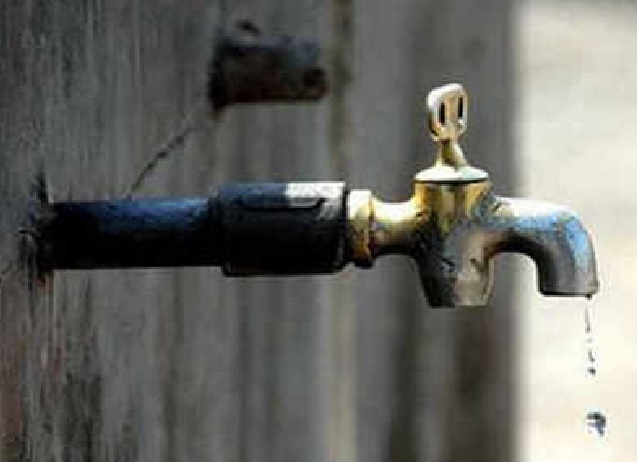
Representational image

New Delhi (NVI): The National Jal Jeevan Mission (JJM) has launched an ICT Grand Challenge to create innovative, modular, and cost-effective solution to develop a ‘Smart Water Supply Measurement and Monitoring System’ at the village level.

The Jal Jeevan Mission, in partnership with Ministry of Electronics and Information Technology, will be inviting proposals from Indian Tech start-ups, MSMEs, Indian Companies and Indian LLPs.

This challenge will harness the vibrant IoT eco-systems of India for creating smart rural water supply eco-system to measure and monitor the service delivery of the water supply in rural areas, the Ministry of Electronics and Information Technology said in a release.

It will also provide opportunity to work for cause of Jal Jeevan Mission and to assure potable water supply through Functional Household Tap Connections to every rural household.

Moreover, the grand challenge will provide support at ideation stage, prototype development stage and deployment stage.

The pilot will be conducted at 100 villages and the best solution will get a cash prize of Rs 50 lakh while runner ups will get prize of Rs 20 lakh each.

Successful developers will be given an opportunity to join the Ministry of Electronics & Information Technology supported incubator or CoEs for further nurturing of their solution, the release said.

Furthermore, this will boost the idea and thrust of initiatives like Aatmanirbhar Bharat, Digital India and Make in India, it added.

National Jal Jeevan Mission (JJM) aims at providing Functional Household Tap Connection (FHTC) to every rural household by 2024.

The mission focuses on service delivery at the household level, through water supply regularly in adequate quantity and of prescribed quality.

Therefore, this necessitates the use of modern technology in systematic monitoring of the programme and to capture service delivery data automatically for ensuring the quality of services.

As digitisation of water supply infrastructure has the potential to solve some of the biggest societal problems facing the nation, it will help anticipate and address future challenges.

-RJV

Chinese actions reflect disregard of various bilateral agreements: Rajnath in RS

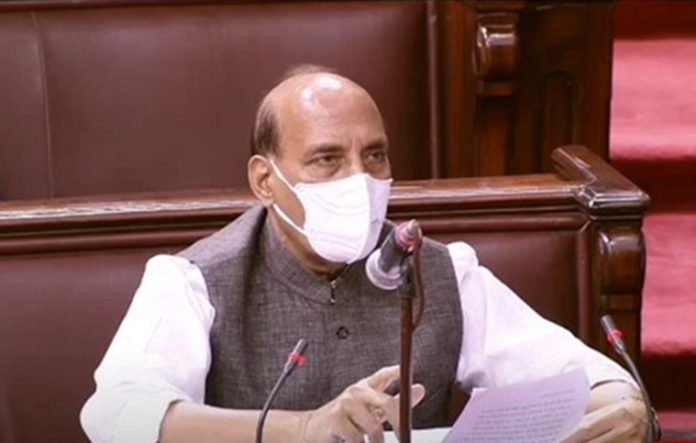
New Delhi (NVI): Defence Minister Rajnath Singh today said that China does not accept the customary and traditional alignment of the boundary with India and its recent actions reflect an utter disregard of the various bilateral agreements between the two countries.

He said India will no more tolerate any Chinese misadventures at the LAC and will not step back from taking any harsh decision since Indian troops are in a better position to retaliate, this time.

“The amassing of the troops by China goes against the 1993 and 1996 Agreements. Respecting and strictly observing the Line of Actual Control is the basis for peace and tranquility in the border areas and explicitly recognized in both 1993 and 1996 agreements. While our Armed Forces abide scrupulously by it, this has not been reciprocated by the Chinese side,” he said.

While responding to questions on the Chinese not allowing Indian soldiers to patrol on traditional posts, Rajnath said this is the reason for India’s fight with China. He was responding to a question by AK Antony who was Defence Minister in the previous Congress government.

Antony had commented on Indian troops being pushed back from traditional patrolling points in Ladakh.

Apart from that, Singh said that no power on earth can stop the Indian troops from patrolling Ladakh border at Line of Actual Control (LAC). He was replying to clarifications sought by Rajya Sabha MPs on his statement on border row with China.

The Defence Minister said that the skirmishes at LAC have been primarily over the issue of patrolling on Ladakh border. “No force in the world can stop Indian soldiers from patrolling. Our soldiers have sacrificed their lives only for this,” he said.

Rajnath’s statement retained elements of what he spoke on the issue in Lok Sabha two days ago, except for some crucial points.

He said that even though the situation this year is very different both in terms of scale of troops involved and the number of friction points, India remains committed to a peaceful resolution.

“Starting a war is in our hands but the end is not in our hands. I am astonished at times that peace is compromised. I want to tell our 130 crore countrymen that we will not let the country down. Neither will we bow before anyone, nor is it our intention to make anyone bow before us,” he said.

He also said that there is a mismatch between what China says and does while referring to the August 29 and 30 attempts by Chinese PLA to change the status quo at the southern bank of Pangong Tso lake in Ladakh.

-ARK

India may have COVID-19 vaccine by the start of next year: Harsh Vardhan

Govt is alert, no need to panic: Health Min on new COVID strain in UK

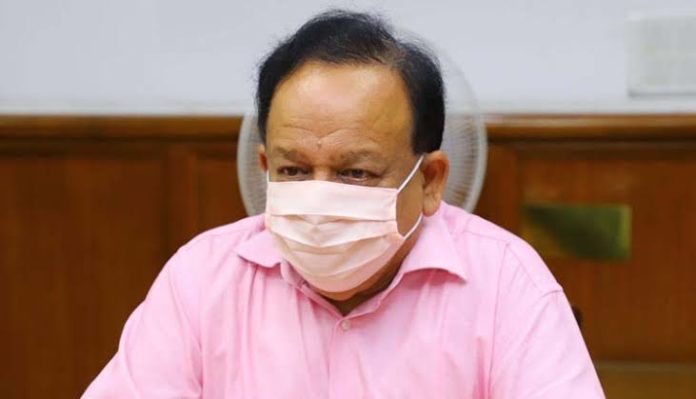
New Delhi (NVI): Union Health Minister Harsh Vardhan today said that he is hopeful that by the early next year, the coronavirus vaccine will be available in India.

He also said, Prime Minister Narendra Modi, has been personally monitoring the COVID-19 situation in the country.

Speaking at Rajya Sabha, Harsh Vardhan said, “Just like other countries, India is also making efforts. Three vaccine candidates are in different phases.”

“Under Prime Minister’s guidance, an expert group is looking at it and there is advanced planning in place. We are hopeful that by the start of next year a vaccine will be available in India,” he said regarding the coronavirus situation in the country.

His remarks come at a time when India has recorded more than 50 lakh coronavirus cases and people are eagerly waiting for the vaccine.

Moreover, the clinical trials for two indigenous vaccines by Zydus Cadila and Bharat Biotech are curently underway, with both completing phase 1 testing.

Serum Institute of India (SII) has again commenced the phase 2 and 3 clinical trials for the COVID-19 vaccine after getting clearance from the Drug Controller General of India (DCGI). However, the Pune-based firm, is looking after the trials at 17 trial sites across India.

India is the manufacturing partner of the vaccine candidate named Covishield, developed jointly by the University of Oxford and AstraZeneca.

Apart from this, the Russian Direct Investment Fund (RDIF) and Dr. Reddy’s Laboratories Limited, a global pharmaceutical company headquartered out of India, have agreed to cooperate on clinical trials and distribution of the Sputnik V vaccine in the country.

Vardhan further stated, the COVID-19 vaccine will be first made available to those who need it the most, irrespective of their paying capacity, the health minister reiterated.

The central government has been considering emergency authorization of COVID-19 vaccination especially in the case of senior citizens and people working in high-risk settings, he added.

With 51,18,253 infections, India is the world’s second-worst affected country, the total number of fatalities stands at 83,198.

-RJV

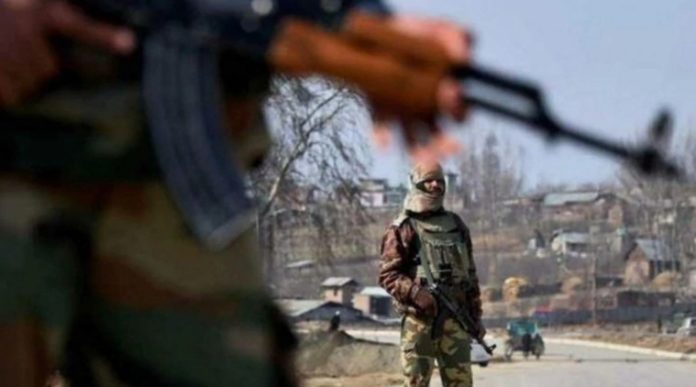
No impact of Covid-19 on terrorism

Kashmir terror attack
Representational Image

COLUMN

-By RC Ganjoo

When the world is fighting against the Covid-19 pandemic and nations, scientists and organisations are trying hard to prevent further dwindling of economic and socio-psychological aspects at human costs, the scourge of terrorism continues to destroy lives.

Experts are of the opinion that terrorist groups use the pandemic as an opportunity to increase attacks, adding to the crisis while exploiting the shattering situation of the governments.

While pronouncing Covid-19 a ‘punishment’ from God, the IS and Al Qaeda militant organizations have urged their supporters to take care of themselves and non-Muslims to utilise their time under lockdown to learn about Islam.

After the US-Taliban Doha peace deal in February, it was being hoped that Afghanistan would witness a significant reduction in violence. But it did not happen. The attack on a Kabul maternity hospital on May 12 was the most horrific and sickening incident in a wave of violence. Human Rights Watch (HRW) called it an apparent war crime.

It is beyond any doubt that terrorists are unpredictable elements. As long as terrorist networks remain intact, no one can foretell their actions with surety.

Pakistan has also seen a rise in terrorist attacks in the last two months. There has been a surge in militant activities in parts of the tribal districts, mainly North and South Waziristan. Militant attacks have been reported from areas closer to the Pak-Afghan border Datta Khel. Militants have been expanding their areas of operation.

Reportedly, the Tehrik-i-Taliban Pakistan (TTP) and other militants are trying to hit their native towns to reclaim their lost influence. Outfits like Jamaatul Ahrar are in process of regrouping in their towns of origin, Bajaur and Orakzai. Questions are being raised about the return of Pakistani Taliban militants sheltering in Afghanistan who want to relocate to their native towns in the tribal districts. It is reported, that the Pakistan government would pardon TTP militants and allow them to come back, a similar concession would be offered to Baloch insurgents.

The Baloch insurgent leaders under new leadership are emerging from within their ranks. The strategy of Baloch insurgents is unique in execution.  For major attacks, they take time in planning and execution. During intervals between large scale attacks, they continue to engage forces in low-intensity attacks. But there are spoilers and exploiters all around the region contributing to keeping the insurgency alive.

Currently, there are about 40,000 terrorists in Pakistan, of which 16 have been declared as international terrorists by the United Nations. These terrorists belong to terror organizations like Jamaat-ud-Dawa and Jaish-e-Mohammad and both these organizations are banned worldwide, but their activities still continue in Pakistan.

Last year, the United Nations Security Council declared Masood Azhar as an international terrorist for masterminding the terror attacks in Pulwama and Pathankot, but Pakistan has so far not taken any action against him.

“With the start of intra-Afghan talks, we were expecting the Taliban to reduce the number of their attacks, but unfortunately their attacks are still going in high numbers,” Fawad Aman, spokesman for the Afghan defence ministry, said.

Representatives from a number of countries who spoke at the inauguration of the peace talks in Doha on September 12, 2020, called on the Taliban to announce an immediate ceasefire before negotiators sat down to find a way to end decades of war in Afghanistan. The Taliban did not say anything about a possible ceasefire at the ceremony

The Afghan government delegation was led by Masoom Stanekzai while the Afghan Taliban team was headed by Shaikh Abdul Hakim Haqqani. Also present during the talks were American Secretary of State, Mike Pompeo, US Special Envoy for Afghanistan Zalmay Khalilzad, chief of the High Afghan Council for National Reconciliation Dr Abdullah Abdullah as well as Afghan Foreign Minister Hanif Atmar.

In a speech at the starting of talks, Taliban co-founder Mullah Abdul Ghani Baradar reiterated the insurgents’ demand that Afghanistan should be run according to Islamic law, highlighting a likely sticking point. A comprehensive peace deal could take years, and will depend on the willingness of both sides to tailor their competing visions for Afghanistan and the extent to which they can agree to share power.

The two US senior officials, involved in planning the May 2011 raid that killed Osama bin Laden, Bill McRaven, who was commander of Joint Special Operations Command and Michael Morell, who was deputy director of the CIA at the time of the raid, has warned that a US pullout from Afghanistan would result in a Taliban takeover within a year. Expressing concern about the peace deal McRaven has  said, “my assessment is that the Taliban would take over the country again in a matter of months.” Morell said, “my assessment is that they would provide safe haven to al-Qaida.”

Shopian encounter: Results of DNA samples within a few days, says J&K DGP

2 LeT militants surrender after gunfight in J&K's Kulgam
(Representational/file image)

Abid Bashir

Srinagar (NVI): J&K DGP Dilbagh Singh today said that the results of DNA samples collected from family members from Rajouri district of Jammu, who claimed three youths killed on July 18 Amshipora encounter in Shopian were their kin, will be out in a few days.

“There is no delay in results as the process takes time. I believe it’s a matter of few days when the results of DNA samples will be out,” Singh told reporters in a presser at Police Control Room (PCR), Srinagar, while replying to a query about the reason behind the delay in the DNA results which were collected about a month ago from six family members of Rajouri district in Jammu.

Interestingly, the J&K LG Manoj Sinha recently said that he would ensure that there is no injustice to the families. He was speaking in reference to the Shopian encounter.

It may be recalled that three families from Rajouri district of Jammu had claimed that the three youth, killed in a gunfight on July 18 at Amshipora, Shopian, were not terrorists as claimed by the Army but their sons, who had gone to Shopian to earn a living.

The pictures of slain youth had gone viral on social media after which Army had ordered a court of inquiry to find out the reality. Police had started a separate probe in the matter and J&K LG Sinha in his recent presser at Rajbhawan also stated that the administration was probing the encounter.

A police team from Srinagar had travelled to Rajouri district last month and collected the DNA samples of six family members of three families, who claimed that the slain were their sons. However, almost 35 days on, the results of DNA samples collected were still awaited.

-CHK

All 3 militants killed in Srinagar encounter were locals from South Kashmir: J&K DGP

Abid Bashir

Srinagar (NVI): All three militants killed in an encounter at Batamaloo in Srinagar today were locals from South Kashmir, Director General of Police (DGP) J&K, Dilbagh Singh said here during a press conference.

“The militants were given a chance to surrender but they refused and fired. One CRPF officer and another CRPF man sustained injuries in the initial exchange of firing. The officer is critical and we are praying for his recovery,” the DGP said.

He said that the forces conducted the operation in a professional manner and killed all three militants. “However, a woman was caught in the cross-firing. Her killing is very unfortunate and we express sympathy with the bereaved family,” DGP Singh said. He was flanked by IGP Kashmir Vijay Kumar and the new IG CRPF, Srinagar sector, Charu Sinha. The slain woman was identified as Kousar Jan.

About the identification of the three slain militants, the DGP said that all three were local militants from South Kashmir. “Arms and ammunition were recovered from them,” he added.

He said that militants from other districts of South and North Kashmir keep on visiting Srinagar to carry out attacks on security forces. “On August 14, they targeted our party and killed two policemen at Nowgam. Before that, they had killed two BSF men at Pandach on city outskirts. And then they made another attempt at Pantha Chowk where we lost a brave SoG man,” the DGP Singh said.

He said police and CRPF teams are alert and whenever they get a lead about presence of militants in Srinagar, efforts are always put in to ensure zero collateral damage. “Today’s operation was seventh one in Srinagar in the recent past, but biggest success was the killing of Hizbul Mujahideen commander Junaid Sehrai,” the J&K Police chief said.

He said that this year so far 177 militants have been killed in 72 operations which include 22 foreign terrorists as well. He said that Pakistan is trying to float new outfits to create confusion while efforts are being made to revive Al-Badr. “We are aware of this and counter programs and strategies are being adopted,” the DGP said, adding that despite huge efforts by militants and their handlers across, 20 youth who had tread the wrong path, returned back.

Also speaking on the occasion, IG Charu Sinha said that there is a huge difference between the situation in Naxal areas and Kashmir, especially Srinagar. “We will work professionally in collaboration with police and other agencies,” said Sinha, who has served in Andhra Pradesh and other Naxal hit areas in India.

-ARK

South Africa to ease coronavirus restrictions as cases drop

Representational image

New Delhi (NVI): South African President Cyril Ramaphosa has announced that his country is further easing restrictions imposed to tackle the COVID-19 pandemic as figures continue to improve.

The new measures will come into effect from September 20, an overnight curfew will be reduced, gatherings will be allowed at 50 per cent of a venue’s capacity, and alcohol will again be on sale.

Cyril Ramaphosa in a television address to the nation said, “We have withstood the coronavirus storm. But rules on social distancing and mask-wearing will remain in place.”

He also said, “Now is the time to return our country, its people and our economy to a situation that is more normal, that more resembles the lives that we were living six months ago.”

“It is time to move to what will become our new normal for as long as the coronavirus is with us,” Ramaphosa added

The African continent shuttered its borders at the start of a strict nationwide lockdown on March 27 to contain the spread of the virus. In addition to this, the president said that international travel would also resume from October 1st.

The president announced that following consultations with health experts and officials from across South Africa, the country would lower its current alert Level 2 to Level 1 from midnight on September 20.

Under the new measures, most gatherings will be permitted at 50 percent of a venue’s capacity, with a cap of 250 people for indoor and 500 people for outdoors events.

A 10:00 pm curfew will be scaled back to midnight and a 50-person limit at recreational facilities will be lifted.

Restrictions on sporting events remain in place, however, and face-masks will still be required in public. Whereas, alcohol will be permitted for on-site consumption in licensed establishments

South Africa has been particularly hard-hit by the coronavirus, with more than 651,000 infections and over 15,600 deaths recorded to date. However, the number of new cases has dropped from about 12,000 per day in July to fewer than 2,000.

Moreover, travel may also be restricted to and from countries with high infection rates, Ramaphosa said, adding that, a list would be determined based on latest scientific data from those countries.

South Africa will start by reopening its three main airports in Cape Town, Durban and Johannesburg.

In addition, tourists arriving in South Africa must present a negative COVID-19 test result taken less than 72 hours prior, or quarantine at their own cost.

“Further stimulus package was being drawn up to rebuild an economy that has been savaged by the lockdown,” Ramaphosa stated.


-RJV

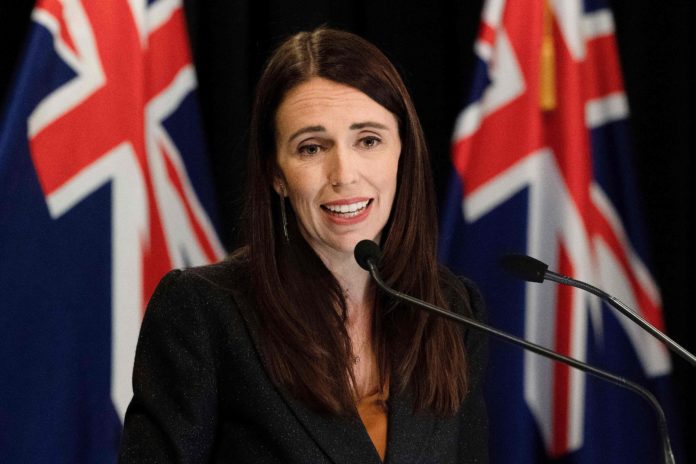
New Zealand plunges into recession as economy shrinks record 12%

Pfizer/BioNTech vaccine
New Zealand PM Jacinda Ardern

New Delhi (NVI): New Zealand fell into its deepest economic slump on record in the second quarter as its battle against the coronavirus pandemic paralysed business activity, according to official data.

The country’s GDP shrank by 12.2 per cent between April and June as the lockdown and border closures hit.

The GDP data confirms New Zealand’s worst recession, defined as two straight quarters of contraction, since 2010, with GDP in the March quarter falling 1.6 per cent.

This is New Zealand’s first recession since the global financial crisis and its worst since 1987, when the current system of measurement began. But the government hopes its pandemic response will lead to a quick recovery.

The Reserve Bank of New Zealand had forecast a quarterly and annual GDP decline of 14 per cent in its August statement.

Growth has been hit by a standstill in economic activity as a strict nationwide coronavirus lockdown in April and parts of May forced almost everyone to stay at home and businesses to shut.

The nation of nearly five million was briefly declared virus free, and although it still has a handful of cases, it has only had 25 deaths.

The economy is likely to be a key issue in next month’s election, which was delayed after an unexpected spike in Covid-19 cases in August.

Industries such as retail, accommodation, restaurants and transport saw significant declines; as did construction and manufacturing at 25.8 per cent and 13 per cent respectively. Household domestic spending dropped by 12 per cent.

Annually, GDP fell by 2 per cent – the first annual decline since the March 2010 quarter, according to media reports.

New Zealand’s economic retraction is higher than Australia’s 7 per cent and Canada at 11.5 per cent, but much less than in India, Singapore and the UK.

Meanwhile, Finance Minister Grant Robertson said the GDP numbers were better than expected, and suggested a strong recovery ahead. “Going hard and early means that we can come back faster and stronger,” he said.

-CHK

State-wise details of Covid-19 cases in India

COVID-19
File photo

New Delhi (NVI): The total number of coronavirus cases in India have reached 51,18,254 after 97,894 new cases were reported in the past 24 hours, the biggest single-day rise, according to Union Health Ministry data.

The country’s death toll has gone up to 83,198 after 1,132 new fatalities were reported in the country during this period.

In worst-hit Maharashtra, the COVID-19 cases climbed to 11,21,221, followed by Andhra Pradesh with 5,92,760 cases, and Tamil Nadu with 5,19,860 cases.

Total positive cases in States/UTs:

Andaman and Nicobar Islands- 3,593

Andhra Pradesh- 5,92,760

Arunachal Pradesh- 6,692

Assam- 1,48,969

Bihar- 1,62,463

Chandigarh- 8,958

Chhattisgarh- 73,966

Dadra Nagar Haveli & Diu – 2,810

Delhi- 2,30,269

Gujarat- 1,17,547

Goa- 26,139

Haryana– 1,01,316

Himachal Pradesh- 10,795

Jammu and Kashmir- 58,244

Jharkhand- 66,074

Karnataka- 4,84,990

Kerala- 1,17,863

Ladakh- 3,535

Madhya Pradesh- 95,515

Maharashtra- 11,21,221

Manipur- 8,320

Meghalaya- 4,195

Mizoram- 1,560

Nagaland- 5,263

Odisha- 1,62,920

Puducherry- 21,111

Punjab- 87,184

Rajasthan- 1,07,680

Sikkim- 2,221

Tamil Nadu- 5,19,860

Telangana- 1,65,003

Tripura- 20,676

Uttarakhand- 35,947

Uttar Pradesh- 3,30,265

West Bengal– 2,12,383

State/UT wise total death toll:

Andaman and Nicobar Islands- 52

Andhra Pradesh- 5,105

Arunachal Pradesh- 13

Assam- 811

Bihar- 848

Chandigarh- 104

Chhattisgarh- 611

Dadra and Nagar Haveli- 2

Delhi- 4,839

Goa- 319

Gujarat- 3,256

Haryana- 1,045

Himachal Pradesh- 91

Jammu and Kashmir- 932

Jharkhand- 579

Karnataka- 7,536

Kerala- 480

Ladakh- 46

Madhya Pradesh- 1,844

Maharashtra- 30,883

Manipur- 48

Meghalaya- 29

Nagaland- 15

Odisha- 656

Puducherry- 418

Punjab- 2,592

Rajasthan- 1,279

Sikkim- 19

Tamil Nadu- 8,559

Telangana- 1,005

Tripura- 222

Uttarakhand- 447

Uttar Pradesh- 4,690

West Bengal- 4,123

However, a total of 40,25,079 people have been cured or discharged. Total active cases stand at 10,09,976

-CHK

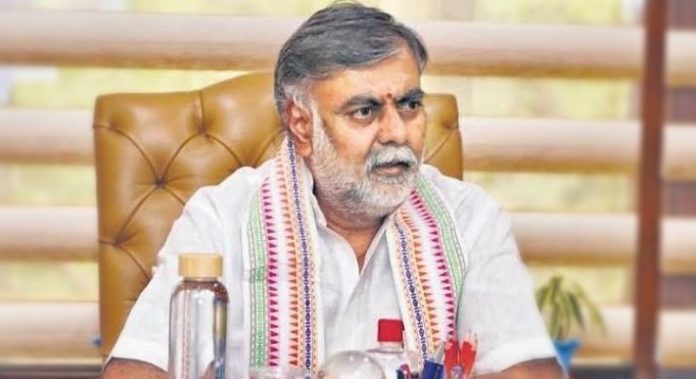
Prahlad Patel tests Covid positive

New Delhi (NVI): Union Tourism and Culture Minister Prahlad Singh Patel tested positive for coronavirus today.

Taking to Twitter, Patel said, “Yesterday my report of corona has come positive, those who come in contact with me should take precaution.”

Earlier, Road Transport Minister Nitin Gadkari tested COVID-19 positive. Both Gadkari and Patel attended Lok Sabha proceedings on September 14 when the Monsoon Session started.

They were both seated in front rows with other ministers in close vicinity. Therefore, parliament had mandated a COVID-19 negative certificate for all entrants to the complex.

However, ministers are testing positive within days of testing negative, raising safety concerns for other MPs who are attending the unprecedented session amid rising COVID-19 cases.

India is currently in the second place in terms of coronavirus cases at 51,18,254, while the country’s death toll stood at 83,198.

-RJV

MUST READ