
Sunday, June 28, 2026
Home Blog Page 1174

Dragon Sniper Rifle, ammunition recovered in J&K’s Gulmarg sector: Army

Representational image

Abid Bashir

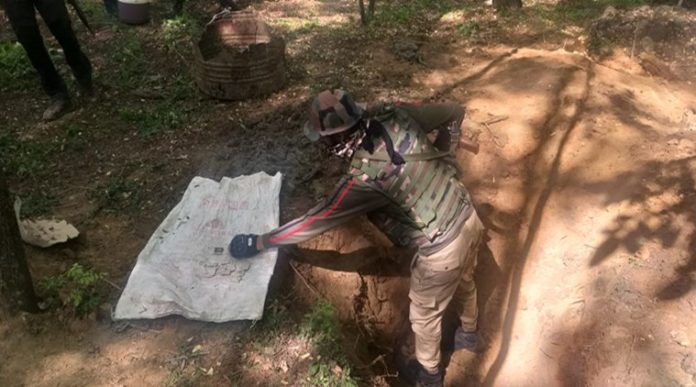
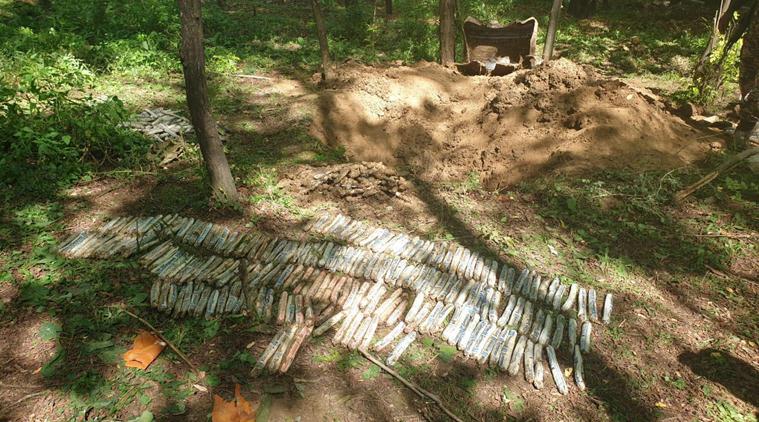
Srinagar (NVI): The Indian Army has today recovered a Dragon Sniper Rifle with a magazine besides other arms and ammunition at Gulmarg sector in north Kashmir’s Baramulla district.

Today’s weapon and ammunition recovery along the LoC in Baramulla district is third in a row in the ensuing month of July. Defence Spokesman in Srinagar, Colonel Rajesh Kalia told NVI that a Dragon Sniper with a magazine and 194 AK-47 rounds, 10 Rifle Grenades and two IED Circuits were recovered in Marpathri, upper reaches of Gulmarg in Baramulla district.

He said that a search operation was launched in the morning following credible inputs regarding presence of arms cache in the forest area. Police sources said that a case has been registered in this regard in Gulmarg Police Station. This recovery comes just two days after the Army recovered a huge arms cache in Hathlangoo area of Uri in north Kashmir’s Baramulla district.

On July 22, Army’s Srinagar-based Chinar-Corps had said in a tweet that an input was received regarding weapon drop near LoC and a search operation was launched after that. The recovered items included one AK-47 rifle with magazines, five Chinese pistols with magazines, 24 grenades and other warlike stores.

Earlier, on July 7, the Army during a search operation close to Line of Control (LoC) in Maidan Nala, of Uri area in north Kashmir’s Baramulla district had recovered a cache of arms consisting of three AK-56, two Pistols with magazines and other ammunition.

-CHK

COVID-19: J&K records 523 fresh cases, tally at 17,305

Abid Bashir

Srinagar (NVI): Jammu and Kashmir today witnessed yet another spike as 523 fresh coronavirus cases, including 88 travelers, were reported taking the total number of positive cases in the Union Territory to 17,305.

Officials said that among the 523 new cases, 367 belong to Kashmir division while 156 are from Jammu division, adding that the total number of positive cases in Kashmir division has reached 13.669 including 7,550 recoveries while the total number of positive cases in Jammu division has reached 3,636 including 1,967 recoveries and 22 deaths.

Officials said that total number of active cases in Jammu and Kashmir stands at 7,483 including 5,836 from Kashmir division and 1,647 from Jammu division.

With 300 more recoveries, the tally of total recoveries in the UT has reached 9,517 which is 54.99 percent of the total cases which was over 63 percent a few days before.

Pertinently, Srinagar district alone has 3,793 positive cases which is more than the total number of positive cases in Jammu division.

Cases tested positive in J&K include 145 from Srinagar, 18 from Baramulla, 06 from Kulgam, 11 from Shopian, 20 from Anantnag, 10 from Kupwara, 62 from Pulwama, 56 from Budgam, 30 from Bandipora and 09 from Ganderbal in Kashmir division while as 156 from Jammu division include 66 from Jammu, 27 from Kuthua, 16 from Rajouri, 02 from Udhampur, 09 from Ramban, 02 from Samba, 18 from Doda, 04 from Poonch, 10 from Kishtwar and 02 from Reasi.

As per the officials figures, in Kashmir division, 3,793 positive cases including 86 deaths and 1,518 recoveries are from Srinagar, 1,758 including 63 deaths and 1,109 recoveries are from Baramulla, 1,443 including 916 recoveries and 26 deaths are from Kulgam, 1,363 including 20 deaths and 886 recoveries are from Shopian, 1,151 including 21 deaths and 728 recoveries are from Anantnag, 1,018 including 644 recoveries and 16 deaths are from Kupwara, 1,194 including 594 recoveries and 16 deaths are from Pulwama, 1,040 including 611 recoveries and 21 deaths are from Budgam, 591 including 396 recoveries and 08 deaths are from Bandipora and 318 including 149 recoveries and 06 death are from Ganderbal.

In Jammu division, 823 including 482 recoveries and 14 deaths are from Jammu district, 460 including 298 recoveries and 01 death are from Kathua, 524 including 123 recoveries and 02 death are from Rajouri, 388 including 299 recoveries and 01 death are from Udhampur, 472 including 240 recoveries are from Ramban, 364 including 202 recoveries and 01 death are from Samba, 228 including 109 recoveries and 02 deaths are from Doda, 170 including 135 recoveries and 01 death is from Poonch, 106 including 34 recoveries are from Kishtwar and 101 including 45 recoveries are from Reasi.

As per the daily information bulletin, 3,50,946 people in Jammu and Kashmir are placed under observation while 43,332 people have been kept under home quarantine. 7,483 people are in hospital isolation while 12 people are under hospital quarantine.

According to the bulletin, 2,58,962 people have completed surveillance period and 40,852 people are under home surveillance besides that so far results of 5,70,508 samples have been made available.

-CHK

PM Modi reviews implementation of PM-SVANidhi Scheme

Prime Minister Narendra Modi

New Delhi (NVI): Prime Minister Narendra Modi today held a meeting to review the implementation of PM-SVANidhi Scheme which comes under the Ministry of Housing & Urban Affairs.

The Centre launched the PM SVANidhi Scheme to facilitate collateral free working capital loan upto Rs 10,000 with a tenure of one-year to approximately 50 lakh street vendors, to help them resume their businesses during the COVID-19 pandemic.

Loan processing under the scheme has begun since July 2, 2020 through an IT platform “PM SVANidhi” with Small Industries Development Bank of India (SIDBI), which is the implementing agency for the scheme administration.

During the meeting, it was informed that over 2.6 lakh applications have been received, over 64,000 have been sanctioned and more than 5,500 have been disbursed.

PM Modi expressed satisfaction on use of end-to-end IT solution through a web-portal and mobile App for administration of the Scheme to ensure transparency, accountability and speed.

While noting that the Ministry of Housing and Urban Affairs is working on a complete IT solution including mobile application for seamless implementation of the scheme, the PM said that the scheme design should invent use of end-to-end digital transactions by the street vendors. This should cover the entire gamut of their business – from procurement of raw material to collection of sale proceeds.

Appropriate incentives and training should be conducted for this purpose. Use of digital payments would also help build a credit profile for the street vendor helping them in future financial needs, Modi further added.

The Prime Minister also said that the scheme should not be just seen from the perspective for extending loans to street vendors. It should also be seen as a part of an outreach to the street vendors for their holistic development and economic upliftment.

-CHK

Coronavirus cases cross 2.70 lakh-mark in Pakistan

New Delhi (NVI): The total number of coronavirus cases in Pakistan have crossed 2.70 lakh and have reached 2,71,886 after detection of 1,487 new cases in the last 24 hours.

Meanwhile, the coronavirus death toll has reached to 5,787 in the country.

Looking at the breakdown of cases, Sindh reported 1,16,800 coronavirus cases, highest among all the provinces, while Punjab has 91,691 positive cases.

On the other hand, Khyber-Pakhtunkhwa has recorded 33,071 cases, Balochistan is at 11,550, Gilgit-Baltistan at 1,942, Islamabad at 14,821 and Pakistan-occupied Kashmir is at 2,012 cases so far, according to media reports.

A total of 2,36,596 patients have recovered from the disease so far in the country.

-CHK

India records highest-ever COVID-19 tests in a single day

Representational image

New Delhi (NVI): A record number of more than 4,20,000 COVID-19 tests were conducted in a single day by the Indian Council of Medical Research (ICMR) across the country, the Ministry of Health said.

In an official statement, the ministry said that, with 4,20,898 samples tested in the last 24 hours, the Tests Per Million (TPM) has further increased to 11,485 and cumulative testing to 1,58,49,068 and both continue to maintain the upward trend.

Notably, there has been increase in the number of labs from merely one in January to 1,301 today, inclusive of 902 government labs and 399 in the private sector.

Meanwhile, the Centre has advised all states and UTs to keep up the strategy of “Test, Track and Treat”. It has also asked the governments to test aggressive which may lead to higher number of daily positive cases initially but would eventually achieve a decline, the ministry said.

The statement further added that, the case fatality rate continues on its downward trend which means that the collective efforts of the Centre and State/UT governments have resulted to keep a check on the mortality due to COVID-19.

The fatality rate has significantly dipped to 2.35 per cent today. “India has one of the lowest fatality rates in the world,” it said.

In the last 24 hours, 32,223 COVID-19 patients have recovered taking the cumulative number of recovered cases to 8,49,431 today. With this the recovery rate has achieved another high of 63.54 per cent.

However, the gap between recovered patients and active COVID-19 cases has further increased to 3,93,360, the ministry added.

-RJV

This pasta restaurant in Italy is moving to Switzerland as Alpine Border melts

New Delhi (NVI): Rifugio Guide del Cervino, is a bar and restaurant atop the Plateau Rosa, a glacial ridge in the Italian Alps. Or at least, it was. Climate change is moving it inexorably towards Switzerland as the glacier on which it sits steadily melts.

When the Rifugio was built in 1984, it was on the Italian side of the border. Since then, climate change, accelerated by the 2003 European heatwave which caused Alpine glaciers to lose 10 percent of their mass, has led to the glacier retreating towards Switzerland.

News reports about people and wildlife forced to move by the effects of climate change usually does the rounds, but in this corner of the Alps, climate change is literally moving the border between Italy and Switzerland.

In 2009, Italy and Switzerland agreed their border should be mobile, shifting to accommodate changes caused by glacial melting. Movements are monitored using GPS sensors allowing the border to be redrawn as the ice moves.

The moving border has shifted over the last fifteen years since its creation as glaciers retreat and this restaurant may now be in Swiss territory, according to media reports.

If decided to be in Switzerland, the restaurant would be subject to Swiss law, taxes, and potentially even customs; Swiss inspectors would need to approve every box of pasta and package of coffee brought up to the restaurant by cable car from Italy.

Shrinking glaciers are one of the most visible demonstrations of the effects of global warming. The US National Oceanic and Atmospheric Administration says the amount of ice lost since 1980 is equivalent to removing a 24-metre slice off the top of each glacier.

Global temperatures are estimated to have risen by at least 1°C above pre-industrial levels, and experts warn urgent action is needed to curb emissions. A rise above 1.5°C will cause glaciers in Asia, for example, to shrink by two-thirds by the end of the century.

-CHK

Air pollution can be linked to higher COVID-19 infections: Study

Representational image

New Delhi (NVI): As coronavirus global death toll has passed half a million mark, one of the major factor that could partially explain this is air pollution, according to a new study.

The study shows a correlation between the level of air pollution and the number of COVID-19 cases. It shows the relationship between COVID-19 cases and exposure to air pollution in the Netherlands which found that the equivalent figure for that country could be up to 16.6 per cent.

According to the research, the long term exposure to pollutants such as fine particulate matter (often called PM2.5, as these are particles smaller than 2.5 micrometres), nitrogen dioxide (NO₂) and sulphur dioxide (SO₂) can reduce lung function and cause respiratory illness.

These pollutants have also been shown to cause a persistent inflammatory response even in relatively younger people and to increase the risk of infection by viruses which targets the respiratory tract.

Moreover, the pathogen that causes COVID-19 – SARS-CoV-2 – is one such virus.

Meanwhile, several other studies have already suggested that poor air quality can leave people at greater risk of contracting the virus, and at far more greater risks of serious illness and death.

Another study of the US found that even a small increase in PM2.5 concentrations of 1 microgram per cubic metre is associated with an 8 per cent increase in the COVID-19 death rate.

This study, analysed the data for 355 Dutch municipalities, and found that an increase in fine particulate matter concentrations of 1 microgram per cubic metre was linked with an increase of up to 15 COVID-19 cases, four hospital admissions and three deaths.

The first confirmed COVID-19 case in the Netherlands occurred in late February and by late June over 50,000 cases had been identified. Notably, these hotspots of disease transmission are in relatively rural regions where there are fewer people living close together.

In late February and early March each year, these areas hold carnival celebrations which attract thousands of people to street parties and parades.

While it’s likely that the carnival celebrations played a role, the pattern of cases across these regions suggest other factors may be as important.

The south-eastern provinces of North Brabant and Limburg house over 63 per cent of the country’s 12 million pigs and 42 per cent of its 101 million chickens. Intensive livestock production produces large amounts of ammonia.

These particles often form a significant proportion of fine particulate matter in air pollution. Concentrations of this are at their highest in air samples from the south-east of the Netherlands.

According to the analysed data that has used COVID-19 cases up to June 5, 2020, capturing almost the entire known course of the Dutch epidemic, the relationship found between pollution and COVID-19 exists even after controlling other contributing factors, such as the carnival, age, health, income, population density and others.

Furthermore, the highest annual average concentration of fine particulate matter in a Dutch municipality is 12.3 micrograms per cubic metre, while the lowest is 6.9, as per the study.

If concentrations in the most polluted municipality fell to the level of the least polluted, the results suggest this would lead to 82 fewer disease cases, 24 fewer hospital admissions and 19 fewer deaths, purely as a result of the change in pollution.

The correlation found between exposure to air pollution and COVID-19 is not simply a result of disease cases being clustered in large cities where pollution may be higher. After all, COVID-19 hotspots in the Netherlands were in relatively rural regions.

So far, within regions, pollution levels and COVID-19 cases vary considerably from place to place, making it hard to estimate the precise relationship between the two.

However, until this kind of data is available, the evidence of a relationship between pollution and COVID-19 can never be conclusive.

-RJV

India, UK affirm their commitment towards Free Trade Agreement

New Delhi (NVI): India and UK have affirmed their shared commitment to a free trade agreement (FTA) with a view to strengthen economic tie up between both the countries, the Ministry of Commerce said.

The declaration was announced during the 14th Joint Economic and Trade Committee meeting which was held virtually yesterday.

It was co-chaired by Minister for Commerce and Industry Piyush Goyal and UK Secretary of State for International Trade Elizabeth Truss, the ministry in a statement said.

They were assisted by Minister of State for Commerce and Industry Hardeep Singh Puri and his counterpart, UK Minister of State for International Trade, HE Ranil Jayawardena.

Goyal and Truss affirmed their shared commitment to a Free Trade Agreement and towards that, Early Harvest deals in a staged manner, the statement said.

Puri and Minister Jayawardena will have monthly meetings to intensify the dialogue. It was decided that a meeting led by Minister Goyal and SOS Truss will be held in Autumn 2020 here to carry forward the dialogue, the statement said.

The statement further said, the co-chairs of business led Joint Working Groups on life science and health, ICT and food and drink set up during the last JETCO made their recommendations to the ministers.

Both the sides approached the talks with open minds and shared commitment for revival and revitalisation of the long standing trade and economic linkages between India and the UK.

They also resolved to cooperate in health sector especially in view of the present COVID-19 pandemic.

-RJV

J&K: Western Army Commander reviews operational readiness of troops

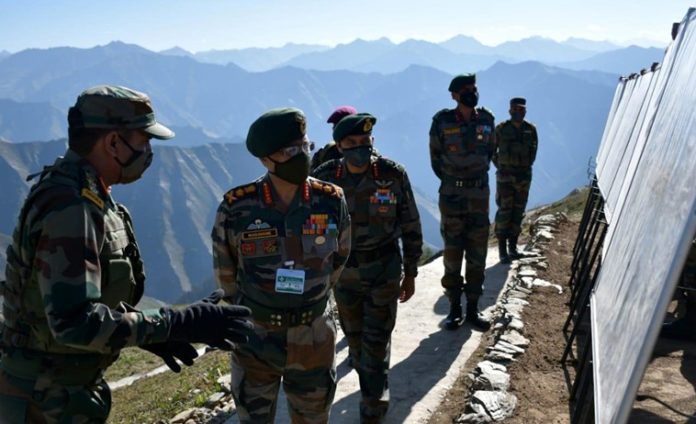
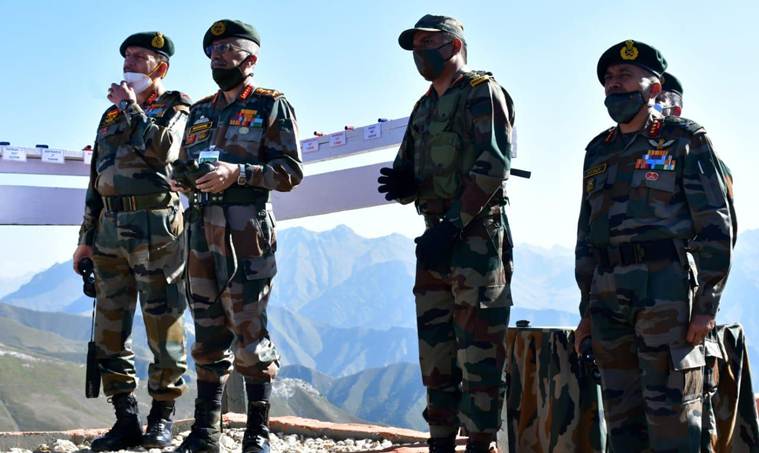
Jammu (NVI): Western Army Commander Lt Gen RP Singh today visited Basoli, Bakloh & Mamun military stations in Jammu and Kashmir to review the current security situation and operational readiness.

The Army Commander was accompanied by Lt Gen Upendra Dwivedi, GOC, Rising Star Corps.

Lt Gen Singh interacted with the Commanders of the field formations and was briefed about the operational and logistics preparedness and up-gradation of security infrastructure.

The Army Commander boosted the morale of the troops on ground and was confident about the preparedness of the Rising Star Corps to thwart any type of threat posed by the adversaries and Anti National Elements. He exhorted all ranks to continue working with same zeal and enthusiasm.

Alka Singh, Regional President AWWA, HQ Western Command also accompanied the Army Commander.  She interacted with the families of soldiers and praised them for their strong support and also commended them for their contribution in the fight against the COVID–19 pandemic.

-CHK

Over 4 million children affected by floods in South Asian countries: UNICEF

Children transporting books during floods in Bangladesh in 2019. (Source @UNICEF)

New Delhi (NVI): More than 4 million children are currently estimated to be affected by devastating floods in South Asia and are in urgent need of life-saving support, United Nations International Children’s Fund (UNICEF) said in a report.

In an official statement, the UN agency said, weeks of torrential monsoon rains, widespread flooding and deadly landslides in Bangladesh, Bhutan, India and Nepal have affected millions of children and families.

Over 4 million children are currently estimated to be impacted with many millions more at risk, it said.

Jean Gough, UNICEF Regional Director for South Asia said, “Even for a region that is all-too-familiar with the devastating impact of extreme weather, the recent heavy monsoon rains, rising floods and continued landslides are creating a perfect storm for children and families affected.”

“The COVID-19 pandemic and containment and prevention measures add an additional complication to the mix, as COVID-19 cases are accelerating in some of the affected areas,” she added.

In addition to this, more than 700 people have died and dozens are missing across these four countries, with continuing reports of children drowning, the report said.

UNICEF is on the ground working in close coordination with respective governments and humanitarian partners to scale up its responses and support the immediate needs of affected children and their families, but the response is complicated by the COVID-19 pandemic and the associated containment and prevention effort, the organization said.

“Measures such as physical distancing and handwashing needs to be observed in order to minimize the risk of infections among affected populations, especially those in emergency shelters,” UNICEF further said.

Many areas remain inaccessible due to damage to roads, bridges, railways and airports. The most urgent needs for children are clean water, hygiene supplies to prevent the spread of disease, food supplies and safe places in evacuation centres for children to play.

“The fall-out from the COVID-19 pandemic is being compounded by climate change and extreme weather events and are arguably the biggest issues affecting children in South Asia right now,” said Jean Gough.

“Immediate support, more resources and innovative programmes are urgently needed to address the challenges that these threats represent to the region’s children,” she added.

In India, over 6 million people have been affected by the floods, including an estimated 2.4 million children. Though flooding at this period of the year is common, this widespread scale of floods during mid-July is unusual. At the same time, India has seen the daily number of COVID-19 cases crossing the 40,000 thresholds.

“UNICEF is working with the Government and partners to respond quickly and effectively. UNICEF is also supporting the government of Assam to implement the COVID-19 adapted relief camp management guidelines and Child Friendly Spaces in select districts, in addition to its focused support for maternal and child health service continuity and COVID-19 response in many states,” the UN agency said in a statement.

In Bangladesh alone, more than 2.4 million people are estimated to be affected by flooding, including around 1.3 million children. More than half a million families have lost their homes.

The flooding has come at a time when Bangladesh is still recovering from Cyclone Amphan, and it’s already stretched emergency and health response systems are working hard to contain the spread of the COVID-19 virus. So far, the country has over 2,10,000 confirmed cases.

UNICEF said that it is working closely with government partners, who are leading the flood response, and NGOs to provide urgently needed water, sanitation and hygiene supplies to children and communities in need.

The organization is also actively engaged in supporting a comprehensive outbreak response across the country.

In Nepal, heavy monsoon rainfall has caused flooding and landslides across different parts of the country, impacting more than 20 districts, since July 9. More than 100 people have died and over 10,000 people – half of them children – have been affected with an estimated 7,500 displaced from their homes. This same period has also seen a significant number of COVID-19 positive cases in Nepal.

“UNICEF has so far been responding to the immediate needs in the central and far western areas of Nepal where landslides have occurred, providing blankets, tarpaulin, hygiene kits, buckets, mugs and water purification tabs. UNICEF remains at the forefront to support the delivery of essential as well as COVID-19 related health services. UNICEF is also planning to provide further support for landslide and flood victims,” the UNICEF statement read.

In Bhutan, the monsoon rain has caused landslides across the country and is hampering transport and communication as the main highway and inter-district roads have been damaged, the report said.

However, the flashfloods were caused by the overflow of the seven streams and tributaries to the Mao river. The water levels in the Mao remains very high posing significant risks for more flooding. The flooding has also caused damage to crops and a water treatment plant in the country.

-RJV

MUST READ