Tuesday, October 6, 2026
Home Blog Page 1192

Weapons recovered on Sgr-Jammu highway were meant to fuel militancy in South Kashmir: J&K Police

Abid Bashir

Srinagar (NVI): Six Chinese pistols, out of a consignment of weapons recovered from a truck at Jawhar Tunnel on Srinagar-Jammu highway in Kulgam district, were especially meant to lure youth and recruit more people to fuel militancy in South Kashmir, according to J&K Police.

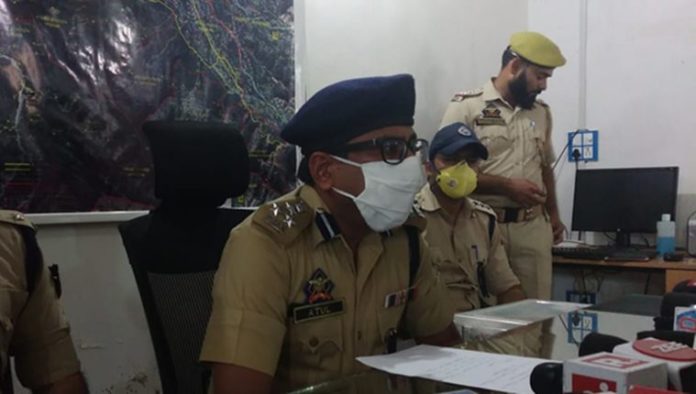
“Joint teams of security forces along with police stopped a truck and recovered huge quantities of arms and ammunition including US-made M-4 carbine and AK-47, besides six Chinese pistols. The pistols were seemingly meant for recruiting new people into militancy,” said Atul Goel, J&K Deputy Inspector General of Police (DIG) for South Kashmir range, while addressing a press conference at Amno Police camp at Kulgam today.

He said police have so far been able to contain the local militant recruitment after it witnessed a sharp rise earlier. “We will not allow the recruitment to gain ground again,” he added.

Asked about the arrests made and whether weapon consignment was meant to be delivered in South Kashmir, he said that two people including the driver of the truck and the Co-driver have been arrested and a special investigation team (SIT) has been constituted to find out for whom the weapons were meant to be delivered.

“Prima facie it looks like that the pistol consignment was meant for recruitment of new youth. Investigations are on and more details will come to fore,” he said. “One thing is clear that weapon consignment was obviously to fuel militancy in South Kashmir,” he added.

-ARK

One in eight deaths in Europe linked to pollution

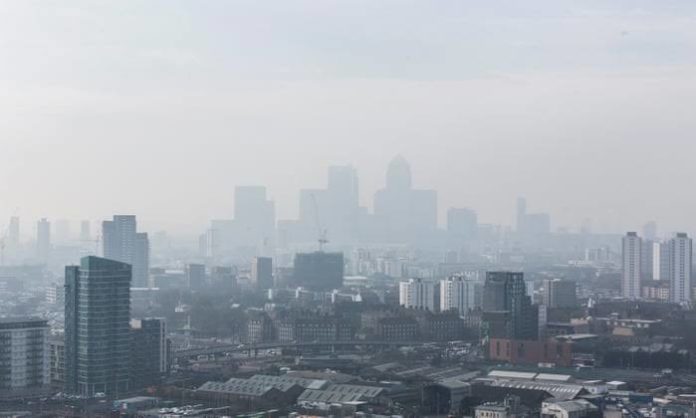
Representational image

New Delhi (NVI): At least one in eight deaths in Europe can be linked to environmental factors such as pollution and heatwaves driven by climate change, according to a new report.

The European Environment Agency (EEA) report said, the factors such as air and noise pollution, as well as poor water quality and exposure to chemicals, contributed to 13 per cent of all deaths in Europe.

Nearly, 6,30,000 deaths in the European Union’s 27 countries plus Britain were attributable to environmental factors in 2012, the latest year for which data are available, the agency said in a report.

“These deaths are preventable and can be significantly reduced through efforts to improve environmental quality,” it added.

Air pollution is the biggest environmental health risk in Europe, contributing to more than 4,00,000 premature deaths each year.

While prolonged exposure to pollutants can cause diabetes, lung disease and cancer, and early evidence suggests air pollution may be linked to higher death rates among COVID-19 patients too, the report stated.

Moreover, the Europe’s pollution levels decreased amid lockdowns imposed during the COVID-19 pandemic, but the dip is expected to be temporary and most EU countries are on course to miss their targets to cut air pollutants in the next decade.

The report also said the COVID-19 pandemic has highlighted the connection between the environment and human health, demonstrating the increased risk of passing diseases from animals to humans as a result of environmental degradation and meat production.

Stella Kyriakides, European Commissioner for Health and Food Safety said, “COVID-19 has been yet another wake-up call, making us acutely aware of the relationship between our ecosystems and our health.”

Meanwhile, the European Commission has proposed EU targets to make agriculture more sustainable, by ringfencing natural habitats and curbing pesticide use, although farming groups have warned the goals could curb crop yields.

The report further stated, drinking water quality is consistently high across the EU, but it raised the alarm over the release of antibiotics through waste water treatment plants, which can spread antimicrobial resistance. However, infections from drug-resistant bacteria cause roughly 25,000 deaths in the EU each year.

Climate change will also have an adverse effect on health, with current scenarios suggesting that additional deaths due to heatwaves could reach over 130,000 per year, the EEA report said.

In addition to this, the agency calls for creating more green and blue spaces as they “cool cities during heatwaves, alleviate flood waters, reduce noise pollution and support urban biodiversity.”

-RJV

Oxford COVID-19 vaccine put on hold over safety concerns

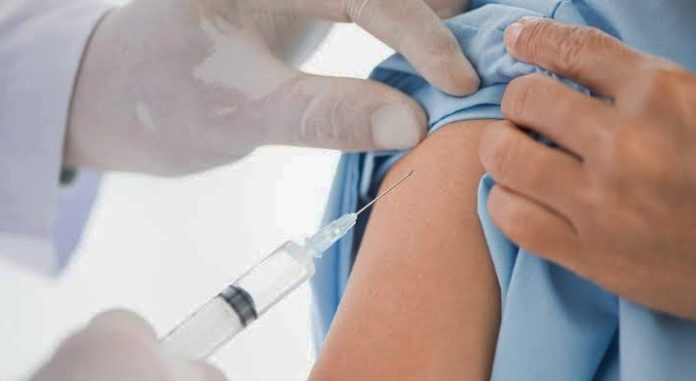
Representational image

New Delhi (NVI): A large, Phase 3 study testing of a highly-anticipated COVID-19 vaccine candidate being developed by AstraZeneca and the University of Oxford at dozens of sites has been put on hold due to a suspected serious adverse reaction in a participant in the United Kingdom.

The company is now investigating if a report of a patient with a serious side effect is linked to the shot.

The outcome of vaccine trials is being closely watched around the world.

Its move to Phase 3 testing in recent weeks has involved some 30,000 participants in the US as well as in the UK, Brazil and South Africa. Phase 3 trials in vaccines often involve thousands of participants and can last several years.

“As part of the ongoing randomized, controlled global trials of the Oxford coronavirus vaccine, our standard review process triggered a pause to vaccination to allow review of safety data. This is a routine action which has to happen whenever there is a potentially unexplained illness in one of the trials, while it is investigated, ensuring we maintain the integrity of the trials,” AstraZeneca said in a statement.

“The company is working to expedite the review of the single event to minimize any potential impact on the trial timeline,” it added.

The nature of the safety issue and when it happened were not immediately known, although the participant is expected to recover, according to Stat News.

The report said suspension of the trial was having an impact on other AstraZeneca vaccine trials – as well as on clinical trials being conducted by other vaccine makers.

AstraZeneca only began its Phase 3 trial in the U.S. in late August. The U.S. trial is currently taking place at 62 sites across the country, according to clinicaltrials.gov, a government registry, though some have not yet started enrolling participants. Phase 2/3 trials were previously started in the U.K., Brazil, and South Africa.

-CHK

Pakistan could ‘run dry’ by 2025

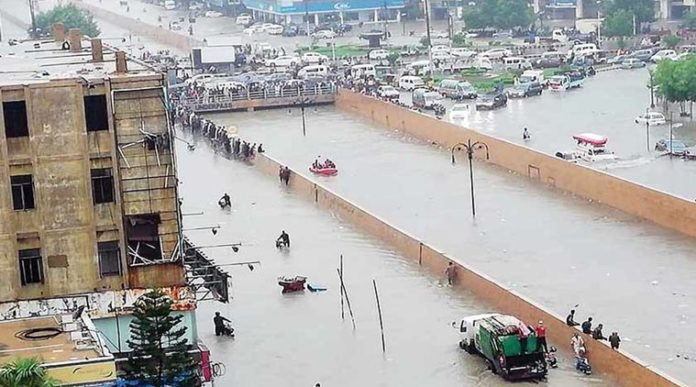
Karachi flooding exposed the Pakistan Govt's collective failure in managing climate risks. (Pic: news.com.pk)

COLUMN

-By RC Ganjoo

Pakistan is rich in water resources but continues to face water scarcity every year because of the poor water management, costing around 4-5 percent of GDP each year. These costs are caused by the floods and droughts that Pakistan faces due to poor water supply and sanitation.

The most alarming situation is the water crisis, rated as the biggest risk to Pakistan by the World Economic Forum and the Pakistan Council of Research in Water Resources. They also warned that the country could “run dry” by 2025.

Half of the annual rainfall in Pakistan occurs in July and August, averaging about 255 millimeters. This year in August, only Karachi received 484 mm (19 inches) rain. It is the highest rainfall recorded over the last 90 years. Pakistan receives 145 million-acre feet of water every year. However, only 14m acre-feet of water is preserved that can meet the shortage, provided Pakistan has proper storage of rainwater and floodwater.

In Pakistan, politics on the water is being played between the federal and provincial levels over the percentage of water sharing. Sindh is adamant to cooperate with Imran Khan on the water crisis for the people of Karachi.

While facing water scarcity due to floods and poor water management, Pakistan on the other is also facing the threat of water terrorism from India. India either can stop or block share of water when Pakistan needs it, or release extra water into Pakistani rivers to increase the flow causing floods in Pakistan, and both of these actions are dangerous for Pakistan.

Pakistan is dependent on India for water. India blocking water can deprive Pakistan of water to convert it into a desert.  PM Modi had already thrown the first water bomb on Pakistan in 2018 by blocking natural watercourse. India had completed its construction of the Kishanganga hydropower project on the Kishanganga River by diverting the watercourse through a 16 km tunnel.

The Kishanganga River, upon entering Pakistani territory is recognised as Neelam River that originates from Kashmir and flows through the Gurez Valley to join the Jhelum River near Muzaffarabad, at Domail, in PoK.

The project includes a 121 feet tall concrete-face rock-fill dam, which will divert a portion of the river to the south through a 24 km tunnel. The diversion reduced the flow of water into Pakistan by about 11 percent in the summer and about 27 percent in the winter. It also contends that the diversion would result in an ecological disaster for the area. India had signed all the important Conventions that, with complete effect, would ruin Neelam valley totally.

IAF to induct Rafale jets at Ambala tomorrow in presence of French defence minister

(File photo)

New Delhi (NVI): The five Rafale fighter aircraft that arrived in India in July, will be formally inducted into the Indian Air Force in a ceremony at Ambala Air Force station tomorrow, that will be attended by Defence Minister Rajnath Singh and his French counterpart Florence Parly.

The Rafale fighter jets will be inducted into IAF’s ‘Golden Arrows’ Squadron, the Ministry of Defence said in a statement.

During the ceremony at Ambala, French defence minister Florence Parly will be given a ceremonial Guard of Honour on arrival. The program will include ceremonial unveiling of the Rafale aircraft, a traditional ‘Sarva Dharma Puja’, Air Display by Rafale and Tejas aircraft as well as by ‘Sarang Aerobatic Team’, the Ministry of Defence said in a statement.

The programme will culminate with the ceremonial induction of Rafale aircraft to 17 Squadron. After the ceremonial events, the Indian and French delegation will have a bilateral meeting, the ministry added.

Chief of Defence Staff General Bipin Rawat, Chief of the Air Staff Air Chief Marshal RKS Bhadauria, Defence Secretary Dr Ajay Kumar, Dr G Satheesh Reddy, Secretary Department of Defence R&D and Chairman DRDO along with other senior officers of the Ministry of Defence and Armed Forces will also be present.

The French delegation will be represented by Emmanuel Lenain, Ambassador of France to India, Air General Eric Autellet, Vice Chief of the Air Staff of the French Air Force and other senior officials. A large delegation of senior functionaries of French Defence Industries which includes Eric Trappier Chairman and Chief Executive of Dassault Aviation and Eric Beranger, CEO, MBDA will be present during the ceremony.

Earlier on July 29, the first batch of five Rafale jets arrived in India, four years after signing a contract with the French government to procure 36 aircraft for Rs 59,000 crore.

The next batch comprising of 3 to 4 Rafale jets is expected to reach Ambala from France in October, followed by a third batch in December, the officials said, adding that, all deliveries will be completed by the end of 2021.

Of the 36 Rafale jets, 30 are fighter jets and six will be twin-seater trainers. They are expected to have nearly all the features of the fighter jets.

The first squadron of the Rafale jets will be stationed at the Ambala airbase, while the second will be based at Hasimara base in West Bengal, according to the reports.

India’s new Rafale fighters will significantly enhance the offensive capabilities of the air force with their advanced weaponry, high-tech sensors, superior radar for detection and tracking of targets and ability to carry an impressive payload.

-RJV/ARK

Afghan Vice President escapes unhurt in Kabul blast, 10 killed

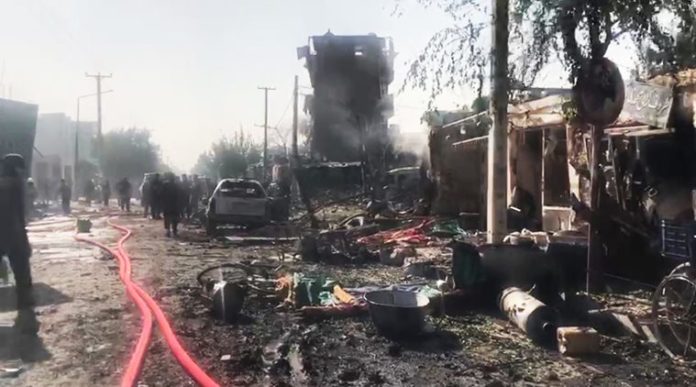
New Delhi (NVI): Afghanistan’s first Vice President Amrullah Saleh had a narrow escape when his convoy was targeted early this morning in Taimani area of PD 4 in Kabul city, reports TOLO news.

The incident took place two days after the former intelligence chief raised the issue of Durand Line and talked about Peshawar as summer capital of Islamic Republic.

According to Tariq Arian, Interior Ministry spokesman, 10 people were killed and 16 were wounded in the powerful Kabul blast targeting the convoy of VP Saleh.

Saleh survived the attack although some of his staff and bodyguards were wounded, reports TOLO news.

Three in Saleh’s convoy, including bodyguards, were wounded in the blast, Rezwan Murad, head of public relations for the vice president’s office told TOLO news, adding that Saleh was not hurt in the blast.

Ebad Saleh, VP Saleh’s son, tweeted that he was with his father when the blast hit their convoy and said: “I assure you he’s fine and everybody is fine, no martyrs from us just yet.”

In a video message, Saleh confirmed that his convoy was attacked, his security guards were injured, and that he has minor wounds on his hand and face. He also apologised for the harm done to bystanders in the attack.

According to TOLO news, the blast took place when three vehicles belonging to Saleh’s security guards were passing the area.

Meanwhile, the Taliban has issued a statement denying involvement in the blast.

The attack on Saleh, a former Northern Alliance leader, comes at a time when the country is remembering Ahmad Shah Massoud, the late anti-Taliban resistance leader who sacrificed his life for the liberty and freedom of his country. Massoud was assassinated two days before the twin towers went down in the US.

It also comes at a time when the Taliban is planning to hold intra-Afghan negotiations in Qatar’s capital city Doha with the support of US.

-ARK

Uttarakhand govt unveils discount plan to boost tourism sector

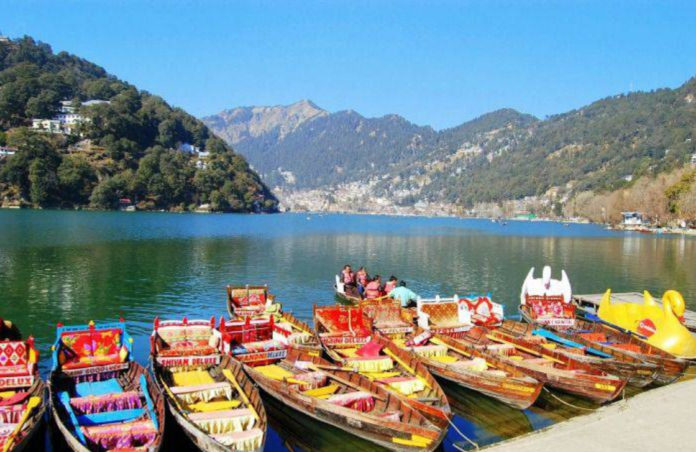
The Nainital Lake, Uttarakhand

New Delhi (NVI): The Uttarakhand government has come up with an initiative called ‘Tourist Incentive Coupon’, handing out discount coupons to tourists who check in to hotels and homestays across the state.

The initiative, aimed at improving tourism sector in the Himalayan state. Under this project, tourists coming to Uttarakhand will get Rs 1,000 or 25 per cent of the accommodation charges per day (whichever is less) subject to a maximum stay of 3 days, said Tourism Minister Satpal Maharaj.

However, this is the perfect opportunity for holidaymakers who wanted to explore the picturesque hills of Dehradun, Nainital and Mussoorie, he added.

The offer, which will come into effect in the next few days, will only be applicable to those who do a three-day online booking at any hotel or homestay in the state.

The minister said, “The tourists will be given the discount coupon while registering themselves on the government portal under tourist category. They will then be able to use the coupon during their stay in a hotel or homestay in the tourist spots of the state.”

The decision on the pilot project was finalised at a Cabinet meeting. During the meeting, the government also discussed refunding tourists, who had advance bookings at the famous Jim Corbett Tiger Reserve. Apparently, the national park is still shut because of the COVID-19 pandemic.

Tourism is one of the major sources of revenue in Uttarakhand and draws a significant number of tourists from across the country and globe every year.

This year, due to the virus outbreak, the economy had to suffer. So, now the government is rolling out some innovative activities and schemes to attract tourists and reshape the tourism industry.

Other states also have come up with some offers to draw tourists, like the Madhya Pradesh Government recently launched Intezaar Aapka campaign calling tourists to visit the state.

Furthermore, an overall expenditure of Rs 2.7 crore is expected under this scheme in the initial month, which will be compensated from the Chief Minister’s Relief Fund.

-RJV

World EV Day: EESL promoting e-mobility in India to combat climate change

New Delhi (NVI): With climate change taking precedence, electric mobility is gradually inching towards the center stage. Energy Efficiency Services Ltd (EESL) is combating the air pollution in the nation by driving India’s e-mobility transition.

On the World’s first EV Day, many of the charging suppliers and car manufacturers, as well as other organisations involved with the electric car ecosystem have partnered together to celebrate the transition to sustainable road transport and a zero-emissions electric future.

World EV Day aims to celebrate e-mobility solutions across the globe and will also look to address the wider role of climate change and air quality. EVs are the pathway towards building a cleaner and greener world.

The movement is launched in conjunction with the Swedish-Swiss firm ABB and sustainability media company Green TV.

In India, in continuation to its #iCommit initiative, launched by RK Singh, Minister of State, Power and New & Renewable Energy, EESL is celebrating the World EV Day by continuing its commitment to transform India’s mobility landscape.

EESL has already deployed 1,514 electric vehicles on road till date, under the National e-Mobility Programme, making a remarkable impact on the environment by enabling reduction of 5,360 tonnes of CO2 emissions so far.

With the aim to provide an impetus to the entire e-mobility ecosystem, the Government of India launched the National E-Mobility Programme in 2018. The objective of this programme is to create a sustainable demand for e-vehicles, promote domestic manufacturing for both EVs and lithium-ion battery, and reduce oil imports and Green House Gas (GHG) emissions from the transport sector.

Saurabh Kumar, EVC, EESL stated, “There are no two ways about the fact that the future of mobility, not only in India but globally, is electric and it is time we equipped ourselves for it. With a supportive policy framework, India’s journey towards electric mobility has commenced. It is now incumbent upon us as stakeholders to join forces and enable a clean, green, and electric future for better public health and quality of life for ourselves and our coming generations.”


In the country, e-mobility has positioned itself as viable mobility alternative & there has been a rise in awareness around its merits, in India. It is now time to make a shift towards sustainability, by adopting electric vehicles.

A surge of 20 per cent in the sale of electronic vehicles has been recorded on a year-on-year basis. These sales include the off-take of electric two-wheelers, cars and buses.

Around 1,56,000 EVs were sold in Fiscal Year (FY) 2019-20, up from 1,30,000 in the previous year, according to data from Power Ministry.

Minister of State, Power and New & Renewable Energy, RK Singh, took to twitter on this occasion and wrote, “Electric mobility plays a central role in reducing both the nation’s carbon footprint & its dependency on oil imports. A switch to electric cars is now imperative & will require enthusiastic participation from the people of India. #WorldEVDay”

The key elements of an electric vehicle ecosystem will include charging solutions, supplier base for electric vehicle components, vehicle financing and mobility service providers.

Electric mobility as a concept took off a long time ago at a global level but the Indian automotive market is still only in the nascent stages. But thankfully, with growing awareness and interest things have started to change considerably.

-CHK

India’s LUH helicopter completes hot and high altitude trials in Himalayas

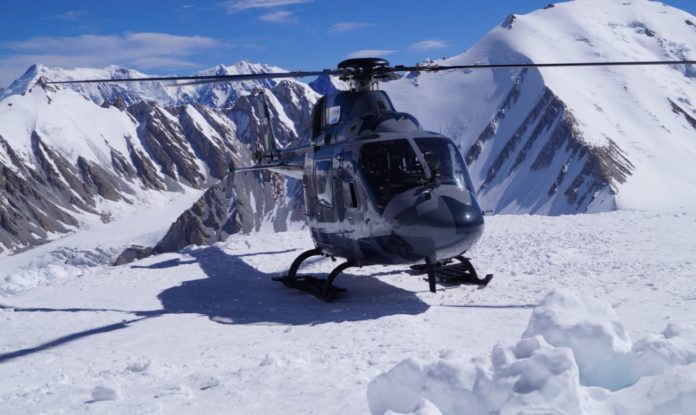
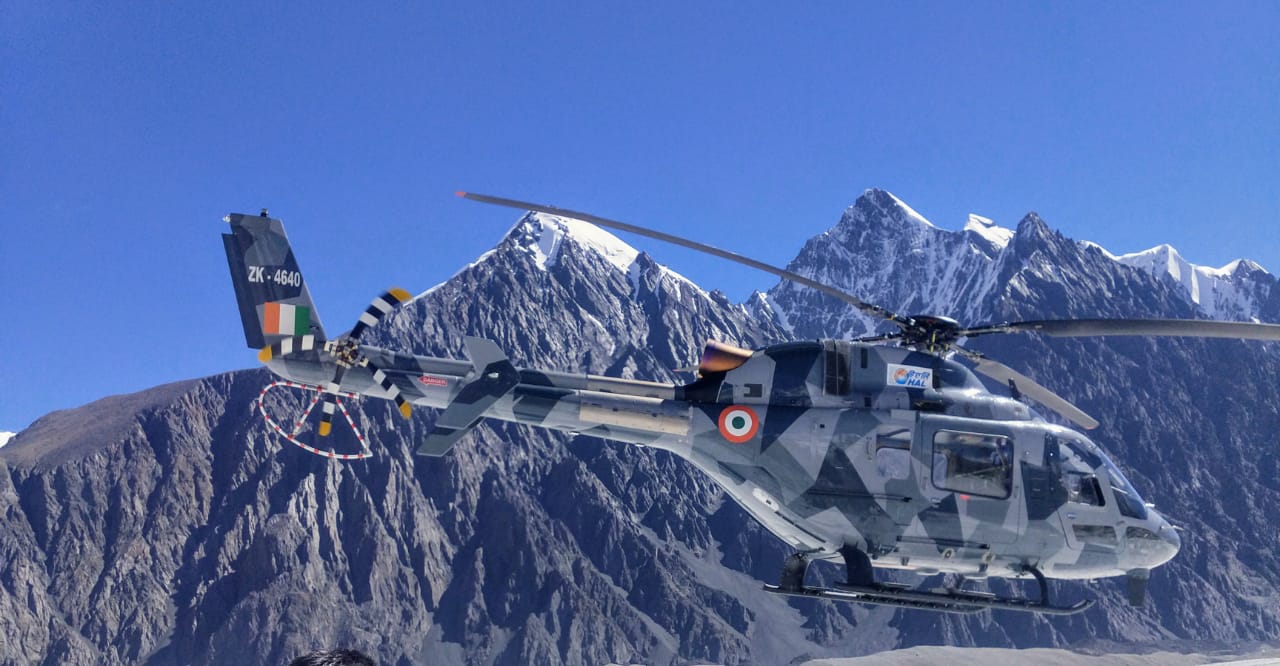
New Delhi (NVI): Indigenously designed and developed Light Utility Helicopter (LUH) by Hindustan Aeronautics Limited has completed high altitude trials in the Himalayas during last 10 days, demonstrating its capability in Hot and High weather conditions.

In a statement, HAL said that a comprehensive test plan was executed at Leh (3300 MAMSL) in temperatures up to ISA+320C which included envelope expansion, performance and flying qualities.

“LUH took off from Leh and demonstrated its hot and high hover performance at Daulat Beg Oldie (DBO) Advanced Landing Ground (ALG) at 5000 MAMSL,” HAL said.

The helicopter also demonstrated its payload capability in Siachen glacier high altitude.  During the trials, pilots landed the helicopter at the highest helipads of Amar and Sonam.

Light Utility Helicopter (LUH)

“HAL has once again proved its indigenous capability in design & development.  The Army version of LUH is now ready for Initial Operational Clearance,” R Madhavan, CMD, HAL said in a statement.

According to Arup Chatterjee, Director (Engineering and R&D), HAL, the performance of the helicopter and its systems are satisfactory fulfilling the requirements of the users. All planned tests were successfully demonstrated.

Apart from that, the flights were carried out by a composite trial team which included pilots from HAL, Wg Cdr (Retd) Unni Pillai, CTP (RW), Wg Cdr (Retd) Anil Bhambani, Gp Capt (Retd) Pupinder Singh and Gp Capt V Panwar along with Gp Capt R Dubey, Sq Ldr Joshi (from Indian Air Force) and Lt Col R Grewal & Lt Col Pawan (from Indian Army). The representatives from certification authority witnessed the trials.

The Initial Operational Clearance for basic LUH was accorded by CEMILAC for IAF variant on February 7, 2020, HAL said.

-RJV

State-wise details of Covid-19 cases in India

Coronavirus India

New Delhi (NVI): The total number of coronavirus cases in India has reached 43,70,128, after 89,706 new cases were reported in the past 24 hours, according to Union Health Ministry data.

The country’s death toll has gone up to 73,890 after 1,115 new fatalities were reported in the country during this period.

In terms of total number of cases, Maharashtra continues to be the worst affected state with 9,43,772 coronavirus cases followed by Andhra Pradesh with 5,17,094 cases, Tamil Nadu with 4,74,940 positive cases.

Total positive cases in States/UTs:

Andaman and Nicobar Islands- 3,392

Andhra Pradesh- 5,17,094

Arunachal Pradesh- 5,402

Assam- 1,30,823

Bihar- 1,50,502

Chandigarh- 6,372

Chhattisgarh- 50,114

Dadra Nagar Haveli & Diu – 2,617

Delhi- 1,97,135

Gujarat- 1,06,804

Goa- 21,630

Haryana– 81,059

Himachal Pradesh- 7,831

Jammu and Kashmir- 45,925

Jharkhand- 55,296

Karnataka- 4,12,190

Kerala- 92,515

Ladakh- 3,102

Madhya Pradesh- 77,323

Maharashtra- 9,43,772

Manipur- 7,202

Meghalaya- 3,076

Mizoram- 1,123

Nagaland- 4,245

Odisha- 1,31,382

Puducherry- 17,749

Punjab- 67,547

Rajasthan- 94,126

Sikkim- 1,958

Tamil Nadu- 4,74,940

Telangana- 1,47,642

Tripura- 16,717

Uttarakhand- 26,094

Uttar Pradesh- 2,78,473

West Bengal– 1,86,956

State/UT wise total death toll:

Andaman and Nicobar Islands- 50

Andhra Pradesh- 4,560

Arunachal Pradesh- 9

Assam- 378

Bihar- 765

Chandigarh- 78

Chhattisgarh- 407

Dadra and Nagar Haveli- 2

Delhi- 4,618

Goa- 256

Gujarat- 3,133

Haryana- 854

Himachal Pradesh- 60

Jammu and Kashmir- 815

Jharkhand- 496

Karnataka- 6,680

Kerala- 372

Ladakh- 35

Madhya Pradesh- 1,609

Maharashtra- 27,407

Manipur- 39

Meghalaya- 17

Nagaland- 10

Odisha- 569

Puducherry- 337

Punjab- 1,990

Rajasthan- 1,164

Sikkim- 7

Tamil Nadu- 8,012

Telangana- 916

Tripura- 161

Uttarakhand- 360

Uttar Pradesh- 4,047

West Bengal- 3,677

However, a total of 33,98,844 people have been cured or discharged. Total active cases stand at 8,97,394.

-CHK

MUST READ