
Oil tankers being rushed to Ladakh on the Srinagar-Leh highway to meet increased demand from the Indian troops deployed in the region. Extra forces have been deployed in the region after fresh skirmishes between the Indian and Chinese troops when the latter tried to change the status quo on the southern bank of Pangong Tso lake along LAC in eastern Ladakh over the last weekend. The move was thwarted by the IndianArmy.
WATCH | Indian Army movement towards Ladakh from Srinagar

Indian Army movement towards Ladakh on Srinagar-Leh highway in the wake of fresh attempts by the Chinese troops to change the status quo on the southern bank of Pangong Tso lake along LAC. The move by China’s PLA was thwarted by the Indian Army.
One of the farthest Star galaxies discovered by Indian Astronomers

New Delhi (NVI): As a landmark achievement in Space missions, Indian Astronomers have discovered one of the farthest Star galaxies in the universe, named AUDFs01, according to Department of Space.
Sharing this information, Union Minister Jitendra Singh said, “It is a matter of pride that India’s first Multi-Wavelength Space Observatory “AstroSat” has detected extreme-UV light from a galaxy located 9.3 billion light-years away from Earth.”
The AUDFs01 galaxy was discovered by a team of astronomers led by Dr Kanak Saha from the Inter-University Centre for Astronomy and Astrophysics (IUCAA) Pune.
India’s AstroSat/UVIT was able to achieve this unique feat because the background noise in the UVIT detector is much less than one on the Hubble Space Telescope of US based NASA.
The importance and uniqueness of this original discovery can be made out from the fact that it has been reported in the leading international journal “Nature Astronomy” published from Britain.
Singh congratulated India’s Space Scientists for once again proving to the world that India’s capability in Space technology has risen to a distinguished level from where our scientists are now offering cues and giving leads to the Space scientists in other parts of the world.
According to Director of Inter-University Centre for Astronomy and Astrophysics (IUCAA) Somak Ray Chaudhury, this discovery is a very important clue to how the dark ages of the Universe ended and there was light in the Universe. We need to know when this started, but it has been very hard to find the earliest sources of light, he said.
Pertinent to mention that India’s first Space Observatory AstroSat, which has made this discovery, was launched by the Indian Space Research Organization (ISRO) on September 28, 2015 during the first term of the Modi Government. It was developed by a team led by ShyamTandon, Ex Emeritus Professor, IUCAA with the full support of ISRO.
-CHK
Mild quake hits Maharashtra’s Palghar

New Delhi (NVI): An earthquake of magnitude 2.5 on the Richter scale occurred today at around 3.45 pm in Palghar, Maharashtra, the National Centre for Seismology (NCS) stated.
Earthquake of Magnitude:2.5, Occurred on 01-09-2020, 15:47:00 IST, Lat: 19.96 & Long: 72.81, Depth: 5 Km ,Location: Palghar, Maharashtra
for more information https://t.co/lMK86lrN3E pic.twitter.com/zWnSIlAKFq— National Centre for Seismology (@NCS_Earthquake) September 1, 2020
So far, no reports of any damage have surfaced, however, all the concerned authorities are monitoring the situation.
Magnitude 2.5 is a very light intensity quake and have minimum changes of posing any danger to life and property.
India has witnessed several mild to strong tremors in several parts over the last few months.
An earthquake happens when two blocks of the earth suddenly slip past one another. The surface where they slip is called the fault, the location below the earth’s surface where the earthquake starts is called the hypocenter, and the location directly above it on the surface of the earth is called the epicenter.
-CHK
Australia, India, Japan to cooperate on supply chain resilience
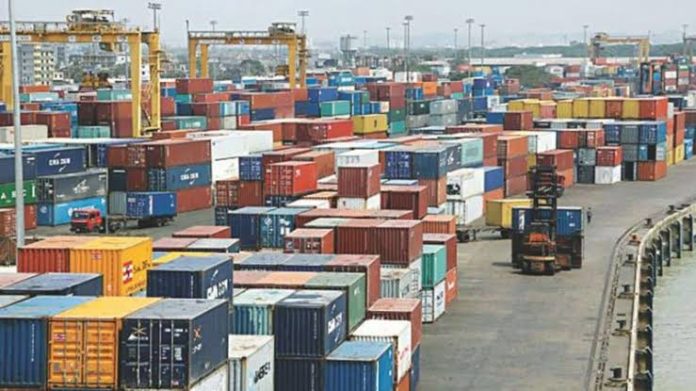
New Delhi (NVI): The trade ministers of Australia, India and Japan today came together to discuss the vital need for regional cooperation on supply chain resilience in the Indo-Pacific region.
They shared their intention to work towards the launch of a new initiative to achieve the objective through cooperation.
The issue was discussed during a virtual meeting of Minister of Commerce and Industry, Piyush Goyal, Australia’s Minister for Trade, Tourism and Investment, Simon Birmingham and Japan’s Minister of Economy, Trade and Industry, Kajiyama Hiroshi.
“The Ministers reaffirmed their determination to take a lead in delivering a free, fair, inclusive, non-discriminatory, transparent, predictable and stable trade and investment environment and in keeping their markets open,” the Ministry of Commerce and Industry said in a statement.
In light of the COVID-19 crisis and the recent global-scale changes in the economic and technological landscape, they underscored the necessity and potential to enhance the resiliency of supply chains in the Indo-Pacific region.
“Recognising the pressing need for regional cooperation on supply chain resilience in the Indo-Pacific, the ministers shared their intention to work toward the launch of a new initiative to achieve the objective through cooperation,” the statement said.
They also noted the important role of business and academia in realising the objective, and called for other countries in the region to participate in the initiative.
Meanwhile, addressing the meeting, Piyush Goyal said that the initiative could not have come at a more opportune time in the post COVID scenario when there is a likelihood of rechurning of supply chains in the Indo-Pacific region.
“India wholeheartedly endorses the broad concept of working towards ensuring a trustworthy, dependable and reliable supply chain in the Indo-Pacific region. The diversification of supply chain is critical for managing the risks associated with supply of inputs including disciplining price volatility.” the statement quoted Goyal.
He added, for this countries may need to identify the manufacturing and services sectors that contribute most to the domestic value addition in the region.
Goyal also expressed the hope that the proposed initiative must clearly try to bridge this and work towards enhancing mutual trade.
US eager to help India grow as a net security provider in IOR: Stephen Biegun
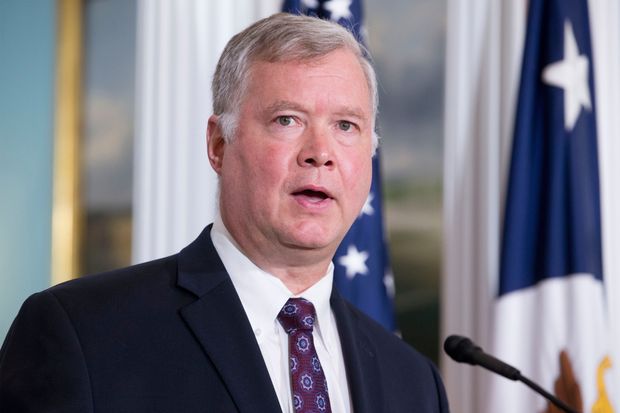
New Delhi (NVI): The US is very eager to help India become and remain a “world-class power” in contributing to net security rather than worrying about it and how it affects their interests, US Deputy Secretary Stephen Biegun has said.
Speaking at the US-India Strategic Partnership Forum yesterday, Biegun said this can be achieved through defense cooperation.
The US Deputy Secretary was responding to a question from former US Ambassador to India Richard Verma on whether the US can do more on defense cooperation, export controls and technology transfer.
A Net Security Provider is one that tackles its own security concerns by enhancing the mutual security of more than one country. This is done by addressing common security concerns, including dealing with transnational piracy, or responding to disasters, etc.
In the Indian context the term net security provider was first used by the Americans. In the present scenario, India is committed to be a ‘net security provider’ in the Indian Ocean Region (IOR). India’s role as a net security provider in the IOR is at present very crucial when China is flexing its muscle in the region.
Biegun said that one of the countervailing trends is India’s appropriate desire to be more self-sufficient in defense. “No country wants to be entirely dependent upon other parties. Even in a partnership as close as the United States and India, there are times in which that – which that can be tested by other events in the regions – in the region or in the country,” he said.
“And so I understand that, but I think it can’t come at the exclusion of giving India the best-in-class defense capabilities, and I think India’s going to find a very willing and creatively thinking partner in the United States in the weeks and months ahead in that exact area,” he added.
The US Deputy secretary also highlighted the importance of strong India-US ties for the success of US Indo-Pacific strategy. He said the US requires India to stand by its side for the success of its strategy of a free and open Indo-Pacific region.
“Our new Indo-Pacific strategy is the importance of having a strategy that reflects the realities of the modern world, and the Indo-Pacific strategy is focused around democracies. It’s focused around free markets. It’s focused upon the values that the Indian government and the Indian people share with the United States government and the United States people.
“In order to make that successful we have to tap into the full scale of the region. That includes the scale of economics, the scale of security cooperation, and that’s impossible to do without India as a centerpiece of the strategy. So as important as I’d like to think the United States is to this strategy, it’s not going to be successful for us without India also standing side by side,” he said.
Biegun further stated that India has shown tremendous leadership and interest in contributing in its own right to the Indo-Pacific strategy the the US is advancing. He said India and the United States have deepened security cooperation and are in the process of seeking an even broader economic relationship through including some dimensions of trade liberalization.
“And we’re also working very closely in the security sphere, most recently India clearly indicating an intention to invite Australia to participate in the Malabar naval exercises, which will be a tremendous step forward in ensuring the freedom of passage and the security of the seas in the Indo-Pacific,” he said.
Responding to another question in Quadrilateral Security Dialogue (Quad), Biegun said that it represents four extraordinarily solid democracies in the world- the United States, India, Australia, and Japan.
“I think that’s critically important because while interests will drive all our nations to make choices in the policy sphere in the Indo-Pacific and beyond, shared values that complement shared interests create a solid foundation. And so at its core, what the Quad is is a combination of democracies,” he said.
Apart from that, the US Deputy secretary also said that a quad ministerial meet between India, the US, Australia and Japan is being planned and is expected to take place in Delhi.
-ARK
Uttarakhand relaxes norms, no restriction on number of visitors

New Delhi (NVI): The Uttarakhand government has relaxed norms to visit the state as the country enters Unlock 4.0, in an effort to boost tourism which is a major source of revenue in the state.
The state has tourism as one of its core industries, which has suffered massive losses as tourism was shut down due to the COVID-19 outbreak. Now, as the country has entered Unlock 4.0, the state government is keen to attract tourists once again.
The major curbs that will no longer be in place for those intending to visit Uttarakhand is restriction on number of visitors per day. Earlier, the state allowed only 2,000 visitors a day from outside the state and e-permits were also required for the same.
Other relaxations were granted in terms of ICMR recognized COVID-19 negative report and making ‘Truenat’ tests acceptable.
State Cabinet Minister Madan Kaushik said, “The visitors have to register themselves on a state government smart city portal smartcitydehradun.uk.gov.in and produce COVID-19 negative report ranging in the last 72-hours.”
Moreover, there shall be no restriction on inter-state or intrastate movement of people and goods, a letter from secretary of disaster management SA Murugesan stated.
This move comes after demands of relaxations by tourism sector which forms backbone of the economy of the Himalayan state, especially religious tourism has been hit hard with thousands left struggling for ends to meet.
As religious tourism has got hit badly in Uttarakhand due to coronavirus induced lockdown, priests are opting for odd jobs including factory workers. They were earning between Rs 8,000-12,000 per month by working in factories.
This year, the state government had also cancelled Kanwar Yatra in the wake of COVID-19 pandemic which hit religious tourism in Haridwar the hardest after Char Dham Yatra. However, the Char Dham Yatra was allowed from June for state residents and later for residents of other states too since last month giving some respite to the sector.
Last year, more than 3.5 crore devotees visited Haridwar through the yatra in the auspicious month.
-RJV
Another terror hideout unearthed in J&K’s Poonch, arms recovered

Abid Bashir
Srinagar (NVI): A militant hideout was unearthed during a Cordon and Search Operation in Khetnar area close to the Line of Control (LoC) in Poonch district of Jammu and Kashmir, security officials said.
The development comes just an hour after the Indian Army stated that it has busted multiple hideouts in Uri area of north Kashmir’s Baramulla and recovered a huge quantity of arms and ammunition.
A senior police officer said that joint teams of Police, 72-Battalion of BSF and the Army launched an operation in several villages of Poonch this morning on the basis of a specific lead about presence of militant hideouts. “During the searches in Khetnar village of Poonch district close to LoC, a militant hideout was unearthed and large quantity of arms and ammunition were recovered,” he said.
The official further said that the recoveries include two Chinese pistols, five pistol magazines, its 50 rounds, five AK-17 magazines, its 270 rounds, four grenades and two wireless sets, besides one binocular and other material.
The officer said that search operation was still on in a few villages. He said the recoveries were made from a militant hideout and it is believed that terrorists had dumped the weapons since past few months and were using the place to hide themselves.
-ARK
Indian Railway to become Net Zero Carbon Emitter by 2030
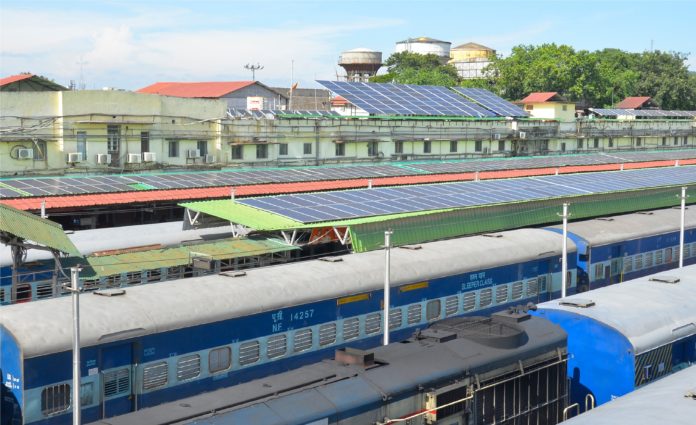
New Delhi (NVI): Indian Railways is set to produce solar energy for meeting all it’s energy consumption needs of more than 33 billion units by 2030 and become a “net zero carbon emitter”, according to Ministry of Railways statement.
Indian Railways has a mega plan for installing solar plants of 20 GW capacity by utilizing its vacant land by 2030, the statement added.
In order to achieve its objective of becoming 100 per cent self-sustainable for all it’s power needs and also to contribute to national solar power goals, Indian Railways has solarised more than 960 stations till date.
Indian Railways, Green Railways: In mission mode, Railways solarises 960 Railway Stations, and moves closer to becoming a Net Zero Carbon Emission Railway by 2030 ☀️
? https://t.co/u1xpwDqrSS pic.twitter.com/BZvEkpn02H
— Piyush Goyal (@PiyushGoyal) August 31, 2020
Furthermore, orders have been placed for 198 MW solar rooftop capacity for 550 stations which are under execution.
Some of the stations already solarised are Varanasi, New Delhi, Old Delhi, Jaipur, Secunderabad, Kolkata, Guwahati, Hyderabad, Howrah and so on.
About 51,000 hectare vacant land available with Indian Railways and is now ready to extend all support to the developers for installing solar power plants on Railway’s vacant un-encroached land. Railways is also set to achieve 100% electrification by the year 2023.
Railways is committed to utilize solar energy for meeting its traction power requirement and become a complete ‘Green mode of transportation’. This is in line with the recent directive of Prime Minister to solarise railway stations and utilize vacant railway land for Renewable Energy (RE) projects.
The use of solar power will accelerate the Railways’ mission to achieve the goal of becoming ‘Net Zero Carbon Emission Railway’.
In this regard, to begin with, bids for 3 GW solar projects on vacant Railway land parcels and land parcels along the railway track have already been invited by Railway Energy Management Company Ltd. (REMCL), a PSU of Indian Railways. These solar projects, besides supplying power to Railways at reduced tariff, will also protect the Railway land by the construction of boundary wall along the track.
-CHK
Fact check: Govt not seeking personal details for health ID registration

New Delhi (NVI): A media report has claimed that the Government is asking for sensitive personal data for the registration of Health ID for the National Digital Health Mission.
The Fact Check Unit of the Press Information Bureau (PIB) has clarified that the news is fake and the government is not asking for sensitive personal information for the registration of health ID.
In a tweet, the PIB said that fake news is being spread that people will have to submit crucial personal details on an individual’s medical host, finances, genetics, sex life, caste, religion and political beliefs.
“Claim: Media report has claimed that the government is asking for “sensitive personal data” for the registration of Health ID.
#PIBFactCheck: This claim is #Fake Information like name, year of birth, state, etc. are required while registering for Health ID,” PIB tweeted.
Claim: Media report has claimed that the government is asking for “sensitive personal data” for the registration of Health ID. #PIBFactCheck: This claim is #Fake Information like name, year of birth, state, etc. are required while registering for Health ID. pic.twitter.com/m2LMTRCAIy
— PIB Fact Check (@PIBFactCheck) September 1, 2020
Prime Minister Narendra Modi on August 15, announced the launch of the National Digital Health Mission (NDHM). Under the programme every Indian will get a health ID that will store the individual’s medical records.
The National Health Authority (NHA) has been entrusted with the responsibility for the implementation of Ayushman Bharat Pradhan Mantri Jan Arogya Yojana, which has been mandated to design and roll out NDHM in the country.
Notably, in order to keep the health data of people safe, the government has proposed a framework and a set of minimum standards for data privacy protection.
-RJV