
Monday, October 5, 2026
Home Blog Page 1216

Body of missing Panch recovered from orchards in J&K’s Shopian

Bomb disposal squad

Abid Bashir

Srinagar (NVI): The decomposed body of a Panch (panchayat member), who went missing from Srinagar on August 19, was found in an orchard at Dangam-Ratnipora area of South Kashmir’s Shopian district today, officials said.

The body was spotted by some locals, who informed police after which it was pulled out from the half-dug grave in an orchard. A police official said that the body was later identified as that of Nisar Ahmed Bhat, a Panch from Khonmoh area of Srinagar.

Nisar, according to his family, had gone missing on August 19, after which they registered a missing report. Police sources said that Nisar was booked under Public Safety Act (PSA) in 1995 and there are around a dozen cases against him pending in various police stations.

“The body of Nisar is totally disfigured and decomposed. It took us many hours to identify him,” a police official said.

Pertinently, two days after Nisar went missing, an audio clip went viral on social media, in which an unverified voice claimed that they have killed the Panch and won’t return the body as being done by the police in case of slain militants in the wake of Covid-19 pandemic.

Before Nisar, a Territorial Army soldier identified as Shakir Manzoor was also kidnapped by suspected militants, and later an audio clip went viral in which they claimed that they had killed the soldier and buried him. They said the TA soldier’s body won’t be given to the family in view of COVID-19.

J&K Police has stopped giving bodies of slain local militants, who die in encounters, to their families due to Covid-19. Their bodies are buried in Baramulla district of north Kashmir in presence of a magistrate.

-ARK
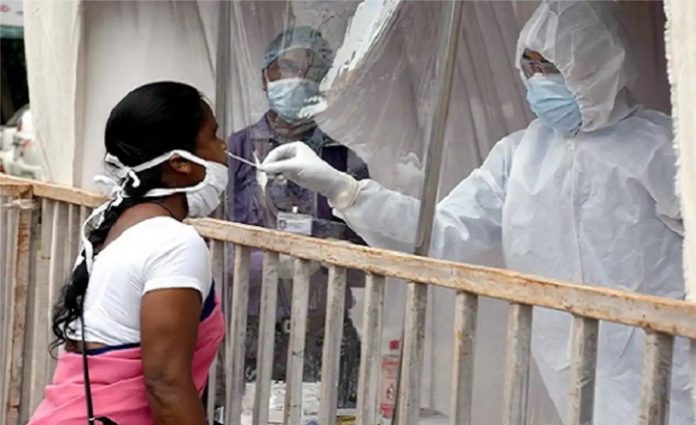
COVID-19 recovery rate improves further in India, mounts to 76.28%

COVID-19
File photo

New Delhi (NVI): India’s coronavirus recoveries have reached nearly 26 lakh and stands at 25,83,948, pushing the recovery rate to 76.28 per cent in the country, the Union Health Ministry said.

In an official statement, the ministry said that the recovery of 25,83,948 has been made possible because of effective implementation of the policy of TESTING aggressively, TRACKING comprehensively and TREATING efficiently.

The number of recoveries is nearly 3.5 times the active cases, which comprise 21.90% of the total cases. Higher number of recoveries has led to a constantly growing difference between recoveries and active cases. Crossing 18 lakhs, the difference stands at 18, 41,925 today.

“Focus on standard of care protocol including use of non-invasive oxygen, better skilled doctors in the ICUs and hospitals, and improved ambulance services have culminated in yielding the desired results,” it added.

In the last 24 hours, with 60,177 recoveries, India’s recovery rate amongst the COVID-19 patients has crossed 76 per cent reflecting that the number of patients recovering is on a steady rise over the past several months, the ministry said.

The Union Government has adopted a graded and evolving strategic response to COVID management in India within the larger evolving global context. The early focus on surveillance and contact tracing through house-to-house survey was continuously strengthened with increase in testing for ensuring early identification of positive cases.

This has ensured prompt isolation of the confirmed positive cases either in supervised home care for the mild and moderate cases, and hospitalisation in case of those who are exhibiting critical symptoms.

In addition to this, effective treatment of the positive cases has resulted in a progressively dipping Case Fatality Rate, which is pegged at 1.82 per cent today.

-CHK

Meals allowed on domestic flights, no-fly list warning for passengers without mask

Institutional quarantine
Delhi Airport

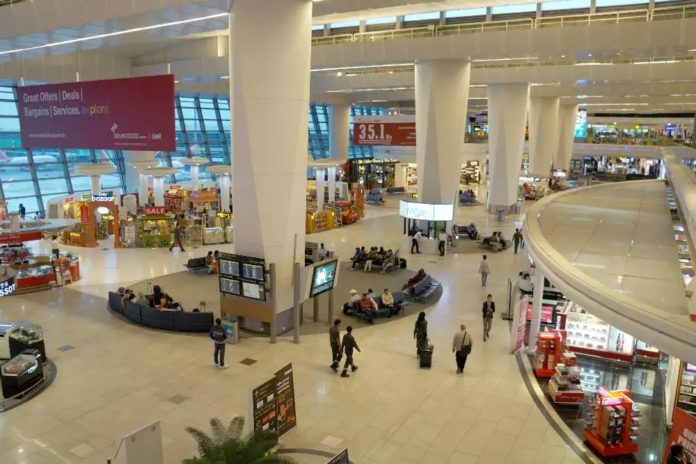
New Delhi (NVI): In the latest set of coronavirus guidelines for flyers, Centre has allowed airlines to serve pre-packed snacks, meals and beverages on domestic flights depending on the travel time, and hot meals on international flights.

Apart from that, any passenger who refuses to wear a face mask in a flight can be put on the no-fly list by the airline, according to the latest DGCA guidelines.

Due to the coronavirus pandemic, in-flight meal service was not permitted on domestic flights since their resumption on May 25. On international flights, only pre-packed cold meals and snacks were being served depending on the flight duration since May this year.

Providing further details, the ministry said only single-use disposable trays, plates and cutlery should be used while serving food or beverages on both the flights.

“Crew shall wear a fresh set of gloves for every meal/beverage service,” it noted.

Besides food, the DGCA also allowed the usage of in-flight entertainment system on international as well as domestic flights, wherever available.

“Disposable earphones or cleaned and disinfected headphones will be provided to passengers at the start of the journey,” the statement read.

Notably, scheduled international passenger flights have been suspended since March 23. Domestic flights resumed in India on May 25 after a gap of 2 months due to coronavirus pandemic.

-CHK

Covid-19 pandemic affected mental health of millions, says WHO chief

patent

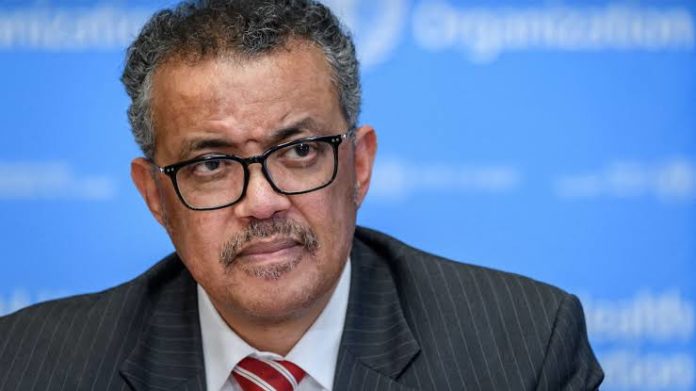
New Delhi (NVI): The ongoing COVID-19 pandemic has affected the mental health of millions of people worldwide, according to World Health Organization (WHO) Director General, Tedros Adhanom Ghebreyesus.

“For many people, the lack of social interaction caused by the pandemic has had a profound effect on their mental health,” Tedros said in a media briefing.

He stressed that people in long-term facilities such as care homes and psychiatric institutions are at an increased risk of infection.

The WHO chief also added that mental health professionals have themselves been infected with the virus, and some mental health facilities have been closed to be converted into treatment facilities for people with COVID-19.

Tedros recollected that mental health was already a most neglected public health issue globally before the pandemic, with close to one billion people living with a mental disorder.

According to WHO, at least 1 billion people are living with a mental disorder, due to which 3 million people die every year from the harmful use of alcohol and one person dies every 40 seconds by committing suicide.

Yet relatively fewer people have access to quality mental health services, he said adding that, in low- and middle-income countries, more than 75 per cent of people with mental, neurological and substance use disorders receive no treatment for their condition at all.

Earlier in July, Tedros had said that the COVID-19 crisis is getting worse, adding that in most of the world, the virus is not under control.

“In most of the world, the virus is not under control. It is getting worse. The virus has upended health systems in some of the wealthiest nations, while some countries that have mounted a successful response have been of modest means,” the WHO chief said.

Tedros further announced that for this year’s World Mental Health Day, which falls on October 10, the WHO, together with its partner organizations, United for Global Mental Health and the World Federation for Mental Health, would call for a massive scale-up in investments in mental health.

-RJV

Curbs imposed in parts of Kashmir to prevent Muharram processions

J&K: People returning to libraries in Srinagar for reading amid Covid restrictions
Lal Chowk (City center/File)

Abid Bashir

Srinagar (NVI): The J&K administration today imposed restrictions parts of Kashmir, especially Srinagar where the city centre (Lal Chowk) was sealed early this morning to prevent people from taking out Muharram processions to mark the eighth day of the 10-day mourning period.

Officials said that strict restrictions on the movement of people and vehicular traffic were imposed in almost a dozen areas of Srinagar including Lal Chowk, the commercial hub of Srinagar. “Deployment of police and paramilitary CRPF men was made in these areas in large numbers while roads were sealed with the reams of concertina wires,” they said.

As per the tradition, on the 8th day of Muharram, Shia mourners would take out a massive procession that would pass through traditional routes and reach Lal Chowk before culminating at Imam Bara Zadibal, in Srinagar.

It is pertinent to mention that before 1990, on the 8th day of Muharram, the procession would commence from Shaheed Gunj area, pass through MA Road and later culminate at Imam Bara Dalgate. In the past 30 years, authorities have not allowed the processions, citing security and law and order issues.

However, mourners have been defying the restrictions and trying to reach Lal Chowk through lanes and bylanes, all these years.

Divisional Commissioner, Kashmir Pandurang K Pole yesterday said that restrictions shall continue on all religious processions and gatherings in all districts in the wake of Covid-19.

He urged the heads of these Shia bodies to use their influence and make people aware of the importance of following Covid-19 related SOPs including social distancing protocols and use of face masks while commemorating the martyrdom of Imam Hussain.

Sources in the administration said that restrictions will remain in force till the 10th day of Muharram and all major religious processions should be restricted in a particular area. They said that a limited number of people can participate in mourning processions while following Covid-19 protocols.

Muharram is the first month of the Islamic calendar. On 10th Muharram, Imam Hussain, the grandson of Prophet Muhammad, was martyred in the battle of Karbala in Iraq, some 1400 years ago. Shia community observers first 10 days of Muharram as mourning and would take processions while beating chests and reciting hymns to praise Imam Hussain to pay him tributes. Imam Hussain was martyred on 10th Muharram along with his family members in Karbala, Iraq. The 10th Muharram is known as “Youm-e-Ashura” among the Muslim community across the globe.

-ARK

PM Modi praises achievements of Jan Dhan Yojana as it completes 6 years

Prime Minister Narendra Modi

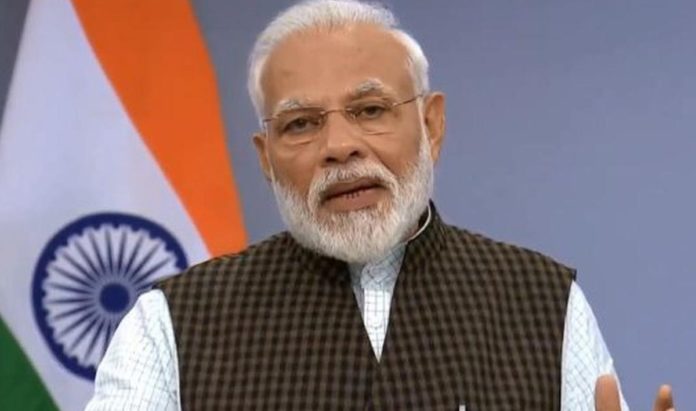
New Delhi (NVI): On the sixth anniversary of the Pradhan Mantri Jan Dhan Yojana (PMJDY) scheme, Prime Minister Narendra Modi today said that the initiative served as the foundation for many poverty alleviation initiatives.

Taking to twitter, PM Modi wrote, “Today, six years ago, the Pradhan Mantri Jan Dhan Yojana was launched with an ambitious aim of banking the unbanked. This initiative has been a game-changer, serving as the foundation for many poverty alleviation initiatives, benefitting crores of people.”

The Prime Minister added that the high number of beneficiaries of this scheme are from rural areas and are mostly women.

In another tweet, PM Modi said, “Thanks to the Pradhan Mantri Jan Dhan Yojana, the future of several families has become secure. A high proportion of beneficiaries are from rural areas and are women. I also applaud all those who have worked tirelessly to make PM-JDY a success. 6Years Of JanDhan Yojana.”

He also shared some infographics which stated that till August 2015, 17.90 crore PM-JDY bank accounts were opened whereas till August 2020, as many as 40.35 crore bank accounts have been opened.

Another infographic showed over 63.6 per cent of the PM-JDY account holders are from rural areas while 36.4 per cent are from urban areas. Over 55 per cent PM-JDY account holders are women.

On this occasion, Finance Minister Nirmala Sitharaman also took to twitter and said, “Pradhan Mantri Jan Dhan Yojana (PMJDY) has brought in financial inclusion in India in an unprecedented scale. It was on this day six years ago.”

The Jan Dhan Yojana, was announced by PM Modi in his Independence Day address on August 15, 2014, and was launched on August 28, in the same year. However, the scheme aims to expand and make affordable access to financial services such as bank accounts, remittances, credit, insurance and pensions.

-RJV

SC upholds UGC decision, final year students will not be promoted without exams

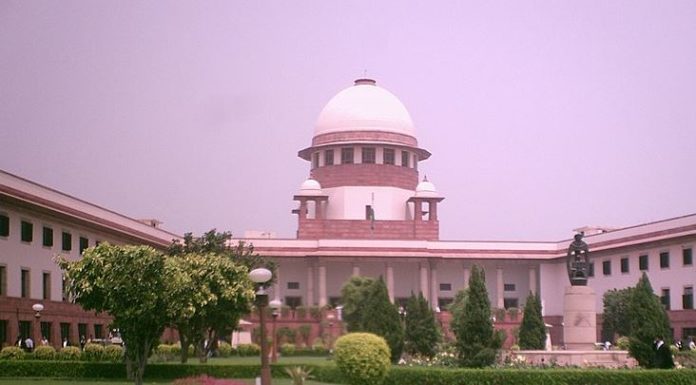
New Delhi (NVI): The Supreme Court today rejected petitioners’ demand that online/offline examinations be scrapped in the view of Covid-19 crisis. The examinations will be held as directed by the University Grants Commission (UGC), said the apex court.

A 3-judge bench headed by justice Ashok Bhushan pronounced the verdict.

The apex court ruled that states must hold examinations to promote final year students.

However, the court said that states can postpone examinations under the Disaster Management Act, in view of the COVID-19 pandemic, and they can consult the UGC to fix fresh dates.

On July 6, the UGC had directed universities across the country to hold final year examinations by September 30.

Even as UGC maintained that degree cannot be conferred on graduating students without holding final year examinations, states including Delhi, Maharashtra, Odisha, Punjab, Haryana and Madhya Pradesh have cancelled final year University exams.

To this, Solicitor General Tushar Mehta, appearing on behalf of UGC, said that only the statutory body had power to cancel examinations and not the state governments.

-CHK

State-wise details of Covid-19 cases in India

Covid variant
File photo

New Delhi (NVI): The total number of coronavirus cases in India has reached 33,87,501, after 77,266 new cases were reported in the past 24 hours, biggest single-day rise, according to Union Health Ministry data.

The country’s death toll has gone up to 61,529 after 1,057 new fatalities were reported in the country during this period.

In worst-affected Maharashtra, the coronavirus cases climbed to 7,33,568, followed by Tamil Nadu with 4,03,242 cases, and Andhra Pradesh with 3,93,090 cases.

Total positive cases in States/UTs:

Andaman and Nicobar Islands- 3,018

Andhra Pradesh- 3,93,090

Arunachal Pradesh- 3,633

Assam- 98,807

Bihar- 1,28,780

Chandigarh- 3,564

Chhattisgarh- 25,988

Dadra Nagar Haveli & Diu – 2,266

Delhi- 1,67,604

Gujarat- 91,179

Goa- 15,483

Haryana– 59,298

Himachal Pradesh- 5,501

Jammu and Kashmir- 35,135

Jharkhand- 34,396

Karnataka- 3,09,792

Kerala- 66,761

Ladakh- 2,492

Madhya Pradesh- 58,181

Maharashtra- 7,33,568

Manipur- 5,725

Meghalaya- 2,129

Mizoram- 974

Nagaland- 3,784

Odisha- 90,986

Puducherry- 12,434

Punjab- 47,836

Rajasthan- 76,015

Sikkim- 1,542

Tamil Nadu- 4,03,242

Telangana- 1,17,415

Tripura- 10,414

Uttarakhand- 17,277

Uttar Pradesh- 2,08,419

West Bengal – 1,50,772

State/UT wise total death toll:

Andaman and Nicobar Islands- 42

Andhra Pradesh- 3,633

Arunachal Pradesh- 5

Assam- 278

Bihar- 538

Chandigarh- 43

Chhattisgarh- 245

Dadra and Nagar Haveli- 2

Delhi- 4,369

Goa- 171

Gujarat- 2,962

Haryana- 646

Himachal Pradesh- 33

Jammu and Kashmir- 671

Jharkhand- 373

Karnataka- 5,232

Kerala- 267

Ladakh- 27

Madhya Pradesh- 1,306

Maharashtra- 23,444

Manipur- 25

Meghalaya- 8

Nagaland- 9

Odisha- 448

Puducherry- 190

Punjab- 1,256

Rajasthan- 1,005

Sikkim- 3

Tamil Nadu- 6,948

Telangana- 799

Tripura- 89

Uttar Pradesh- 3,217

Uttarakhand- 228

West Bengal- 3,017

However, a total of 25,83,948 people have been cured or discharged. Total active cases stand at 7,42,023.

-CHK

Govt advises all tuberculosis patients to be tested for COVID-19

sero survey
File photo

New Delhi (NVI): The Union Health Ministry has issued a guidance note stating that the COVID screening for all diagnosed Tuberculosis (TB) patients and TB screening for all COVID-19 positive patients should be conducted.

“Tuberculosis is associated with a 2.1-fold increased risk of severe COVID-19 disease. In addition, TB patients also tend to have co-morbid or living conditions (malnutrition, diabetes, smoking, HIV etc) that increase their vulnerability,” the guidance note said.

It further added that prevalence of tuberculosis among COVID-19 patients has been found to be 0.37–4.47 per cent, according to different studies.

“There has been an overall decline in tuberculosis notification by 26 per cent during January to June this year as compared to the previous year, due to the COVID-19 pandemic,” it said.

Meanwhile, the guidance note suggested Bi-directional TB-COVID screening to address dual morbidity of Tuberculosis and COVID-19, tuberculosis analysis of all influenza-like illness (ILI) and Severe Acute Respiratory Infection (SARI) cases has also been advised.

The guidance note stated that both Tuberculosis and COVID-19 are infectious diseases which primarily attack the lungs. “They present with similar symptoms of cough, fever and difficulty breathing, although TB has a longer incubation period and a slower onset of disease,” it added.

Whereas, for COVID-19 screening, the ministry has advised that all newly diagnosed TB patients or those currently on treatment should be tested for coronavirus.

“Based on the result of COVID-19 test, further management would be undertaken as per the ministry guidelines. Even upon diagnosis of COVID, treatment of TB should continue uninterrupted,” the note added.

-RJV

India’s Covid-19 tally nears 34 lakh; death toll 61,529

New Delhi (NVI): India’s coronavirus tally now stands at 33,87,501, with the confirmation of biggest single-day jump of 77,266 positive cases in the last 24 hours, Union Health Ministry said.

The country’s death toll has gone up to 61,529 with 1,057 new fatalities being reported during this period.

So far, 25,83,948 patients have been cured and recovered all over the country while active cases stands at 7,42,023.

However, in the past 5 months, more than 75 percent of the cases have recovered and less than 25 percent are active now.

In worst-affected Maharashtra, the coronavirus cases climbed to 7,33,568, followed by Tamil Nadu with 4,03,242 cases, and Andhra Pradesh with 3,93,090 cases.

The other worst high virus hit states are Karnataka (3,09,792), Uttar Pradesh (2,08,419), Delhi (1,67,604) and West Bengal (1,50,772).

Maharashtra has also reported the highest number of fatalities at 23,444 followed by 6,948 deaths in Tamil Nadu.

The death toll in the national capital rose to 4,369, while 1,59,027 patients in Delhi have recovered so far, the healthy ministry data shows.

According to the Indian Council of Medical Research (ICMR), the total number of samples tested up to August 27 is 3,94,77,848 including 9,01,338 samples tested yesterday.

Meanwhile, a night curfew has been imposed in Punjab from 7 pm to 5 am on all days to contain the spread of coronavirus in the state.

-RJV


MUST READ