Monday, October 5, 2026
Home Blog Page 1217

Coronavirus cases exceed 24.3 million worldwide; death toll tops 8.30 lakh

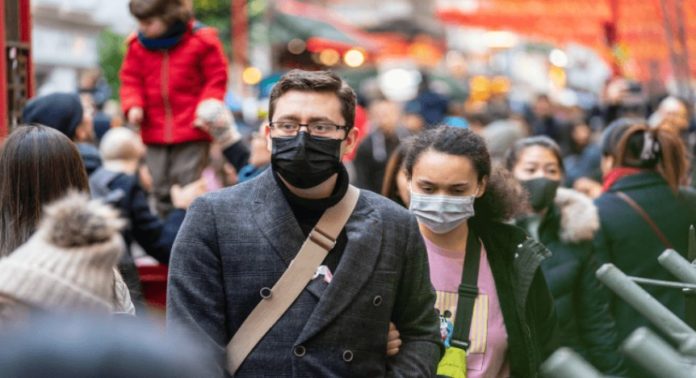
Coronavirus cases
(Representational/file photo)

New Delhi (NVI): More than 24.3 million people around the world have been diagnosed with the coronavirus, and 15.8 million have recovered, according to Johns Hopkins University. More than 8,30,000 people have died due to the deadly contagion so far.

In the US, the total number of coronavirus cases crossed 5.8 million while the death toll surpassed 1,80,000 in the country.

Brazil has reported 44,235 new cases of the novel coronavirus and 984 deaths from the disease caused by the virus. Brazil has registered 3,761,391 cases of the virus since the pandemic began, while the official death toll from Covid-19 has risen to 1,18,649.

French Health authorities have reported 6,111 new Covid-19 cases in the past 24 hours, the highest since March 31, at the height of the pandemic. There have been 30,576 deaths in France since beginning of the pandemic.

South Korea reported 371 new Covid-19 cases, including 359 local infections in the last 24 hours. This is down from the nearly six-month high on Thursday of 441. However, the country has reported triple digit figures of new cases for more than two weeks.

Germany has banned large gatherings until the end of this year, amid rising coronavirus cases in Europe.

Lebanon reported 689 new cases of Covid-19 in the past 24 hours, which is the highest daily number of infections recorded since the beginning of the pandemic. The latest recorded cases bring the country’s total case count to 14,935.

Tedros Adhanom Ghebreyesus, the director general of the World Health Organization (WHO), has announced that a team of international experts will travel to the Chinese city of Wuhan to begin a study into the origin of the coronavirus.

-CHK

J&K’s Covid tally crosses 35,000 mark with 655 new cases

Over 3,200 cops COVID positive in J&K and 15 succumbed to virus
File photo

Abid Bashir

Srinagar (NVI): Jammu and Kashmir today recorded 655 fresh corona cases, including 71 travelers, taking the total number of confirmed Covid-19 cases in the Union Territory to 35,135.

Of the total 35,135 cases, 27,369 are from Kashmir and 7,766 from Jammu division. UT Officials said that among 655 new cases, 497 belong to Kashmir while 158 are from Jammu division, adding that the total number of positive cases in Kashmir division has reached 27,369 including 20,730 recoveries.

The total positive cases in Jammu division has reached 7,766 including 5,991 recoveries and 57 deaths.

The officials said that total number of active cases in J&K is 7,743 including 6,025 from Kashmir division and 1,718 from Jammu division.

With 528 more recoveries, the tally of total recoveries in the UT has reached 26,721 which is 76.05 percent of the total cases.

Srinagar district alone has 8,735 positive cases which is more than the total number of positive cases in Jammu division where total cases are 7,766, they said.

“Cases tested positive in J&K include 182 from Srinagar, 33 from Baramulla, 42 from Pulwama, 60 from Budgam, 27 from Anantnag, 08 from Kulgam, 23 from Shopian, 46 from Kupwara, 51 from Bandipora and 25 from Ganderbal in Kashmir division while as 158 from Jammu division include 87 from Jammu, 07 from Rajouri, 25 from Kathua, 08 from Udhampur, 11 from Samba, 10 from Doda, 05 from Poonch, 02 from Reasi and 03 from Kishtwar,” as per the daily Covid bulletin.

As per the daily information bulletin, 4,48,697 persons in J&K are under observation while 44,537 persons have been kept under home quarantine. Besides that, 7,743 persons are in isolation.

According to the bulletin, 3,52,018 persons have completed the surveillance period and 43,728 persons are under home surveillance.

So far, results of 9,15,226 samples are available out of which 880,091 have been tested negative while 35,135 have tested positive. Among positive cases, 7,743 are active and 26,721 persons have recovered.

-ARK

Self-reliance in defence sector will pave way for a modern, ‘Atmanirbhar Bharat’: PM

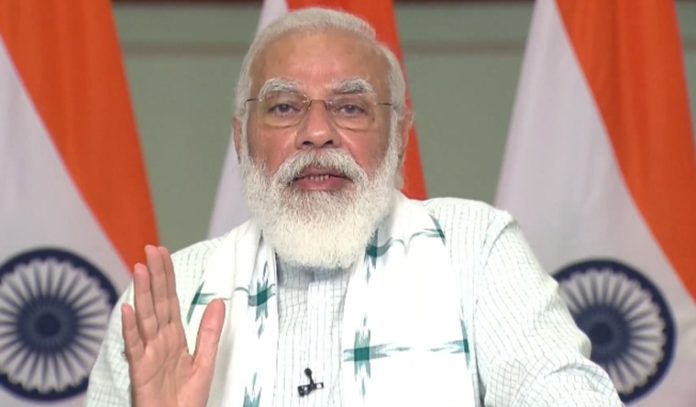
New Delhi (NVI): In a self-reliance push towards making India capable of major producing defence equipment, Prime Minister Narendra Modi today said that self-confidence in this sector will pave the way for a modern and “Atmanirbhar Bharat” in the near future.

While Addressing the webinar on ‘Atmanirbhar Bharat – Defence Industry Outreach’, PM Modi called for investment in the defence sector while assuring the foreign players that his government is committed to creating a robust ecosystem for all manufacturers.

“We are witnessing a new mentality in the defence sector. For a modern and Atmanirbhar Bharat, self-confidence in the defence sector is very important,” the PM said while addressing the webinar organized by FICCI, jointly with the Department of Military Affairs (DMA), Ministry of Defence.

The PM further mentioned that Atmanirbhar Bharat is not inward-looking but to make the global economy more stable, for global peace, and making India a self-reliant country. “This is also true for Atmanirbharta in the defence sector,” he said.

In addition to this, Modi also emphasized that India has the capability to become a trusted supplier of defence equipment for its friendly countries.

“We all collectively have to achieve the target of Atmanirbhar Bharat. It is a win-win situation for everyone including the public sector, private sector and foreign companies. The government is committed to providing a better eco-system,” he said.

In order to support the private sector, Modi said that the Ministry of Defence will allocate one portion of capital budget for promoting products manufactured within India.

Speaking on the recent reforms announced by the government, Modi emphasized that the process of the reforms will not stop but will continue.

Also present in the virtual event, Defence Minister Rajnath Singh said that India is committed to providing a level playing field to the industry and the vision of Atmanirbhar Bharat can only be achieved by this.

He further added that the government is working on the process of corporatization of the Ordinance Factory Boards in the country, which will further strengthen the defence sector.

Singh said that his ministry has allocated Rs 52,000 crore from the defence budget for the current financial year to boost and promote domestic defence industries. He also laid emphasis on simplifying the procurement procedures and reducing the timelines for approvals.

Chief of Defence Staff, General Bipin Rawat, who also participated in the webinar said that after consultation with the industry, there are a lot of items that they want to be added in the negative list.

“The list is going to increase, and we will have the next list by early next year. That will not be the end of the list. Gradually, as we see the private industry delivering, we will keep on adding more items to the list,” he said.

He further expressed hope that the Indian aerospace industry will find their feet in India and that this is one area where we are lagging. “Putting them in the negative list will be one of our greatest achievements,” he added.

Raj Kumar, Secretary, Department of Defence Production, Ministry of Defence said that the proof of Atmanirbharta lies in our ability to export our defence products.

“With the help of the defence attaché, we have developed country profiles of friendly nations. We propose that with due facilitation by defence attaché and Indian embassies will help us promote export of our indigenous products,” he added.

-ARK

India wants redeployment of troops at regular posts at LAC

Ladakh

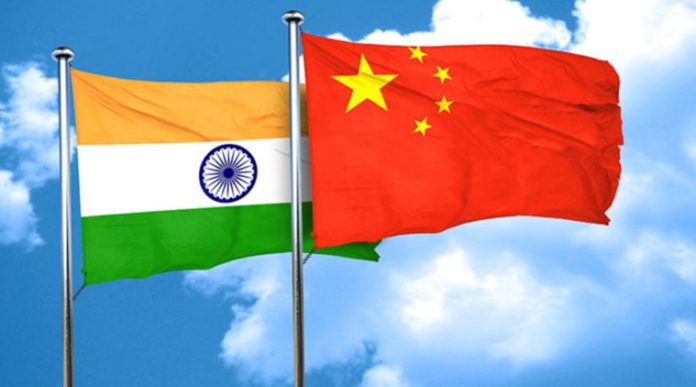
New Delhi (NVI): Amid the ongoing border row with China in Ladakh, India today said that complete disengagement would require both sides to re-deploy their troops on each side of the border at their regular posts along the Line of Actual Control (LAC).

“Complete disengagement requires re-deployment of troops by each side towards their regular posts on their respective sides of the LAC,” MEA spokesman Anurag Srivastava today said, adding that this can be done only through mutually agreed reciprocal actions.

“Thus it is important to bear in mind that achieving this requires agreed actions by both sides,” he added.

India and China have engaged in diplomatic and military level talks to resolve the border issue for long now, since the tensions between the two countries started in May.

While addressing the weekly media briefing here, the MEA spokesperson said that in the last meeting of the WMCC, the two sides agreed to resolve the outstanding issues in an expeditious manner and in accordance with the existing agreements and protocols.

“Both sides also agree that full restoration of peace and tranquility in the border areas would be essential for the overall development of bilateral relations. The two sides had also agreed to continue their engagements both through diplomatic and military channels,” Srivastava said.

The 18th meeting of the Working Mechanism for Consultation & Coordination on India-China Border Affairs (WMCC) took place last week during which the two sides had a “candid” and “in-depth exchange” of views on the existing situation in the India-China border areas, he said.

Srivastava reiterated India’s commitment to resolve the matter through diplomatic and peaceful means and referred to the agreements reached between the foreign ministers and Special Representatives from the two countries recently.

“Both sides have reaffirmed that the two sides will continue to sincerely work towards complete disengagement of the troops along the Line of Actual Control (LAC) in the Western Sector in accordance with the agreements reached between the two Foreign Ministers and the two Special Representatives (SRs) during their conversation on 5th July,” he said.

The MEA spokesman also referred to a recent interview of External Affairs Minister S Jaishankar in which he talked about various past border incidents between India and China and noted that what was common was that all borders situations were resolved through diplomacy.

“When it comes to finding a solution, this must be predicated on honouring all agreements and understandings. And not attempting to alter the status quo unilaterally,” EAM Jaishankar had told Rediff.com in an interview ahead of the release of his book ‘The India Way: Strategies for an Uncertain World’.

-ARK

India slams Pak for U-turn on Dawood Ibrahim’s presence, demands ‘credible action’

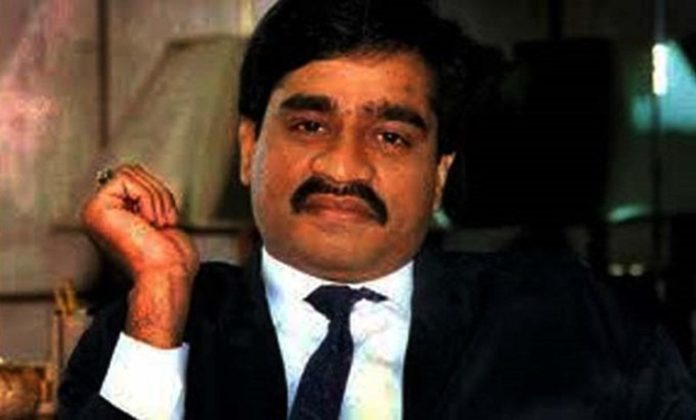
New Delhi (NVI): Pakistan has never taken any “credible” and “verifiable action” against terror entities or listed individuals, including the “most wanted ones”, India today said while slamming Islamabad for denying the presence of 1993 Mumbai blasts mastermind Dawood Ibrahim.

The Ministry of External Affairs, in a statement here, hit out at Pakistan for recently doing a U-turn on the presence of Dawood Ibrahim in the country, just days after Islamabad confirmed he was present in the country.

While addressing the weekly media briefing, MEA spokesman Anurag Srivastava also asked Pakistan to take credible action other terrorists listed by United Nations Security Council (UNSC).

“This subsequent denial by their Foreign Office calls into question their intentions and it would not mislead the world community in believing its propaganda. Pakistan must take credible action and ensure that the listed individuals are prosecuted,”

“Pakistan’s assertion that the SRO does not mean that it admits to the presence of listed individuals on its territory or that it would impose any new measures on these listed individuals, lays bare the insincerity of Pakistan in responding to legitimate expectations of the world that they will track down international terrorists based on its soil,” he added.

Pakistan had earlier this month issued a Statutory Regulatory Orders (SRO) reproducing the listed terrorist by 1267 committee of UNSC which included Masood Azhar and Dawood Ibrahim. Pakistani foreign ministry had later issued a clarification saying that doesn’t mean acceptance of Dawood’s presence in the country.

Srivastava further added that Pakistan has not only maintained its opposition to this international consensus but it has also chosen not to act against them.

-ARK

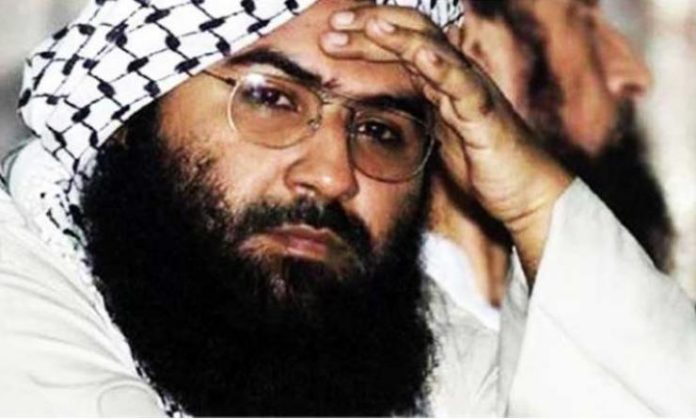
Masood Azhar, first accused in Pulwama chargesheet still sheltered by Pak: MEA

Masood Azhar

New Delhi (NVI): India today hit out at Pakistan for sheltering Jaish-e-Mohammad chief Masood Azhar, the main accused in 2019 Pulwama attack, saying that enough evidence has been shared but Islamabad continues to evade responsibility. 

The Ministry of External Affairs statement came just two days after the National Investigation Agency (NIA) filed a charge-sheet against Masood Azhar, his brother Rauf Asghar and 17 other accused in connection with the February 2019 terror attack at Pulwama in South Kashmir that claimed lives of 40 CRPF personnel.

“The charge sheet has been filed after investigation of an year and half since the attack took place on 14 February 2019. It has been filed to address the act of terrorism and to bring perpetrators of such a heinous crime to justice. Our aim is not to simply issue statements or notifications,” MEA spokesman Anurag Srivastava said while addressing the weekly media briefing here.

“Jaish e Mohammad had claimed the responsibility of Pulwama attack. The organization and its leadership is in Pakistan.  It is regrettable that Masood Azhar, the first accused in the chargesheet continues to find shelter in Pakistan. Enough evidence has been shared with Pakistan but it continues to evade responsibility,” he said.

Srivastava also added that Pakistan has not yet taken any credible action against perpetrators of the Mumbai terror attack of 2008 which resulted in loss of 165 innocent lives including 25 foreign nationals.

Parl panel suggests steps to boost agricultural, marine exports

Agriculture

New Delhi (NVI): Parliamentary Panel on Ministry of Commerce and Industry has made recommendations to the ministry to undertake renewed efforts for exploring new overseas markets for promoting export of agricultural, marine and plantation commodities.

The panel, chaired by YSR Congress leader Vijaysai Reddy, has highlighted India’s position as one of the leading producers of cereals, fruits, vegetables, spices, milk, sugar, seafood products, in the world due to its varied agro-climatic conditions capable of producing diverse crops, to boost exports specifically amid of COVID-19 pandemic.

The committee made these recommendations in its report submitted to Rajya Sabha Chairman M Venkaiah Naidu yesterday.

The panel also recommended permitting regulated foreign direct investment in the tobacco sector and establishing export-only tobacco farms to boost outward shipments.

According to the report, the committee is of the opinion that the FDI in the tobacco sector in a regulated manner would stimulate the production and processing of Indian tobacco, thereby boosting its export.

While voicing concern over low share of export of agricultural commodities as compared to their total production, the panel also called for renewed focus on post harvest infrastructure ,supply chain, value addition and exploring new overseas markets for promoting export of agricultural, marine and plantation commodities sector.

The panel underscored the significant role of Agriculture Export Policy in doubling farmers’ income and integrating the agriculture sector with the global value chain. It also suggested restructuring of the Spices Board and to explore the feasibility of fixing a minimum support price for turmeric crops.

In addition to this, the committee noted that India is the second largest producer of fruits and vegetables in the world with production of 311.7 million tonnes. Indian dairy market is among the largest and fastest growing markets in the world. India is the largest producer of milk in the world.

Observing the growing prospects of exports in horticulture and dairy sector especially in the processed segment (processed fruits, juices, vegetables, dairy products) and the constraining issue of tariff and non-tariff barriers, the Committee recommended ensuring compliance to the international quality, sanitary and phyto-sanitary standards.

It has also urged the Department of Commerce to expedite the implementation of Electronic Data Interchange (EDI) system to reduce the high procedural costs and timelines involved in exports for ensuring ease of doing business.

Furthermore, referring to the vast potential in harvesting marine resources due to India’s long coastline, the Committee made suggestions to the Marine Products Export Development Authority (MPEDA) to undertake measures for value-addition and quality standards, establishing testing laboratories near marine processing centres, modernize dilapidated fishing harbours, upgradation of post-harvest infrastructure, devising specific scheme for Tuna Fish production and its export given its huge potential, appropriate incentives to the marine exporters.

India’s position as the 7th largest producer of coffee in the world with exports amounting to 75 per cent of the total coffee produced in the country. Referring to the considerable decline in coffee exports since 2017-18, the Committee stressed upon the need of framing export-centric strategies for expanding coffee production in both traditional and non-traditional areas, value addition, marketing and brand promotion to spur export.

It also desired to ensure the export promotion of five Geographical Indication (GI) varieties of Indian coffee, namely, Araku Valley Arabica, Wayanad Robusta, Coorg Arabica, Chikmangalur Arabica and Bababudangiri Arabica coffee in international markets.

These measures for promoting exports in agricultural and plantation sectors assume more significance in the context of COVID-19 pandemic and the adverse impact of the pandemic on the export front, which would require concerted measures by the Government and other stakeholders.

In this regard, the panel also urged the Government to play a proactive role in international trade/economic forums in strengthening multilateralism and ensuring fair world trade governance in the post-Covid19 phase.

-CHK/ARK

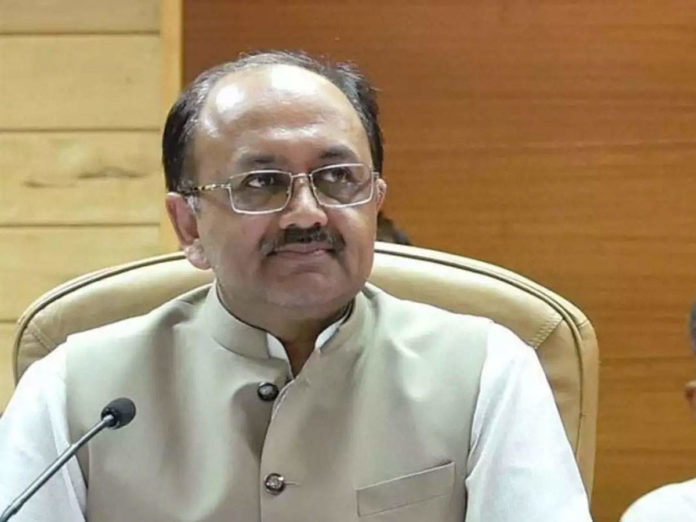
UP minister tests COVID-19 positive

Sidharth Nath Singh

New Delhi (NVI): Uttar Pradesh Cabinet Minister Sidharth Nath Singh today tested positive for coronavirus, joining the list of BJP leaders affected by the deadly illness.

Sidharth Singh, 56, tweeted that his health is fine and has isolated himself at home.

“On getting the initial symptoms of coronavirus, I got the test done and the report came back positive. My health is fine and with the advice of doctors, I have isolated myself at home. I request that all of you, who have come in contact with me in the last few days, please get yourself checked,” Singh tweeted in Hindi.

Meanwhile, the coronavirus epidemic hit the Uttar Pradesh government hard this month as two of its Cabinet Ministers – Kamala Rani Varun and Chetan Chauhan – died of the disease within days.

-CHK

28 trillion tonnes of ice lost from Earth’s surface in less than 30 years: Report

New Delhi (NVI): A total of 28 trillion tonnes of ice have disappeared from the surface of the Earth since 1994, according to a latest report.

The scientists – based at Leeds and Edinburgh universities and University College London – describe the level of ice loss as “staggering” and warn that their analysis indicates that sea level rises, triggered by melting glaciers and ice sheets, could reach a metre by the end of the century.

The review paper, called Earth’s Ice Imbalance was published in the journal Cryosphere Discussions states that ice loss has increased by 49 per cent over the past 24 years compared to the 1990s and earlier.

UK scientists who have analysed satellite surveys of the planet’s poles, mountains and glaciers to measure how much ice coverage lost because of global heating triggered by rising greenhouse gas emissions stated, “To put that in context, every centimetre of sea level rise means about a million people will be displaced from their low-lying homelands.”

The group studied satellite surveys of glaciers in South America, Asia, Canada and other regions; sea ice in the Arctic and Antarctic; ice sheets that cover the ground in Antarctica and Greenland; and ice shelves that protrude from the Antarctic mainland into the sea. The study covered the years 1994 to 2017.

To put the losses experienced into context, 28 trillion tonnes of ice would cover the entire surface of the UK with a sheet of frozen water that is 100 metres thick.

The scientists also warn that the melting of ice in these quantities is now seriously reducing the planet’s ability to reflect solar radiation back into space.

White ice is disappearing and the dark sea or soil exposed beneath it is absorbing more and more heat, further increasing the warming of the planet.

In addition, cold fresh water pouring from melting glaciers and ice sheets is causing major disruptions to the biological health of Arctic and Antarctic waters, while loss of glaciers in mountain ranges threatens to wipe out sources of fresh water on which local communities depend.

The level of ice loss revealed by the group of scientists matches the worst-case-scenario predictions outlined by the Intergovernmental Panel on Climate Change (IPCC).

The researchers’ conclusion is that all the regions have suffered devastating reductions in ice cover in the past three decades and these losses are continuing.

In the case of the melting ice sheet in Antarctica, rising sea temperatures have been the main driver while increasing atmospheric temperatures have been the cause of ice loss from inland glaciers such as those in the Himalayas.

However, in Greenland, ice loss has been triggered by a combination of both sea and atmospheric temperatures increasing.

-CHK

Balochistan condemns arrest of activist Tanveer Ahmed in PoK

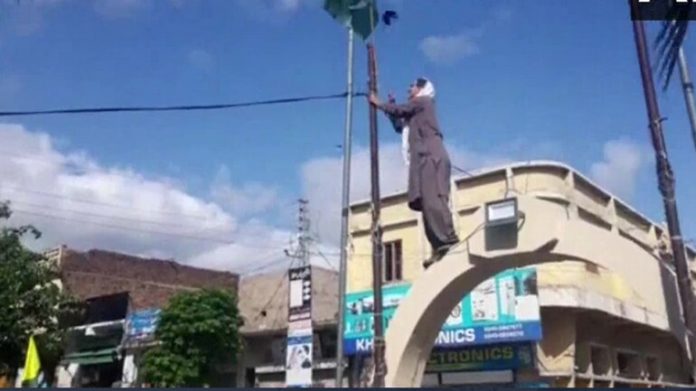
New Delhi (NVI): Several Baloch activists have condemned the arrest of journalist Tanveer Ahmed who was arrested and tortured by Pakistani agencies and security forces on Friday after he removed Pakistan’s flag from a popular public place in Pakistan occupied Kashmir (PoK).

They have also demanded the release of JKLF member Safeer Kashmiri in PoK, saying that they are facing similar problems and brutalities at the hands of Pakistan in Balochistan.

Dr Allah Nizar Baloch, a Baloch medical professional has expressed solidarity with the people of PoK who are being suppressed and humiliated by Pakistani forces for raising their voices in the region.

“I strongly condemn the arrest of Tanveer Ahmed and Safeer Kashmiri in Pakistani Occupied Kashmir (PoK). We support and appreciate their struggle because we are facing similar problems and brutalities by Pakistan in Balochistan,” he tweeted.

In a video that has gone viral on social media, Tanveer can be seen bringing down a Pakistani flag at Maqbool Bhat Shaheed Chowk in Dadyal area in PoK.

According to media reports, Tanveer Ahmed was on a hunger strike for a few days demanding the removal of Pakistani flags in Dadyal. When the local administration failed to do so, he went on to remove the flags himself.

The activist had also claimed that he is being followed by the secret agencies. He was later mishandled and threatened by the security agencies. In a video, the security forces and policemen were seen dragging the journalist to a police vehicle.

Following his arrest, people in Dadyal came out on streets in large numbers and demanded his immediate release.

In another protest in PoK’s Muzaffarabad, local residents held a torch rally against the illegal construction of dams by Chinese firms on Neelum-Jhelum River on Monday.

Over a thousand people from Muzaffarabad city and other parts of PoK attended the rally, shouting slogans against the illegal construction of dams. The protesters highlighted environmental impacts caused by the dams constructed by Pakistan and China.

The people in PoK, just like those in Balochistan have been demanding a free state, following years of brutality and torture at the hands of Pakistan military and authorities.

Both Balochistan and PoK suffer mass plundering by Pakistan and China now as they have been trying to exploit the natural resources in these areas through any means.

In 2015, Beijing announced the China-Pakistan Economic Corridor (CPEC), which is part of its intercontinental Belt and Road Initiative (BRI), with an aim to expand its influence in Pakistan and across Central and South Asia. CPEC includes plans to create road, rail and oil pipeline links to improve connectivity between China and the Middle East via Pakistan.

Pakistan has also been grappling with a severe economic crisis, so it is seeing CPEC as a golden opportunity to revive its economy by providing China access to Middle East.

Pakistan’s growing hunger to exploit natural resources in the garb of development and China’s growing footprint in Balochistan and PoK has irked the locals who have been demanding freedom from Pakistan’s occupancy for years now.

-ARK

MUST READ