Tuesday, September 8, 2026
Home Blog Page 1239

Families of missing Baloch persons protest, seek answers from Pak Govt on Eid

Victims of Pakistani oppression in Balochistan. (File pic)

New Delhi (NVI): While Muslims celebrated Eid in various parts of the world, the families of Baloch missing persons staged a sit-in at Quetta press club in Pakistan, demanding the release of their loved ones.

The protesters which included the mothers, sisters and daughters of missing persons mourned and cried while holding the photographs of their loved ones who are missing for years. They have been appealing the Pakistan government for years to release their family members who have been lodged in jails and tortured.


These protests are held every year on the occasion of Eid. According to campaign groups, more than 40,000 Baloch are missing. Many of the missing persons have not been seen by their families for years, reports The Balochistan Post.

Enforced disappearances of Baloch people have remained a huge Human Rights concern in Pakistan. According to Amnesty International, enforced disappearances have been taking place for a long time and despite the pledges of successive governments to criminalize the practice, there has been slow movement on legislation while people continue to be forcibly picked up and made to disappear with impunity.

Amnesty International says the “Commission of Inquiry on Enforced Disappearances (COIED) has more than 2,178 cases unresolved as of now. As per the Commission’s recent monthly report, 48 cases disposed of in the month of January 2019, included 46 traced persons out of which 29 were returned home, 10 were traced to internment centers, five are in jails on terrorism charges and two were described as “dead bodies”.

The UN Working Group on Enforced or Involuntary Disappearance has more than 700 cases pending from Pakistan. The number of cases of victims of enforced disappearance recorded by victim groups is much higher.

Thousands of missing Baloch persons have also been killed under custody. Pakistan secretive agencies are believed to be the perpetrators of these crimes, according to a by The Balochistan Post.

-ARK

Amit Shah, TN Guv test Covid positive

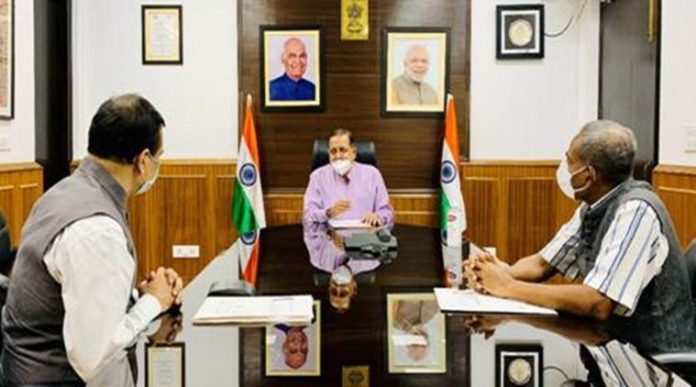
New Delhi (NVI): Union Home Minister Amit Shah tested positive for coronavirus today. He has been admitted to a hospital and has requested those who came in contact with him for last few days to get tested for the virus.

The Union Minister took to Twitter and said that after getting initial Covid-19 symptoms, he got a test done and the report came positive.

“On getting the initial symptoms of coronavirus, I got the test done and the report came back positive. My health is fine, but I am being admitted to the hospital on the advice of doctors. I request those who came in contact with me in the last few days to get tested for coronavirus and isolate themselves,” Amit Shah tweeted.

Tamil Nadu Governor Banwarilal Purohit has also tested positive for COVID-19. A statement from Kauvery hospital in Chennai said that the governor has been advised home isolation and he will be monitored by a team of doctors from the hospital.

-ARK

Afghanistan Govt releases 317 Taliban prisoners

(Pic courtesy: TOLO News)

New Delhi (NVI): The Afghan government has released 317 Taliban prisoners in the past two days in response to the group’s three-day ceasefire. The move could potentially lead to long-delayed peace talks between Afghanistan and the Taliban.

The prisoners were released from Parwan and other provinces, bringing the total to  4,917, the National Security Council tweeted today, reports TOLO news.

“Release will continue until the total reaches 5,100,” NSC said.

On Friday, the first day of Eid-al-Adha, Afghanistan President Ashraf Ghani had ordered the release of 500 Taliban prisoners in after the group announced three-day ceasefire earlier.

Ghani said the 500 prisoners would be released within the next four days. However, they are not prisoners that are on Taliban’s list. The Taliban list includes detainees that the Afghan government has said are accused of serious crimes, reports TOLO news.

Meanwhile, as a solution, the US has proposed that hundreds of Taliban prisoners be transferred to house arrest in a supervised facility when they are freed from Afghan jails.

The move was proposed to end the deadlock that is holding up the intra-Afghan negotiations, the Afghan website reports.

The release of the 500 Taliban prisoners would complete the Government’s part as outlined in a deal the Taliban signed with the United States.

According to the peace deal signed between the United States and the Taliban, the Afghan government would release 5,000 Taliban prisoners while the Taliban would release 1,000 government captives.

-ARK

India, China hold fifth round of Corps Commander level talks on border row

India-China face-off: Core issue is to 'strictly' follow bilateral border pacts, says MEA

New Delhi (NVI): India and China are holding the fifth round of military-level talks today expedite the process of disengagement of troops from both the countries along the Line of Actual Control (LAC).

The senior military commanders from both sides are holding the meet in Moldo, on the Chinese side of the LAC.

Since the face-off in Galwan Valley of Ladakh on June 15, India and China have held diplomatic and military level talks to resolve the border situation.

Today’s talks are expected to focus on the critical Finger Area and the strategic Depsang plains, according to sources.

To recall, apart from the June 15 Galwan Valley clashes between the Indian Army and PLA troops, the border tensions were also triggered by a violent clash between the two militaries in Pangong Tso area in eastern Ladakh on May 5.

In the June 15 violence, 20 Indian soldiers lost their lives while China also lost some of its troops but Beijing didn’t disclose the number of casualties.

On Thursday, Chinese ambassador to India Sun Weidong had said border troops of both countries “have disengaged in most localities” and China was not a strategic threat to India.

Hours after the Chinese ambassador’s claim on disengagement at LAC, the Ministry of External Affairs said that there has been some progress but the disengagement process has not been completed yet.

The previous round of corps commander-level talks took place on July 14 and lasted for nearly 15 hours.

Apart from that, the 17th meeting of the Working Mechanism held on July 24 in which the two sides reviewed the situation in the India-China border areas along the Line of Actual Control (LAC) in the Western sector.

-ARK

Highest single-day Covid recoveries in India at 51,255

Representational image

New Delhi (NVI): India has recorded highest-ever single day COVID-19 recoveries of 51,255, according to the Ministry of Health. India’s total recoveries from COVID-19 have touched 11,45,629, with 51,225 patients cured and discharged.

With the highest ever single-day increase in recovered patients in the last 24 hours, the recovery rate has seen a high of 65.44%, the Health Ministry said in a statement. This means that more and more COVID-19 patients are getting cured and discharged, it said.

“Coordinated implementation of COVID-19 management strategy by the Union and State/UT governments and selfless sacrifice of all frontline health and other workers and COVID-19 warriors across sectors have ensured that the recoveries are continuously on the rise,” it said.

The gap between the recoveries and the active cases has seen a steady rise. On June 10, 2020, for the first time, the total number of recovered patients exceeded the active cases with a difference of 1,573 which has increased to 5,77,899 as on today.

The active cases are the actual caseload for India and currently the active cases (5,67,730) account for 32.43% of the total cases and all are under medical supervision either in hospitals and in-home isolation, the ministry said.

“The successful and coordination implementation of the effective containment strategy, aggressive testing and standardized clinical management protocols based on a comprehensive Standard of Care framework, have resulted in a consistent trend of rising Recovery Rate and progressively reducing Case Fatality Rate,” it added.

India has one of the lowest Case Fatality Rate (CFR) at 2.13% as compared to the global average, according to the ministry.

-ARK

Railway Ministry organises virtual retirement function for first time

New Delhi (NVI): In a first, the Ministry of Railways organized a virtual retirement function amid the Covid-19 pandemic for 2,320 superannuating officials connecting all its zones, divisions, production units on a virtual platform.

The virtual function was organised for the Railways officers and staff who superannuated on July 31, the Ministry said in a release.

The event was attended by Minister of Railways Piyush Goyal, Minister of State for Railways, Suresh C Angadi, Secretary, Railway Board, Sushant Kumar Mishra and senior officers of Railways.

On the occasion, Piyush Goyal said, “It is a day of Happiness and Sadness. It is a happy occasion because the employees have served long period in different areas, capacities, responsibilities. Your contribution for Railways to make it a better Railways and the role you have played in making Railways for future-ready shall be remembered. In past few years, Railways have shown improvement in their style of working.”

“In COVID phase, freight trains, parcel trains, Shramik Special trains were moved. Railways have put in best efforts to serve the nation during the pandemic. Railway employees are no less than Corona warriors. I would like to compliment the staff for putting best efforts during the fight against COVID,” he added.

Goyal also urged the retirees to continue to perform small acts that can bring discernible changes in society like rainwater harvesting, production of manure from wet waste, thinking of innovative ways to increase production of farmers’ harvest.

He also suggested that all the officers/staff who retired from Railways have the vast experience of working in the Government sector. “They may further inform and educate the common people about Government of India’s policies and programmes so a common man may benefit and become self sufficient. It may be one of the big contributions for making their life better,” he said.

Addressing retirees, Suresh C. Angadi said, “It is a great pleasure to be with you all. Railways and the country can never forget the services which Railway staff has rendered tirelessly. Your advice/suggestion is always welcome to motivate the young staff. I wish to God to give strength and good keep up. A Railwaymen is always a Railwaymen.”

-ARK

Solar energy potential dwarfs current electricity demand in most countries: Report

energy demand
Representational Image

New Delhi (NVI): The potential for electricity generation from solar photovoltaic sources in most countries dwarfs their current electricity demand, according to a report by the World Bank.

Countries around the world are focussing on generating clean energy and cutting the costs as well as environmental hazards that come with a power plant.

However, policymakers and investors often wonder whether the PV power potential in a specific country or region is good enough to take advantage of and if so, on what scale.

Until now, a global and harmonized assessment of country-level PV potential has not existed.

A new World Bank report – “Solar Photovoltaic Power Potential by Country” – attempts to fill this gap by evaluating the theoretical potential (the general solar resource), the practical potential (accounting for additional factors affecting PV conversion efficiency and basic land use constraints), and the economic potential of PV power generation, considering a simplified evaluation of electricity production costs.

The report is based on data provided by the World Bank through the Global Solar Atlas, a free, web-based tool providing the latest data on solar resource potential globally. It is accompanied by country factsheets, downloadable from the Global Solar Atlas, that provide a summary of the resource potential and how it compares to other countries.

The data make it possible to evaluate or compare virtually any site, region, or country.

Interestingly, the difference in average practical potential between countries with the highest potential (e.g. Namibia) and the lowest (e.g. Ireland) is slightly less than a factor of two.

In total, 93% of the global population lives in countries that have an average daily solar PV potential between 3.0 and 5.0 kWh/kWp. Around 70 countries boast excellent conditions for solar PV, where average daily output exceeds 4.5 kilowatt hours per installed kilowatt of capacity (kWh/kWp) – enough to boil around 25 liters of water.

Countries in the Middle East, North Africa, and Sub-Saharan Africa regions dominate this category, accompanied by Afghanistan, Argentina, Australia, Chile, Iran, Mexico, Mongolia, Pakistan, Peru, and many nations of the Pacific and Atlantic islands.

The report further states that high-potential countries tend to have low seasonality in solar photovoltaic output, meaning that the resource is relatively constant between different months of the year.

In total, 86% of the global population lives in 150 countries where the difference between the maximum and the minimum output between different seasons is below a factor of two, and average daily output is above 3.5 kWh/kWp.

The report aims to provide findings for high-level comparisons between countries and regions on their solar energy potential and is intended to raise awareness, stimulate investment interest, and inform public debate.

Many less-developed countries—in terms of the human development index, reliability of electricity supply, and access to electricity—tend to have very high practical solar photovoltaic potential, so far untapped. In Ethiopia just 0.005% of the country’s land area could generate sufficient power to cover existing needs, and in Mexico that figure is just 0.1%.

Alongside solar resource, the potential for growth in the solar industry is determined by electricity needs; supportive or restrictive policies; costs and payback time; weather-related risks; stability of electricity grids; predictability of solar power supply; interconnection of grids enabling transmission and distribution; and other technical, social, and economic factors.

Hence solar PV may still be economically attractive in countries with relatively low solar resource potential due to the prevalence of high electricity prices, or a high daytime peak load from industry or air conditioning.

-ARK

Covid-19 will push 71 to 100 mn people into extreme poverty in 2020

New Delhi (NVI): The novel coronavirus, which continues to wreak havoc on lives around the world, will push 71 million to 100 million people into extreme poverty, measured at the international poverty line of $1.90 per day, according to a World Bank report.

The Covid crisis will inevitably add to the burden of the poorest countries. In an effort to mitigate the impact of the pandemic, the World Bank Group (WBG) and the International Monetary Fund (IMF) stepped up to financially support developing countries.

In response to a joint call for action by the WBG and IMF, the G20 finance ministers announced that official bilateral creditors will allow IDA countries that request forbearance to suspend their debt service payments, beginning May 1, for the remainder of 2020, as per the report.

Bilateral debt service suspension is a powerful measure that can bring real benefits to people in poor countries, particularly countries that don’t have the financial resources to respond to the COVID-19 crisis, while avoiding a liquidity crisis and debt defaults.

During this fluid situation, it’s critical to be able to accurately quantify these debt liabilities, says the World Bank. Since 1952, the World Bank has maintained a Debtor Reporting System (DRS) which includes historical quantification, methodologies, and aggregate debt information. To support the proposed debt relief efforts, the World Bank’s Development Data Group built a detailed data profile of debt stocks and flows for countries eligible to receive relief under the Debt Service Suspension Initiative.

The profile identifies the annual and monthly debt service payments projected to come due during 2020 and 2021, to the multilateral and bilateral creditors that may be called upon to relieve debt burdens as needed.

The basic data elements used to calculate the future payments were the lending terms of individual creditors and creditor groups. These projections were based on debt stock as of the end of 2018, for individual debt instrument (i.e., loans).

These profiles will facilitate validation and reconciliation of debtor and creditor records at a much more granular level, according to the World Bank.

-ARK

UP minister dies of Covid-19

New Delhi (NVI): UP minister Kamal Rani Varun, who had tested positive for Covid-19, succumbed to the virus today. She was 52.

The minister was diagnosed with the virus on July 18. She breathed her last at PGI Hospital in Lucknow.

Kamal Rani Varun served as the Minister of Technical Education in the Yogi Adityanath government. She got elected from Kanpur’s Ghatampur in 2017 and was known to be a prominent fighter for women empowerment in her area.

-ARK

India’s Covid tally crosses 17 lakh mark with 55,000 new cases

New Delhi (NVI): The total number of confirmed coronavirus cases has crossed the 17 lakh mark in India with 55,000 new cases. The country has recorded a jump of over 1.5 lakh cases in the past three days.

According to the Health Ministry data, 853 casualties took place in the last 24 hours, taking the death toll to 37,364.

Meanwhile, there are total 17,50,724 confirmed cases so far out of which 5,67,731 are active cases amd 11,45,630 have been cured. With this, the recovery rate stands at 65.43 per cent at present.

A total of 1,98,21,831 samples have been tested in the country so far. The positivity rate, i.e., percentage of patients who have tested positive for coronavirus, stood at 11.81 per cent.

In another development, the Delhi government yesterday reduced the number of containment zones from 715 to 496 following extensive assessment of the sealed areas in the last two days.

Covid-19 has infected over 18 million people in the world and 6.84 lakh have died of the virus.

The World Health Organisation has said that the said it expects the Covid-19 pandemic to be of “lengthy duration” and that it remains “a public health emergency of international concern.” “The pandemic is a once-in-a-century health crisis, the effects of which will be felt for decades to come,” WHO Director-General Tedros Adhanom Ghebreyesus said yesterday.

-ARK

MUST READ