Sunday, October 4, 2026
Home Blog Page 1246

Reopening schools too early could lead to rapid spread of COVID-19: Study

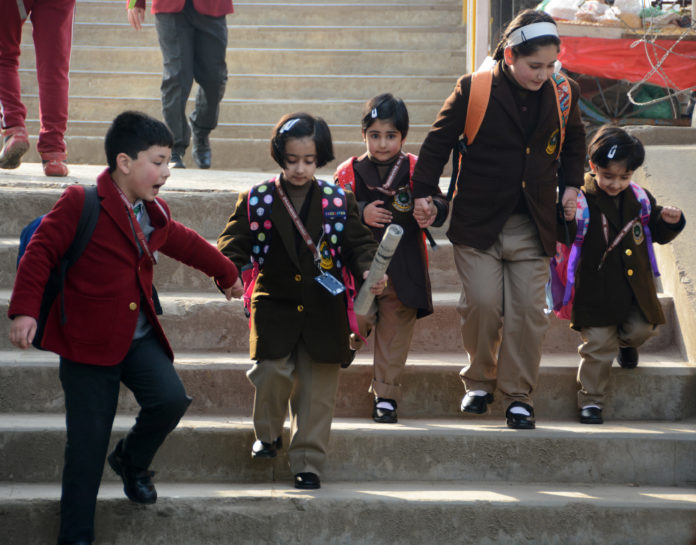
New Delhi (NVI): Reopening schools too early, especially in developing countries, could undermine the gains made so far in containing the spread of the virus, according to a recent study by the UN.

The study predicts that delaying school openings can be a potent force for saving lives, by reducing the risk of children getting infected at school, and in turn, spreading the virus within their households.

According to the latest UNESCO figures, over 100 countries are currently implementing nationwide school closures due to COVID-19, affecting over 60 per cent of the world’s enrolled students.

The topic of reopening primary and secondary schools has been heavily politicised in many countries with parents, teachers, and politicians sometimes at odds over when to reopen.

Notably, in developing countries, adults and the elderly generally have more contact with children than those in advanced economies due to factors such as more crowded living conditions and bigger households.

According UN data, the proportion of elderly people who live with at least one child under 20 is more than 10 per cent in most African countries, compared to less than 1 per cent in European countries and the United States. This raises the risk that children may contract the virus at school and transmit it to parents and grandparents at home.

The overall predictions are applicable to many other low-income countries, which share the feature of large families living under one roof, with frequent contact between the young and their older household members.

Furthermore, a new report by the US Centers for Disease Control and Prevention (CDC) into an outbreak at a summer camp in Georgia has suggested that children, even asymptomatic cases, may be significant in community transmission of coronavirus.

Policymakers need to carefully consider the science of spread before deciding on whether to reopen schools or wait, even as they work on the ‘how’ of reopening.

However, any policy decisions about delaying school openings must weigh the potential lives saved against the negative impacts of keeping children out of school for a long period.

Major issues of concern in developing countries around keeping schools closed for long periods include losses in learning, missed midday meals, availability of childcare for working parents, and limited resources for online learning.

-CHK
India signs air bubble deal with Maldives

Travel ban
Representational/ file image

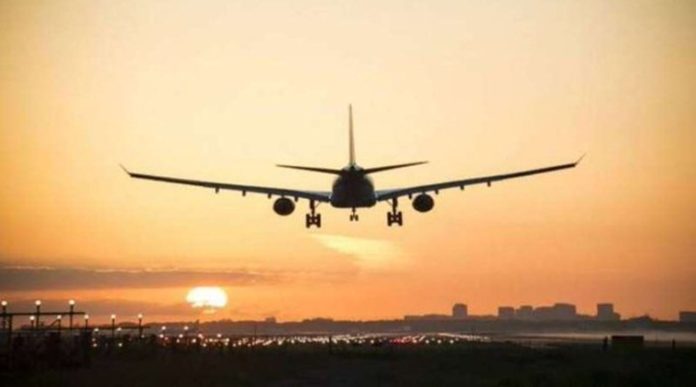
New Delhi (NVI): India and Maldives have signed an “air bubble” agreement to facilitate the movement of people between the two countries amid the Covid-19 pandemic. With this, Maldives has become the sixth country with which India has signed the deal.

As per the Air bubble deal, citizens are allowed to travel between the specified countries freely without having to undergo on-arrival quarantine.

Today’s announcement was made after the video conference between External Affairs Minister S Jaishankar and Maldives Foreign Minister Abdulla Shahid.

India also announced a new Indian Line of Credit (LoC) of USD 400 million along with a grant component of USD 100 million for the Greater Male Connectivity Project.

This will be the single-largest infrastructure project in the Maldives and will link Male with Villingili, Gulhifalhu, and Thilafushi islands.

Apart from Maldives, India currently has allowed travel to the US, the UK, Germany, France and Kuwait, and is in talks with Canada for a similar travel arrangement.

-ARK

Zydus Cadila launches cheapest remdesivir at Rs 2,800 per vial in India

A look at Bharat Biotech and SII's efforts to develop Covid vaccines approved by DCGI
Representational image

New Delhi (NVI): An Indian pharmaceutical company, Zydus Cadila today launched antiviral drug remdesivir in India under the brand name Remdac to treat patients suffering from severe COVID-19 symptoms.

The drug is priced at Rs 2,800 per 100mg vial (lyophilised injection). With this pricing, Remdac becomes the cheapest remdesivir brand in the country.

It will be made available to government and private hospitals across India treating COVID-19 patients through the firm’s distribution chain, the company in a statement said.

“Remdac is the most affordable drug as we would like to enable patients to have access to this critical drug in the treatment of COVID-19,” Sharvil Patel Cadila Healthcare Managing Director said.

This makes Zydus the fifth company to launch a copy of the antiviral in India. Prior to this, Hetero Labs, Cipla and Jubilant Life Sciences had also launched the antiviral under their respective brands.

Earlier in June, Zydus entered into an agreement with Gilead Sciences Inc to manufacture and sell remdesivir, prescribed for emergency use to treat severe coronavirus patients by the US Food and Drug Administration (USFDA).

Gilead has also entered into licensing agreements with Dr Reddy’s Laboratories Ltd and Syngene International Ltd to make remdesivir for distribution in 127 countries, including India.

Notably, Zydus Cadila is also in the COVID-19 vaccine race. It’s candidate ZyCov-D is now in Phase 2 of the clinical human trials.

-RJV

Heavy rains lash Delhi, several areas waterlogged

Light rains in Delhi
Representational Image

New Delhi (NVI): Several areas of Delhi saw waterlogging today after heavy rains lashed the national capital.

Over 40 locations in north Delhi got inundated due to the downpour, including areas in Mukherjee Nagar, Fateh Puri, Burari, Rohini, Narela and West Patel Nagar, according to the North Delhi Municipal Corporation (NDMC).

According to the India Meteorological Department (IMD), the Ayanagar weather station recorded 99.2 mm rainfall. The Palam and Ridge weather stations gauged 93.6 mm and 84.6 mm precipitation respectively.

In addition to this, parts of buildings collapsed at eight places and trees fell at seven locations, according to media reports.

Delhi witnessed the heaviest spell of rains this monsoon season helping the city bring down its rain deficiency for the monsoon season, the lowest in 10 years.

Under the influence of these conditions, IMD further predicted fairly widespread to widespread rains, with heavy to very heavy falls at isolated places, are very likely exoected across northwest India, including Delhi, for the next 2-3 days.

Owing to the likelihood of heavy to very showers, thunderstorms, and lightning, an orange alert has been placed over the capital for Thursday.

Meanwhile, heavy rain battered parts of Mumbai, neighbouring Thane, Palghar and Raigad districts in the last 24 hours, according to the weather department.

IMD stated more rain is likely in the Konkan region and some areas of central Maharashtra tomorrow.

Furthermore, widespread rainfall with heavy to very heavy falls at isolated places very likely over major parts of northwest India – Himachal Pradesh, Uttarakhand, Punjab, Haryana, Chandigarh & Delhi, Uttar Pradesh – during the next 2-3 days.

Gujarat, Rajasthan and parts of central India are likely to receive heavy rainfall during the next 48 hours.

-CHK

Afghanistan: 3 women, child killed in roadside mine blast in Kandahar

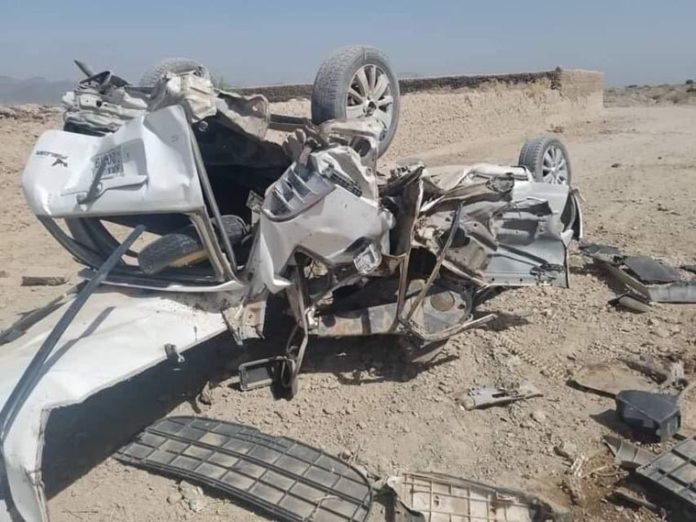
New Delhi (NVI): Three women and a child were killed in a roadside mine blast in Kandahar province of Afghanistan this morning, local police said in a statement.

A civilian vehicle struck a roadside mine that led to the incident in Panjwai district of the province, police said, adding that a man has also been injured in the blast.

“Three women and a child were killed and four children, a woman and a man were wounded in the blast,” a police official was quoted as saying by TOLO news.

Officials said that the victims have been taken to the nearby hospital for treatment.

No group has claimed responsibility for the blast, the Afghan news portal reports.

On Sunday, at least eight civilians were killed in a roadside mine blast in Arghistan district of the province when a civilian vehicle hit a roadside bomb in Sheen Nari village in the district.

-ARK

Ram temple trust chief Covid positive

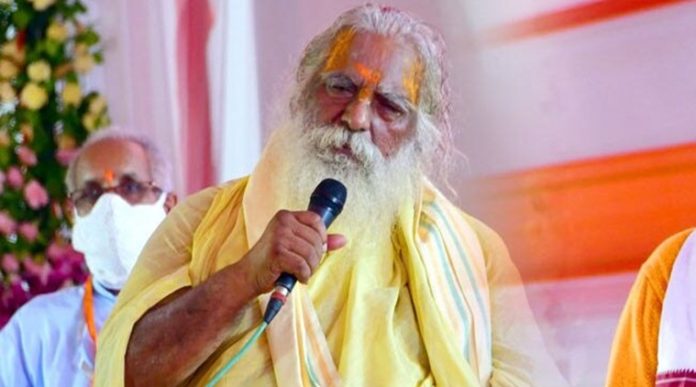
New Delhi (NVI): Mahant Nritya Gopal Das, 82, the head of the Ram Janmabhoomi Teertha Kshetra Trust or the Ram Temple trust in Ayodhya has tested positive for coronavirus.

Das has been diagnosed with the virus a week after he shared the stage with Prime Minister Narendra Modi during bhoomi pujan of Ram temple in Ayodhya.

Uttar Pradesh Chief Minister Yogi Adityanath and Governor Anandiben Patel were also among the top leaders who were present at the event on August 5.

Uttar Pradesh Government in a statement today said that Chief Minister Yogi Adityanath had spoken to Mathura District Magistrate Sarvagya Ram Mishra. He has also urged Dr Naresh Trehan of Medanta Hospital, Gurugram, to provide immediate medical attention to the priest.

The priest heads the Shri Ram Janmabhoomi Teerth Kshetra, a trust constituted by the Centre for the construction and management of the Ram temple.

-ARK

Govt supplies over 3 cr N95 masks to states, UTs for free

Representational image

New Delhi (NVI): The government has distributed over 3.04 crore N95 masks, more than 1.28 crore PPE kits and over 10.83 crore HCQ tablets to states, Union Territories and central institutions for free since March 11, the Union Health Ministry said today.

In addition, 22,533 ‘Make in India’ ventilators have been delivered to various states, Union Territories and central institutions. The Centre is also ensuring their installation and commissioning, the Health Ministry in a statement said.

In the relentless work for containment and management of COVID-19, the central role of government has been in strengthening health infrastructure of states and Union Terrorists to fight the pandemic and its effective management, it added.

The ministry stated that, along with augmenting COVID-19 facilities, the government has alson been providing medical supplies to states and Union Territories for free of cost to supplement their efforts.

Most of the products supplied by the government were not being manufactured in the country in the beginning. The rising global demand due to the pandemic resulted in their scarce availability in the foreign markets, it said.

The statement further stated, “With the combined efforts of Ministry of Health & Family Welfare (MoHFW), Ministry of Textiles and Ministry of Pharmaceuticals, Department for Promotion of Industry and Internal Trade (DPIIT), Defence Research and Development Organisation (DRDO) and others, the domestic industry has been encouraged and facilitated to manufacture and supply essential medical equipment like PPEs, N95 masks, ventilators etc., during this period.”

However, the resolve for ‘Atmanirbhar Bharat’ and ‘Make in India’ has been strengthened and most of the supplies made by the government are domestically manufactured, it added.

Will go for DNA test, call details of 3 killed in Shopian encounter: IGP Kashmir

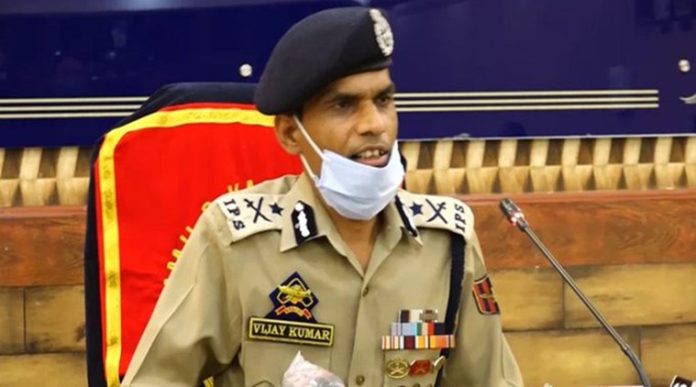
IGP Kashmir Vijay Kumar (File photo)

Abid Bashir

Srinagar (NVI): Jammu and Kashmir police today said that it will go for DNA tests of all three “slain militants” who were killed in the July 18 encounter at Shopian district and also check the call details of the trio to find out their possible links with the terrorists.

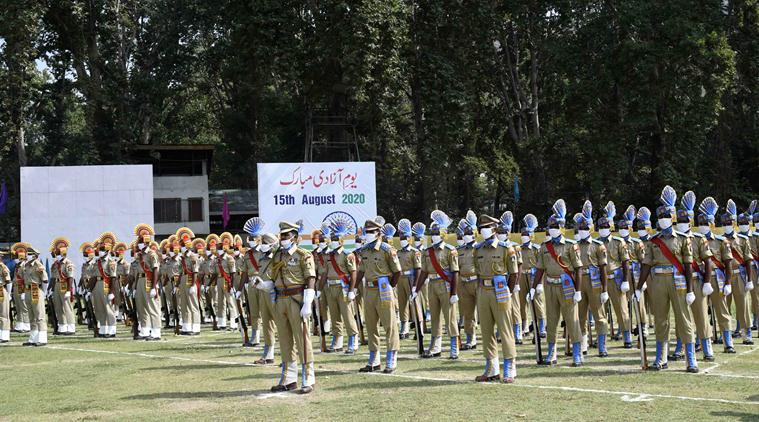
Talking to reporters on the sidelines of full dress rehearsal parade at SK Stadium in Srinagar, a day ahead of the Independence-Day function, Inspector General of Police (IGP) Kashmir Vijay Kumar said that police is working on two aspects of the July 18 Shopian encounter case.

“First is that we will go for DNA cross-examination of slain with the three families that claim three militants killed were their wards. We have already taken the DNA samples of all three slain as part of our procedure of dealing with the militant bodies,” the IGP said. “Today a team headed by DySP Wajahat has left for Rajouri district to complete the legal formalities.”

The second thing, the IGP said police will check the call details of all the three slain to find out whether they were in touch with militants, besides other technical details. “No conclusion can be drawn at this point,” the Kashmir police chief said.

The families of three missing youth from Rajouri have claimed on the basis of pictures gone viral on social media that their wards, who were working as labourers in Shopian district, were killed in the Shopian encounter. They have told police that the three were living in a rented accommodation in Ashmipora area of Shopian and were not terrorists.

Social media was abuzz with the posts from netizens that the encounter that took place on July 18 at Shopian was “stage-managed.” The Army has also taken cognizance of the social media posts and ordered an inquiry.

The family members of three youths and Amnesty International have demanded an independent and transparent probe. The families of three Rajouri youth had also approached concerned authorities in Rajouri to seek permission to travel to Kashmir and demand exhumation of bodies for identification.

Meanwhile, on August 15 I-Day preparations, the IGP Kashmir said that foolproof security arrangements have been put in place along with ground and aerial surveillance. “All security agencies are maintaining a close synergy to foil any possible attack by militants. Militant presence is there but we are ready to foil all their plans and ensure smooth conduct of I-Day function across Kashmir including Srinagar,” the IGP said.

Rehearsal for I-Day celebrations at Sher-e-Kashmir Cricket Stadium in Srinagar on Thursday.

He has also urged people to cooperate with the security forces during the frisking operations that have been intensified across the Valley, especially Srinagar.

-ARK

State-wise details of Covid-19 cases in India

Covid variant
File photo

New Delhi (NVI): The total number of coronavirus cases in India has reached 23,29,638, after 66,999 new cases were reported in the past 24 hours, the biggest single-day jump so far, according to Union Health Ministry data.

Meanwhile, the death toll stands at 47,033 after 942 new fatalities were reported in the country during this period.

In terms of total number of cases, Maharashtra continues to be the worst affected state with 5,48,313 coronavirus cases followed by Tamil Nadu (3,14,520) Andhra Pradesh (2,54,146) and Delhi (1,48,504).

Total positive cases in States/UTs:

Andaman and Nicobar Islands- 1,900

Andhra Pradesh- 2,54,146

Arunachal Pradesh- 2,430

Assam- 68,999

Bihar- 90,321

Chandigarh- 1,751

Chhattisgarh- 13,498

Dadar Nagar Haveli & Diu – 1,696

Delhi- 1,48,504

Gujarat- 74,318

Goa- 9,924

Haryana– 44,024

Himachal Pradesh- 3,636

Jammu and Kashmir- 26,413

Jharkhand- 19,743

Karnataka- 1,96,494

Kerala- 38,144

Ladakh- 1,811

Madhya Pradesh- 41,604

Maharashtra- 5,48,313

Manipur- 3,982

Meghalaya- 1,179

Mizoram- 649

Nagaland- 3,118

Odisha- 50,672

Puducherry- 6,381

Punjab- 26,909

Rajasthan- 56,100

Sikkim- 930

Tamil Nadu- 3,14,520

Telangana- 86,475

Tripura- 6,603

Uttarakhand- 10,886

Uttar Pradesh- 1,36,238

West Bengal – 1,04,326

State/UT wise total death toll:

Andaman and Nicobar Islands- 21

Andhra Pradesh- 2,296

Arunachal Pradesh- 3

Assam- 161

Bihar- 416

Chandigarh- 26

Chhattisgarh- 109

Dadra and Nagar Haveli- 2

Delhi- 4,153

Goa- 89

Gujarat- 2,713

Haryana- 503

Himachal Pradesh- 18

Jammu and Kashmir- 49

Jharkhand- 19

Karnataka- 3,510

Kerala- 126

Ladakh- 9

Madhya Pradesh- 1,048

Maharashtra- 18,650

Manipur- 12

Meghalaya- 6

Nagaland- 8

Odisha- 305

Puducherry- 96

Punjab- 6

Rajasthan- 822

Sikkim- 1

Tamil Nadu- 5,278

Telangana- 665

Tripura- 4

Uttar Pradesh- 2,230

Uttarakhand- 140

West Bengal- 2,203

However, a total of 16,95,982 people have been cured or discharged. Total active cases stand at 6,53,622.

-CHK

43% schools lacked handwashing facilities prior to COVID-19 pandemic

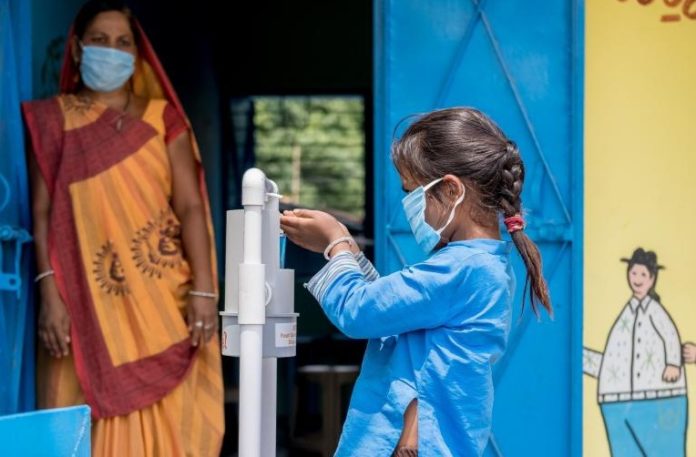
Girl using a foot pedal sanitizer to practice hand hygiene (Source @UNICEF)

New Delhi (NVI): 43 per cent of schools around the world lacked access to basic handwashing with soap and water last year – a key condition for schools to be able to operate safely in the midst of the COVID-19 pandemic, according to a joint report by the UNICEF and WHO.

According to the report, around 818 million children lack basic handwashing facilities at their schools, which puts them at increased risk of COVID-19 and other transmittable diseases.

More than one third of these children (295 million) are from sub-Saharan Africa. In the least developed countries, 7 out of 10 schools lack basic handwashing facilities and half of schools lack basic sanitation and water services.

Henrietta Fore, UNICEF Executive Director said, “Global school closures since the onset of the COVID-19 pandemic have presented an unprecedented challenge to children’s education and wellbeing.”

“We must prioritize children’s learning. This means making sure that schools are safe to reopen – including with access to hand hygiene, clean drinking water and safe sanitation,” she added.

The report further said that of the roughly 818 million children who lacked a basic handwashing service at their school, 355 million went to schools which had facilities with water but no soap, and 462 million to schools which had no facilities or water available for handwashing.

In 60 countries at the highest risk of health and humanitarian crises due to virus, three-quarters of children lacked the basic ability to wash their hands at school at the start of the outbreak, while half lacked basic water service.

Meanwhile, the report stressed that governments seeking to control the spread of COVID-19 must balance the need for implementation of public health measures versus the associated social and economic impacts of lockdown measures.

The partners said that evidence of the negative impacts of prolonged school closures on children’s safety, wellbeing and learning are well-documented.

“Access to water, sanitation and hygiene services is essential for effective infection prevention and control in all settings, including schools,” said Tedros Adhanom Ghebreyesus, WHO Director-General.

“It must be a major focus of government strategies for the safe reopening and operation of schools during the ongoing COVID-19 global pandemic,” he added.

The report identifies resources for COVID-19 prevention and control in schools, including 10 immediate actions and safety checklists. It builds on guidelines on the safe reopening of schools issued in April by UNESCO, UNICEF and partners, geared towards national and local authorities.

These guidelines include several protocols on hygiene measures, use of personal protective equipment, cleaning and disinfection, as well as providing access to clean water, handwashing stations with soap, and safe toilets.

UNICEF and WHO also underlined their commitment to achieving equitable access to adequate water, sanitation and hygiene services worldwide, including through the ‘Hand Hygiene for All’ initiative that supports vulnerable communities.

-RJV/ARK

MUST READ