Monday, June 22, 2026
Home Blog Page 1260

Woman killed, 2 injured in Pak shelling along LoC in J&K’s Baramulla

Ceasefire
Representational image

Abid Bashir

Srinagar (NVI): A woman was killed and two civilians were injured in intense shelling by Pakistani troops along the Line of Control (LoC) in Uri area of north Kashmir’s Baramulla district today, police said.

A mortar shell hit the house of Akthar Begum (40), wife of Zahoor Ahmad at Batha-Gram village of Uri, killing her on the spot, they said.


Senior Superintendent of Police, Baramulla, Abdul Qayoom said the woman died after a mortar shell hit her house. “Two more civilians were injured in the shelling, who have been shifted to hospital,” he said. “A few residential houses and private vehicles also suffered damage in the shelling from across the LoC.”

Defence spokesman in Srinagar, Rajesh Kalia said that in the morning at 8:20 am, Pakistan initiated an unprovoked ceasefire violation along the LoC in Rampur sector of Uri in north Kashmir’s Baramulla district by firing mortars and other weapons. “Befitting response is being given,” he said.

Earlier today, Pakistani troops resorted to heavy firing and mortar shelling in Uri which was retaliated to effectively by the India side.

A video grab from the ceasefire violation along LoC in Uri.

“Pakistani army resorted to unprovoked firing with the small arms and light mortars in Uri area. The troops responded effectively. The Pakistani army targeted army check posts in Hajipeer sector and other posts in Uri,” a defence official said told NVI earlier.

The firing started in the morning and continued till the afternoon, he said.

The intense shelling by Pakistani troops and retaliation by the Indian Army triggered panic in almost a dozen villages close to the LoC in Uri as many residents were seen running for safety, besides taking their livestock to safer places. Abdul Aziz Khanata, a village elder in Churunda village, told NVI over phone that people of dozens of Uri villages woke up to intense shelling from across the border.

“We took our livestock to safety and asked the people of our village to stay indoors and take safety precautions,” Khatana said, adding that the children and women were gripped by fear and none of them ventured out of their homes.

This year, a record number of 1600 ceasefire violations have been recorded in J&K on LoC where in Pakistan has used small arms to mortal shells besides indiscriminate gunfire, as per security officials. “Every time Pakistan resorted to unprovoked ceasefire violation, the army has given them a befitting reply by retaliating effectively,” a defence official said.

J&K: Markets to open in Srinagar from tomorrow, SOPs issued

Abid Bashir

Srinagar (NVI): For the first time since the outbreak of Covid-19 in Kashmir, the Srinagar administration today announced re-opening of shops and malls with fresh Standard Operating Procedure (SoPs) and other precautions, focusing on social distancing and wearing of masks.

The announcement comes a day after Srinagar trade bodies held hectic deliberations with the district administration headed by Deputy Commissioner Srinagar, Dr Shahid Iqbal Chaudhary, where the majority of the traders stressed on the need of re-opening markets citing ailing economy of the Valley. During the meeting, the traders gave a written undertaking on following SoPs in a proper manner and maintaining social distancing, besides wearing of masks.

Chairman of Kashmir Traders and Manufacturers Federation (KTMF), an amalgam of various trade bodies, Muhammad Yaseen Khan, welcomed the Srinagar administration’s decision stating that “all the guidelines will be followed in spirit.” Markets were closed as part of the Lockdown-1, soon after the first case of Covid-19 was reported in Srinagar on March 19.

An order issued by the district administration said that in view of multifarious dimensions involved, suggestions and recommendations were obtained from SKIMS Srinagar, Govt Medical College Srinagar, SKIMS Medical College Bemina and Directorate of Health Services Kashmir, and sector-specific SOPs have been devised taking into account such recommendations and standard protocols notified by the competent authority.

“Detailed deliberations were held with all trade & business organisations and associations viz a viz notification of containment zones in the district and limited permissible activities therein, mandatory observance of SOPs particularly related to mandatory wearing of masks, maintaining physical distancing, hygiene and sanitization,” the order read.

“The SOPs notified by the SEC are to be observed in letter and spirit. The said organisations undertook to ensure that all SOPs are observed for permissible opening of shops in line with SEC notification cited above. Therefore, in line with the permissible activities and opening of shops provided in the SEC notification, consultations held with stakeholders and readiness to observe SOPs and necessary steps for COVID containment expressed by the trade and business organisations,” it said.

The order further read “After assessment, District Magistrate, Srinagar, by virtue of powers vested and provisions contained in The Disaster Management Act 2005, Section 144 CrPC, and The Epidemic Disease Act, notify the following schedule, in District Srinagar, for the opening of shops, from Saturday (June 13).”

“Monday to Saturday—following shops will remain open full day—Bookshops, stationery, Chemists, Medical products, Grocery. Fruits, Vegetables, Milk & Milk products, Meat/Poultry, Farming products (Agri/Horti/Sericulture etc). Repair workshops, e-Commerce & courier, Hotels Restaurants for home-delivery/Take-away, bakery, and other essential products,” it added.

On Monday, Wednesday and Friday (From 11 am to 5:30 Pm), following shops will remain open— Readymade garments, Cloth shop, Cosmetics, Footwear Electronics & Electric Material, Jewellery, Tailors/Designers/Boutiques.

Similarly, on Tuesday, Thursday and Saturday from 11 am to 5:30 pm, following shops will remain open— Handicrafts, Handloom, Hardware, Building material, Furniture, Furnishing, Automobiles, Services stations, Saloons Beauty Parlours.

“The SOPs contained in Govt of UT of JAK vide Order No.62-JK(DMRRR) of 2020 dated 07-06-2020 for Hotels and Restaurants, Shopping Malls and Salons/Barbershops etc shall be strictly followed. Further, concerned market association shall be responsible for observance of all SOPs,” the order said.

“Wearing mask and physical distancing shall be mandatory. Equidistant circle in paint indicating mandatory distance shall be marked outside every shop/establishment. No business shall be transacted in absence of guidelines related to mandatory wearing of Masks and Physical distancing. Every shop/establishment shall be properly sanitized before being made operational Hand sanitizers/ handwash/Soap etc shall also be compulsorily made available at every establishment,” it added.

In addition to this, the order said that night restrictions/curfew between 8 PM to 5 AM as notified vide order dated 19.05.2020 shall continue to be in place and only essential services shall be allowed during the period. As far as public transport is concerned, the order said that three-wheelers with two passengers has been allowed.

WATCH | Army retaliates to Pak shelling along LoC in J&K’s Baramulla

Civilian injured

In yet another ceasefire violation along Line of Control (LoC) in J&K, Pakistani troops today resorted to heavy firing and mortar shelling in the Uri area of north Kashmir’s Baramulla district. Pakistani army started unprovoked firing on the LoC in Uri early this morning which was retaliated effectively by the India side. Read story

UNICEF, GRAB join forces to protect health workers, children from Covid-19 in East Asia

(Photo Credit: UNICEF Thailand)

New Delhi (NVI): UNICEF has joined hands with GRAB, a multinational ride-hailing company based in Singapore, to provide personal protective equipment (PPE) and health supplies for frontline health workers battling the COVID-19 pandemic, as well as providing handwashing supplies to keep children safe in schools in East Asia.

The initiative covers four countries in the region: Indonesia, Malaysia, Philippines and Thailand. In addition, GRAB users can make in-app donations that will help UNICEF purchase lifesaving supplies such as masks, gloves, soap, tents and gowns for ‘healthcare heroes’ and children returning to schools, which lack basic sanitation, the UN body said in a statement Wednesday.

Karin Hulshof, UNICEF’s Regional Director for East Asia and Pacific said, “COVID-19 is a threat to people everywhere. The virus has not impacted everyone equally. The oldest, the poorest, and the youngest have been the hardest hit by the pandemic. Without additional investment in children and the support of partners like Grab, we risk losing achievements that have seen ever more children survive and thrive.”

“Schools need to reopen safely as the longer children stay out of school, the less likely they are to return. Together we can make sure children and families recover, rebound and reimagine a stronger future. We must stop COVID-19 from becoming a lasting crisis for children,” she added.

According to the statement, Grab users can donate money via the GrabPay e-wallet or donate their Grab Rewards points to support UNICEF’s efforts to deliver essential supplies where they are needed most.

“The COVID-19 pandemic poses a test for our generation like none we have seen. Our users, driver and delivery-partners, and merchant-partners have all been impacted,” said Huey Tyng Ooi, Head of GrabPay.

“But we are also seeing increasing e-wallet usage due to safety and hygiene concerns around the use of cash. More and more people are going digital, and we are confident that many Grab users will be encouraged to support our vulnerable communities in ways that they can, either via e-wallet donations or their Rewards points,” Tyng Ooi added.

Since January, UNICEF has been working closely with governments in the region and its partners to stop the spread of COVID-19, keep children at the heart of its response and to mitigate the long-term impact of the pandemic on children.

The organization has provided public health information to people on how to protect themselves, particularly focusing on children, pregnant and breastfeeding women.

Apart from this, UNICEF has provided critical medical supplies, including masks and other personal protective equipment to health workers. It is also making sure that children and their families have access to safe water and sanitation services, and hygiene supplies.

In partnership with companies like Grab, it helps UNICEF to raise awareness about COVID-19 and its impact on children to the millions of Grab users in the region, and to generate much-needed funding, the statement read.

Globally, UNICEF is appealing for USD 1.6 billion to support its humanitarian response for children impacted by the COVID-19 pandemic. In East Asia and Pacific, UNICEF requires over USD 137.2 million to fund its response.

The initiative is part of UNICEF’s #Reimagine global campaign to task the global community to #Reimagine a better world for children post COVID-19.

J&K: Lashkar terrorist nabbed in Shopian

The LeT terrorist was nabbed during a cordon and search operation.

Abid Bashir

Srinagar (NVI): A Lashkar-e-Toiba terrorist was arrested today during a cordon and search operation at Khojpora village of South Kashmir’s Shopian district, police said.

A police officer said that acting on a specific input about the presence of a Lashkar terrorist, who had recently joined the outfit, in village Khojipora, a cordon and search operation was launched jointly by the teams of Army and police in the wee hours.

“When the suspected house was zeroed in, the terrorist who was hiding, was cornered from all sides and offered surrender. He accepted the offer and was caught alive,” the officer said.

The arrested terrorist was identified as Zakir Ahmed Khan of Shopian district who had joined the Lashkar outfit a few weeks ago. Police recovered a 9 MM pistol, two magazines and 12 rounds.

A case has been registered in Zainapora police station and investigations have been taken up to find out the involvement of the arrested terrorist in various crimes.

The arrest of the terrorist comes at a time when security forces have stepped up anti-militancy operations across Kashmir, especially in the southern belt of Kashmir.

This year so far, 89 militants including top commanders of Hizbul Mujahideen, Lashkar-e-Taiba and Jaish-e-Mohammed were killed in various encounters. Since March 20, when Covid-19 pandemic stepped into the Union Territory, 55 militants have been killed including Hizbul Mujahideen’s chief operational commander Reyaz Naikoo.

State-wise details of Covid-19 cases in India

New Delhi (NVI): India has now become the fourth worst-affected country in the world index due to coronavirus pandemic, after it surpassed United Kingdom in the total number of confirmed cases, as the country continues to witness huge spike in the infected cases.

Maharashtra is one of the worst affected states, while the capital city Mumbai is reporting over 52,000 cases and now has more cases than China’s Wuhan city, the epicentre of the virus outbreak.

Meanwhile, the total number of coronavirus cases in the country stands at 2,97,535 including 8,498 casualties, according to the Union Health Ministry.

In the last 24 hours, a record 10,956 new cases of coronavirus and 396 deaths have been reported in India, both being at a record high in a single day till now.Maharashtra tops the country with the maximum number of coronavirus cases and has reported nearly 90,000 confirmed cases so far.

Total positive cases in States/UTs:

Andaman and Nicobar Islands- 38

Andhra Pradesh- 5,429

Arunachal Pradesh- 61

Assam- 3,319

Bihar- 5,983

Chandigarh- 332

Chhattisgarh- 1,398

Dadar Nagar Haveli- 26

Delhi- 34,687

Gujarat- 22,032

Goa- 417

Haryana– 5,968

Himachal Pradesh- 470

Jammu and Kashmir- 4,574

Jharkhand- 1,599

Karnataka- 6,245

Kerala- 2,244

Ladakh- 135

Madhya Pradesh- 10,241

Maharashtra- 97,648

Manipur- 366

Meghalaya- 44

Mizoram- 102

Nagaland- 128

Odisha- 3,386

Puducherry- 157

Punjab- 2,887

Rajasthan- 11,838

Sikkim- 14

Tamil Nadu- 38,716

Telangana- 4,320

Tripura- 913

Uttarakhand- 1,643

Uttar Pradesh- 12,088

West Bengal – 9,768

State/UT wise total death toll:

Andhra Pradesh- 80

Assam- 6

Bihar- 36

Chandigarh- 5

Chhattisgarh- 6

Delhi- 1085

Gujarat- 1,385

Haryana- 64

Himachal Pradesh- 6

Jammu and Kashmir- 52

Jharkhand- 8

Karnataka- 72

Kerala- 18

Ladakh- 1

Madhya Pradesh- 431

Maharashtra- 3,590

Meghalaya- 1

Odisha- 9

Puducherry- 2

Punjab- 59

Rajasthan- 265

Tamil Nadu- 349

Telangana- 165

Tripura- 1

Uttar Pradesh- 345

Uttarakhand- 15

West Bengal- 442

A total of 1,47,195 people have been cured or discharged from hospitals in India. There are around 1,41,842 active cases currently, according to the Health Ministry.

World Day Against Child Labour 2020: History, significance and theme

Representational image

New Delhi (NVI): World Day Against Child Labour is observed on June 12 every year in almost 100 countries all around the globe. This year, the focus is on the impact of Covid-19 crisis on child labour, as millions of children face the risk of being pushed into the inhuman practice due to the pandemic situation.

The day is also used to spread awareness about the mental and physical problems faced by children forced into child labour around the world.

According to a United Nations (UN) report, there are an estimated 152 million children globally who are engaged in the practice, 72 million of whom are into hazardous work.

Millions more could be forced into child labour, which could lead to the first rise in child labour after 20 years of progress, according to a new brief from the International Labour Organization (ILO) and UNICEF.

Children in the age group 5 to 17 are engaged in work that deprives them of a normal childhood, like getting adequate education, proper health care, leisure time or just basic freedom.

In 2002, the International Labour Organization (ILO), launched the World Day Against Child Labour for the first time.

COVID-19 pandemic and the resulting economic and labour market shock are having a huge impact on people’s lives and livelihoods. The crisis can push millions of vulnerable children into child labour, the UN said in a statement.

This year, the day’s theme is “COVID-19: Protect children from child labour, now more than ever”. The theme focuses on the need to protect children from under-age labour amid Covid-19 pandemic.

The UN body says the World Day Against Child Labour this year will see a virtual campaign due to COVID pandemic. A virtual campaign is being organized jointly with the Global March Against Child Labour and the International Partnership for Cooperation on Child Labour in Agriculture (IPCCLA).

Furthermore, ILO and UNICEF are developing a simulation model to look at the impact of COVID-19 on child labour globally.

Meanwhile, there are more than 10 million child labourers in India, according to the latest census and many are kept confined to the workplace by employers.

Coronavirus cases surpass 7.5 million worldwide; death toll tops 4,20,000

Coronavirus cases

New Delhi (NVI): More than 7.5 million people have now been confirmed to have the coronavirus and at least 4,20,000 have died, according to data from Johns Hopkins University.

In Brazil, the total number of coronavirus cases surpassed 8,00,000 mark today, being the second worst-affected country in the world by the deadly contagion.

The United States has passed 2 million confirmed cases of the virus with more than 1,13,000 fatalities being reported in the country.

Beijing recorded its first instance of local transmission in weeks, after one case of COVID-19 was reported from the city. The Chinese man reportedly claimed that he has been in the capital city for more than two weeks and had not been in contact with anyone from outside the city.

Meanwhile China has reported 7 new cases of coronavirus.

The speed the new coronavirus jumped from 100,000 to 200,000 confirmed cases in Africa shows just how quickly the pandemic is accelerating on the continent, the World Health Organization said.

India’s COVID tally rises to 2.98 lakh; death toll 8,498

New Delhi (NVI): The total number of coronavirus cases in India has risen to 2,97,535 and fatalities from the virus have gone up to 8,498, according to Union Health Ministry.

In the past 24 hours, 10,956 fresh COVID-19 infections were reported, the highest single-day spike in the country.

At least 1,47,195 patients have been cured of the virus or discharged.

With this, India’s COVID-19 cases climbed to the fourth highest in the world, overtaking the UK yesterday.

In terms of total number of cases, Maharashtra continues to be the worst affected state with 97,648 coronavirus cases followed by Tamil Nadu with 38,716 and Gujarat with 34,678 positive cases.

The other worst affected states are Gujarat (22,032), Rajasthan (11,838) Uttar Pradesh (12,088) and Madhya Pradesh (10,241).

In terms of deaths, Maharashtra tops the tally with 35,09 fatalities, ministry said.

The death toll in the national capital surged to 1,085 while another 12,731 patients have recovered so far, healthy ministry data shows.

Meanwhile, the Supreme Court today will hear a matter pertaining to alleged harassment of COVID-19 positive patients and mishandling of bodies of those who succumbed to the virus.

India focuses on friendly relations with Nepal amid border row

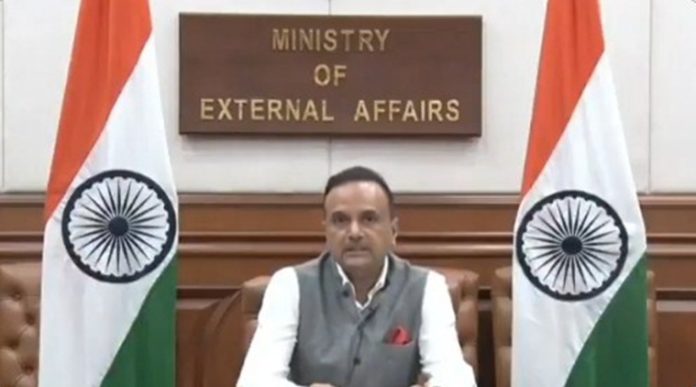
New Delhi (NVI): India today said that it deeply values its civilizational, cultural and friendly relations with Nepal, ahead of a vote on a constitutional amendment bill in the lower house of Nepalese Parliament, to amend the Himalayan country’s political map.

“India deeply values its civilization, cultural and friendly relations with Nepal. Our multi-faceted bilateral partnership has expanded and diversified in the recent years with increased focus and enhanced Government of India’s assistance on humanitarian, development and connectivity projects in Nepal,” MEA spokesperson Anurag Srivastava said today.

The External Affairs spokesperson also highlighted India’s continued support to friendly neighbouring countries including Nepal, in line with Prime Minister Narendra Modi’s initiative to chart out a common strategy to combat COVID-19 in the region.

“India has extended all possible technical, medical and humanitarian assistance to Nepal. We have supplied about 25 tonnes of medical aid to Nepal including Paracetamol and hydroxy chloroquine (HCQ) medicines, test kits and other medical supplies,” the MEA spokesman said.

He further added that the Government of India has also ensured that there is no untoward disruption in trade and supply of essential goods to Nepal, despite the lockdown on both sides. “India has also helped in repatriation of Nepalese nationals stranded abroad on humanitarian grounds,” he added.

India’s comments come ahead of the crucial vote in Nepal’s parliament that will decide on the amendments in the new Nepal may that shows Indian territories of Kalapani, Lipulekh and Limpiyadhura as its own, drawing a sharp reaction from New Delhi.

Nepal PM KP Sharma Oli had on May 18 chaired a Cabinet meeting in which the new map of the country featuring the Indian territories of Kalapani, Lipulekh, and Limpiyadhura was approved.

Addressing the Parliament on May 19, the Nepal PM claimed that India had made the aforesaid territories “disputed” by stationing its Army there. He vowed to reclaim these territories from India through diplomatic efforts.

Reacting to Nepal incorporating parts of Indian territory in its official map on May 20, the Ministry of External Affairs slammed this “unilateral act”.

Maintaining that this move was not based on historical facts and evidence, MEA official spokesperson Anurag Srivastava had observed that this was contrary to the understanding between the two countries to resolve boundary disputes through dialogue.

Apart from this, on May 31, the Nepalese government had moved a constitutional amendment bill that seeks to make an alteration in the country’s national emblem and the political map which includes an additional 370 sq km that also features in the Indian map.

Earlier in May, the Oli government had objected to India’s new road from Dharchula to Lipulekh as part of the Mansarovar Yatra route, and which came out with a new map, adding to it an area of 370 sq km at the tri-junction of Nepal, India and China (Tibet) that India claims is its territory.

MUST READ