Tuesday, September 8, 2026
Home Blog Page 1271

Climate change making forests shorter and younger: Report

Representational image

New Delhi (NVI): Climate change is speeding up the death of trees, slowing their growth and making forests across the world younger and shorter, according to a new report.

A team of more than 20 scientists analysed the state of the world’s forests, using data from 160 previous studies and satellite imagery captured over decades.

In the report published in Science magazine, researchers show that the world lost roughly one-third of its old grown forest between 1900 and 2015.

In addition to this, in North America and Europe, where more data was available, they found that tree mortality has doubled in the past 40 years.

Decades of logging activity and forest clearances, increasing temperatures from human-made climate change are seen as a significant factor, the researchers said.

Similarly, in Brazil, both human activity and wildfires have cleared large tracts of Amazon rainforest. Likewise, Russia and North America have lost vast areas of tree canopy.

The report also stated that, more than 55,000 square kilometers of Russia’s tree cover was cleared in 2018 – roughly equivalent to the size of Croatia.

The loss of mature trees is harming global biodiversity levels, as animal habitats disappear and ecosystems are disrupted, report added.

Meanwhile, what are left are younger trees, less able to reach for the skies due to warming temperatures, which limits photosynthesis and stunts tree growth.

“Unfortunately, mortality drivers like rising temperature and disturbances such as wildfire and insect outbreaks are on the rise and are expected to continue increasing in frequency and severity over the next century,” said the lead author of the study, Nate McDowell of the US Department of Energy’s Pacific Northwest National Laboratory.

“Hence, reductions in average forest age and height are already happening, and they’re likely to continue to happen,” McDowell added.

Furthermore, trees act as natural sponges to absorb carbon dioxide from the planet’s atmosphere. Besides, when mature forests which are generally bigger and can hold more carbon than younger areas of canopy die, the planet’s capacity to store CO2 is diminished, exacerbating climate change.

Another study, led by Martin Sullivan from the University of Leeds and Manchester Metropolitan University, suggests that tropical forests are resistant to small temperature changes until they reach a threshold of about 32 degree Celsius.

Beyond this temperature, trees stop growing and begin to die, releasing carbon back into the atmosphere.

“The 32-degree threshold highlights the critical importance of urgently cutting our emissions to avoid pushing too many forests beyond the safety zone,” Sullivan said.

In addition to this, the World Economic Forum (WEF) has launched a global initiative to grow, restore and conserve 1 trillion trees. It aims to connect, mobilize tree planting and reforestation efforts to restore biodiversity and fight climate change.

-RJV

South pole warmed ‘three times faster’ than global average over past 3 decades: Study

New Delhi (NVI): Antarctica’s south pole, recorded warming that was three times higher than the global average from 1989 to 2018, according to a new study.

However, based on the study published in Nature Climate Change, this rate of warming was not consistent across Antarctica. The results find that the rate of warming at the south pole was seven times higher than across the continent as a whole.

The record heat was driven largely by natural swings in Antarctica’s climate, but appears very likely that it worked in tandem with human-caused warming.

Notably, Antarctica holds enough ice that, if all melted, would raise global sea levels by around 60 metre.

In addition to this, the rate at which Antarctic ice loss has contributed to sea level rise has accelerated in recent years. Most of the ice loss is occurring in West Antarctica, where many land glaciers are coming into direct contact with warm ocean waters.

The study’s lead author, Dr Kyle Clem, a polar researcher at the Victoria University of Wellington in New Zealand, said, “Research over the past couple decades revealed the Antarctic plateau, the coldest and one of the most remote places on Earth, had been cooling while global temperatures were increasing…Our study has found that this is no longer the case. The south pole is now one of the fastest warming regions on the planet, warming at an incredible three times faster than the global average rate.”

Temperatures in Antarctica generally stay well below freezing. Annual temperatures average around -49C, with the coldest temperature ever recorded being -82.8C.

Furthermore, based on the study’s analysis, the south pole saw four record-high annual average temperatures during the 21st century – in 2002, 2009, 2013 and 2018.

The ‘dominant’ likely driver of the increased warming at the south pole over the past three decades is likely to be natural swings in Antarctica’s climate.

Human-caused warming is also causing significant ice melt, but it is still not clear to what extent. Climate change has caused significant ice loss from Antarctica, even if its fingerprint in the frozen interior of the continent is difficult to detect.

-CHK

Ban on flights to Kolkata from 6 cities extended till July 31

UDAN scheme
Representational image

New Delhi (NVI): The ban on passenger flights to Kolkata from six metro cities has been extended till the end of this month, July 31, in the wake of rising coronavirus cases.

The ban which has already been in place since July 6 has now been extended for the flights arriving from 6 cities – Delhi, Mumbai, Pune, Chennai, Nagpur and Ahmedabad.

The decision comes after the West Bengal government requested the Civil Aviation Ministry to restrict flight movement from cities with high prevalence of Covid-19 cases in order to curb the spread of virus.

On Friday evening, the Kolkata Airport tweeted, “The restriction on arriving flights to #KolkataAirport from 6 cities viz Delhi, Mumbai, Pune, Chennai, Nagpur & Ahmedabad has been extended up to 31st July.”

Earlier, the airport had announced that no passenger flight would be arriving in Kolkata from six particular metro cities from July 6 to July 19.

In the pre-COVID period, the Kolkata airport operated around 200 domestic and 35 international flights regularly.

However, West Bengal continues to witness a steep rise in cases, with the total number of cases being at 38,011 while the death toll is at 1,049.

-RJV/CHK


State-wise details of Covid-19 cases in India

Representational image

New Delhi (NVI): India’s today registered the biggest single-day spike of 34,884 new cases in the last 24 hours, taking the total number of cases to 10,38,716, according to Union Health Ministry data.

Meanwhile, the death toll has climbed to 26,273 with 671 new fatalities being recorded since yesterday.

In terms of total number of cases, Maharashtra continues to be the worst affected state with 2,92,589 coronavirus cases followed by Tamil Nadu with 1,60,907 and Delhi with 1,20,107 positive cases.

Total positive cases in States/UTs:

Andaman and Nicobar Islands- 194

Andhra Pradesh- 40,646

Arunachal Pradesh- 609

Assam- 20,646

Bihar- 23,589

Chandigarh- 660

Chhattisgarh- 4,964

Dadar Nagar Haveli & Diu – 297

Delhi- 1,20,107

Gujarat- 46,430

Goa- 3,304

Haryana– 24,797

Himachal Pradesh- 1,417

Jammu and Kashmir- 12,757

Jharkhand- 4,921

Karnataka- 55,115

Kerala- 11,066

Ladakh- 1,151

Madhya Pradesh- 21,081

Maharashtra- 2,92,589

Manipur- 1,800

Meghalaya- 403

Mizoram- 282

Nagaland- 956

Odisha- 16,110

Puducherry- 1,832

Punjab- 9,442

Rajasthan- 27,789

Sikkim- 266

Tamil Nadu- 1,60,907

Telangana- 41,018

Tripura- 2,366

Uttarakhand- 4,102

Uttar Pradesh- 45,163

West Bengal – 38,011

State/UT wise total death toll:

Andhra Pradesh- 534

Arunachal Pradesh- 3

Assam- 51

Bihar- 201

Chandigarh- 11

Chhattisgarh- 23

Delhi- 3,571

Goa- 21

Gujarat- 2,106

Haryana- 327

Himachal Pradesh- 11

Jammu and Kashmir- 231

Jharkhand- 46

Karnataka- 1,147

Kerala- 38

Ladakh- 1

Madhya Pradesh- 697

Maharashtra- 11,452

Meghalaya- 2

Odisha- 83

Puducherry- 25

Punjab- 239

Rajasthan- 546

Tamil Nadu- 2,315

Telangana- 403

Tripura- 3

Uttar Pradesh- 1,084

Uttarakhand- 51

West Bengal- 1,049

A total of 6,53,751 people have been cured or discharged. Total active cases stand at 3,58,692.

-CHK

Global coronavirus cases surpass 14 million

New Delhi (NVI): The total number of coronavirus cases globally has surpassed 14 million mark, with over 601,000 deaths.

At least 7.7 million patients have recovered worldwide, according to Johns Hopkins University data.

The US remains the worst-hit country with more than 3.6 million infections, while the death toll due to virus exceeds 139,100 in the country.

In Brazil, more than 2.04 million people have tested positive including President Jair Bolsonaro, and more than 77,000 people have died in the country.

South Africa, once nearly free of the virus, has exploded over the past week to become the sixth most infected country in the world, with over 337,000 cases.

In Spain, officials asked residents in the city of Barcelona to stay at home as much as possible to curb the spread of the deadly contagion. The country’s COVID-19 death toll stands at 28,400, one of Europe’s worst.

Apart from this, Azerbaijan has extended coronavirus lockdown restrictions, including the closure of its borders, until August 31 after a further rise in the number of cases. The country had registered 26,636 confirmed cases of the coronavirus and 341 deaths so far.

-RJV

India’s COVID tally tops 10.38 lakh; death toll at 26,273

covid cases
File photo

New Delhi (NVI): India today registered the highest single-day spike of 34,884 coronavirus cases in last 24 hours, taking the total number to 1,038,716.

In addition to this, India recorded more than 34,000 cases of the COVID-19 for two days in a row.

Meanwhile, the death toll in the country stood at 26,273 with 671 new fatalities being reported in the past 24 hours, Union Health Ministry said.

As many as 6,53,751 COVID-19 patients have been cured and discharged so far. With this the recovery rate was at 62.93 per cent, down from yesterday’s 63.33 per cent.

In terms of total number of cases, Maharashtra continues to be the worst affected state with 2,92,589 coronavirus cases followed by Tamil Nadu with 1,60,907 and Delhi with 1,20,107 positive cases.

The other worst affected states are Gujarat (46,430) Uttar Pradesh (45,163) West Bengal (38,011) and Rajasthan (27,789).

In terms of deaths, Maharashtra tops the tally with 11,452 fatalities, ministry said.

The death toll in the national capital surged to 3,571 while another 99,301 patients have recovered so far, healthy ministry data shows.

According to the Indian Council of Medical Research (ICMR), so far 1,34,33,742 samples have been tested for COVID-19, of these 3,61,024 samples were tested yesterday.

Apart from this, with a surge in coronavirus cases in Bihar, West Bengal, Assam and Odisha, the health ministry has asked these states to step up in efforts to contain the deadly virus and keep case fatality rate below one per cent.

-RJV

J&K: 3 terrorists killed in ongoing encounter in Shopian

encounter
File photo

Abid Bashir

Srinagar (NVI): Three terrorists were killed in an ongoing encounter that broke out early this morning in Amshipora village of South Kashmir’s Shopian district, police officials said.

An official said that acting on a tip-off, joint teams of Police, Army and the CRPF launched a search operation in village Amshipora, Shopian at 5 am today. “When the joint teams of forces zeroed in on the suspected spot, the hiding terrorists opened indiscriminate fire at the forces, triggering a fierce encounter,” he said.

He also said that in the initial exchange of fire, two terrorists were killed and one more was shot dead at 9 am. “However, forces continue to see gunfire coming from the house, which indicates presence of one or two more terrorists. So far, three terrorists have been killed,” the officer said.

In addition, Kashmir zone police on its Twitter handle wrote, “Three terrorists killed so far, operation on.”

Defence spokesman in Srinagar, Colonel Rajesh Kalia said that, three terrorists have been killed in Amshipora, Shopian encounter. “Joint operation is on,” he said. Authorities in Shopian district have snapped the internet services as a precautionary measure to prevent law and order situation.

Today’s encounter is second in South Kashmir in the past 24 hours. Last morning, security forces killed three Jaish-e-Muhammad terrorists including a top commander and the IED expert of the outfit- Waleed Bhai at Nagnad village of South Kashmir’s Kulgam district. Waleed was a Pakistani national and had expertise in using the US-made M-4 Carbine.

Notably, Defence Minister Rajnath Singh chaired a crucial security review meeting in Srinagar last evening, and asked the heads of various security agencies to “clean Kashmir from remaining terrorists and to plug infiltration on the Line of Control.”

This year so far, 145 terrorists have been killed in a series of anti-militancy operations that include top commanders of Hizbul Muajhideen, Lashkar-e-Toiba and Jaish-e-Muhammad outfit. Hizb has borne the maximum brunt as the outfit has lost 60 terrorists alone including its chief operational commander Reyaz Naikoo.

However, official figures suggest that since June 1, 55 terrorists were killed in various counter-insurgency operations across South Kashmir alone.

-RJV

Three of a family killed in LoC shelling in J&K’s Poonch

Ceasefire
Representational image

Abid Bashir

Srinagar (NVI): A couple and their teenage son were killed in unprovoked cross-border shelling by Pakistani troops along the Line of Control (LoC) in Khari-Karmara village of J&K’s Poonch sector late this evening, officials said.

They said that the Pakistan army resorted to heavy shelling in Khari-Karmara village of the Poonch sector this evening and one of the 120 mm mortar shells hit a residential house in the village.

“A husband-wife duo and their teenage son got seriously injured, who were evacuated to the hospital, but they died on the way,” an official in Poonch administration said. “Their house got completely damaged,” he added.

The official identified the slain husband-wife duo as Muhammad Rafiq (52), and Rafiqa Bi (50). Their son was identified as Irfan Ahmed (14).

He said that another family member also got injured, who was shifted to hospital where his condition is serious.

Deputy Commissioner (DC) Poonch, Rahul Yadav said that three persons have died and the fourth one has got injured due to the cross LoC shelling in the Poonch sector this evening. He said since shelling is on in the area, a team from the administration will rush to the spot tomorrow to assess the nature of damage caused by the shelling.

Earlier, defence officials had said that the Pakistan army resorted to heavy shelling in the Poonch sector and the Indian Army was giving a befitting reply.

-ARK

J&K records 2nd highest single-day spike with 601 new cases, toll at 12,575

Abid Bashir

Srinagar (NVI): Jammu and Kashmir today recorded a second-highest single-day spike in Covid-19 positive cases since the outbreak of the deadly virus in March this year as 601 fresh cases tested positive, taking the UT’s tally to 12,575.

With the addition of these 601 fresh cases, the number of positive cases in Kashmir has gone up to 10,113, while the number Jammu has reported 2,644 total cases.

Among the new cases, 464 belong to Kashmir division while 137 are from Jammu division, officials said, adding that the total number of positive cases in Kashmir has reached 10,113 including 4,893 recoveries and 213 deaths while the total number of positive cases in Jammu has reached 2,644 including 1,665 recoveries and 18 deaths.

The officials said that the total number of active cases in J&K is 5968 including 5007 from Kashmir and 961 from Jammu.

With 112 more recoveries, the tally of total recoveries in the UT has reached 6558 which is 51.40 percent of the total cases which was over 63 percent a few days before.

Cases tested positive in J&K include 152 from Srinagar, 10 from Kulgam, 62 from Baramulla, 82 from Shopian, 51 from Anantnag, 12 from Kupwara, 19 from Pulwama, 46 from Budgam, 01 from Bandipora and 29 from Ganderbal in Kashmir division while as 137 from Jammu division include 16 from Jammu, 15 from Udhampur, 21 from Kuthua, 12 from Rajouri, 41 from Ramban, 15 from Samba, 04 from Poonch, 10 from Kishtiwar and 03 from Reasi.

As per the daily information bulletin, 3,25,291 persons in J&K are under observation while 37,924 persons have been kept under home quarantine. Besides that, 5968 persons are in hospital isolation while 13 persons are under hospital quarantine.

According to the bulletin, 2,36,850 persons have completed the surveillance period and 44,305 persons are under home surveillance.

So far, results of 4,89,382 samples are available out of which 4,76,625 tested negative while 12,757 have been tested positive. Among positive cases, 5968 are active and 6558 persons have recovered while 231 have died.

-ARK

India’s health system behind one of the best Covid recovery rates in world: PM

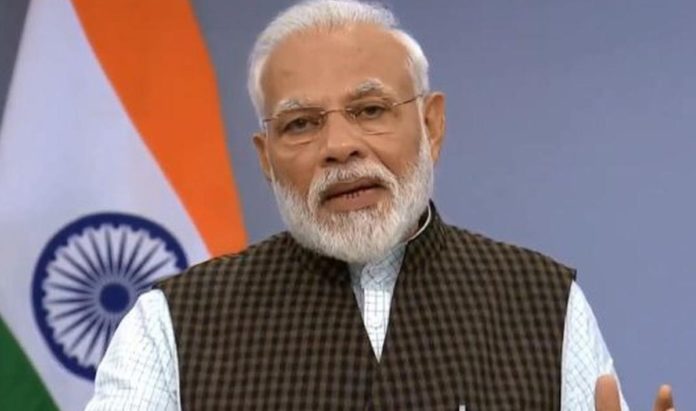
New Delhi (NVI): Prime Minister Narendra Modi today said that India’s “grass-roots” health system has helped the country in attaining one of the best recovery rates in the world in its fight against Covid-19, despite a huge population that is almost one-sixth of the world.

The Prime Minister was delivering a keynote address virtually at this year’s High-Level Segment of the United Nations Economic and Social Council (ECOSOC) session.

This was the first address by the PM to the broader UN membership since India’s overwhelming election as a non-permanent member of the Security Council on June 17, for the term 2021-22, the Prime Minister’s Office said in a statement.

“COVID-19 pandemic has severely tested the resilience of all nations. In India, we have tried to make the fight against the pandemic a people’s movement, by combining the efforts of Government and civil society,” PM Modi said in his virtual address.

“Be it earthquakes, cyclones, Ebola crisis or any other natural or man-made crisis, India has responded with speed and solidarity. In our joint fight against COVID,  we have extended medical and other assistance to over 150 countries,” he added.

In his address, PM also recalled India’s long association with the ECOSOC and the UN’s developmental work, including for the Sustainable Development Goals. He noted that India’s developmental motto of ‘SabkaSaath, SabkaVikaas, Sabka Vishwas’ resonates with the core SDG principle of leaving no one behind.

Prime Minister Modi pointed out that India’s success in improving the socio-economic indicators of its vast population has a significant impact on global SDG targets. He spoke about India’s commitment to also support other developing countries in meeting their SDG targets.

The theme of the High-Level Segment of the ECOSOC this year is “Multilateralism after COVID19: What kind of UN do we need at the 75th anniversary”.

Coinciding with the 75th Anniversary of the founding of the UN, this theme also resonates with India’s priority for its forthcoming membership of the UN Security Council. Prime Minister reiterated India’s call for a ‘reformed multilateralism’ in a post-COVID-19 world, which reflects the realities of the contemporary world.

-ARK

MUST READ