Tuesday, September 8, 2026
Home Blog Page 1272

Canada eases immigration rules to help foreign students amid Covid-19

New Delhi (NVI): Canada has made its immigration rules more flexible amid the Covid-19 pandemic to help international students study online from their native countries and qualify for a work permit at the same time after completing their graduation.

The changes were announced by the Canadian government earlier this week to cater to the needs of foreign students. Apart from approval for online study, a two-stage approval process has also been introduced to allow applicants to start their studies even if some of their documentation is delayed due to the pandemic.

Canada is among the most preferred and favourite destinations among foreign students, with a huge study contingent from India. For instance, in 2019, nearly 1.39 lakh study permits (34.5% of total) were allotted to Indian students.

The new measures provide priority study-permit processing for students who have submitted a complete application online, to ensure that permits are processed as quickly as possible.

It will also allow students to count the time spent pursuing their studies online abroad toward their eligibility for a post-graduation work permit, if they have submitted a study permit application and if at least 50% of their program is completed in Canada.

In addition to this, the new rules provide reassurances to international students who cannot submit all of the documentation needed to complete processing of their applications, and who choose to pursue programs through distance learning, by implementing a temporary 2-stage approval process.

The temporary process will also allow applicants to count the time spent studying online abroad towards their post-graduation work permit once they receive an approval-in-principle, as long as they are able to satisfy all requirements and receive the full approval of their study permit application at a later date.

As services begin to reopen, applicants will be required to submit remaining documents and receive an approved study permit before being allowed to travel to Canada.

This process is available to students starting a program in the fall semester who submit a study permit application before September 15, 2020, according to IRCC. This measure will reassure students that they can enrol and begin their studies this fall online, even when they are not able to submit all required documentation due to pandemic-related closures, it added.

As the fall season is fast approaching, Minister of Immigration, Refugees and Citizenship, Marco Mendicino announced additional measures to support international students beginning a new program online this fall with a Canadian learning institution, if their institution is offering the program online, so that they can pursue their education while ensuring everyone’s safety, read an official statement from Immigration, Refugees and Citizenship Canada (IRCC).

“These changes will give students more certainty about their ability to enter Canada once travel and health restrictions are eased in Canada and their own home countries. They mean that students will be eligible to work in Canada after graduation, even if they need to begin their studies online from overseas this fall,” the IRCC statement read.

-ARK

Ranbir Kapoor’s look-alike from Kashmir dies of cardiac arrest

Abid Bashir

Srinagar (NVI): Junaid Shah, Ranbir Kapoor’s doppelganger, passed away after a cardiac arrest at his residence in Ellahi Bagh area of Srinagar this morning, leaving family and friends in deep shock.

Junaid shot to fame due to his uncanny resemblance to ‘Rockstar’ and ‘Barfi’ actor Ranbir Kapoor. The 28-year-old had recently returned to the Valley to take care of his ailing father.

At the age of eight, Junaid developed interests in acting and mimicking Bollywood actors. At his school in Srinagar, he was known for his stylish looks, especially for his hairstyle. His friends would often call him “hero”.

With his age, Junaid Shah, a resident of Elahibagh, Soura on Srinagar outskirts, grew up tall, handsome, and fairly smart. At the age of 20, he started getting offers to play in drama serials and small plays. With his parents’ consent, he traveled to Delhi and then Mumbai.

On his 21st birthday, people started calling him a replica of Bollywood star Ranbir Kapoor and rightly so. At times, many people would identify him as Ranbir. “Even people from the film industry wouldn’t believe he wasn’t Ranbir. His hairstyle, height, smile, skin color, all was the same as that of Ranbir,” said Raees, Junaid’s close friend in Srinagar, who traveled to Mumbai many times to spend time with his friend in the past.

Junaid was busy in choosing the best of the offers he had got from various television channels and even from some well-known film directors for his role in some movies. After a call from his family recently, he had to return to Srinagar as his father was not keeping well.

“We called him back as my health started falling. He told me he was coming. I never knew he is coming to leave us forever,” said Nisar Ahmed Shah, Junaid’s ailing father, in a broken voice. Junaid went to sleep late last evening after having a chat with his family members in Srinagar, never to wake up again, leaving his family members, neighbours, friends and a huge chunk of Bollywood industry in a deep shock and grief. According to doctors and family sources, Junaid died of sudden massive cardiac arrest.

The family’s former neighbour and veteran Kashmir journalist, Yusuf Jameel said that Junaid died due to “massive cardiac arrest overnight.” “Our old neighbor Nissar Ahmed Shah’s son Junaid passed away due to massive cardiac arrest overnight. People say he was a lookalike of Bollywood actor Ranbir Kapoor. I say he was a big hope, strength & salvation of his ailing father and his mother and that of the whole Kashmir. Magfirah!” Jameel tweeted.

Junaid had gained popularity way back in 2012-2014 when his pictures went viral with people comparing him to Ranbir.  Junaid also featured on many TV channels, including Zoom TV, MTV and Zee TV. He became popular after young Kashmiris widely shared his pictures with Ranbir Kapoor on Facebook.

He became an instant hit not only among the Valley youth, but all over the country. Ranbir’s late father and Bollywood veteran Rishi Kapoor too had reacted to his picture on Twitter. “OMG. My own son has a double!!! Promise cannot make out. A good double,” Rishi had tweeted.

When the news of Junaid’s death spread this morning, a pall of gloom descended on his family, neighborhood and friends, who flooded his Srinagar residence. He was later laid to rest at his native place in Srinagar.

-ARK

Over 150 countries engaged in Covid-19 vaccine global access facility: WHO

Representational Image

New Delhi (NVI): More than 75 countries have shown interest in joining the COVAX facility by the World Health Organisation (WHO), meant to provide global access to a Covid-19 vaccine, the global health body has said.

These 75 countries would finance the vaccines from their own public finance budgets while partnering to support 90 lower-income through voluntary donations to the Gavi’s COVAX Advance Market Commitment (AMC), according to the WHO report.

“Together, this group of up to 165 countries represents more than 60 per cent of the world’s population. Among the group are representatives from every continent and more than half of the world’s G20 economies,” WHO said.

The COVAX initiative is co-led by Gavi, the Coalition for Epidemic Preparedness Innovations (CEPI) and WHO, working in partnership with developed and developing country vaccine manufacturers.

The initiative is meant to help accelerate the development and manufacture of COVID-19 vaccines, and to guarantee fair and equitable access for every country in the world.

“COVAX is the only truly global solution to the COVID-19 pandemic. For the vast majority of countries, whether they can afford to pay for their own doses or require assistance, it means receiving a guaranteed share of doses and avoiding being pushed to the back of the queue, as we saw during the H1N1 pandemic a decade ago,” said Dr Seth Berkley, CEO of Gavi, the Vaccine Alliance.

“Even for those countries that are able to secure their own agreements with vaccine manufacturers, this mechanism represents, through its world-leading portfolio of vaccine candidates, a means of reducing the risks associated with individual candidates failing to show efficacy or gain licensure,” he said.

The COVAX Facility forms a key part of the COVAX pillar (COVAX) of the Access to COVID-19 Tools (ACT) Accelerator, a ground-breaking global collaboration to accelerate the development, production, and equitable access to COVID-19 tests, treatments, and vaccines.

The WHO said that the COVAX facility would also maintain a buffer of doses for emergency and humanitarian use, including dealing with severe outbreaks before they spiral out of control.

“Through COVAX our aspiration is to be able to vaccinate the most vulnerable 20 per cent of the population of every country that participates, regardless of income level, by the end of 2021. Ensuring fair access is not only a matter of equity; it is the fastest way to end this pandemic,” said Dr Richard Hatchett, CEO of CEPI.

By the end of 2021, the goal of COVAX is to deliver 2-billion doses of safe, effective Covid-19 vaccines that have passed regulatory approval and or WHO pre-qualification.

These Covid-19 vaccines will be delivered to all participating countries, proportional to their populations, initially prioritising healthcare workers. The initiative will then be expanding to cover 20 per cent of the population of participating countries, said the WHO report.

“Further doses will then be made available based on country need, vulnerability and Covid-19 threat,” report said.

The WHO report further stated, COVAX will now begin a process of consultation with all 165 the countries. The countries that have expressed interest to finance the initiative will have to commit to purchase the vaccine doses with upfront payment by August end to secure involvement in the COVAX facility.

Significant progress has been achieved by the COVAX partners to date, with seven of the nine candidate vaccines supported by CEPI already in clinical trials.

Gavi also said that it had raised USD 600 million against an initial target of USD 2 billion from private donors under the COVAX Advance Market Commitment (AMC). Also, the AMC aims at incentivising vaccine manufacturers and helping them produce sufficient quantities of approved Covid-19 vaccines to ensure access for developing countries.

Additionally, WHO has also signed a Memorandum of Understanding (MoU) with AstraZeneca also commits them to supply 300 million doses of COVID-19 vaccines to COVAX, as per the reports.

-RJV/ARK

Adequate storage capacity and supply of Medical Oxygen in India

Union Textiles Minister Piyush Goyal (file pic)

New Delhi (NVI): In the wake of Covid-19 pandemic, there is adequate availability, storage, transport and supply of Medical Oxygen in the country.

Union Minister of Commerce and Industry, Piyush Goyal, today reviewed the Medical Oxygen supply and enhancement of capacity storage in the country.

The officials of the Department of Industry and Internal Trade (DPIIT) and Ministry of Health and Family Welfare (MOHFW) informed the minister that as of now, there is no major problem reported in manufacturing, storage, transport and supply of Medical Oxygen.

Medical oxygen is the primary treatment for the majority of patients who are suffering from severe COVID-19 symptoms, as they complain of breathlessness and severe respiratory distress.


Notably, the average monthly consumption of Medical Oxygen was 902 MT per day in April, 2020, and had gone upto 1512 MT per day by July 15, 2020. Although the demand has increased, there is sufficient stock of over 15 thousand MT in the country, as of now.

Piyush Goyal said, “The adequate arrangements should be in place for any eventuality or sudden spurt in demand. He directed that special care should be taken to make available the Oxygen supply in those areas where connectivity gets affected at this time of the year, due to adverse weather conditions.”

It was also observed that the overall position of the present production and supply of Medical Oxygen, as compared to the total projection of the requirement by end of this month, is comfortable in all the states.

In states and districts, where the active cases are larger in number, the position of supply and storage is adequate. Similarly, appropriate arrangements have been made for making available Medical Oxygen at remote places.

During the review meeting, it was highlighted that the percentage of total Covid-19 cases on Oxygen including those in ICU, has declined to 4.58 percent since yesterday. Medical Oxygen storage capacity is also being enhanced by almost 10 percent from 5,938 MT, as on March 1, 2020.

-CHK

Locust control operations carried out in around 3.5 lakh hectares area

Representational image

New Delhi (NVI): In fight against locust swarms, the Centre said control operations were carried out in more than 3.5 lakh hectares area in many states till July 16.

Starting from April 11 till July 16, locust control operations have been done in 1,76,055 hectares area in states of Rajasthan, Madhya Pradesh, Punjab, Gujarat, Uttar Pradesh and Haryana by Locust Circle Offices (LCOs), a official statement by Ministry of Agriculture & Farmers Welfare said.

The control operations have also been done in 1,76,026 hectares area in Rajasthan, Madhya Pradesh, Punjab, Gujarat, Uttar Pradesh, Maharashtra, Chhattisgarh, Haryana and Bihar by the state governments.

Further, the release stated that, on the intervening night of July 16-17, 2020, control operations were carried out at 23 places in 9 districts viz. Barmer, Jodhpur, Bikaner, Nagaur, Churu, Jhunjhunu, Sikar, Jalore and Sirohi of Rajasthan and Kutch district of Gujarat by LCOs.

Besides this, respective state agriculture departments also carried out control operations at 2 places in the district of Pilibhit in Uttar Pradesh and 1 places in the districts of Pali in Rajasthan on the intervening night of July 16-17 , against small groups and scattered population of locusts, it added.

Meanwhile, the IAF’s helicopter undertook anti-locust operation in Ramsar area of Barmer in Rajasthan today.

“Today (on July 17), swarms of immature pink locusts and adult yellow locusts were active in districts of Barmer, Jodhpur, Bikaner, Nagaur, Churu, Jhunjhunu, Sikar, Jalore and Sirohi of Rajasthan, Kutch district of Gujarat and Pilibhit district of Uttar Pradesh,” the ministry said.

-RJV

Rising COVID-19 recovery rate in India is aiding to continuous decline in active cases

File photo

New Delhi (NVI): Although, India has been reporting increased number of Covid-19 cases following widening of testing, the ray of hope is the rising recovery rate, which is aiding to the continuous decline in Covid-19 active cases.

The recovery rate has shot up from 52 percent in mid June to more than 63 percent by mid July, according to the Ministry of Health and Family Welfare.

As on date, the actual case load of coronavirus in the country is at 3,42,756, while the number of cured cases is approximately at 6.35 lakh making it 63 percent of the total reported cases so far.

The collaborative efforts of all States/UTs for house-to-house surveys, contact tracing, surveillance of containment and buffer zones, perimeter control activities, aggressive testing and timely diagnosis has resulted in early identification of the infected persons. This has helped in early treatment too.

In addition to this, Mumbai is nearing the 1 lakh-mark as far as the number of reported cases is concerned. Furthermore, it has also clocked one of the impressive recovery rates in the country at nearly 70 percent, which is 7 percent higher than the national average and nearly 15 percent higher than Maharashtra which has clocked a recovery rate of 55.62 percent.

According the data released by the Medical Education & Drugs Department (MEDD) on Friday, the number of active cases in Mumbai stands at 24,307 while the number of patients recovered stands at 67,830.

Notably, the coronavirus recovery rate in Mumbai stood at 50 percent around mid June, when the BrihanMumbai Municipal Corporation (BMC) launched the ‘Mission Zero’ under Rapid Action Plan to contain coronavirus transmission. The rate improved to 57 per cent on July 1 and further to around 70 percent by July 15.

Across the nation, Delhi has posted a recovery rate of 82 percent against total reported cases of 1,18,645. Rajasthan, Haryana, Madhya Pradesh and Gujarat have also posted good recovery rate of 70 percent or above.

India has followed a standard of care protocol for the differentiated categorisation of COVID-19 patients – mild, moderate and severe as clearly formulated in the Clinical Management Protocol of Ministry of Health & Family Welfare (MoHFW).

The effective clinical management strategies have shown to yield positive results. Almost 80 percent of the asymptomatic and mild cases are advised home isolation under medical supervision. The strategy of home isolation for the mild and asymptomatic patients has ensured to keep the hospitals unburdened, where the focus has been on treatment of the severe cases and reduction of fatality.

-CHK

Terrorists planning to target Amarnath pilgrims in south Kashmir: Army

Brigadier VS Thakur

Abid Bashir

Srinagar (NVI): Inputs continue to pour in that terrorists are planning to carry out a strike on Amarnath pilgrims on the National Highway (NH) stretch in south Kashmir, as the annual pilgrimage is scheduled to commence on July 21, a top Army officer said today.

Addressing a press conference at Kulgam Army Base, Sector commander of Army’s 9 RR regiment, Brigadier V S Thakur, said, “This stretch is a bit sensitive but we are all prepared to scuttle the terrorist designs and to ensure smooth conduct of the pilgrimage that is commencing from July 21.”

Thakur further added that the number of active terrorists in south Kashmir is around 100 including 25 to 30 foreign militants. “There are also reports of few individuals who are missing and since Pakistan continues to push in terrorists into this side, you can add a bit to the number. So it would be slightly more than 100,” he added.

Speaking about the Nagnad operation in south Kashmir’s Kulgam district today in which three terrorists were killed including a top Jaish-e-Mohammed commander, the Army officer said that the operation was full of challenges. After getting the information about the presence of two to three terrorists in village Nagnad in Kulgam from Deputy Inspector General of Police, south Kashmir, a siege was laid at around 4.30 am in the morning.

“There was a single road access to the house where terrorists were hiding and the closest base was 10 to 12 kms away,” he said, adding the second challenge was that there were civilians in the house where the terrorists had taken refuge.

“Our troops showed resilience and didn’t even resort to speculative fire at the target house,” he added.

Brigadier Thakur said that an appeal was made to the civilians to evacuate the house. “Two terrorists started firing indiscriminately at the forces with small arms during evacuation of civilians and also lobbed grenades with an Under Barrel Grenade Launcher (UBGL),” he said. Two terrorists were killed without causing any harm to the civilians or the house they were hiding in, he added.

The army officer also said that when civilians were coming out of the house, one remaining terrorist who was wearing a pheran (traditional Kashmiri gown used in winters) with a weapon inside, tried to move out with the civilians.

“However, alert troops physically stopped him and when he tried to use his weapon, he and the soldier got into a fight, who successfully killed the terrorist,” the Brigadier said.

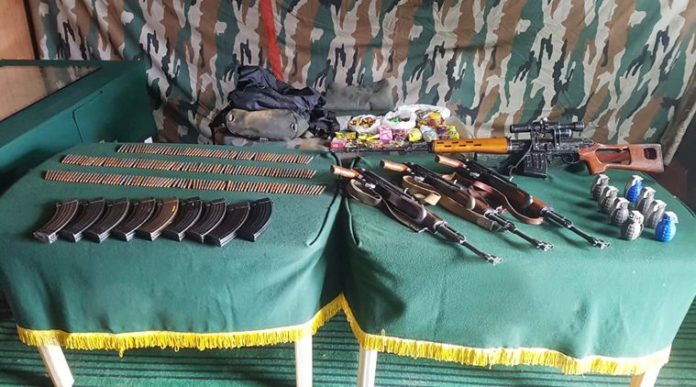
He said a huge quantity of arms and ammunition was recovered from the three slain terrorists which include a US-made M-4 Carbine, one Ak-47, five magazines, a few grenades and a UBGL.

-CHK/ARK

Meghalaya to close all entry points from July 24 to 31 amid spike in COVID-19 cases

New Delhi (NVI): The Meghalaya government has decided to close all entry points of the state from July 24 to 31 amid rise in coronavirus cases.

Chief Minister Conrad K Sangma said only people engaged in essential services will be permitted to enter the state during this period.

The state government took this decision to reduce the burden on the health worker and administration engaged in intensive surveillance for the past four months, according to media reports.

The entry points of Byrnihat, Ratacherra, Bajengdoba, Tikrikilla, Mirjumla and Hallidayganj will be shut during this period.

According to latest figures, the total number of coronavirus cases in the stated stand at 377 while the state has recorded 2 fatalities from the virus so far.

-CHK

No force in world can take away land from India: Rajnath in Leh

(Updating earlier copy)

New Delhi (NVI): Defence Minister Rajnath Singh, while interacting with troops in Ladakh today, said that no country in the world can take away even an inch of land from India. He said that talks on the border row with China were underway to resolve the dispute in the most amicable way.

Rajnath, who arrived in Ladakh this morning said that India-China talks should resolve the border dispute, but to what extent, he can’t guarantee. He was interacting with soldiers at Lukung post.

“Talks are underway to resolve the border dispute but to what extent it can be resolved, I cannot guarantee. But I can assure you that not even an inch of our land can be taken by any power in the world. If solution can be found by talks, there is nothing better,” Singh said.

Singh, who arrived in Ladakh over a month after the Galwan Valley clashes last month, assured the troops that the sacrifice of Indian soldiers killed in the face-off will not go in vain. 20 Indian soldiers had lost their lives in violent clashes with the Chinese troops on June 15.

The Defence Minister, who is on a two-day long visit to take stock of the military preparedness in the region amid the ongoing tension with China, was accompanied by Chief of Defence Staff (CDS) General Bipin Rawat and Army chief General Manoj Mukund Naravane.

Earlier today, taking to Twitter, Rajnath said, “Leaving for Leh on a two-day visit to Ladakh and Jammu-Kashmir. I shall be visiting the forward areas to review the situation at the borders and also interact with the Armed Forces personnel deployed in the region. Looking forward to it.”

Singh visited Stakna forward areas after landing in Ladakh where the troops showed him paradropping skills of the armed forces.

This is Rajnath’s first visit to Ladakh after an escalation in tensions along the LAC following the Galwan valley clashes.

Both sides recently held the fourth round of military-level talks on disengagement in eastern Ladakh. In the talks between corps commanders of the Indian and Chinese armies, that started on Tuesday and stretched into the early hours of Wednesday, both sides discussed the roadmap for further reducing tensions along the Line of Actual Control (LAC).

Singh’s visit also comes exactly two weeks after Prime Minister Narendra Modi made a surprise trip to Ladakh, when he addressed troops and signalled the country’s firmness in dealing with the India-China border row.

-CHK/ARK

IndiGo’s ‘6E double seat’ option to book 2 seats for single passenger to ensure safe travel

Representational image

New Delhi (NVI): Indian airlines, IndiGo, has launched 6E double seat bookings scheme that allows passengers to book two seats for a single passenger, to ensure safe travel amid Covid-19 pandemic.

Under the scheme, in 6E double seat bookings, only one boarding pass is generated for the two seats, the offer will be effective from July 24.

The passengers will be able to purchase the 6E double seat from IndiGo’s official website, at the time of making the original booking. In addition to this, a double seat may be purchased upto 24 hours prior to the scheduled departure of the flight.

The airline said, “This option can be availed by both passengers as well as travel agents and the charges for the extra seat will be up to 25 percent less the original booking cost.

Furthermore, this facility will not be available through travel portals and the airline’s call centre. Customers cannot avail the 6E double seat booking once the original seat is booked.

The airline further added that airport charges like PSF, UDF will not be charged under this scheme.

However, this booking will only be an airline component, GST will be charged and therefore, will be at a lower price rate than the total fare paid for the original booking.

-RJV

MUST READ