Wednesday, April 8, 2026
Home Blog Page 1282

Far from home, Srinagar cops get frequent briefings to stay strong on streets

Abid Bashir

Srinagar (NVI): The personnel of Jammu and Kashmir police, implementing lockdown in Srinagar, have been away from their families for over one-and-a-half months and working under stress but they maintain their cool while performing their crucial duty of saving lives.

This is thanks to the frequent briefings given to them by their senior officers to remain mentally strong and stress-free on the job.

That’s why there has been no complaint against the police from the public in Srinagar, “barring one incident where a Srinagar Municipal Corporation (SMC) employee alleged that he was beaten, explains Senior Superintendent of Police (SSP), Srinagar, Haseeb Mughal to NVI.

Mughal said the cops are briefed on moral, physical and psychological grounds.
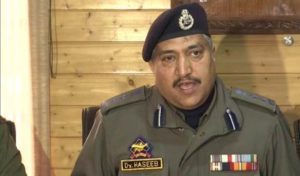
Srinagar Police chief Haseeb Mughal

“We tell them do’s and don’ts. We tell them that whatever you are doing on the ground, that’s for the cause of saving humanity. Earlier, there were only morning and evening briefings, but in times of Covid-19, there are at least four briefings for them every day,” the senior officer said.

The SSP said that the policemen deployed on the ground have high morale despite being away from their homes for almost a month-and-a-half. “We are making day deployments, night deployments and mobile deployments in mobile bunkers. Then in police stations, our SDPOs and other officers use public address systems asking people to stay at home. Those who are still violating restrictions are being dealt with as per the law,” he said.

The senior police officer said so far 130 FIRs have been registered in Srinagar district against the violators of lockdown. “Some 250 people have been arrested so far,” Haseeb said. “We also provide survival kits (ration, edibles and grocery items) to the needy people and so far 400 families have been covered and the process is on.”

Haseeb said that police is also present at the quarantine centers and is actively taking part in contact tracing process. “In Srinagar, every medical team is accompanied by a police team to ensure timely screening of suspects,” he said, adding that majority of people have so far cooperated with police.

The senior police officer said that there has been no complaint from the people against the police so far. “Barring one incident where a Srinagar Municipal Corporation (SMC) employee alleged that he was beaten, there is no complaint against police in Srinagar,” he said.

“We have strictly directed boys to persuade those violating lockdown amicably but there are some fringe elements, who don’t understand and we have acted against them as per the law,” he added.
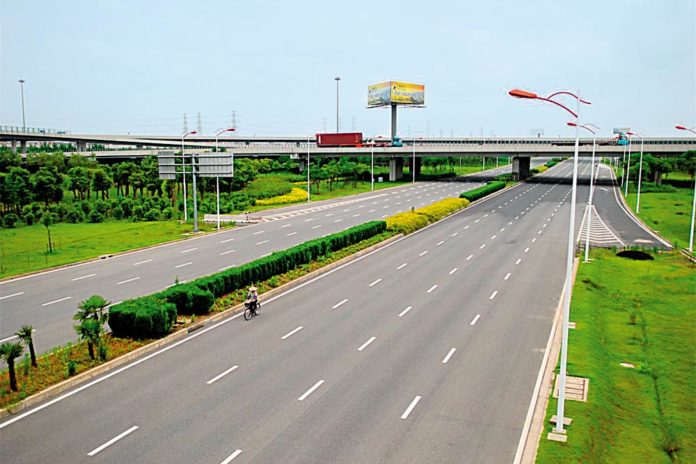
Road min launches dashboard with list of dhabas, truck repair shops to help drivers

highway construction

New Delhi (NVI):  The road transport ministry has created a dashboard link on its website providing list of ‘dhabas’ and truck repair shops, in a bid to help drivers engaged in transporting essential goods or other cargo at different places in the country amid the coronavirus pandemic.

The link will help drivers find dhabas (road-side eateries) and truck repair shops across the country by various organisations like NHAI, States, Oil Marketing companies, the Ministry of Road Transport and Highways (MoRTH) said in a statement today.

The list can be accessed at https://morth.nic.in/dhabas-truck-repair-shops-opened-during-covid-19, it said.

“This is intended to facilitate the truck/cargo drivers and cleaners in their movement while traveling between different places of the country for delivering required goods in the present challenging times of lockdown announced to curb Covid-19 pandemic,” the Ministry said.

“A regular contact is being maintained with various stake holders particularly States/UTs, Oil Marketing Companies(OMCs), etc in providing information which is then updated on the dashboard link on MoRTH website,” it added.

NHAI’s centralized call number 1033 has also been enabled to answer calls and help drivers/cleaners to find information about the dhabas and repair shops along National Highways, the ministry said.

However, the ministry stated that these Dhabas and repair shops, drivers, cleaners or any other person in the chain of movement of goods, shall follow all the necessary precautions and healthcare protocols of social distancing, use of masks, hygiene, etc.

Coronavirus cases reach 8,648 in Pakistan, 181 dead

COVID-19: Pakistan imposes mini-lockdown in Islamabad

New Delhi (NVI): The total number of coronavirus cases in Pakistan has reached 8,648, with 181 deaths so far, according to Geo News.

Nearly half of the total confirmed cases are from Punjab province alone, at 3,721.

Looking at the breakdown of cases, the Sindh province has reported 2,767 cases while Balochistan has 432 cases so far. The Khyber Pakhtunkhwa Province has 1,235 cases, Islamabad 181, Gilgit Baltistan 263 and 49 in Pakistan occupied Kashmir (PoK).

No new cases of recovery were reported in the last 24 hours. So far, around 1,800 COVID-19 patients have recovered from the virus in the country.

Pakistan is under lockdown for over a month now to curb the spread of coronavirus.

Doubling rate of corona cases improves from 3.4 to 7.5 days: Health Ministry

New Delhi (NVI): India’s doubling rate of Covid-19 cases has improved to 7.5 days as compared to 3.4 days before the lockdown, the Union Home Ministry said today.

The current doubling rate was calculated using the growth over the past seven days, the Ministry said, adding that doubling rate for the week before lockdown was 3.4, and has improved to 7.5 as on 19th April.

The ministry also released a list of 18 States that have shown improvement in doubling rate as compared to the national average:

Doubling rate- Less than 20 days:

Delhi (UT)- 8.5 days

Karnataka- 9.2 days

Telangana- 9.4 days

Andhra Pradesh- 10.6 days

J&K (UT)- 11.5 days

Punjab- 13.1 days

Chhattisgarh – 13.3 days

Tamil Nadu- 14 days

Bihar- 16.4 days

Doubling rate- Between 20 days to 30 days:

A&N (UT) – 20.1 days

Haryana – 21 days

Himachal Pradesh – 24.5 days

Chandigarh (UT)- 25.4 days

Assam – 25.8 days

Uttarakhand – 26.6 days

Ladakh (UT) – 26.6 days

Doubling rate- More than 30 days:

Odisha – 39.8 days

Kerala – 72.2 days

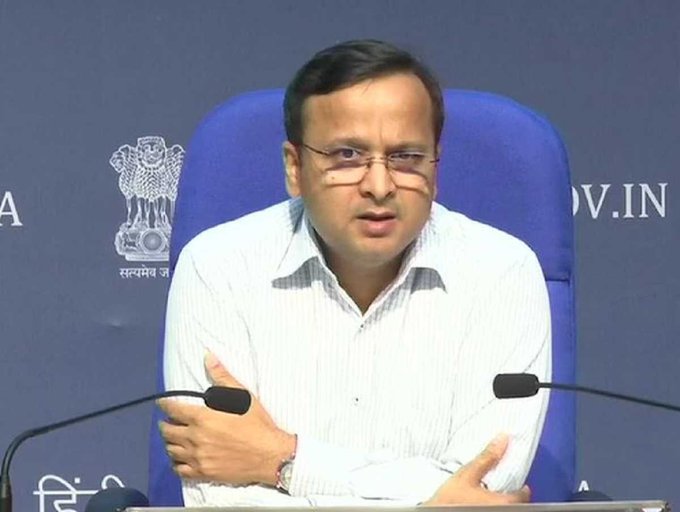
Apart from this, all COVID-19 patients in Goa were discharged from hospital after recovery, and now Goa has no active case, said Lav Aggarwal, Joint Secretary, Union Health Ministry during the daily briefing.

He said that three districts – Mahe (Puducherry), Kodagu (Karnataka) & Pauri Garhwal (Uttrakhand) have also not reported any fresh cases during the last 28 days. “There are now 59 additional districts from 23 States/UTs that have not reported any fresh cases during the last 14 days,” he added adding six new districts have been included in this list- Dungarpur & Pali in Rajasthan, Jamnagar and Morbi in Gujarat North Goa in Goa and Gomati in Tripura.

The Joint Secretary further said that a total of 17,265 confirmed cases are reported for COVID-19 in the country. “As many as 2547 persons i.e. 14.75 per cent of total cases have been cured/discharged after recovery. A total of 543 deaths have been reported so far due to COVID-19,” he said.

COVID-19 can create food shortage, says Bangladesh PM

Bangla PM raises Teesta river issue with Modi

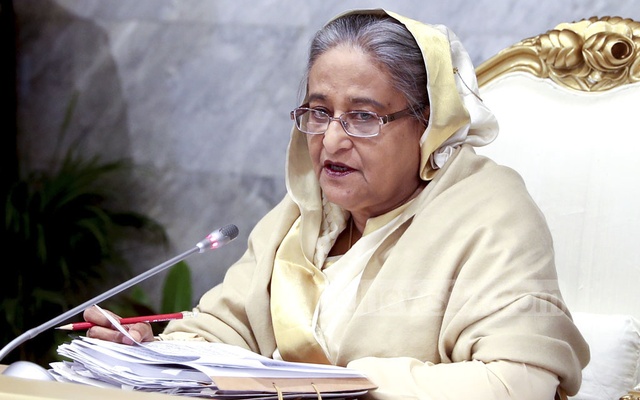
New Delhi (NVI): Prime Minister Sheikh Hasina today urged all the concerned to produce and preserve foodgrains in Bangladesh mentioning that the world might face famine in the coming days as coronavirus will create a shortage of food.

The total number of deaths from the deadly coronavirus continues to rise in Bangladesh as 10 more people have died in the last 24 hours, taking the total casualties in the country to 101, according to United News of Bangladesh.

Besides, a record number of 492 people tested positive for coronavirus during the period, raising the number of such cases in the country to 2,948.

Meanwhile, Additional Director General of the Directorate General of Health Services (DGHS) Prof Nasima Sultana said, “We’re in a great crisis”.

“The infection rate in Gazipur has gone up and also in Kishoreganj. 19.5 per cent of the newly-infected people are from Gazipur, while 13 per cent from Kishoreganj,” Nasima added.

30 new COVID-19 cases in Afghanistan, total rises to 1,026

New Delhi (NVI): With 30 new positive COVID-19 cases in Afghanistan in the past 24 hours, the total number of confirmed coronavirus cases have reached 1,026 in the country, according to Afghan media reports.

Among the new coronavirus cases, 15 have been reported in Kabul, 6 at Herat, 4 at Laghman, 4 at Kunar and 1 at Nangarhar, according to the country’s Health Ministry.

Meanwhile, the head of Shinozada Hospital in Kabul has died from the coronavirus, reports said. The hospital was closed several days ago after the first COVID-19 case was confirmed, as per media reports.

At a press conference held today, spokesman for the Health Ministry Wahidullah Mayar said that the country will receive 5,000 kits today from the UN, adding that more will be bought to solve the problem, reported Tolo News.

In another development, three patients lost their lives in Kabul, Kandahar and Balkh provinces, increasing the total number of fatalities in Afghanistan to 36.

Six inter-ministerial teams to assess Covid-19 situation in 4 states

(Representational/file photo)

New Delhi (NVI): The Central government has constituted six Inter-Ministerial Central Teams for West Bengal, Maharashtra, Madhya Pradesh and Rajasthan to take stock of complaints regarding the implementation of lockdown, supply of essential commodities, social distancing and preparedness of health infrastructure to deal with the spread of COVID-19.

These ICMTs will make an on-spot assessment of the situation and issue necessary directions to State Authorities for its redressal and submit their report to Central Government in larger interest of general public, the Ministry of Home Affairs said in a statement released today.

Two teams have been constituted each for West Bengal and Maharashtra and 1 each for Madhya Pradesh and Rajasthan.

“Situation is specially serious in Indore (MP), Mumbai and Pune (Maharashtra), Jaipur (Rajasthan) and Kolkata, Howrah, Medinipur East, 24 Parganas North, Darjeeling, Kalimpong and Jalpaiguri in West Bengal,” the statement read.

The ICMT’s will also focus on safety of health professionals and conditions of the relief camps for labour and  poor people in these areas.

“It may be mentioned that if the incidents of violations are allowed to occur without any restraining measures in hotspot districts or emerging hotspots or even places where large outbreaks or clusters may be expected and pose a serious health hazard, both for the population of these districts and for that living in other areas of the country. After analyzing the prevalence of such violations in major hotspot districts, it is clear to the Central Government that the situation is especially serious in the above-mentioned areas and expertise of the Centre need to be used,” the Ministry said in the statement.

The Committees have been constituted by the Central Government in exercise of the powers, conferred, inter alia, under Section 35(1), 35(2)(a), 35(2)(e) and 35(2)(i) of the Disaster Management Act 2005, the order read.

These IMCTs will focus their assessment on the compliance and implementation of lockdown measures as per guidelines issued under the Disaster Management Act 2005, it said.

These teams will also focus on issues like the supply of essential commodities, social distancing in movement of people outside their homes, preparedness of the health infrastructure, hospital facility and sample statistics in the District, safety of health professionals, availability of test kits, PPEs, masks and other safety equipment, and conditions of the relief camps for labour and poor people, it added.

Govt allows stranded labourers to work, but with conditions

Representational image

New Delhi (NVI): The Ministry of Home Affairs has issued a Standard Operating Protocol (SOP) for enabling the movement of migrant labourers who are stranded in different parts of the country amid the nationwide coronavirus lockdown.

In its order issued yesterday, the MHA said that workers stranded in relief camps could go to work within the states they are in but didn’t give permission to let them go back to their home states or allow any interstate movement.

“Since additional new activities, outside the containment zones, have been permitted in the consolidated revised guidelines with effect from 20th April 2020, these workers could be engaged in industrial, manufacturing, construction, farming and MNREGA works,” the MHA order read.

However, the Government has released some guidelines in order to facilitate their movement within States/UTs.

The migrant labourers currently residing in relief or shelter camps in states/UTs should be registered with the concerned local authority and their skill mapping be carried out to find out their suitability for various kinds of works, the order said.

In the event, that a group of migrants wish to return to their places of work, within the state where they are presently located, they would be screened and those who are asymptomatic would be transported to their respective places of work, as per the new SOP released by MHA.

“It may be noted that there shall be no movement of labour outside the State/UT from where they are currently located,” the order read.

During the journey by bus, it would be ensured that safe social-distancing norms are followed and the buses used for transport are sanitised as per the guidelines of the Health authorities, it said.

The National Directives for COVID-19 Management issued under the consolidated revised guidelines dates 15th April 2020 shall be strictly followed.

The local authorities shall also provide for food and water etc., for the duration of their journey, the SOP added.

UN body launches fund to help prevent rural food crisis amid COVID-19

Representational image

New Delhi (NVI): The UN International Fund for Agricultural Development (IFAD) today announced USD 40 million to support farmers and rural communities to help them continue growing and selling food to prevent rural food crisis.

With the COVID-19 pandemic and economic slowdown threatening the lives and livelihoods of the world’s most vulnerable people, IFAD has also launched an urgent appeal for additional funds.

As part of the broader UN socio-economic response framework, these funds will ensure that farmers in the most vulnerable countries have timely access to inputs, information, markets and liquidity.

On top of its own contribution, IFAD aims to raise at least USD 200 million more from Member States, foundations and the private sector.

IFAD’s new multi-donor fund, the COVID-19 Rural Poor Stimulus Facility, will mitigate the effects of the pandemic on food production, market access and rural employment.

“We need to act now to stop this health crisis transforming into a food crisis,” Gilbert F. Houngbo, President of IFAD said. “The fallout from COVID-19 may push rural families even deeper into poverty, hunger and desperation, which is a real threat to global prosperity and stability. With immediate action, we can provide rural people with the tools to adapt and ensure a quicker recovery, averting an even bigger humanitarian crisis.”

With movements restricted to contain further spread of the virus, many small-scale farmers are unable to access markets to sell produce or to buy inputs, such as seeds or fertilizer.

In addition to this, closures of major transport routes and export bans are also likely to affect food systems adversely.

As the entire production chains are disrupted and unemployment rises, the most vulnerable include daily labourers, small businesses and informal workers, who are very often women and young people. The return of workers from cities affected by lockdowns will put further strain on rural households, which will also stop receiving much needed remittances.

According to a recent United Nations University study, in a worst-case scenario, the economic impact of the pandemic could push a further half-billion people into poverty.

“This pandemic is threatening the gains we have made in reducing poverty over the past years. To avoid serious disruption to rural economies, it is essential to ensure agriculture, food chains, markets and trade continue to function,” said Houngbo.

“A majority of the world’s most impoverished people are already suffering the consequences of climate change and conflict. An economic downturn in rural areas could compound these effects, generating more hunger and increasing instability, especially in fragile states.”

The Rural Poor Stimulus Facility will provide inputs for production for small-scale producer, facilitate access to markets to support small-scale farmers to sell their products in conditions where restricted movement is interrupting the functioning of markets.

It will also provide targeted funds for rural financial services to ensure sufficient liquidity is available and to ease immediate loan repayment requirements to maintain services, markets and jobs for poor rural people and will use digital services to share key information on production, weather, finance and markets.

IFAD has had significant experience in working in fragile situations improving the resilience of rural populations. For example, in Sierra Leone during the Ebola outbreak, IFAD-supported banks were the sole providers of banking and financial services in affected areas.

Even before the COVID-19 pandemic, IFAD was stepping up its programmes and calling on member states to increase investments in rural development to achieve Sustainable Development Goal 2 – ending hunger.

“A timely response to the pandemic is an opportunity to rebuild the world’s food systems along more sustainable and inclusive lines and build the resilience of rural populations to crisis, whether related to health, climate or conflict,” said Houngbo.

IFAD has received requests from governments in more than 65 countries to help respond to the impact of the pandemic. It has already adapted its projects and diverted funds to support this.

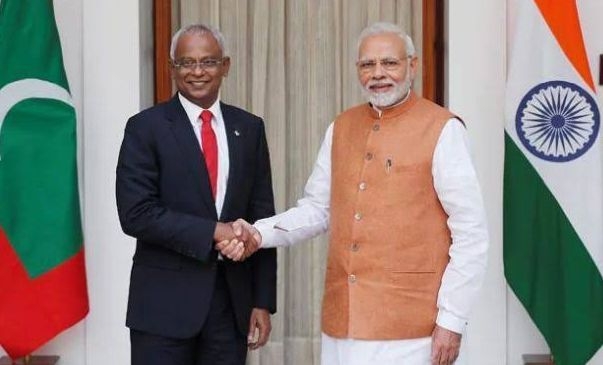
PM Modi talks to Maldivian President

New Delhi (NVI): Prime Minister Narendra Modi today had a telephonic conversation with the Maldives President, Ibrahim Mohamed Solih, as the two leaders updated each other about the current state of COVID-19 infections in their countries.

During the conversation, they expressed satisfaction that the coordination modalities agreed between SAARC countries were being implemented actively, the Prime Minister’s Office said in a statement.

President Ibrahim Solih told PM Modi that the Indian medical team deployed earlier to Maldives, and the essential medicines gifted by India, had contributed towards controlling the spread of the infection in the islands, the PMO said.

Apart from that, Prime Minister Modi also noted the special challenges that the pandemic poses for a tourism-dependent economy like the Maldives, and assured the Maldivian President of continued Indian support for minimising the health and economic impact of COVID-19.

The two leaders agreed that their officials would remain in touch on issues arising out of the present health crisis, as well as other aspects of bilateral cooperation, the PMO said.

MUST READ