Saturday, June 20, 2026
Home Blog Page 1310

50,000 people brought back to their homes so far: J&K Govt

Srinagar (NVI): Jammu and Kashmir government today said that as many as 50,000 people including students and labourers from the Union Territory have been evacuated safely from various parts of India and abroad amid Covid-19 lockdown.

All these people were brought to Srinagar through Srinagar-Jammu highway after thorough screening at Lakahpur. Besides, this, the government said that 7,264 persons were also brought home through special trains at Jammu and Udhampur till May 15.

According to a detailed break up about the figures, Rajdhani Express from Delhi has brought over 900 stranded J&K residents to Jammu this morning while two trains — one from Delhi and other from Aligarh today reached at Railway station Udhampur carrying 523 and 781 passengers respectively.

In a statement issued here, the government said that at Udhampur, the trains were received by Deputy Commissioner, Piyush Singhla, who had a brief interaction with the passengers about their journey and facilities. He informed that the district administration Udhampur has made elaborate arrangements for reception and departure of these passengers to their homes in different districts of J&K. “Corona warriors are facilitating the returnees to reach their homes”, he said.

The DC informed that the district authorities are ensuring strict adherence to the guidelines issued by Ministries of Home Affairs and Health & Family Welfare regarding COVID-19 during the boarding and de-boarding process in the district. “It is being ensured that the passengers observe social distancing and wear masks,” the official statement said.

As per the official communique, of the 49,218 returnees till May 15, 2020 (morning) coming via Lakhanpur, included 11,513 from Punjab, 18,286 from Himachal Pradesh, 3,905 from Delhi, 650 from Gujrat, 1,538 from Rajasthan, 2,401 from Haryana, 96 from Chhattisgarh, 2,666 from Uttarakhand, 326 from Maharashtra, 2,766 from Uttar Pradesh, 42 from Odhisa, 35 from Assam, 814 from Madhya Pradesh, 88 from Dehradun, 486 from Chandigarh, 316 from Telengana, 142 from Bihar and 3,148 from other states and UTs.

UK flies home 16,500 citizens stranded in India

UDAN scheme
Representational image

New Delhi (NVI): The UK has repatriated more than 16,500 of its citizens stranded in India via 64 special charter flights in the past 38 days, the British High Commission said in a statement today.

The British nationals were picked up from 32 locations, across the length and breadth of India, the High Commission said.

“Almost half of the Brits repatriated globally thus far on UK charter flights have been from India. It has been a large and complex operation with over 500 members of staff in India working around the clock to ensure flights operated smoothly and passengers could reach airports,” it said.

The High Commission office said that it worked hand-in-hand with the Indian government and local authorities to make the repatriation process successful as there was a strict lockdown in place the country amid the coronavirus outbreak.

One British national stranded in a remote village in Manipur had to travel more than 2,700 km for their flight home from New Delhi, it said.

Jan Thompson, Acting High Commissioner to India, said: “The last currently scheduled charter flight left for London Heathrow from Amritsar today with over 300 passengers on board. This unprecedented repatriation effort would not have been possible without the excellent support of the Indian Government. Continued cooperation between our nations will be essential in the fight against this pandemic.”

Since the outbreak of coronavirus, the UK Government has helped 1.3 million Britons from around the world return on commercial flights and organised special charter flights from 27 different countries and territories, the High Commission said in its statement.

The BHC further informed that there is no further planned UK Government charter flights but the situation will be kept under review. “These flights were organised for British Nationals. Where possible, seats were also allocated to vulnerable non-British UK residents with Indefinite Leave to Remain and to other foreign nationals,” it added.

Nepal’s Covid tally climbs to 258 after 9 new cases identified

New Delhi (NVI): The total number of coronavirus cases have increased to 258 in Nepal with 9 new cases confirmed today, according to the local media reports.

According to the country’s Ministry of Health and Population, the new cases were confirmed through PCR tests conducted at the National Public Health Laboratory, Kathmandu, and Bheri Hospital, Nepalgunj.

The infected persons include a 37-year-old male from Makawanpur, and 18, 20, 22, 25, 25, 27, 32, and 36-year-old males from wards-1,2, and 3 of Narainapur Rural Municipality in Banke district have been tested positive.

All of the patients are in normal health condition and in touch with health workers, the ministry said.

Meanwhile, there are 222 active COVID-19 patients currently undergoing treatment in hospitals across the country, as per media reports.

So far, 36 people have been cured or recovered from the virus.

Covid-19: 2 test positive at Rohingya camp in Bangladesh’s Cox’s Bazar

New Delhi (NVI): Two Rohingya refugees were tested positive for coronavirus today at a refugee camp in Bangladesh’s Cox’s Bazar, according to UNHRC, the UN refugee agency.

The refugee camps in southern Bangladesh are home to more than a million Rohingya refugees.

The total number of coronavirus infections in Bangladesh rose to 20,065 after 1,202 new infections were reported in the last 24 hours.

The total number of deaths from coronavirus continues to rise as 15 more people died during the period, taking the total casualties in the country to 298, according to United News of Bangladesh.

Meanwhile, in line with the extended general holidays, the Roads and Highways Division (RHD) said the public transport services will also remain suspended until May 30.

414 new Covid-19 cases in Afghanistan take tally to 6,053

New Delhi (NVI): At least 414 new coronavirus cases have been reported in Afghanistan in the last 24 hours, taking the total number of cases to 6,053 across the country, according to Afghan media reports.

Among the new cases, 162 were reported in Kabul, 132 in Herat, 26 in Nangarhar, 19 in Samangan, 13 in Kandahar, 12 in Paktia, 8 in Laghman, 2 in Ghazni, 1 in Helmand, 5 in Kunduz, 9 in Jawzjan, 6 in Faryab, 5 in Zabul, 4 in Paktika, 2 in Kapisa, 3 in Badakhshan, 1 in Sar-e-Pul, 1 in Daikundi and 3 in Khost.

Kabul still tops the list with 1,718 positive cases of coronavirus.

According to the country’s health ministry, 17 people have died of COVID-19 in the last 24 hours, bringing the national death toll to 153.

Meanwhile, the Afghan government increased the testing capacity to more than 1,100 samples per day. Almost 1,122 samples were tested in the last 24 hours.

So far more than 20,854 samples have been tested.

The number of confirmed cases is going up as people are not taking the lockdown seriously and markets and streets are flooded with crowd since the last two days, despite warnings by the country’s Public Health Ministry, local media reports said.

At least 745 people have been cured or completely recovered across the country.

COVID-19 cases surpass 38,000 in Pakistan; 822 dead

New Delhi (NVI): The total number of positive coronavirus in Pakistan has increased by more than 1,500 cases, taking the overall tally to 38,290 with at least 822 fatalities recorded so far.

Looking at the breakdown of cases, Sindh province has reported 14,916 coronavirus cases, highest among all the provinces, while Punjab has 13,914 positive cases.

On the other hand, Khyber-Pakhtunkhwa has recorded 5,678 cases, Balochistan is at 2,310, Gilgit-Baltistan at 501, Islamabad at 866 and Pakistan-occupied Kashmir is at 105 cases so far, according to Geo News.

In addition to this, the Civil Aviation Authority of Pakistan has extended the suspension of international flight operations till May 31, according to the directions of the government.

Meanwhile, Punjab government has allowed large shopping malls across the province to reopen from Monday, according to media reports.

Coronavirus could kill 1,50,000, infect more than 200 mn in Africa: WHO

New Delhi (NVI): The novel coronavirus could kill at least 1,50,000 people in Africa and infect more than 200 million people in a year unless urgent action is taken, according to a WHO modelling study.

The prediction by WHO comes amid stark warnings that COVID-19 is threatening a health emergency in developing countries.

According to the research published in the BMJ Global Health journal, authors have said that although many African nations have been swiftly adopting containment measures, it is being warned that health systems could still quickly become overwhelmed.

The rates of exposure to the virus and infection in the 47 countries were modelled by experts at the WHO’s Africa office under its regional remit, which excludes Djibouti, Egypt, Libya, Morocco, Somalia, Sudan and Tunisia.

The researchers also claimed that a surge in COVID-19 hospital admissions would divert limited resources needed to combat HIV, tuberculosis, malaria and malnutrition in the region.

The modelling has estimated what would happen for each country over the period of a year from the beginning of widespread and sustained community transmission.

According to the research, around 231 million people of the 1 billion people in the region were expected to be infected in the 12 month period – most of them showing few or no symptoms.

An estimated 4.6 million people would need to be admitted to hospital, while 140,000 would have severe COVID-19 infection and 89,000 would be critically ill, according to the study.

The virus would likely circulate within the region for longer than other countries, possibly for several years, researchers stated.

The research estimated that the transmission to be greatest in small nations, with Mauritius found to have the highest risk of exposure. Of the region’s large countries, South Africa, Cameroon and Algeria were also in the top ten for exposure risk.

Some 88 per cent people would not know they had the virus, with either mild symptoms or none at all, the report assumed, while four percent would suffer severe or life-threatening illness.

Rajnath commissions Indian Coast Guard Ship, 2 interceptor boats

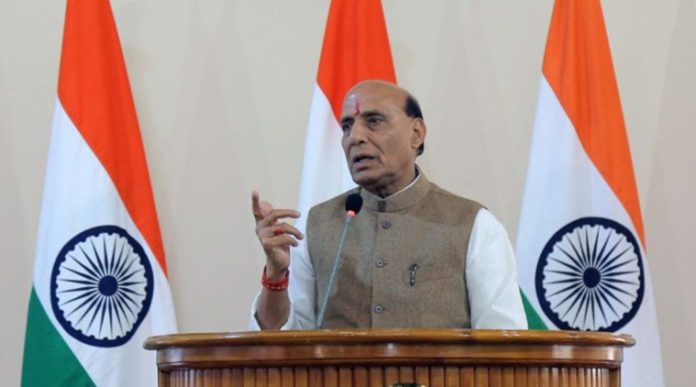
New Delhi (NVI): Defence Minister Rajnath Singh today commissioned Indian Coast Guard Ship (ICGS) ‘Sachet’ and two interceptor boats (IBs) in Goa, via video conference.

The two interceptor boats– C-450 and C-451 — and ICGS ‘Sachet’ are indigenously build and will enhance maritime security, the Defence Minister said, adding they symbolise self-reliance.

The ICGS Sachet, the first in the series of five offshore patrol vessels has been designed and built indigenously by Goa Shipyard Limited (GSL). It is fitted with state-of-the-art navigation and communication equipment, the Ministry of Defence said in a statement.

On the occasion, Rajnath Singh said, “The commissioning of these ships is an important milestone in India’s coastal capability building process. Also, despite challenges like COVID-19, it is also a great example of our commitment and determination for the safety and security of the country. The rising power of ‘our sea guard’, ICG and Indian shipbuilding industry is a matter of pride for the country.”

Speaking on the government’s vision of ‘SAGAR’ (Security and Growth for All in the Region), he said, “The oceans are the lifelines of not only our country, but also global prosperity.” Safe, protected and clean seas provide economic opportunities for our nation building.

“India is an emerging maritime power, and our prosperity is also very dependent on the sea. Being a responsible maritime power, Oceans are priority of the government”, he added.

Praising the role of ICG guarding the coastline, Rajnath Singh said, “As the fourth largest Coast Guard in the world, it has established itself as a reliable force. It not only protects our coastline and coastal community, but also protects economic activities, and maritime environment in the Exclusive Economic Zone (EEZ).”

The Defence Minister also acknowledged that the sea can become a medium of any kind of threats sponsored by anti-national elements. Therefore it is extremely important to develop a collaborative and cooperative approach among all stakeholders.

He expressed confidence that the Coast Guard ships being inducted from today onwards will add to their strength and help in addressing the challenges related to maritime terrorism, drug trafficking, smuggling etc.

On the occasion, Director General of Indian Coast Guard Krishnaswamy Natarajan said, the commissioning event proved that despite the hurdles posed by COVID-19, the ICG moves ahead.

The new additions to the ICG fleet of vessels would assist the ICG to remain ever vigilant at sea and contribute to nation’s fight against COVID-19, he added.

Along with Rajnath Singh, Ajay Kumar, defence secretary, and D G Krishnaswamy Natarajan, Director General of ICG, were also present on the occasion. Minister of State for Defence Shripad Naik was present at Vasco facility of Goa Shipyard Ltd at the time of commissioning.

The 105-metre ship displaces approx 2350 tons and is propelled by two 9100 KW diesel engines designed to attain a maximum speed of 26 knots, with an endurance of 6000 nm ( nautical miles).

The Ministry of Defence said that it is for the first time in Indian maritime history that a ship was commissioned through digital medium, maintaining strict protocol of social distancing in the backdrop of COVID-19 pandemic.

The interceptor boats C-450 and C-451 are indigenously designed & built by Larsen & Toubro Shipyard Hazira. It fitted with latest navigation and communication equipment. The two 30 metre long boats are capable of achieving speeds in excess of 45 knots and designed for high speed interception, close coast patrol and low intensity maritime operations.

The ships, on joining the Coast Guard fleet, will be deployed extensively for Exclusive Economic Zone (EEZ) surveillance, coastal security and other duties as enshrined in the Coast Guard charter of duties, to safeguard the maritime interests of the Nation.

With the commissioning of these ships, the ICG has reached a landmark 150 ships & Boats and 62 aircraft.

Beside this, 40 ships are in various stages of construction at different Indian Shipyards and 16 advanced light helicopters are under production at Hindustan Aeronautics Limited, Bengaluru.

In the year 2019, the ICG has to its credit of saving about 400 lives at sea, 4,500 lives as part of assistance rendered to civil authorities and undertook 32 medical evacuations, the MoD said.

World Bank approves $1 bn to protect India’s poorest from COVID-19

Representational Image

New Delhi (NVI): The World Bank today approved another USD 1 billion funds to accelerate India’s COVID-19 ‘Social Protection Response Program’ to support the poor and vulnerable households in the country that are severely impacted by the COVID-19 pandemic.

This is another billion-dollar support to India by World Bank to help combat Covid-19. The bank had approved USD 1 billion emergency funds for India on April 3.

“This takes the total commitment from the Bank towards emergency COVID-19 response in India to $2 billion. A $1 billion support was announced last month towards immediate support to India’s health sector,” the World Bank said in a statement.

The new support will be funded in two phases – an immediate allocation of USD 750 million for fiscal year 2020 and a USD 250 million second tranche that will be made available for fiscal year 2021, it said.

The first phase of the operation will be implemented countrywide through the Pradhan Mantri Garib Kalyan Yojana (PMGKY). It will help scale-up cash transfers and food benefits, using a core set of pre-existing national platforms and programs such as the Public Distribution System (PDS) and Direct Benefit Transfers (DBT).

The fund will also provide robust social protection for essential workers involved in COVID-19 relief efforts and benefit vulnerable groups, particularly migrants and informal workers, who face high risks of exclusion under the PMGKY.

With the second tranche of USD 250 million, the program will deepen the social protection package, whereby additional cash and in-kind benefits based on local needs will be extended through state governments and portable social protection delivery systems.

“The response to the COVID-19 pandemic around the world has required governments to introduce social distancing and lockdowns in unprecedented ways. These measures, intended to slow down the spread of the virus have, however, impacted economies and jobs – especially in the informal sector. India with the world’s largest lockdown has not been an exception to this trend,” said Junaid Ahmad, World Bank Country Director in India.

“In this context, cash transfers and food benefits will help the poor and vulnerable access a ‘safety bridge’ towards a time when the economy will start to revive,” he added.

Social protection is a critical investment since half of India’s population earns less than USD 3 a day and are precariously close to the poverty line, the World Bank statement said.

Over 90 per cent of India’s workforce is employed in the informal sector, without access to significant savings or workplace based social protection benefits such as paid sick leave or social insurance, it said.

This program will create a system that will strengthen the delivery of India’s safety nets program. It will help India to move from more than 460 fragmented social protection schemes to a single integrated system that is fast and more flexible, acknowledging the diversity of needs across states.

Furthermore, it will enable geographic portability of social protection benefits that can be accessed from anywhere in the country, despite the state from which the worker belongs, ensuring food, social insurance and cash-support for all, including for migrants and the urban poor.

“The COVID-19 pandemic has also put the spotlight on some of the gaps in the existing social protection systems,” added Junaid Ahmad.

He further added, “This program will support the Government of India’s efforts towards a more consolidated delivery platform – accessible to both rural and urban populations across state boundaries. The platform draws on the country’s existing architecture of safety nets – the PDS, the digital and banking infrastructure, and Aadhaar – while positioning the overall social protection system for the needs of a 21st century India. Importantly, such a system will need to leverage India’s federalism enabling and supporting states to respond quickly and effectively in their context.”

Out of the USD 1 billion commitment, USD 550 million will be financed by a credit from the International Development Association (IDA) – the World Bank’s concessionary lending arm and USD 200 million will be a loan from the International Bank for Reconstruction and Development (IBRD), with a final maturity of 18.5 years including a grace period of five years. The remaining USD 250 million will be made available after June 30, 2020 and would be on standard IBRD terms. The program will be implemented by the Union Ministry of Finance.

The World Bank is rolling out a total of USD 14 billion fast-track package to strengthen the COVID-19 response in developing countries and shorten the time to recovery. The immediate response includes financing, policy advice and technical assistance to help countries cope with the health and economic impacts of the pandemic.

China supplying upgraded battle tanks to Pak?

(Source: Twitter/Pakistan Defence Command)

New Delhi (NVI): While the world is engaged in fight against coronavirus, China possibly is clandestinely delivering advanced battle tanks to Pakistan, clearly to boost its military capabilities against India.

According to reports, China recently delivered two VT4 battle tanks indicatively to Pakistan as part of a deal for 100 pieces of these armoured vehicles.

China’s official news channel China Central Television (CCTV) reported that the two tanks, upgraded with a turret boost design and explosive reactive armour, have been dispatched to a “foreign buyer” location.

The tanks manufactured by China North Industries Group (NORINCO) left for their destination following a launch ceremony, the report said.

Though CCTV did not identify the “foreign buyer”, earlier reports had said that Pakistan had placed order for procurement of some 100 VT4 tanks from China.

The Pakistan Army has already tested these tanks, as was evident from some photographs leaked three years back.

The VT4 tanks are said to be lightweight high mobility vehicles which can operate well in high altitude locations and the Chinese military had earlier sought to prove this through demonstrations in the Tibetan plateau.

Acquisition of these tanks will bolster Pakistani military capabilities in high altitudes, which are weak in comparison to India.

The VT4 upgraded tank, previously known as MBT3000, has extra protection capabilities, including a new explosive reactive armour, according to the CCTV report.

With a diesel engine of 1,200-horsepower, the VT4 can travel at a maximum speed of 70 kms per hour and a maximum cross-country speed of 50 kms per hour, according to the reports.

The tank is equipped with a 125-mm smooth bore gun and can fire armour-piercing fin-stabilized discarding-sabot (APFSDS), high explosive anti-tank cartridges and missiles with a 5-kilometer range, according to these reports.

MUST READ