Saturday, June 20, 2026
Home Blog Page 1312

Vande Bharat II: 149 flights to bring back Indians stuck in 31 countries from May 16

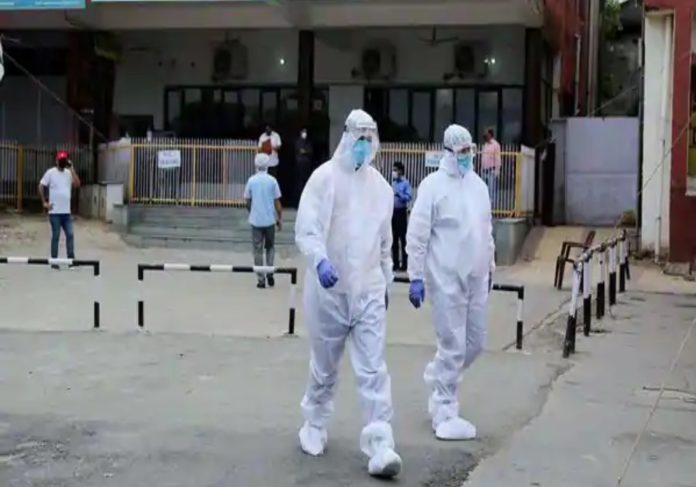
Representational Image

New Delhi (NVI): 149 flights will be operated to bring back Indians from 31 countries under the second phase of Government’s Vande Bharat mission from May 16-22, the Ministry of External Affairs said today.

The 149 flights will also include feeder flights, MEA spokesperson said, adding that an additional 18 countries have been covered under the second phase including Indonesia, Thailand, Australia, Italy, France, Germany, Ireland, Canada, Japan, Nigeria, Kazakhstan, Ukraine, Kyrgyzstan, Belarus, Georgia, Tajikistan and Armenia.

State-run carrier Air India has started bookings for these flights from today.

“As you can see, we are broadening the ambit every week in a phased manner keeping with our quarantine capacity, health protocols, etc. Till now 188,646 Indian nationals have registered to return on the portal,” the MEA spokesperson said.

The entire flight list can be checked on the website of Vande Bharat Mission.

Vande Bharat Mission, which was launched on May 7, reached its eighth day and 56 flights have been operated to bring back Indian nationals from 12 countries.

In addition to this, 904 Indians have been repatriated from Maldives by Indian Navy ships INS Jalashwa and INS Magar on 10th May and 12th May respectively, under ‘Mission Sagar’. Some others have arrived through deportation flights from various countries. In the last few days, more than 12000 Indian nationals have safely returned, the MEA spokesperson said.

Giving further details for Mission Sagar, the MEA spokesperson said that the Government has sent Indian naval ships Kesari to Maldives, Mauritius, Madagascar, Comoros and Seychelles.

“This ship has been sent in response to the request for assistance from these countries. It carries on board two medical assistance teams, consignment of Covid related essential medicines and essential food items. This is inspired by PM’s vision of Sagar – security and growth for all in the region. This is also in keeping with India’s role as a first responder in the region,” he said.

As of date, INS Kesari which departed India on 10th May is presently docked at Male. Currently, the 550 tonnes of essential food items sent on board area being offloaded, he added.

Coronavirus may ‘never go away’: WHO

New Delhi (NVI): A leading World Health Organisation (WHO) official has said that coronavirus “may never go away” and could become endemic.

During a virtual press briefing in Geneva yesterday, WHO Emergencies Director Michael Ryan said that coronavirus may become just another endemic virus and people will have to learn with it.

Ryan also cited HIV, saying that it has not gone away but the world has come to terms with the virus.

“This virus just may become another endemic virus in our communities. HIV hasn’t gone away – but we have come to terms with the virus,” Ryan said.

“I’m not comparing the two diseases but I think it is important that we’re realistic. I don’t think anyone can predict when or if this disease will disappear,” he added.

Although multiple teams of scientists around the world are currently working on more than 100 potential vaccines, there are other diseases, like measles, that still haven’t been eliminated despite developing vaccines for them.

The Emergencies Director also condemned the attacks on healthcare workers, saying over 35 “quite serious” episodes were recorded in April in 11 countries. “Covid-19 is bringing out the best in us, but it’s also bringing out some of the worst,” he added.

WHO Director-General Tedros Adhanom Ghebreyesus stated, “We should all contribute to stop this pandemic.”

However, during the briefing, WHO infectious disease epidemiologist Dr. Maria Van Kerkhove sounded positive and said that the “trajectory of this outbreak” is in our hands.

The coronavirus contagion has so far claimed the lives of nearly 3,00,000 and infected more than 4.3 million around the globe.

Coronavirus cases reach 18,663 in Bangladesh; 283 dead

Bangladesh lockdown

New Delhi (NVI): The total number of coronavirus infections in Bangladesh rose to 18,663  after 1,041 new infections were reported in the last 24 hours.

The total number of deaths from coronavirus continues to rise as 14 more people died during the period, taking the total casualties in the country to 283, according to United News of Bangladesh.

As of now, the recovery rate against the number of infections in the country is 19.10 per cent while the death rate is 1.5 per cent.

Meanwhile, 482 people have been repatriated from India by the Bangladesh government today on three separate flights.

A special flight of Biman Bangladesh Airlines brought back 149 people from New Delhi while 165 Bangladesh nationals returned home from Chennai by a special flight of US-Bangla Airlines.

Coronavirus cases climb to 246 in Nepal

New Delhi (NVI): The total number of coronavirus cases have increased to 246 in Nepal with one new case being reported today, according to the local media reports.

The country’s Ministry of Health and Population said that the new case was confirmed through a PCR test conducted at the laboratory of Bharatpur Hospital in Chitwan district, The Himalayan Times reported.

The infected person is a 49-year-old male from Devchuli Municipality-12 in Nawalparasi (Bardaghat Susta East).

At present, the infected person has only come in contact with the health workers.

Earlier today, a 32-year-old male from Kathmandu and a 6-year-old girl from Kapilvastu were confirmed to have contracted the contagion, taking the count to 245.

Currently, 211 people are undergoing treatment at various hospitals in the country while 35 have completely recovered from the virus.

COVID-19 cases surge past 36,000 in Pakistan; death toll at 788

(Image source: Dawn.com)

New Delhi (NVI): The total number of positive coronavirus in Pakistan has increased by more than a thousand cases, taking the overall tally to 36,717 with at least 788 fatalities recorded so far.

Looking at the breakdown of cases, Sindh province has reported 14,099 coronavirus cases, highest among all the provinces, while Punjab has 13,561 positive cases.

On the other hand, Khyber-Pakhtunkhwa has recorded 5,423 cases, Balochistan is at 2,239, Gilgit-Baltistan at 482, Islamabad at 822 and Pakistan-occupied Kashmir is at 91 cases so far, according to Geo News.

Meanwhile, the Sindh government has decided to set up six hospitals for the infectious disease across the province.

Nearly 8,000 people have recovered from the coronavirus so far.

President to take 30% salary cut to aid Covid-19 fight, reduce expenses

New Delhi (NVI): President Ram Nath Kovind today said that he has decided to forego 30 percent of his salary for a year, as a part of steps to make more resources available for Covid-19 relief measures.

Besides, President Kovind also announced some austerity measures towards reducing expenditure of Rashtrapati Bhavan in this fiscal year.

The President had also contributed his one month’s salary to PM-CARES Fund in March.

“The President has given instructions to the Rashtrapati Bhavan to set an example by economising the expenditure, making optimal usage of resources, and dovetailing the saved money to combat Covid-19 and mitigate the people’s economic plight,” the Rashtrapati Bhavan said in a communique today.

“In the President’s estimation, this will be a small but significant contribution to realise the government’s vision of making India self-reliant (Atmanirbhar) and energise the nation to take up the challenge to fight the pandemic and continue our journey for development and prosperity simultaneously,” the statement read.

In order to reduce its expenditure, the Rashtrapati Bhavan has decided that no new capital works will be taken up in Financial year 2020-21. Only the ongoing works will be completed.

The repair and maintenance work will be minimised to only ensure proper upkeep of assets, according to the statement.

There will be substantial reduction in the use of office consumables. For instance, the Rashtrapati Bhavan will use e-technology to cut down the use of paper to avoid wastage and make the office eco-friendly. Efforts will be made to save energy and fuel by rationalising their usage, the communique said.

Apart from this, the President has decided to defer purchase of the Presidential Limousine which was to be used for ceremonial occasions. The existing resources of the Rashtrapati Bhavan and the government will be shared and used for such occasions, said the communique.

The domestic tours and programmes will be substantially reduced in order to follow the social distancing restrictions and minimise the expenditure that such exercises entail. Instead, the President will largely rely on technology to reach out to people.

In addition to this, the consumption during ceremonial occasions such as At-Home ceremonies and state banquets will be minimised by taking measures like:

* Keeping smaller guest lists to maintain social distance

* Lesser usage of flowers and other items for decoration on such occasions

* Reducing the food menu to the extent possible.

According to the communique, it is estimated that these measures will save nearly 20 per cent of the budget of the Rashtrapati Bhavan in the current financial year.

However, it will be ensured that such austerity measures would have no adverse impact on support given to outsourced/contractual workers. “Other activities taken up by the Rashtrapati Bhavan for the welfare of poor people will not be affected either,” the release added.

J&K: Militants give slip to security forces in Kulgam encounter

July 18 Shopian encounter: Army completes summary of evidence
An encounter site in Kashmir (File Pic)

(Updating earlier copy)

Abid Bashir

Srinagar, May 14 (NVI): Jammu and Kashmir police today said that the militants who were trapped in Yamrach area of South Kashmir’s Kulgam district managed to flee after an initial exchange of fire with security forces, taking advantage of the darkness.

Security forces including Police, Army and CRPF had laid a siege at Yamrach village of Kulgam district late last night after specific inputs about the presence of militants. A police official said that after forces zeroed in on the suspected house, the hiding militants opened fire. “However, there was no further contact with the militants even as searches were carried out throughout the day,” he said.

A police spokesman in a statement issued here said that during the intervening night of May 13 and 14, a specific input was received by Kulgam police about the presence of militants in village Yamrach.

“During the search operation, militants fired indiscriminately at the searching parties of forces. The troops immediately took cover and retaliated. Militants took advantage of darkness and fled from the spot,” he said.

He said that a case has been registered and investigations are underway. “Search is still in progress to track down the escaped militants,” the police spokesman said.

Srinagar airport gears up to resume domestic flights amid Covid lockdown

Abid Bashir

Srinagar (NVI): Airport authorities in Srinagar are making necessary arrangements for maintaining social distancing norms and other Covid-19 protocols as domestic flight operations are expected to resume soon across the country.

Srinagar airport has decided to start with 40 per cent flight operations soon after the Centre’s nod.


Since March 20, all flight operations across the country and also at the Srinagar international airport were cancelled in the wake of Covid-19 pandemic threat. Talking to NVI, Director at Srinagar International Airport, Santosh Dhoke, said that all the necessary protocols, Standard Operating Procedures (SOPs) are being put in place for the smooth flow of operations.

“We are ready to resume the flight operations but final call is up to the ministry of aviation (GoI). The moment they give us the nod, we will go ahead”, he said. “To begin with, we will be dealing with only 30 to 40 per cent air traffic operations.”

He said that to ensure protocol is followed in spirit and social distancing maintained among the passengers, the airport staff have started marking some important spots and in the coming few days marks will also ensure maintaining social distancing among passengers. “Special marks will be used at the checking counters to ensure social distancing among officials. Airlines will also depute their officials who will provide passengers boarding pass after showing valid PNR number. But in entire exercise, proper guidelines will be followed and no laxity will be allowed,” he said.

He said all the arrangements are being made to ensure the safety of passengers and officials. “At entrances, the computers and web cameras have been installed to magnify the boarding passes and tickets. Passes will be shown on computer screen to satisfy the security officials who will allow entry,” Dhoke said.

Similarly, at the gate, there will be a team of health officials who will check the temperature of passengers and as per government guidelines, a passenger should have Aarogya-Setu app and the indication it shows must be green. “In case it’s orange, one won’t be allowed to enter/proceed,” he said, adding that the app is mandatory. “If a passenger arrives without it he/she won’t be allowed to proceed,” he said.

A decontamination tunnel is also being installed by SMC for sanitising the passengers and their luggage also with 1 per cent of hydro-chloride. The director said that it is going to be a challenge but all the government guidelines are being followed to ensure smooth flow of air traffic and passengers that include arrivals and departures.

Over 5 lakh suggestions, most want public transport to open partially: Kejriwal

Arvind Kejriwal

New Delhi (NVI): Delhi Chief Minister Arvind Kejriwal today said that over five lakh people have given suggestions on easing lockdown restrictions in the national capital and most want buses and Metro to open partially.

During a video conference here, Kejriwal said that citizens want public transport and mall to open partially with social distancing in place. He said that many people also wanted “strict action” against those who were not wearing masks.

“Most people also felt that schools and colleges must remain closed and so should barber shops, salons and spas,” he said.

“Many people also said that hotels should stay closed but restaurants should be opened for take-away and home delivery,” he added.

The Delhi government had on Tuesday sought suggestions from people on the way forward regarding easing lockdown restrictions after the third phase of the lockdown ends on May 17.

Meanwhile, Kejriwal will meet Delhi Lt. Governor Anil Baijal at 4 pm today and brief him on the suggestions to be forwarded to the Centre.

Covid-19 threatens recent advances in health: WHO

(Pic courtesy: UNICEF)

New Delhi (NVI): The coronavirus pandemic, which has already caused a significant loss of lives and disrupted livelihoods across the world, threatens recent advances in health and progress towards global development goals, according to a WHO report.

The deadly pandemic, which has infected 4.3 million of the world population so far, threatens to throw progress off the track, highlighted in the 2020 World Health Statistics published by the World Health Organization (WHO) yesterday.

“The good news is that people around the world are living longer and healthier lives. The bad news is the rate of progress is too slow to meet the Sustainable Development Goals and will be further thrown off track by COVID-19,” said Dr Tedros Adhanom Ghebreyesus, WHO Director-General.

“The pandemic highlights the urgent need for all countries to invest in strong health systems and primary health care, as the best defense against outbreaks like COVID-19, and against the many other health threats that people around the world face every day. Health systems and health security are two sides of the same coin,” said Tedros.

WHO’s World Health Statistics — an annual check-up on the world’s health — reports progress against a series of key health and health service indicators, revealing some important lessons in terms of progress made towards the Sustainable Development Goals and gaps to fill.

The report says that life expectancy and healthy life expectancy have increased, but unequally.

According to the report, the biggest gains have been made in low-income countries, which saw life expectancy rise 21% or 11 years between 2000 and 2016 (compared with an increase of 4% or 3 years in higher-income countries).

“One driver of progress in lower-income countries was improved access to services to prevent and treat HIV, malaria and tuberculosis, as well as a number of neglected tropical diseases such as guinea worm. Another was better maternal and child healthcare, which led to a halving of child mortality between 2000 and 2018,” it said.

However, in a number of areas, progress has been stalling. Immunization coverage has barely increased in recent years, and there are fears that malaria gains may be reversed.

“And there is an overall shortage of services within and outside the health system to prevent and treat non-communicable diseases (NCDs) such as cancer, diabetes, heart and lung disease, and stroke. In 2016, 71 per cent of all deaths worldwide were attributable to NCDs, with the majority of the 15 million premature deaths (85%) occurring in low and middle-income countries,” the report said.

Poverty and low income has also lowered the prospects of getting proper healthcare facilities for many. The inability to pay for healthcare is another major challenge for such people.

“On current trends, WHO estimates that this year, 2020, approximately 1 billion people (almost 13 per cent of the global population) will be spending at least 10% of their household budgets on health care. The majority of these people live in lower-middle-income countries,” the report suggests.

Dr Samira Asma, Assistant Director General at WHO says, “The COVID-19 pandemic highlights the need to protect people from health emergencies, as well as to promote universal health coverage and healthier populations to keep people from needing health services through multisecotral interventions like improving basic hygiene and sanitation.”

In 2017, more than half (55%) of the global population was estimated to lack access to safely-managed sanitation services, and more than one quarter (29%) lacked safely-managed drinking water. In the same year, two in five households globally (40%) lacked basic handwashing facilities with soap and water in their home.

The World Health Statistics also highlight the need for stronger data and health information systems. Uneven capacities to collect and use accurate, timely, and comparable health statistics, undermining countries’ ability to understand population health trends, develop appropriate policies, allocate resources and prioritize interventions.

The report further states that for almost a fifth of countries, over half of the key indicators have no recent primary or direct underlying data, another major challenge in enabling countries to prepare for, prevent and respond to health emergencies such as the ongoing COVID-19 pandemic. “WHO is therefore supporting countries in strengthening surveillance and data and health information systems so they can measure their status and manage improvements,” it said.

“The message from this report is clear: as the world battles the most serious pandemic in 100 years, just a decade away from the SDG deadline, we must act together to strengthen primary health care and focus on the most vulnerable among us in order to eliminate the gross inequalities that dictate who lives a long, healthy life and who doesn’t,” added Asma. “We will only succeed in doing this by helping countries to improve their data and health information systems,” she added.

MUST READ