Friday, April 3, 2026
Home Blog Page 1334

Trump recommends 2 ‘game changer’ drugs for coronavirus

New Delhi (NVI): US President Donald Trump has said two drugs developed by the Food and Drug Administration (FDA) could help cure coronavirus, becoming the biggest game-changers in the history of medicine.

The US President has said that Hydroxychloroquine and Azithromycin– used for treating malaria and bacterial infections respectively — if taken together, can be helpful in curing coronavirus.

“HYDROXYCHLOROQUINE & AZITHROMYCIN, taken together, have a real chance to be one of the biggest game changers in the history of medicine. The FDA has moved mountains – Thank You! Hopefully they will BOTH (H works better with A, International Journal of Antimicrobial Agents)…..be put in use IMMEDIATELY. PEOPLE ARE DYING, MOVE FAST, and GOD BLESS EVERYONE!,” Trump tweeted.

However, the combination of two drugs to treat the deadly infection is still unproven and Trump’s announcement has got mixed reactions from the scientific community as well.

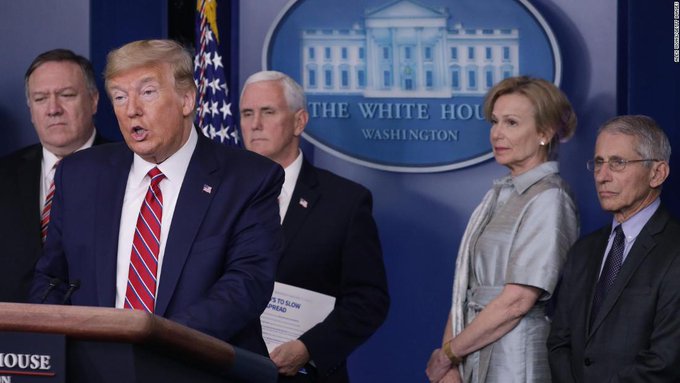
Earlier on Thursday, the US President in a press conference had announced that an existing drug (Hydroxychloroquine) prescribed for malaria and some forms of acute arthritis was among a range of drugs being tested for treating coronavirus and could soon be available to the public.

Dr. Anthony Fauci, a top infectious disease expert in the US and part of Trump’s team to combat COVID-19, contradicted the claims by Trump at the White House press conference, a day later. He has maintained that the drug is just part of the efforts by the team to find a cure for novel coronavirus.

Chloroquine, or hydroxychloroquine, has been approved to treat and prevent malaria since 1944. But, no drug has been approved to treat COVID-19, and a vaccine is estimated to remain at least a year away.

COVID-19 cases rise to 324 as India observes Janta Curfew

New Delhi (NVI): The total number of coronavirus cases in India rose to 324 today even as the country began a 14-hour voluntary lockdown– Janta Curfew — today to fight the pandemic.

Just minutes before the shutdown, Prime Minister Narendra Modi made a fresh appeal to citizens too remain indoors from 7 AM to 9 PM today.

“In a few minutes from now, the #JantaCurfew commences. Let us all be a part of this curfew, which will add tremendous strength to the fight against COVID-19 menace. The steps we take now will help in the times to come. Stay indoors and stay healthy,” he tweeted.

The PM had called for the self-imposed curfew by the public in his address to the nation on Thursday. He has also urged the people to express gratitude to medical staffers, media persons and all others working amid coronavirus outbreak, by clapping at 5 PM.

Several states have also ramped up measures to encourage people to remain indoors from suspending metro services to deploying additional cops.

Coronavirus cases mount to 315 in India

New Delhi (NVI): The number of confirmed coronavirus cases in India rose to 315, the Indian Council of Medical Research (ICMR) said tonight.

It said a total of 16,911 samples from 16,021 individuals were tested for SARS-CoV2 till 6 pm today.

Around 315 of them have been confirmed positive among suspected cases and contacts of known positive cases, it added.

Four deaths have been reported so far due to coronavirus — one each from Punjab, Maharashtra, Delhi and Karnataka.

Delhi has reported 26 positive cases while Uttar Pradesh has recorded 24 cases including one foreigner.

A total of 63 cases have been reported in Maharashtra, with as many as 11 new cases been reported on Friday, according to Maharashtra government officials.

The country will be observing ‘Janata Curfew’ tomorrow in pursuance to appeal made by Prime Minister Narendra Modi.

COVID: 4 positive cases in J&K, 3611 under observation

Jammu (NVI): The Jammu and Kashmir government today informed that 3611 travellers and persons in contact with suspected cases have been put under surveillance and, so far, only four cases have tested positive in the Union Territory.

According to the daily Media Bulletin on novel coronavirus (COVID-19), 2557 people have been kept under home quarantine while 50 are in hospital quarantine.

Persons who are under home surveillance stand at 584 while as 420 persons have completed their 28-day surveillance period.

The Bulletin further said that 213 samples have been sent for testing of which 205 tested as negative and only four cases have tested positive so far, while as four reports are awaited till March 21, 2020.

Meanwhile, a 24×7 toll-free national helpline number 1075 has been activated for support, guidance, and response to health related queries on novel coronavirus disease. The government of Jammu and Kashmir has also set up helpline numbers in this regard: 0191-2549676 (UT level Cell for J&K), 0191-2520982 (Jammu Division), 0194-2440283 and 0194-2430581 (Kashmir Division).

The government has directed that Home quarantine is mandatory for anybody having travel history to Novel Coronavirus affected countries/ areas in order to contain the spread of the disease.

All the travellers who have arrived from Covid-19 affected countries/ areas and have not declared their travel history so far have been appealed to necessarily report to local health authorities/ Covid helpline and undergo self-imposed home quarantine for a period of 14 days from the date of their arrival.

The Public at large has been urged to extend full co-operation to the call of Janta Curfew given by the Prime Minister tomorrow from 7:00 AM to 9:00 PM.

The Government has also urged the general public to maintain social distancing as it is the key to stop and prevent the spread of Covid-19 from those who are infected.

“The intervention includes remaining out of crowded settings, avoiding mass gatherings, and maintaining distance (approximately 6 feet or 2 meters) from others when possible,” the Government advisory said.

Further, the Government has appealed people to not panic and take care of health and protect others.

“Public, in general, is advised to avoid unnecessary travel and use of public transport. Avoid unnecessary travel and use of public transport; avoid crowded places and large gatherings, do not spit in public. People must take basic precautions for personal hygiene; frequent hand washing with soap and observing coughing and sneezing etiquettes,” the Government advisory added.

The advisory also calls upon the general public to strictly follow the advisories issued by the Government from time to time and rely only on the information released by the Government through the daily media bulletin to print and electronic media.  The advisory urges people to rely only on the information released by the government in this regard through the daily media bulletin to print and electronic media.

Furthermore, people are advised to refrain from spreading rumours and pay no heed to them at the same time.

PM urges people not to panic over coronavirus

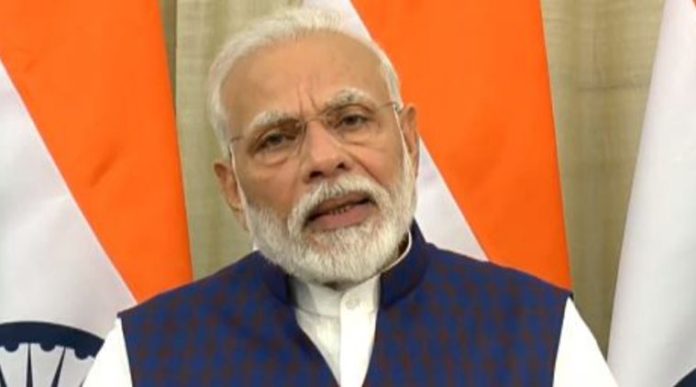
(Pic courtesy: DD News)

New Delhi (NVI): Ahead of ‘Janta Curfew’ in the country tomorrow, Prime Minister Narendra Modi today urged people not to panic and avoid unnecessary travels.

He also said that all those who have been told to stay in home quarantine should follow the instructions.

“Never forget – precautions not panic! It’s not only important to be home but also remain in the town/ city where you are. Unnecessary travels will not help you or others. In these times, every small effort on our part will leave a big impact,” Modi tweeted.


In the following tweets, he said, “This is the time we should all listen to the advise given by doctors and authorities. All those who have been told to stay in home quarantine, I urge you to please follow the instructions. This will protect you as well as your friends and family.”


Appreciating the IT professionals and Workers for providing their services to fellow citizens, the Prime Minister said their outstanding role in combating COVID-19 will be remembered for years to come.

“They are heroes. They’re phenomenal individuals whose outstanding role will be remembered for years to come,” Modi added.

Under the preventive measures, PM Modi has announced a “Janata curfew” across the country tomorrow.

WATCH | Restrictions in Kashmir, markets shut over COVID-19 fears

Strict restrictions on movement and assembly of people continued for the third consecutive day on Saturday in Kashmir to contain the spread of the coronavirus that has infected four people in the Valley so far. The J&K Government today informed that a total of 3,611 travelers and persons in contact with suspected cases have been put under surveillance.

(Video Credit: Mubashir Bukhari)

Manmade destruction causing pandemics like COVID-19?

New Delhi (NVI): Pandemic diseases like Coronavirus, Ebola and Zika could be a result of manmade destruction of biodiversity, according to researchers.

“We invade tropical forests and other wild landscapes, which harbour so many species of animals and plants—and within those creatures, so many unknown viruses,” David Quammen, author of Spillover: Animal Infections and the Next Pandemic told Scientific American publishers.

More than 80% of the terrestrial species of animals, plants and insects depend on forests, most biologically diverse ecosystems on land.

Around 1.6 billion people including more than 2,000 indigenous cultures depend on forests for their livelihoods, medicines, fuel, food and shelter.

Yet despite all of these priceless ecological, economic, social and health benefits, global deforestation continues at an alarming rate.

According to United Nations Environment Programme (UNEP), around 13 million hectares of forests are destroyed annually and this accounts for 12 to 20 per cent of the global greenhouse gas emissions that contribute to climate change.

The problem is highlighted as the world is gripped by the unprecedented challenge posed by coronavirus (COVID-19) on a day when it should be celebrating the International Day of Forests today.

The theme of this year’s Forests Day is ‘biodiversity’, which depicts a variety of wildlife and plants present in a certain ecosystem. Higher biodiversity denotes that an ecosystem has a higher variety of plants and animal.

In 2012, the United Nation General Assembly initially marked the International Day of Forests aiming to raise awareness of the importance of all types of forest habitat.

Ayush health centres to be brought under Ayush Mission

New Delhi (NVI): The Union Cabinet today approved a proposal for inclusion of the Ayush Health & Wellness Centre component of the Ayushman Bharat progamme in National Ayush Mission, with an aim of reducing burden on secondary and tertiary health care.

The Cabinet meeting, chaired by Prime Minister Narendra Modi, cleared the proposal to establish a holistic wellness model based on AYUSH principles and practices, focusing on preventive promotive, curative, rehabilitative and palliative healthcare by integration with the existing public health care system.

It will also provide informed choice to the needy public by making the AYUSH services available.

The proposal entails expenditure of Rs 34,000 crore for operationalization of AYUSH HWCs within a period of five years, 12,000 new Ayush wellness and health centres will be made at the existing 12,500 centres and sub-centres of the Ayush ministry.

Among other things, it will also reduce out of pocket expenditure due to “self-care” model and validate a holistic wellness model in target areas.

The National Health Policy 2017 has advocated mainstreaming the potential of AYUSH systems –Ayurveda, Yoga & Naturopathy, Unani, Siddha, Sows-rigpa and Homoeopathy — within a pluralistic system of Integrative healthcare.

The Government of India in February 2018 decided that 1.5 lakh health and wellness Centres would be created by transforming existing Sub health Centres and Primary Health Centres to deliver Comprehensive Primary Health Care.

The vision of the proposal is to establish a holistic wellness model based on AYUSH principles and practices, to empower masses for “self care” to reduce the disease burden.

WHO launches Health Alert service on WhatsApp

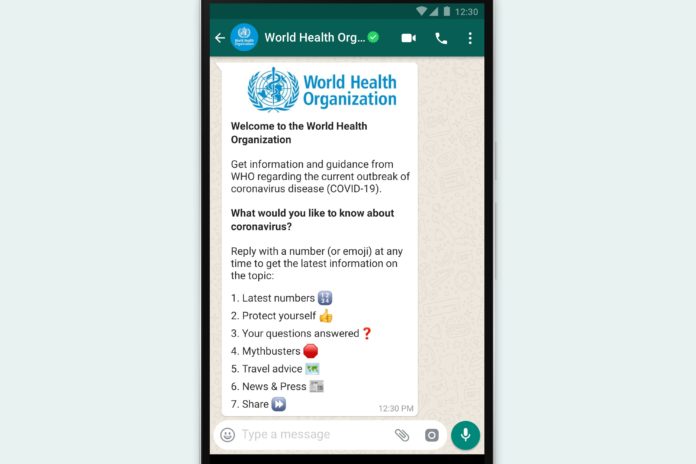
New Delhi (NVI):  The World Health Organization (WHO) has created a health alert on WhatsApp to keep people aware and updated about the coronavirus pandemic and combat misinformation.

As the coronavirus pandemic spreads which has infected more than 2,25,000 people and killed more than 11,000 people globally, people are turning to the World Health Organization for official, trusted health information and advice.

Facebook founder Mark Zuckerberg announced the move on his social media platform and said that Faceboom and Whatsapp have worked together with WHO to get “authoritative information” about coronavirus sent directly to a person’s WhatsApp account.

The new service, which is free to use, has been designed to answer questions from the public about COVID-19, and to give prompt, reliable and official information 24 hours a day, worldwide. This will also serve government decision-makers by providing the latest numbers and situation reports.

To avail this service, WhatsApp users can save the number +41 79 893 1892 into their phone contacts and text the word “Hi” in a WhatsApp message to begin receiving alerts.

Information provided in the WHO Health Alert includes tips on protection from the infection, travel advice and debunking myths about the coronavirus pandemic.

The service is initially being launched in English but will be available in all six United Nations languages within the coming weeks (English, Arabic, Chinese, French, Russian and Spanish.)

Director-General of WHO, Tedros Adhanom Ghebreyesus said, “Digital technology gives us an unprecedented opportunity for vital health information to go viral and spread faster than the pandemic, helping us save lives and protect the vulnerable. We are proud to have partners like Facebook and WhatsApp, that are supporting us in reaching billions of people with important health information.”

The WHO Health Alert is the latest official NGO or government helpline to become available on WhatsApp, joining the Singapore Government, The Israel Ministry of Health, the South Africa Department of Health, and KOMINFO Indonesia.

Earlier this week WhatsApp, in partnership with the World Health Organization, UNICEF, and UNDP, launched the WhatsApp Coronavirus Information Hub, to provide simple guidance for health workers, community leaders, local governments and local businesses that rely on WhatsApp to communicate.

Coronavirus crisis can open doors for cyber attacks: WEF

Representational image

New Delhi (NVI): As coronovirus continues to spread across the globe, the pandemic has also increased the risk of cyber attacks, according to World Economic Forum (WEF).

An emergency like this could cause people opening the door to cyber criminals. “In a crisis situation, particularly if prolonged, people tend to make mistakes they would not have made otherwise,” it explained.

Additionally, spending more time online could increase the risks that internet users face. “Inadvertently risky Internet behavior increases with more time spent online,” the WEF said.

Internet has almost instantly become the channel for effective human interaction and the primary way we work, contact and support one another.

A cyber attack that deprives organizations or families of access to their devices, data or the internet could be devastating.

With the world battling to contain the coronavirus outbreak, a cyber attack could wreak real destruction.

“In a worst case scenario, broad-based cyber attacks could cause widespread infrastructure failures that take entire communities or cities offline, obstructing healthcare providers, public systems and networks,” WEF said.

Debbie Gordon, CEO of cybersecurity specialist Cloud Range Cyber said, “Now more than ever, people need to be even more aware of fraud emails, especially ones that refer to COVID-19 in any form or fashion whether it’s a cure, reports of cases, or really anything that would make people very curious”.

The majority of cyber attacks – by some estimates, 98% – deploy social engineering methods. Cybercriminals are extremely creative in devising new ways to exploit users and technology.

The firms also need to be extra alert. They have to be even more proactive in detecting threats and looking at abnormality in their systems given that the hackers are aware that people are scrambling and can have their attention focused somewhere else.

There has already been evidence of the threats that cyber attackers pose during the coronavirus crisis. As the U.S. ramped up its efforts to control the outbreak, a cyber attack recently hit the Department of Health and Human Services.

MUST READ