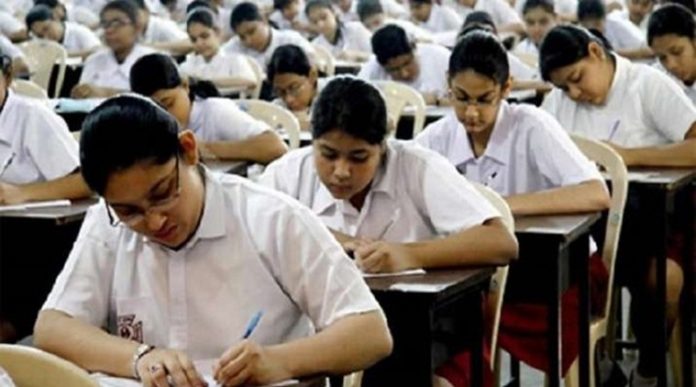
New Delhi (NVI): Vice President Venkaiah Naidu today asked universities and other educational institutions to ensure continuity of academic calendar during the lock-down period by fully harnessing the power of technology.
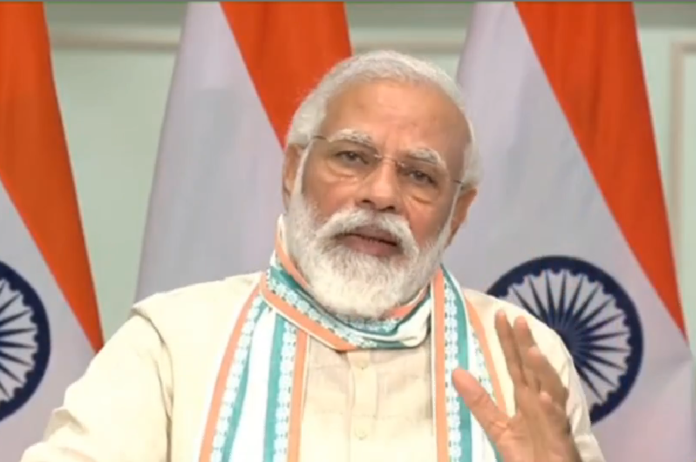
While interacting with the Vice Chancellors of Delhi, Hyderabad, Pondicherry, Punjab, Makhanlal Chaturvedi Universities and Director of the Indian Institute of Public Administration through a video conference, the Vice President observed that it might take some more time for normalcy to return and enquired about their plans to cope with the disruption caused by COVID-19 pandemic.
Naidu, who is also the President of IIPA and Chancellor of three Universities, urged the institutions to reach out to students, promote collaborative learning and self-learning. He asked them to optimally utilize technological tools for ensuring interactive learning for all students.
“Ensure continuity of the teaching and learning process during lockdown by using technology,” he said.
The protracted conflict in Libya had forced thousands of people to leave their home. Many sought sanctuary in the city of Benghazi, where ICRC distribute food and other essential household items to the most vulnerable. (Credit: ICRC)
New Delhi (NVI): A war-torn Libya, which was caught between bombs and bullets, is facing another challenge in the form of COVID-19, as the pandemic threatens to spread and debilitate the country’s fragile health system.
According to the International Committee of the Red Cross (ICRC), there are fears that the virus will compound the suffering of conflict-affected families, who are already struggling to meet basic needs, from shelter to food, water, and medical care.
“The Libyan health care system was struggling before COVID-19,” said Willem de Jonge, ICRC’s head of operations for Libya.
“Today, some medical professionals who need to be trained on COVID-19 infection prevention protocols keep being called back to the frontlines to treat the injured. Clinics and hospitals are overwhelmed caring for war-wounded and those with chronic illnesses, so their capacity to receive COVID-19 patients is limited. They need more support and resources to face this challenge,” he said.
Despite international calls for a ceasefire, fighting in Tripoli has escalated, forcing people to flee their homes and damaging civilian infrastructure, says ICRC in its report. Some areas in Tripoli like Abu Salim have seen their patient-load quadruple in recent months, mostly due to the influx of displaced families, many of whom live in collective centres, it says.
“Displaced Libyans, including some of our colleagues, have told us they have no choice but to return to their homes near the frontline, for fear they could bring the virus into the homes of their elderly parents or family members,” said Maria Carolina, ICRC’s deputy head of sub-delegation for Tripoli.
“This highlights the unimaginable choices some people are now forced to make as they struggle to decide whether shelling and airstrikes pose a greater threat to their lives than COVID-19,” she said.
The ICRC says that special preventive measures must also be taken to ensure that COVID-19 does not enter prisons, as physical distancing is impossible. Migrants in Libya are also highly vulnerable to the disease, as many have only limited access to information, health care, or income, it said.
At the same time, restrictions such as curfews and border closures, while important in curbing the spread of the disease, are creating new challenges to deliver humanitarian aid and keep the supply chains for food, medicine, and basic needs open.
“Authorities must ensure that delivery of humanitarian aid is facilitated while maintaining preventive measures such as physical distancing, or those who depend on it will suffer tremendously,” said Jonge.
“We are already seeing the cost of food and other essential supplies increase, putting an additional strain on some of Libya’s most vulnerable families. COVID-19 comes on top of years of conflict in which families have seen their public services interrupted and job opportunities vanish,” he added.
In the wake of Covid-19 crisis in Libya, ICRC continues to provide food and household items to internally displaced people, residents and returnees. In March, these efforts reached more than 8,200 people.
The ICRC is also giving cash to health care facilities to help them buy equipment and medical consumables such as masks, soap and disinfectants. Three hospitals will also receive generators, so they can keep working through power cuts, the committee said in its report.
New Delhi (NVI): Amid the coronavirus pandemic, which has caused extreme distress to students, and is a setback to academic activity, All India Council for Technical Education (AICTE) has introduced an online ELIS portal which will offer e-learning content.
In order to foster digital learning and support the student community across the country at this time, Enhancement in Learning with Improvement In Skills (ELIS) portal has been designed by AICTE and is available at free.aicte-india.org.
ELIS portal has been created to provide all students with content that not only enhances learning for regular subjects but also aims to build up valuable skill sets as required in the actual work environment, according to a statement released by the AICTE.
The e-learning content on the portal has been sourced from 18 leading Ed-tech companies with 26 different courses, the Council said.
Under normal circumstances, these are selectively available at prices ranging from Rs 5,000 to Rs 20,000. However, all participating companies have offered to enrol students in the present lockdown period without any cost till 15 May 2020, it said.
All companies have also gracefully agreed to keep the course free, the Council said. In effect, there shall be no charges whatsoever to be paid by learners who enrol now till the course is
completed, it added.
The portal was formally launched yesterday (April 12) by Prof. Anil Sahasrabudhe, Chairman AICTE along with Prof MP Poonia, Vice-chairman AICTE and Prof Rajive Kumar, Member Secretary, AICTE.
Doctors and other medical staff gave an emotional farewell to the two kids.
Abid Bashir
Srinagar (NVI): It was an emotional moment at the Jawahar Lal Nehru Memorial (JLNM) hospital in Srinagar today, when two siblings– Kashmir’s youngest coronavirus victims aged four and seven– were ready to return home after completing 14-day mandatory quarantine period.
Their samples were taken thrice and they tested negative every time. Their mother, who was tested negative, chose to stay with her two daughters for all 14 days and boosted their morale to fight the disease.
When the two kids turned up to leave for their home at the hospital today, doctors and para-medical staff, some with teary eyes, presented bouquets to them amid prayers- “may you live long.”
The children, who reside in a posh Srinagar locality, were tested positive on March 26, after coming in contact with their grandfather, who had a travel history to Saudi Arabia. Their grandfather had travelled in the same flight in which first Covid-19 positive case of Srinagar was on board from Delhi to Srinagar on March 16.
Deputy Medical Superintendent, JLNM hospital, Dr Tabasum told NVI that after testing positive, the samples of siblings were taken thrice. “And thank God, they tested negative every time. We wanted to be doubly sure that these young victims of Covid are negative,” she said.
She said that despite being negative herself, the mother of two minors spent all 14 days with her kids.
“We had kept these small kids in a separate room where they completed their quarantine period. Their mother used protective gear while being with her children. She didn’t go home for all these days,” the doctor said.
Doctors at the hospital said that they were so happy to bid a see-off to the two little siblings. “It was our treatment and their mother’s love and affection that paid in the end. There were tears in the eyes of female medical staff while saying good-bye to the siblings. They have been advised to stay in home quarantine so that they could stay away from the pandemic,” a doctor at the hospital said.
As the siblings were discharged, J&K government spokesman Rohit Kansal tweeted: “Great News…Mubarak to the families and gratitude to the entire medical team”. Deputy Commissioner Srinagar, Dr Shahid Iqbal Chaudhary also tweeted: “I take a humble bow in respect of doctors at JLNM hospital and for resilience of a brave mother as two kids who had earlier tested positive are discharged after repeated samples testing negative. Congratulations!”
Srinagar (NVI): Twenty-five new cases, that include 12 non-locals, were tested positive in Kashmir today, taking the total number of positive cases in Jammu and Kashmir to 270.
“25 more test positive today in Kashmir. Total in J&K is 270. Further details awaited,” tweeted the UT Government spokesman Rohit Kansal.
Officials said that among the 25 new positive cases, 13 were confirmed at Chest Diseases Hospital. Among them, 12 are non-local residents belonging to Tableegi Jammat from Delhi, Gujarat and Kerala.
Dr Qazi Masood, Nodal officer of Covid-19 for Kashmir division said that the contact tracing process in Kashmir is still going on as many people are not cooperating with the authorities.
“Many people in Kashmir concealed their travel history until they developed symptoms. That’s why it is taking time to trace all suspects,” he said.
He appealed people of Kashmir to cooperate with the administration and help in stopping the spread of covid-19.
As per the daily bulletin, 53,679 persons in Jammu and Kashmir are under observation while 8,581 persons have been kept under home quarantine. Besides that, 250 persons are in hospital isolation while 354 persons are under hospital quarantine.
According to the bulletin, 13,856 persons have completed the surveillance period and 30,634 persons are under home surveillance. So far, results of 4,065 samples are available.
“Out of 4,065 the number of samples tested negative stands at 3,795 while as 270 have been tested positive, among them 250 are active,” the bulletin read.
Srinagar (NVI): “All of us should be bombed and killed in one go or we should be allowed to live in peace.”
This is the refrain of Nazir Ahmad Shah of a village located along the Line of Control (LoC) in Kashmir’s Kupwara district which was subjected to intense shelling by Pakistani Army yesterday.
Three civilians, including a child, were killed in the Pakistani shelling which also caused widespread destruction to property and livestock in the twin villages of Timuna-Vilgam and Reddi in Chowkibal area.
A woman with the body of her eight-year-old son who was killed in Pakistan shelling. (Photo via arrangement)
Timuna-Vilgam and Reddi villages bore the brunt of shelling from across LoC on Sunday afternoon as mortal shells rained on the residential houses.
Nazir Ahmad Shah, a resident of Reddi village, said the intense shelling has caused immense fear among the local populace of Kupwara and they are running for safer places.
“Last afternoon, we felt like the end has arrived,” he said.
Significantly, the Pakistani troops resorted to shelling at a time when the whole world is busy combating the global pandemic of coronavirus.
Shah said the fear was not only from the raining mortars but also about people contracting coronavirus as many locals gathered at the site of destruction, at a time when authorities are advising social distancing.
He said the sufferings of people living close to LoC due to repeated shelling and firing should end once for all.
Shah’s house was completely destroyed in the Pakistani shelling.
“This shelling has been going on since past 30 years but hasn’t yielded anything so far except for the fact that civilian population has always been bearing the brunt,” he said.
“On Sunday, a mortal shell landed in the premises of my house. The belongings in my lawns were up in flames. I have never seen this thing before, even though I am witness to a number of exchanges of fire between the armies of India and Pakistan in Kupwara district,” he said.
The residents of these villages spent the last night under open sky, many of them without food, fearing that firing may again resume.
Another reason to stay awake for the whole night was the damage caused to at least six residential houses, the death of three civilians – a woman, an 18-year-old youth and a child — and also the extensive loss caused to their livestock.
Firdous Ahmad Wani, a resident of Timuna-Vilgam village, said the slain woman, Shameema Begum, has left behind four small kids.
“Her husband is a poor labourer. He is in deep shock,” Wani said.
Irshad Ahmad Kataria, also a local from Timuna-Vilgam village, said some shells landed in the civilian population areas causing immense damage to property which claimed life of a kid.
“The kid’s father has also suffered critical injuries in one hand. Almost three residential houses including a cow and ox were also charred to death in our village,” said Kataria.
“This should now end as we are suffering each single day,” he pleaded.
Locals told NVI that they mourned not only the three persons who died in shelling but also the livestock, including a dozen cows and sheep besides an Ox.
As per the locals, charred cattle including sheep and cows lie scattered amid the debris of residential houses in Timuna and Reddi villages.
The locals said that over the years, the village has suffered huge losses. “But on Sunday, we thought it is the end of us,” said one resident who refused to give his name.
“Many of us slept without food,” another resident of Reddi village told NVI.
In view of the destruction and fear caused by the Pakistani shelling, the residents of these villages have appealed to Government of India and also the J&K Lieutenant Governor Girish Chander Murmu to order immediate construction of underground bunkers “for the safety of villagers” living in Kupwara district.
New Delhi (NVI): The number of total confirmed coronavirus cases in Sri Lanka has jumped to 210, according to the Health Promotion Bureau report.
Health Ministry has confirmed that the total active patients receiving treatment at hospitals are 147 while 154 individuals are currently under investigations in hospitals.
In addition to this, 7 deaths have been reported and 56 people have been recovered including one Chinese tourist, who was the COVID-19 case that was detected in the country.
In another development, Sri Lanka has reportedly made it compulsory to cremate people who are dying due to the novel coronavirus despite facing protests from rights groups and the country’s Muslim population.
The decision has received a lot of criticism from rights groups and other religious freedom monitoring bodies, according to media reports.
New Delhi (NVI): The All India Council of Technical Education (AICTE) has introduced a three-week induction program for all freshmen students from 2017 with one faculty associated with every 20-25 students to build a strong connection between them and create holistic awareness about Universal Human Values.
“This step is taken to build a strong connect between students and the faculty on one hand and create holistic awareness about Universal Human Values,“ the Council said in a statement.
Prof. Anil D Sahasrabudhe, Chairman, AICTE, said that AICTE is orienting academic fraternity towards inculcation of Universal Human Values (UHV) in Technical Education.
One of the objectives of the programme is to engage students in different art forms like painting, singing, dance, drama, pottery, yoga, meditation, etc, the Council said.
It also aims to channelize the energy of students into several productive activities like sports, cultural programme, it added. Inspirational lectures by eminent personalities, visits to nearby historical places and discussions and film screenings etc. are also a part of this programme.
A faculty member trained in Universal Human Values programme helps students in the right development of their world-view, mindset, perspective and values, AICTE said in a statement.
The Student Induction Program (SIP) based on UHV-I and UHV-II course in AICTE’s Model Curriculum can provide an orientation to students for such a holistic education, it said.
“Colleges are required to develop the requisite teaching capacity for both. As indicated in the Approval Process Handbook 2020-21, each college must prepare at least 1 UHV faculty for every 20 newly joined students. Faculty must be prepared from every department/branch/discipline over the next three years. AICTE has so far trained more than 17,000 faculty members,” the Council said.
New Delhi (NVI): As the 21-day nationwide lockdown in India almost comes to a close, various cities in the country including Delhi have witnessed a huge reduction in air pollution levels, with citizens breathing the cleanest air in about a decade.
It is almost three weeks since the COVID-19 lockdown was imposed, that millions of vehicles are off the roads, leading to an improved AQI, even in places known for their toxic air.
Data from SAFAR (System of Air Quality and Weather Forecasting And Research) shows that post lockdown, Delhi has seen a 51 per cent reduction in PM 2.5 and 49 per cent reduction in PM 10 levels.
Delhi is ranked among the most polluted cities in the world. In 2019, Delhi had an average AQI of 98.6, making it the fifth most polluted city.
Apart from the national capital, Gurugram and Noida have also witnessed a drop of over 50 per cent in PM 2.5 concentration, days after the lockdown was imposed.
Meanwhile, the AQI bulletin for Delhi-NCR released today said that the air quality is likely to remain in a ‘satisfactory category’ from 13.03.2020 to 15.04.2020.
Air Quality Early warning for Delhi (Source-IITM)
Almost whole of the April so far has witnessed a satisfactory air quality, as per CPCB.
On March 27, 28 and 29, the air quality remained in ‘good category’, according to the board.
Here, if we compare it with the pre-lockdown situation, then the AQI was in ‘moderate’ category on March 20 and 21. The air quality also deteriorated marginally in a week before the lockdown was imposed on March 24.
In the first two weeks of March, the AQI oscillated between ‘moderate’ to ‘poor quality’ with PM 10 being the predominant pollutant, according to CPCB data.
In a nutshell, the 21-day lockdown, which has brought 1.3 billion people to a near halt in India, has also provided temporary relief from the burning issue of pollution in the country.
Particulate matter PM 2.5 is one of the primary reasons responsible for health risks such as cardiovascular diseases, respiratory diseases, and lung cancer. PM 2.5 and nitrogen dioxide are released by vehicles and power plants.
As per Air Quality Index scale, as defined by the US-EPA (Environmental Protection Agency) 2016 standard, an AQI between 0 and 50 is considered to be “good” while between 51-100 is considered “moderate” and between 101-150, it is considered “unhealthy for sensitive groups”.
The air quality is rated “unhealthy” if AQI is between 151-200 and “very unhealthy” between 201-300. It is considered to be “hazardous” if it is found above 300.
According to another report released by the Global Strategic Climate Communication (GSCC) — a global network of communications professionals in the field of climate and energy, over 90 cities in the country have shown minimal air pollution since the lockdown.
35 cities ranked “good” on the fourth day of the lockdown, as per the report.
Before lockdown, the positive effect of a limited human interference with the environment was felt on March 22 when the country observed ‘Janata Curfew’, a one-day lockdown call by Prime Minister Narendra Modi to fight the coronavirus spread in the country.
Since then, the air quality levels have significantly improved, so much so that residents in Jalandhar were able to see the mighty Dhauladhar mountain range in Himachal Pradesh, 213 km away from the city. According to reports, it was after 30 long years that people in Jalandhar were able to see the snow-capped Dhauladhar peaks.
A recent Greenpeace report said that air pollution from burning fossil fuels was generating losses of USD 150 billion in India, i.e., Rs 10.7 lakh crore annually.
According to the 2019 world ranking, India accounts for two-thirds of the world’s most polluted cities — 21 of the most polluted 30 cities; 14 of the highest 20; and six of the highest 10.
New Delhi (NVI): The total number of coronavirus cases in Pakistan has reached 5,478, while 85 people have died of the disease so far, according to Geo news.
1,095 COVID-19 patients have recovered from the virus in the country, including Sindh and Punjab province.
Nearly half of the total confirmed cases are from Punjab province alone, at 2,656.
Looking at the breakdown of cases, the Sindh province has reported 1,452 cases while Balochistan has 231 cases so far. The Khyber Pakhtunkhwa Province has 744 cases, Islamabad 131, Gilgit Baltistan 224 and 40 in Pakistan occupied Kashmir (PoK).
A steady rise in the new cases has been registered despite more than 3-week lockdown in the country.