Saturday, March 21, 2026
Home Blog Page 1367

Govt to boost water sports in J&K: Navin Choudhary

Srinagar (NVI): The Jammu and Kashmir administration is taking steps to boost water sports across the Union Territory, Principal Secretary, Education and Technical Education Department, Navin Kumar Choudhary said today.

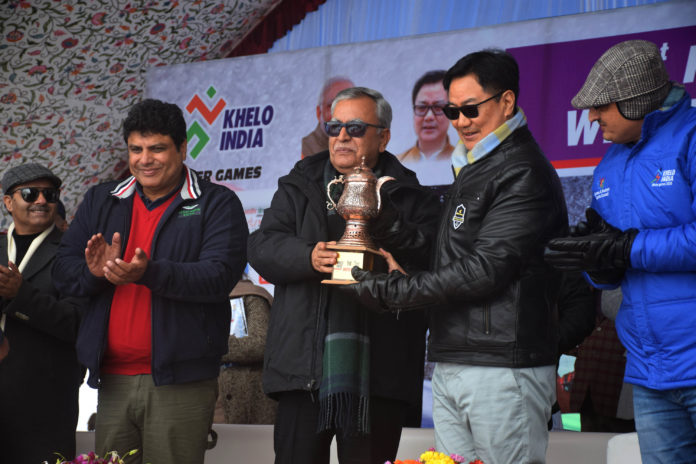
While interacting with athletes during a ceremony at Banquet Hall, Srinagar, Choudhary said that Jammu and Kashmir has tremendous potential in water sports and the UT Government was taking every possible step to boost this sport.

Choudhary, who is also President, Association for Rowing & Sculling (JKARS) said some vital equipment has been installed for training purposes of the athletes. He hailed the donors of these athletes, saying that their contribution will help the Government to make a remarkable change in water sports. The athletes also displayed the equipment at Banquet Hall Srinagar.

The function was attended by all the district presidents and members of JKARS who hailed the efforts of Association President. They said that Choudhary himself raised funds through sponsorships for the procurement of water sports equipment which will give a boost to water sports in J&K and sponsorship of J&K team for the upcoming world championship in Indore.

JKARS is the first sports association in J&K which has so far availed funds of its own for procurement of equipment and sponsorships for team J&K for upcoming international event endogenously without support from the government.

On the occasion, it was decided that Jammu and Kashmir would be hosting its first ever indoor national rowing championship soon and will also be procuring more equipment to make J&K viable for national and international events.

While assuring all sincere efforts to make J&K an international arena for water sports, Choudhary said, ”Through public donations,  J&K is taking a big step in the promotion of water sports  and has already sanctioned for the procurement of water sports equipment worth  Rs 7 crore through state government which would be procured very soon.”

“Jammu and Kashmir is blessed with natural water resources and has potential to provide opportunities for local youth who are bestowed with enormous natural talent and liking for water sports,” he said adding it was good to know that so far J&K has produced six international players in water sport.

Choudhary stressed National Coach and prominent athlete, Bilqees Mir, to work for profiling the athletes and provide equal opportunities for youngsters. He said that there was a greater need to create a platform for youth in every district of J&K and involve them in water sports.

“Our youth has lot of talent and we will avail every possible help to boost water sports in J&K, and I hope in the upcoming world championship most of the players from J&K participate,” he said.

Air pollution costs India $150 billion a year: Report

climate change

New Delhi (NVI): Air pollution from burning fossil fuels is generating losses of USD 150 billion in India, i.e., Rs 10.7 lakh crore annually, according to a Greenpeace report.

The report also reveals the cost of air pollution from fossil fuels in some other countries and highlights solutions that can protect health and benefit communities.

The global cost of air pollution from fossil fuels is estimated to be around US$2.9 trillion, or 3.3% of the world’s GDP annually, according to the report.

India is estimated to bear 10.7 lakh crore (US$150 billion), or 5.4% of India’s GDP annually, the third-highest costs from fossil fuel air pollution worldwide.

China bears the highest costs at US$900 billion followed by the United States with US $600 billion and India.

The analysis also suggests that an estimated one million deaths each year and approximately 9,80,000 estimated preterm births, equating to an annual economic loss of 10.7 lakh crore (US$150 billion) is attributed to air pollution from fossil fuel in India.

Another source of economic costs is that approximately 350,000 new cases of child asthma each year are linked to NO2, a by-product of fossil fuel combustion.

As a result, around 1,285,000 more children in India live with asthma linked to fossil fuel pollution. Exposure to pollution from fossil fuels also leads to around 49 crore days of work absence due to illness.

SC on Shaheen Bagh protests

SC quashes plea seeking waiver of exam fees for CBSE Class 10, 12 students
File Photo of Supreme Court

New Delhi (NVI): The Supreme Court today took note of the inconvenience caused to commuters due to anti-Citizenship Amendment Act (CAA) protests at Shaheen Bagh and appointed two mediators to convince protesters to lift the road blockade and move it elsewhere.

The Bench of Justices Sanjay Kishan Kaul and KM Joseph passed the order today in the petitions seeking removal of protesters from Delhi’s Shaheen Bagh and the clearance of Kalindi Kunj road, where anti-CAA protests have been going on for nearly two months.

The top court has asked senior counsel Sanjay Hegde and advocate Sadhana Ramachandran to act as interlocutors and ask the protesters to carry out their demonstrations at an alternative site.

During the hearing, Justice Kaul said, “We are not saying that people don’t have the right to raise their concerns. The question is where to protest? Because if this continues on the roads today for this legislation, tomorrow it could be done for another legislation.”

People have a fundamental right to protest but the thing which is troubling us is blocking of public roads, the bench noted.

Grant permanent commission to women officers: SC to Centre

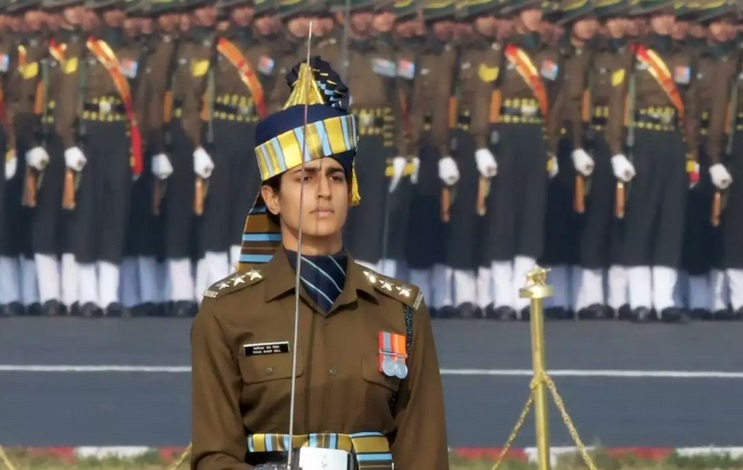
New Delhi (NVI): The Supreme Court today upheld a 2010 ruling by Delhi High Court for granting permanent commission to women officers in the Indian Army while directing the Central government in this regard.

An SC bench comprising Justices DY Chandrachud and Ajoy Rastogi said that women officers should be granted permanent commission in the Indian Army.

The apex court also observed that exclusion from command postings to women violates Articles 14 of the Constitution of India that provides for equality before the law or equal protection of the laws within the territory of India.

In its verdict on Centre’s appeal against the Delhi High Court direction, SC said the permanent commission will apply to all women officers in the Army in service, irrespective of their years of service. The Supreme Court also directed the Centre to grant permanent commission within three months to all women officers in the Army who opt for it.

The SC added that all terms of appointments of women officers shall be the same as their male counterparts.

Last week, the Centre had told the Supreme Court that women were not suitable for command posts in the Army as male troops were “not yet prepared” to accept women officers. “The composition of rank and file being male, and predominantly drawn from a rural background, with prevailing societal norms, the troops are not yet mentally schooled to accept women officers in command,” the Centre said in an affidavit.

In its verdict, the Supreme Court noted that the arguments presented by the Centre were “contrary to its own policy” of 2019 on extending permanent commission options for women. It observed that the Centre’s arguments for opposing permanent commission roles by citing physiological features perpetuated “gender stereotypes”.

“Women in the Army is an evolutionary process,” Justice DY Chandrachud said.

The Delhi High Court had in 2010 ordered the government to provide them permanent commission but the government has been dragging it’s feet on the issue.

The SC noted that the absolute bar on granting command posting to women officers in the Army is irrational and against equality. It is indefensible to deny command posting, and a blanket ban on command posting for women cannot be sustained in law.

India’s tiger population doubled 2 years before deadline: PM

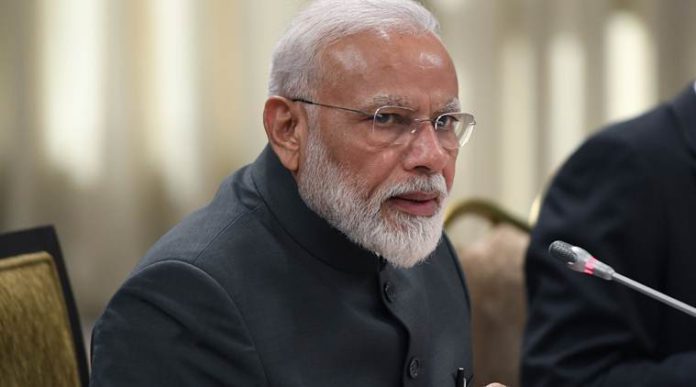
New Delhi (NVI): India has achieved its target of doubling the number of tigers from 1411 in 2010 to 2967, two years before the committed date of 2022, Prime Minister Narendra Modi said today.

PM Modi was speaking after inaugurating the 13th Conference of Parties on Conservation of Migratory Species of Wild Animals at Gandhinagar through video conferencing.

While addressing a gathering, the PM called upon Tiger Range Countries present on the occasion to come together to strengthen tiger conservation through sharing of benchmarking practices.

While asserting that India is one of the most diverse countries of the world, he said, “With 2.4% of the world’s land area, India contributes about 8% of the known global biodiversity.”

The Prime Minister stressed that for ages, conservation of wildlife and habitats has been part of the cultural ethos of India, “which encourages compassion and co-existence”.

“Inspired by Gandhi ji, the ethos of non violence and protection of animals and nature have been suitably enshrined in the constitution of India and is reflected in several laws & legislations,” he said.

The Prime Minister also spoke of the increase in India’s forest cover, which currently stands at 21.67% of the total geographical area of the country.

He mentioned how India has been championing the cause of “climate action” through conservation, sustainable lifestyle and green development model.

In this context, he mentioned the push towards electric vehicles, smart cities, and conservation of water.

“India is one of the few countries whose actions are compliant with the Paris Agreement goal of keeping rise in temperature to below 2 degree celsius,” he said.

The Prime Minister also elaborated on some of India’s priority areas, while holding the presidency of this convention for the coming three years.

Noting that India is a part of the Central Asian Flyway for migratory birds, he said that with a view to conserve birds along the Central Asian Flyway and their habitats, India has prepared a ‘national action plan for conservation of migratory birds along the central asian flyway’.

“India would be happy to facilitate preparation of action plans for other countries in this regard. We are keen to take the conservation of migratory birds to a new paradigm with active cooperation of all the central asian flyway eange countries,” he said.

“India proposes to strengthen its association with the ASEAN and East Asia Summit countries,” he said.

“This would be in sync with the Indo Pacific Ocean Initiative (IPOI), wherein India will be playing a leadership role,” he added.

“India by 2020, will be launching its Marine Turtle Policy and Marine Stranding Management Policy,” he asserted.

“This will also address the pollution caused by microplastics,” he added.

“Single use plastics have been a challenge for environment protection and we in India have been on a mission mode to reduce its usage,” he said.

Mentioning that several protected areas in India share common boundaries with the protected areas of neighbouring countries, the Prime Minister said that cooperation in conservation of wildlife through establishment of ‘Trans boundary Protected Areas’, would lead to very positive outcomes.

Reiterating the union government’s commitment to the path of sustainable development, he mentioned the release of the linear infrastructure policy guidelines to tailor development in ecologically fragile areas.

He also explained how, in the spirit of “Sabka Saath, Sabka Vikaas, Sabka Vishwaas”, millions of people living in vicinity of forest area in the country have now been integrated in the form of Joint Forestry Management Committees and Eco Development Committees and associated with the protection of forest and wildlife.

Nirbhaya case: Fresh death warrants issued

New Delhi (NVI): A Delhi court today issued fresh death warrants and a new date to hang the four convicts in the 2012 Nirbhaya gang rape and murder case.

As per the new order, the convicts are scheduled to be hanged on March 3 at 6am in Tihar Jail.

Additional Session Judge Dharmendra Rana issued death warrants against convicts – Mukesh Kumar Singh (32), Pawan Gupta (25), Vinay Kumar Sharma (26) and Akshay Kumar (31).

This is the third time that death warrants have been issued against them.

The date of execution, first fixed for January 22, was postponed to February 1 by a January 17 court order. The trial court later on January 31, stayed, “till further orders” the execution of the four convicts, as they had not exhausted all their legal remedies.

On December 16, 2012, a 23-year-old woman was gang-raped and assaulted inside a moving bus in South Delhi by six persons, before being thrown out on the road. She later died on December 29, 2012, at a hospital in Singapore.

IFJ slams Pak govt for strict regulations on digital creators

Representational image

New Delhi (NVI): The Pakistan Government has clamped down on digital content creators throughout 2020, a move that has evoked sharp reactions from several groups including International Federation of Journalists (IFJ) and its associate the Pakistan Federal Union of Journalists (PFUJ).

The groups have also urged the authorities to update the rules subsequent to counselling with journalists, media association and significant partners.

The proposed ‘Consultation on Regulating the Web TV and Over the Top TV (OTT) Content Services’ was published on the PEMRA site on January 8 with a deadline time for remarks on the proposition due on February 14.

The proposal seeks to regulate online content creators and imposes license fees up to PKR 10,000,000 (USD 65,000). OTT content refers to content services accessible over the internet.

If passed, web TV services, producing content for entertainment, education, travel, sports purposes will be required to pay 5 Million rupees to obtain a license. News, current affairs and OTT services will pay PKR 10,000,000 (USD 65,000) or PKR 5,000,000 (USD 32,500) respectively for a license.

Creators who earn money from content on Facebook, Twitter or YouTube will be required to obtain a license under the proposed regulation. Additionally, the regulation allows for the suspension of video media outlets should they violate PEMRA’s code of conduct.

On January 28, Pakistan’s federal cabinet approved a separate piece of legislation without consulting media organisations. The approved Citizens Protection (Against Online Harm) Rules 2020 requires social media platforms such as YouTube, Facebook, Twitter, TikTok to establish offices in Pakistan.

The bill empowers the National Coordinator of the Ministry of Communications to fine social media companies up to PKR 500,000,000 (USD 3,240,000) if a company refuses to comply with directions made by the National Coordinator to remove content.

PFUJ has strongly rejected the “PEMRA proposals to control the internet TV and social media and termed it tantamount to put another embargo on the freedom of speech and expression promised by the constitution for the people of Pakistan”.

“Social media should frame its own code of ethics to be implemented for positive use of the most popular social media, web TV and OTT”, it said.

The IFJ has also slammed the Pak Govt over the regulations: “The dual blow of PEMRA and Pakistan’s federal cabinet signifies a concerted attempt by the government to curtail freedom of expression. The lack of consultation over these changes with journalists and media organisations undermines the free press and the ability for media workers to carry out their jobs on a day-to-day basis. The IFJ urges the government to review the regulations in consultation with media organisations and relevant stakeholders to create an environment that will produce critical journalism and empower both workers and creators.”

The development bears significance in the wake of internet curbs in Jammu and Kashmir after the abrogation of Article 370 in August last year.

India objects to Turkish President’s remarks on Kashmir

External Affairs spokesperson Raveesh Kumar (File)

New Delhi (NVI): India today slammed Turkish President for his “completely unacceptable” comments on Jammu and Kashmir and said that his remarks reflect “neither an understanding of history nor of the conduct of diplomacy.”

In a strong demarche issued to the Turkish Government over Erdogan’s recent remarks made in Pakistan, India said the comments amounted to interfering in the internal affairs of another country and warned that there will be “implications” on bilateral relationship.

External Affairs Ministry spokesperson Raveesh Kumar said that Turkey has once again sought to justify cross-border terrorism indulged in by Pakistan.

In response to a media query on comments made by the President of Turkey on India’s internal matters during his recent visit to Pakistan, the Official Spokesperson Raveesh Kumar said, “India has made a strong demarche with the Turkish Government on the remarks made by President Erdogan on the Indian Union Territory of Jammu & Kashmir during his recent visit to Islamabad.

“These remarks reflect neither an understanding of history nor of the conduct of diplomacy. They distort events of the past to advance a narrow-minded view of the present.”

“This recent episode is but one more example of a pattern of Turkey interfering in the internal affairs of other countries. India finds that completely unacceptable. We particularly reject the repeated attempts by Turkey to justify the cross border terrorism practised so blatantly by Pakistan,” he said.

These developments have strong implications for our bilateral relationship, Kumar added.

The demarche was made by Secretary (West) to the Ambassador of Turkey in New Delhi earlier today.

How dancing can improve your mental health

Representational image

New Delhi (NVI): Dancing boosts your physical health and agility but it may also work as a therapy to improve your mental health.

According to Dr Adrianna Mendrek, a researcher in behavioural neurobiology and psychiatry at Bishop’s University, the Dance/movement therapy (DMT) goes beyond simply dancing.

DMT uses dance and movement to promote insight, integration and well-being, as well as to diminish undesirable symptoms in various clinical populations.

DMT has appeared to be helpful in treating those with sorrow, Alzheimer’s and Parkinson’s.

However, the dance/development treatment (DMT) is not progressively well known inside the fields of brain research and psychotherapy universally, says Adrianna.

Just like traditional psychotherapies, DMT can be applied in a wide range of ways. It may involve talking, different types of music or no music at all. It can be done in groups, with individuals or with couples.

A group therapy session may involve a warm-up and check-in as to where we are at emotionally, mentally and physically. It may be followed by the development of a theme.

All of this is done with bodies in motion or stillness, but some verbal sharing, journaling, drawing and other elements may be added.

Dance/movement therapy has been around for several decades but it has never become widely popular, possibly due to a lack of well-designed research studies, according to the researcher.

Overcoming depression

One of the main reasons people dance is to modify their emotional state; typically, they strive to feel more joy and happiness and to reduce stress and anxiety.

Since its inception, dance therapy, similar to somatic psychotherapies, has emphasized the reciprocal interaction between body and mind, and the ability to regulate emotions via changes in body postures and movements.

The associations between emotions and specific motor components have been used in the past for diagnosis or emotion recognition. This study goes further and proposes specific techniques for modifying emotions.

A recent systematic review of research on dance/movement therapy specifically found it to be effective in the treatment of adults with depression.

Helpful in treating Parkinson’s disease

Dance typically involves learning sequences of steps and movements in space, in coordination with the music. In other words, it requires substantial physical and cognitive engagement.

When comparing relatively long-term dance interventions to conventional fitness training, several studies have found improvements in attention and verbal memory and neuroplasticity in healthy older adults.

The researchers also found improvements in memory and cognitive function for older adults with mild cognitive impairment after a 40-week dance program.

In addition, a recent meta-analysis of seven randomized controlled trials comparing the effects of dance therapy to non-dance interventions in Parkinson’s disease.

Changes in brain structure

Dancing engages extensive areas of the cerebral cortex as well as several deep brain structures.

A recent descriptive systematic review included eight well-controlled studies. These changes included: increased hippocampal and parahippocampal volume (involved in memory), increased grey matter volume in the precentral gyrus (involved in motor control) and white matter integrity in the corpus callosum (involved in communication between the two hemispheres).

Overall, these studies are compatible with the idea of using dance and DMT in various neurological and psychiatric disorders.

New possibilities for feeling and perceiving

It is clear that dance has a powerful effect on the human body and psyche.
DMT from its inception emphasized that the body is inseparable from, and in constant reciprocal interaction with, the mind. As such, sensations, perceptions, emotions and thinking affect our body and the way we move.

Conversely, our posture and our movements have the power to transform our mental states, to evoke repressed memories, to release spontaneity and creativity, to reorganize our brains. New ways of moving and dancing may produce new ways of feeling and perceiving the world.

This is one of the most exciting and profound aspects of DMT and it is shocking that the body, movement and dance have been almost entirely ignored by mainstream psychotherapy.

President inaugurates projects at Daman

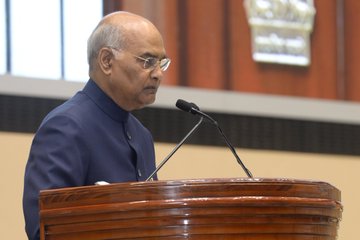
Daman (NVI): President Ram Nath Kovind today inaugurated various developmental projects of Dadra and Nagar Haveli and Daman and Diu here today.

On the occasion, he said that this is his first visit to the Union Territory of Dadra & Nagar Haveli and Daman & Diu as President.

He expressed confidence that these projects would give new energy and momentum to the development of the Union Territory.

The President said that the Government of India and the Union Territory Administration are making great efforts for the welfare and progress of the people.

“It is now the responsibility of all the citizens that all of us, while being conscious of and dedicated to our duties, should work with energy and enthusiasm in the national interest,” he added.

Later in the evening, the President will inaugurate the Jampore Sea Front Road from Moti Daman Jetty to Jampore Beach and an Ayushman Bharat Wellness Centre in Daman.

MUST READ