Tuesday, February 3, 2026
Home Blog Page 1372

Exercise can improve vision: Study

New Delhi (NVI): Exercises can improve our vision too, according to the World Economic Forum report based on a study.

The WEF report which is based one Journal of Cognitive Neuroscience study reveals that low-intensity exercise boosted activation in the visual cortex, the part of the cerebral cortex that plays an important role in processing visual information.

According to University of California, Santa Barbara psychological and brain sciences professor and co author Barry Giesbrecht said “We show that the increased activation—what we call arousal—changes how information is represented, and it’s much more selective.That’s important to understand because how that information then gets used could potentially be different,”.

“There’s an interesting cross-species link that shows these effects of arousal might have similar consequences for how visual information is processed. That implies the evolution of something that might provide a competitive advantage in some way,” he added.

To find out that visual processing increase during physical activity for the human brain, scientist designed an experiment using behavioral measures and neuroimaging techniques to explore the ways in which brief bouts of physical exercise affect human performance and underlying neural activity.

During this experiment, 18 volunteers wore a wireless heart rate monitor and an EEG (electroencephalogram) cap containing 64 scalp electrodes.

While on a stationary bicycle, participants performed a simple orientation discrimination task using high-contrast stimuli composed of alternating black and white bars presented at one of nine spatial orientations.

The tasks were performed while at rest and during bouts of both low- and high-intensity exercise.

The recorded data were then fed into a computational model that allowed researchers to estimate the responses of the neurons in the visual cortex activated by the visual stimuli.

The responses were analyzed while participants were at rest and then during low- and high-intensity exercise.

This approach allowed researchers to reconstruct what large populations of neurons in the visual cortex were doing in relation to each of the different stimulus orientations—and to generate a “tuning curve,” which estimates how well the neurons are representing the different stimulus orientations.

UC Santa Barbara’s Attention Lab postdoctoral researcher and a lead author Tom Bullock said “We found that the peak response is enhanced during low-intensity exercise relative to rest and high-intensity exercise. We also found that the curve narrows in, which suggests a reduction in bandwidth.”

“Together, the increased gain and reduced bandwidth suggest that these neurons are becoming more sensitive to the stimuli presented during the low-intensity exercise condition relative to the other conditions, ” he said.

It is unclear by what mechanism this is occurring, Bullock says that there are some hints that it may be driven by specific neurotransmitters that increase global cortical excitability and that can account for the change in the gain and the increase in the peak response of these tuning profiles.

Govt considering reducing entry barrier in coal mining: Coal Secretary

Coal Secretary Anil Kumar Jain (File)

New Delhi (NVI): Coal Secretary Anil Kumar Jain has said that the government is looking at reducing entry barriers in coal mining which will have a spin effect on the GDP growth and economy.

He also said that Coal the Ministry is open to all suggestions in this regard and will go to the Cabinet after the consultation series are over.

Jain was yesterday speaking at a stakeholder consultation on recently launched discussion paper of Ministry of Coal for ‘Auction of Coal Mines for Sale of Coal’ organized by Ministry of Coal, jointly with FICCI.

This was the first of the series of stakeholders’ consultations being organized to gain the industry’s perspective on the upcoming auction of coal mines for sale of coal. The second roundtable is in the series is being organized on 28th January at Kolkata.

The Coal Secretary’s comments come amid the Central Government’s efforts to enable wider participation in auction of coal mines by removing the end-use restrictions of the mining blocks. The Government has also promulgated Mineral Laws (Amendment) Ordinance, 2020 on January 10 in this direction.

Earlier last year, the Government had also allowed 100% Foreign Direct Investment (FDI) under automatic route for coal mining activities including associated processing infrastructure.

Coast Guard helps in rescue of 13 Indians aboard stranded vessel

New Delhi (NVI): The Indian Coast Guard (ICG) today coordinated the rescue of 13 Indian crew members from a sinking vessel near Okha in Gujarat. The vessel was on its way from Basrah in Iran to Hazira in Surat district.

The Coast Guard rescued the distressed Merchant tanker MT Reem 5 at 11.30 am in the Arabian Sea, about 210 NM (Nautical Miles) from Okha, a coastal town in Dwarka district of Gujarat.

The Maritime Rescue Co-ordination Centre Mumbai (MRCC), after receiving a distress call from the sinking vessel at 08.05 am, established contact with another Indian ship in the area and MRCC Karachi, as the position was 90 NM inside Pakistan Search and Rescue Region.

MRCC Mumbai identified MV Ganga which was operating in close vicinity and directed the vessel to rescue the crew on MT Reem 5.

All the 13 crew members were then rescued by MV Ganga around 11.40 am today despite severe rough sea conditions, the Coast Guard said, adding the status of the distressed vessel was being monitored closely.

50-bedded hospitals to be set up in each district of J&K

Srinagar (NVI): To promote alternate medicine health care in Jammu and Kashmir, 50-bedded hospitals will be set up in every district at a cost of Rs 12 crore, Union Minister of State for AYUSH Shripad Nayak said here today.

He also said Gulmarg, Patnitop, Pahalgam hill stations would be promoted as AYUSH medical tourism destinations.

Nayak said this during a function organised to promote AYUSH medicine and e-inauguration of some major projects in Srinagar.

The minister gave a detailed overview of AYUSH and wellness centers being established across J&K for promoting traditional and affordable healthcare across the state particularly in rural areas.

He assured liberal funding for upgradation of health infrastructure in the valley.

R-Day Chief Guest Brazilian President to arrive tomorrow

New Delhi (NVI): Brazilian President Jair Messias Bolsonaro, who will be the Chief Guest at the upcoming Republic Day, will arrive here tomorrow on a four-day State visit.

This will be the third time when a Brazilian President will be the Chief Guest at the Republic Day parade, previous instances being 1996 and 2004.

This will be the first high-level visit of the year to India.

Bolsonaro will be accompanied by eight ministers, four members of Parliament, senior officials and a very large business delegation.

During this visit, Prime Minister Narendra Modi and President of Brazil Jair Bolsonaro will hold official talks, with focus on economic and financial dialogue, bio-energy, oil and gas and mineral resources, science & technology, defence and space cooperation, said a statement issued by the External Affairs Ministry.

The two countries aim to increase bilateral trade to $25 billion in the next three-four years.

The Indian government sees it as greater economic cooperation between India and Brazil.

Govt provides Rs 10,500 crore viability gap funding for pipeline laying

New Delhi (NVI): In an effort to transform India into a gas-based economy, the government is providing Rs. 10,500 crore viability gap funding for laying pipeline in Eastern and Northeastern India for the first time, Union Minister of Petroleum and Natural Gas Dhamendra Pradhan said.

Speaking during the the national conclave on emerging opportunities in natural gas sector here today, Pradhan said the gas pipeline network in Eastern and North-Eastern India will be ready from Kutch to Kohima and Kashmir to Kochi.

He also said that 4 lakh crore rupees worth of investment is likely to be made in such projects which is a challenge as well as an opportunity.

“The sources of import have been diversified and the government is holding discussions with gas-exporting countries for getting more gas on favourable terms,” he said.

He also informed the present share of gas in the energy basket of the country is 6.2 per cent and the target is to take it to 15 per cent by 2030.

“The world average is 24 per cent while within the country, the Gujarat has 26 per cent share of gas based energy,” he said.

“The domestic gas production is likely to increase in the current financial year to 34.55 billion cubic metre,” he added.

“Pricing and LNG marketing freedoms have been given to gas producers, LNG terminal capacity is being augmented and national gas grid is being developed,” he said.

“CBG is a great initiative which has the potential to generate wealth from waste, provide employment, protect the environment, and give boost to the economy,” he said.

Calling upon the states to fully cooperate and support the gas infrastructure activities and projects, Minister said that ministry of petroleum and natural gas has prepared a draft Policy of City Gas Distribution (CGD), which may be adopted by states to facilitate such activities.

“PNGRB is likely to soon start bid round 11 for CGD and States make like to give suggestions in identification of geographical areas,” he said.

He called upon the states to adopt qualification packs developed by Hydrocarbon Sector Council in their Vocational Training Institutes.

He also called upon the States to actively promote CNG usage in State transportation and mining sector.

Pradhan called upon all the entities who have bagged CGD rounds to not delay their work and immediately start action. He also called upon PNGRB to strictly monitor the progress.

Pradhan also announced that Federation of Indian Petroleum Industry (FIPI) will have a Help Desk for holding any future interaction with all stakeholders. He assured full support to all the stakeholders who are part of the gas based supply chain.

15th Finance Commission meets representatives in Goa

15th Finance Commission meeting was held in Goa. (Source: @digambarkamat)

New Delhi (NVI): The 15th Finance Commission today met with representatives of the Rural Local Bodies (RLBs) of Goa. The Finance Commission was headed by its Chairman NK Singh. Members and senior officials of the commission also accompanied Singh.

During the meeting, the representatives of the RLBs informed the Commission that the first State Finance Commission was constituted in 1999 and the Government of Goa had accepted its recommendations in November 2001.

The second State Finance Commission submitted its report in December 2007, but the Goa government did not accept its recommendations.

Later, the 3rd State Finance Commission was constituted in January 2017, 10 years after submission of report of the 2nd State Finance Commission, and has not yet submitted the report even after three years.

The main recommendations of the 14th Finance Commission were that grants to Rural Local Body of Rs 134 crore should be provided. Out of that Rs 120 crore was Basic Grant and Rs 14 crore was for Performance Grant. By the end of March 31, 2019, only Rs 50 crore as Basic Grant and Rs 2.62 crore as Performance Grant, has been sanctioned which is 42% of the total grant recommended by 14th Finance Commission

The 15th Finance Commission desired to know the reasons behind not implementing the recommendations of the 2nd State Finance Commission. It also sought information as to why submission of the report of the 3rd State Finance Commission was awaited even after three years of its constitution.

In view of the fact that in 2016-17 & 2017-18, 191 village panchayats had generated Rs 24 crore and Rs 25 crore respectively as Tax Revenue, the Commission has also sought information for the status of accounts of Panchayati Raj Institutions.

The Commission has noted all the issues raised by the RLB representatives and has assured to address them in the recommendations to the Union Government.

UN chief Guterres warns of four global threats

UN Secretary General Antonio Guterres (Source: @UN)

New Delhi (NVI): UN Chief Antonio Guterres has raised concern over four challenges the world is facing today, while also calling for 21st-century solutions to address them.

As 2020 also marks the 75th anniversary of the United Nations, Guterres while addressing the General Assembly on Wednesday said, “Commemorating the 75th anniversary with nice speeches won’t do. We must address these four 21st century challenges with four 21st century solutions.”

While speaking about his priorities for this year at the UNGA, Guterres described the four threats as “four horsemen” — epic geopolitical tensions, the climate crisis, global mistrust, and the downsides of technology. “These four horsemen can jeopardize every aspect of our shared future,” he said.

“The first horseman comes in the form of the highest global geostrategic tensions we have witnessed in years. Devastating conflicts, terrorist attacks, nuclear menace is growing,” he said.

“More people have been forced from their homes by war and persecution than at any time since the Second World War. Tensions over trade and technology remain unresolved. The risk of a Great Fracture is real,” Guterres added.

Talking about the second threat – the existential climate crisis, he said, “Rising temperatures continue to melt records. The past decade was the hottest on record. Scientists say that ocean temperatures are now rising at the equivalent of five Hiroshima bombs a second. One million species are in near-term danger of extinction. The planet is burning,” he added.

“The third horseman is deep and growing global mistrust. Disquiet and discontent are churning societies from north to south. Each situation is unique, but everywhere frustration is filling the streets. More and more people are convinced globalization is not working for them, he said while speaking on third issue.

“The fourth and the final threat is the dark side of the digital world,” he said, asserting that technological advances are moving faster than “our ability to respond to – or even comprehend – them”. He said that despite enormous benefits, new technologies are being abused to commit crimes, incite hate, fake information, oppress and exploit people and invade privacy.

He said the world is not prepared for the profound impact of the fourth industrial revolution on the labour market and the very structure of society.

“Artificial intelligence is generating breathtaking capacities and alarming possibilities. Lethal autonomous weapons — machines with the power to kill on their own, without human judgement and accountability — are bringing us into unacceptable moral and political territory,” he said while acknowledging the developing insecurity and side-effects of AI.

No scope of third party mediation on Kashmir: India

New Delhi (NVI): There is no role for any third party in Kashmir issue and it has to be resolved bilaterally with Pakistan, India said today, two days after US President Donald Trump offered his “help” on the matter.

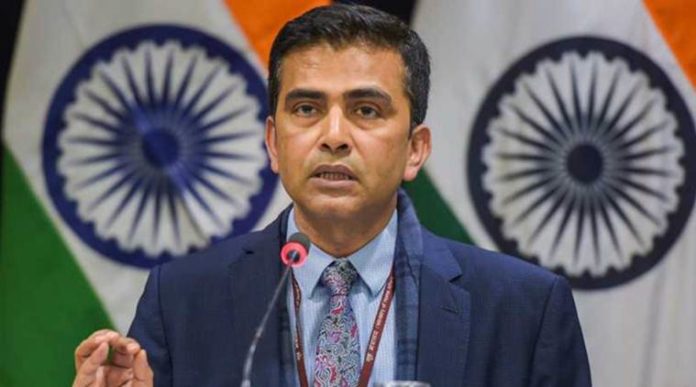
External Affairs Ministry spokesperson Raveesh Kumar said the government’s stand is clear on the issue and there is no scope for third party mediation.

“There is no role for any third party in this matter,” Kumar said at a media briefing while responding to a question about Trump raising Kashmir issue during his meeting with Pakistan Prime Minister Imran Khan in Davos.

“If at all, there are any bilateral issues between India and Pakistan, that should be discussed, it needs to be done between the two countries under the provisions of Simla Agreement and Lahore Declaration. But again as we have said in the past the onus, is on Pakistan to create such conducive conditions,” the MEA spokesperson said.

On Tuesday, Trump had said that the US was watching the developments between India and Pakistan in relation to Kashmir “very closely”. He also offered his “help” to resolve the issue.

On Imran Khan’s remarks at Davos, the MEA spokesperson said, “We have seen reports about certain remarks on India and India-Pakistan relations made by Pakistani Prime Minister Imran Khan at Davos. We are hardly surprised by the content and tone of his remarks.”

He said Khan’s comments “are not only factually inaccurate and contradictory but also demonstrate a growing sense of frustration.”

Kumar said Pakistan has to “realise that the global community has seen through this double-standard of playing the victim card in their fight against terror on the one hand, and supporting terror groups targeting India and other countries on the other.”

Kumar said that Pakistan has to take credible, irreversible and verifiable action against terror groups operating from its soil rather than making misleading and alarmist statements to divert the attention of the international community.

On January 16, India had slammed China for helping Pakistan in trying to raise the Kashmir issue at UNSC and asked Beijing to refrain from such actions in future. This was yet another instance of Pakistan facing global embarrassment for trying to misuse the UNSC platform to forward its Kashmir agenda.

Coronavirus hit Wuhan city goes into lockdown

Representational image

New Delhi (NVI): China is putting on lockdown Wuhan, a city of 11 million people, considering it the epicentre of novel coronavirus, that has killed 17 and infected nearly 600, as health officials around the world scramble to prevent a global pandemic.

The authorities have suspended planes and trains in and out of the city of 11 million people, as well as buses, subways and ferries.

The move is meant to “effectively cut off the virus spread, resolutely curb the outbreak and guarantee the people’s health and safety,” the notice said, according to Xinhua news agency.

Residents have been told not to leave. Worried about a food shortage, one said it felt like “the end of the world”.

Health officials fear the transmission rate will accelerate as hundreds of millions of Chinese travel at home and abroad during week-long holidays for Lunar New Year, which begins on Saturday.

Cases have been detected as far away as the United States, stoking fears the virus is already spreading worldwide.

In contrast with its secrecy over the 2002-03 Severe Acute Respiratory Syndrome (SARS) that killed nearly 800 people, China’s communist government has this time provided regular updates to avoid panic ahead of the holidays.

Authorities had confirmed 571 cases and 17 deaths by the end of Wednesday, China’s National Health Commission said. Earlier, it said another 393 suspected cases have been reported.

Several regional airlines – including Malaysia’s AirAsia and Singapore Airlines budget carrier Scoot – have announced a temporary halt to flights to and from Wuhan.

MUST READ