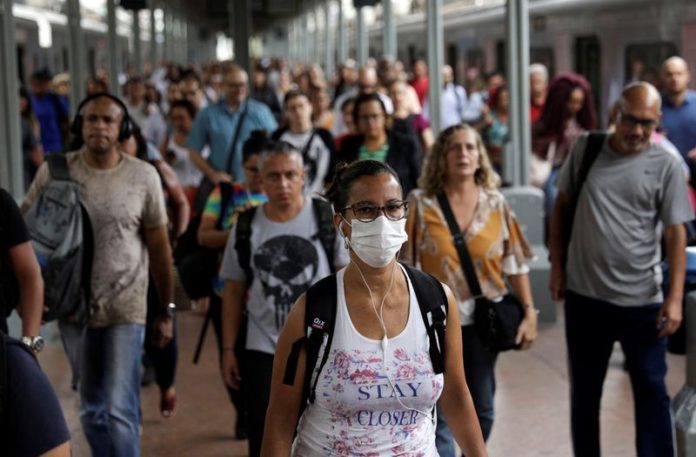
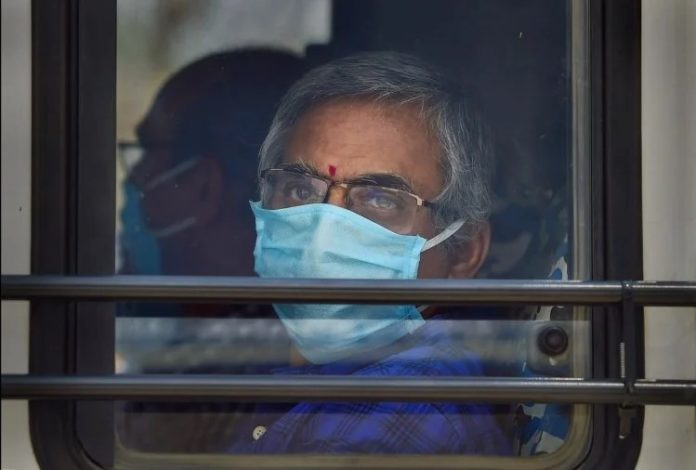
New Delhi (NVI): More than 8.9 million people have been confirmed to have the coronavirus, at least 4.4 million people have recovered, while more than 4,67,000 people have died, according to John Hopkins University tally.
The World Health Organization (WHO) reported a record increase in global coronavirus cases, with the total cased rising by 1,83,020 in a 24-hour period. The biggest increase was from North and South America with more than 1,16,000 new cases.
Brazil, the second worst affected country by coronavirus after the United States, passed 50,000 coronavirus deaths. It has more than 1 million total number of cases, according to the country’s health ministry.
New Zealand has reported two new cases of the coronavirus as a trickle of infected people continue to arrive at the border. The country of 5 million people now has nine active cases after having none at all earlier this month.
The number of confirmed coronavirus cases in Germany increased by 537 to 1,90,359. Meanwhile, the reported death toll rose by 3 to 8,885, the tally showed.
In addition to this, China reported 18 new coronavirus cases in the last 24 hour, 9 of which were in the capital Beijing.
New Delhi (NVI): The total number of coronavirus cases in India now stands at 4,25,282, with 13,699 deaths due to the pandemic, Union Health Ministry said.
At least 14,821 new cases of coronavirus and 445 deaths have been reported in India in the last 24 hours.
So far, 2,37,196 patients have recovered all over the country. With this the recovery rate is rising and now stands at around 55 per cent in India.
In the worst-hit Maharashtra, the COVID-19 cases climbed to 1,32,075, followed by Delhi with 59,746 cases, and Tamil Nadu with 59,377 cases.
Maharashtra has also reported the highest number of fatalities at 6,170, followed by 1,663 in Gujarat and 515 in Madhya Pradesh.
The death toll in the national capital surged to 2,175. While another 33,013 patients in Delhi have recovered so far, the healthy ministry data shows.
The other states with high virus cases are Gujarat (27,260), Uttar Pradesh (17,731), Rajasthan (14,930) and Madhya Pradesh (11,903).
Meanwhile, the Centre has asked the government of Delhi to trace all containment zones afresh, list all households even outside containment zones, conduct a survey among 20,000 Delhiites, and associate every district with a big hospital.
Srinagar (NVI): 122 new positive cases have been reported in Jammu and Kashmir since yesterday, taking the overall confirmed cases to 5,956. There are 2,492 active cases in the Union Territory with the death toll at 82.
Among the new corona cases, 20 are from Jammu division and 102 from Kashmir. Apart from that, 46 more Covid-19 patients have recovered or been discharged from various hospitals, according to the daily health bulletin. These include 38 from Jammu and 8 from Kashmir. 1 fresh death has been reported from Kashmir.
According to the daily health bulletin released by the UT administration, a total of 2,53,942 persons have been enlisted for observation, 38,829 people have been kept under home quarantine (including facilities operated by J&K government).
2,492 persons have been kept in hospital isolation and 30 have been kept under hospital quarantine. While 1,65,858 persons have completed surveillance, 46,651 are under home surveillance.
So far, test results are available for 3,07,638 cases, out of which 3,01,682 tested negative and 5,956 have tested positive. Out of total 2,492 active cases in the UT, 576 are from Jammu and 1,913 from Kashmir. There have been total 3,382 recoveries, 777 from Jammu and 2605 from Kashmir.
Out of total 82 deaths, 10 are from Jammu and 72 from Kashmir (including 1 new death from the Valley). Overall, 1,366 confirmed cases have been reported from Jammu and 4590 from Kashmir, taking the overall tally to 5956, as per the bulletin.
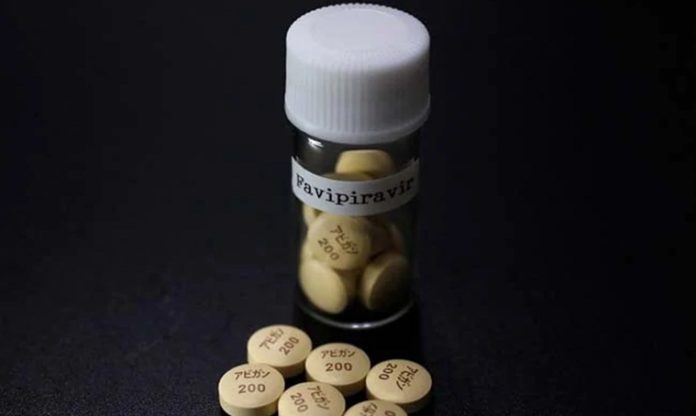
New Delhi (NVI): Glenmark Pharmaceuticals has announced the launch of antiviral drug Favipiravir for the treatment of mild to moderate COVID-19 patients at a price of about Rs 103 per tablet.
The drug manufacturing firm on Saturday announced that it has received regulatory approval for oral antiviral Favipiravir (brand name FabiFlu®).
“Glenmark has received manufacturing and marketing approval from India’s drug regulator, making FabiFlu® the first oral Favipiravir-approved medication in India for the treatment of COVID-19,” the company said in a statement.
The drug will be available as a 200 mg tablet at a maximum retail price (MRP) of Rs 3,500 for a strip of 34 tablets, the company said.
Favipiravir is backed by strong clinical evidence showing encouraging results in patients with mild to moderate COVID-19, claims Glenmark.
The antiviral offers broad spectrum RNA virus coverage with clinical improvement noted across age groups 20 to more than 90 years. Favipiravir can be used in COVID-19 patients with co-morbid conditions such as diabetes and heart disease with mild to moderate COVID 19 symptoms, according to a statement released by the firm.
It offers rapid reduction in viral load within four days and provides faster symptomatic and radiological improvement. “Of most importance, Favipiravir has shown clinical improvement of up to 88% in COVID-19 mild to moderate COVID 19 cases,” the company has claims.
“This approval comes at a time when cases in India are spiralling like never before, putting a tremendous pressure on our healthcare system. We hope the availability of an effective treatment such as FabiFlu® will considerably help assuage this pressure, and offer patients in India a much needed and timely therapy option,” said Glenn Saldanha, Chairman and Managing Director of Glenmark Pharmaceuticals Ltd.
Favipiravir is a generic version of Avigan of Fujifilm Toyama Chemical, Japan, a subsidiary of Fujifilm Corporation. Considering a minimum of two strips per patient, Glenmark will be able to provide FabiFlu for about 82,500 patients in the first month itself.
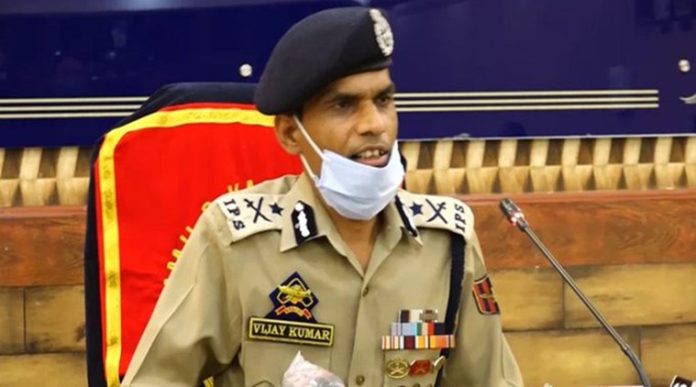
Srinagar (NVI): The number of active terrorists in Kashmir at present is somewhere between 100 to 200 even as 106 ultras have been killed so far, Inspector General of Police (IGP) Vijay Kumar said today.
Addressing a press conference at police control room Srinagar, the IGP Kashmir said that when he took charge, there were 252 active militants in Kashmir and at present, the number is between 100 and 200. “The reason for this number is that there may have been some successful infiltration bids…,” he said.
The IGP said that police don’t go by numbers and its job is to kill militants wherever it gets a lead about their presence.
On today’s encounter at Zonimar, Kadikadal area of Srinagar’s downtown, the Kashmir police chief said that late last night, police received a tip-off about the presence of three militants. “A siege was laid and hectic efforts were made to ensure surrender of militants. Two of the three were locals and we brought their families and made repeated announcements on loudspeakers through area elders and also by the parents,” he said, adding that the hiding militants lobbed grenades and fired at the security forces, triggering an encounter. “In the ensuing encounter, they were killed,” he said.
Two of them have been identified and their families will be allowed to participate in the last rites either in Handwara or Baramulla district of north Kashmir. “The identity of the third slain terrorist is being ascertained,” he said.
The IGP said that the slain militants were listed as the Islamic State of J&K militants as per police records but there were reports that they had joined Hizbul of late. “One AK-47 rifle and two pistols were recovered from the slain militants,” he said, adding that the operation was held in a very clean manner and there was no collateral damage for which CRPF and police deserve applause.
Asked whether Srinagar was witnessing a resurgence of militancy, the IGP said if there are no anti-militancy operations taking place in any district, that doesn’t mean militancy isn’t there. “There are two active militants in Srinagar at present. Srinagar being the Central district is used by militants to receive funds and meet group leaders and other associates,” he said.
About the identity of slain militants, the IGP said one of the two local slain militants has been identified as Shakoor Farooq Langoo of Qamarwari, Srinagar. “He was involved in the killing of two BSF men at Soura and had also snatched their weapons. There were other militants also involved, but Shakoor was the one who had fired at BSF men,” Kumar said.
He said that police and CRPF teams acted professionally and didn’t damage the house where the trio was hiding. “This is for the first time in history that militant leadership in Kashmir stands collapsed. In the recent months, we have been able to kill all the leaders of the four major outfits: Hizbul, Lashkar, Jaish and Ansaar Gazwatul Hind (AGH),” he said.
New Delhi (NVI): Indian Naval ship (INS) Airavat is all set to bring back around 250 Indian nationals from the Maldives as part of the next phase of ‘Operation Samudra Setu’ that kicks-in from today.
The Navy ship which reached Male yesterday will set sail for Tuticorin in Tamil Nadu with the evacuated Indian citizens late today.
— PRO Defence Gandhinagar (@DefencePRO_Guj) June 21, 2020
The Indian Embassy in the Maldives tweeted that the passengers of today’s evacuation by INS Airavat were being assisted and provided food packets at the Velana airport in Male.
Passengers of today’s evacuation by #INSAiravat being assisted and provided food packets at the Velana airport in #Malé.
The Indian Navy had started Operation Samudra Setu (Sea Bridge) on May 8 as part of national efforts to repatriate Indian citizens from overseas who are stuck in foreign countries amid the Covid-19 pandemic.
The Navy had also deployed INS Jalashwa and INS Magar in earlier phases of the evacuation process.
On June 11, INS Shardul reached Porbandar in Gujarat with 233 Indians stranded in Iran. All of them were quarantined for seven days at various locations in Porbandar.
Earlier, INS ‘Jalashwa’ and INS ‘Magar’ had evacuated 2,874 Indians from the Maldives and Sri Lanka to ports of Kochi and Tuticorin under ‘Samudra Setu’ operation.
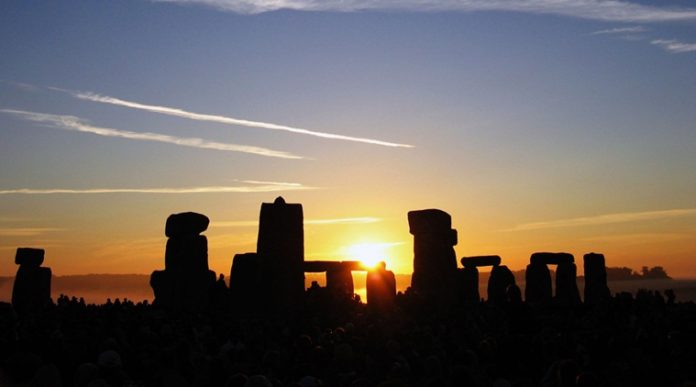
New Delhi (NVI): The word ‘solstice’ is derived from the Latin sol (“sun”) and sistere (“to stand still”). On this day (June 21), the seasonal movement of the Sun’s daily path (as seen from Earth) appears to “stand still” at a northern or southern limit before reversing direction.
This is an annual event that occurs when the Sun reaches its most northerly or southerly day-arc relative to the equator.
There are two solstices that occur annually: around June 21 (commonly known as “Summer Solstice” for being the first day of summer and the longest day of the year) and December 21 (commonly known as “Winter Solstice” for being the first day of winter and the shortest day of the year).
On the other hand, an equinox — derived from the Latin aequinoctium, from aequus (equal) and nox (night) — is commonly regarded as the instant when the center of the visible Sun is directly above the Equator, and this occurs twice each year: around 20 March (called “Spring Equinox” as it marks the begining of spring in most cultures) and 23 September (called “Autumnal Equinox” as it marks the beginning of autumn).
The equinoxes are the only times when the solar terminator (the “edge” between night and day) is perpendicular to the equator, and hence daytime and nighttime are of approximately equal duration.
The solstices, together with the equinoxes, are connected with seasons, harvests and livelihood. Therefore, many cultures celebrate various combinations of the solstices, the equinoxes, and the midpoints between them, leading to various holidays arising around these events, according to the United Nations.
The solstices and equinoxes symbolize the fertility of the land, agricultural and food production systems, cultural heritage and their millenary traditions.
The United Nations General Assembly (UNGA) has acknowledged that the celebration of these events is an embodiment of the unity of the cultural heritage and centuries-long traditions, and further play a significant role in strengthening the ties among peoples on the basis of mutual respect and the ideals of peace and good-neighborliness. It, therefore, recognized 21 June as the International Day of the Celebration of the Solstice.
The summer solstice fire festivals take place in the Pyrenees (Mountain range in Europe) each year on the same night when the sun is at its zenith. Once night falls, people from different towns and villages carry flaming torches down the mountains to light a variety of traditionally constructed beacons.
The descent is a special moment for young people, signifying the transition from adolescence to adulthood, according to a UN report. The festival is considered a time for regenerating social ties and strengthening feelings of belonging, identity and continuity with celebrations including popular folklore and communal dining. Roles are assigned to specific people.
In some municipalities, the mayor is involved with lighting the first beacon. In others, a priest blesses or lights the fire. Elsewhere, the most recently married man lights the fire and leads the descent to the village. Often, young unmarried girls await the arrival of the torchbearers in the village with wine and sweet pastries.
In the morning, people collect embers or ashes to protect their homes or gardens. The element has deep roots among local communities and is perpetuated thanks to a network of associations and local institutions. The most important locus of transmission is the family, where people keep the memory of this heritage alive.
Srinagar (NVI): Three terrorists have been killed in an ongoing operation in Zoonimar area of downtown Srinagar after repeated efforts by their family members, forces to persuade them to surrender failed, police said today.
A gunfight broke out in Zoonimar- Gilkadal area of Srinagar’s old city after joint teams of Police and Quick Reaction Teams (QRTs) of CRPF cordoned off the area on the basis of specific information about the presence of militants there, they said.
Talking to NVI, Inspector General of Police, Kashmir, said that the three militants were holed up in a house which also suffered damage in the gunfight. “Two of them are locals. We launched the operation in the night. For almost two-and-a-half hours, we tried to persuade the hiding militants to surrender. Repeated announcements to them by the locals of the area were also made. We also brought family members of two militants to the spot. They also appealed their children to surrender, but all efforts didn’t succeed,” the IGP said.
He said that two out of the three militants are locals and one is believed to be a foreigner. A police official said that as the hiding militants refused to surrender and opened fire at the forces triggering an encounter, two unidentified militants were gunned down. Later, the third ultra was also taken down after an intense exchange of gunfire.
This is the second encounter in Srinagar’s downtown in the recent past. Earlier, two militants including the divisional commander of Hizbul Mujahideen outfit Junaid Sehrai were killed. The authorities have snapped mobile internet services in the entire Srinagar district as a “precautionary measure.”
A day before yesterday, addressing a joint press conference with the police, Srinagar based Army’s 15 Corps commander Lieutenant General BS Raju had said that over 100 militants including top commanders of various outfits were killed. Lt Gen Raju had stated that in the next few months, Army will try to ensure normalcy in full across the Valley.
IGP Kashmir has already announced that from next month, police will shift focus from South Kashmir to North Kashmir. Today’s encounter is believed to be a chance encounter as security officials have been maintaining that in Srinagar. militancy was already wiped out but some were on the move, who get trapped after human and technical intelligence is used by the security agencies.
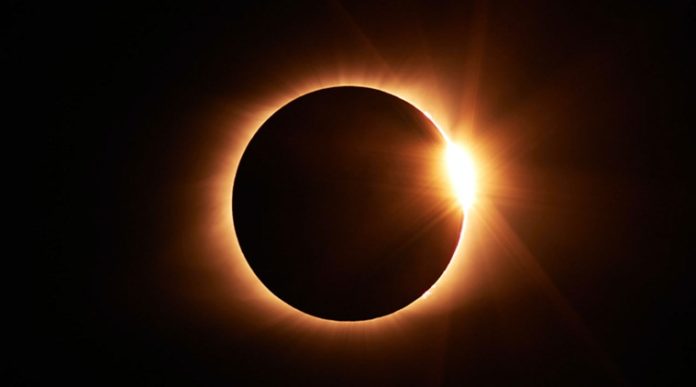
New Delhi (NVI): A rare kind of solar eclipse takes place today which also coincides with the summer solstice, the longest day of the year, or the first day of summer. The rare celestial event, annular solar eclipse, popularly called ‘ring of fire’ is visible today from various parts of India.
“The first solar eclipse of this year takes place on the summer solstice, which is the longest day in the Northern Hemisphere,” the Ministry of Science & Technology said in a release yesterday.
No, you don’t want to miss the last annular #SolarEclipse in India, of this decade
Today!
Here are the places in India where the partial phase of #SolarEclipse2020 can be seen
Mumbaikars can watch the partially covered sun between 10.00 AM and 1.28 PM
While people living along the path annular eclipse passing through Anupgarh, Suratgarh, Sirsa, Jakhal, Kurukshetra, Yamunanagar, Dehradun, Tapowan and Joshimath will be able to see the annular phase, people in rest of India can witness a partial eclipse.
The solar eclipse started at 9:15 AM (IST) and will be visible until 3:04 PM. At 12:10 PM, the maximum eclipse will take place. The eclipse will be visible from much of Asia, Africa, the Pacific, the Indian Ocean, parts of Europe and Australia.
In India, the path of the ‘Ring of Fire’ solar eclipse began near Gharsana in Rajasthan around 10:12 AM today.
When Moon comes between the Sun and Earth, the shadow falls on the surface of the Earth. The Sun is entirely covered by the Moon for a brief period. Those places that are engulfed by the dark, dense umbral shadow of the Moon experience the total solar eclipse.
In the regions that plunge into the soft diffused penumbral shadow of the Moon experience the partial eclipse. In all solar eclipse the Sun, Moon and Earth may not be perfectly aligned, and then we only have a partial eclipse. When the three celestial bodies happen to be in a straight line, we have Total solar eclipse.
The Ministry of Science and Technology has also warned people not to look at the sun during the eclipse. “Sun is a very bright object, and looking at it directly can cause severe damage to the eye and vision. There are special goggles made for looking at the Sun. These goggles filter the sunlight for safe viewing,” it said.
It is good to be excited about #SolarEclipse2020, but please remember
?Viewing it without proper care can damage your eyes
Please make sure you view the annular #SolarEclipse safely
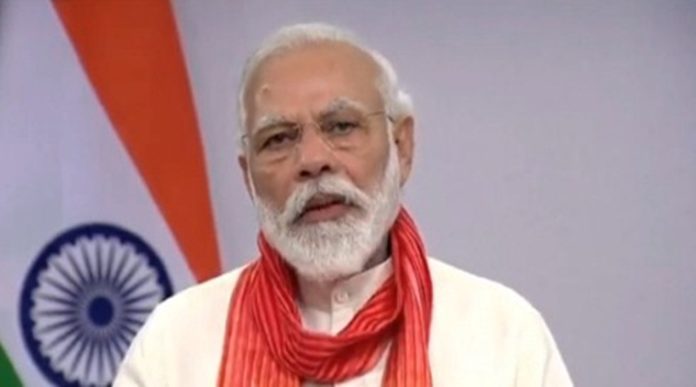
New Delhi (NVI): Highlighting the importance of Yoga for a healthy and peaceful world, Prime Minister Narendra Modi today said that Yoga has emerged as a force of unity as it deepens bonds of humanity and doesn’t discriminate.
“It goes beyond race, colour, gender, faith and nations. Anybody can embrace Yoga. If we can fine tune our chords of health and hope, the day is not far away when world will witness the success of healthy and happy humanity. Yoga can definitely help us make this happen,” the Prime Minister said in his address to the nation on the occasion of sixth International Yoga Day.
PM Modi said that International Yoga Day is a day of solidarity, a day of universal brotherhood.
The PM said that the World is feeling the need of Yoga more now as the Covid pandemic has threatened human life. “Yoga boosts immune system of the body. You must include Pranayama in your daily life. Pranayama Yoga or breathing exercises strengthens our respiratory system. It is more relevant in the current times as it is the respiratory system of the body that is most adversely affected by the Covid19 virus,” he said.
Due to COVID-19 global health emergency, this year International Yoga Day is being observed through the electronic and digital platform.
“Today, all of us should stay away from large gathering and practice yoga at home with our families. This year’s theme is ‘Yoga at Home and Yoga with Family’. Yoga promotes family bonding as children, youngsters, elders in family come together to practise yoga, there is a flow of positive energy in home. Yoga also promotes emotional stability,” the PM said.
“As conscious citizens, we will move forward as a family and society in unison. We will try to make ‘Yoga at home and Yoga with family’ a part of our lives. We will surely succeed, we will surely win”, he added.
President Ram Nath Kovind also shared a message on Yoga on Twitter. “Greetings on #InternationalYogaDay. The ancient science of Yoga is India’s great gift to the world. Glad to see more and more people adopting it. Amid stress and strife, especially with #Covid19, practicing Yoga can help keep the body fit and mind serene,” he wrote.
The ancient science of Yoga is India’s great gift to the world.
Glad to see more and more people adopting it.
Amid stress and strife, especially with #Covid19, practicing Yoga can help keep the body fit and mind serene. pic.twitter.com/1ZGqsTnn4A
— President of India (@rashtrapatibhvn) June 21, 2020
PM Modi also said that the huge participation of people in ‘My Life – My Yoga’ video blogging competition from across the globe reflects the growing popularity of yoga.
This is for the first time that the celebrations are being held virtually since it was instituted on June 21, 2015.