Sunday, August 16, 2026
Home Blog Page 1376

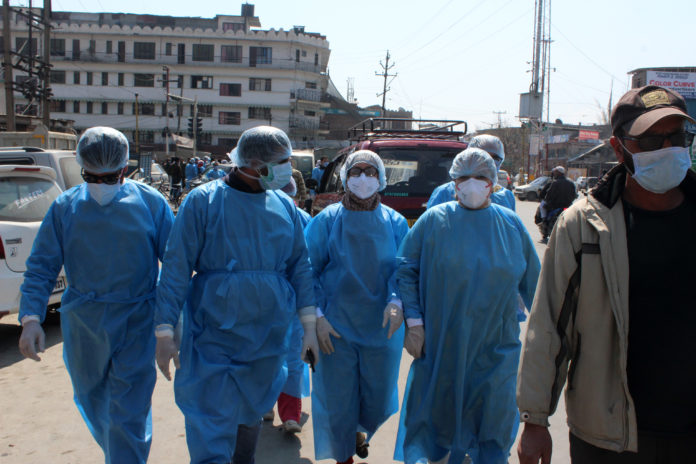
World Bank approves $1 bn to protect India’s poorest from COVID-19

Representational Image

New Delhi (NVI): The World Bank today approved another USD 1 billion funds to accelerate India’s COVID-19 ‘Social Protection Response Program’ to support the poor and vulnerable households in the country that are severely impacted by the COVID-19 pandemic.

This is another billion-dollar support to India by World Bank to help combat Covid-19. The bank had approved USD 1 billion emergency funds for India on April 3.

“This takes the total commitment from the Bank towards emergency COVID-19 response in India to $2 billion. A $1 billion support was announced last month towards immediate support to India’s health sector,” the World Bank said in a statement.

The new support will be funded in two phases – an immediate allocation of USD 750 million for fiscal year 2020 and a USD 250 million second tranche that will be made available for fiscal year 2021, it said.

The first phase of the operation will be implemented countrywide through the Pradhan Mantri Garib Kalyan Yojana (PMGKY). It will help scale-up cash transfers and food benefits, using a core set of pre-existing national platforms and programs such as the Public Distribution System (PDS) and Direct Benefit Transfers (DBT).

The fund will also provide robust social protection for essential workers involved in COVID-19 relief efforts and benefit vulnerable groups, particularly migrants and informal workers, who face high risks of exclusion under the PMGKY.

With the second tranche of USD 250 million, the program will deepen the social protection package, whereby additional cash and in-kind benefits based on local needs will be extended through state governments and portable social protection delivery systems.

“The response to the COVID-19 pandemic around the world has required governments to introduce social distancing and lockdowns in unprecedented ways. These measures, intended to slow down the spread of the virus have, however, impacted economies and jobs – especially in the informal sector. India with the world’s largest lockdown has not been an exception to this trend,” said Junaid Ahmad, World Bank Country Director in India.

“In this context, cash transfers and food benefits will help the poor and vulnerable access a ‘safety bridge’ towards a time when the economy will start to revive,” he added.

Social protection is a critical investment since half of India’s population earns less than USD 3 a day and are precariously close to the poverty line, the World Bank statement said.

Over 90 per cent of India’s workforce is employed in the informal sector, without access to significant savings or workplace based social protection benefits such as paid sick leave or social insurance, it said.

This program will create a system that will strengthen the delivery of India’s safety nets program. It will help India to move from more than 460 fragmented social protection schemes to a single integrated system that is fast and more flexible, acknowledging the diversity of needs across states.

Furthermore, it will enable geographic portability of social protection benefits that can be accessed from anywhere in the country, despite the state from which the worker belongs, ensuring food, social insurance and cash-support for all, including for migrants and the urban poor.

“The COVID-19 pandemic has also put the spotlight on some of the gaps in the existing social protection systems,” added Junaid Ahmad.

He further added, “This program will support the Government of India’s efforts towards a more consolidated delivery platform – accessible to both rural and urban populations across state boundaries. The platform draws on the country’s existing architecture of safety nets – the PDS, the digital and banking infrastructure, and Aadhaar – while positioning the overall social protection system for the needs of a 21st century India. Importantly, such a system will need to leverage India’s federalism enabling and supporting states to respond quickly and effectively in their context.”

Out of the USD 1 billion commitment, USD 550 million will be financed by a credit from the International Development Association (IDA) – the World Bank’s concessionary lending arm and USD 200 million will be a loan from the International Bank for Reconstruction and Development (IBRD), with a final maturity of 18.5 years including a grace period of five years. The remaining USD 250 million will be made available after June 30, 2020 and would be on standard IBRD terms. The program will be implemented by the Union Ministry of Finance.

The World Bank is rolling out a total of USD 14 billion fast-track package to strengthen the COVID-19 response in developing countries and shorten the time to recovery. The immediate response includes financing, policy advice and technical assistance to help countries cope with the health and economic impacts of the pandemic.

China supplying upgraded battle tanks to Pak?

(Source: Twitter/Pakistan Defence Command)

New Delhi (NVI): While the world is engaged in fight against coronavirus, China possibly is clandestinely delivering advanced battle tanks to Pakistan, clearly to boost its military capabilities against India.

According to reports, China recently delivered two VT4 battle tanks indicatively to Pakistan as part of a deal for 100 pieces of these armoured vehicles.

China’s official news channel China Central Television (CCTV) reported that the two tanks, upgraded with a turret boost design and explosive reactive armour, have been dispatched to a “foreign buyer” location.

The tanks manufactured by China North Industries Group (NORINCO) left for their destination following a launch ceremony, the report said.

Though CCTV did not identify the “foreign buyer”, earlier reports had said that Pakistan had placed order for procurement of some 100 VT4 tanks from China.

The Pakistan Army has already tested these tanks, as was evident from some photographs leaked three years back.

The VT4 tanks are said to be lightweight high mobility vehicles which can operate well in high altitude locations and the Chinese military had earlier sought to prove this through demonstrations in the Tibetan plateau.

Acquisition of these tanks will bolster Pakistani military capabilities in high altitudes, which are weak in comparison to India.

The VT4 upgraded tank, previously known as MBT3000, has extra protection capabilities, including a new explosive reactive armour, according to the CCTV report.

With a diesel engine of 1,200-horsepower, the VT4 can travel at a maximum speed of 70 kms per hour and a maximum cross-country speed of 50 kms per hour, according to the reports.

The tank is equipped with a 125-mm smooth bore gun and can fire armour-piercing fin-stabilized discarding-sabot (APFSDS), high explosive anti-tank cartridges and missiles with a 5-kilometer range, according to these reports.

Army officer, soldier killed in avalanche in north Sikkim

(Representational Image)

New Delhi (NVI): A Lieutenant Colonel and a soldier lost their lives yesterday after a patrolling cum snow clearance party came under a heavy avalanche in north Sikkim, Army said today.

The deceased officer has been identified as Lieutenant Colonel Robert TA and Sapper Shanmukha Rao.

“Inspite of the best efforts of the rescue team and local formation an officer Lieutenant Colonel Robert TA and Sapper/ OPEM Sapala Shanmukha Rao who were trapped under the ice lost their lives,” Army said in a statement, adding that all other members of the team are safe.

The two personnel were part of an 18-member group that came under the avalanche.

Army soldier tests Covid positive

Amshipora encounter

New Delhi (NVI): An Indian Army soldier has been tested positive for Covid-19 at Sena Bhawan in New Delhi, Defence spokesperson said.

The affected area of Sena Bhawan has been closed for sanitisation and disinfection, he said.

Action as per protocol such as contact tracing and quarantine are in progress, he added.

On April 28, an employee working at NITI Aayog Bhavan in the National Capital was tested positive for COVID-19 and the building was sealed for disinfection and sanitisation.

State-wise details of Covid-19 cases in India

New Delhi (NVI): After the first confirmed coronavirus case in India, which was reported in the state of Kerala on January 30, the virus has tightened its grip across the country, with Maharashtra, Gujarat and Madhya Pradesh being the most affected states.

The country has now entered the last week of the third phase of the nationwide lockdown that is slated to end on May 17. The total number of confirmed cases have been reported at 81,970 with 2,649 deaths so far, according to the Union Health Ministry.

Total positive cases in States/UTs:

Andaman and Nicobar Islands- 33

Andhra Pradesh- 2,205

Arunachal Pradesh- 1

Assam- 87

Bihar- 994

Chandigarh- 191

Chhattisgarh- 60

Dadar Nagar Haveli- 1

Delhi- 8,470

Gujarat- 9,591

Goa- 14

Haryana– 818

Himachal Pradesh- 74

Jammu and Kashmir- 983

Jharkhand- 197

Karnataka- 987

Kerala- 560

Ladakh- 43

Madhya Pradesh- 4,426

Maharashtra- 27,524

Manipur- 3

Meghalaya- 13

Mizoram- 1

Odisha- 611

Puducherry- 13

Punjab- 1,935

Rajasthan- 4,534

Tamil Nadu- 9,674

Telangana- 1,414

Tripura- 156

Uttarakhand- 78

Uttar Pradesh- 3,902

West Bengal – 2,377

State/UT wise total death toll:

Andhra Pradesh- 48

Assam- 1

Bihar- 7

Chandigarh- 3

Delhi- 115

Gujarat- 586

Haryana- 11

Himachal Pradesh- 2

Jammu and Kashmir- 11

Jharkhand- 3

Karnataka- 35

Kerala- 4

Madhya Pradesh- 237

Maharashtra- 1,019

Meghalaya- 1

Odisha- 3

Puducherry- 1

Punjab- 32

Rajasthan- 125

Tamil Nadu- 66

Telangana- 34

Uttar Pradesh- 88

Uttarakhand- 1

West Bengal- 215

A total of 27,920 people have been cured or discharged from hospitals in India. There are around 51,401 active cases currently, according to the Health Ministry.

International Day of Families 2020: Importance of a family amid COVID-19

New Delhi (NVI): May 15 is celebrated as ‘International Day of Families’ every year. ‘Family’ is one word, but there are many emotions attached to it.

This year, the day resonates amid the current coronavirus pandemic, as people realise the importance of their families in these tough times.

This year’s theme is ‘Families in Development: Copenhagen & Beijing+25’.

“This year’s 25th anniversary of Copenhagen Declaration and Beijing Platform for Action comes at a time of one of the most challenging global health and social crises,” the UN said in a statement.

UN said that the 2020 COVID-19 pandemic brings into sharp focus the importance of investing in social policies protecting the most vulnerable individuals and families.

“It is the families who bear the brunt of the crisis, sheltering their members from harm, caring for out-of-school children and, at the same time, continuing their work responsibilities,” it said.

The Day was proclaimed by the UN General Assembly in 1993 and reflects the importance the international community attaches to families.

Every year, this day is observed to celebrate and spread awareness about the benefits of the family systems to the masses.

The day is being marked as Family Day since 1995 to celebrate the importance of families, people, societies and cultures around the world.

Each year, this day is also used as a platform to highlight the various issues plaguing families around the globe and the necessary measures that can be taken to resolve these issues.

According to the United Nations (UN), “This day provides an opportunity to promote awareness of issues relating to families and to increase the knowledge of the social, economic and demographic processes affecting families.”

The symbol for the International Day of Families consists of a solid green circle with an image in red. The image consists of elements of simple drawings of a heart and a house. It indicates that families are the center of society and provide a stable and supporting home for people of all ages.

Coronavirus death toll surges past 3 lakh globally

New Delhi (NVI): The death toll due to the coronavirus contagion has now surpassed three lakh globally while the number of infections has crossed 4.4 million, according to John Hopkins University tally.

The number of coronavirus cases in Russia has surpassed 250,000, but daily new infections fell below 10,000 for the first time in nearly two weeks.

First coronavirus case has been detected in a Rohingya refugee in the sprawling camps in southern Bangladesh, according to the officials.

Slovenia today officially called an end to its coronavirus epidemic, becoming the first European country to do so.

In the US, more than 1.4 million cases have now been recorded with the death toll standing at over 85,000.

In addition to this, nearly three million laid-off workers in the US have applied for unemployment benefits last week, bringing the total, since coronavirus shutdowns began two months ago, to over 36 million.

A WHO modelling study indicates the coronavirus could kill 150,000 people in Africa and infect 231 million people in a year unless urgent action is taken.

Authors of the research say even though many African nations have been swift to adopt containment measures, health systems could still quickly become overwhelmed.

Meanwhile, about 1.6 million people have recovered.

Covid-19 cases in India climb to 81,970, death toll at 2,649

New Delhi (NVI): The total number of coronavirus cases in India has risen to 81,970 and fatalities from the virus have gone up to 2,649, according to the Union Health Ministry.

In the last 24 hours, 3,967 new coronavirus cases reported in the country.

In Maharashtra, the Covid-19 cases climbed to 27,524, followed by Tamil Nadu that has 9,674 cases and Gujarat with 9,591 cases so far.

The state of Maharashtra has also reported the highest number of deaths, as many as 1,019, which is followed by Gujarat (586) and Madhya Pradesh (237), according to the Health Ministry data.

At least 8,470 people in the national capital have been infected with coronavirus.

The other worst affected states are Rajasthan, Madhya Pradesh and Uttar Pradesh, ministry said.

Meanwhile, the total number of samples tested for the virus stood at 19,47,041 at last count.

Apart from this, the Maharashtra government is most likely to extend the lockdown in the state till May 31 even as the Centre is yet to make an announcement of extension.

At least 27,919 patients have been cured of the virus or discharged.

J&K to get Anti Narcotics Task Force soon

Abid Bashir

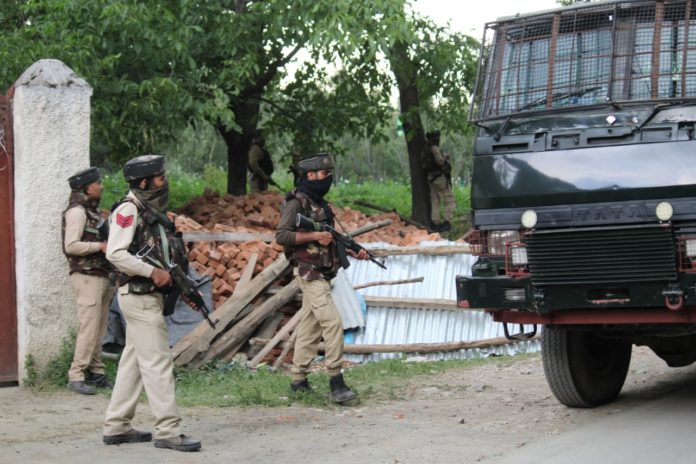
Srinagar (NVI): The Jammu and Kashmir administration, led by Lieutenant Governor GC Murmu, today accorded sanction to set up first-ever Anti Narcotics Task Force (ANTF) in the UT to tackle the menace of drug abuse and drug trafficking.

J&K Home Department issued an order to announce the setting up of the ANTF.

The order read that the sanction has been accorded to set up Anti Narcotics Task Force (ANTF) under the overall superintendence and control of the Inspector General of Police, Crime, Jammu and Kashmir.

The Home Department has also created one post of Superintendent of Police, two posts of Deputy Superintendents of Police, nine posts of Inspectors, eighteen posts of Sub Inspectors, eighteen posts of Assistant Sub Inspectors and fifty-two posts of selection grade constables and constables, who will all be part of ANTF.

The Home Department in its order has further stated that it shall be ensured that 50 per cent of Sub Inspectors to be posted to the new force shall be direct recruits.

A police spokesman said that J&K DGP Dilbagh Singh has thanked LG Murmu for the creation of ANTF on the police proposal, stating that the Force will help in fighting the drug menace in the UT.

“This will be yet another special wing within the police department to deal with the crimes related to drugs and their trafficking,” the spokesman said in a statement.

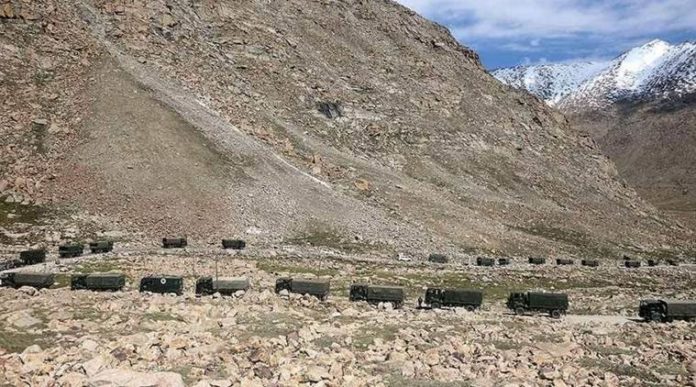
India committed to maintain peace on border with China: MEA on LAC face-off

Representational Image

New Delhi (NVI): India today said that it remains committed to the objective of maintaining peace and tranquility in the India-China border areas, days after face-offs between Indian and Chinese soldiers.

MEA spokesperson Anurag Srivastava said that such face-offs could have been avoided if both sides had a common perception of LAC (Line of Actual Control).

“Occasionally however on account of difference in perception of the alignment of the Line of Actual Control (LAC), situations have arisen on the ground that could have been avoided if we had a common perception of the LAC,” he said.

To recall, Indian and Chinese troops clashed with each other on May 5 in Pangong Tso area in Eastern Ladakh.

There was a similar face-off four days later near Naku La pass in North Sikkim. Some soldiers from both sides had sustained minor injuries in the clash.

Responding to media queries on the developments on LAC, the MEA spokesperson also referred to the informal summits between Prime Minister Modi and Chinese President Xi Jinping in Wuhan (2018) and in Chennai (2019).

He said that the two leaders had reaffirmed that both sides will continue to make efforts to ensure peace and tranquility in the border areas. “This is essential for the overall development of the bilateral relations,” he added.

“The two leaders had also directed their militaries to earnestly implement various confidence building measures agreed upon between the two sides, including the principle of mutual and equal security, and strengthen existing institutional arrangements and information sharing mechanisms to prevent incidents in border regions. As a result, India-China border has largely been peaceful,” Srivastava said.

The MEA spokesman added that the two sides have established mechanisms to resolve such situations as and when they arise including Border Personnel Meeting, Flag Meetings, and Working Mechanism for Consultation & Coordination on India-China Border Affairs as well as diplomatic channels.

Indian and Chinese soldiers have clashed with each other in the past as well. In 2017, Indian and Chinese troops were locked in a 73-day standoff in Doklam after the Indian side stopped the construction of a road in the disputed area by the Chinese Army.

MUST READ