Tuesday, September 22, 2026
Home Blog Page 16

CM Omar Abdullah Calls For Making J&K Hub For Film Production

Srinagar, Sept 11 (NVI): Jammu and Kashmir Chief Minister Omar Abdullah on Thursday called for transforming the Union Territory from merely a sought-after filming location into a vibrant centre for storytelling, talent development and film production.

Addressing the concluding ceremony of the four-day International Film Festival of Jammu and Kashmir (IFFJK) at the SKICC here, Abdullah said the success of the festival should ultimately be measured by the careers it launches, collaborations it creates and stories from J&K that reach audiences across India and the world.

The inaugural edition of IFFJK featured 120 films from more than 30 countries and brought filmmakers, artists, young aspirants and cinema enthusiasts together.

“Jammu and Kashmir must increasingly become a place from which stories emerge, talent is discovered, and films are conceived and created,” Abdullah said.

He said the region’s landscapes may attract filmmakers, but its stories, people and a professional filmmaking environment should encourage them to return.

“Our landscapes may bring filmmakers here, but our stories, our people and a professional filmmaking environment can bring them back,” he said.

The chief minister said J&K had much more to offer the film industry than its scenic locations, pointing to its cities, villages, languages, literature, music, crafts, history and everyday life as a rich source of stories.

Abdullah also emphasised the need to create opportunities for local talent to work with the wider film industry and gain exposure beyond the region.

He said the long-term success of IFFJK should not be judged only by the number of films screened or personalities attending the festival.

“Ten years from now, IFFJK’s success will be measured not only by the films screened or the personalities who joined us, but by the careers that began here, the opportunities and collaborations it created, and the stories from Jammu and Kashmir that reached audiences across India and the world,” he said.

The chief minister called for developing IFFJK beyond a four-day annual event into a year-round platform for screenings, training, learning and collaboration.

He said the government could provide the necessary platform and an enabling environment, but a vibrant film culture had to be sustained by the creative community.

Abdullah also highlighted the economic potential of the film sector, saying filmmaking could generate employment and opportunities for local professionals, artists, craftspeople, service providers and businesses.

“Films coming to Jammu and Kashmir should therefore leave behind not only memorable images, but also skills, employment and stronger local capabilities,” he said.

Recalling the region’s long association with cinema, Abdullah said iconic films such as “Junglee”, “Arzoo”, “Kashmir Ki Kali” and “Kabhi Kabhie” had showcased Kashmir’s landscape to audiences for decades.

He said the screening of such films during the festival, including through the floating cinema on Dal Lake, had been among the defining memories of the inaugural edition.

“For decades, Kashmir travelled to audiences through the cinema screen; this week, in a sense, the screen came back to Kashmir,” he said.

The chief minister urged visiting filmmakers, actors and delegates to return to J&K to shoot, write, teach, collaborate and explore the region.

He also encouraged young filmmakers and storytellers to focus on stories rooted in their own surroundings.

“Tell the stories of your neighbourhoods, villages, families and generation. Some of cinema’s most powerful stories are intimate and local,” he said.

Union Minister of State for Information and Broadcasting L Murugan, former chief minister Farooq Abdullah, members of the J&K Council of Ministers, legislators, Chief Secretary, senior civil and police officers and members of the film fraternity were present at the concluding ceremony.

Abdullah thanked the jury, filmmakers, delegates, organisers, volunteers and audiences for contributing to the success of the first edition of IFFJK.

He said the conclusion of the inaugural festival should not mark the end of the idea behind it, but the beginning of something enduring for Jammu and Kashmir’s film and creative community.—(NVI)

Swarms to Singularity: Can Vatsal Soin’s ‘0→1’ Doctrine Invention Steer AI Through Financial Markets?

Vatsal Soin

Financial markets increasingly face decisions no one can later prove were authorized.

This invention proposes a governance path in which any proposed action normalizes to
measurable conditions between 0 and 1, then tests against defined boundaries before
execution.

The same architecture is designed for classical, quantum, AGI, or ASI systems.
Live: www.0to1doctrine.com

AI does not need to reach Singularity before markets face a new governance question.
Trading, credit, derivatives, foreign exchange, and digital assets are increasingly automated, while agentic swarms connect actions across systems.

WHY MARKETS NEED A COMMON GATE

Markets already have sophisticated models and rules. The harder problem starts when AI
turns analysis into action: a trade fires, credit approves, a settlement moves, a anomaly flag freezes an account.

Systems can produce a decision without proof of which conditions were checked, or whether authority existed. Agentic swarms multiply that gap across connected processes.

ONE EXAMPLE, BEFORE THE ARCHITECTURE

A credit application scores 0.55 on a lender’s risk-appetite band of [0.60, 1.00]. The bands do not overlap — the application is rejected, without transmitting income or employment
records.

A second application scores 0.72: inside the band, approved.

A trade proposes moving capital equal to 0.85 of a fund’s volatility ceiling of [0.00, 0.75].

The bands do not overlap either — held, routed for human authority before execution.

MULTIPLE TOKENS, ONE CHAIN

USP, User System Parameters, captures relevant financial data locally. UCC, User
Compliance Code, converts it into a governed band. PDT, Product Design Token, and ACT,
Asset Capability Token, state what is required and what is offered.

MAT, Manufacturing Authorization Token, tests whether the bands overlap. OCT,
Orchestration and Compliance Token, governs execution. ACR, Actuation Compliance
Receipt, seals the outcome.

Raw data stays at its origin; only the governed result and receipt move.

The multi-token chain is not separate systems. It is one sequence: capture, convert, define
requirement, define capability, test overlap, govern execution, seal receipt — the same order, whether the action is a single trade or a large agentic swarm.

THE RECEIPT CLOSES THE LOOP

A trader needs execution accountability. A lender needs a record of credit authorization. A
regulator needs an auditable decision without the underlying private data. The same sealed
receipt serves all three.

TRADING NEEDS MORE THAN SPEED

Algorithmic trading reacts in milliseconds. The Doctrine does not slow every trade; it places
boundaries around consequential conditions. In a compound event, EMERGE, the Emergent
Meta-Environmental Response and Governance Envelope, detects correlated breaches across markets, while PRAT, the Predictive Risk Advisory Token, issues a systemic advisory before cascade.

CROSS-BORDER FINANCE, ONE HIERARCHY

A transaction crossing jurisdictions can meet contradictory requirements. OCT, the
Orchestration and Compliance Token, can pause, reroute, or escalate the proposal, recording any unresolved conflict in the sealed receipt rather than letting it disappear.

A cross-border settlement normalizes to 0.68 against a receiving jurisdiction's compliance floor of [0.75, 1.00]. Outside the band — held, escalated, and recorded, not silently forced through.

ANOMALY, SETTLEMENT, DIGITAL ASSETS

Anomaly detection finds abnormal patterns; the governance question is different — was the
flag authorized, and can the process be reconstructed? The same architecture extends to
digital assets, settlement, and derivatives.

SYSTEMIC RISK IS THE BIGGER TEST

EMERGE aggregates signals across asset classes. RECAP, the Regenerative Evaluation and
Civic Accountability Protocol, makes aggregated outcomes auditable to regulators without
exposing individual positions. FTWE, the Fair and Transparent Waste Estimator, measures
prevented loss: Prevented Waste equals Baseline Waste minus Observed Waste — turning
avoided loss into a recorded number.

Systemic risk rarely announces itself as one large failure. It builds from many small,
individually authorized actions that only become dangerous once viewed together across
institutions — which is precisely the pattern EMERGE and RECAP are built to surface, not
any single transaction alone.

FTWE’s formula sounds simple because it is meant to be checked, not admired: Prevented
Waste equals Baseline Waste minus Observed Waste. A number an auditor can recompute
independently is worth more than a narrative no one can verify.

HUMAN AUTHORITY REMAINS A GATE

Computable parameters are separated from matters requiring human judgment. A machine
cannot convert an exceptional decision into a convenient score. Where oversight is required, the outcome routes to a named human authority and records it.

None of this claims accounting, securities law, or banking regulation becomes automatic.
Whichever framework already governs a market — exchange rules, central bank policy, local statute — remains the authority.

The Doctrine tests the proposed action against it.

Human oversight is not a delay mechanism inserted to slow AI down. It is the recorded point where a person, not a probability, took responsibility for a decision the architecture itself was not built to make alone.

BUILT FOR A QUANTUM-AGE MARKET

Post-quantum cryptography protects the token chain and receipts, alongside secure
hardware for sensitive calculations — continuity as computational capability changes, not a
replacement for existing regulation or controls.

WHERE THE CLAIM STOPS

The Doctrine does not predict Singularity, solve every financial risk, or make professional
judgment unnecessary. Measurable conditions can be normalized, compared, and closed
with a receipt before execution.

Illustrative demonstrations using representative market conditions — volatility, commodity
movement, cross-border settlement — show how the architecture could behave. They are not field results, and they do not claim that every market event is governed by it.

THE CAPITAL OWNER’S TEST
For investors, exchanges, banks, and funds, diligence shifts from “can the model predict” to
“can the institution prove why the action was authorized.” Who set the boundary? Was every mandatory condition met? What receipt remains when the trade is later questioned?

A billionaire deploying agentic swarms across markets faces a version of the same question a regulator asks: not whether the swarm is intelligent, but whether its actions can be
individually authorized, halted, and reconstructed, at the speed the swarm itself operates.

THE NEXT FINANCIAL CIRCUIT BREAKER
AI can make markets faster without making them accountable. The competitive advantage
may belong to institutions that can show, at machine speed and across jurisdictions, not just what their AI decided — but why it was allowed to act.

The same tokens that govern a single retail trade can govern a sovereign wealth fund’s
allocation, without becoming a different architecture for each — one governance sequence,
tested at whatever scale the proposing party operates at.

CLOSING NOTE
“Every market eventually asks who can prove an action was authorized. The next institutional edge may belong to whoever answers first, at machine speed, everywhere.”

Live: www.0to1doctrine.com
This can be tested, live, via API, governed against ungoverned, side by side.

THE INVENTOR
Vatsal Soin is a serial inventor and entrepreneur with patent filings across six continents and grants in the US, India, Japan and South Africa. He is a SIM–RMIT and NTU Singapore
alumnus. His work spans apparel, footwear, AI governance, biometric systems and quantum-resistant cryptography, converging toward 0→1 invention.

SELECTED REFERENCES

Granted: US Patent 12,446,652 B2 · Japan Patent 7560909 · India Patents 454081 and
599317 · Filed: PCT/IN2025/051943 · US 19/489,595 · India 202511115781 · Australia
AU2022450649

DISCLAIMER
Informational only. Not certified. No endorsement implied. Not investment advice. Examples are illustrative, not field results. Vatsal Soin · © 2026 All Rights Reserved.

Two killed, three injured in car accident in J&K’s Kathua

Shivam Bakshi

Kathua, Sept 11 (NVI): Two people were killed and three others injured after a car met with an accident at Sarthal Mode in Bani tehsil of Jammu and Kashmir’s Kathua district on Friday, officials said.

The deceased have been identified as Monika, 29, wife of Suveer Kotwal, and Balwant Kotwal, 61, both residents of Dandi Bhaderwah, they said.

According to officials, Monika died on the spot, while Balwant, who was injured in the accident, later succumbed to his injuries at a hospital.

The three injured persons were shifted to a hospital for treatment.

Police have taken cognisance of the incident and initiated further proceedings, officials said.—(NVI)

Pakistani intruder apprehended near international Border in J&K’s Kathua

Shivam Bakshi

Jammu, Sept 11 (NVI): A Pakistani intruder was apprehended by the Border Security Force (BSF) after he allegedly attempted to enter Indian territory through the Tarnah Nallah area along the International Border in Hiranagar sector of Jammu and Kashmir’s Kathua district on Friday, officials said.

The intruder was intercepted by BSF personnel while attempting to cross the International Border, they said.

The apprehended person is being questioned by the BSF, while further details are awaited.—(NVI)

Yasin Malik Performs ‘Divorce’ stunt But Questions Persist Over Marriage

Yasin Malik and Mushaal when she came to Kashmir in 2010

By Ajay Kaul

Because of his terrorist acts, numerous families were destroyed, several women became widows and many children were orphaned in their very young age.

The same brutal terrorist now claims he is worried about the fate of his own wife and daughter.

This is Yasin Malik, the chief of Jammu and Kashmir Liberation Front (JKLF) terrorist outfit, who murdered many innocent people in cold blood in Kashmir between 1989 and 1994.

The same butcher, who was the face of terror in Kashmir for several years, is now portraying himself as a victim and his wife and child as sufferers.

He has claimed, in a publicized affidavit filed in a court in Srinagar, that he was terminating his 17-year-old marriage with Pakistani national Mushaal.

The affidavit by the 60-year-old terrorist was filed in relation to a trial against him in the case of murder of a young Kashmiri Pandit nurse in 1990.

Malik said he decided to give divorce to his 40-year-old wife so that she does not have “to live her whole life carrying the burden” of his imprisonment “or living like a widow.”

He also claimed that he has been unable to speak to his wife and daughter for eight years because he was not permitted telephone calls or video conferencing with them.

It is the same person who personally killed or ordered murders of scores of innocent people in Kashmir.

They included 4 personnel of the Indian Air Force (IAF), including an officer, whom he shot dead in cold blood when they were waiting for official bus at a bus stand in Srinagar on January 25, 1990. He has publicly acknowledged that killing.

His victims were someone’s husband, someone’s father, someone’s son, someone’s daughter or someone’s brother.

While he says he does not want his wife to live as a widow, the widows of those killed by him have been waiting for justice even so many decades after. In fact, they were widowed in the prime of their youth and were forced by him to live without their dear husbands.

While he says he has not been able to talk to his daughter for eight years, there are scores of daughters whom he deprived from speaking to their fathers forever.

Suspicions over Marriage

Irrespective of merits of his affidavit, the marriage itself and the woman he calls his wife have always remained a subject of suspicion and intrigue.

While talking about his intention to give “divorce” to Mushaal, Malik did not mention the fact that the two have hardly lived together since their marriage in February 2009.

Their marriage ceremony was conducted in Rawalpindi in Pakistan and it was 9 months later that Mushaal came to Srinagar to Yasin Malik’s residence.

Thereafter, she stayed in Srinagar only for a few months and returned to Pakistan, never to come back.

Mushaal is publicly described as a “painter” and an “activist” but her credentials have remained under the shroud of mystery.

For the public consumption, the UK-born 19-year-old Mushaal fell in love with 39-year-old Yasin Malik when they came face-to-face in Pakistan in 2005.

The JKLF chief had travelled to Pakistan as part of a Kashmiri separatist delegation with the permission of the government of India which was searching for ways to have a dialogue process.

According to the much-publicised theory, Yasin and Mushaal came in contact during that trip and it was love at first sight.

The decision to get married was instant, including for Yasin Malik who had vowed not to marry because of his commitment to the “Kashmir cause”.

Mushaal, who is said to be a Post-Graduate in Political Economy from the London School of Economics, belongs to a well-connected family of Karachi affiliated with Prime Minister Shehbaz Sharif’s PML-N party.

Born in Pakistan into an ethnic Kashmiri family in Karachi on October 23, 1986, Mushaal’s late father MA Hussein Mullick was an economist who headed the economics department at Bonn University in Germany.

Her mother Rehana Hussein Mullick has been the secretary general of the women’s wing of PML-N.

Why the suspicion?

It has remained a mystery how and why Mushaal, an elite UK-based young girl, chose to marry a person double his age and involved in a separatist movement for which he remained in and out of Jail.

Being a Pakistani national, she must have been conscious from the beginning that getting married to someone in India, particularly in Kashmir, would entail lots of restrictions. The curbs and scrutiny would be more considering the kind of person Yasin Malik was.

Despite this, why did she choose to take Yasin Malik her husband? What was the compulsion?

In fact, when the news about the marriage plans broke, some sections in Kashmir raised questions and slammed the move.

A journalist and newspaper publisher in Kashmir went to the extent of holding a press conference where he referred to Yasin Malik’s vow not to marry for the sake of “Kashmir movement”.

The Journalist also said that even if Yasin Malik wanted to get married, there was no dearth of good and beautiful girls in Kashmir. He asked, “Then why did he choose a girl from across the border?”

Marriage – A Game Plan of Pakistan?

There have been doubts that she was planted into Kashmir by ISI to further its nefarious agenda.

There is certain logic attached to this suspicion.

Mushaal’s marriage to Yasin Malik gave Pakistan a sort of locus since a citizen of its own got a personal reason to talk about Kashmir everywhere in the world.

It gave Pakistan a better handle to target India over Kashmir. Rather than some Pakistani official or politician talking about Kashmir at the United Nations, they got a better person in the form of “wife” of a so-called “leader” of the Valley to speak at the global forum and berate India.

And that is what Mushaal did as she returned to Pakistan after a brief stay with  Yasin Malik.

Pakistan deputed her to the United Nations to raise the issue of so-called human rights in Kashmir.

Under her name, Pakistan also sent letters to the international human rights organisations.

Mushaal, as the “wife of Kashmiri leader”, also gave interviews to international media and issued statements, to criticize India.

She portrayed herself as a “victim” wife and it was hugely amplified by Pakistan.

For all such services, Pakistan did reward her.

In 2018, she was given National Women’s Rights award by the Pakistan government.

In 2020, she, with the active help and soliciting by Pakistan, was given a United Nations Women’s award for peace and human rights.

Then in August 2023, she was appointed as Adviser to the Prime Minister of Pakistan on Human Rights and Women’s Empowerment. She held that post until March last year.

All these aspects lead to questions about the real motive behind the so-called marriage.

Had it been a normal marriage, Mushaal should have lived with Yasin and stayed by his side through thick and thin.

But, clearly the intent was something else – to use the so-called marriage as a pretext for hurting India, even if the husband got no benefit. (NVI)

Putin arrives in New Delhi for 18th BRICS Summit

New Delhi, Sep 11 (NVI): Russian President Vladimir Putin arrived in New Delhi on Friday for a three-day visit during which he will attend the 18th BRICS Summit and hold bilateral talks with Prime Minister Narendra Modi.

Putin was received at the airport by Union Minister of State for External Affairs Kirti Vardhan Singh as India prepares to host the BRICS Leaders’ Summit on September 12 and 13.

During his visit, Putin and Modi are expected to hold wide-ranging discussions on strengthening bilateral cooperation in key areas, including trade, investment, energy, defence, technology and pharmaceuticals.

The Russian president is accompanied by a high-level delegation and is scheduled to participate in BRICS engagements and meet other visiting leaders.

The summit is expected to focus on strengthening collective resilience in areas such as food and energy security, health, disaster management and critical supply chains amid a challenging global geopolitical and economic environment.

Putin’s visit marks his first in-person participation at a BRICS summit outside Russia since the Russia-Ukraine conflict began in February 2022.—(NVI)

Indian Oil Corp launches In-Car Payment Solution

New Delhi, Sept 10 (NVI) State-owned Indian Oil Corporation Ltd. (IOCL) has launched India’s first In-Car Payment solution at IndianOil Retail Outlets in association with NPCI and ToneTag for TATA.CARS.

The initiative will enable customers to securely pay for fuel directly through the dashboard of their connected vehicles.

This initiative marks a significant step towards advancing the digital payment experience in mobility.

The solution leverages NPCI’s UPI Circle framework, “Introduction of IoT Devices and Software on the UPI Ecosystem”, to enable payments through connected vehicles.

After refuelling, customers will be able to complete the transaction through their vehicle’s interface, without using a separate mobile application or card or other payment method.

The solution will also integrate IndianOil’s XTRAREWARDS loyalty programme, enabling eligible customers to earn reward points without sharing their mobile numbers during the transactions.

By bringing together IndianOil’s extensive fuel retail network, TATA.CARS’ connected
vehicle ecosystem and NPCI’s trusted digital payments infrastructure, the initiative
seeks to make refuelling quicker, safer and more convenient.

“The collaboration marks an important milestone in India’s connected mobility journey,
positioning IndianOil as the country’s first fuel retailer to introduce an In-Car Payment
experience at its retail outlets,” the company said in a statement.

“It also creates a foundation for a wider range of in-vehicle payments, commerce and digital services in the future, it said. (NVI)

IGP Kashmir Reviews Anti-Terror Operations, Law and Order in Kulgam, Shopian

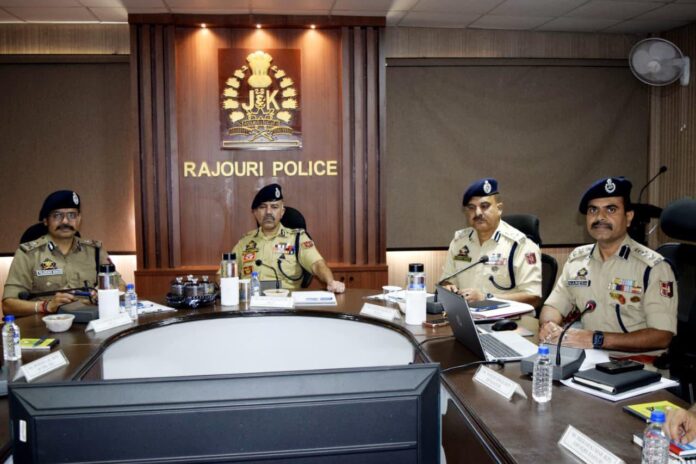
Srinagar, Sep 10 (NVI): Inspector General of Police, Kashmir Zone, Sujit Kumar on Thursday visited Kulgam and Shopian districts to review the security situation, counter-terrorism operations, crime and law and order, officials said.

Kumar, accompanied by DIG South Kashmir Range Javed Iqbal Mattoo, chaired security and crime review meetings in both districts, which were attended by the respective SSPs and other senior police officers, they said.

The SSPs briefed the IGP about the prevailing security situation, anti-terror operations, counter-terrorism grid, crime prevention measures and steps being taken to maintain public order.

The IGP stressed the need for robust intelligence gathering, close coordination among security agencies and a swift response to emerging security challenges, officials said.

He directed field formations to maintain sustained pressure on the terror ecosystem and adopt zero tolerance towards elements inimical to peace.

During his visit, Kumar also inspected the D H Pora subdivision in Kulgam and interacted with supervisory officers, SHOs and personnel of the Special Operations Group (SOG), they said.—(NVI)

Fintech firms should treat data as fidiciary responsibility, not business asset: RBI Gov

RBI Governor Sanjay Malhotra

Mumbai, Sep 10 (NVI) RBI Governor Sanjay Malhotra today said fintech companies should “treat data as a fiduciary responsibility, not as a business asset.”

Addressing the Global Fintech Fest (GFF) 2026 at the Jio World Centre here, he said, “This data must be treated the way a trustee treats assets and property, collected with a clear purpose and used strictly within the consent provided, and protected as though it was a human.”

Delivering his keynote address on ‘Shaping the Next Decade of Finance: Technology, Trust and Innovation’, Malhotra added that when a “fintech company’s lending book or user base grows to a poin’t where its disruption could meaningfully affect the financial system, the firm has a responsibility to protect data.”

He underscored the importance of operational resilience, business continuity, and cyber security, for a fintech company that has achieved scale.

Talking about inclusion, the RBI Governor said, “57 crore Pradhan Mantri Jan Dhan Yojana accounts, over 85 crore micro-insurance policies represent the impact of the fastest transformation in financial behaviour witnessed anywhere in the world”.

He added, “Today, a street vendor displaying a QR code to receive payments is a common sight” and described it as “a simple but very powerful example” of the scale of inclusion achieved in just a few years.

“It has happened because of the public-private partnership which has facilitated entrepreneurship and innovation while maintaining public trust and preserving confidence,” he said, commending innovators and entrepreneurs who were present at his session.

On India’s global standing, the RBI Governor struck an optimistic note, pointing to the country’s fintech ecosystem as the third largest globally.

“India’s first decade of fintech was largely about building for India. The next decade presents an opportunity to build for the world, in India,” he said, adding that solutions developed for financial inclusion, affordable payments and digital identity could be adapted for wider global adoption. (NVI)

CBI searches 12 locations in Bengaluru, Mumbai, Pune over builder-financial institution nexus

New Delhi, Sep 10 (NVI): The CBI on Thursday conducted searches at 12 locations in Bengaluru, Mumbai and Pune in connection with five newly registered cases involving alleged financial irregularities and a purported nexus between builders and officials of financial institutions.

The cases were registered in compliance with the directions of the Supreme Court, the Central Bureau of Investigation said.

Four of the cases relate to the Ozone Group and its associated entities in connection with projects in Bengaluru and Mumbai, while the fifth case pertains to M/s Vivansaa Baalsam and its Bengaluru project, besides unidentified officials of various financial institutions.

The cases involve allegations of criminal conspiracy, cheating, criminal breach of trust and criminal misconduct allegedly committed by officials of financial institutions in connivance with builders, the agency said.

The searches were conducted at premises linked to the cases to collect evidence relating to the alleged nexus, which purportedly resulted in homebuyers being cheated and defrauded.

The CBI said it seized incriminating documents, digital devices and other materials during the searches. The seized material is being examined as part of the ongoing investigation.

The agency said the probe is focused on establishing the larger conspiracy, including alleged diversion of funds, financial irregularities and fraudulent practices in the housing and real estate sector.

A large number of homebuyers have approached the Supreme Court seeking relief over alleged fraudulent activities by builders, which they claimed had affected them for several years.

The CBI said it had earlier registered 50 cases against various builders across the country in compliance with the Supreme Court’s directions.

With the registration of the five fresh cases, the total number of cases registered by the agency on the directions of the apex court has risen to 55.

The CBI said it was committed to conducting an expeditious and impartial investigation and ensuring accountability, adding that those found responsible for allegedly defrauding homebuyers in violation of applicable laws and guidelines would be brought to justice.—(NVI)

MUST READ