Tuesday, September 22, 2026
Home Blog Page 51

POJK situation: UN Secretary General concerned, wants accountability for actions by Pakistan

UN Chief Guterres
UN Secretary General Antonio Guterres (file photo)

New Delhi, Aug 9 (NVI) UN Secretary General Antonio Guterres is concerned over the volatile situation in Pakistan-occupied Jammu and Kashmir (POJK) where Pakistani forces have been indulging in extreme brutalities and wants accountability for actions taken against people involved in peaceful protest.

POJK has been in turmoil for over two months, with masses protesting to demand their due rights and end to Pakistan’s interference in political and other matters of the region.

The agitation is led by J&K Joint Awami Action Committee (JAAC), a conglomerate of several non-political organisations of POJK.

To crush the protests, Pakistani forces have been resorting to the worst forms of brutality, firing bullets on the peaceful unarmed civilians, which have reportedly left over 400 killed and hundreds of others injured.

UN High Commissioner for Human Rights Volker Turk had on July 17 expressed concern about the recent developments in PojK and called for an impartial and thorough investigation into the deaths of protesters.

“The Secretary-General supports the work of his High Commissioner, and we certainly hope that the pleas made by Mr Turk will be listened to,” Deputy Spokesman for the Secretary-General Farhan Haq said in response to a media query in New York.

On whether there will be calls for accountability from the authorities on the crackdown on protestors in the PoK, Haq said, “It’s important that all authorities everywhere allow for peaceful protest, and certainly that is the case here. If there have been people harmed for engaging in peaceful protest, there needs to be accountability for that.”

The High Commissioner had called for prompt, thorough and impartial investigations into all deaths that have occurred due to the unrest, both amongst protesters and members of security forces.

The JAAC has alleged that the Pakistani establishment manoeuvres 12 ‘refugee’ seats of POJK Assembly to install a government of its choice in the occupied region, negating the wishes of the locals.

The agitation began ahead of the elections to the 53-member Assembly and due to the mass protests and boycott, polling for seven seats have been postponed now.

India maintains that the entire Union Territories of Jammu & Kashmir and Ladakh are its integral and inalienable parts.

New Delhi also asserts that Pakistan has been in “illegal and forcible occupation” of parts of these Union Territories.

There are 53 seats in the so-called PoK legislative assembly, 45 are directly elected, while eight are reserved for women, technocrats and clerics.

Elections for the 45 seats are being held in three phases, with the first phase on July 27 and the second phase on August 2 marred by violent protests.

India, on August 4, described the so-called local body elections in PoK as a “complete farce”, asserting that such “hollow” exercises cannot hide the ground reality in the region.

The Ministry of External Affairs (MEA) strongly criticised Pakistan’s crackdown on protesters in PoK and said the international community should see through the “flimsy veneer” of Islamabad’s “hypocritical lecturing” on human rights.

“This so-called local election in PoK is a complete farce. The real happening is that of public protests and wanton killings by Pakistani forces. Such hollow exercises cannot hide reality,” MEA spokesperson Randhir Jaiswal said in New Delhi. (NVI)

Op Sindoor sent global message India will go to any extent to protect citizens: Rajnath Singh

New Delhi, Aug 9 (NVI): Defence Minister Rajnath Singh on Sunday said Operation Sindoor sent a global message that India would go to any extent to ensure the safety of its citizens, while protecting the “sindoor” worn by the country’s women.

Addressing the ‘Sindoor Maharaktadan Yatra’ blood donation camp at Base Hospital, Delhi Cantonment, Singh said Operation Sindoor demonstrated the “unmatched valour” of the country’s armed forces, which eliminated terrorists and their handlers based in Pakistan.

“Operation Sindoor demonstrated the unmatched valour of our defence forces who sent a global message that India will go to any extent to ensure the safety of its citizens while protecting the sindoor worn by our women,” he said.

The defence minister also commended the armed forces for ensuring that those who dared to “cast an evil eye” on India faced dire consequences.

Drawing a parallel between Operation Sindoor and the blood donation campaign, Singh said that while the military operation showcased courage, the mega blood donation camp represented compassion.

Around 1,000 wrestlers and athletes from Maharashtra participated in the blood donation drive, demonstrating solidarity with the armed forces and the spirit of selfless service.

Expressing gratitude to the donors, Singh said the blood donated during the campaign would serve as a credible reserve for soldiers and their families in need.

He described blood donation as “Jivandan” and “Mahadan”, saying that despite advances in science and medicine, there is still no artificial substitute for human blood.

“Blood can only be produced by the human body and donated by one person to another,” he said, describing blood donation as one of the noblest forms of charity.

Singh said every blood donor and recipient was serving the nation in their own way and urged people, particularly the youth, to make blood donation a culture.

He said India’s vision for 2047 should not be restricted to becoming a developed economy but should also include building a compassionate society where people are healthy and safe and essential resources such as blood are readily available during emergencies.

The defence minister also called upon the youth to prioritise fitness, saying a healthy and fit individual becomes a greater asset to society and is better equipped to undertake noble causes such as blood donation.

He highlighted initiatives such as Khelo India and Fit India, saying the government under Prime Minister Narendra Modi was encouraging citizens, particularly the youth, to adopt fitness as a way of life.

Highlighting Maharashtra’s tradition of valour and compassion, Singh said the legacy of Chhatrapati Shivaji Maharaj continued to inspire generations.

He said the true purpose of physical strength was to protect others and safeguard the nation, adding that the contribution of athletes and wrestlers from Maharashtra would be remembered as a noble service to the country.

The event was attended by Maharashtra Deputy Chief Minister Eknath Shinde, Minister of State for Ayush Pratap Rao Jadhav, Maharashtra Industries Minister Uday Ravindra Samant, MP Srikant Lata Eknath Shinde, Chief of the Army Staff General Dhiraj Seth, DG Armed Forces Medical Services Surgeon Vice Admiral Arti Sarin, Adjutant General Lt Gen VPS Kaushik and other senior military and civil officials.

The Armed Forces Medical Services attaches particular importance to maintaining adequate blood reserves as military hospitals cater to routine healthcare requirements as well as operational, trauma and emergency contingencies.

The participation of voluntary donors at the camp reaffirmed the ethos of “Service Before Self” and highlighted the role citizens can play in saving lives through regular voluntary blood donation.(NVI)

Crackdown on JeI-linked network, searches at 26 locations in Kashmir

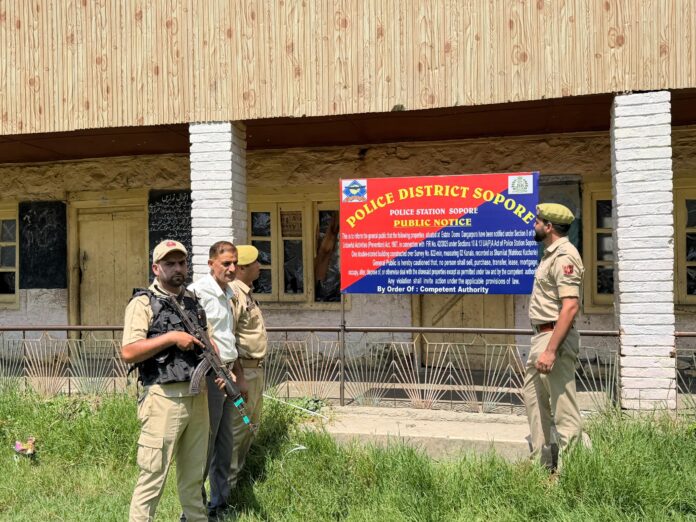
Srinagar, Aug 9 (NVI) Security forces and investigating agencies on Sunday conducted searches at around 26 locations in and around Sopore in north Kashmir’s Baramulla district in connection with a case registered under the Unlawful Activities (Prevention) Act (UAPA) against the banned Jamaat-e-Islami (JeI), officials said.

The searches were carried out at multiple locations in the Police District Sopore as part of an ongoing investigation into the alleged activities and network linked to the banned organisation, they said.

The locations include Sadiq Colony in Sopore, Bomai, Goripora, Tarzoo, Shutloo Rohama and Behrampora Rafiabad, among other areas, officials said.

Senior officials said searches were also underway at several other locations and further details were awaited.

Sopore Senior Superintendent of Police Iftkhar Talib confirmed that search operations were being conducted in connection with the investigation.

Details regarding any recoveries or other developments during the searches were awaited.(NVI)

US Vice President Vance calls up Modi, discuss strategic cooperation
The telephone call from Vance to Modi came hours after US Senate passed a bill that enables US President Donald Trump to levy 100% tariff on India, along with 4 other countries, for buying oil and gas from Russia.

US Vice President J.D. Vance with PM Modi (file pic)

New Delhi, Aug 9 (NVI) US Vice President J.D. Vance tonight made a telephonic call to Prime Minister Narendra Modi, who said they discussed ways to further strengthen the India-US Comprehensive Global Strategic Partnership.

In a social media post, Modi said the two leaders discussed key areas of cooperation between India and the United States.

“Received a phone call from US Vice President JD Vance. We discussed ways to further deepen India-US Comprehensive Global Strategic Partnership across key areas. Warmly congratulated him and the Second Lady on the birth of their son and conveyed best wishes to the entire family,” PM Modi wrote on X.

The telephone call from Vance to Modi came hours after US Senate passed a bill that enables US President Donald Trump to levy 100% tariff on India, along with 4 other countries, for buying oil and gas from Russia. (NVI)

Man Dies After Being Hit By Legislator’s Convoy Vehicle In Jammu

Road accidents
Representational image

Shivam Bakshi

Jammu, Aug 8 (NVI): A man was killed after being hit by a vehicle belonging to the convoy of a senior legislator of Jammu and Kashmir in the Gangyal area here on Saturday night, officials said.

The accident took place near Royal Furniture Showroom in the Satwari area, they said.

According to officials, the vehicle was part of the convoy returning after dropping the legislator at his residence in Kunjwani when it allegedly hit the man.

The victim, identified as Bharat, son of Bhagirath, was shifted to a hospital where he succumbed to his injuries, officials said.

Police have taken cognisance of the incident and initiated an investigation.(NVI)

MDR charges on UPI payments will be nominal and apply above threshold: Govt

New Delhi, Aug 8 (NVI) The MDR charges on UPI payments, as and when introduced, will apply only to a limited set of merchant transactions, above a certain threshold, at a nominal rate, far lower than debit or credit card MDRs, the Union Government said today.

“Vast majority of the transactions will remain free of charge for merchants on UPI,” the government said in an official statement, issued against the backdrop of widespread anxiety and criticism over the move that is likely to impact crores of people.

It said consumers making UPI payments will not face any transaction charges.

All Person-to-Person transactions will continue to be free of charge, the government said.

The statement said the issue of MDR will be decided by “UPI and Services Steering Committee” headed by NPCI after Parliament passes the Taxation and Other Laws (Amendment) Bill, 2026, which proposes to amend Section 10A of the Payment and Settlement Systems Act, 2007.

The government said the amendment is “designed to ensure UPI’s long-term sustainability, technological advancement, and resilience against emerging risks.”

It said, “With exponential transaction volumes, the system requires significant and continuous upgrades in cybersecurity, fraud prevention, and infrastructure.”

The government also said that it was “necessary to increase competition by encouraging more companies to expand their operations, which requires a self-sustaining revenue model.”

It added, “Reliance on subsidies alone is not viable for the next wave of growth. A balanced framework is required to ensure that UPI remains robust, inclusive, and future-ready.”

Talking about the growth of UPI, the government said 2,366 crore such transactions worth ₹29.9 lakh crore were processed in July 2026 alone.

UPI is now also live in 11 foreign countries, and many other countries have shown interest. (NVI)

Ethical leadership vital to strengthen democracy, says J&K LG Sinha

Srinagar, Aug 8 (NVI): Jammu and Kashmir Lieutenant Governor Manoj Sinha on Saturday said ethical and accountable leadership is vital for strengthening democratic institutions and urged young leaders to make public service, integrity and excellence the guiding principles of their professional lives.

Addressing the convocation of the ninth batch and induction ceremony of the 10th batch of the Indian Institute of Democratic Leadership (IIDL), an initiative of Rambhau Mhalgi Prabodhini, Mumbai, Sinha said leadership is about understanding people, creating new opportunities for them and serving with humility and honesty.

Congratulating the graduating students and welcoming the new batch, the LG said the institute has an important role in nurturing young leaders with constitutional values, discipline and wisdom.

Highlighting the contribution of Rambhau Mhalgi Prabodhini since its establishment in 1982, Sinha said more than 60,000 parliamentarians, legislators, panchayat representatives, entrepreneurs and youth have been trained by the institution.

He said India’s future depends on addressing key challenges, including sustaining economic growth, eliminating terrorism and divisive forces, ensuring transparent and technology-driven governance, promoting merit-based opportunities in politics, strengthening national integration, achieving leadership in emerging technologies and building a world-class education system.

Sinha outlined four principles of democratic leadership — honesty and transparency as the foundation of trust, knowledge and wisdom as the compass for decision-making, sensitivity to maintain balance in democracy, and public service as the highest duty of leadership.

“The strength of democracy lies in Constitutional values, institutions and in those leaders who are committed to the values of honesty, humility, and public service,” he said.

The LG said institutions provide the structure of democracy, but ethical leadership gives them purpose and vitality.

“Without ethical leadership, even the finest institutions weaken over time, whereas honest and accountable leadership can turn even ordinary institutions into powerful engines of change and nation-building,” he said.

Referring to India’s demographic strength, Sinha said more than 65 per cent of the country’s population is below the age of 35 and called upon the youth to convert this demographic dividend into a leadership dividend by building teams, empowering others and creating roadmaps for inclusive growth.

He cited the transformation witnessed in Jammu and Kashmir since 2020 as an example of leadership based on public service and good governance, claiming that more than 30,000 projects have been completed through public participation, alongside strengthening of Panchayati Raj institutions and digital governance.

Urging the youth to make ethics their character and public service their duty, Sinha said success should not be measured by one’s position but by the number of lives transformed, the trust earned and the positive impact created in society.

“To realise the resolve of Viksit Bharat, young leadership must bring change into the life of the last person standing in the queue of development,” he said.

The LG also called upon young leaders to balance tradition with modernity and progress with sensitivity while working towards building a prosperous, inclusive and innovative India.

He said young leadership should be driven by innovation, empowered by technology, strengthened by transparency and guided by sensitivity and effective implementation.

“True leadership rises above the boundaries of caste, religion, and region, carries everyone together, and treats public welfare as its highest duty,” Sinha said.(NVI)

No new renewable projects can be set up within 1 km of border areas: MHA order

solar power project (representative pic)

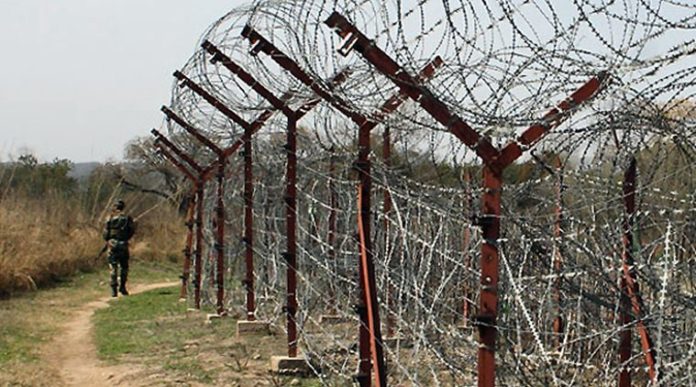
New Delhi, Aug 8 (NVI): Setting up of new solar, wind, and hybrid renewable energy projects within 1 km of the Line of Control (LoC), the Line of Actual Control (LAC), and the International Border has been barred by the Union Government.

Issuing guidelines, the Ministry of Home Affairs (MHA) has also classified areas within 50 km of these borders as sensitive zones and introduced additional security clearance requirements for projects proposed.

The directive by the Ministry restricts the engagement of engineers, employees, staff and labour from countries sharing a land border with India, particularly Pakistan, Bangladesh and China, for project implementation without prior approval from the central government.

Applicants will also require prior approval before transferring project land to a foreign company.

All solar, wind and hybrid renewable energy projects proposed within 50 km of the LoC, LAC or International Border will require security clearance from the MHA.

While no project activity will be permitted within 1 km of these borders, proposals between 1 km and 50 km will be assessed on a case-by-case basis by the MHA and the Ministry of Defence.

A separate no-objection certificate (NOC) from the Ministry of Defence will be required for projects proposed within 20 km of the International Border.

The MHA said projects that have already received its security clearance or an NOC from the Ministry of Defence before the guidelines were issued will not have to reapply.

Applications will be submitted through the Ministry of New and Renewable Energy (MNRE), which will forward them to the MHA and the Ministry of Defence along with the state government’s in-principle approval for land allotment.

The application must also include the project’s latitude and longitude.

The MNRE will communicate the final decision to developers after receiving the required security clearance and NOC.

The guidelines also require renewable energy projects in sensitive areas to have comprehensive security arrangements, including anti-drone systems where required. Such security equipment will be operated by the Central Industrial Security Force (CISF) or state police.

Projects will also be required to have a dedicated police post attached to monitor construction activity and security arrangements. Employees involved in project implementation must undergo verification before entering the project area and comply with instructions issued by local police and the Border Security Force (BSF).

The guidelines also provide for monitoring of foreign nationals entering sensitive areas. Project staff will be required to follow security directions issued by authorities deployed along the International Border.

The MHA has directed that land allocation should be planned so that project construction does not extend over a long distance parallel to the International Border.

Roads within project areas should also be sufficiently wide for the Border Security Force or armed forces during emergencies.

The guidelines also restrict accommodation and other facilities that could attract crowds or create security vulnerabilities in sensitive areas.

Hotels and accommodation facilities should be located at least 5 km from the border, while cafeterias have to be located within the plant premises.

Civil infrastructure used for project maintenance and operations will also face height restrictions based on its distance from the border. The maximum permitted height is three metre between one km and eight km, five metres between eight km and 20 km, and 15 metre between 20 km and 50 km.

Projects involving foreign investment will require a separate application to the Department for Promotion of Industry and Internal Trade (DPIIT) under the government’s Foreign Direct Investment Policy.

The applicant will also need prior approval from the central government, including security clearance from the MHA, before transferring land to a foreign company.

The MHA said the guidelines were issued in response to a growing number of applications seeking approval for solar, wind and hybrid renewable energy projects in border areas.

The framework aims to provide uniform and transparent rules for such projects while taking into account national security concerns and the government’s ease-of-doing-business objective. (NVI)

SKIMS to be transformed into quaternary healthcare hub: J&K Chief Secretary

Srinagar, Aug 8 (NVI) The Jammu and Kashmir administration has set a vision to transform the Sher-i-Kashmir Institute of Medical Sciences (SKIMS), Soura, into a quaternary healthcare facility and a Centre of Excellence for advanced medical care, research and education.

The Standing Finance Committee (SFC) of SKIMS met here on Saturday under the chairmanship of Chief Secretary Atal Dulloo, after a gap of more than five years. The last meeting of the committee was held in August 2021.

Dulloo called upon the SKIMS administration to set higher institutional benchmarks and upgrade its capacities in super-speciality healthcare, advanced medical technologies, medical education and cutting-edge research.

He assured the institute of all possible government support for strengthening infrastructure, equipment, human resources and specialised services.

The Chief Secretary directed the SKIMS administration to prepare a comprehensive roadmap aimed at ensuring that patients from Jammu and Kashmir do not have to travel outside the Union Territory for advanced and highly specialised treatment.

He also stressed the need to strengthen SKIMS as a Centre of Excellence in medical education and research, particularly in areas such as cancer and other diseases of growing prevalence in the region.

“Access to quaternary-level healthcare should be expanded so that people can avail advanced treatment facilities closer to their homes, irrespective of their socio-economic status,” the administration said.

The meeting deliberated on several infrastructure and service-expansion initiatives, including augmentation of emergency services through a dedicated Emergency Block, establishment of a Trauma Care Centre and Organ Transplant Unit, and creation of a dedicated OPD Block.

The committee also approved the creation of requisite posts for the State Cancer Institute and measures to strengthen the Departments of Cardiovascular and Thoracic Surgery, Nursing and Medical Technology.

It also gave the go-ahead for introducing internship programmes for BSc and MSc Nursing students to provide them with structured clinical training and practical exposure.

Financial Commissioner (Additional Chief Secretary), Finance, Shailendra Kumar stressed the need for administrative excellence, financial sustainability and greater institutional self-reliance at SKIMS.

Commissioner Secretary, Health and Medical Education, M Raju, appreciated the institute’s efforts in patient care, academics and research and stressed the need for sustained institutional growth.

Earlier, SKIMS Director Prof (Dr) Mohd Ashraf Ganie presented a roadmap for institutional expansion, including strengthening tertiary and quaternary healthcare, augmenting specialised manpower, upgrading infrastructure and integrating modern medical technologies.

The meeting is expected to give fresh impetus to the development of SKIMS as a regional hub for advanced healthcare, medical education and biomedical research, the administration said.(NVI)

Amarnath Yatra suspended from Aug 9 for track restoration work

File Photo

Srinagar, Aug 8 (NVI) The annual Shri Amarnath Ji Yatra will remain suspended from both the Pahalgam and Baltal routes from August 9 to facilitate repair and maintenance of vulnerable stretches of the pilgrimage tracks following recent rains, officials said on Saturday.

The 57-day pilgrimage, which commenced on July 3 from the traditional Chandanwari route in Anantnag district and the Baltal route in Ganderbal district, is scheduled to culminate with the ‘Chadi Mubarak’ ceremony on August 28.

More than 4.8 lakh pilgrims have so far paid obeisance at the holy cave shrine, according to officials.

Divisional Commissioner Kashmir Anshul Garg said the suspension was necessitated by the need to restore the tracks at vulnerable locations following recent rainfall. The restoration work is being carried out by the Border Roads Organisation (BRO).

“Adverse weather conditions have also been predicted by the IMD over the next few days. Hence, the Yatra shall remain suspended from both routes with effect from August 9, 2026,” Garg said.

He said the traditional ‘Chadi Mubarak’ would proceed through the Pahalgam route and mark the culmination of the 2026 Yatra on August 28.

The divisional commissioner appealed to pilgrims to follow advisories issued by the competent authorities from time to time in the interest of their safety and smooth conduct of the pilgrimage.(NVI)

MUST READ