Wednesday, June 24, 2026
Home Blog Page 62

Rape and Murder of daughter of IRS officer in Delhi; How the gruesome crime was committed

Rape and Murder of daughter of IRS officer in Delhi; How the gruesome crime was committed
Rahul Meena, accused of raping and murdering daughter of IRS officer in Delhi

New Delhi: The 22-year-old daughter of an IRS officer, who was raped and murdered in South Delhi, was an IIT Graduate and was preparing for UPSC examinations slated for next month.

She was, in fact, studying when a demon in the shape of a teenaged boy attacked her early morning at her residence yesterday. He hit her in the head, due to which she fell unconscious. He then raped her and subsequently strangulated her to death, using the wire of a phone charger.

Thus, a promising life of a girl, an All-India topper in her class 12 examinations and a dancer with a number of awards, was cut short in a gruesome manner.

Rahul Meena, the 19-year-old accused, had worked at her home till about two months back, before he was fired because of his ill-habits, like taking loans from neighbours.

Yesterday morning, he returned from his native place of Alwar in Rajasthan to commit the ghastly crime.

Before coming to Delhi, Meena allegedly raped the wife of a friend in Alwar the previous night. Then he sold a mobile phone for Rs 10,000 and hired a cab to Delhi for Rs 6,000. He then walked to his former employer, a senior IRS officer’s house, in South Delhi’s Amar Colony.

Familiar person:

Rahul, having worked at the house for eight months, was familiar with the family’s daily routine.

He knew the victim’s parents would be out for their daily gym session, leaving their daughter home alone while keeping the house key in a shoe rack for a maid to get in during their absence.

As recorded in a CCTV camera, Rahul entered the colony at around 6:30 am and went straight to the woman’s study room, a separate one-room structure built on the terrace.

When he stepped into her room, the surprised victim questioned his presence. “Aunty ne bulaya tha kaam se (Aunty called me for some work),” Rahul told her.

Rahul then demanded money. Her refusal led to a heated argument between the two, which soon turned violent.

He hit her with a lamp, resulting in injuries across her face and body.

She fell unconscious and taking advantage of this, Rahul allegedly raped her and then  strangulated her with a mobile charging cable.

Bad habits:

Rahul had the ill habits of borrowing money from people in the neighbourhood because of his online gaming addiction.

He has claimed that he come to the house with the intention of theft. However, the locker in the house could only be opened using a thumb impression. He then dragged the victim out of the study room, pulled her down the stairs, and into the room where the locker was kept.

He pressed the woman’s blood-stained finger against a biometric scanner, but it did not open, probably because she had died by then and that is why the biometric scanner did not recognise her thumb impression.

Rahul then abandoned her body and opened the locker using a screwdriver. He took out cash and jewellery and packed them in a bag kept nearby.

Before fleeing the house, he was alert enough to remove his blood-stained clothes and change into the woman’s brother’s trousers. He replaced his shoes with a pair of slippers lying around and fled.

While walking towards the Palam railway station, the accused pretended to be on a call to avoid drawing unwanted attention.

Meena was arrested from a hotel in Delhi’s Dwarka area, where he had been hiding. He is being charged with rape, murder and robbery, police said.

Addiction

The initial investigation has revealed that Rahul was addicted to the online game “Teen Patti” through which he lost and earned money. He would use the money to solicit women to fulfill his sexual desires.

He was also into gambling and would often borrow money from peers.

“He would borrow money from other servants in the vicinity, or from domestic staff working in nearby households, without ever repaying them. This is why he was fired,” Joint Commissioner of Police Vijay Kumar said.

Motive:

According to police sources, during the initial interrogation, Meena claimed that his sole motive was robbery. To avoid suspicion and prevent being traced, he sold three mobile phones – own and those elonging to his family members – before coming to Delhi. A part of the money was used for online betting.

He had also stolen a phone from Alwar victim’s house. The plan was to carry out a robbery in Delhi and bring the money back home to Alwar.

The investigating officers, however, believe that it is possible Meena had come with the intention to rape, considering he had raped another woman less than 24 hours ago.

“Since he had been dismissed from a job here in Delhi, a sense of grudge could also be a contributing factor,” Kumar added.

Envoys of 4 nations present credentials

Envoys of 4 nations present credentials
Rashtrapati Bhawan

New Delhi, Apr 23: Envoys of four countries — Lao PDR, Congo, Namibia and Guinea Bissau — today presented their credentials to President Droupadi Murmu at a ceremony held at Rashtrapati Bhavan.

Two of the Envoys are women.

Those who presented their credentials were:

1. Mrs Vithaya Xayavong, Ambassador of the Lao People’s Democratic Republic

2. Mrs Emilie Ayaza Mushobekwa, Ambassador of the Democratic Republic of the Congo

3. Wing Commander Alex Lunyazo Tukuhupwele (Retd.), High Commissioner of the Republic of Namibia

4. Mr Antonio Serifo Embalo, Ambassador of the Republic of Guinea-Bissau.

Presentation of Credentials marks the formal start of the Ambassadorial work of an Envoy. (NVI)

India refrains from responding to Trump’s ‘Hell-Hole’ Remark

India Responds to Trump’s ‘Hell-Hole’ Remark: MEA Issues Statement
External Affairs Ministry spokesman Randhir Jaiswal (file pic)

New Delhi, Apr 23: Notwithstanding widespread criticism, the Government of India today refrained from responding to the highly controversial remarks of US President Donald Trump, referring to India as a “hell-hole.”

At a media briefing here, Spokesperson of Ministry of External Affairs Randhir Jaiswal was asked to comment on Trump’s remarks which have caused a lot of hurt to Indians.

“We have seen some reports. That’s where I will leave it,” he replied.

What Triggered the Controversy

The issue arose after Donald Trump reshared content from a podcast titled Savage Nation, hosted by conservative commentator Michael Savage.

In the podcast, Savage used highly critical language about immigration to the United States, referring to countries including India and China in derogatory terms. The remarks included claims opposing birthright citizenship and strong criticism of immigrant communities.

Trump reportedly shared both the video and transcript of the podcast, aligning with its stance on immigration policy and questioning the US Supreme Court’s position on birthright citizenship.

Political Reactions in India

The remarks triggered political reactions in India, with opposition parties demanding a formal response from the government.

The Indian National Congress alleged that repeated critical comments from Trump reflected negatively on India-US relations and urged Prime Minister Narendra Modi to take up the matter diplomatically. The party described the remarks as offensive and called for stronger engagement with US authorities.

Background: Immigration Debate in the US

The controversy is linked to ongoing political debates in the United States over immigration and birthright citizenship, a constitutional provision that grants citizenship to individuals born on US soil.

Such debates often involve polarising rhetoric, particularly in election cycles or political commentary platforms, and have historically triggered international reactions when they involve foreign nations.

India’s Diplomatic Approach

Despite the strong political reactions domestically, the MEA has opted for a restrained stance, avoiding escalation or direct confrontation.

This approach aligns with India’s broader diplomatic practice of addressing sensitive international remarks through formal channels rather than public exchanges.

Jackky Bhagnani Calls Marriage With Rakul Preet Singh a ‘Situationship’, Sparks Debate On Social Media

Jackky Bhagnani Calls Marriage With Rakul Preet Singh a ‘Situationship’, Sparks Debate On Social Media

Actor-producer Jackky Bhagnani has offered a candid and unconventional perspective on his marriage with actress Rakul Preet Singh, describing their relationship as a “situationship” while emphasizing that they remain exclusively committed to each other. The couple, who tied the knot in 2024 in Goa, shared insights into their relationship during a recent conversation, highlighting how their bond has evolved from a lockdown romance into a partnership rooted in emotional independence.

From Romance to Marriage: Built on Independence

Jackky explained that both he and Rakul entered the relationship as individuals already comfortable with their personal lives. Rather than seeking emotional dependency, they chose companionship based on mutual happiness and growth.

He noted that the foundation of their relationship is not about filling emotional gaps but about enhancing each other’s lives while maintaining individuality.

Rakul Preet Singh echoed this sentiment, stating that their bond is not defined by expectations or dependency, but by companionship and shared understanding.

“Situationship” in Marriage: A Modern Definition

In a surprising remark, Jackky described their marriage as a “situationship,” a term typically used for undefined romantic arrangements. However, he clarified that in their case, it represents emotional freedom within commitment. While they are fully exclusive due to marriage, he emphasized that their relationship allows open communication without pressure or control. He highlighted that being able to talk about anything freely is a key strength of their bond.

Transparency and Trust as Core Values

A defining aspect of their relationship, according to Jackky Bhagnani, is complete transparency. He shared that there are no hidden aspects between them, even extending to interactions with past relationships.

He explained that this openness removes insecurity and prevents misunderstandings, allowing both partners to maintain trust without emotional restrictions.

Rakul added that their relationship is built on friendship at its core, describing them as “best friends” who prioritise honesty and comfort over possessiveness.

Equality in Modern Marriage

Rakul Preet Singh also addressed evolving expectations in modern relationships, highlighting the importance of equality between partners.

She noted that traditional dynamics often place disproportionate adjustment burdens on women, but in their marriage, both partners function as equals, respecting each other’s schedules, choices, and personal space. According to her, this balance allows the relationship to feel natural rather than restrictive.

Compatibility Over Differences

Jackky further reflected on relationship compatibility, dismissing the idea that opposites necessarily attract in long-term partnerships.

He explained that shared values, similar thinking patterns, and aligned life goals play a crucial role in sustaining relationships over time, reducing conflict and misunderstandings.

From Professional Meeting to Personal Bond

The couple initially met through professional circles, but their relationship deepened during the lockdown period, eventually leading to marriage. Their journey reflects a shift toward modern relationship dynamics that prioritise individuality alongside emotional connection.

UPMSP Result 2026: UP Board Class 10th and 12th Results Declared

UPMSP Result 2026: UP Board Class 10th and 12th Results Declared

The Uttar Pradesh Madhyamik Shiksha Parishad (UPMSP) has officially declared the Class 10 (High School) and Class 12 (Intermediate) exam results today, April 23, 2026. The results were announced at 4:00 PM IST. Students can now access their digital scorecards through official channels and DigiLocker.

Where and How to Check Results

Students can check their marks by visiting the following official websites:

  • upmsp.edu.in

  • upresults.nic.in

Steps to Download Marksheet:

  1. Visit the official UPMSP result portal.

  2. Select the link for either “U.P. Board High School (Class X) Examination – 2026 Results” or “U.P. Board Intermediate (Class XII) Examination – 2026 Results”.

  3. Enter your Roll Number and the School Code (as mentioned on your admit card).

  4. Submit to view and download your marks memo.


Results at a Glance: Key Statistics

The UP Board conducted the 2026 examinations across nearly 8,000 centres state-wide. While official pass percentages for 2026 are currently being updated from the press conference, here is the benchmark set by the previous year (2025):

Category 2025 Pass Percentage (Class 12) 2025 Pass Percentage (Class 10)
Overall 81.15% 89.55% (approx)
Girls 86.37% 93.34%
Boys 76.60% 86.05%

Rewards for Toppers

The Uttar Pradesh state government has traditionally offered significant incentives to top-performing students:

  • Cash Prizes: State-level toppers may receive up to Rs 1 lakh, while district-level toppers receive between Rs 20,000 and Rs 50,000.

  • Digital Tools: Laptops or tablets are frequently distributed to support higher education.

  • Honors: Medals, certificates of excellence, and public felicitation ceremonies with senior officials.


Important Post-Result Information

  • Original Marksheets: The online result is for immediate information only. Original marksheets with the Board’s seal will be sent to respective schools within a few days for collection.

  • DigiLocker: Students can also fetch their digital certificates via the DigiLocker app using their Aadhaar and Roll Number.

  • Revaluation: Students unsatisfied with their scores can apply for scrutiny/revaluation through the official UPMSP website shortly.

In addition to UPMSP, the Jharkhand Academic Council (JAC) also declared its Class 10th results today, marking a major day for board exam outcomes across Northern and Eastern India.

From India to the World: Award-Winning Cheeses You Should Know About

From India to the World: Award-Winning Cheeses You Should Know About

India’s artisanal dairy sector has achieved a notable breakthrough on the international stage, securing four medals at the Mundial do Queijo do Brasil 2026 held in Sao Paulo. The competition featured entries from over 30 countries and is widely regarded as one of the most respected global platforms for cheese producers.

Indian artisanal cheeses have made a striking global debut by winning four medals at the Mundial do Queijo do Brasil 2026, an international cheese competition held in São Paulo, Brazil. The event featured entries from over 30 countries and is considered one of the most prestigious platforms for cheese producers worldwide. Despite participating for the first time, India delivered an impressive performance, securing one Super Gold, two Gold, and one Silver medal across various categories. (Image: Pexels)

In its first participation, India delivered an impressive performance, winning one Super Gold, two Gold, and one Silver medal, highlighting the country’s growing presence in the global gourmet cheese industry.

Super Gold Category Cheese: Excellence in French-Style Innovation

The highest honour of the event, Super Gold, was awarded to Eleftheria Gulmarg, a Brie-style cheese inspired by the classic French Brie.

Super Gold: Eleftheria Gulmarg (Brie style): The Super Gold award was won by Eleftheria Gulmarg, a soft and creamy cheese inspired by French Brie and made from cow’s milk. It offers a rich yet balanced flavour with buttery notes and a subtle earthy undertone. Judges praised its refinement, consistent ripening, and exceptional technical precision—an impressive achievement for a relatively new entrant in the global artisanal cheese scene. (Image: X)

Produced from cow’s milk, the cheese impressed judges with its smooth, creamy texture and refined flavour balance. Its buttery richness, subtle earthy undertones, and consistent ripening process were highlighted as key strengths, reflecting advanced technical precision in production.

Gold Medal: Himalayan Terroir in Focus

One of the Gold medals went to Yak Churpi-Soft, crafted in Ladakh using milk from the indigenous yak.

Gold: Yak Churpi-Soft (Nordic Farm, Ladakh): The Gold medal was awarded to Yak Churpi-Soft by Nordic Farm, Ladakh. Originating from the Himalayan region, this cheese is crafted from rare yak milk, a traditional element of Ladakh’s dairy heritage. Unlike the region’s well-known hard churpi, this soft variant is designed for gourmet tasting, offering a dense yet slightly yielding texture. It delivers a rustic, tangy flavour influenced by high-altitude production conditions. Its standout quality lies in its deep connection to local terroir and the distinctive character imparted by yak milk, setting it apart in the international cheese competition.

This cheese represents a modern gourmet reinterpretation of traditional Himalayan dairy practices. Unlike the region’s well-known hard churpi, the soft variant offers a dense yet slightly yielding texture. It carries a rustic, tangy flavour shaped by high-altitude conditions and reflects the strong cultural identity of Ladakh’s dairy heritage.

Gold Medal: Nordic Inspiration with Indian Craftsmanship

The second Gold was awarded to Eleftheria Brunost, inspired by Norway’s traditional Brunost.

Gold: Eleftheria Brunost (Whey cheese): Eleftheria Brunost earned a Gold award for its innovative Indian take on Norway’s traditional brown whey cheese, Brunost. The cheese is crafted by slowly simmering whey over controlled heat until it naturally caramelises into a dense, fudge-like block. The final product is smooth, sliceable, and rich in flavour, with distinct notes of caramel and butterscotch. Judges were particularly impressed by the technical precision required to produce it—careful temperature management is essential to prevent bitterness while achieving the perfect caramelisation and texture. (Image: Freepik)

Produced by slowly heating whey until it caramelises, the cheese develops a dense, fudge-like texture with rich caramel and butterscotch notes. Judges noted the high level of precision required in temperature control to achieve balanced sweetness without bitterness.

Silver Medal: Bold Flavour and Alpine Influence

The Silver medal went to Eleftheria Kaali Miri, a semi-hard cheese inspired by alpine varieties such as Belper Knolle.

Silver: Eleftheria Kaali Miri (Belper Knolle style): The Silver medal went to Eleftheria Kaali Miri, a semi-hard cheese inspired by alpine-style varieties and finished with a coating of black pepper (kaali miri). It features a firm yet slightly crumbly texture with a creamy base profile. The flavour is enhanced by the sharp, aromatic spice of the pepper crust, creating a striking contrast with the smooth dairy richness. Judges appreciated its balanced taste, creative approach, and well-executed layering of flavours, which helped it stand out in the competition. (Image: Pexels)

Finished with a coating of black pepper, the cheese combines a creamy base with a slightly crumbly texture and sharp spice notes. The contrast between richness and heat was praised for its balance, creativity, and well-executed flavour layering.

Industry Impact: A Milestone for Indian Artisanal Dairy

India’s performance at this global competition reflects the rapid growth of its artisanal cheese industry, which is increasingly blending traditional knowledge with modern international techniques.

From Himalayan yak milk to European-inspired methods, Indian cheesemakers are creating products that are gaining recognition in premium global markets. This achievement is expected to boost export opportunities, culinary tourism, and the expansion of niche dairy entrepreneurship in the country.

WhatsApp Rolls Out Prepaid Mobile Recharge Feature in India via PayU

WhatsApp Rolls Out Prepaid Mobile Recharge Feature in India via PayU

WhatsApp has introduced a new prepaid mobile recharge feature for users in India, enabling them to recharge mobile numbers directly within the app. The service is powered by PayU and is being gradually rolled out on both Android and iOS devices, with full availability expected in the coming weeks.

What Is PayU WhatsApp Payments and How Does It Work?

Seamless Connectivity Across Major Operators

The feature allows users to recharge their own numbers or those of friends and family in just a few simple steps. It supports major telecom operators such as Reliance Jio, Bharti Airtel, and Vodafone Idea, offering a variety of prepaid plans that can be selected and paid for without leaving the app. To access the service, users can tap the newly added rupee (₹) icon on the home screen, choose the mobile recharge option, enter or select a phone number, confirm the operator, pick a plan, and complete the payment using UPI, debit card, or credit card.

WhatsApp unites with Paytm, Google Pay, PhonePe, PayU & RazorPay : UPI Payments Unveiled | YourStory

User Experience & Features

According to Meta Platforms, the move aligns with its broader strategy to transform WhatsApp into a multi-purpose platform where users can handle everyday tasks seamlessly. The addition of recharge services builds on existing features like UPI payments, metro ticket bookings, and bill payments already available on the app.

PayU stated that the integration aims to simplify routine digital transactions by allowing users to complete frequent tasks within an app they already use daily. With this rollout, WhatsApp continues to expand its role beyond messaging into a more comprehensive digital services platform in India.

Woman Among Four OGWs Held in Srinagar; Arms, Ammunition Seized

Representational Pic.

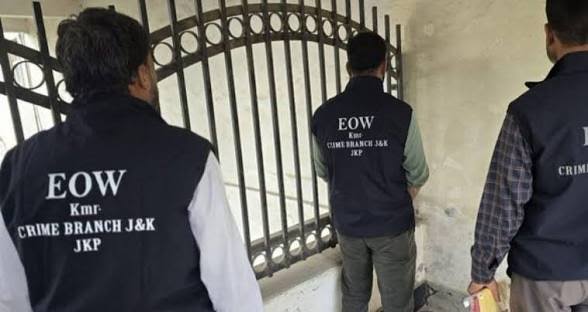
Srinagar, Apr 23 (NVI): Four over ground workers (OGWs), including a woman, were arrested in Srinagar for allegedly providing logistical support to terrorists, on Thursday.

A top police officer told that the four accused were apprehended from the Hazratbal area.

They have been identified as Zahoor Ahmad Mir, Bashir Ahmad Bhat, and Ghulam Mohammad Bhat — all residents of Hazratbal. The woman has been identified as Shazia Mohammad, also a resident of the same area.

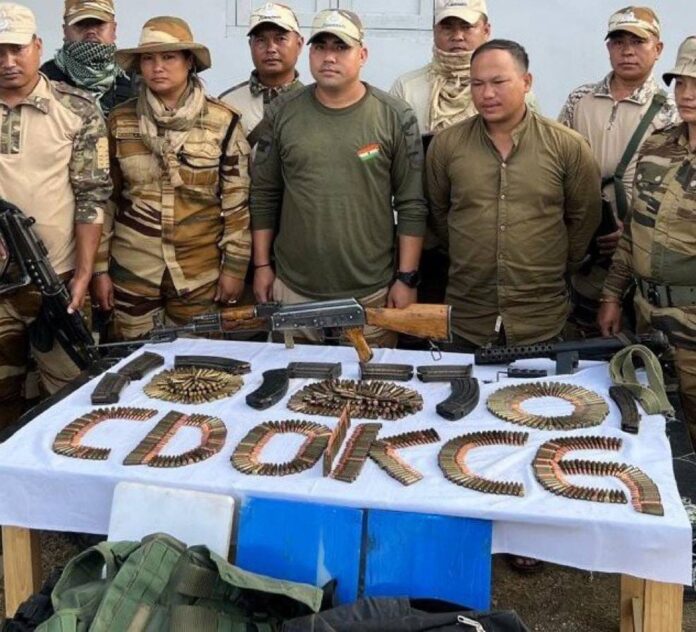
During the operation, security forces recovered a hand grenade, 15 rounds of AK-47 ammunition, four mobile phones, and cash from their possession.

A case has been registered against the accused under relevant sections of the Unlawful Activities (Prevention) Act (UAPA) and the Arms Act, officer added.(NVI)

Water Supply to Remain Suspended in Parts of Ganderbal, Srinagar from April 25–27

Representational Image

Srinagar, Apr 23 (NVI): The Public Health Engineering (PHE) Department has announced a temporary suspension of drinking water supply in several areas of Ganderbal and adjoining rural pockets of Srinagar from April 25 to 27 to facilitate repair works on the Sindh Power Canal.

An official statement issued by the Executive Engineer, Rural Water Supply Division Ganderbal, Phase-II maintenance works on the canal will be carried out on April 25 and 26, during which raw water supply to dependent treatment plants will remain suspended.

The water supply disruption will be effective from 6 a.m. on April 25 and is expected to continue until 6 a.m. on April 27, affecting several urban and rural localities under the division.

In Ganderbal district, the affected areas include Ganderbal town, Nagbal, Rangil, Darend, Malshahibagh, Khalmulla, Nunner, Gutlibagh, Wayil, Nadribagh, Babaspora, Chattergul, Bandibagh, Arch, Saderbagh, Malpora, Gundrehman, Harran, Kachan, Hathbura, Sehpora, Shallbugh, Chundina, Gogjigund, Malikpora, Kogund, Devpora, Gadoora, Kujjar, Beehama, Manigam, Tulmulla, Waseepora, Theeru and Lar, among others.

In the rural areas of Srinagar district, localities including Gulab Bagh, Zakura, Habak, Shuhama, Chatterhama, Bakura, Inderhama, Syedpora, Khimber, Hadoora, Wanihama, Gassu, Qurashi Mohalla, Shanpora, Guzerbal, Palpora, Tangpora, Gurnanjipora, Pampore Colony, Goripora, Shunglipora and adjoining areas are also likely to face disruption.

Officials said the shutdown is necessary to carry out essential repair works to ensure the long-term stability and efficiency of the water supply system.

Residents have been advised to store sufficient quantities of water in advance to meet their requirements during the shutdown period. The department has also issued helpline numbers for emergency assistance.

Authorities have appealed for public cooperation, stating that the temporary inconvenience is required for improving overall service delivery. (NVI)

Afghan refugees being tormented by Pakistani authorities: Human Rights Watch
Pakistani authorities are subjecting Afghan refugees to abusive raids, arbitrary detentions and relentless fear.

Afghan refugees being tormented by Pakistani authorities: Human Rights Watch
Afghan refugees crossing Chaman border between Pakistan and Afghanistan. (File Pic)

New York, April 23: At a time when Pakistan is portraying itself as a peacenik, a renowned US-based international human rights organization has highlighted the extreme “abusive practices” of the Pakistani authorities towards Afghan refugees and escalation in the trend in the recent weeks.

“Pakistani authorities have sharply escalated abusive raids, arbitrary detentions, and forced returns of Afghan refugees following renewed border clashes between Pakistan and Afghanistan,” Human Rights Watch (HRW) has said in its latest report.

“Police operations (in Pakistan) have left thousands of already vulnerable Afghan refugees, including children, facing serious barriers to health care, education, and other essential services,” it pointed out.

“Abusive police practices are forcing people to forgo food and health care while mass deportations are returning refugees to possible persecution and worse in Afghanistan.”

Pakistan’s forced returns and expulsions of Afghans may amount to violations of Pakistan’s obligations as a party to the UN Convention Against Torture and the customary international law prohibition against refoulement or forced return to a place where they would face a genuine risk of persecution, torture, or other ill-treatment, or a threat to their life, the HRW said.

The damning report, highlighting the ugly face of the Pakistani state, comes at a time when its Prime Minister Shehbaz Sharif and all-powerful military chief Field Marshal Asim Munir have been projecting themselves as ‘peaceniks’ by volunteering mediation between the US and Iran.

Interestingly, US President Donald Trump has been showering praise on Asim Munir and Shehbaz Sharif.

Fereshta Abbasi, Afghanistan researcher at HRW, said, “Pakistani authorities are spreading fear among Afghan refugees instead of treating them as people in need of protection.”

The report said the Pakistani police “expanded operations against Afghan communities in several Pakistani cities, carrying out door-to-door raids, late-night home searches, and arrests without warrants” after fighting between Pakistan and Afghanistan intensified since February this year.

Police have detained Afghans with valid visas along with those without documentation, which many Afghans lack since the Pakistani government stopped renewing Proof of Registration cards and other residency documents for Afghan refugees in 2023, it said.

Police generally transfer detained refugees to holding centers and then expels them.

In 2026 alone, more than 146,000 Afghans have been deported from Pakistan, with the numbers increasing since April 1, the HRW said.

It said that between February and April, Human Rights Watch interviewed eight Afghans in Pakistan and four who had recently arrived in Afghanistan, as well as representatives of aid organizations working with Afghan refugees.

Those interviewed said that police have arrested Afghans while they were shopping, going to school, and seeking day labor, confiscating their phones and cash and demanding bribes in exchange for release. Those unable to pay have been detained and expelled.

Afghan refugees in Pakistan cannot access health facilities and services unless they can provide valid visas, even in medical emergencies involving children. Fear of arrest has prevented families from seeking medical care, worsening physical and mental health conditions.

“My daughter is ill, and I can’t take her to the hospital in fear of police arrest,” said an Afghan woman in Islamabad. “She hasn’t been eating well for the past six weeks and I am really worried.”

Aid workers have said that they are aware of refugees with serious illnesses who cannot get care either because they do not have documentation or are too frightened to seek it.

Many Afghan families keep their children indoors to avoid apprehension. They described living in constant fear, unable to carry out ordinary daily activities because of the risk of arrest.

One Afghan woman said that Pakistani police detained her husband and nine-year-old daughter while they were shopping and expelled them shortly afterward, leaving the family separated.

The increased abuse began after the major escalation in fighting between Afghanistan and Pakistan in mid-October 2025.

More than 1,000 Afghans, including young children, were detained during a November operation in the Surkhab refugee camp in Balochistan province.

The authorities bulldozed homes and businesses inside the camp after removing residents.

Those detained were transferred to the Chaman border crossing and forcibly returned to Afghanistan, often without knowing where their family members were or whether they would be reunited.

In numerous cases over recent months, families have been forcibly separated.

Children as young as 13 have been sent back to Afghanistan alone, while parents have been left behind without information about their children’s whereabouts.

Some deported families have ended up in camps in Afghanistan along the border with harsh living conditions and a lack of access to necessities such as food, health care, and shelter. Women and girls face especially severe restrictions on freedom of movement.

As of March 17, 2026, the United Nations Assistance Mission in Afghanistan had documented at least 76 civilian deaths and 213 injuries in Afghanistan, most from cross-border shelling during the recent fighting.

“Pakistan should take action against abusive police practices and immediately stop forcibly returning Afghan refugees,” Abbasi said. “Other governments should raise their concerns about these practices with the Pakistani government, as well as denouncing continuing human rights violations by Afghanistan.”  (NVI)

MUST READ