Tuesday, September 22, 2026
Home Blog Page 69

DRDO successfully test-fires indigenous ‘Kusha’ long-range air defence missile

New Delhi, Jul 23 (NVI): The Defence Research and Development Organisation (DRDO) on Thursday successfully conducted the maiden flight-test of the indigenous ‘Kusha’ Long-Range Surface-to-Air Missile (LRSAM) system from APJ Abdul Kalam Island off the Odisha coast, officials said.

The missile was tested against an electronic target simulating a high-speed, high-altitude aerial threat and successfully intercepted it, according to the Defence Ministry.

Officials said the ‘Kusha’ missile system is designed to neutralise a wide range of aerial threats, including fighter aircraft, missiles, unmanned aerial vehicles (UAVs) and large enemy aircraft over long ranges and at varying altitudes.

The system, including its missiles, radars, command-and-control centre and other components, has been developed by various DRDO laboratories in collaboration with industry partners.

Defence Minister Rajnath Singh congratulated the DRDO and associated teams, describing the successful maiden flight-test as a significant milestone in India’s defence research and development.

He said the indigenous system would reduce dependence on imports for long-range air defence capabilities and strengthen the country’s air defence preparedness.

Defence Secretary and DRDO Chairman Rajesh Kumar Singh monitored the launch and congratulated the scientists, engineers and industry partners involved in the successful test, the ministry said.—(NVI)

Chief Secretary Pushes Faster AI Integration in Governance Across J&K

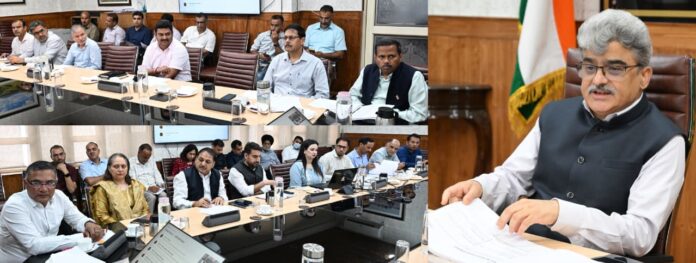
Srinagar, Jul 23 (NVI): Jammu and Kashmir Chief Secretary Atal Dulloo on Thursday directed all government departments to fast-track the implementation of identified Artificial Intelligence (AI) use cases to improve governance and public service delivery across the Union Territory.

Chairing a high-level review meeting here, Dulloo said AI has the potential to transform governance by enhancing efficiency, transparency, responsiveness and the quality of public services.

He asked departments to work closely with the Information Technology Department, nominate nodal officers wherever required and ensure timely sharing of quality datasets for the development and validation of AI-based solutions.

The chief secretary stressed that AI applications should complement the existing digital ecosystem instead of creating parallel systems, while emphasising the importance of data quality, interoperability and departmental ownership for successful implementation.

He also directed that sector-specific workshops be organised with departmental nodal officers, technology partners and domain experts to assess data availability, infrastructure readiness and operational requirements before launching pilot projects.

Officials informed the meeting that the Ministry of Electronics and Information Technology (MeitY) Centre of Excellence (CoE) in Artificial Intelligence at IIT Jammu is expected to become operational by August this year.

The meeting was told that around 10,000 square feet of space has been earmarked for the Centre, infrastructure is being readied, and procurement of high-performance computing infrastructure for AI Digital Public Infrastructure (AI-DPI) has been initiated.

The review covered 20 AI use cases across eight priority sectors, including education, agriculture, health, transport, power development, public governance, skill development and infrastructure.

According to officials, the proposed AI interventions include foundational literacy and numeracy, multilingual learning platforms, precision agriculture, hyper-local weather intelligence, digital governance, utility demand forecasting, infrastructure health monitoring, urban flood modelling, oral cancer screening and clinical decision support systems.

The meeting was attended by senior government officials, representatives of IIT Jammu, BISAG and other stakeholders. It concluded with a commitment to expedite implementation of the AI roadmap to promote transparent, efficient and citizen-centric governance in Jammu and Kashmir.(NVI)

Highway closure: Special Srinagar-Katra train introduced for stranded passengers

PRS counter tickets
(Representational Image)

Srinagar, Jul 23 (NVI): Northern Railway on Thursday operated a special train between Srinagar and Shri Mata Vaishno Devi Katra to facilitate passengers stranded due to the continued closure of the Jammu-Srinagar National Highway following heavy rain, landslides and shooting stones.

Officials said the special service was introduced in view of the heavy passenger rush caused by the highway closure and slow movement of traffic.

The train will depart Srinagar at 5 pm and reach Katra at 8.15 pm via Banihal. On its return journey on Friday, it will leave Katra at 8.45 am and arrive in Srinagar at 11.50 am.

The train will run non-stop between Banihal and Katra in both directions and will be operated with an eight-coach MEMU rake, the officials said.

The Jammu-Srinagar National Highway has remained closed for the second consecutive day due to multiple landslides, shooting stones and road erosion at several locations, leaving hundreds of vehicles and passengers stranded, they added.—(NVI)

Mass Detentions, House Demolitions Won’t Restore Peace in J&K: CM

Srinagar, July 23 (NVI): Jammu and Kashmir Chief Minister Omar Abdullah on Thursday said terrorism cannot be eradicated through house demolitions or mass detentions alone, asserting that lasting peace in the Union Territory can only be achieved by winning the confidence and support of the people.

Speaking to reporters here, Abdullah said security forces can deal with terrorism to a certain extent, but its complete elimination requires public participation.

“We will not improve the situation by demolishing houses or arresting thousands of people. Such measures will only worsen the situation. Terrorism cannot end without the support of the people,” he said.

Referring to the recent Anantnag terror attack in which a police head constable was killed, the chief minister said people across Jammu and Kashmir were outraged over the incident but cautioned against actions that could alienate the public.

“People are angry over the killing of the policeman, but when thousands of people are detained, that anger gets diverted. We must take the people along in this fight,” he said.

On the demolition of houses linked to alleged militants, Abdullah said such actions were not in line with the spirit of the Supreme Court’s directions. He recalled that similar demolitions were halted after the Pahalgam attack when investigations indicated the attackers had come from outside Jammu and Kashmir.

On alleged paper leak cases, the chief minister welcomed Prime Minister Narendra Modi’s remarks on addressing the concerns of youth and said the government should engage with young people instead of ignoring their issues. He added that investigations into the paper leak cases had already been conducted and the matter was before the CBI.

Abdullah also said the government was working to strengthen Jammu and Kashmir’s startup ecosystem through seed capital support, incubators and entrepreneurship programmes, with a focus on sectors such as agriculture, horticulture and renewable energy.

Highlighting the impact of recurring heavy rains and cloudbursts, he called for a comprehensive long-term disaster management plan to safeguard infrastructure, saying recent rainfall had caused damage in several areas, including Beerwah in central Kashmir.(NVI)

Balochistan: BLA claims killing 62 Pakistani soldiers in single operation

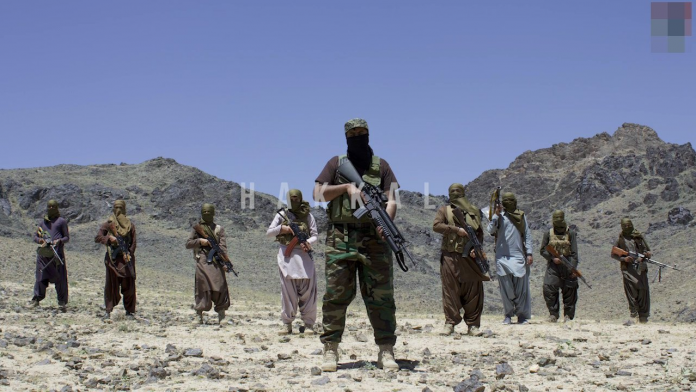
Fighters of Baloch Liberation Army (BLA) at some undisclosed location. File Pic

Quetta (Balochistan), July 23 (NVI) Baloch Liberation Army (BLA) has claimed to have killed 62 personnel of the occupying Pakistan Army, including 3 officers, and wounded a large number of others in a single operation in Balochistan.

“The coordinated, organized, and intense attacks” were carried out at three different locations in the Khad Koocha area of Mastung, targeting a large convoy of the occupying Pakistani army, its security escort, and subsequent military reinforcements that arrived at the scene, BLA spokesman Jeeyand Baloch said.

This operation went on for two days and even as Pakistan used air force, “all units of BLA successfully achieved their objectives and returned safely to their bases”, he said.

“As a result of these operations, a total of 62 personnel of the occupying army, including 3 officers, were killed on the spot, and a large number were severely injured,” he said.

The operations started at around 12:00 PM on July 16, with BLA fighters ambushing a convoy of the occupying Pakistani army advancing from Quetta towards Panjgur.

The ambush was carried out following prior intelligence provided by “ZIRAB” (BLA’s intelligence wing).

The convoy comprised 18 buses and dozens of security vehicles, carrying over 550 armed personnel from various military wings, including the 91 Wing, 164 Wing, 59 Wing, Panjgur Rifles, Makran Scouts, and Dasht Scouts, the BLA spokesman said.

The BLA’s vanguard “Fateh Squad” launched a surprise attack with automatic and heavy weaponry on the front section of the convoy and its main escort vehicles at the location of “Guru” in Khad Koocha.

In this attack, 4 buses of the occupying army came under direct fire, one of which caught fire and was completely reduced to ashes, killing all personnel aboard on the spot.

The BLA fighters also targeted and completely destroyed a special vehicle carrying officers of the occupying army, resulting in the immediate death of 3 high-ranking officers inside, the spokesman said.

Other squads of BLA surrounded the remaining security vehicles of the convoy, completely paralyzing their advance and shattering the enemy’s defensive perimeter.

Immediately after the attack, when the occupying army attempted to dispatch reinforcements from nearby camps, BLA fighters, who had already taken up positions, intercepted their advance with ambushes at two additional locations, unleashing relentless attacks upon them, Jeeyand Baloch said.

Due to these successive attacks, the enemy forces found no opportunity to recover, and the entire area echoed with the sound of explosions for several hours, he said.

Following severe panic and heavy casualties on the ground front, the occupying Pakistani army deployed gunship helicopters, fighter jets, drones, and heavy air power, making a failed attempt to besiege the entire area, causing the battle to rage continuously for two consecutive days and nights.

“The enemy indiscriminately used modern aerial and ground technology alongside relentless bombardment, which affected public places, mosques, and religious schools.

“But, the BLA fighters, demonstrating superior strategy, guerrilla tactics, and geographical dominance, foiled all enemy counterattacks and inflicted further casualties and material losses upon them,” he said.

Despite this lethal battle, two days of intense clashes, and heavy aerial bombardment, all fighters BLA and other units remained completely safe and, after successfully achieving their operational goals, safely moved to their designated combat zones, the spokesman said.

“This victory sends a clear message to the security institutions of occupying Pakistan that their modern technology, aerial bombardment, and numerical superiority are completely powerless against the geographical knowledge and national resolve of the Baloch fighters,” he said.

“The Baloch Liberation Army reiterates its commitment that lethal, organized, and strategic attacks of this nature against the occupying forces will continue with even greater intensity until the ultimate goal of national liberation is achieved,” the spokesman declared. (NVI)

J&K LG chairs security meeting, reviews Amarnath Yatra arrangements

Srinagar, Jul 23 (NVI): Jammu and Kashmir Lieutenant Governor Manoj Sinha on Thursday chaired a high-level security review meeting here to assess the overall security situation and review arrangements for the ongoing Amarnath Yatra, officials said.

The meeting was attended by senior officials of the Army, Jammu and Kashmir Police, civil administration, Central Armed Police Forces (CAPFs) and other security agencies.

Officials said the Lieutenant Governor reviewed the security scenario and took stock of logistics, safety measures and emergency preparedness for the annual pilgrimage in view of the recent spell of heavy rainfall and inclement weather across the Union Territory.

Sinha directed all departments and security agencies to maintain close coordination to ensure the safety, security and convenience of the pilgrims undertaking the yatra.

In a post on X, the Lieutenant Governor said he had reviewed the logistics and safety arrangements for the ongoing pilgrimage and instructed all departments to work in close coordination to ensure the well-being of the devotees.

The annual Amarnath Yatra is proceeding under a multi-layered security cover, with authorities keeping a close watch on the situation amid heightened security measures across Jammu and Kashmir.(NVI)

West Asia War And Failure of Dubious Pakistan’s ‘Mediation’

US-Iran talks: Uncertainty prevails even as Islamabad is geared up
Islamabad Talks Logo (File pic)

Column

By Ajay Kaul 

After a lull of about two months, West Asia is again in the grip of a massive war involving the United States, Iran, Israel and all the Gulf countries.

Over the last two weeks, the intensity of fighting has been increasing, with missiles and drones flying all over the region.

As a result, the entire world has again plunged into deep anxiety as global energy supplies, sourced from the West Asian region, have almost stopped in the wake of  repeated attacks on vessels attempting to transit through the crucial Strait of Hormuz.

The resumption of fighting with sustained intensity makes it evident enough that the so-called ‘mediation’ by Pakistan has utterly failed, or was a farcical exercise.

A lot of trumpeting was done by Pakistan regarding its ‘mediation’ and self-portrayal as a ‘peace-maker’.

Interestingly, US President Donald Trump participated in that chorus by repeatedly praising Pakistan’s Field Marshal Asim Munir and Prime Minister Shehbaz Sharif.

A so-called ‘peace deal’ was also signed by Trump with Iran’s leadership on June 17.

However, three weeks later, Trump threw that ‘deal’ into a dustbin and restarted attacks on Iran on July 7, using the pretext of two vessels being attacked in the Strait of Hormuz.

This action by Trump meant a huge loss of face for the ‘mediator’ Pakistan, which was still in the early phase of enjoying a sort of international relevance that it had lost since decades because of continued support to international terrorism.

Before its un-requisitioned ‘mediation’ in the deadliest war of the 21st century, Pakistan was virtually a pariah globally.

It was an outcaste at the international stage, rightly so, for actively supporting terrorism and its dubious record in relation to acquisition of nuclear weapons through smuggling.

For years, the Financial Action Task Force (FATF), a global watchdog for international terrorism, had kept Pakistan in the ‘Grey List’ (watch list) for its financing terrorism, a matter of absolute shame for any nation.

Host to the World’s most wanted terrorist:

While Trump repeatedly showered praise on the Pakistan Army chief, he forgot, or deliberately ignored, the fact that the same military had been exposed by the US itself just 15 years back for hosting the most wanted global terrorist Osama bin Laden.

That exposure came when the US, despite having strategic partnership with Pakistan, conducted a top-secret surgical military operation in Abbottabad, near Islamabad, in the dead of the night on May 3, 2011 to hunt down the Al Qaeda chief.

Such was the lack of trust in the Pakistani military leadership that the US had to keep it in the dark during the months-long operation to track, locate and then swoop down on Laden who was living in a carefree manner with his family in a 3-storey house, located nearby a cantonment of Pakistan Army.

In fact, the operation exposed how Pakistan had cheated its ally, the US, which was frantically searching for Osama bin Laden for 10 long years in Afghanistan.

All through, Pakistan pretended to be helping the US in its efforts to find bin Laden, but in reality it had provided a safe hideout to the globally most wanted terrorist.

Interestingly, Trump, during his first term as the US President, had publicly highlighted how Pakistan had been deceiving America for decades while giving “safe haven to terrorists”.

On January 1, 2018, Trump had tweeted: “The US has foolishly given Pakistan more than $33 billion in aid over the last 15 years and they have given us nothing but lies and deceit, thinking of our leaders as fools. They give safe haven to the terrorists we hunt in Afghanistan, with little help. No more!

Surprise

Isn’t it surprising and intriguing that the same Trump trusted the same Pakistan when it came to ending hostilities between the US and Iran?

Or is it that Trump used Pakistan as a face-saving tool to take a break in the war after the US military faced unprecedented losses and ran short of missiles after using those in 40 days of war with Iran?

It has already been reported that after the US faced severe Iranian attacks on its military bases in the Gulf region from March 1 onwards, Trump had talked about the missile stocks running out and urged the country’s defence industry to scale up production on urgent basis.

Perhaps, it was to allow that replenishment that Trump announced a ceasefire with Iran and once that was done, the war was restarted.

Pakistan’s Lack of Credibility:

While Trump played blow-hot, blow-cold, there could be nothing more ironic than Pakistan projecting itself as a ‘peace maker’ considering its history of being a war-monger and destabilizing factor in the region.

Leave aside others, even within Pakistan, most common people are unable to digest that its Army chief is a peacenik as they see the brutal face of the Pakistani military day in and day out.

The Pakistani military and its intelligence agencies are notorious within the own country for human rights violations, oppression and atrocities through abductions, killings and other criminal acts.

While Munir and Shehbaz Sharif were projecting themselves as ‘peace makers’ before the world, the Pakistani military remained busy with abducting and killing innocent people in Khyber Pakhtunkhwa Province, Balochistan and Sindh.

Just when Munir was playing the ‘mediation’ drama in the US-Iran fight, he was ordering his military to carry out airstrikes on the neighbouring Afghanistan, killing and injuring hundreds of civilians, including children and women, and destroying hospitals, residential houses and mosques.

In one such barbaric act, the Pakistani military bombed a drug rehabilitation centre in Afghanistan’s capital Kabul in March, killing 265 and injuring over 400 patients and medical staff.

Pakistan’s belligerence against Afghanistan increased so much that China, a common friend of the two countries, had to step in to ‘mediate’ between them.

Interestingly, the talks, mediated by China, were held between Pakistan and Afghanistan, in Beijing only a few days before the first round of negotiations between the US and Iran in Islamabad on April 11, brokered by Pakistan.

So, at a time when Pakistan was projecting itself as a ‘peace maker’ in the war between the US and Iran, it itself was hosted as a ‘war monger’ by China to stop it from attacking Afghanistan.

Promoter of terrorism:

The credentials of Pakistan as a ‘peace maker’ are also questionable because of its sickening track record of using terrorism and other criminal acts against its neighbours India and Afghanistan with the objective of causing destabilization.

With respect to India, the Pakistani military has been indulging in terrorism, drug peddling and circulation of fake currency for several decades.

Similarly, the Pakistani military has, for decades, sponsored and promoted terrorism in Afghanistan, which has badly impacted the US also.

When the US-led international forces were in Afghanistan from 2001 to 2021, many attacks on them were engineered by the Pakistani intelligence agencies.

The US intelligence agencies, like the CIA, are quite aware of this fact.

Atrocities by Pakistani military in occupied territories:

While Pakistan claimed to be a ‘peace maker’, it remains illegal occupant of several territories, like those of Jammu and Kashmir, Gilgit-Baltistan and Balochistan.

These regions continue to witness extreme forms of atrocities and oppression by the Pakistani military and its notorious intelligence agency ISI.

In occupied parts of Jammu and Kashmir and Gilgit-Baltistan, the Pakistani military and its secret agencies suppress even the freedom to life, leave aside other basic necessities, and currently a mass uprising is underway there for over one-and-a-half month.

The Pakistani military and its secret agencies also carry out extreme atrocities against the Baloch people in occupied Balochistan on daily basis, including abductions, rapes and extra-judicial killings.

Thousands of youth, including girls, are abducted by the Pakistani military every year in Balochistan and most of them never see the light of the day again even as their loved ones keep waiting endlessly.

Some of them may be freed after years but the extreme torture leaves them in a vegetable state.

Similar abuses are carried out by the Pakistani military in Sindh too.

The military regime of Pakistan has also been carrying out brutal crimes and human rights abuses against its own people, particularly in Khyber Pakhtunkhwa Province.

On the pretext of targeting militants, the Pakistani military conducts aerial bombings and kills civilians and children.

Muslim religious scholars are also not spared, with State-sponsored personnel indulging in their killings in a recurrent manner.

Elsewhere also, anyone criticizing the military is silenced by threats or eliminations.

If all these aspects about Pakistan had been taken into account, it would have become clear in the beginning itself that peace-making efforts between the US and Iran would lead nowhere since the credentials of the ‘mediator’ were anything but impeccable.

By now, this must have become clear to all those who were praising Pakistan.

Ends

J&K: BJP says Omar govt rewarded main accused in 2012 MBBS paper leak case

BJP leader Sunil Sharma (file pic)

Jammu, Jul 23 (NVI): Leader of Opposition Sunil Kumar Sharma on Thursday alleged that the Omar Abdullah-led government had rewarded the main accused in the 2012 MBBS/Common Entrance Test (CET) paper leak case by granting him an extension and a post-retirement appointment.

In a statement, Sharma claimed that the Chief Minister should not lecture others on transparency and accountability, alleging that the then government had patronised the main accused in the paper leak case.

He alleged that Mushtaq Peer, whom he described as the main accused in the 2012 CET paper leak case, was given an extension and later appointed as a consultant for fast-track recruitment of Class IV posts.

Sharma also questioned why the government and the investigating agencies allegedly failed to act on complaints related to the case until the Jammu and Kashmir High Court intervened.

Referring to the court proceedings, he claimed that the High Court took note of the matter after the Amicus Curiae informed it about reports that question papers of the JKCET-2012 had allegedly been sold before the examination for monetary gains.

The BJP leader further alleged that paper leak allegations had also surfaced during the JE Electrical examination in 2025 and accused the Chief Minister of ignoring those issues.

There was no immediate response from Chief Minister Omar Abdullah or the government to Sharma’s allegations.(NVI)

Kashmir on high alert after Anantnag terror attack; security intensified across Valley

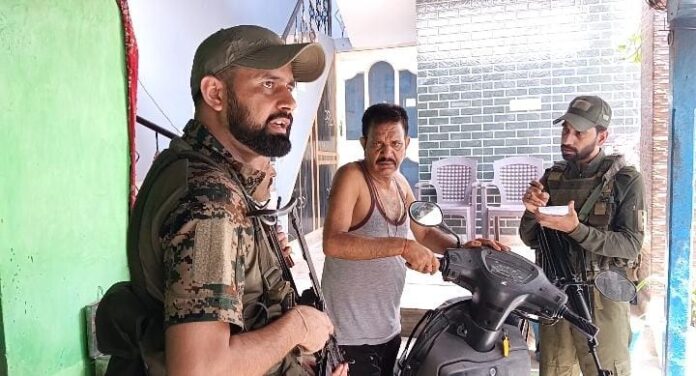
Security forces checking vehicles as part of high alert following killing of a policeman in Kashmir

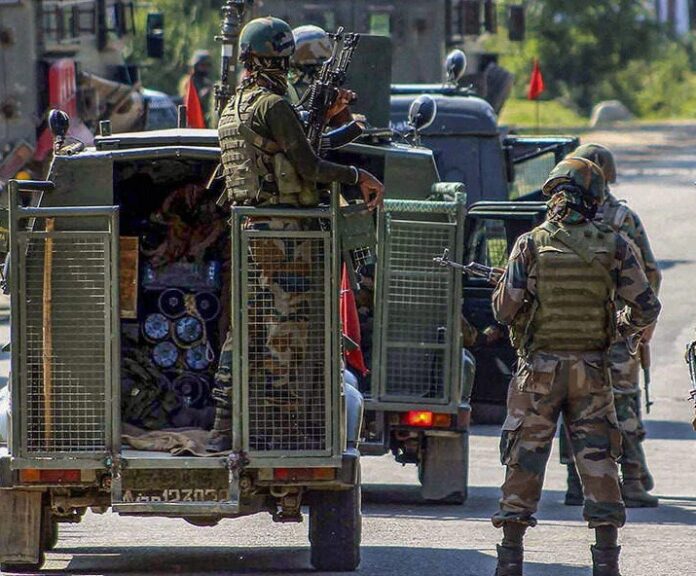
Srinagar, Jul 23 (NVI): Security has been tightened across Kashmir a day after a policeman was killed in a terrorist attack in Anantnag district, with security forces intensifying surveillance, strengthening checkpoints and launching search operations across the Valley, officials said on Thursday.

A senior official said security arrangements have been enhanced at vulnerable locations, while frisking of pedestrians, checking of vehicles and area domination exercises have been intensified in several districts to prevent any untoward incident.

Search operations are also underway in parts of south Kashmir as security forces continue efforts to track down the attackers, they said.

The officials urged people to remain vigilant, cooperate with security personnel during checking and report any suspicious movement or activity to the nearest police station.

Head Constable Ashiq Hussain Qureshi of the Jammu and Kashmir Police was killed after terrorists opened fire at him at Lal Chowk in Anantnag on Wednesday while he was deployed for Amarnath Yatra security duty.

Following the attack, security forces launched a massive cordon and search operation in the area. Police have also intensified operations across the Valley as part of a wider anti-terror crackdown, with officials saying a large number of suspected overground workers (OGWs) have been detained for questioning.—(NVI)

Anantnag terror attack: J&K LG Sinha to Chair High-Level Security Review Meeting

File Photo : LG Manoj Sinha

Srinagar, July 23 (NVI): Jammu and Kashmir Lieutenant Governor Manoj Sinha will chair a high-level security review meeting in Srinagar on Thursday to assess the overall security situation and review arrangements for the ongoing Amarnath Yatra, official sources said.

The meeting, scheduled to be held at the Raj Bhavan’s Lok Bhavan at 11 a.m., comes a day after a police head constable was killed in a terrorist attack in Anantnag district.

Senior officials from the police, Army, Central Armed Police Forces and intelligence agencies are expected to attend the meeting and brief the Lieutenant Governor on the prevailing security scenario, particularly in the wake of the Anantnag attack, sources said.

The meeting will also review the security and logistical arrangements for the annual Amarnath Yatra, which has been temporarily suspended due to inclement weather in Jammu and Kashmir.

Head Constable Ashiq Hussain was shot dead at close range by terrorists in the Lal Chowk area of Anantnag on Wednesday, triggering intensified security measures and search operations in the district.

The attack has prompted security agencies to reassess the security situation, especially with the annual pilgrimage underway.(NVI)

MUST READ