Friday, September 11, 2026
Home Blog Page 954

DRDO can play a significant role in making India superpower: Rajnath

Ministry of Defence

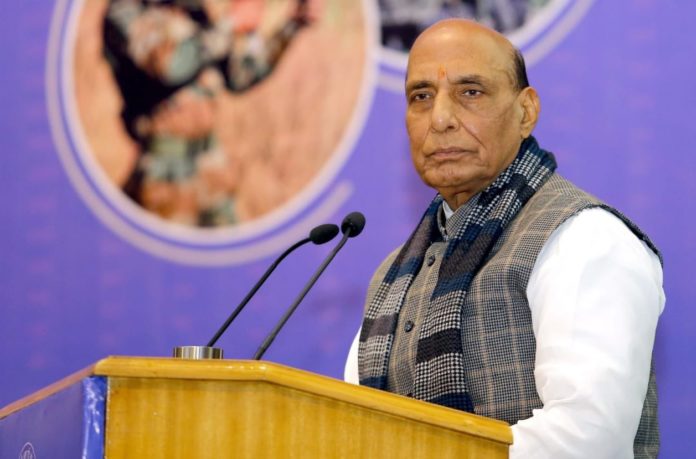
New Delhi (NVI): Defence Minister Rajnath Singh today said that in India’s endeavour to become a superpower, the Defence Research and Development Organisation (DRDO) can play a crucial role.

“We want to make India superpower. For that, India has to become super economic power as well as super military power. In that process, if there is any major contribution, then it is by scientists like you, or it can be,” Rajnath said while addressing DRDO officials at an annual award ceremony.

The Defence Minister lauded the DRDO scientists for successfully developing and testing defence systems. Notably, DRDO has been playing a crucial role in meeting almost all weapon systems’ requirements for armed forces, especially in the wake of India-China face-off, by developing indigenous technology.

Rajnath also handed over three indigenously developed DRDO systems to Army, Navy and Air Force at the event held at DRDO Bhawan in New Delhi.

The Defence Minister handed over the Indian Maritime Situational Awareness System (IMSAS) to the Chief of Naval Staff, Admiral Karambir Singh, ASTRA Mk-I Missile to Air Chief Marshal, Rakesh Kumar Singh Bhadauria and Border Surveillance System (BOSS) to the Chief of Army Staff, General MM Naravane, the Ministry of Defence said in a statement.

In addition to this, during the function, Singh also gave away awards to DRDO scientists for outstanding contributions in various categories.

DRDO Lifetime Achievement Award – 2018 was given to NV Kadam for his contributions for developing control and guidance schemes for missiles, MoD said.

Excellence awards were given to academia and industry for technology absorption. Besides, individual awards, team awards, technology spin-off awards, techno managerial awards and awards in other categories were also given.

Complimenting the DRDO scientists for their outstanding work in developing defence systems, the Defence Minister said that DRDO has been developing high-level technologies for defence systems for increasing the capacity and capability of armed forces.

He also lauded the role of DRDO scientists in combating COVID-19 pandemic. He congratulated all the scientists who received the awards and wished them the very best for their future endeavours.

Speaking at the event, Chief of Defence Staff, General Bipin Rawat, congratulated the scientific fraternity for their achievements and emphasised on the need of working at the fast pace so that the country will have most of the indigenous systems.

The development of these high technology systems has led to higher self-reliance in Defence technologies, he said.

Among the systems handed over was BOSS. An all-weather electronic surveillance system which has been deployed at Ladakh border area for day and night surveillance. The system facilitates monitoring and surveillance by automatically detecting the intrusions in harsh high-altitude sub-zero temperature areas with remote operation capability.

The IMSAS, handed over to Chief of Naval Staff, is state-of-the-art, fully indigenous, high performance intelligent software system that provide Global Maritime Situational Picture, Marine planning tools and Analytical capabilities to Indian Navy.

Furthermore, the ASTRA Mk-I, which was handed over to Air Chief Marshal, is the indigenously developed first Beyond Visual Range (BVR) Missile, which can be launched from Sukhoi-30, Light Combat Aircraft (LCA), Mig-29 and Mig-29K.

Several senior functionaries from the Ministry of Defence and Government of India were also present at the function.

-CHK/ARK
Thailand relaxes travel curbs for tourists from more than 50 countries

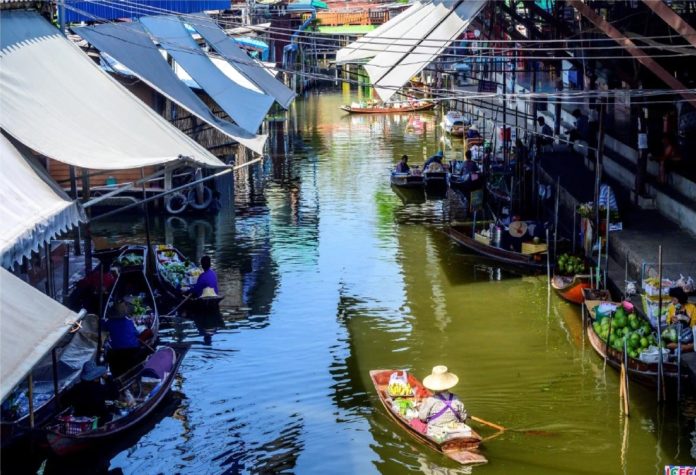
New Delhi (NVI): Thailand has eased travel restrictions for citizens from 56 countries in a bid to boost the country’s pandemic-hit tourism industry although visitors will be required to undergo a mandatory two-week hotel quarantine.

Tourists from countries including Australia, France and the United States can travel without visas, but would need a certificate to show they were free of coronavirus 72 hours before travel and a reservation at a quarantine hotel.

Visitors would then be subject to a two-week quarantine period after arriving and the normal 30-day visa would be extended to 45 days.

While in quarantine, arrivals would undergo three COVID-19 tests, up from two required previously.

The revisions come as the tourism-reliant economy struggles to encourage more domestic activity, but an ongoing travel ban continues to keep most foreign tourists away.

Meanwhile, travellers from other countries not included in the announcement could still be eligible for a 90-day special tourist visa and a certificate of entry.

Thailand’s entry restrictions have helped keep its COVID-19 cases at a low 4,281, but has caused widespread economic damage and many job losses.

-CHK

J&K: Pak violates ceasefire along LoC in Mendhar sector of Poonch

Representational Image

Srinagar (NVI): Pakistani troops today violated ceasefire along the Line of Control (LoC) in Mendhar sector of Poonch district in Jammu and Kashmir while resorting to mortar shelling and firing with small arms in the area at around 5:40 pm, defence officials said.

“At about 1740 hours Pak initiated unprovoked ceasefire violation by firing with small arms & shelling with mortars along LoC in Mendhar sector in district Poonch (J&K). Indian Army retaliates befittingly (Army),” an official defence statement read.

Earlier on December 16, Pakistani troops had shelled forward areas in Nowshera sector of Rajouri district in Jammu and Kashmir.

-RJV/ARK

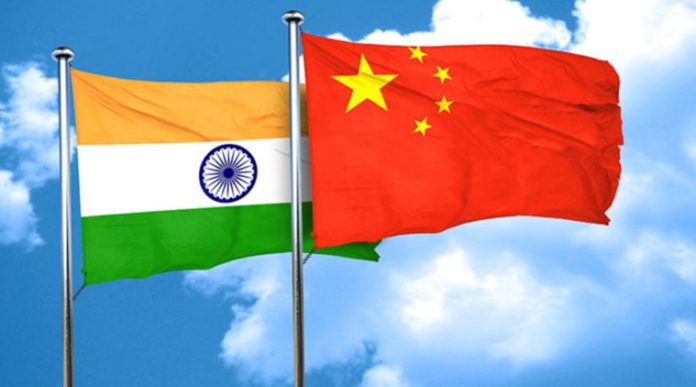
India, China resume diplomatic-level talks over border row in Ladakh

Ladakh

New Delhi (NVI): After a gap of nearly 11 weeks, India and China today resumed diplomatic-level talks to resolve the border stand-off in Ladakh as diplomats from both sides held a virtual meeting under the Working Mechanism for Consultation and Coordination on Border Affairs (WMCC).

This was the 20th meeting of the WMCC where the two sides reviewed the developments along the Line of Actual Control (LAC) in the India-China border areas since the last round of the WMCC held on 30 September 2020.

During the meeting, the two sides agreed that based on the guidance provided by senior leaders and the agreements reached between the two Foreign Ministers and Special Representatives, they would continue to work towards ensuring complete disengagement in all friction points along the LAC in the Western Sector at the earliest, the Ministry of External Affairs said.

“The two sides noted that the 7th and 8th rounds of Senior Commanders meetings held on 12th October and 6 November 2020 respectively had in-depth discussions in this regard and that these discussions had also contributed to ensuring stability on the ground,” MEA said.

Both sides also agreed to maintain close consultations at the diplomatic and military level. “They agreed that the next (9th) round of Senior Commanders meeting should be held at an early date so that both sides can work towards early and complete disengagement of troops along the LAC in accordance with the existing bilateral agreements and protocols, and fully restore peace and tranquility,” the Ministry said in a statement.

Pertinent to mention here that thousands of troops have dug in on either side of the Line of Actual Control (LAC) in sub-zero conditions. The last WMCC meeting held on September 30 had failed to take forward the negotiations focussed on troop disengagement. The WMCC mechanism was set up in 2012.

India had yesterday called for further discussion with China to reach a “mutually acceptable solution” on complete disengagement at all friction points on the LAC.

“It is our expectation that the further discussions will help both sides to achieve an agreement on a mutually acceptable solution for ensuring complete disengagement in all friction points along the LAC in the Western sector and full restoration of peace and tranquility as early as possible,” MEA spokesman Anurag Srivastava said.

-ARK

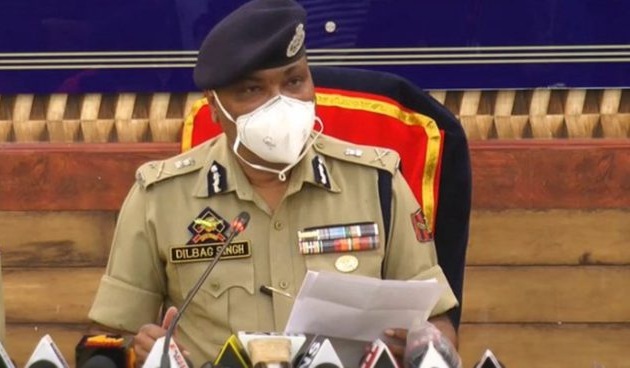
J&K DGP chairs joint security review meeting in Handwara

Neyaz Elahi

Srinagar (NVI): In order to review the security situation in Jammu and Kashmir, Director General of Police Dilbag Singh today chaired a joint meeting with officers of Police, CAPF and Army at District Police Lines in north Kashmir’s Handwara.

At the meeting, local police officers gave a detailed presentation regarding the security scenario of the district and measures put in place by Handwara police during DDC elections.

Officers including, Brigade Commander 7 sector MS Rathore, Commanding Officer 21 RR Gagandeep Singh, CO 15 RR Abishek, CO CRPF 92 Battalion Uday Divyanshu Sharma, SSB CO Mehra and others were also present in the meeting.

During the meeting, DGP J&K appreciated the role being played by the men in uniform and congratulated them for the successful and incident free conduct of DDC elections.

He also directed the officers to be more alert and vigilant in strengthening the security grid and to plug the gaps with strict security measures for future.

Dilbag Singh further appreciated the role of police and other law enforcement agencies in maintaining law and order during the elections and emphasized upon the officers to keep their morale high even after the elections.

-RJV

Afghanistan: At least 15 killed, 20 injured in Ghazni blast

Chhattisgarh
Representative pic of a blast

New Delhi (NVI): At least 15 civilians were killed and 20 were injured in a blast inside of a house in Gelan district of Ghazni province in Afghanistan.

“At least 15 civilians were killed and 20 more were wounded in an explosion at a gathering in Gelan district, Ghazni province, this afternoon,” the Interior Ministry Affairs spokesman Tariq Arian said.

The explosives were loaded on a motorbike that was parked near a house in Agho Jan village in Gelan district where a group of people had gathered to attend a Quran recitation ceremony, according to TOLO News.

The explosion comes amidst a sharp increase in violence in the country despite efforts to end the decades of conflicts through a political solution.

However, no group has so far claimed responsibility for the blast.

-CHK

Centre working on structure to roll out PLI for technical textiles, MMF: Irani

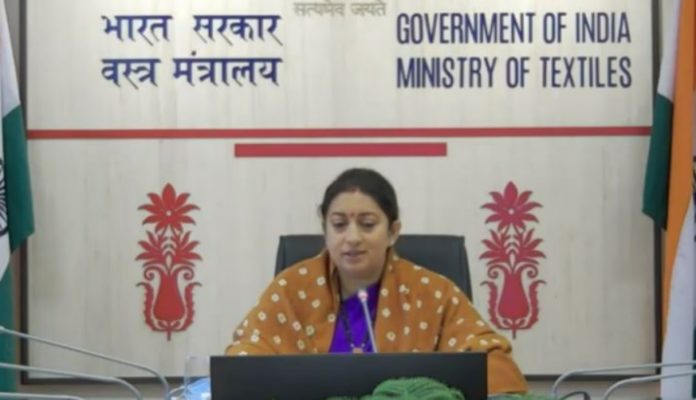
Smriti Irani speaking at ASSOCHAM Foundation Week Programme

New Delhi (NVI): Union Textile Minister Smriti Irani today announced that the Textile Ministry is working on a structure to roll out a Production Linked Incentive (PLI) scheme for technical textiles and man-made fibre (MMF) segment.

Addressing a ASSOCHAM Foundation Week Programme 2020, Irani said, “We are currently on the anvil of also bringing to the fore the new Indian textile policy, the last time India had a textile policy was two decades ago.”

The minister also highlighted the impact of agricultural reforms on Indian industry and said, “The government in a determined effort has ensured that the MSP operations undergo with the help of technology and those who participate in the MSP operation receive direct benefit transfer of their funds in to their bank accounts.”

Speaking on the theme of programme, ‘Future lies in the past – Leveraging India’s embedded knowledge to pivot the country’s growth story,’ the minister informed, “In 2013-14, in the cotton segment, the MSP operations were merely worth Rs 90 crore while last year the MSP operations in the cotton segment alone breached a value in total of Rs 28,500 crore.”

This season, in the cotton segment MSP operations worth Rs 14,659 crore have already been undertaken and 9.63 lakh farmers producing cotton in the country have directly received into their bank accounts an amount of Rs 11,799 crore, this is done in only two months, she was quoted as saying in the official statement.

Irani added that this means, when we look at the policy reforms, the idea called AatmaNirbhar Bharat cannot come to a fruition when we work in silos. “So while on one hand the government of undertakes agricultural reforms, on the other hand we leverage technology to provide farm support and undertake MSP operations.”

The minister further stated, if you look at extra-long stable cotton, we currently produce only four lakh bales.

Looking at the agricultural reforms, if the industry conjoins its efforts with farming community and “we bring up the potential growth of production of ELS cotton from four lakh bales to 50 lakh bales, then the impact on the Indian cotton textiles industry will be such that we will increase our businesses from the current USD 18 billion to USD 80 bn, that is the potential that needs to be leveraged and explored,” she said.

However, speaking about agricultural reforms she underlined that when reform takes place in one segment, its impact is determined across the value chain of Indian economy.

“When agricultural reforms came into being, it was a contribution of dialogues and deliberations that have been undertaken for 19 years across industries, agriculture sector, farmer organisations and specialists who want to leverage technology in the field of agriculture so that potential benefit is accrued not only by farmers but also industry and citizens at large,” she said.

The minister further noted, India has become the second largest manufacturer and exporter of personal protective equipment (PPE).

“When Covid-19 pandemic hit Indian shores, not many across the globe were confident of India’s response, one of the greatest examples of Indian resilience was given by the Indian textiles industry in the manufacturing of PPE suits, provision for which was among the consistent demands of frontline workers and the medical community was across the world,” Irani added.

She said that while the textiles industry was not prepared for, but it rose to this challenge. “It was an effort which involved almost all ministries and industry segments in support of Indian textiles industry.”

Speaking at the virtual event, ASSOCHAM President Niranjan Hiranandani assured industry’s full support to the government to reach the goals of becoming an AatmaNirbhar Bharat and USD 5 trillion economy.

Vineet Agarwal ASSOCHAM senior VP, also recalled similar sentiments and lauded the minister for being supportive to Indian industry.

The government has launched the Production Linked Incentive Scheme (PLI) to attract diversification, investment and growth in the man-made fibre (MMF) and technical textiles segments, the statement said.

This scheme is extended for 10 key specific sectors, of which Textile is one of the sectors and has been allocated Rs 10,683 crore of the total estimated worth of Rs 1.46 lakh crore mainly for MMF and technical textile segment, it added.

-RJV

India planning to invest $60 billion to create gas infrastructure by 2024

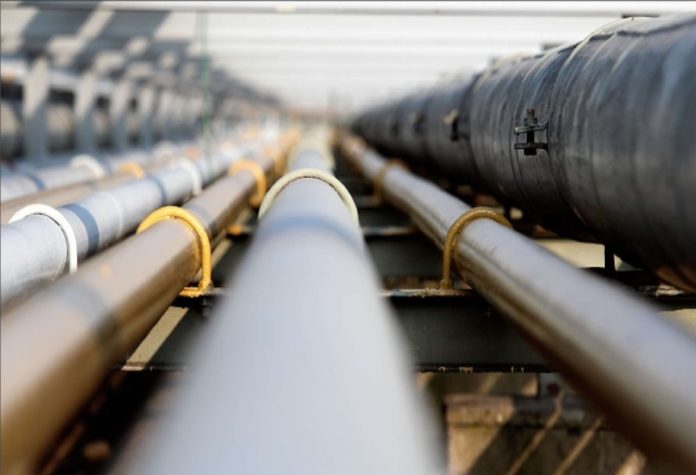
New Delhi (NVI): The central government aims to create a gas infrastructure in India with an investment of $60 billion over the period of next four years which includes laying gas pipelines and LNG terminals, Petroleum Minister Dharmendra Pradhan today said.

While addressing the ASSOCHAM Foundation Week in a session – Energy Transition to fuel India’s growth path – he informed that the government is envisaging a gas based economy by increasing the share of natural gas in India’s primary energy mix from 6.2 percent to 15 percent by the year 2030.

“Last year, the Prime minister announced the target of ‘One nation, One Gas Grid’. India is set to expand India’s natural gas grid to 34500 km by adding another 17000 km gas pipeline. The regasification capacity of the existing 42 million metric tonnes per annum will be expanded to 61 million metric tonnes per year by the year 2022,” he pointed out.

Pradhan further stated that the coverage of city gas distribution projects have been expanded to include 232 new geographical areas spread over 400 districts with the potential to cover 53 percent of the country’s geographic and 70 percent of the population.

“We plan to have 1,000 LNG fuel stations. We are also tapping into huge biomass potential through National biofuel policy. The government is setting up 5000 CBG plants by the year 2023-24 with a production capacity of 15 million MT and an investment of $20 billion,” he added.

“The government is already reworking the transitional strategy not just to mitigate the effects of pandemic, but also to build back better. Our energy demands have grown back to pre Covid levels particularly for petroleum products. Which is very good news,” he said.

The petroleum minister said that the efforts to move towards a gas based economy, cleaner use of fossil fuels particularly of petroleum and coal, greater reliance on domestic use of bio fuels, achieving renewable target of 450GW by 2030, increase in consumption of electricity to decarbonise mobility and moving into emerging fuels including hydrogen and digital innovations across all energy systems are the drivers.

He explained that the government has initiated the most significant reforms in building an Aatmanirbhar Bharat or self-reliant India.

According to the minister, the government is moving from revenue generation to production maximisation to enhance the domestic production of crude oil and natural gas.

“We now allow 100 percent FDI in the exploration and production projects. The government also permits 49 percent FDI in public sector refining under the automatic route. These reforms are translating for increased FDI for this sector,” he said.

“India is using only 6 percent of the world’s primary energy. Our per capita consumption of energy is only 40 percent of the global average. This is rapidly changing now as India is among one of the fastest growing large economies in the world,” Pradhan added.

Darshan Hiranandani, Chairman, ASSOCHAM National Council on Hydrocarbon and Petrochemicals and Managing Director, Hiranandani Group of Companies & CEO, H Energy, “India is taking critical steps in transitioning its energy platform for long term sustainability and moving towards a net zero future. Focus on natural gas, renewables, pump storage hydro and energy storage technologies will ensure that India will lead the world in sustainability.”

-CHK

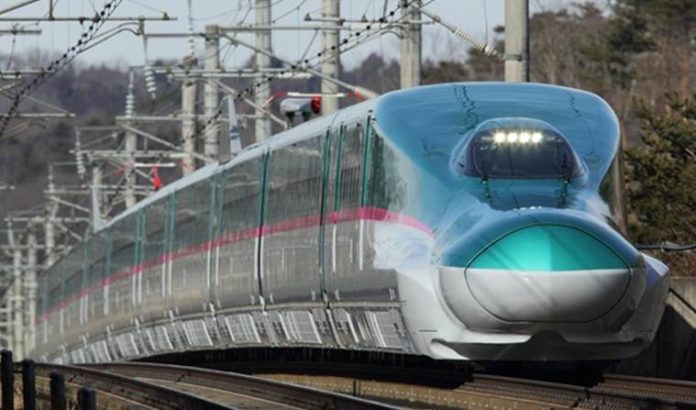
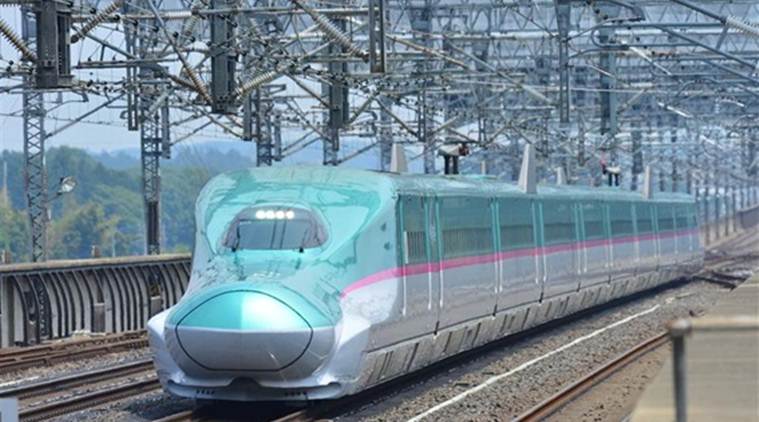
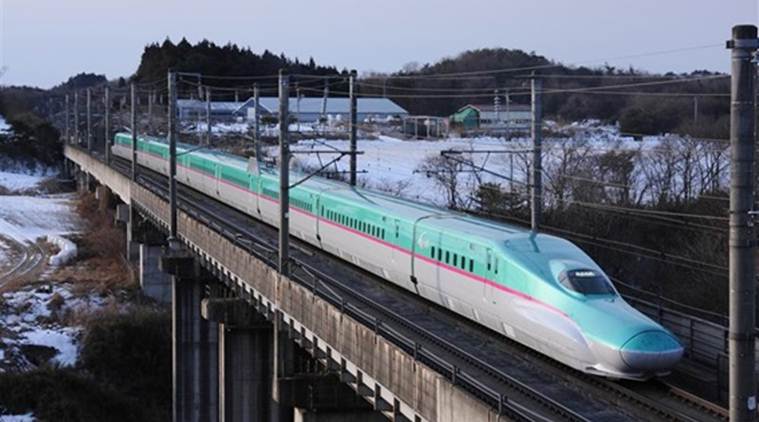
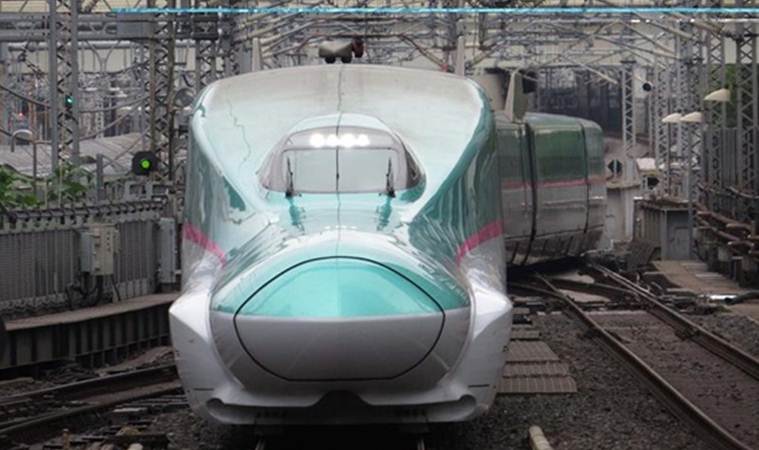
Mum-Ahd high-speed rail: First photos of E5 Series Shinkansen bullet train

Mum-Ahd high-speed rail corridor: First photos of E5 Series Shinkansen bullet train
(Image: Japan Embassy in India)

New Delhi (NVI): The Embassy of Japan in India has released the first photos of E5 Series Shinkansen (Japan’s bullet train) which will be modified for use as rolling stock of the Mumbai-Ahmedabad High-Speed Rail project.

The Mumbai-Ahmedabad bullet train project will operate at a speed of 320 km per hour, once completely developed and ready for services.

It will cover 12 stations along the route, passing through specific regions in Gujarat, Maharashtra, and Dadra and Nagar Haveli. The entire distance will be covered in three hours with all stops.

According to reports, the Sabarmati Terminal will be the only bullet train station that will boast of multimodal transit hub for passengers, giving seamless connectivity to bus transit points, Indian Railways, and the metro station.

Prime Minister Narendra Modi’s ambitious 508-km Mumbai-Ahmedabad high-speed rail project, popularly known as ‘bullet train project’, will reportedly create more than 90,000 direct and indirect jobs during the construction phase.

On September 14, 2017, PM Modi and then Japanese Premier Shinzo Abe had laid the foundation stone for the ambitious Rs 1.08 lakh crore ($17 billion) project.

-ARK

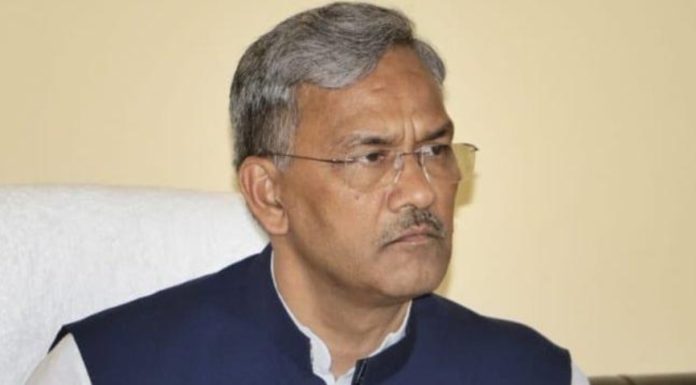
Uttarakhand CM tests Covid positive

Uttarakhand CM tests Covid positive
Trivendra Singh Rawat

New Delhi (NVI): Uttarakhand Chief Minister Trivendra Singh Rawat today informed that he has tested positive for novel coronavirus.

Taking to Twitter, Rawat wrote, “Today I had the corona test done and the report came back positive. My health is fine and I do not have any symptoms. Therefore, on the advice of doctors, I will be in home isolation.”

“I request everyone, whoever has come in contact with me in the last few days, please isolate yourself and get yourself checked,” he tweeted in Hindi.

Earlier, Uttarakhand Health Secretary Amit Negi, BJP President JP Nadda and Governor Baby Rani Maurya had tested positive for COVID-19.

Meanwhile, a total of 84,689 coronavirus cases have been registered so far in Uttarakhand, while the death toll stands at 1,384 in the state.

-RJV

MUST READ