Thursday, September 10, 2026
Home Blog Page 1047

About 30 Indian cities to face water risks within few decades, says WWF

water
Representational image

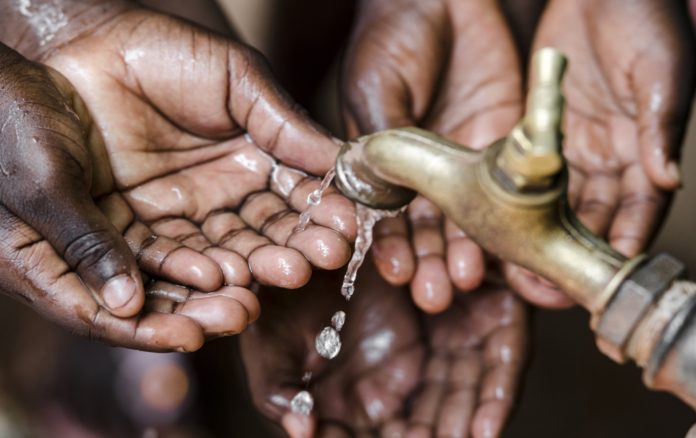
New Delhi (NVI): At least 30 Indian cities including Mumbai, Jaipur and Bangalore among others will face increased water risks in the few decades, unless urgent action is taken to mitigate and adapt to climate change, according to the World Wide Fund (WWF) study.

The WWF’s new water risk scenarios estimated that, hundreds of millions of people in cities across the globe could face dramatically increased water risks, with water crises already plaguing many of the world’s cities.

As per the scenarios in the WWF Water Risk Filter, the 100 cities that are expected to suffer the greatest rise in water risk by 2050 are home to at least 350 million people as well as nationally and globally important economies.

Globally, populations in areas of high-water risk could rise from 17 per cent in 2020 to 51 per cent by 2050.

The list includes cities which are Beijing, Jakarta, Istanbul, Hong Kong, Mecca and Rio de Janeiro with China accounting for almost half the cities, the study said.

“About 30 Indian cities including Jaipur, Indore, Amritsar, Pune, Srinagar, Kolkata, Bangalore, Mumbai, Kozhikode and Vishakhapatnam among many others have been identified as cities that will face increasing water risks in the next few decades,” it added.

Sejal Worah, Programme Director, WWF India, said, ” The future of India’s environment lies in its cities. As India rapidly urbanizes, cities will be at the forefront both for India’s growth and for sustainability.”

“For cities to break away from the current vicious loop of flooding and water scarcity, nature based solutions like restoration of urban watersheds and wetlands could offer solutions. This is our chance to re-evolve and re-imagine what the future of the cities could be,” she added.

Moreover, the Smart Cities initiative in India could offer an integrated urban water management framework combining urban planning, ecosystem restoration and wetland conservation for building future- ready, water smart and climate resilient cities.

“Urban watersheds and wetlands are critical for maintaining the water balance of a city, flood cushioning, micro-climate regulation and protecting its biodiversity,” the WWF said, adding that, the future of our cities and sustainability lies in the efficiency in closing the loop by integrating water supply, demand management.

The study informed that the multi-stakeholder engagement and ownership involving local communities is key in creating and conserving sustainable water infrastructure and rejuvenating urban freshwater systems.

There are many initiatives across the country that can be scaled up where multi-stakeholder groups have come together and revived wetlands such as Bashettihalli wetland in Bengaluru and the Sirpur Lake in Indore.

However, urban planning and wetland conservation needs to be integrated to ensure zero loss of freshwater systems in the urban areas.

While improving the urban water infrastructure and cutting water consumption will help reduce water risks, Nature-based Solutions, such as restoring degraded watersheds, reconnecting rivers to their floodplains and restoring urban wetlands are critical to avoiding the worst-case scenario and to safeguarding economies and human wellbeing.

“Launched in October, the new climate and socio-economic pathway-based scenarios for 2030 and 2050 are available in the WWF Water Risk Filter, the leading online tool for assessing, valuing and responding to water risk,” the WWF said in a release.

These scenarios are aligned to the Task Force on Climate-related Financial Disclosure (TCFD) recommendations and can help companies, and cities, better understand future water risks and drive more effective corporate action on climate and water resilience, it added.

-RJV
India maintains top global ranking with maximum COVID recoveries

Covid-19
File photo

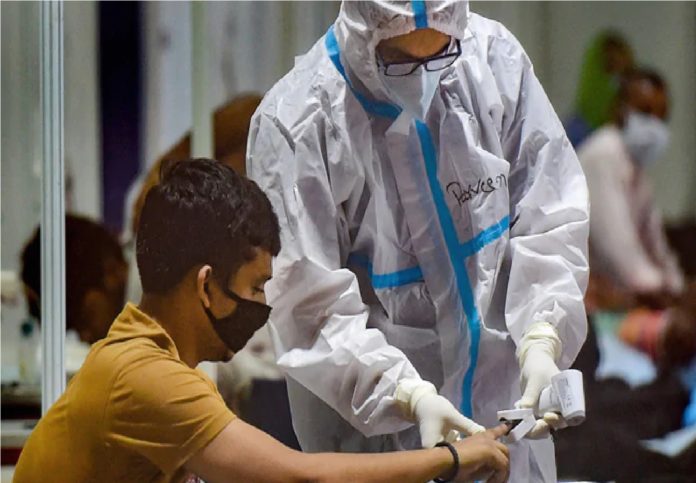
New Delhi (NVI): India continues to occupy the top global position as the country with the maximum number of recoveries.

According to Union Health Ministry data, 53,285 recoveries were registered in the last 24 hours. With this, the total number of coronavirus recoveries have crossed 75 lakh-mark and stands at 7,544,798 in the country.

Higher number of recoveries is also reflected in the continuous increase in the national recovery rate, which is at present 91.68 per cent.

Meanwhile, the active cases have sustained on the downslide. The total active cases in India stand at 5,61,908 and comprise of only 6.83 per cent of the total positive cases of the country.

Notably, in a span of just two months, the percentage of active cases have reduced by more than 3 times. On September 3, active cases were 21.16 per cent of the total cases.

Furthermore, India has demonstrated an exponential increase in the number of COVID-19 cumulative tests since January 2020. Expanded testing has led to early identification and appropriate treatment. It has crossed the landmark of 11 crore (11,07,43,103) total tests today.

The country’s testing capacities have multiplied manifold with 2,037 labs across the country and with collaborative efforts of the Centre and State/UT governments.

-CHK

AP, Uttarakhand & Assam reopen schools

(Source: @twitter)

New Delhi (NVI): The state of Andhra Pradesh, Uttarakhand and Assam reopened schools from today, after a gap of over seven months due to the coronavirus induced lockdown.

The decision is in line with the government’s recent Unlock 5 guidelines allowing schools to reopen and leaving it upon the states and Union Territories to decide whether to start classes or not.

However, the schools in these three states will open with strict COVID-19 protocol including limited attendance in the classes to maintain social distancing.

According to the government’s order schools in Andhra Pradesh will reopen only for students of classes 9 to 12, the students will attend classes on alternate days till afternoon.

Every classroom is limited to only 16 students, following social distancing protocols. During the afternoon hours, their will be will online classes for students who didn’t turn up for schools.

In Assam, the government decided to do classroom teaching for the students of class 6 and above. All schools will follow an odd-even system, to minimise the COVID-19 risk.

The students of classes 6, 8 and 12 will have classroom teaching on Monday, Wednesday and Friday and the remaining three days are reserved for 7,9 and 11 classes, as per the the state education department.

Likewise, the Uttarakhand schools will reopen only for students of class 10 and 12, the students will be allowed to go to school with parental consent.

The online learning classes, however, will continue to be the preferred mode of teaching. Also, schools will have to follow the standard operating procedures (SOP) approved by the state government.

-RJV

Stubble burning keep Delhi’s AQI in ‘very poor’ category

(File photo)

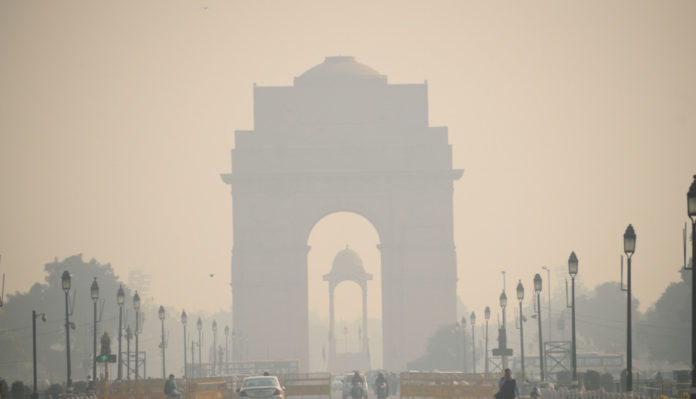
New Delhi (NVI): The air quality index (AQI) in the national capital this morning remained at the high end of ‘very poor’ category. The air pollution was dominated by the share of pollutants from farm fires, estimated at nearly 40 per cent of the cause.

Delhi’s AQI today was recorded at 362 in Sonia Vihar, 345 in Bawana, 326 in Patparganj and 373 in Jahangirpuri.

All four of the areas were in the ‘very poor’ category, as per Central Pollution Control Board (CPCB).

An AQI between 0 and 50 is considered ”good”, 51 and 100 ”satisfactory”, 101 and 200 ”moderate”, 201 and 300 ”poor”, 301 and 400 ”very poor”, and 401 and 500 ”severe”.

The Ministry of Earth Sciences’ air quality monitor, SAFAR, said the share of stubble burning in Delhi’s pollution rose to 40 per cent on Sunday, the maximum so far this season.

It was 32 per cent on Saturday, 19 per cent on Friday and 36 per cent on Thursday, the second highest this season so far.

Last year, the stubble contribution to Delhi’s pollution had peaked to 44 per cent on November 1, according to SAFAR data.

-CHK

State-wise details of Covid-19 cases in India

COVID-19

New Delhi (NVI): The total number of coronavirus cases in India has crossed the 82 lakh-mark and stands at 82,29,313 after 45,230 new cases were reported in the last 24 hours, according to the Union Health Ministry data.

The country’s death toll stands at 1,22,607 after 496 new fatalities were reported during the same period.

In worst-affected Maharashtra, the coronavirus cases climbed to 16,83,775, followed by Karnataka with 8,27,624 cases, and Andhra Pradesh with 8,25,966 positive cases.

Total positive cases in States/UTs:

Andaman and Nicobar Islands- 4,340

Andhra Pradesh- 8,25,966

Arunachal Pradesh- 14,881

Assam- 2,06,517

Bihar- 2,16,707

Chandigarh- 14,476

Chhattisgarh- 1,88,813

Dadra and Nagar Haveli– 3,255

Delhi- 3,92,370

Gujarat- 1,73,642

Goa- 43,786

Haryana– 1,68,880

Himachal Pradesh- 22,264

Jammu and Kashmir- 95,325

Jharkhand- 1,02,087

Karnataka- 8,27,064

Kerala- 4,40,130

Ladakh- 6,287

Madhya Pradesh- 1,72,082

Maharashtra- 16,83,775

Manipur- 18,750

Meghalaya- 9,607

Mizoram- 2,757

Nagaland- 9,075

Odisha- 2,91,825

Puducherry- 35,109

Punjab- 1,33,975

Rajasthan- 1,98,747

Sikkim- 3,958

Tamil Nadu- 7,27,026

Telangana- 2,40,970

Tripura- 30,852

Uttarakhand- 62,550

Uttar Pradesh- 4,83,832

West Bengal – 3,77,651

State/UT wise total death toll:

Andaman and Nicobar Islands- 60

Andhra Pradesh- 6,706

Arunachal Pradesh- 37

Assam- 931

Bihar- 1,097

Chandigarh- 226

Chhattisgarh- 2,150

Dadra and Nagar Haveli- 2

Delhi- 6,562

Goa- 609

Gujarat- 3,721

Haryana- 1,795

Himachal Pradesh- 326

Jammu and Kashmir- 1,482

Jharkhand- 885

Karnataka- 11,192

Kerala- 1,512

Ladakh- 75

Madhya Pradesh- 2,958

Maharashtra- 44,024

Manipur- 171

Meghalaya- 90

Mizoram- 1

Nagaland- 39

Odisha- 1,331

Puducherry- 595

Punjab- 4,214

Rajasthan- 1,917

Sikkim- 72

Tamil Nadu- 11,152

Telangana- 1,348

Tripura- 348

Uttar Pradesh- 7,051

Uttarakhand- 1,027

West Bengal- 6,900

However, a total of 75,44,798 people have been cured and discharged. The total active cases stands at 5,61,908 in the country.

-CHK

WHO chief goes into quarantine after coming in contact with Covid-19 patient

patent

New Delhi (NVI): World Health Organization chief, Tedros Adhanom Ghebreyesus, said that he was self-quarantining after someone he had been in contact with tested positive for COVID-19.

Ghebreyesus took to Twitter to announce the news of his self-quarantine and said he was feeling well and did not have any symptoms of the virus.

“I have been identified as a contact of someone who has tested positive for #COVID19. I am well and without symptoms but will self-quarantine over the coming days, in line with WHO protocols, and work from home,” Tedros tweeted.

He also stressed upon that it is important to comply with health guidelines amid the pandemic.

“It is critically important that we all comply with health guidance. This is how we will break chains of #COVID19 transmission, suppress the virus, and protect health systems,” Tedros said in another tweet.

He added that, “My WHO colleagues and I will continue to engage with partners in solidarity to save lives and protect the vulnerable. Together!”

Tedros has been at the forefront of the United Nations health agency’s efforts to battle the pandemic.

This comes at the time when the global coronavirus cases have crossed 46 million-mark and the death toll is nearing 12 lakh, according to the data provided by John Hopkins University.

-RJV

Rajasthan govt bans sale, bursting of firecrackers this Diwali amid Covid-19

(File/Representational image)

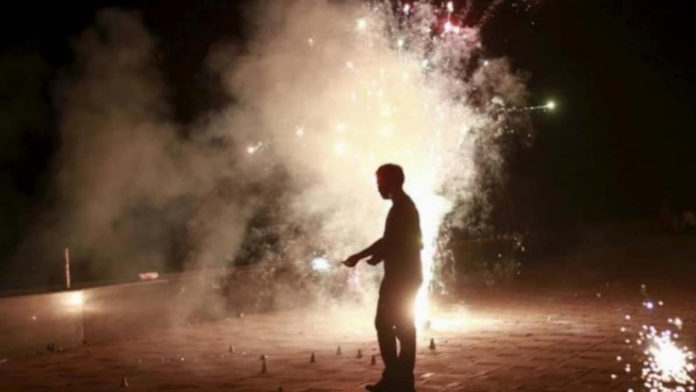
New Delhi (NVI): The Rajasthan government today decided to ban the sale and bursting of firecrackers in the state for upcoming Diwali festival, to protect coronavirus patients and the public from the smoke.

Taking to Twitter, Rajasthan Chief Minister Ashok Gehlot informed about the decision and said, “State govt has taken the decision to ban the sale and bursting of firecrackers in order to protect health of #COVID19 infected patients & public from poisonous smoke emanating due to fireworks. In this challenging corona pandemic time, protecting lives of ppl is paramount for govt.”

The chief minister further said that poisonous smoke emanating from fireworks is a health hazard for COVID-19 patients as well as those suffering from heart ailments and breathing problems. In such a situation, people should avoid fireworks during Diwali.

“Instructions have been given to ban the temporary license for the sale of firecrackers and that fireworks should also be stopped during wedding and other functions,” Gehlot added.

This move comes at the time when air pollution is on the rise in the northern states of the country.

Meanwhile, in a review meeting on the COVID-19 situation in Rajasthan on Sunday, Gehlot directed officials to take strict action against the sale of firecrackers and fireworks in the state and polluting vehicles running without fitness certificate.

-RJV

Renewable energy solutions can help decarbonise cities: Report

New Delhi (NVI): The increase of renewable energy solutions can be the backbone of urban decarbonization efforts in the cities around the world, according to a new joint report.

The new report by the International Renewable Energy Agency (IRENA) and the International Climate Initiative (IKI) showed that, “Cities are responsible for over 70 per cent of total energy-related CO2 emissions and are increasingly relevant in addressing climate change, building a climate-resilient urban infrastructure on renewable energy.”

According to the UN estimates, cities will have to accommodate two-thirds of global population in a livable and low-carbon environment by the year 2050.

The report on the “Rise of renewables in Cities: Energy solutions for the urban future” shows that, “Integrating renewables into local energy systems has become part of the transformative action in many cities around the world. Still, their full potential remains untapped.”

Some 671 cities have set a renewable target and over half of them aim for 100 per cent renewables, most of the cities with targets are in Europe and North America.

An additional 2.5 billion people are expected to become urban dwellers in the next three decades, 90 per cent of them in Asia and Africa. Yet, cities in these regions are falling behind in renewable target setting, the new report shows, even more so as their energy demand is expected to grow, the report said.

Furthermore, the majority of large and mega cities that have set renewable energy targets have pursued only a modest share of renewables in their energy mix. Only the megacity of Los Angeles with 10 million inhabitants has a 100 per cent renewable target set for 2045.

Other megacities show much lower levels of ambition, with all but Sao Paolo and Shenzhen targeting renewable shares below 30 per cent. Only 4 cities in the population range of 5 to 10 million (Atlanta, Barcelona, Madrid and Toronto) and 33 cities in the population range of 1 to 5 million had targets for 100 per cent renewables.

The IRENA report said that, hydropower, bioenergy and waste-to-energy already play a significant role in urban decarbonization strategies. And the use of solar and geothermal energy in cities is rising while the ability to harness wind power within cities is progressing but remains marginal.

In view of the growing cooling demand in Africa and Asia, solar thermal energy in particular has the potential for gradually extending into the cooling sector, tripling from 2,000 to 6,000 terawatt hours by 2050.

The report also highlighted the importance of urban planning and developing smart grids through innovation and the adoption of enabling technologies such as electric vehicles, energy storage systems and intelligent energy management systems to facilitate the integration of renewables.

This means coupling the power, buildings, transport, heating and industry sectors to achieve higher system efficiency and enhance climate resilience, it added.

-RJV

Coronavirus cases surge past 46.4 million worldwide

Coronavirus cases surge past 85 million mark worldwide
(File/Representational image)

New Delhi (NVI): More than 46.4 million people have been infected by coronavirus worldwide, with over 11,99,600 deaths reported, according to Johns Hopkins University tally.

Over 30.9 million patients have been cured and recovered from the deadly contagion globally.

In the US, the total number of coronavirus cases have exceeded 9.2 million as it reported rise of over 78,000 new cases. The country’s death toll stood at 2,30,900.

Brazil’s coronavirus infections have crossed 5.54 million, while the country’s death toll tops 1,60,000 with 190 fatalities in past 24 hours.

The UK reported more than 20,000 coronavirus cases for a seventh straight day. It had 23,254 new cases on Sunday, a day after the country passed the 1 million mark. With this, the country’s death toll rose to 46,807.

Italy reported 29,907 new COVID-19 cases on Sunday, a slight decline from Saturday’s record of 31,758 but amid slower testing on the weekend, taking the total caseload to 7,09,335.

Meanwhile, two days after a nationwide lockdown went into effect, France reported more than 42,000 on Sunday, pushing the overall tally to 14,58,990 An additional 231 people died from virus-related illness, bringing the toll to 37,000.

-RJV

India’s COVID tally crosses 82-lakh mark, death toll tops 1,22,600

corona
(File/Representational image)

New Delhi (NVI): India’s coronavirus tally crossed the 82-lakh mark and currently stands at 82,29,313 with a single rise of 45,230 fresh cases in the last 24 hours, Union Health Ministry confirmed.

The country’s death toll has reached to 1,22,607 with 496 fatalities reported during the same period.

Notably, 75,44,798 patients have been cured and recovered all over the country while active cases stands at 5,61,908.

This is for the third consecutive day when the active coronavirus cases remained below 6 lakh.

In worst-affected Maharashtra, the coronavirus cases climbed to 16,83,775, followed by Karnataka with 8,27,624 cases, and Andhra Pradesh with 8,25,966 positive cases.

Other states with a high virus hit included Tamil Nadu (7,27,026), Uttar Pradesh (4,83,832), Kerala (4,40,130) and Delhi (3,92,370).

Moreover, of the total deaths, Maharashtra tops the tally with 44,024 fatalities, followed by Karnataka with 11,192 deaths.

The death toll in the national capital rose to 6,562, while 3,51,635 patients in Delhi have recovered so far, the healthy ministry data shows

According to Indian Council of Medical Research (ICMR, a total of 11,07,43,103 samples tested for COVID-19 up to November 1. Of these, 8,55,800 samples were tested yesterday.

Meanwhile, the government of Rajasthan has decided to ban the sale of firecrackers during the festive season in the state in the wake of the crisis created by the COVID-19 pandemic.

-RJV


MUST READ