Thursday, September 10, 2026
Home Blog Page 1064

WhatsApp introduces new feature: Mute chats ‘Forever’

(Representational Image)

New Delhi (NVI): Facebook-owned messaging app, WhatsApp has introduced a new feature that will allow users to mute a chat ‘forever’. Until now, WhatsApp allowed users to mute a chat for a few hours, weeks or a year.

WhatsApp made the announcement on Twitter, while introducing this feature for both Android and iOS users. The new feature will be available on WhatsApp for Web version.

The messaging platform has now removed the option of muting chat for 1 year with forever. The new feature comes as a relief for many users as the never-ending pings after random forwarded messages add to a person’s social media burden.

After the announcement, many WhatsApp users took to Twitter for expressing their reactions. Some of the users reacted as if they were waiting for this feature for since very long!

-ARK

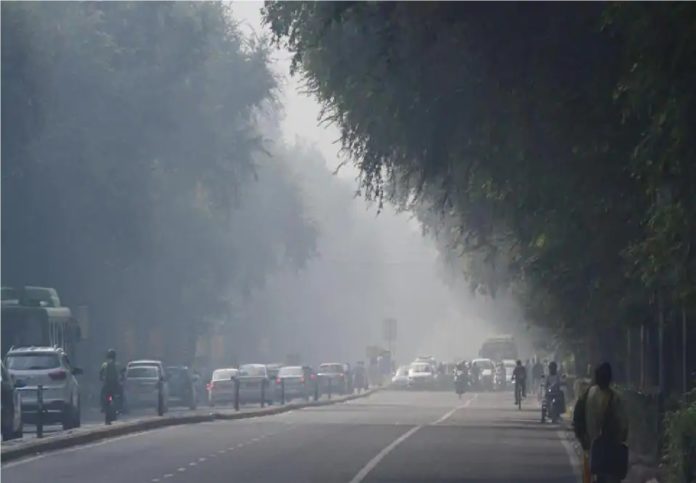
Air quality in Delhi-NCR further dips; worsens to ‘very poor’ category

Delhi Air
(File photo)

New Delhi (NVI): Delhi-NCR’s air quality further deteriorated this morning with the overall pollution level dipping to ‘very poor’ category, according to the Central Pollution Control Board (CPCB) data.

The Air Quality Index (AQI) was recorded at 387 in Anand Vihar, 333 in RK Puram, 391 in Rohini, and 390 in Dwarka, all four in the ‘very poor’ category.

The air quality in the neighbouring cities of the national capital — Faridabad, Gautam Buddh Nagar and Ghaziabad was also no better as there too, it remained in ‘very poor’ category.

An AQI between 0 and 50 is considered “good”, 51 and 100 “satisfactory”, 101 and 200 “moderate”, 201 and 300 “poor”, 301 and 400 “very poor”, and 401 and 500 “severe”.

Furthermore, 10 of 35 monitoring stations across the national capital recorded the air quality’s dip into the ‘severe’ category today.

Officials at the monitoring stations said this was the worst air quality reading recorded in the city in the last eight months.

The Central Pollution Control Board (CPCB) data showed that on Friday, air in Alipur, Shadipur, Patparganj, Vivek Vihar, Anand Vihar, Jahangirpuri, Rohini, Wazirpur, Bawana and Mundka was in the ‘severe’ zone.

In addition to this, the alarming rate of pollution in Delhi-NCR for almost a fortnight now has also caught the attention of United States President Donald Trump, who went on to accuse the country of taking no action on climate change.

On October 22, during a presidential debate with his Democratic challenger Joe Biden in Nashville, Trump accused China, India and Russia of not taking care of their filthy air as he justified America’s withdrawal from the ‘unfair’ Paris climate agreement. “Look at China, how filthy it is. Look at Russia. Look at India, it’s filthy. The air is filthy,” Trump said.

-CHK

15% of deaths across Mediterranean region due to environmental factors: UNEP

Mediterranean is one of the world’s most coveted tourism destinations (Source: @UNEP)

New Delhi (NVI): Around 15 per cent of deaths in the Mediterranean region are accountable to preventable environmental factors, including biodiversity and climate change, according to a UN Environment Programme (UNEP) report.

The new report by UNEP’s State of the Environment and Development in the Mediterranean (SoED) showed that more than 2,28,000 people died prematurely in 2016 from exposure to air pollution in the region.

The environmental damage in the Mediterranean basin are caused by rising inequality, biodiversity loss, the growing impact of climate change and unrelenting pressure on natural resources, as per the report said.

The UNEP highlights that unless urgent and resolute action is taken to halt current trends, environmental degradation could have serious and lasting consequences for human health and livelihoods in the region.

Moreover, with hundreds of millions of visitors each year, the Mediterranean is one of the world’s most coveted tourism destinations and busiest shipping routes.

Every day it is polluted by an estimated 730 tonnes of plastic waste, which threatens biodiversity along with the more than 1,000 non-indigenous species that live below the water. Furthermore, the overall region is warming 20 per cent faster than the global average, the report said.

“By shedding light on the mistakes of the past, the report’s findings can guide a green renaissance in the Mediterranean,” said Gaetano Leone, Coordinator of the UNEP/MAP-Barcelona Convention Secretariat.

He added, “Embarking on greener development paths now can halt the environmental degradation trends and salvage hard-won achievements in the implementation of the Sustainable Development Goals (SDGs).”

Meanwhile, the report also indicates that the region, which is home to more than 512 million people, is not on track to achieve the SDGs by 2030.

Whereas, in order to induce transformative change that tackle the drivers of environmental degradation the report identifies several actions including phasing out environmentally harmful subsidies and incentivizing sustainable options.

The UNEP asked all sectors of Mediterranean economies to prioritize development, not just those directly concerning the environment, and implement degradation preventation measures, noting that they cost less, and lead to better environmental and social outcomes than clean-up and curative action

Also, harnessing nature-based solutions is recommended to build resilience, which requires action and investment.

The enforcement of provisions in national legislation to allow for accountability and legal action, and strengthening the legal and administrative mechanisms involved in enforcement including those undertaken by the Mediterranean countries under the Barcelona Convention and its Protocols, the report said.

“The future of the Mediterranean is on the line. In the past few months, the world has been wondering what the world will be like in the future,” said Francois Guerquin, Director of Plan Bleu.

“This is the third issue of the SoED report since 2005 and very little has changed since. If we want to protect the Mediterranean for present and future generations, we can no longer afford piecemeal steps. We must embark on drastic changes in our relationship with nature,” Guerquin added.

-RJV

‘Look at India, it’s filthy, the air is filthy’: Trump at US presidential debate

Donald Trump
US President Donald Trump (File Pic)

New Delhi (NVI): US President Donald Trump, during his second and final presidential debate with Democratic rival Joe Biden, used the word “filthy” to describe the air quality in India, China and Russia while justifying the United States’ decision to walk out of Paris climate agreement.

Accusing India, China and Russia of not taking care of their air quality, Trump said that the US air quality is much better as his government has taken appropriate steps in this regard. During the debate, he said that the US has the best carbon emissions in 35 years. “We have the cleanest air, the cleanest water and the best carbon emissions”.


In the race for the White House, Trump clashed with Biden on a number of issues like Covid-19, immigration, racism, healthcare and foreign policy.

“Look at China, how filthy it is. Look at Russia, look at, India, it’s so filthy, the air is filthy,” the US President said in a segment on climate crisis.

“The Paris accord, I took us out because we were going to have to spend trillions of dollars, and we were treated very unfairly when they put us in there, they did us a greatest service. They were going to take away our businesses,” he said.

Trump repeatedly blamed countries like India and China for not doing enough on climate change while labeling them as regions with air that is impossible to breathe.

The US had formally notified the UN of its withdrawal from 2015 Paris climate accord in November last year. The landmark global agreement brought together 188 nations, including India, to combat global warming.

In 2017, Trump pulled the US out of the 2015 Paris climate agreement, saying the international deal to keep global temperatures rise below 2 degrees Celsius was disadvantageous to US workers.

However, the process began for withdrawal began after almost two and a half years in 2019 with the formal notification and the US will be out of the pact on November 4, 2020.

-ARK

Kapil Dev undergoes angioplasty after suffering chest pain

Former Team India captain Kapil Dev

New Delhi (NVI): Former Team India captain Kapil Dev has undergone an angioplasty surgery after he was admitted to Fortis Hospital in New Delhi late yesterday night due to chest pain.

The 62-year-old cricketer is said to be in a stable condition now and is expected to get discharged in a couple of days.

“Former Indian Cricket captain Kapil Dev, Age 62 years, came to Fortis Escorts Heart Institute (Okhla Road) emergency department at 1:00 am on 23rd October with a complaint of chest pain. He was evaluated and an emergency coronary Angioplasty was performed by Dr. Atul Mathur, Director of Cardiology Department, in the middle of night,” Fortis Escorts Hospital said in a statement.

“Currently, he is admitted in ICU and under close supervision of Dr Atul Mathur and his team. Kapil Dev is stable now and he is expected to get discharged in couple of days,” the statement added.

Kapil Dev, the legendary Indian cricket team captain and all-rounder led India to glory in the 1983 World Cup. He has played 131 Tests and 225 ODIs and is the only player in cricket’s history to claim over 400 wickets (434) and accumulate more than 5,000 runs in Tests.

Recently, Kapil Dev, nicknamed the ‘Haryana Hurricane’, had also taken up golf as a passion and won an amateur tournament in Pune last year.

-RJV

Heavy rainfall likely over Northeast India for the next 48 hours: IMD

Rainfall
Representational image

New Delhi (NVI): Rough weather conditions are expected to return over parts of Northeast India, as heavy rains and thunderstorms have been forecast for the next 2 days, starting today.

As per the India Meteorological Department (IMD), a low pressure area and an associated cyclonic circulation are located over central parts of the Bay of Bengal.

The low pressure system has become a well-marked low pressure area over west-central Bay of Bengal in the last 24 hours, and has moved towards north-northeastwards, about 50 km southeast of Sagar Islands (West Bengal) and 200 km west-southwest of Khepupara (Bangladesh), and has concentrated into a depression.

Under the influence of these weather systems, extremely heavy rainfall is likely over Tripura and heavy to very heavy falls at a few places in Nagaland, Manipur, Mizoram, south Assam and Meghalaya this afternoon.

Light to moderate rainfall at many places with heavy rainfall at isolated places likely over remaining districts of Assam, according to IMD.

On October 24, light to moderate rainfall at many places with isolated heavy falls likely over Assam, Meghalaya, Nagaland, Manipur, Mizoram and Tripura.

Owing to these weather conditions, the IMD has placed Nagaland, Manipur, Tripura, and Mizoram under an orange alert from Friday to Sunday. The advisory instructs residents to ‘be prepared’ for the rough weather conditions.

Since the beginning of October, a majority of the northeastern states have experienced below-normal rainfall as compared to their respective long-term averages. Among all states in the region, Mizoram has recorded the highest amount of rainfall at 107.4 mm, followed by Meghalaya (105.9 mm), Tripura (97.2 mm), Assam (90.7 mm), Nagaland (75.5 mm), and Manipur (49.9 mm).

-CHK

EESL to invest $5mn in Thai EV manufacturer

EESL has invested in SWAG EV, an emerging e-mobility player in Southeast Asia. (Pic: Southpole.com)

New Delhi (NVI): As the world moves towards e-mobility to reduce transport-related carbon dioxide emissions, India’s Energy Efficiency Services Limited (EESL) has announced that it will invest in SWAG EV, an emerging e-mobility player in Thailand to drive the use of electric motorbikes while contributing to increasing power grid flexibility.

EESL, under the purview of Ministry of Power, has been at the forefront of India’s journey towards energy efficiency and electric mobility.

EESL’s investment in Thailand’s leading Electric Vehicles manufacturer is driven by the concept of convergence -the integration of electric mobility, battery storage, renewable energy generation and carbon finance, which has the power to provide clean, reliable and affordable energy, and catalyse an energy transformation in Southeast Asia, the EESL said in a statement.

With this, the drivers of the 21 million motorbikes in Thailand – the main form of transportation in most cities and a leading cause of transport-related carbon dioxide emissions – now have a new role to play in the fight against climate change.

By using e-bikes with swappable batteries, most of which will be charged by solar power, they can drive the transformation to healthier cities while fighting climate change. ‘Batteries on wheels’ create an overlap between e-mobility, solar energy battery storage and a more flexible power grid.

The e-bike batteries will increase the capacity of the power grid to incorporate a higher share of renewable energy in its energy mix and trigger decarbonization in Thailand. This concept is replicable across the world and this project will serve as the basis for implementation in India, EESL said in a release.

EESL is a pioneer in driving the concept of convergence in its key markets – India and Southeast Asia. As one of the world’s largest public energy service companies, owned by the largest public sector enterprise in the Indian power sector, EESL has invested in SWAG EV, an emerging actor ushering in the two-wheeled e-mobility transformation in Southeast Asia.

EESL’s initial US$5 million investment was conceptualized by SHIFT Asia, a carbon finance platform designed and operated by South Pole to mobilize climate finance for e-mobility. In addition to its investment, SHIFT Asia will co-fund the e-bike charging infrastructure in designated service areas and support EESL in financing shared batteries; all to make battery swapping and charging simple and convenient.

A major mid-term goal of the SHIFT platform is to use these batteries in their second life as a distributed renewable energy storage facility, providing the Thai energy grid with the flexibility to manage a higher share of variable renewable energy. They will be charged during the day with solar power (when electricity demand is low), and discharged during the evening power peak hours, when there is more demand than supply of electricity.

Charging stations located in factories with solar roofs will also be able to store and release surplus solar power. This system helps Thai utility companies increase the flexibility of the power grid, both in terms of managing variable renewable energy generation and reducing the load on the grid during peak hours.

Saurabh Kumar, Executive Vice Chairperson of EESL Group Companies said: “As the power sector across the world deals with more renewable energy, and electric mobility takes off, it is essential that we, as key stakeholders, join forces and enable a clean, green, and electric future for better public health and quality of life – for ourselves and coming generations. EESL is driven by the objective of facilitating faster adoption of disruptive technology solutions, while balancing economic development and environmental sustainability.”

Janson Chen, Executive Director, SWAG EV said: “We are committed to catalysing e-mobility in SEA, which has the highest use of 2-wheelers per capita and a growing middle-income consumer segment. We are thrilled to have such a respected investor as EESL supporting our vision, and excited to scale it further, together with our partners and investors.”

-ARK

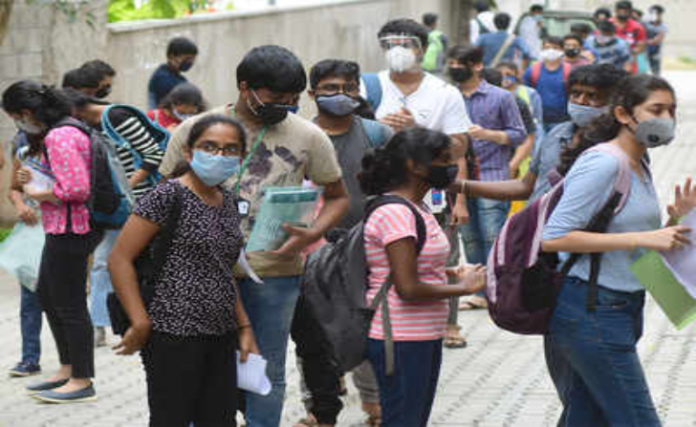
Karnataka colleges to reopen on Nov 17

colleges
(File/Representational image)

New Delhi (NVI): The government of Karnataka today decided to reopen engineering, diploma and degree colleges from November 17, after remaining shut for over six months amid the pandemic.

The development was confirmed by the state’s Deputy Chief Minister CN Ashwath Narayan after his meeting with the Chief Minister BS Yediyurappa.

Taking to Twitter, Ashwath Narayan said, “Colleges in Karnataka will reopen for classes from November 17. This decision is an outcome of a review meeting held under the leadership of CM Yediyurappa. Reopening of all graduate, PG, diploma & engineering colleges was discussed with all concerned departments’ officials.”

In another tweet, the Minister said, “The classes will be held in a ‘blended’ manner with the option of attending classes either in-person or through online classes. Those who wish to attend the classes in-person will have to carry a consent letter from their parents.”

Narayan further informed that all safety measures shall be followed in accordance with UGC’s COVID-19 guidelines and a task force will be instituted at each district and college level to seamlessly implement the same.

So far, Karnataka had recorded more than 7.8 lakh COVID-19 cases, making it one of the worst-affected states in the country. The state had reported over 10,700 deaths due to the virus.


Immunity against COVID-19 could last for 7 months: Study

Representational image

New Delhi (NVI): The immunity against coronavirus might persist for up to seven months after being infected with the SARS-CoV-2 virus, according to a new study.

The study led by an Indian-origin researcher in the United States studied the production of antibodies from a sample of nearly 6,000 people infected with the novel coronavirus, the World Economic Forum (WEF) reported.

“We clearly see high-quality antibodies still being produced five to seven months after SARS-CoV-2 infection,” Deepta Bhattacharya from the University of Arizona in the US was quoted as saying by the WEF.

“Many concerns have been expressed about immunity against COVID-19 not lasting. We used this study to investigate that question and found immunity is stable for at least five months, he added.

According to the study, when a virus first infects cells, the immune system deploys short-lived plasma cells that produce antibodies to immediately fight the virus. Those antibodies appear in blood tests within 14 days of infection.

The second stage of the immune response is the creation of long-lived plasma cells, which produce high-quality antibodies that provide lasting immunity.

Bhattacharya led the study and published it in a scientific journal Immunity alongside professor Janko Nicolich Zugich, tracked antibody levels over several months in people who tested positive for SARS-CoV-2 antibodies.

They found SARS-CoV-2 antibodies are present in blood tests at viable levels for at least five to seven months, although they believe immunity lasts much longer.

Earlier studies extrapolated antibody production from initial infections and suggested antibody levels drop quickly after infection, providing only short-term immunity.

Bhattacharya also said that those conclusions focused on short-lived plasma cells and failed to take into account long-lived plasma cells and the high-affinity antibodies they produce. “The latest time-points we tracked in infected individuals were past seven months, so that is the longest period of time we can confirm immunity lasts,” he added.

Bhattacharya further pointed out that people who were infected with the first SARS coronavirus, which is the most similar virus to SARS-CoV-2, are still seeing immunity 17 years after infection.

“If SARS-CoV-2 is anything like the first one, we expect antibodies to last at least two years, and it would be unlikely for anything much shorter.”

The study began when both members of the University of Arizona, led a team that developed a blood test to check for SARS-CoV-2 antibodies. The partnership with the state led to 5,882 volunteers undergoing antibody testing in Pima County, starting April 30. The testing efforts later were expanded statewide.

Zugich also said, “When we began, the first test we developed was 99 per cent accurate for measuring antibodies in one part of the virus. We then decided to confirm, and hopefully improve, that accuracy level by looking at another part of the virus that makes antibodies independent of the first location.”

The scientific verification of the high level of accuracy of the new antibody test is the other finding in the new paper. Of 5,882 tests completed, only one returned a false positive, a rate of less than .02 per cent. The test received US Food and Drug Administration (FDA) emergency use authorization in August.

However, the team now has tested almost 30,000 people and antibody tests still are available for anyone in Arizona age 18 and older at multiple locations throughout the state, Nikolich Zugich said.

-RJV

India’s 7 finest innovators win Ayushman Bharat Startup Grand Challenge

New Delhi (NVI): Evaluated by a ‘Grand Jury’ of distinguished industry leaders, the Ayushman Bharat PM-JAY Startup Grand Challenge has announced 7 incredible innovators that have won in 7 different categories.

The winners in the 7 categories are Bengaluru-based Tricog Health, TruCover and HealthCloudAILabs, Pune-based Periwinkle Technologies, Gurugram-based OnionDev, Noida-based Incredible Devices and Mumbai-based Universal Mednet.

National Health Authority’s (NHA), Ayushman Bharat PM-JAY Startup Grand Challenge, launched in partnership with BIRAC and Startup India, is a unique initiative and one-of-a-kind opportunity that provides an open platform for start-ups to become a participant and stakeholder in Ayushman Bharat Pradhan Mantri Jan Arogya Yojana (AB PM-JAY), the world’s largest government-funded health assurance scheme.

The initiative got an amazing response with 320 entries from across sectors including Medical Devices, Digital Health, Health Communications, Hospital services and Hospital Management, Medical workforce training and capacity building, among others.

The aim is to find and work with the most remarkable inventors to help solve some of AB PM-JAY’s key implementation challenges.

Notably, NHA’s newly launched Market Access Program (MAP), an initiative focused on accelerating adoption of innovations for Ayushman Bharat PM-JAY through validation pilots, procurement support, business intelligence and mentorship services will empower the winners with end-to-end scale-up support.

With MAP, disruptive innovations will now have an opportunity to directly access the Indian healthcare system and transform access, quality and affordability of the healthcare.

The jury comprised of prominent industry leaders – Sangita Reddy (Joint MD Apollo HospitalsMr. Mukesh Bansal (Founder, Myntra and CureFit.), Ambrish Mithal (Head, Endocrinology at Max hospital (Saket) and Member, Governing Board of NHA), Nachiket Mor (Health Economist & Former India Country Director, BMGF), Vani Kola (MD, Kalaari capital) and Prashant Prakash (Founding Partner, Accel Ventures India).

The winners of ‘Ayushman Bharat PM-JAY Startup Grand Challenge’ in the 7 categories are:

  1. Category: Ensuring Quality of Care

Winner: Tricog Health, a comprehensive technology-led intervention to help patients gain access to quick, accurate and affordable ECG diagnosis.

Founders: Charit Bhograj, Zainul Chaarbiwala, Udayan Dasgupta and Abhinav Gujjar

  1. Category: Strengthening Fraud and Abuse control

Winner: TrueCover, an AI based real-time fraud, waste, and abuse monitoring platform for health insurance payers.

Founder: Ashish Chandra

  1. Category: Maximizing pre and post-treatment engagement

Winner: Periwinkle Technologies Pvt. Ltd., a Comprehensive single visit, expert-independent solution for cervical cancer detection

Founders: Veena Moktaali and Koustubh Naik

  1. Category: Increasing Beneficiary Awareness

Winner: OnionDev Technologies (Gram Vaani), a proven platform to create awareness, drive healthcare demand and monitor services through continuum of care.

Founders: Aaditeshwar Seth and Vijay Sai Pratap

  1. Category: Maximizing capacity of health workforce

Winner: HealthCloudAILabs, a mobile-health solution to empower non-physician staff

Founders: Nitesh Shroff and Preeti Bhargava

  1. Category: Reducing cost of services at the point of care

Winner: Incredible Devices Pvt. Ltd, an automated catheter reprocessing system to make treatment safe, affordable, and accessible for millions of poor patients

Founders: Vikram Goel and Rajwinder Kaur

  1. Category: Enhancing the quality and security of data

Winner: Universal Mednet Pvt. Ltd, a secure digital locker for all medical-reports of patients

Founders: Rohit Raheja

MUST READ