Thursday, September 10, 2026
Home Blog Page 1071

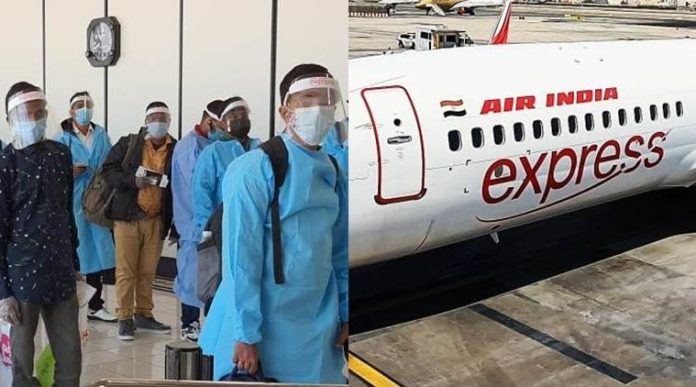
Vande Bharat: AI Express flight leaves for Hyd from Bahrain with 169 passengers

(Pic courtesy @IndiaInBahrain)

New Delhi (NVI): Under the air bubble arrangement between India and Bahrain, an Air India Express flight today left for Hyderabad from Bahrain International Airport with 169 passengers on board.

“Air India Express Flight IX 1974 from Bahrain to Hyderabad via Vijayawada departed today from Bahrain International Airport with 169 passengers onboard. Wishing safe journey to all the passengers,” the Indian embassy in Bahrain tweeted.

India has made air bubble arrangements with at least 13 countries including the US, UK, France, Germany, Canada, the Maldives, UAE, Qatar, Bahrain, Nigeria, Iraq, Afghanistan and Japan.

Air India/Air India Express and Gulf Air are now permitted to operate services between India and Bahrain under the arrangement.

Bubble arrangements between countries are different from repatriation flights, which are only one way and the passengers have to register themselves with the embassy to board such flights.

-ARK

Agriculture emerges as 2nd largest contributor to India’s GDP: ASSOCHAM

Representational Image

New Delhi (NVI): Agriculture, along with forestry and fishing sectors, has emerged as the second-largest contributor in the country’s GDP, well above Manufacturing and other key sectors, which have suffered severe setbacks from the pandemic, according to an ASSOCHAM report.

Agriculture, forestry and fishing’ (AFF)’s contribution to India’s GDP, refined as Gross Value Add in the segregated set of data, has gone up sharply to almost 18 per cent in the first quarter of 2020-21 from about 13 per cent during April-June quarter of the previous fiscal, as per the report.

The manufacturing remained around 13 per cent in its contribution to the GVA. While other sectors are catching up fast in the subsequent qurters, the AFF remains the second largest contributor to GDP/GVA, as of now (latest data available). Last fiscal, manufacturing was way ahead of agriculture, says the ASSOCHAM analysis.

The AFF was at the fourth position in terms of its contribution to GVA in Q1 period of 2019-20 at Rs 4.39 lakh crore, behind manufacturing at Rs 5.78 lakh crore.

As per the broad categories contributing to GVA, the ‘Financial, Real Estate and Professional Services’ fall into a single group, remaining the top most claimant to India’s economic value addition. However, its aggregate value too went down to Rs7.60 lakh crore in the Q1 of the current fiscal from Rs 8.03 lakh crore in the comparable period of 2019-20; though its overall share to GVA went up to 29.78 per cent from 24 per cent.

Since all other sectors came under a severe impact of the Covid-19, the ‘Agriculture, forestry and fishing’ (AFF) was the only sector which could show a positive annualised growth of 3.4 per cent, contributing as much as Rs 4.54 lakh crore during first quarter of the current financial year as per the Ministry of Statistics and Programme Implementation (MOSPI) data. The manufacturing added Rs 3.51 lakh crore in the first quarter of 2020-21.

India’s total GVA was estimated at Rs 25.53 lakh crore at constant prices, after adjusting the inflationary impact in the April-June quarter of 2020-21. It was at Rs 33.07 lakh crore in the same quarter of the previous fiscal.

“All credit to our farmers for ensuring food security during one of the most difficult times in the modern history of mankind. They deserved Prime Minister Mr Narendra Modi’s applaud who did it in an eloquent manner, when he stated that: when the world is battling coronavirus, Indian farmers have broken last year’s production record,” ASSOCHAM Secretary General Deepak Sood said.

Sood said the importance of food security can be gauged from the citation of the Nobel Peace Prize-2020 given to the UN’s World Food Programme. It read as follows: ”With this year’s award, the Norwegian Nobel Committee wishes to turn the eyes of the world towards the millions of people who suffer from or face the threat of hunger.”

Against such a challenging global situation, India’s farm sector has achieved a remarkable performance, giving a huge value-add opportunity to the processors and agri exports. The latest figures make it evident.  For September,2020, rice exports have jumped up year-on-year by a whopping 94 per cent to USD 725 million; cereals by 337 per cent to USD 56 million; oilseeds by 36 per cent to USD 69 million.

“These export figures point towards continuation of a stellar performance of the agri sector; though other sectors too are catching up fast subsequent to almost complete unlocking of the economy,” the ASSOCHAM analysis noted.

In the GVA basket, ‘Trade, hotels, transport, communication’ are generally the second most important contributors. But with complete shutdown of the hotels, this sector has witnessed erosion of half of its contribution at Rs 3.34 lakh crore in the Q1 of the current fiscal from Rs 6.30 lakh crore. In fact, all but agriculture saw a let-down.

While further catch-up is expected, the rural landscape should continue as a bright spot of the Indian economy. The food processing industry is having a significant potential to drive future growth.

-ARK

Some mouthwashes, oral rinses may inactivate human coronaviruses: Study

Representational image

New Delhi (NVI): In the fight against the coronavirus, certain oral antiseptics and mouthwashes may have the ability to inactivate human coronaviruses, according to a recent study.

The study carried out by the Penn State College of Medicine, published in the Journal of Medical Virology indicated that some of these products might be useful for reducing the viral load, or amount of virus, in the mouth after infection.

This may also help to reduce the spread of SARS-CoV-2, the coronavirus that causes COVID-19.

The researchers tested several oral and nasopharyngeal rinses in a laboratory setting for their ability to inactivate human coronaviruses, which are similar in structure to SARS-CoV-2.

The products evaluated include a 1 per solution of baby shampoo, a neti pot, peroxide sore-mouth cleansers and mouthwashes, as per the study.

During the study, the researchers found that several of the nasal and oral rinses had a strong ability to neutralize human coronavirus, which suggests that these products may have the potential to reduce the amount of virus spread by people who are COVID-19 positive.

Craig Meyers, a professor at Penn State College of Medicine, “While we wait for a vaccine to be developed, methods to reduce transmission are needed. The products we tested are readily available and often already part of people’s daily routines.”

The researchers team used a test to replicate the interaction of the virus in the nasal and oral cavities with the rinses and mouthwashes.

They treated solutions containing a strain of human coronavirus, which served as a readily available and genetically similar alternative for SARS-CoV-2, with the baby shampoo solutions, various peroxide antiseptic rinses and various brands of mouthwash.

The researchers also allowed the solutions to interact with the virus for 30 seconds, one minute and two minutes, before diluting the solutions to prevent further virus inactivation.

Meyers also said the outer envelopes of the human coronavirus tested and SARS-CoV-2 are genetically similar so the research team hypothesizes that a similar amount of SARS-CoV-2 may be inactivated upon exposure to the solution.

To measure how much virus was inactivated, the researchers placed the diluted solutions in contact with cultured human cells. They counted how many cells remained alive after a few days of exposure to the solution and used that number to calculate the amount of human coronavirus that was inactivated as a result of exposure to the mouthwash or oral rinse that was tested, the study noted.

Moreover, the 1 per cent baby shampoo solution, which is often used by head and neck doctors to rinse the sinuses, inactivated greater than 99.9 per cent of human coronavirus after a two-minute contact time. Several of the mouthwash and gargle products also were effective at inactivating the infectious virus.

Many inactivated greater than 99.9 per cent of virus after only 30 seconds of contact time and some inactivated 99.99 per cent of the virus after 30 seconds, the researchers said.

According to Meyers, the results with mouthwashes are promising and add to the findings of a study showing that certain types of oral rinses could inactivate SARS-CoV-2 in similar experimental conditions.

He further said the next step to expand upon these results is to design and conduct clinical trials that evaluate whether products like mouthwashes can effectively reduce viral load in COVID-19 positive patients.

Meyers also noted, “People who test positive for COVID-19 and return home to quarantine may possibly transmit the virus to those they live with.”

“Certain professions including dentists and other health care workers are at a constant risk of exposure. Clinical trials are needed to determine if these products can reduce the amount of virus COVID-positive patients or those with high-risk occupations may spread while talking, coughing or sneezing. Even if the use of these solutions could reduce transmission by 50 per cent, it would have a major impact, he said.

-RJV

J&K: Three LeT terrorists killed in Pulwama encounter, Ops over

Representational Image

Abid Bashir

Srinagar (NVI): Three Lashkar-e-Taiba terrorists were killed in an encounter with security forces in Harkipora area of Kakapora in south Kashmir’s Pulwama district today, police officials said.

Inspector General of Police (IGP), Kashmir, Vijay Kumar said that all the slain militants belonged to the LeT terror outfit.

“#PulwamaEncounterUpdate: 01 more unidentified #terrorist killed (total 03). Search going on. Further details shall follow,” the Kashmir one police said in a tweet.

Earlier, the police said joint teams of security forces including the Police, Army’s 50 RR and CRPF launched a cordon and search operation in Harkipora area of Kakapora in Pulwama on the basis of a specific lead.

“When the security forces zeroed in on the suspected spot, the hiding terrorists opened fire, triggering an encounter,” a police official said.

In the initial exchange of fire, one terrorist was killed while the other two were killed later.

This is the second encounter in the past 24 hours in south Kashmir. In the encounter that raged in Shopian district of south Kashmir yesterday, two terrorists were gunned down with the killing of a second terrorist today.

This year so far, 187 terrorists have been killed in various anti-militancy operations which includes top commanders of Hizbul Mujahideen, Lashkar-e-Toiba and Jaish-e-Muhammad outfit.

-CHK/ARK

Telangana postpones exams till Dasara

Noida
File photo

New Delhi (NVI): Telangana government has postponed all the college and school examinations till Dasara following India Meteorological Department’s (IMD) prediction for heavy rainfall till October 22.

The announcement was made by Telangana Education Minister, Sabitha Indra Reddy, on twitter.

“All the examinations have been postponed till Dasara. @TelanganaCMO, @KTRTRS,” she tweeted.

The move is set to give relief to more than 5 lakh students across the state.

Meanwhile, the capital of Telangana state, Hyderabad, was hit by heavy rains this afternoon.

-CHK

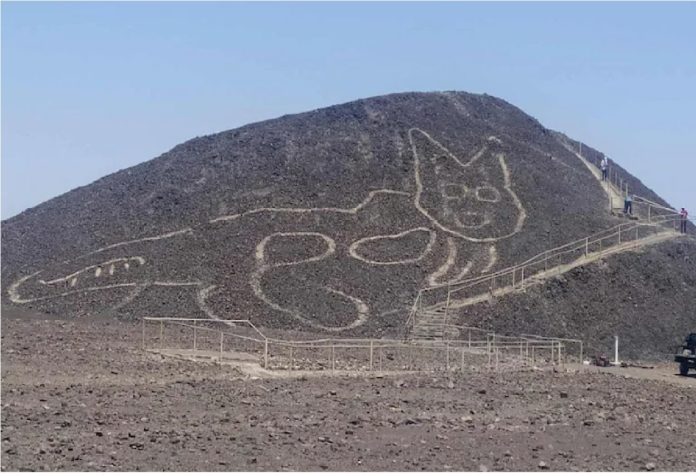
Huge 2,000-year-old cat found etched into desert hillside in Peru

The feline figure, seen on a hillside in Nazca, Peru.

New Delhi (NVI): Peruvian archaeologists have uncovered an enormous cat etched into a hillside in the desert of the famed Nazca Lines.

According to Peru’s Ministry of Culture, the cat was carved on a desert hillside over 2,000 years ago and measures approximately 37 metres (121 feet).

The ancient geoglyph (large design or motif produced on the ground by clastic rocks) forms part of the Nazca Lines, which are a collection of hundreds of mysterious artworks, including that of a hummingbird, a monkey, a spider and a human, etched onto a plateau 250 miles south of Lima.

The discovery of the cat figure was made during the maintenance work which was being done to improve access to one of the hills that provides visitor’s a vantage point from which many of the designs can be seen.

The figure is made up of a long body, striped tail and head with distinctive pointed ears.

A ministry press release said, “The figure was barely visible and was about to disappear as a result of its location on a fairly steep slope and the effects of natural erosion.” However, after undertaking cleaning and conservation work, archaeologists were able to uncover a series of lines varying in width from 30 to 40 centimeters.

The ministry also added that the style of the geoglyph suggests that it was created between 200 BC to 100 BC, in the late Paracas period. “Representations of this type of feline are frequently found in the iconography of ceramics and textiles in the Paracas society,” the statement added.

A UNESCO world heritage site since 1994, the Nazca Lines are drawn in geometric patterns and distinct animal shape. About 80 to 100 new figures emerged over recent years in the Nazca and Palpa valleys, all of which predated the Nazca culture (AD200-700).

The area has been closed to tourists since March because of the coronavirus pandemic but is due to reopen on November 10.

-CHK

J&K: High-level committee to work out roadmap, schedule for DDC elections

Abid Bashir

Srinagar (NVI): Jammu and Kashmir administration today constituted a high-level committee to draw a roadmap and detailed schedule for holding the first-ever District Development Council (DDC) polls in the Union Territory.

DDC polls will be held for the first time in J&K UT after 1947 and the process will complete the three-tier Panchayati Raj system in the UT. Elections for Panchayats and Blocks Development Councils (BDCs) have already been held.

According to an order issued by General Administration Department (GAD), the panel headed by Principal Secretary Home shall comprise of Director General of Police, Additional Director General of Police (CID), Administrative Secretary. Rural Development and Panchayat, Divisional Commissioners, representative of Transport Department and any other member co-opted by the panel.

“The panel shall draw its roadmap on the basis of two divisional level committees and taking into consideration various requirements including security, logistics, personnel, equipment, etc,” read an official order.

Pertinently, the Central government has amended Jammu and Kashmir Panchayati Raj Act-1989 for establishing elected District Development Councils in J&K. J&K LG Manoj Sinha recently said that governance will be taken to the doorsteps of the people of J&K and for that, DDC elections are a must.

In many districts, concerned Deputy Commissioners have already sought feedback from the ground level officers by October 25 for completing formalities regarding DDC Polls.

-ARK

Gadkari lays foundation stone of India’s first multimodal logistics park in Assam

Nitin Gadkari

New Delhi (NVI): Union Transport Minister Nitin Gadkari today laid the foundation stone for India’s first multi-modal logistic park at Jogighopa in Assam.

The multi-modal logistics park will be constructed with a cost of Rs 694 crore and it will provide direct connectivity to air, road, rail and waterways to the people. It will be developed under the ambitious Bharatmala Pariyojana of the government. the Ministry of Road Transport & Highways said in a statement.

Speaking at the virtual event, Nitin Gadkari said that his ministry envisages developing 35 multi-modal logistic parks (MMLPs) in the country, of which work on preparing DPR and feasibility report is underway.

He said, SPVs will be formed for all these MMLPs, and professionally qualified CEOs will be appointed for each separately. The first such MMLP is being made by NHIDCL in Jogighopa of Assam, which will be connected to road, rail, air and waterways. This is being developed in 317-acre land along the Brahmaputra.

Gadkari also informed that the first phase of construction is scheduled to be completed by 2023, which is worth Rs 280 crore and have already been awarded, including Rs 171 crore for road construction, Rs 87 crore for erecting the structure, and Rs 23 crore for rail lines.

The minister also expressed hope that this project will provide direct or indirect employment to nearly 20 lakh youth in the state.

Gadkari further added that the MMLPs will have all the facilities like, warehouse, railway siding, cold storage, custom clearance house, yard facility, workshops, petrol pumps, truck parking, administrative building, boarding lodging, eating joints, water treatment plant, etc.

The Minister also informed that the initial report and master plan is ready for the 346 acre MMLP with JNPT in Wardha Dry port area of Nagpur.

A feasibility report is being prepared for the Bangalore MMLP, Sangrur warehouse complex in Punjab, Surat, Mumbai, Indore, Patna, Hyderabad, Vijayawada, and Coimbatore. DPR is being made for MMLP near Chennai port, and studies have begun for MMLP in Pune and Ludhiana.

Other 22 MMLPs are proposed in Ahmedabad, Rajkot, Kandla, Vadodara, Ludhiana, Amritsar, Jullundur, Bhatinda, Hissar, Ambala, Kota, Jaipur, Jagatsinghpur, Sundarnagar. Delhi, Kolkata, Pune, Nashik, Panaji, Bhopal, Raipur, and Jammu, he said.

During the event, Union Minister Jitendra Singh lauded Gadkari and said his innovation and mega projects that the North East has emerged as a model of development in the country.

The virtual event was presided over by the Chief Minister Sarbananda Sonowal, and was attended by Union Ministers of State Jitendra Singh, Gen (Retd) V K Singh and Rameshwar Teli, Ministers from the Assam State, Members of Parliaments, MLAs and senior officers from the Centre and the State.

-RJV

Genocide is China’s main policy: Top Uyghur leader

(COLUMN by Ghulam O Yaghma, President of East Turkistan Government in Exile)

Uyghurs in East Turkistan and the Chinese government have always had a relationship of colonialism and anti-colonialism. East Turkistan, a historically independent nation, was first conquered by the Qing Empire in 1759. However, this was not colonialization in the usual sense, but one characterized by colonial governance from inside military garrisons.

For the Qing colonial army was not fully confident in colonial governance for fear of massive threats as it was sporadically subject to local resistance movements. During this time, the Qing colonialism inside garrisons was overthrown by local people many times, until it was replaced by the Government of Yettishar in East Turkistan in 1865, otherwise called Kashgaria, under the leadership of Yakub Beg.

After 14 years of Kashgaria rule, in 1879, East Turkistan was once again attacked and reoccupied by the Qing Empire and turned into a new province called Xinjiang, translating to “A New Frontier”. The Qing Empire was defeated in 1911, and the Republic of China was established. In Sun Yatsen’s nation-building guidance, Uyghur’s were not a part of the five key nationalities of the new republic because they did not consider East Turkistan as part of it.

After Sun Yatsen, Chinese militarists, in a bid to politically inherit what was left after the Qing Empire, governed East Turkistan, with strategic support from the former Soviet Union and the Kuomintang Party which was interrupted twice with the establishment of two East Turkistan Republics in 1933 and 1944, respectively. Up until the annexation of East Turkistan by the People’s Liberation Army in 1949, the Chinese governance of East Turkistan had been largely symbolic with no significant colonial confidence and competence.

Neither the Qing Empire nor Chinese militarist governments in East Turkistan were able to facilitate a significant influx of Han Chinese from China into East Turkistan. According to a report from Amnesty International, the population of Han Chinese in East Turkistan prior to its annexation by the Chinese Communist armies in 1949 only comprised 2% of its total population. This 2% was mainly government officials, army personnel, police officers and their families. There were no Chinese farmers or shepherds who settled in East Turkistan at that point in time.

There has been a pattern in China’s further suppression of Uyghurs after every occasion of colonialism was successful, China has carried out two types of genocide against the people of East Turkistan in order to prevent them from building up resistance movements. These were the genocide against the people of East Turkistan with the deliberate aim of reducing their numbers and the genocide of intellectuals and prominent public figures, including descendants of aristocratic and royal families who had the potential to organize and lead locals in resistance movements because of their ancestral legitimacy.

It was reported that after the second colonialization of East Turkistan in 1878, every Uyghur family in East Turkistan lost at least one male member and large families lost up to three male members to systematic genocide aiming to prevent population growth and to instill deep fear in their minds. Aside from the high number of deaths caused by wars between the local people of East Turkistan and colonial forces, genocide was used as a deliberate policy to achieve these goals. This genocidal policy specifically targeted intellectuals, businesspeople, and heads of Uyghur cities and villages.

The Communist regime in East Turkistan is not a stranger to the oppressive and genocidal policies of the regimes that came before it, they continue to implement the same policies in addition to assisting and encouraging the settlement of Han Chinese in East Turkistan. This deliberate and state-sponsored policy has brought about a massive change in the demographic structure of East Turkistan.

In the long term, China has aimed to increase the population of Han Chinese while decreasing the population of Uyghurs in the region, turning the Uyghurs into a minority in their own homeland. This has been perpetrated historically in the name of fighting against local nationalism in the 1950s, against revisionists and bourgeoisies during the Cultural Revolution, against separatists in 1980s and 1990s. Most recently since 9/11, the oppression and genocide have been branded as the fight against terrorism.

The elimination of Uyghurs had been a long-term policy and a progressive process for the Chinese regime. However, it became a more pressing issue as the political and economic necessity to expand into the Central Asia as part of its historical ambition to rule the whole world grew. To start expanding into Central Asia, the CCP had to eliminate any internal factors that could jeopardize its plans which meant permanently eliminating East Turkistan as a potential risk by implementing radical policies to assimilate or eliminate the Uyghur population.

These radical policies started with the gradual elimination of the Uyghur language at all levels of education in 2000. The next level of elimination was physical elimination through various methods such as deliberately spreading life-threatening drugs or incurable diseases among the Uyghur population. Furthermore, China has implemented policies to prevent Uyghurs from having kids and have even transferred Uyghur girls to inner China under the pretext of employment opportunities.

The Chinese government has perpetrated and staged terrorist attacks to blame and arrest innocent Uyghur men only to torture and kill them inside prisons. These suppressive policies continued until 2017 when Chinese authorities established a network of Nazi-style concentration camps where murder, deliberate retardation of intelligence, organ harvesting, and brainwashing are a norm. This tore families apart and left children orphaned, who were then indoctrinated and Sinicized in boarding schools, orphanages, and other institutions.

Several genocide survivors, who fled to Kazakhstan as Kazakh citizens, revealed that these camps are crueler and more inhumane than Nazi concentration camps. There were also reports of food given in prisons and concentration camps containing mysterious chemicals that cause mental retardation in those who consume it. These chemicals turn people into zombie-like creatures that are nothing more than slaves.

It is difficult to guess the levels of oppression that the people of East Turkistan face today because we live in an era where, in the West aside from the discussion of human rights even the issue of animal rights is a topic of debate in parliaments. We live in a world where the atrocities of Nazis against the Jewish people during WWII are displayed in Holocaust museums to warn humanity not to repeat the same mistake ever again. Amid our collective memory of the Holocaust, genocide against Uyghurs is being carried out before our very eyes.

Previously, people could absolve themselves of their responsibility to stop the Holocaust by saying that they did not know that it was happening. However, the Uyghur genocide is different—nobody could consciously say that they do not know what tragedy is befalling the Uyghurs in East Turkistan. Elders, youth, and kids, none of them are spared from China’s cruelty.

We can anticipate that if the free world watches the tragedy befalling Uyghurs, Kazakhs, and others in East Turkistan, the same tragedy can very well befall others because China’s ambition for world dominance is built right into their DNA. For China, there is no difference between Uyghurs and non-Uyghurs—whoever stands in its way of global dominance will be eliminated. If you are silent about this genocide today, there will nobody left to defend you tomorrow.

It is still difficult to convince many people in the West of what is truly happening in East Turkistan. China is more authoritarian than many other dictatorships, and the oppression mechanism it utilizes has uniquely been successful to indoctrinate its people to take suffering as pleasure. Moreover, it is a perfectly insular state that no foreign journalists can penetrate its inner circles. Therefore, any crime that China commits, big or small, is hidden from the world.

As Chinese people are ruled by the internalization of fear, it is hard to expect them to tell the truth to the outside world, even if they are completely alone. In the case of Uyghurs, each house is closely monitored which instills fear in the people and forces them watch every little thing they say even around their family members.

This unprecedented repression mechanism is created by a dystopian regime that humanity has never heard of or seen before to the point that it is impossible to convince someone that a regime like this exists today. An intellectual once said “if you are going to oppress others, then oppress them in such an excessive way that the victim is unable to make others believe in their suffering.” This is exactly what Chinese authorities are doing to Uyghurs in East Turkistan.

The world must not be silent over the unspeakable tragedies that Uyghurs are facing in East Turkistan. To recognize that East Turkistan is a nation occupied by China is the first crucial step to stop China from continuing to perpetrate this genocide. The issue of East Turkistan is not just an internal affair within China nor will it ever be. We will not stand by and watch this genocide take place in the modern era.

The perpetrators must be severely punished, and justice must be served. Only then can we brag about the strides we have made in universal human rights. When you fight for the rights of animals who are protected by legislation, please do not forget about the people of East Turkistan who have less rights than those animals.

Over 50% workers worldwide fear losing their jobs amid COVID-19 crisis

Representational image

New Delhi (NVI): More than half of the working adults worldwide fear losing their jobs in the next 12 months, according to a survey measuring labor market insecurity inflicted by the COVID-19 crisis.

The new Ipsos survey, conducted on behalf of the World Economic Forum, shows that these workers are outnumbered by those who think their employers will help them retrain on the current job for the jobs of the future (67 per cent).

The survey of 12,000 employed adults from 27 countries finds that of the 54 per cent who are concerned, 17 per cent are “very concerned” and 37 per cent “somewhat concerned” about losing their job.

The size of the gap between optimism about reskilling and pessimism about job losses depends on where you live, the WEF said in a statement.

The COVID-19 crisis has accelerated trends towards automation and the use of artificial intelligence. Jobs will certainly go – but new ones that require different skills are emerging, the statement added.

Similarly, governments are considering the longer-term labour market implications of maintaining, withdrawing or partly continuing the strong crisis support they are providing to businesses to cover wages and maintain jobs.

Moreover, the prevalence job-loss concern in the next year ranges from 75 per cent in Russia, 73 per cent in Spain, and 71 per cent in Malaysia, to just 26 per cent in Germany, 30 per cent in Sweden, and 36 per cent in the Netherlands and the United States.

The Ipsos survey also finds that two thirds of employed adults say they can learn and develop skills needed for the jobs of the future through their current employer: 23 per cent are “very much able” to do so, and 44 per cent “somewhat able”.

Across the 27 countries, the perceived ability to learn and develop those skills on the job is most widespread in Spain (86 per ), Peru (84 per cent), and Mexico (83 per cent) and least common in Japan (45 per cent), Sweden (46 per cent), and Russia (48 per cent).

The countries where those who can gain new skills on the job outnumber those who are concerned about losing their job by the largest margins are the United States and Germany (by 40 percentage points).

However, in reverse, job loss concern is more prevalent than perceived ability to acquire skills in Russia (by 28 points) and, to a lesser extent in Malaysia, Poland, Japan, Turkey, and South Korea.

“Rather than narrowly focusing on short-term savings from layoffs or automation, therefore, businesses that invest in human capital will find that there is a compelling financial and nonfinancial business case to reskill at-risk workers,” the WEF said.

Earlier, a report by the World Economic Forum suggests that human capital is a crucial asset of any business.

It highlighted how in an age of ubiquitous technology, it is human skills, creativity and capability that will form the competitive edge for any organization. Financing and implementing a “reskilling revolution” is a critical investment for business, workers and economies alike.

-RJV

MUST READ