Thursday, September 10, 2026
Home Blog Page 1084

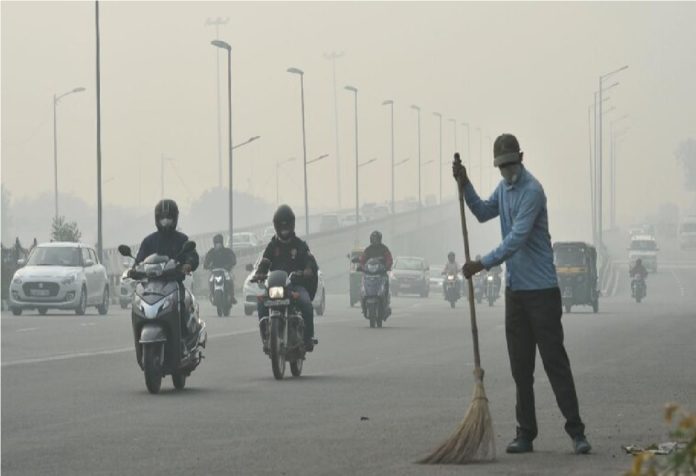
DPCC bans diesel generators in Delhi from Oct 15 to curb air pollution

New Delhi (NVI): In a bid to curb air pollution in the national capital, the Delhi Pollution Control Committee (DPCC) today issued directions to ban the use of diesel generators in the city from tomorrow.

The air quality in Delhi-NCR has been dipping due to the onset of the winter and stubble burning by farmers in the neighbouring states.

“DPCC hereby bans the operation of generator sets of all capacities, run on diesel, petrol or kerosene in Delhi with effect from October 15 till further orders, excluding those used for essential or emergency services,” an official order read.

On Wednesday, Delhi recorded an air quality index (AQI) of 274 at 10:30 am. The 24-hour average AQI was 300 on Tuesday. The AQI had hit “very poor” levels on Tuesday morning and stood at 306 at 11 am, which was the worst since February.

Under the Graded Response Action Plan (GRAP), DPCC has banned the use of generator sets of all capacities, run on diesel, petrol or kerosene in Delhi, excluding those used for essential or emergency services.

Essential services include healthcare facilities, elevators, railway services, Delhi Metro, airports and interstate bus terminals and the data centre run by the National Informatics Centre.

GRAP is a set of anti-pollution measures that come into force in Delhi and its vicinity towns according to the severity of the situation.

-CHK

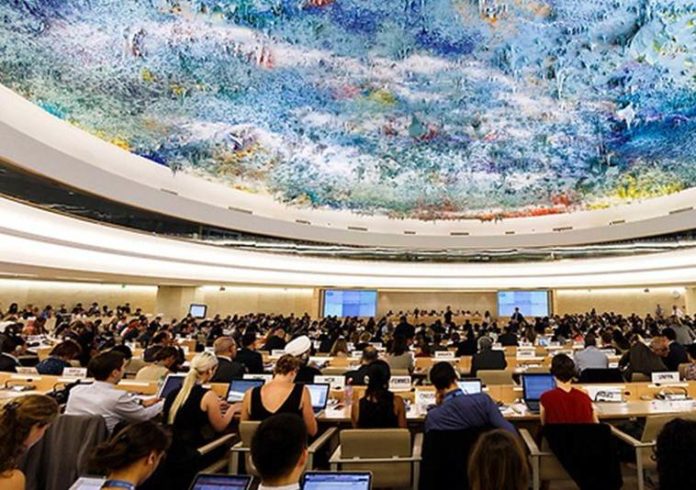
China, Pak elected to UNHRC despite their abysmal human rights record

New Delhi (NVI): China and Pakistan have been elected into UN Human Rights Council (UNHRC) despite their abysmal human rights record and protests by several activist groups, who have condemned the UN body for electing such authoritarian regimes.

Both China and Pakistan were elected to UNHRC during the ongoing 75th General Assembly Session at the UN headquarters in New York.

While China managed to win despite its treatment of the Uighur Muslim minority, Pakistan also made it to the UN body despite its gross human rights violations in Gilgit Baltistan and Balochistan regions where it is oppressing minority communities for raising their voices.

However, China has witnessed reduced support at the UNHRC this time as it received only 139 votes out of the total number of 191 valid votes cast by the member states. 52 member states did not vote for China. In 2009 China had received 167 votes, in 2013 it had received 176 and in 2016 it had received the highest 180 votes.

This reflects the decreasing support for China by the member states in the wake of atrocities committed by Beijing on the minority Uighur Muslim population.

At the UNHRC elections, seats are allocated to regions to ensure geographical representation.

Ironically, Pakistan has managed to receive a maximum of 169 votes at the UNHRC, even as several reports by Human Rights Watch (HRW) and activists have shown the dark side of Islamabad when it comes to the treatment of the minority population in the region. Pakistan has been re-elected to the group and has been elected six times since the formation of the UN body in 2006.

The other contenders: Uzbekistan received 164 votes, Nepal 150 and Saudi Arabia just 90 votes.

China has been elected to the Council for four previous terms: 2007-09, 2010-12, 2014-16 and 2017-19. In 2009 China had received 167 votes, in 2013 it had received 176 and in 2016 it had received the highest 180 votes.

Apart from Uighur Muslims, China has also oppressed Tibet for years now. Beijing has almost turned the Tibet region into a surveillance state.

After China’s election into UNHRC, Dr. Lobsang Sangay remarked, President of the Central Tibetan Administration said, “China’s election to the Council casts an indelible stain on the credibility of the UN Human Rights Council. There is mounting evidence of China’s egregious human rights violations in Tibet, East Turkestan (CHN: Xinjiang), Hong Kong, Souther Mongolia (CHN: Inner Mongolia) and other regions under China. The human rights violations in Tibet have gone from bad to worse with reports of over half a million Tibetans subjected to forced labour camps in Tibet.”

Sangay said that it is unfortunate that China has been elected to one of the most important UN bodies tasked with the protection of human rights. “This undermines the integrity of the Council. However, we should also acknowledge the fact that 41 countries who had voted in favour of China in 2016 have changed their votes and this clearly shows that China’s power is on the decline. More countries should join hands towards making the world a safer place for Tibetans, Uyghurs, Hongkongers and other vulnerable communities suffering under the Chinese Communist Party regime,” he added.

Total 15 countries, that have been elected to UNHRC for three-year terms starting January 1, 2021 are Côte d’Ivoire, Gabon, Malawi, Senegal, China, Nepal, Pakistan, Uzbekistan, Russia, Ukraine, Bolivia, Cuba, Mexico, France and the United Kingdom.

The UN Human Rights Council has 47 member states elected to a term of three years. However, after two consecutive terms at the Council, a member state is not eligible for immediate re-election.

The membership of the Council is distributed on equitable geographical distribution and the seats are allocated as follows: Group of African States (13); Group of Asia-Pacific States (13); Group of Eastern European States (6); Group of Latin American and the Caribbean States (8) and Group of Western European and other States (7).

-ARK

Depression over Telangana moves to north interior Karnataka, Maharashtra: IMD

Representational image

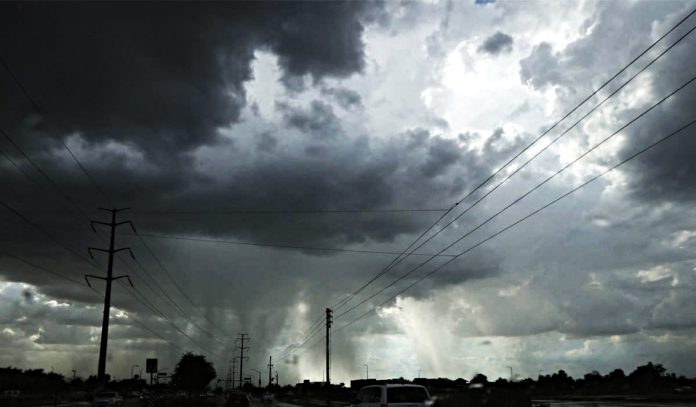
New Delhi (NVI): The depression over Telangana has moved further west-northwestwards and now lies over north interior Karnataka and the adjoining area of Maharashtra, the India Meteorological Department (IMD) said.

According to the Cyclone Warning Division, IMD, the system is expected to move west-northwestwards and weaken into a well marked low pressure area during next 24 hours.

“But it will eventually immerse into eastern parts of Arabian Sea off Maharashtra coast around morning of October 16,” it added.

The Met department also said, there is also possibility of its further intensification into a depression over east central and adjoining northeast Arabian Sea off Maharashtra – south Gujarat coasts and gradual west-northwestward movement.

Under its influence, extremely heavy rainfall (more than 20 cm per day) at isolated places would occur over Madhya Maharashtra, south Konkan and Goa, coastal Karnataka, Ghat section of south interior Karnataka and adjoining Districts of north interior Karnataka during next 24 hours, IMD said.

Moreover, squally wind speed reaching 40-50 kmph gusting to 60 kmph very likely to commence along and off Maharashtra and south Gujarat coasts from October 15 and would gradually increase thereafter to 65 kmph. Therefore, fishermen are advised not to venture into the sea.

The sea condition will also be rough to very rough over east central and adjoining northeast Arabian Sea and along & off Maharashtra & Gujarat coasts from October 16, the IMD added.

-RJV

NTPC collaborates with cement manufacturers across country to supply fly ash

New Delhi (NVI): State-run power giant NTPC, India’s largest power producer and a PSU under Ministry of Power, has started to collaborate with cement manufacturers across the country to supply fly ash as part of its endeavour to achieve 100 per cent utilisation of the by-product.

Fly ash is a byproduct produced from burning pulverized coal in electric power generating plants.

Presently, about 73 per cent of total ash is being utilized for production of cement and fly ash bricks, road embankment construction, mine filling and low-lying land development.

The power producer is leveraging Indian Railways’ sprawling network to transport fly ash in an economical and environment friendly manner.

Power Ministry said, NTPC Rihand is the first power plant in Uttar Pradesh to send conditioned fly ash to cement manufacturers.

The plant recently transported 3,834 Metric Tonnes (MT) of conditioned fly ash to Dalmia Cement (Bharat) Limited plant at Nagaon, Assam.

During the financial year 2019-20, almost 44.33 Million Tonnes of fly ash was utilized for various productive purposes. NTPC produces approximately 65 Million Tonnes of Ash annually, out of which 80 per cent is Fly Ash.

-CHK

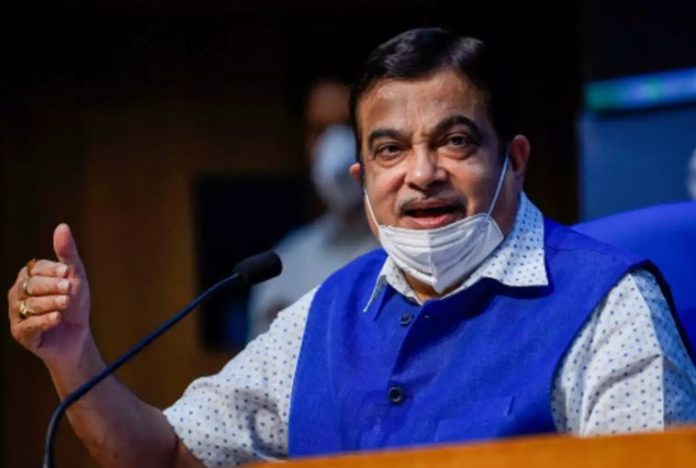
Gadkari to initiate first blasting at Zozila Tunnel in J&K tmrw

Gadkari
Nitin Gadkari

New Delhi (NVI): Union Transport Minister Nitin Gadkari will initiate the first blasting for Zozila Tunnel in Jammu and Kashmir tomorrow.

The 14.15 Km long tunnel will provide all-weather connectivity between Srinagar valley and Leh through Dras & Kargil on NH-1, and will bring about an all-round economic and socio-cultural integration of Jammu & Kashmir, the Ministry of Road Transport & Highways said in a statement.

Notably, it is one of the most dangerous stretch in the world to drive a vehicle and this project is also geo-strategically sensitive, it added.

The project was first conceived earlier in 2005 and its Detailed Project Report (DPR) was prepared by Border Roads Organisation (BRO) in year 2013 on BOT (Annuity) mode. It eventually given to NHIDCL in July 2016 for implementation on EPC mode. Its work was awarded to M/s. ITNL (IL&FS), the ministry said.

Prime Minister Narendra Modi laid foundation stone at Leh and commenced the work on May 15, 2018. The work progressed up to July last year, and thereafter IL&FS went into financial problems and the project was stuck. Hence, the contract was terminated in January last year, it added.

Earlier in February this year, Nitin Gadkari, reviewed this whole project in detail, to reduce the cost and to execute the languishing project on priority, referred the matter to an expert group under the Chairmanship of IK Pandey, DG (RD) & SS, MoRTH.

In addition to this, the expert group suggested modalities of project configuration and implementation, to achieve project completion in least possible time and cost. After due consultation with experts and other stakeholders, the group submitted its report on May 17, which was approved by the Minister, RTH on May 23. However, the total capital cost of the project would be Rs 6,808.63 crore.

The statement further stated that the tunnel in Zozila is the only viable alternative at present for a full year connectivity road. This tunnel when completed will be a landmark achievement in the history of modern India.

It will also be of great importance to the Defence of the country, in view of the fact that massive military activities along our borders in Ladakh, Gilgit and Baltistan regions are taking place, it added.

Furthermore, the tunnel project shall bring to fruition, 30 years of overwhelming public demand of Kargil, Drass and Ladakh region and will also make the travel on Srinagar-Kargil-Leh Section of NH-1 free from avalanches.

It would further enhance the safety of the travelers crossing Zozila Pass and would reduce the travel time from more than 3 hours to 15 minutes and will also generate employment to the locals in the region, the statement added.

-RJV

PM Modi to release Rs 75 coin on Oct 16

PM
Prime Minister Narendra Modi

New Delhi (NVI): On the occasion of 75th Anniversary of Food and Agriculture Organization (FAO) on October 16, Prime Minister Narendra Modi will release a commemorative coin of Rs 75 denomination to mark the long-standing relation of India with FAO.

Prime Minister will also dedicate to the Nation 17 recently developed biofortified varieties of 8 crops.

The event marks the highest priority accorded by the government to agriculture and nutrition, and is a testament of the resolve to completely eliminate hunger, undernourishment and malnutrition.

It will be witnessed by Anganwadis, Krishi Vigyan Kendras, Organic and Horticulture Missions across the country.

Union Agriculture Minister, Finance Minister and WCD Minister will also be present on the occasion.

Earlier on October 12, PM Modi released a commemorative coin of Rs 100 denomination to celebrate the birth centenary of Rajmata Vijaya Raje Scindia.

-CHK

J&K: Two terrorists killed in Shopian encounter

July 18 Shopian encounter: Army completes summary of evidence
An encounter site in Kashmir (File Pic)

Abid Bashir

Srinagar (NVI): Two unidentified terrorists have been killed in an encounter with security forces in Kangan village of Chakoora area in South Kashmir’s Shopian district, police officials said.

“02 unidentified #terrorists killed. Search going on. Further details shall follow,” Kashmir Zone Police said in a tweet.

Earlier, a security official said that a joint team of Police, Army’s 34 RR and CRPF launched a cordon and search operation on specific information about the presence of militants in the area.

He said that as the joint teams of forces approached towards the suspected spot, the hiding militants fired upon them which was retaliated, triggering an encounter.

-ARK

Half of global workforce at risk of losing livelihoods amid COVID-19: WHO

(Source: @ILO)

New Delhi (NVI): Amid to the ongoing COVID-19 pandemic, nearly half of the world’s 3.3 billion global workforce are in immediate risk of losing their livelihoods, including public health, food systems, the WHO warned.

The World Health Organisation (WHO) in a joint statement issued with Food and Agriculture Organization (FAO), the International Fund for Agricultural Development (IFAD), and the International Labour Office (ILO), said the economic and social disruption caused by the COVID-19 pandemic is devastating.

Tens of millions of people are at risk of falling into extreme poverty, while the number of undernourished people, currently estimated at nearly 690 million, could increase by up to 132 million by the end of the year, it added.

The COVID-19 pandemic has led to a dramatic loss of human life worldwide and presents an unprecedented challenge to public health, food systems and the world of work as millions of enterprises face an existential threat, the WHO said.

The statement noted, informal economy workers are particularly vulnerable because the majority lack social protection and access to quality health care and have lost access to productive assets.

“Without the means to earn an income during lockdowns, many are unable to feed themselves and their families. For most, no income means no food, or, at best, less food and less nutritious food,” it added.

The pandemic has also been affecting the entire food system and has laid bare its fragility, the UN agencies said. “Border closures, trade restrictions and confinement measures have been preventing farmers from accessing markets, including for buying inputs and selling their produce, and agricultural workers from harvesting crops, thus disrupting domestic and international food supply chains and reducing access to healthy, safe and diverse diets,” it added.

The WHO said, as breadwinners lose jobs, fall ill and die, the food security and nutrition of millions of women and men are under threat, with those in low-income countries, particularly the most marginalized populations, which include small-scale farmers and indigenous peoples, being hardest hit.

“Millions of agricultural workers – waged and self-employed – while feeding the world, regularly face high levels of working poverty, malnutrition and poor health, and suffer from a lack of safety and labour protection as well as other types of abuse.”

“With low and irregular incomes and a lack of social support, many of them are spurred to continue working, often in unsafe conditions, thus exposing themselves and their families to additional risks,” the statement added.

The agencies also highlighted that when experiencing income losses, they may resort to negative coping strategies, such as distress sale of assets, predatory loans or child labour.

“Migrant agricultural workers are particularly vulnerable, because they face risks in their transport, working and living conditions and struggle to access support measures put in place by governments.”

While guaranteeing the safety and health of all agri-food workers – from primary producers to those involved in food processing, transport and retail, including street food vendors – as well as better incomes and protection, will be critical to saving lives and protecting public health, people’s livelihoods and food security.

Furthermore, the agencies stated that in the COVID-19 crisis food security, public health, and employment and labour issues, in particular workers’ health and safety, converge.

“Adhering to workplace safety and health practices and ensuring access to decent work and the protection of labour rights in all industries will be crucial in addressing the human dimension of the crisis,” it added

The organizations called for immediate and purposeful action to save lives and livelihoods should include extending social protection towards universal health coverage and income support for those most affected. These include workers in the informal economy and in poorly protected and low-paid jobs, including youth, older workers, and migrants. Particular attention must be paid to the situation of women, who are over-represented in low-paid jobs and care roles.

It also said that different forms of support are key, including cash transfers, child allowances and healthy school meals, shelter and food relief initiatives, support for employment retention and recovery, and financial relief for businesses, including micro, small and medium-sized enterprises.

“Designing and implementing such measures it is essential that governments work closely with employers and workers,” the statement added.

-RJV

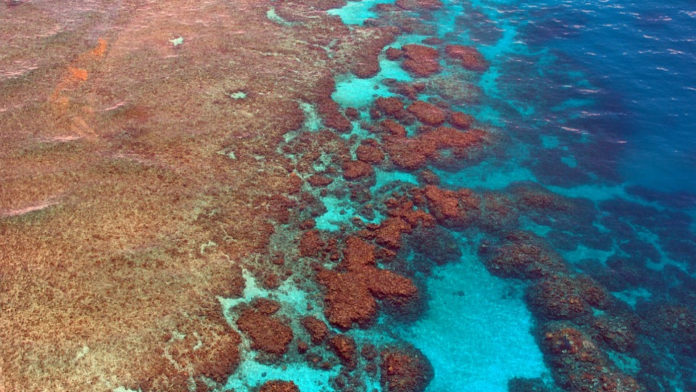
Great Barrier Reef has lost 50% of its corals since 1995

Representational image

New Delhi (NVI): The Great Barrier Reef, off the coast of Australia, has lost more than half of its corals since 1995, due to climate crisis, according to a new study.

The study, published in the journal Proceedings of the Royal Society B, found all types of corals that had suffered a decline across the world’s largest reef system.

Researchers from the ARC Centre of Excellence for Coral Reef Studies, in Queensland, northeastern Australia, assessed coral communities health and their colony size along the length of the Great Barrier Reef between 1995 and 2017.

They found populations had dropped by more than 50 per cent over the past 25 years in all coral sizes and species, but especially in branching and table-shaped corals. These are the large, structural species which usually provide habitats for fish and other marine life, the researchers said.

However, the steepest falls came after mass bleaching events in 2016 and 2017, these were the worst affected by record-breaking temperatures, while more mass bleaching occurred this year.

Professor Terry Hughes, a study co-author, said these coral types had been worst affected by the back-to-back mass bleachings which damaged two-thirds of the reef.

Bleaching occurs when corals under stress drive out the algae – known as zooxanthellae – that give them colour, while corals can recover if normal conditions return, but it can take decades, Hughes added.

Andy Dietze, the lead author said, “A vibrant coral population has millions of small, baby corals, as well as many large ones.”

“Our results show the ability of the Great Barrier Reef to recover – its resilience – is compromised compared to the past, because there are fewer babies, and fewer large breeding adults, he added.

Hughes also said that we used to think the Great Barrier Reef is protected by its sheer size – but our results show that even the world’s largest and relatively well-protected reef system is increasingly compromised and in decline.

Furthermore, the researchers said that the climate crisis is driving an increase in the frequency of reef disturbances such as marine heatwaves.

This study records steeper deteriorations of coral colonies in the Northern and Central Great Barrier Reef after the mass coral bleaching events in 2016 and 2017. And the southern part of the reef was also exposed to record-breaking temperatures in early 2020.

“There is no time to lose, we must sharply decrease greenhouse gas emissions ASAP,” the authors conclude.

Meanwhile, the global temperatures have already risen by about 1°C since pre-industrial times. The United Nations has warned that if that rise reaches 1.5°C, 90 per cent of the world’s corals will be wiped out, as per the reports.

-RJV

State-wise details of Covid-19 cases in India

Covid-19 cases
Representative image

New Delhi (NVI): The total number of coronavirus cases in India has crossed the 72 lakh-mark and stands at 72,39,390 after 63,509 fresh cases were reported in the last 24 hours, according to Union Health Ministry data.

The country’s death toll stands at 1,10,586 after 730 new fatalities were reported during the same period.

In worst-affected Maharashtra, the COVID-19 cases stands at 15,43,837, followed by Andhra Pradesh with 7,63,573 cases, and Karnataka with 7,26,106 cases.

Total positive cases in States/UTs:

Andaman and Nicobar Islands- 4,036

Andhra Pradesh- 7,63,573

Arunachal Pradesh- 12,561

Assam- 1,96,786

Bihar- 1,98,855

Chandigarh- 13,331

Chhattisgarh- 1,47,866

Dadra Nagar Haveli & Diu – 3,168

Delhi- 3,14,224

Gujarat- 1,53,761

Goa- 39,082

Haryana– 1,44,302

Himachal Pradesh- 17,762

Jammu and Kashmir- 84,708

Jharkhand- 93,736

Karnataka- 7,26,106

Kerala- 3,03,896

Ladakh- 5,238

Madhya Pradesh- 1,49,761

Maharashtra- 15,43,837

Manipur- 13,793

Meghalaya- 7,838

Mizoram- 2,212

Nagaland- 7,363

Odisha- 2,56,937

Puducherry- 32,004

Punjab- 1,25,211

Rajasthan- 1,63,219

Sikkim- 3,417

Tamil Nadu- 6,65,930

Telangana- 2,16,238

Tripura- 28,859

Uttarakhand- 55,641

Uttar Pradesh- 4,42,118

West Bengal – 3,02,020

State/UT wise total death toll:

Andaman and Nicobar Islands- 55

Andhra Pradesh- 6,291

Arunachal Pradesh- 28

Assam- 830

Bihar- 961

Chandigarh- 197

Chhattisgarh- 1,306

Dadra and Nagar Haveli- 2

Delhi- 5,854

Goa- 514

Gujarat- 3,584

Haryana- 1,601

Himachal Pradesh- 254

Jammu and Kashmir- 1,340

Jharkhand- 805

Karnataka- 10,123

Kerala- 1,046

Ladakh- 64

Madhya Pradesh- 2,671

Maharashtra- 40,701

Manipur- 97

Meghalaya- 65

Nagaland- 19

Odisha- 1,057

Puducherry- 567

Punjab- 3,894

Rajasthan- 1,679

Sikkim- 59

Tamil Nadu- 10,371

Telangana- 1,241

Tripura- 318

Uttar Pradesh- 6,466

Uttarakhand- 782

West Bengal- 5,744

However, a total of 63,01,927 people have been cured or discharged. The total active cases stands at 8,26,876 in the country.

-CHK

MUST READ