Thursday, September 10, 2026
Home Blog Page 1130

BDC chairman shot dead by suspected terrorists in J&K’s Budgam

Bomb disposal squad

Abid Bashir

Srinagar (NVI): Suspected militants shot dead an independent sarpanch and Block Development Council (BDC) Chairman from Khag area of Central Kashmir’s Budgam district this evening, police officials said.

They said that gunmen believed to be militants shot Bhupinder Singh in the head just outside his residence. “He was taken to hospital where he was declared as brought dead,” they said.

Meanwhile, police teams have rushed to the spot and further details are awaited.

BJP J&K spokesman Altaf Thakur said the slain BDC chairman wasn’t affiliated with the BJP but his killing is highly condemnable and needs to be probed at the highest level.

-ARK

Pregnant wife appeals to militant husband to return home in Kashmir

Abid Bashir

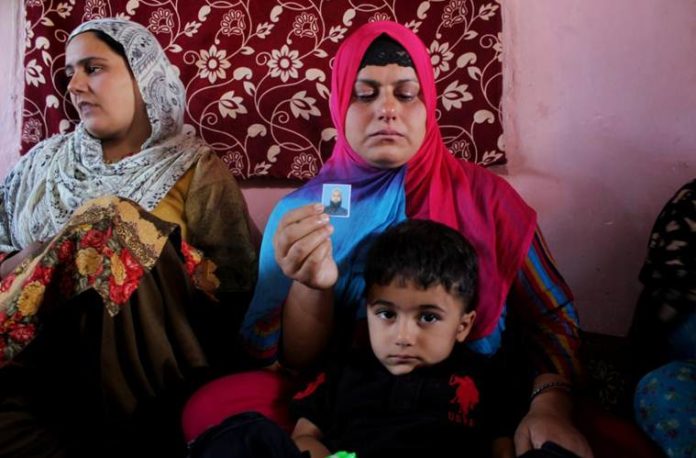
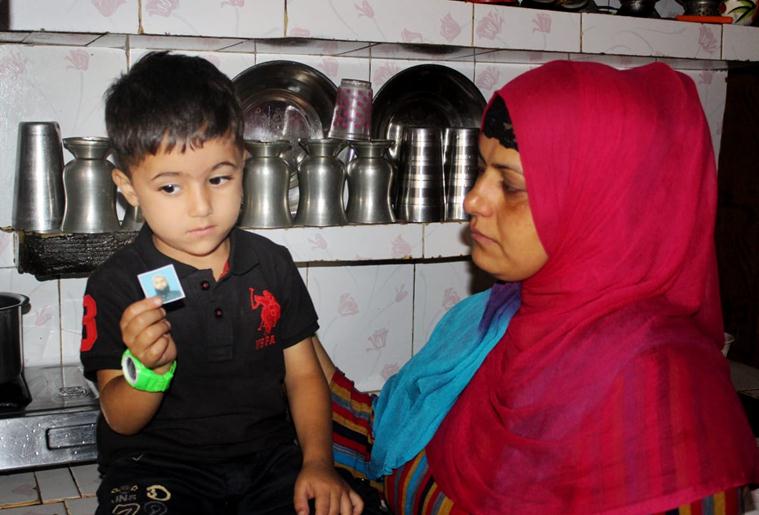
Srinagar (NVI): The family of a terrorist in Kashmir, who joined militancy recently, has appealed to him to return home while his pregnant wife has made a fervent appeal to her husband to come back for the sake of their four-year-old son.

According to an audio clip that went viral, Tariq Ahmed Bhat from Hanjigund, Chadoora area of Central Kashmir, has joined militancy, leaving behind his pregnant wife, four-year-old son and elderly parents.

“I urge all the militant organisations to allow my husband to return to his home. Back home, his four-year-old son, pregnant wife and elderly parents are waiting for him. We have no source of livelihood,” said Tariq’s wife.

Tariq was an auto-driver by profession, who got hooked to militancy for unknown reasons. “I urge my husband to return at least for the sake of baby who is in my womb and also the four-year-old son, whom he loved a lot,” she said with tears in her eyes. Tariq left his home last week and didn’t return forcing his parents to file a missing complaint on September 20 at police station Chadoora.

“We are shocked as we never believed that Tariq was inclined towards militancy. We request him and all militant groups to allow him to come back and join his family again,” said Tariq’s elderly parents.

They said for Tariq, they searched at all relatives’ houses, and in the vicinity but to no avail. “On Sunday evening (September 19), we heard audio in which our son announced that he has joined militant ranks,” the family members said. “We all were shocked over the clip as we never believed Tariq would tread this path.”

A police officer in Chadoora said that primarily it seems that Tariq has joined militancy but the audio clip is still being verified. “We are trying our level best to bring Tariq back,” he said.

-ARK

The Independence Movement of East Turkistan

COLUMN

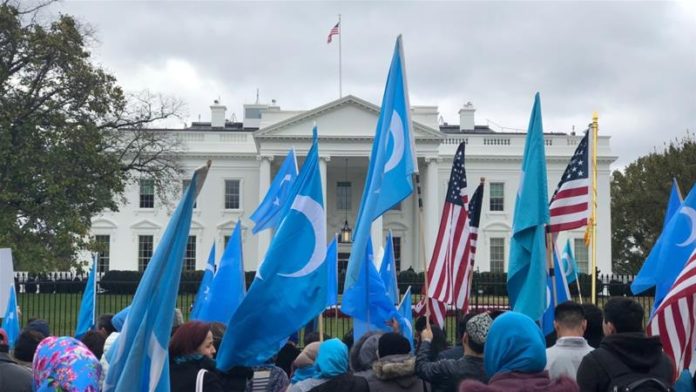
Historically, Uyghurs created two East Turkistan Republics in 1933 and 1944 respectively, both of which were defeated in the end. However, the political goal of re-establishing these republics has never been stopped. This goal has gone through enormous challenges since the invasion of East Turkistan by the Chinese People’s Army because of a secret agreement between Stalin and Mao Zedong in 1949.

Chinese authorities have severely suppressed any idea and action related to Uyghur independence which would amount to the secession of the Uyghur nation from China. In the face of constant opposition from Chinese authorities on Uyghur nationalism, the Uyghur independence movement has largely gone underground, protecting itself from being crushed mercilessly. A lot of underground organizations have been created and operative inside and outside of East Turkistan since 1949.

Since the 1990s when the Chinese government launched a harsh crackdown on Uyghur nationalism which served as the spiritual fortress against China’s aggressive assimilation, the Uyghur independence movement moved out of China into Central Asian countries, Turkey and, finally, Europe and the US. This was a turning point in the internationalization of the Uyghur cause. However, the more internationalized it became, the more challenges it faced.

These challenges were both internal and external. Externally, Chinese security agencies have deeply infiltrated into the Uyghur communities in general and into Uyghur organizations, political or otherwise, all around the world. As a result, Uyghur political communities are pit against one another, without being able to form a global resistance front to China, falling prey to the subversive activities of Chinese spies who spread false rumors and change the perceptions of their goal, and to accept the image of China as invincible, etc. This has done huge damage to the delicate fabric of Uyghur communities needing to act in unison more than ever against China. Internally, sadly, the Uyghur independence movement has not been able to lay the theoretical foundations of East Turkistan independence as an ultimate political goal of Uyghurs. The unclarity of the goal has made the political views of Uyghurs full of confusion and chaos.  The confusion stems from not knowing who the political enemy is and how to deal with them.

Lack of a unified political goal has left room for everybody to put forward his or her own political goal, pointing out who they believe is the real enemy. At times, this disunity has divided Uyghurs into many small political groups, vying for political power and engaging in unending conflict. For example, some Uyghur political leaders suggested that Pan Turkism or Pan Islamism be the ultimate goal of Uyghurs. Unrealistic and outdated, these isms have deviated the Uyghur resistance movement from its true path towards national liberation while throwing it deep into the pits of political chimeras and illusions.

To a certain extent, this is the successful work of Chinese intelligence services to influence the minds of Uyghur leaders, making them unable to think about their future realistically and strategically. In light of these isms, the goal of the Uyghur independence movement has been portrayed as either being too Pan Turkism-oriented or too Islamic. Both categorizations, despite being untrue, have not represented the genuine nature of the movement; instead, they have brought the movement closer to what China wants it to be portrayed as so that they can demonize the Uyghur resistance behind the veil of fighting terrorism.

On the other hand, China deliberately created the East Turkistan Islamic Movement in Pakistan as a shadowy organization to keep these political fantasies alive and convincing. Despite it being mostly unknown and inactive, it is used by China to paint Uyghur resistance with terrorism from time to time where needed. Unfortunately, the Uyghur public in exile, who have been subject to the brainwashing and psychological re-engineering operations of China for decades, have not been sensitive enough to see the danger in these tendencies. Moreover, the disunity among Uyghur diasporic communities, over which there is no unified political leadership to date, has made it impossible for them to choose the right goal. In particular, the lack of political experiences of the leaders of Uyghur organizations in exile is another contributing factor for not being able to lead the Uyghurs to choose the politically correct path.

I have been aware of the political games being played out by the Chinese government, since I went into exile during 1996 as a staunch Uyghur nationalist and experienced intellectual who aimed desperately to find a proper way to achieve the independence of East Turkistan. For this aim, I wrote a great number of critical political treatises with a focus on ideological issues, principal problems, and strategic shortcomings from which the Uyghur independence movement had been suffering over the past few decades. However, against my intention, these treatises have not drawn the sufficient interests of the public. Since 2017, I have turned to talk about these matters online in short and powerful video clips on YouTube, appealing to the broader public in a simple and persuasive language. These clips have suddenly got huge public attention, thanks to the intelligibility and urgency of the topics that I have addressed to the Uyghur audience in a systematic way with a sense of urgency. In those clips, I have reiterated the central matter in our independence movement with this slogan: “One Goal, One Enemy.” This slogan makes it a powerful message for the Uyghurs that we have only one goal to achieve, the independence of East Turkistan, and we have only one enemy to defeat, the Chinese colonial government in East Turkistan. By virtue of this slogan, I intended to put an end to the general and prolonged confusion over our goal and over our enemy. Furthermore, it politically rectified the previous mistakes, with an aim of avoiding the interference of the Chinese authorities to show us the wrong enemy and an unrealistic goal.

For example, since the Arab Spring movement in 2011, some Uyghur religious figures carried out a secret task given to them by the Chinese intelligence service to attract naïve Uyghur youth to go to Syria. As a result, tens of thousands of Uyghurs, unbelievably, got out of China, where everything was subject to strict restriction, into South East Asian countries, from where they moved further into Syria through Turkey, under the illusion that they finally escaped the control of the Chinese government. In Syria, they found themselves at the wrong place, at the wrong time, only for China to show them to the world that Uyghurs are terrorists. This dangerous allegation boosted China’s determination to eliminate Uyghurs in the name of fighting against Uyghur terrorism, leading up to the establishment of hundreds of concentration camps for Uyghurs altogether in 2018.

At the beginning, these Uyghur youth did not question the modus operandi of this heinous plan as they had little to no knowledge about how China’s propaganda worked and how espionage services used some religious forces to lure them into being caught in the line of terrorists. Nor did they question the possibility for them to get out of China, where they would need a travel document going from their village to a next village, into Syria through border areas between China and South East countries, including Vietnam, Laos, Burma, Malaysia and India—the areas that the Chinese patrol forces were highly visible, strict and effective.

On the other hand, if we look at some of the terrorist activities that were allegedly committed by Uyghurs, it becomes clear that they were planned by the Chinese intelligence services to put demonize the Uyghurs. Uyghurs cannot even purchase kitchen knives unless the knives are registered and barcoded and the person goes through a lengthy screening process. Under such circumstances, the use of knives for terrorist activities inside China incites deep suspicion. It is more likely that they were used by China to draw a false link between peaceful Uyghur grievances and terrorism. This false link is ultimately to justify the harsh crackdown on Uyghurs. Another example is that it is almost impossible for the Uyghurs to obtain materials to create a bomb since Chinese authorities do not allow Uyghurs to even purchase matches for fear that they will collect the oxidizing agents at the tips of the matches to make bombs. This makes it highly unlikely that Uyghurs could make bombs to carry out attacks on the Chinese. Therefore, all the terrorism allegations that Chinese government has made against Uyghurs is realistically untrustworthy and politically fabricated.

Currently, the East Turkistan Government in Exile is making great efforts to show Uyghur communities across the globe the right path to the goal of independence from China through the principle of “One Goal, One Enemy.” Uyghurs have gradually been accepting the fact that the East Turkistan Government in Exile represents the genuine interest of Uyghurs in the re-establishment of East Turkistan with the correct end goal and proper means to attain it. Meanwhile, the Government is also actively promoting grassroots activities among Uyghur communities to be united against China more urgently than ever.

(This article was written by the president of East Turkistan Government in-Exile Ghulam Osman)

Bharat Biotech to collaborate with Washington University for COVID intranasal vaccine

Expert panel recommends Bharat Biotech’s Covaxin for restricted emergency use
Representational/File image

New Delhi (NVI): The Hyderabad-based Bharat Biotech today announced that it would be manufacturing up to a billion doses of a single-dose intranasal COVID-19 vaccine in collaboration with the Washington University School of Medicine in St Louis, Missouri.

The Phase-I trials, which will check the safety profile of the vaccine candidate in humans, will take place in the US University’s vaccine and treatment evaluation unit Bharat Biotech, upon obtaining the required regulatory approval, the company said in a statement.

It will pursue further stages of clinical trials in the country and undertake large scale manufacture of the vaccine at its GMP facility located in Genome Valley, Hyderabad.

The Hyderabad-based vaccine innovator owns the right to distribute the vaccine in all markets except USA, Japan and Europe, the statement noted.

“We are proud to collaborate on this innovative vaccine. We envision that we will scale this vaccine to one billion doses. Individuals can be vaccinated by a single dose regimen. An intranasal vaccine will not only be simple to administer but also reduce the use of medical consumables such as needles, syringes, etc, significantly impacting the overall cost of a vaccination drive,” said Krishna Ella, chairman and managing director (MD), Bharat Biotech.

“Our experience in viral vaccines, manufacturing capabilities, and distribution continue to be our strong suit in ensuring safe, efficacious, and affordable vaccines. It is prudent for Bharat Biotech to be involved in diverse but tenable projects to provide a much-needed vaccine against COVID-19 that reaches all citizens of the world,” he added.

The statement further stated that, this intranasal vaccine candidate has shown unprecedented levels of protection in mice studies; for which the technology and data have been recently published in the scientific journal Cell and in an editorial in Nature.

David T Curiel, director, Biologic Therapeutics Center, said in a statement, “The ability to accomplish effective immunisation with a single nasal dose is a major advantage, offering broader reach and easier administration.”

“An effective nasal dose not only protects against COVID-19, but it also prevents the spread of the disease by offering another kind of immunity that occurs primarily in the cells that line the nose and throat. Most other vaccine candidates currently under development can’t do that,” Curiel added.

However, this move will expand Bharat Biotech’s portfolio of vaccines that are currently being developed and are in various stages of clinical development, including Covaxin, which is in Phase 2 clinical trials stage in the country.

-RJV

Delhi Deputy CM admitted to hospital

Delhi Deputy CM Manish Sisodia

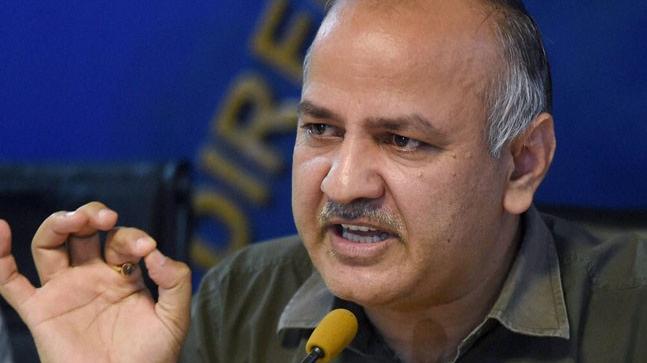
New Delhi (NVI): Delhi Deputy Chief Minister Manish Sisodia, who tested positive for novel coronavirus last week, has been hospitalised in Lok Nayak Jayaprakash Hospital after complaining of fever.

The 48-year-old Aam Aadmi Party (AAP) had tested positive for Covid-19 on September 14.

At the time, the deputy CM had said that he had no fever and was going into isolation.

“Had got my Covid-19 test done after I had a mild fever. The report has come positive. I have gone into self-isolation. As of now, I have no fever or any other issue. I am fine. By your blessings, I will recover fully and return to work soon,” Manish Sisodia said in a tweet in Hindi.

Sisodia is the second minister in the Arvind Kejriwal-led AAP government in Delhi, who has tested positive for the novel coronavirus.

-CHK

Eiffel Tower in Paris evacuated over bomb threat

New Delhi (NV): France’s iconic Eiffel Tower was evacuated today after the police in Paris received a phone call suggesting there was a bomb at the monument.

A spokeswoman for the company that runs the Eiffel Tower said that the evacuation was a precautionary measure after the police received the anonymous call, according to media reports.

Paris police have cordoned off a large area around the landmark in the French capital and urged people to stay away while officers inspect the area to find out if the threat is legitimate.

(Image source: Twitter)

Reports said that a call made to police claimed that there was a bomb placed near the famous tourist place in France. The police swiftly swung into action and cordoned off the area asking visitors to vacate immediately.

The Eiffel Tower, an icon of the French capital, is visited by millions every year. It was forced to close for months at the start of the coronavirus pandemic but gradually reopened over the summer.

-CHK

Parliament passes J&K Official Languages Bill, 5 languages now ‘official’ in the UT

New Delhi (NVI): Parliament today passed a Bill for inclusion of Kashmiri, Dogri and Hindi in the list of official languages in the Union Territory of Jammu and Kashmir, in addition to the existing Urdu and English.

The Jammu and Kashmir Official Languages Bill, 2020 was passed by Rajya Sabha through voice vote. Lok Sabha had cleared the legislation on Tuesday.

Replying to a debate on the Bill, Minister of State (MoS) for Home G Kishan Reddy said it was a long-standing demand of the people of Jammu and Kashmir that the language they speak should be included in the list of official languages.

The minister pointed out that around 74 per cent people in the Union Territory spoke Kashmiri and Dogri languages.

As per the Census, only 0.16 per cent population in Jammu and Kashmir spoke Urdu, while 2.3 per cent of the population speaks Hindi in the UT, the MoS said.

Along with this, the Bill will also strengthen the existing institutional structure for the promotion and development of regional languages.

-CHK

Rajat Sud appointed as new EESL Managing Director

36.69 crore LED bulbs distributed, 1.14 crore LED streetlights installed in 6 yrs: EESL

New Delhi (NVI): Energy Efficiency Services Limited (EESL), a joint venture of PSUs under the Ministry of Power, today announced the appointment of Rajat Sud as its Managing Director with immediate effect. Sud has more than 25 years of experience in the energy sector.

Sud takes over from S Gopal Director (Commercial), who had taken on the additional charge of interim MD. Sud’s repertoire encompasses energy sector restructuring, business strategy, performance improvement and acquisitions.

He also has several notable accomplishments, in securing international consulting engagements, building teams and businesses, driving innovative solutions growth, policy formulation and reforms in the Indian power sector, where he played a lead role in unbundling of the state-owned utilities.

His experience in the sector will be indispensable in helping EESL achieve its ambitious goals and create a new energy paradigm in the country, EESL, a joint venture of PSUs under the Ministry of Power, said in a statement.

Before joining EESL, Sud served as Executive VP at Sterlite Power Transmission Ltd, where he was responsible for the growth of the services business, with a focus on providing solutions for enhancing power delivery through congested transmission lines and corridors. He has also served in leadership positions at Siemens IT Solutions (SISL) and PwC.

Speaking on his appointment, Rajat Sud said, “I have admired EESL, a young and vibrant organization, and its pioneering role in energy efficiency in India. EESL’s impactful initiatives in buildings, transportation, lighting and energy generation have created unprecedented milestones. I am delighted and honored to lead this pioneering company and will work towards the goal of building energy secure and resilient nation, through innovative energy efficiency programmes.”

Saurabh Kumar, EVC, EESL said, “Mr. Rajat Sud has considerable experience in the energy sector and his exhaustive domain knowledge and vision will enable EESL is setting new benchmarks in the energy efficiency space. I look forward to working closely with him to drive transformative energy efficiency programmes.

EESL, under the administration of Ministry of Power, is working towards mainstreaming energy efficiency and is implementing the world’s largest energy efficiency portfolio in the country. Driven by the mission of Enabling More – more transparency, more transformation, and more innovation, EESL aims to create market access for efficient and future-ready transformative solutions that create a win-win situation for every stakeholder.

EESL has pioneered innovative business approaches to successfully roll-out large-scale programs that allow for incentive alignment across the value chain and rapidly drive transformative impact. EESL aims to leverage this implementation experience and explore new overseas market opportunities for diversification of its portfolio. As on date, EESL has begun its operations in UK, South Asia and South-East Asia.

-ARK

Blind singer from Kashmir dreams of opening own school, train people like him

Aijaz Ahmed Ahanger

Abid Bashir

Srinagar (NVI): Life has not been fair to Aijaz Ahmed Ahanger, who is blind by birth, but his melodious and soothing voice mesmerises locals at his village as he has become an inspiration for many other visually impaired people, who have quit begging on streets and have followed in his footsteps.

The 30-year-old lives in a small but picturesque village of Manzgam in South Kashmir’s Kulgam, a place that has been in news for gunbattles and street protests in the recent past.

Aijaz is full of talent. He plays his musical instrument- Sarangi (a small violin) like any other trained expert and sings like a true and committed singer.


In his native village and a few other adjoining villages, Aijaz is a favourite among many people who invite him to sing traditional Sufi songs in marriage parties and also on the occasions of annual anniversaries of revered Sufi saints.

“I was a kid when I lost my mother. Before that, I had lost my father too,” recalls Aijaz, holding Sarangi in his hands. “I am blind by birth. I belonged to a poor family and never got a chance to see a good doctor. Blindness became my destiny.”

Aijaz says he was lucky enough to find a good music teacher and a spiritual guide well within his native village. “His name was Gul Muhammad Shah and he trained me for 15 long years. He is no more now but he trained me like a true guide and a teacher,” he says.

Over the years, Aijaz has compiled 45 songs, majority of them traditional Sufi songs praising nature, prophet and Sufi saints. “With the help of my friend, all 45 songs are ready in written form but I have no resources to get the same published in the form of a book. I sing the same songs in marriage parties and other occasions especially during the annual anniversaries of Kashmir’s revered Sufi saints,” he says.

Aijz says he preferred not to lose hope and instead worked hard with whatever talent he had. “This is a hundred times better than begging on the roads. Though this is full of challenges like at times I have to walk miles to reach the venue for singing. Sometimes, hosts send vehicles for me and for them I pray always,” he says.

Aijaz has changed the lives of many people in his village who were born blind or with other physical disabilities. “I earn very less but I am contented. At marriage functions, people pay me Rs 500 or so with their own choice. I don’t force anyone,” he says. “I saved money to buy Sarangi and today this is my companion.”

He hasn’t been able to marry due to financial constraints. He, however, is a trained artist, a singer with a melodious voice and dreams of setting up a music school to train other people who have physical disabilities or are like him.

“My appeal to the J&K government is to provide me a little financial assistance so that I can set up my own music school. I want people to learn from me before I die. The school would primarily be for those having various issues like the one I have but that’s not the binding, others too can come and learn from me,” he says.

Aijaz has so far performed in 200 programs, including marriage parties, etc.

-ARK

RS passes 3 key labour reform bills

(File photo)

New Delhi (NVI): The Rajya Sabha today passed three key labour bills that will bring about much needed labour reforms, making it easier for employers to hire and fire workers without government permission.

The bills were passed in the Rajya Sabha amidst boycott by opposition parties on farm bills and suspension of eight MPs continued.

The code on occupational safety, health and working conditions, the industrial relations code and the social security code were already passed by the Lok Sabha yesterday. These will now be sent to the President for his assent.

Speaking on discussion of the bills, Labour Minister Santosh Gangwar said, “The purpose of labour reforms is to provide a transparent system to suit the changed business environment.”

The minister also told Rajya Sabha that as many as 16 states have already increased the threshold for closure, lay off and reduction in firms with up to 300 workers without government permission.

He noted that it is not good for employment generation to keep the threshold low at 100 because it discourages employers to recruit more workers than this and they deliberately keep their workers’ strength below it.

The minister further said these bills would safeguard the interest of workers and provide universal social security to workers by expanding the ambit of Employees’ Provident Fund Organisation and Employees’ State Corporation of India.

-RJV

MUST READ