
Saturday, June 27, 2026
Home Blog Page 1194

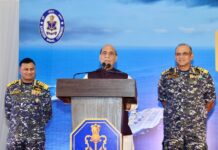
Armed forces get special powers for urgent purchases worth Rs 300 cr

New Delhi (NVI): In the wake of prevailing situation along the northern border, especially the India-China face-off in Ladakh, the defence ministry today delegated special powers the armed forces for urgent purchases worth Rs 300 crore.

A special meeting of the Defence Acquisition Council (DAC) was convened in this regard today under the chairmanship of Union Defence Minister Rajnath Singh, the Ministry of Defence said in a statement.

“The DAC delegated the powers for progressing urgent Capital Acquisition Cases upto Rs 300 crores to the Armed Forces to meet their emergent operational requirements,” read an official statement by MoD.

The Ministry said that this will shrink the procurement timelines and ensure the placement of orders within six months and commencement of deliveries within one year.

Defence Minister Rajnath Singh also tweeted: “The powers for progressing urgent Capital Acquisition cases upto Rs 300 crores have now been delegated to the Armed Forces to meet their emergent operational requirements This will shrink procurement timelines, ensure speedy placement of orders and start deliveries within 1 year.”

It is pertinent to mention here that the three services have started procurement of a series of military equipment and weapon systems amid the ongoing tense border situation between India and China after the violent Galwan valley clashes last month.

Indian and Chinese troops had a deadly face-off in Galwan Valley area of Eastern Ladakh on June 15 in which 20 Indian soldiers lost their lives. Scores of PLA troops were also killed by China has not revealed the exact numbers so far.

Although a series of military and diplomatic level talks have taken place between the two countries after the stand-off, both sides have enhanced border infrastructure along Line of Actual Control (LAC).

-ARK

Pak-China begin building dam in Gilgit-Baltistan

New Delhi (NVI): Construction of Diamer-Bhasha Dam, being built by Pakistan with the help of China in Gilgit-Baltistan, began today, despite protests by the local people and India which says Pakistan has no right to undertake any such activity in the Indian territory illegally occupied by it.

The dam project in Diamer district of Pakistan-occupied Gilgit-Baltistan marks a major Chinese footprint in the region which is originally a part of undivided Jammu and Kashmir.

Pakistan signed a contract with China two months back for construction of the dam at the cost of Rs 442 billion. After the agreement, the local people of Gilgit-Baltistan protested, particularly against Pakistan government’s Land Reforms Act under which their lands would be acquired for the project.

Citizens of Gilgit-Baltistan aired their anger on the ground as well as social media, saying it was Pakistan’s move to disempower them and grab their lands with the help of Chinese muscle power.

“They can’t snatch our ancestors land through their greedy acts like that of ‘Land Reforms Act’. People of #GilgitBaltistan will unitedly raise their voice against any such forceful oppression,” said a tweet by Sayed Ali Baig, a prominent resident of GB.

Another resident, Ejaz Hussain Nasiry said, “Land Reforms Act is a move to change our demography. One such example is Gilgit city where the locals are almost close to become minority due to abolishing of SSR and now the Land Reforms Act will add fuel to the fire”.

The dam will be built jointly by China Power, a State-run company, and Pakistan’s Frontier Works Organisation (FWO), the commercial arm of the country’s all-powerful Army. In the joint venture, the Chinese company has 70% stake, while FWO has the remaining 30% stake.

After the contract was signed, India’s External Affairs Ministry registered New Delhi’s objections to the project.

“Our position is consistent and clear that the entire territory of the union territories of Jammu and Kashmir and Ladakh have been, are, and will continue to be an integral and inalienable part of India,” External Affairs Ministry spokesman Anurag Srivastava had said.

“We have consistently conveyed our protest and shared concerns with both China and Pakistan on all such projects in the Indian territories under Pakistan’s illegal occupation,” he said.

The dam project was conceived some years back and India had registered its protest even then.

Message to China: Two US aircraft carriers in South China Sea

New Delhi (NVI): Sending out a message to China, two US aircraft carriers have sailed through the South China Sea, over which Beijing lays its absolute claim and attempts to usurp the rights of its neighbours like Vietnam, Philippines, Malaysia, Taiwan and Brunei.

Nuclear-powered USS Nimitz and USS Ronald Reagan sailed along with their strike groups into the sea in a major show of strength to China, according to the ‘Sun’ newspaper of the UK.

Pictures showed the steel armada sailing through the region that has been the source of years of tensions between the US and China, it said.

The aircraft carriers launched F/A 18E Super Hornet fighter jets, and were joined by guided missile destroyers and cruisers in the exercise.

Meanwhile, Britain has announced that its new aircraft carrier HMS Queen Elizabeth could also be sent to the Far East.

The American move comes after US Secretary of State Mike Pompeo asserted that China’s claim over South China Sea was not “lawful” or “coherent”.

Addressing a press conference on Monday, he said the United States “rejects any PRC (People’s Republic of China) claim to waters beyond a 12-nautical mile territorial sea derived from islands it claims in the Spratly Islands.”

Pompeo said the US also “rejects any PRC maritime claim in the waters surrounding Vanguard Bank (off Vietnam), Luconia Shoals (off Malaysia), waters in Brunei’s EEZ, and Natuna Besar (off Indonesia).”

He warned that any action by China to harass other states’ fishing or hydrocarbon development in these waters, or to carry out such activities unilaterally, is unlawful.

Contending that China engages in a campaign of “bullying” against its neighbours, he said, “Beijing uses intimidation to undermine the sovereign rights of Southeast Asian coastal states in the South China Sea.”

The Secretary of State went on to add: “America stands with our Southeast Asian allies and partners in protecting their sovereign rights to offshore resources, consistent with their rights and obligations under international law.”

South China Sea is considered to be potentially energy rich and a key lane for international maritime.

Chinese response to the American move came through State-run newspaper ‘The Global Times’, which said the Communist country has missiles which can “kill” aircraft carriers.

“China has a wide selection of anti-aircraft carrier weapons like DF-21D and DF-26 ‘aircraft carrier killer’ #missiles. South China Sea is fully within grasp of the #PLA; any US #aircraftcarrier movement in the region is at the pleasure of PLA,” it tweeted.

The US Navy’s chief of information replied: “And yet, there they are.Two @USNavy aircraft carriers operating in the international waters of the South China Sea. #USSNimitz & #USSRonaldReagan are not intimidated.”

Meanwhile, according to British media reports, ‘The HMS Queen Elizabeth’, the latest aircraft carrier of the UK, will be deployed in the Indo-Pacific region to counter an increasingly aggressive China.

It will be accompanied by a fleet of warships, including two Type 45 destroyers and two frigates. It will also be deployed with two squadrons of F-35B Lightning II jets, likely to be from the RAF and the US Marine Corps.

Vice-Admiral Jerry Kyd, fleet commander, was quoted by The Times newspaper as saying that the Royal Navy was “going to be coming back to the Indo-Pacific”.

Explaining how Britain could get involved in the region, he said: “Our ambition is to be absolutely persistent and forward-based there, maybe with a carrier strike group, or maybe not. We’ll see.”

Vice-Admiral Kyd added that British stealth fighter jets could be sustained “through our US allies and through the hub in Japan”, and be transported by the HMS Queen Elizabeth.

Bangladesh COVID-19 tally surpasses 1.93 lakh; 2,457 dead

(Image source: United News of Bangladesh)

New Delhi (NVI): Coronavirus cases in Bangladesh exceeded 1.93 lakh after 3,533 new cases were detected in the last 24 hours.

In addition to this, 33 new deaths were reported during this period, taking the total number of Covid-19 fatalities in the country to 2,457, according to United News of Bangladesh.

The daily infection rate was today recorded at 25.23 percent in the country, while the overall rate of infection since March 8 is 19.75 percent.

So far, 1,05,023 people have recovered in the country after 1,696 more patients were recovered during this period.

The recovery rate in the country is now at 54.25 percent while the mortality rate is at 1.27 percent.

-CHK

Coronavirus cases exceed 2.55 lakh in Pakistan; death toll at 5,386

New Delhi (NVI): The total number of coronavirus cases in Pakistan crossed 2.55 lakh after detection of 2,165 new cases in the last 24 hours.

Meanwhile, the coronavirus death toll jumped to 5,386 today after 67 new fatalities were reported during this period.

Looking at the breakdown of cases, Sindh reported 1,07,773 coronavirus cases, highest among all the provinces, while Punjab has 88,045 positive cases.

On the other hand, Khyber-Pakhtunkhwa has recorded 31,001 cases, Balochistan is at 11,239, Gilgit-Baltistan at 1,708, Islamabad at 14,315 and Pakistan-occupied Kashmir is at 1,688 cases so far, according to media reports.

A total of 1,72,810 patients have recovered from the disease so far in the country.

-CHK

Afghanistan’s COVID tally nears 35,000, death toll at 1,094

New Delhi (NVI): The coronavirus cases in Afghanistan saw a rise of 254 cases in the last 24 hours, taking the total number to 34,994, according to Afghan media reports.

The death toll in the country stood at 1,094 with 32 new fatalities being reported in the past 24 hours.

The Afghan Ministry of Public Health (MoPH) said, the highest count was reported in Kabul with 78 cases, followed by Daikundi with 61 positive cases.

Likewise, 18 cases were reported in Takhar, Herat (6), Kandahar (3), Balkh (10), Paktia (18), Nangarhar (3), Badghis (11), Logar (9), Badakhshan (11), Wardak (1), Laghman (4) and Ghor (15).

In terms of fatalities, 20 people died Kabul, seven in Farah, three in Herat and two in Nangarhar in the last 24 hours.

The ministry also added that 1,002 patients have been discharged from hospitals in the past 24 hours, bringing the total recoveries to 22,456 in the country.

So far, 81,934 samples have been tested in the government’s testing centers and there are 11,444 known active COVID-19 cases in the country.

Meanwhile, the Afghan government is also implementing a programme titled “national dining table” to replace the bread distribution efforts to families in need during the COVID-19 crisis.

-RJV

COVID-19 increases risk of life for Ethiopian migrants stranded in Yemen

New Delhi (NVI): Tens of thousands of Ethiopian migrants stranded in war-torn Yemen are in fear for their lives as COVID-19 spreads throughout the country and life-saving aid is in short supply, International Organization for Migration (IOM) said.

These migrants face increasing dangers throughout Yemen — a major transit country on the Horn of Africa-Arabian Gulf migration route — without vital services or a means to return home.

The ongoing coronavirus pandemic has led to a 90 per cent reduction in migrant arrivals in Yemen between February to June. In addition to this, the outbreak related restrictions have caused tens of thousands of Ethiopian migrants to be stranded on their journeys.

According to IOM’s report, at least 14,500 migrants today are estimated to be stranded in Yemen’s Aden, Marib, Lahj and Sa’ada governorates, due to the blocked route through the country migrants being forcibly transferred between governorates.

Yemen traditionally has been a country of transit for impoverished Ethiopians seeking work and a better life in Saudi Arabia.

“For nearly six years, Yemen has been an extremely unsafe place to be a migrant,” said Christa Rottensteiner, the International Organization for Migration’s (IOM) Chief of Mission in Yemen.

He further added, “COVID-19 has made this situation worse – migrants are scapegoated as carriers of the virus and, as a result, suffer exclusion and violence.”

Most of the stranded Ethiopians are sleeping in the open or in unsafe, abandoned buildings. That puts them at greater risk of exposure to COVID-19.

Furthermore, as a reaction to the COVID-19 pandemic, migrants in Yemen have been experiencing verbal and physical harassment, increased detention, movement restrictions as well as forced movements to areas far from main urban centres or services.

Aid agencies like IOM are providing assistance to the stranded migrants, but major funding shortages jeopardize the response, putting lives at risk.

Earlier in 2020, IOM launched an appeal for USD 155 million to support over 5.3 million people by the end of the year. Without urgent funds, over 2.5 million displaced Yemenis and migrants will be left alone to face the devastating fall out of nearly six years of conflict and the worsening COVID-19 outbreak.

So far, more than 1,460 cases of coronavirus, including 418 deaths have been reported in Yemen.

-CHK

WATCH | Daughter of abducted J&K BJP leader appeals terrorists to release her father

In this video, the daughter of Mehrajuddin Malla, a local Bharatiya Janata Party (BJP) leader in the Sopore area of north Kashmir’s Baramulla, appeals to terrorists to release her father. Mehrajuddin, who is also the Vice President (VP) of Municipal Committee at Watergam in Sopore, was abducted by the ultras from his residence today.

-ARK

Covid-19 cases in Nepal climbs to 17,177

New Delhi (NVI): Nepal registered 116 new cases of the coronavirus infection today, rising the nationwide tally to 17,177, according to local media reports.

The country’s Ministry of Health and Population said, of the newly infected, three persons are from Province 1; 24 from Province 2; 18 from Bagmati Province.

Likewise, 27 people are from Gandaki Province; one from Province 5; 40 from Karnali Province; and three from Sudurpaschim Province.

The ministry also said that, the new infections were confirmed after testing 5,090 specimens through PCR method in 26 labs across the country, in the last 24 hours. In total, 298,829 people have undergone PCR tests so far.

In the past 24 hours, 697 recoveries have been reported which has taken the total number of recoveries in the country to 10,238. With this Nepal’s current recovery rate stands at 64.2 per cent.

Meanwhile, the deadly contagion has spread across all 77 districts of the country. Of them, Mahottari, Rautahat, Palpa, Kailali, and Bajura have more than 500 active cases each. While Bhojpur, Mustang, Manang and Humla do not have any active case.

So far, 38 people died from the pandemic in Nepal as no coronavirus related death was reported today in the country.

-RJV

First indigenous pneumonia vaccine gets DCGI approval in India

Representational image

New Delhi (NVI): The Drug Controller General of India (DCGI) has given its approval to the first fully indigenously developed Pneumococcal Polysaccharide Conjugate Vaccine for pneumonia.

The vaccine has been developed by Serum Institute of India, Pune.

This vaccine is used for active immunization against invasive disease and pneumonia caused by “Streptococcus pneumonia” in infants.  The vaccine is administered in an intramuscular manner.

Serum Institute first obtained the approval of DCGI to conduct Phase I, Phase II, and Phase III clinical trials of Pneumococcal Polysaccharide Conjugate Vaccine. These trials have since been concluded within the country. Serum Institute has also conducted clinical trials in Gambia.

DCGI looked at the evidence from human trials to allow marketing of the vaccine in the country.

A Health Ministry statement said the application along with the clinical trial data has been reviewed by the Office of Drug Controller General of India with the help of Special Expert Committee (SEC) for vaccines.

“The Committee recommended for grant of permission of market authorization to the said vaccine. On July 14, Serum Institute of India, Pune, has been granted permission to manufacture domestically developed first Pneumococcal Polysaccharide Conjugate Vaccine. This is the first indigenously developed vaccine in the field of pneumonia,” Ministry said.

Earlier the demand of such vaccine was substantially met by licensed importers in the country since the manufacturers were all vaccine companies based outside India.

-CHK

MUST READ