Saturday, April 25, 2026
Home Blog Page 1201

J&K: 80 travelers among 156 new Covid patients, tally climbs to 4,730

Over 3,200 cops COVID positive in J&K and 15 succumbed to virus
File photo

Abid Bashir

Srinagar (NVI): The Union Territory of Jammu and Kashmir today witnessed yet another spike in Covid-19 cases as 156 new infections including 80 travelers tested positive for the deadly virus, taking the tally to 4,730 in the UT.

Officials said that among the new 156 cases, 47 were tested positive at SKIMS, 11 at CD hospital, 32 at JVC Bemina, 2 at Army’s Command Hospital in Udhampur and rest at other hospitals.

Among the fresh cases, 68 belong to Kashmir division while 88 are from Jammu division, officials said, adding that the total number of positive cases in Kashmir have reached 3,633 including 1,733 recoveries and 47 deaths while the total number of positive cases in Jammu has reached to 1,097 including 353 recoveries and six deaths.

The officials said that total number of active cases in Jammu and Kashmir is 2,591 including 1,853 from Kashmir and 738 from Jammu while 266 more persons have recovered today from J&K.

Cases tested positive in J&K include 1 from Anantnag, 2 from Kulgam, 5 from Srinagar, 6 from Budgam, 5 from Kupwara, 38 from Shopian, 7 from Baramulla and 4 from Pulwama in Kashmir while 88 from Jammu include 8 from Jammu, 21 from Ramban, 26 from Kathua, 12 from Poonch, 14 from Samba, 2 from Rajouri, 3 from Doda and one each from Kishtiwar and Rajouri.

In Jammu division, 261 including 117 recoveries and 3 deaths are from Jammu district, 193 including 37 recoveries from Ramban, 153 including 37 recoveries and 1 death from Udhampur, 149 including 59 recoveries from Kathua, 103 including 28 recoveries from Poonch, 83 including and 28 recoveries from Samba, 60 including 12 recoveries and one death from Rajouri, 49 including 20 recoveries and 1 death from Doda, 24 including 11 recoveries from Reasi and 22 including 4 recoveries from Kishtwar.

As per the daily information bulletin, 2,30,505 persons in Jammu and Kashmir are under observation while 41,964 persons have been kept under home quarantine. Besides that, 2,591 persons are in hospital isolation while 31 persons are under hospital quarantine.

According to the bulletin, 1,30,128 persons have completed the surveillance period and 55,738 persons are under home surveillance.

So far, results of 2,54,059 samples are available, out of which 2,49,329 tested negative while 4,730 have been tested positive. Among them, 2,591 are active and 2,086 persons have recovered while 53 persons have died. 47 deaths were reported in Kashmir and five in Jammu.

Covid-19 may trigger sharp rise in child labour: ILO-UNICEF report

New Delhi (NVI): COVID-19 crisis may push millions more children into child labour, which could lead to the first rise in child labour after 20 years of progress, according to a new report by the International Labour Organization (ILO) and UNICEF.

According to a new brief form International Labour Organization (ILO) and UNICEF titled COVID-19 and child labour: A time of crisis, a time to act, child labour decreased by 94 million since 2000, but that gain is now at risk.

According the reports, children already in child labour may be working longer hours or under worsening conditions. “More of them may be forced into the worst forms of labour, which causes significant harm to their health and safety,” it said.

The brief by ILO and UNICEF comes was released on the occasion on World Day Against Child Labour.

“As the pandemic wreaks havoc on family incomes, without support, many could resort to child labour,” said ILO Director-General, Guy Ryder.

“Social protection is vital in times of crisis, as it provides assistance to those who are most vulnerable. Integrating child labour concerns across broader policies for education, social protection, justice, labour markets, and international human and labour rights makes a critical difference,” he added.

According to the brief, COVID-19 could result in a rise in poverty and therefore to an increase in child labour as households use every available means to survive. Some studies show that a one percentage point rise in poverty leads to at least a 0.7 per cent increase in child labour in certain countries, the report said.

“In times of crisis, child labour becomes a coping mechanism for many families,” said UNICEF Executive Director Henrietta Fore.

“As poverty rises, schools close and the availability of social services decreases, more children are pushed into the workforce. As we reimagine the world post-COVID, we need to make sure that children and their families have the tools they need to weather similar storms in the future. Quality education, social protection services and better economic opportunities can be game changers,” Henrietta added.

The report also noted that vulnerable population groups – such as those working in the informal economy and migrant workers – will suffer most from economic downturn, increased informality and unemployment, the general fall in living standards, health shocks and insufficient social protection systems, among other pressures.

“Evidence is gradually mounting that child labour is rising as schools close during the pandemic, the agencies said adding that temporary school closures are currently affecting more than 1 billion learners in over 130 countries. Even when classes restart, some parents may no longer be able to afford to send their children to school,” the report said.

As a result, more children could be forced into exploitative and hazardous jobs. Gender inequalities may grow more acute, with girls particularly vulnerable to exploitation in agriculture and domestic work, the report said.

The brief proposes a number of measures to counter the threat of increased child labour, including more comprehensive social protection, easier access to credit for poor households, the promotion of decent work for adults, measures to get children back into school, including the elimination of school fees, and more resources for labour inspections and law enforcement.

On the occasion, the ILO and UNICEF said that they are developing a simulation model to look at the impact of COVID-19 on child labour globally and new global estimates on child labour will be released in the year 2021.

GST council reduces late fee on filing of GST returns

Small Savings schemes
Finance Minister Nirmala Sitharaman

New Delhi (NVI): Union Finance Minister Nirmala Sitharaman today announced that there will be no late fee at all for those who have no tax liability but have not filed GST returns for tax period July 2017 and January 2020.

While addressing the media after the first GST Council meeting after the lockdown, Sitharaman said, “In wake of COVID-19 pandemic, for taxpayers having aggregate turnover upto Rs 5 crore, further relief provided by waiver of late fees and interest if the returns in FORM GSTR-3B for the supplies effected in the months of May, June and July, 2020 are furnished by September, 2020.”

Maximum late fee has been capped at Rs 500 per return if there is any tax liability.

Several relief measures for small tax payers were announced, following the GST Council meeting.

“Small tax payers will have to pay no interest for late furnishing of GST returns till July 6, 2020; after that, the interest rate has been reduced to 9%, this will be valid till September 30, 2020,” the finance minister said.

Wild elephant radio collared, translocated to safe forest area in Tamil Nadu

New Delhi (NVI): A wild bull elephant, who was raiding crops in Thimmasandra village of Krishnagiri district in Tamil Nadu was successfully tracked, radio-collared and translocated to a safe forest area by the state forest department and Wildlife SOS.

“Around 25-year-old Bull elephant was being targeted by the local communities as the human-elephant conflict was rising due to crop raiding in Tamil Nadu,” the Wildlife SOS said in a statement.

Forest Department and Wildlife SOS Veterinary team in a two-day operation successfully translocated the elephant to safe forest habitat, it said.

Farmers and other people from the village in Denkanikottai taluk of the district were bothered about their crops as well as lives and appealed to the Forest Department to relocate the elephant.

The wild bull elephant had started coming out of the forest and regularly visiting their agricultural fields to feed on their crops.

This habitual pattern resulted in severe crop loss combined with human-elephant conflict which endangered their lives and property.

After monitoring the situation, the Forest Department contacted Wildlife SOS and requested expert assistance to translocate the wild elephant to a safe forest area to help mitigate the human-elephant conflict.

A joint operation – ‘Moving jumbo to safety’ – was conducted by a four-member team of Wildlife SOS, the Forest Department and local police in the early hours yesterday.

Once the elephant was tracked and sedated using tranquilizers, it was gently moved in a large vehicle and safely relocated to a reserve forest a safe distance away to help ensure that human-elephant conflict is mitigated, the Wildlife SOS said in a statement.

Prior to setting the animal free, the elephant was also radio-collared by Forest Officers to ensure that they can track movement patterns of the bull elephant while monitoring his behaviour, crop-raiding patterns, the statement read.

Kartick Satyanarayan, Co-founder & CEO Wildlife SOS said, “Using Radio collars helps to create an early warning system which helps keep people and elephants both safe. Elephants in India are surviving in fragmented habitats that are human-dominated landscapes.

“With food easily available, in agricultural fields, crop-raiding elephants quickly get into conflict with people. This often results in tragic consequences for both humans and elephants. Quick action to stem such conflict will help prevent retaliation from local communities. Working with communities living in elephant areas to raise awareness about elephant conflict-avoidance behavior is essential to protect elephants.”

S Prabhu (IFS), DFO Hosur said, “Immediate action was needed to protect the elephants & people. We have worked with Wildlife SOS before, so we knew they would offer assistance to successfully translocate the elephant. Radio collaring will help in reducing stress on both humans and the elephant as it will alert people early, so preventive measures can be adopted immediately.”

Dr Arun A Sha Director- Research & Veterinary Operations, Wildlife SOS said, “In this case, we extended assistance to the Tamil Nadu Forest Dept to translocate the elephant to safe habitat with large watering holes and plenty of food. The conflict was successfully mitigated.”

The human-animal conflict, especially with regard to elephants in the country has become a sensitive matter now, after the tragic death of a pregnant elephant Kerala’s Malappuram recently after she was fed fire-cracker laden pineapple.

No need to panic over recent tremors in Delhi-NCR: National Seismology Centre

Mild earthquake hits Delhi
Representational image

New Delhi (NVI): There is no need to panic over the recent quakes in Delhi-NCR but it is vital to undertake preparedness and take precautionary measures in this regard, the National Centre for Seismology (NCS) has said.

With nearly 14 earthquakes in 2 months, jolting the Delhi-NCR regions, there have been apprehensions if it is a prelude to a big temblor, but experts say there is nothing unusual in this seismic activity.

Speaking at a meeting convened by the National Disaster Management Authority yesterday, NCS Director BK Bansal said that given the seismic history of Delhi, minor earthquakes in Delhi-NCR are not unusual.

He said that there is no proven technology in the world to predict earthquakes with certainty in terms of location, time, and magnitude, according to an MHA statement.

The NDMA has requested the state governments to take steps that include ensuring compliance of building bye-laws to make upcoming construction earthquakes resilient and avoid the addition of vulnerable building stock.

It suggested they identify the vulnerable structures, especially lifeline buildings, and retrofit them. Private buildings should also be retrofitted in a phased manner.

According to experts, the Delhi-NCR region is very peculiar with regard to seismic activities. It has several fault lines that generate earthquakes, but it also feels the impact of quakes that are epicentral as far as the Hindukush mountains in Afghanistan and even in Nepal.

Bangladesh sees record 3,471 cases, 46 COVID-19 deaths in a day

(Image source: United News of Bangladesh)

New Delhi (NVI): Bangladesh today saw another surge in coronavirus cases and deaths. A whopping 3,471 new cases were reported, taking the total number of confirmed cases to 81,523.

The country also recorded a total of 46 deaths due to the novel coronavirus during this period, raising the death tally to 1,095, according to United News of Bangladesh.

Notably, the country crossed the 1,000 mark in death toll within 91 days after recording the first death on March 11.

So far, a total of 17,249 people have recovered from the deadly contagion, after 502 more patients made recovery.

Against the total number of detected cases, the recovery rate is 21.16 per cent and the mortality rate is 1.34 per cent in the country.

Coronavirus cases exceed 1.28 lakh in Pakistan

Representational Image

New Delhi (NVI): Pakistan is witnessing a spike in coronavirus cases on a daily basis and reported nearly 6,000 new cases in the last 24 hours, taking the overall tally to 1,28,361 with at least 2,480 fatalities.

Looking at the breakdown of cases, Sindh province has reported 49,256 coronavirus cases, highest among all the provinces, while Punjab has 47,382 positive cases.

On the other hand, Khyber-Pakhtunkhwa has recorded 15,787 cases, Balochistan is at 7,673, Gilgit-Baltistan at 1,030, Islamabad at 6,699 and Pakistan-occupied Kashmir is at 534 cases so far, according to Geo News.

Ministry of National Health Services stated that nearly 38,391 patients have fully recovered from the coronavirus.

Meanwhile, Shehbaz Sharif, chief of the opposition Pakistan Muslim League-Nawaz (PML-N), has tested positive for the coronavirus, becoming the latest top politician to be infected in the country.

Afghanistan’s COVID tally crosses 23,500, death toll at 446

New Delhi (NVI): Afghanistan today witnessed a rise in coronavirus cases with 656 new infections, taking the overall tally to 23,546 across the country, according to Afghan media reports.

Among the fresh cases, Kabul was again on top of the list with 326 new confirmed cases followed by Ghazni with 73 positive cases.

In addition, 37 cases were reported in Balkh, 33 in Kandahar, 20 in Nimroz, 18 in Laghman, 19 in Herat, 19 in Kunar, 17 in Faryab, 17 in Paktia, 16 in Nangarhar, 13 in Badghis, 12 in Baghlan, 10 in Sar-e-Pul, 8 in Helmand, 5 in Samangan and 5 in Farah.

Whereas, 20 patients have died due to COVID-19 virus in the country in the past 24 hours.

The new confirmed cases were reported in 18 provinces, with deaths in six provinces led by Herat with 13 (Kabul reported no deaths).

Other COVID-19 deaths were reported in Ghazni (2), Baghlan (2), Kandahar (1), Ghazni (1) and Sar-e-Pul (1).

Apart from this, Kabul with 400 recovered cases in the last 24 hours was on the top of the list followed by Herat (125), Balkh (32), Kandahar (12), Logar (10), Ghazni (8), Daikundi (7), Kunduz (4), Paktia (1), Nangarhar (1), Nimroz (1) and Badakhshan (1).

The Afghan Ministry of Public Health said 3,928 people have recovered while 446 from the respiratory disease in Afghanistan.

So far, 53,705 people have been tested for COVID-19 in the country, as per media reports.

Pakistan violates ceasefire in J&K’s Poonch

Representational Image (File)

Jammu (NVI): In another ceasefire violation along the Line of Control (LoC) in Jammu and Kashmir today, Pakistani troops resorted to firing with small arms and intense mortar shelling in Kirni and Qasba sectors of Poonch district, defence officials said.

“On 12 Jun 2020 at about 1615 hours, Pak initiated unprovoked ceasefire violation by firing with small arms & intense shelling with Mortars along LoC in Kirni & Qasba sectors in District Poonch(J&K),” they said, adding that the Indian Army was retaliating befittingly.

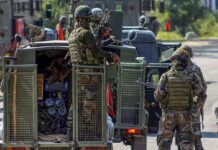
This is the second ceasefire violation by the Pakistani army today, as earlier in the morning it started shelling forward areas along LoC in the Uri area of north Kashmir’s Baramulla district. A woman was killed while two civilians were injured in the intense shelling that continued till the afternoon.

Defence spokesman in Srinagar, Rajesh Kalia said that in the morning at 8:20 am, Pakistan initiated an unprovoked ceasefire violation along the LoC in Rampur sector of Uri in north Kashmir’s Baramulla district by firing mortars and other weapons. “Befitting response is being given,” he said.

(More details awaited)

Defence Min extends delivery period of all capital acquisition contracts

RAJNATH-Singh
File Photo

New Delhi (NVI): Due to supply chain disruptions arising out of Covid-19 pandemic, the Ministry of Defence has extended the delivery period for all existing capital acquisition contracts with the Indian vendors by four months.

An order to this effect was issued today by the acquisition wing of the Ministry, duly approved by Union Defence Minister Rajnath Singh. “Force Majeure shall be applicable for a period of four months i.e. 25th March 2020 to 24th July 2020,” the order read.

“Duration of this Force Majeure will be excluded while calculating the delay in delivery of contracted equipment/service and imposition of Liquidated Damages charges,” it added.

The measure is set to bring a big relief to the domestic defence industry, whose production schedules have been adversely affected by COVID-19 situation, the MoD said in a statement.

However, the MoD order added that the Indian vendor is free to deliver the contracted items well within the extended delivery period.

Further, as per the order, no separate contract specific amendments are required to be made to give effect to this decision.

“With respect to the foreign vendors they can approach the MoD which may consider cases on the basis of the situation prevailing in their respective countries,” MoD said.

MUST READ