Thursday, September 24, 2026
Home Blog Page 131

Pakistan-run terror-gangster module busted; police says Delhi, Mumbai were targets

Delhi Police presents arrested suspects

New Delhi: Delhi Police has claimed to have busted a module of terrorists and gangsters associated with Dawood Ibrahim and sponsored by Pakistan’s intelligence agency ISI.

At least 9 suspects have been arrested from various parts of the country during an operation conducted by the Delhi Police Special Cell, an anti-terrorist unit, along with intelligence agencies.

The module was being operated by four Pakistan-based handlers — Munna Jagda, Yawar Khan, Shahzad Bhatti and Aamir Jatt, who were allegedly planning attacks in Delhi, Mumbai and several other Indian cities, the police said.

The module had recruited operatives in India and arranged the supply of weapons from across the border, a police officer said.

Their targets:

According to investigators, the accused were making preparations for a terror strike in Delhi or Mumbai.

Security forces and strategic locations in the national capital were allegedly among the intended targets, the officer said.

The accused planned to carry out grenade attacks or shooting at security forces like the recent incidents in Punjab, said Joint Commissioner of Police (Special Cell) Anil Shukla.

Police claimed to have recovered reconnaissance videos of multiple sensitive locations in Delhi and Mumbai from the accused.

The footage reportedly included key infrastructure and crowded public locations such as Mumbai’s Dadar railway station and several major bridges.

The Operation:

The Special Cell launched the operation after receiving specific intelligence inputs about the module, the officer said.

Acting on the information, police arrested notorious shooter Vijay Don from Pune.

Based on his disclosures, another suspect was apprehended from Sahibganj in Jharkhand.

During interrogation, investigators found that both were allegedly in direct contact with Pakistan-based handler Shahzad Bhatti.

Further investigations led to the arrest of Tauqeer and Arbaz Khan from Mumbai, police said, adding they were being handled through the network operated by Vijay Don.

As the probe widened, the names of other suspects, including Mujafa and Yawar Khan, also surfaced.

Three more members of the module, hailing from Punjab, were nabbed from Chhattarpur area of south Delhi yesterday, the police said.

Weapons recovered

The police claimed to have recovered four hand grenades, which were later safely defused by the National Security Guard (NSG).

The police also claimed to have seized two Glock-style pistols and 25 live cartridges allegedly manufactured by the Pakistan Ordnance Factory.

According to investigators, the weapons were smuggled into India using drones, raising concerns about cross-border terror networks and the alleged involvement of Pakistan-based criminal and intelligence-linked operatives.

The accused planned to throw these grenades and fire at security personnel, Shukla said.

Handlers in Pakistan

One of the key figures in the network is alleged to be Munna Jagda, whom investigators describe as a long-time underworld operative.

According to agency sources, Jagda was allegedly involved in the 2000 attack on underworld figure Chhota Rajan in Bangkok.

After serving a prison sentence in Thailand, he is believed to have shifted to Pakistan and is currently operating from Karachi.

Investigators further claim that Jagda sent a close associate, identified as Kami Lama, a Nepalese national, to India to provide financial and logistics support to the module.

The investigation is ongoing, and agencies are working to identify additional members and possible sleeper cells connected to the network.

Preparations reviewed for Amarnath Yatra which begins on July 3

Divisional Commissioner of Kashmir Anshul Garg reviewed preparations for Amarnath Yatra

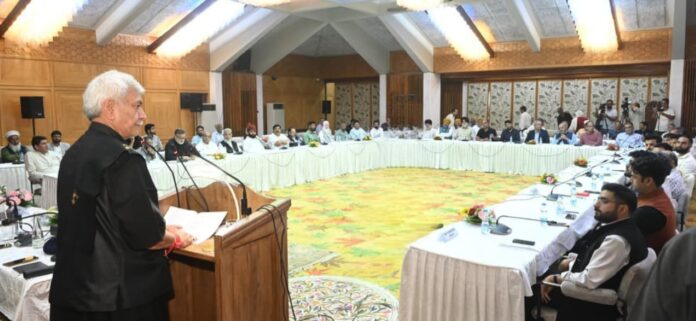
Srinagar, May 30 (NVI): Divisional Commissioner Kashmir Anshul Garg on Saturday reviewed the arrangements for the forthcoming Shri Amarnath Ji Yatra and directed all departments to ensure timely completion of infrastructure and service-related works for the smooth conduct of the annual pilgrimage.

The annual yatra to the Holy Cave of Lord Shiva, situated on a mountain peak in south Kashmir, is scheduled to begin on July 3 and conclude on August 28.

Chairing a meeting at Pahalgam in south Kashmir’s Anantnag district, Garg assessed the preparedness of various departments and agencies involved in managing the yatra scheduled later this year, officials said.

The meeting was attended by Deputy Commissioner Anantnag Bilal Mohi-ud-Din Bhat, senior officers from power, health, public works, rural development, municipal bodies, police, telecom companies and other stakeholder departments.

Officials briefed the divisional commissioner on arrangements being made along the Pahalgam route, including augmentation of infrastructure, provision of essential services and coordination among departments.

Garg directed the Jal Shakti Department to ensure uninterrupted drinking water supply at camps, halting stations and along the pilgrimage route. He also asked the Power Development Department to maintain round-the-clock electricity supply and put adequate backup systems in place.

The Border Roads Organisation (BRO) was instructed to expedite road repair and maintenance works and ensure all roads connected with the pilgrimage remain safe and motorable. Garg also asked officials to explore the possibility of early installation of a two-way bridge at Sarbal and speed up construction of rain shelters along the track.

Reviewing healthcare facilities, he directed the Health Department to ensure deployment of adequate medical staff, availability of medicines, ambulances and emergency response systems at designated locations.

The municipal authorities and Rural Development Department were asked to strengthen sanitation and waste-management measures at camps and along the yatra route, while telecom service providers were directed to maintain uninterrupted communication facilities during the pilgrimage.

Garg emphasised close inter-departmental coordination and directed departments to complete all assigned works within stipulated timelines. He also instructed officials to issue RFID cards to service providers well in advance to facilitate their movement during the yatra.

Earlier, the divisional commissioner interacted with stakeholders, including pony operators, tent owners, taxi operators and hoteliers, who raised various issues and suggestions related to the pilgrimage.

Assuring them that their genuine concerns would be addressed, Garg said service providers have played a crucial role in the successful conduct of previous yatras and contribute significantly to both pilgrimage management and tourism promotion in the region.

Later, he visited Chandanwari, the Nunwan base camp and the Sewage Treatment Plant (STP) at Pahalgam to inspect ongoing works and review arrangements on the ground.

The divisional commissioner directed the concerned agencies to ensure timely completion of all pending works and maintain high standards in the provision of public utilities and sanitation facilities ahead of the commencement of the yatra, officials added.(NVI)

Satish Sharma urges Centre to revive Jammu-Rajouri-Poonch rail project

New Delhi, May 30 (NVI): Jammu and Kashmir Minister Satish Sharma on Saturday urged the Centre to revive and expedite the proposed Jammu-Akhnoor-Rajouri-Poonch railway corridor, describing it as a project of strategic and developmental importance for the border districts of the Union Territory.

During a meeting with Union Railways Minister Ashwini Vaishnaw in New Delhi, Sharma highlighted the long-pending demand for rail connectivity to Rajouri and Poonch and sought priority consideration for the project, an official statement said.

Sharma said a survey for the proposed rail alignment had been conducted earlier and called for a fresh feasibility study and early execution of the project.

He noted that Rajouri and Poonch remain among the major regions in the country without rail connectivity despite their strategic significance and sizeable population.

The minister said the twin border districts frequently face disruptions in road connectivity due to adverse weather and difficult terrain, affecting the movement of people, essential supplies and emergency services. Rail connectivity, he said, would provide a reliable all-weather transport network and boost economic activity in the region.

Emphasising the security aspect, Sharma said the proposed rail corridor would strengthen logistical capabilities and facilitate faster movement of personnel and resources in the sensitive border region.

He also said the project would create opportunities in tourism, trade, industry and employment, helping integrate the districts more closely with the national economy.

According to the statement, Sharma urged the Railway Ministry to treat the project as a national priority and make necessary budgetary provisions for its implementation. He assured full cooperation from the Jammu and Kashmir administration in survey work, land acquisition and other administrative processes.

The Union railway minister assured Sharma that the demands and concerns raised during the meeting would be examined sympathetically, the statement said.

Besides railway infrastructure, Sharma also sought enhanced central support for Jammu and Kashmir’s digital transformation, including the establishment of IT parks, incubation centres and digital skill development hubs.

He advocated greater collaboration between the Ministry of Electronics and Information Technology and the Jammu and Kashmir government in areas such as artificial intelligence, cybersecurity, e-governance and startup development, while stressing the need to improve digital infrastructure in remote and border areas.(NVI)

Old Rocket Launcher Round Found During Well Cleaning in Samba Village

Jammu, May 30 (NVI): An old rusted rocket launcher round was recovered from a well inside a Shiv temple in Jammu and Kashmir’s Samba district on Saturday, officials said.

The explosive ordnance was found during the cleaning of a well located within a Shiv temple in Gudwal village of Ramgarh area by labourers engaged in the work, they said.

On noticing the suspicious object, the labourers informed the police, who rushed to the spot and took possession of the rusted rocket launcher round.

Officials said the recovered round appeared to be old and corroded. It has been seized and further necessary action is being taken as per standard operating procedures.

No injury or damage was reported in the incident, they added.(NVI)

NHPC Rejects Social Media Concerns Over Safety of Uri-I Stage-II Project

Baramulla, May 30 (NVI): State-run NHPC has dismissed safety concerns being circulated on social media regarding the construction activities of the Uri-I Stage-II Hydroelectric Project in Jammu and Kashmir’s Baramulla district, asserting that the project complies with all statutory and regulatory requirements.

In a statement, the General Manager (Civil) of the project said the hydroelectric venture has obtained all major clearances, including environmental, forest, defence and other mandatory approvals, besides securing no-objection certificates from the concerned ministries and departments.

The official said the proposed tunnel is located around 400 metres inside the mountain cover, with an additional lateral cover ranging between 300 and 500 metres, ensuring the safety of construction operations.

Any blasting required during execution of the project will be conducted through controlled techniques under the supervision of NHPC experts and government-approved national-level technical institutions, the statement said.

Describing the project as one of national importance, NHPC said the safety and security of local residents and nearby establishments were taken into account while preparing the Detailed Project Report (DPR).

The company reiterated its commitment to following all prescribed safety norms and regulatory guidelines during the execution of the project and urged people not to be misled by unverified information being circulated on social media.(NVI)

Multinational Military Exercise PRAGATI 2026 Concludes in Meghalaya

Shillong/Umroi, May 30 (NVI): The maiden edition of the multinational military exercise PRAGATI 2026 concluded at the Umroi Military Station in Meghalaya with a 72-hour validation exercise, showcasing enhanced interoperability, mutual trust and operational coordination among the participating countries, officials said on Saturday.

The exercise, titled Partnership of Regional Armies for Growth and Transformation in the Indian Ocean Region (PRAGATI), brought together over 400 military personnel from 13 countries, including India, Bhutan, Cambodia, Malaysia, Maldives, Myanmar, Nepal, the Philippines, Seychelles, Sri Lanka, Vietnam, Indonesia and Laos.

Senior military officials said the exercise focused on counter-terrorism operations in semi-mountainous and jungle terrain, with troops undergoing extensive training in specialised skills before participating in the final validation phase.

The training included rock craft, ambush and counter-ambush drills, slithering operations, jungle lane shooting, room and bus intervention exercises, improvised explosive device (IED) detection and casualty evacuation procedures.

The concluding event was attended by six Vice Chiefs and more than 40 senior military officers from the participating nations. The delegations were hosted by Vice Chief of Army Staff Lieutenant General Dhiraj Seth.

Officials said mixed teams comprising personnel from different countries trained together throughout the exercise, helping improve interoperability, capacity building and professional cooperation.

The exercise also featured a defence equipment display organised by the Indian Army in collaboration with the Federation of Indian Chambers of Commerce and Industry (FICCI), showcasing indigenous defence technologies and next-generation military equipment developed under the Atmanirbhar Bharat initiative.

On the sidelines of the exercise, Lt Gen Seth held bilateral meetings with representatives of participating countries to discuss avenues for expanding defence cooperation and strengthening military ties.

Officials said the exercise has laid a strong foundation for future editions and contributed significantly to enhancing collective readiness, regional cooperation and mutual trust among partner nations in the Indian Ocean Region.(NVI)

IMD forecasts deficient Monsoon; Risks of drought

Monsoon rain
Representational Image

New Delhi, May 30: In a piece of bad news, the India Meteorological Department (IMD) has revised its Monsoon rainfall forecast downward to 90% from 92% of the Long-Period Average (LPA) and predicted a 60% probability to a deficient season.

If the forecast proves correct, the total rainfall during the Monsoon season, which is about to begin, may fall much below the threshold.

The Government weather forecaster said the below-normal rainfall could lead to challenges for agriculture, water availability, hydropower generation and ecosystem sustainability.

There is increased risk of drought, heat stress and pressure on drinking water resources.

The LPA for the June-to-September season, calculated over the 1971–2020 period, is 87cm and if the prediction proves correct, this would mean the lowest Monsoon season rainfall in 11 years.

The new forecast, which revises the one made in April, carries a model error of ±4%.

IMD also assigned a 24% chance of a below-normal monsoon (90–95% of LPA), 14% for normal (96–104%), 2% for above-normal, and zero for excess. Combined, there is an 84% probability of below-normal rainfall or worse.

The Monsoon season generally begins around June 2 every year and immense expectations are attached to the rainfall during this period, particularly in respect of the Agriculture sector.

NorthWest India 

The sharpest deficit is forecast for Northwest India at below 92% of LPA.

The Monsoon Core Zone — the belt of rainfed agriculture across central India — is also forecast at below 94% of LPA.

Central and south Peninsular India face a similar below-normal outcome. Northeast India alone is forecast at normal (94–106% of LPA).

Timetable

The onset itself is now in doubt. IMD had forecast on May 15 that the monsoon would arrive over Kerala on May 26, six days ahead of the June 1 normal date.

That timeline has been pushed back: IMD’s extended range forecast now shows largely dry conditions over Kerala between May 28 and June 4, with only a marginal improvement between June 4 and June 11.

June will be hotter than previously estimated.

Rainfall is expected to pick up only after June 11.

IMD has forecast above-normal heatwave days over many parts of Uttar Pradesh, Haryana, Punjab, Bihar, Odisha, Chhattisgarh, Gujarat and Andhra Pradesh, and over isolated regions of Maharashtra, Telangana, Himachal Pradesh and Tamil Nadu.

Some of these regions are expected to record around five to six heatwave days in June against a normal of three.

“Normally 3 heat wave days are expected in these regions. But we are expecting 2-3 additional heat wave days in June,” said M Mohapatra, Director General of IMD.

Below-normal heatwave days are expected in Rajasthan and Jharkhand.

Reasons

The downward revision is being attributed to two adverse climatic developments since the April forecast and El Niño is one of those. It is expected to arrive earlier and hit harder than previously assessed.

The Met Department said El Niño conditions are likely to evolve into moderate category through the monsoon season, and strong category post-monsoon.

The second significant factor is the disappearance of the IOD (Indian Ocean Dipole) buffer.

The IOD, in a positive phase, can partially offset El Niño’s suppressive effect on the Monsoon by warming the western Indian Ocean and drawing moisture towards India.

Currently, it is in a neutral state and is likely to remain so through the season, IMD said.

This removes a mitigating factor that had earlier offered some comfort.

Nearly half of India’s net-sown area lacks irrigation access, and the Monsoon replenishes 91 natural reservoirs that supply power generation, industry and drinking water.

The season arrives as cultivators already face a potential shortfall in fertiliser supplies caused by the war in West Asia.

The earlier assumption that rainfall in June would be relatively unaffected has also been overturned.

IMD now projects below-normal rainfall for the country as a whole in June, at below 92% of LPA — a significant shift from the April picture.

Below-normal monthly rainfall is very likely over most parts of the country, except parts of Northwest India, Northeast India, the southern Peninsula and isolated pockets of central India.

LG asks writers to counter distorted narratives, uphold factual history

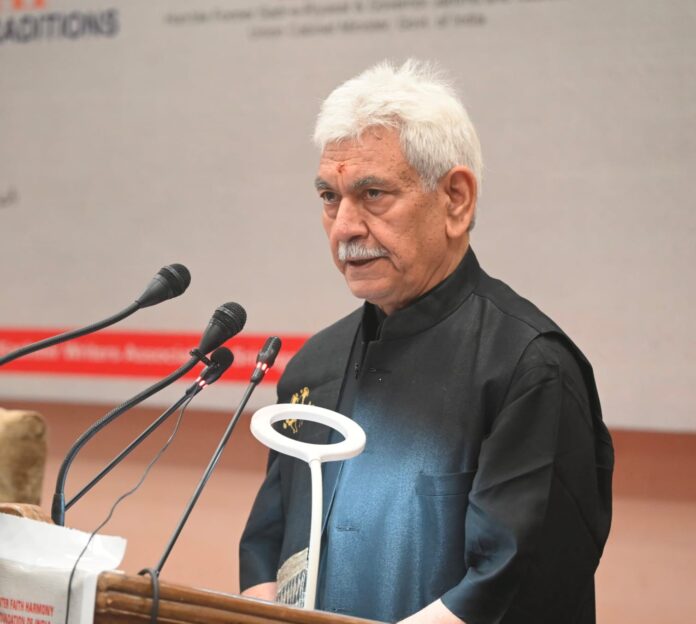
Srinagar, May 30 (NVI): Jammu and Kashmir Lieutenant Governor Manoj Sinha on Saturday called upon writers, authors and intellectuals to play an active role in countering distorted narratives and promoting fact-based discourse through literature.

Addressing the inaugural session of the third edition of the Kashmir Literature Festival here, Sinha said literature has the power to influence society and shape public opinion through creative expression.

He said writers have a responsibility to present authentic accounts of the nation’s history and contemporary realities, and ensure that facts are not misrepresented to serve vested interests.

The lieutenant governor stressed the need to preserve India’s cultural and historical heritage and remove remnants of the colonial mindset from public discourse.

“Writers and intellectuals should contribute towards correcting inaccuracies and providing readers across the world with a truthful understanding of the country’s past and present,” he said.

Sinha said literature can serve as a powerful medium for social transformation, cultural awareness and intellectual engagement, urging the literary community to use its platforms to promote truth and national consciousness.

The Kashmir Literature Festival has brought together writers, scholars, poets and literary enthusiasts from different parts of the country to discuss literature, culture, history and contemporary issues. The event aims to encourage intellectual exchange and celebrate the literary heritage of Jammu and Kashmir.(NVI)

Preparations underway for ‘Operation Sindoor 2.0’, if warranted: Army Chief

Indian Army Chief Gen Upendra Dwivedi

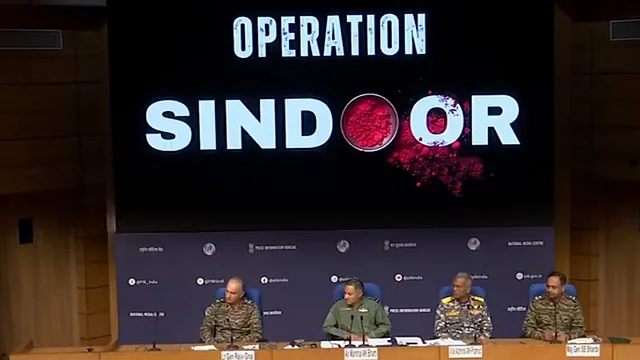
Pune, May 30: ‘Operation Sindoor’ is on pause and preparations are underway for its second phase, if the situation demands, Indian Army Chief General Upendra Dwivedi said today.

He said the Indian Armed Forces remain on high operational alertness despite the pause in military action that was undertaken in May last year, with the initiation of attacks on major terror camps in Pakistan and Pakistan-occupied Jammu and Kashmir (PoJK).

Addressing the Passing Out Parade of the 150th Course at the National Defence Academy (NDA) in Pune in Maharashtra, he said the Army, Navy, and Air Force are jointly preparing for future battlefield scenarios amid rapidly evolving security challenges along the borders.

“Operation Sindoor is still continuing. There is a temporary cessation of hostilities. The Indian Army and all three services are preparing well for Operation Sindoor 2.0, if it takes place,” the Chief of Army Staff said.

Next phase

General Dwivedi said the three services are strengthening coordination and operational readiness while adapting to the realities of modern warfare, where troop movements and battlefield activity remain constantly under surveillance.

The mlitary planners of India are now focusing heavily on inter-service synergy, technological preparedness and troop protection as battle conditions become increasingly transparent in the era of real-time surveillance and intelligence tracking, he said.

The Army Chief also highlighted the need for extreme caution in deployment patterns and operational movement, particularly in sensitive border areas where both military personnel and civilians remain vulnerable.

Integrated Military Operations

General Dwivedi said the coordinated response witnessed during Operation Sindoor reflected the kind of joint military culture developed at the NDA, where cadets from the Army, Navy and Air Force train together from the beginning of their careers.

He underlined the importance of integrated military operations involving all three services.

Jointness can no longer remain only a theoretical military concept and must become a natural operational instinct among officers facing future combat situations, he emphasised.

Defining Example

General Upendra Dwivedi described ‘Operation Sindoor’ as a “defining example” of India’s military response doctrine in the face of provocation.

He said future officers would have to deal with unconventional and rapidly-shifting security situations as modern threats no longer emerge only through traditional battlefronts and

“Threats today do not always arrive in uniform or on a declared front,” the Army Chief said.

Operation Sindoor demonstrated how “Bharat responds to provocation” with “precision and resolve”, he said and urged the newly-commissioned officers to carry forward that standard in their military careers.

Operation Sindoor

Operation Sindoor was launched by India on May 7 last year as a retaliation to the ghastly attack in Pahalgam in Kashmir on April 22, in which 25 tourists and a local man were killed within minutes.

Under the Operation Sindoor, Indian armed forces carried out air attacks on 9 major camps of terror groups located in Pakistan and PoJK.

Pakistan, in defence of the terror groups, carried out air attacks on Indian cities, resulting in a 5-day military conflict.

Security Forces Tighten Cordon as Rajouri Anti-Terror Operation Enters Eighth Day

security forces
Representative pic

Rajouri, May 30 (NVI): A joint anti-terror operation by the Indian Army, Jammu and Kashmir Police and the Central Reserve Police Force (CRPF) entered its eighth consecutive day on Saturday in the dense forest areas of Gambhir Mughlan and Dorimal in the Manjakote sector of Rajouri district, officials said.

Official sources that the operation, codenamed Operation Sheruwali, was launched following specific intelligence inputs about the presence of suspected terrorists in the area.

They said security forces have maintained a tight cordon around the forest belt and are carrying out extensive search and combing operations in the rugged terrain to trace the hiding terrioists.

Sources said the operation intensified on Thursday after an exchange of fire was reported from the Dorimal forest area, prompting forces to strengthen the security grid and deploy additional personnel in and around the region.

Reinforcements and logistical support have also been moved to the operation site to ensure a strong cordon and prevent any possible escape route for the suspected terrorists, they added.

Officials said the difficult terrain and dense forest cover have posed operational challenges, but security forces are continuing surveillance and search efforts with caution.

The area remains under heightened security, while search operations are expected to continue until the entire belt is thoroughly sanitised, officials said. (NVI)

MUST READ