Thursday, September 24, 2026
Home Blog Page 132

June 22 is deadline for transfer of all Platform workers’ on E-Shram portal

New Delhi, May 29: The Government is working to ensure that the data of all Platform workers is transfered on E-Shram Portal by June 22, a senior official said today.

Ashutosh A.T. Pednekar, Joint Secretary and Director General (Labour Welfare), in the Ministry of Labour and Employment, also said that the government is in the process of operationalising the Code of Social Security Rules under the Labour Code, which was notified earlier this month.

Pednekar said the Gig and Platform sector is strategically very important for Indian economy.

“Today, around 1 crore of workers are employed in this sector, and the potential is to reach around 2.5 crore workers by the end of the decade. The government is focusing more towards this sector,” he added.

Speaking on the e-Shram portal, the official said, “we now have the database of the aggregators on the portal so that we can understand on real time basis the benefits which the worker can or has availed.

“Just like the UPI and Aadhaar changed the digital landscape in India, the e-Shram has the potential of changing the way the benefits are given to workers along with the portability of benefits, which is a challenge worldwide including India, can be addressed through the portal.

“We have a deadline till 22nd of June before which the platforms have to ensure that all data of workers is transferred on the e-Shram portal and we are working on very tight timeline,” he emphasized.

“We are in the process of operationalizing the Code basis the rules through various mechanisms like the National Social Security Board for Gig and Platform workers which is being operationalized. The Board will look at unorganized workers,” said Pednekar.

The Code on Social Security (under the new Labour Code) rules were notified on May 8.

The government is also in the process of operationalizing various Social Security schemes for platform workers related to accident benefits, maternity benefits etc, Pednekar said.

He said the government has mandated the new Code to ensure basic social security measures are given to the workers as a part of the protection coverage.

“We are in the process of creating various schemes and engaging with a number of fund managers to ensure the schemes are operationalized,” he noted while addressing the ‘Stakeholders Consultation on Opportunities and Challenges of Gig and Platform Workers in India’, organized by FICCI-AIOE, jointly with International Labour Organization (ILO).

Michiko Miyamoto, Director, ILO DWT for South Asia and Country Office for India said India’s platform economy has moved rapidly from the margins to the mainstream of economic activity.

“Platform work has created new opportunities for income generation, flexibility, entrepreneurship and labour-market participation. The platform economy can contribute meaningfully to India’s growth and to the broader vision of a Viksit Bharat,” she added.

She further stated that India has led the way in South Asia by extending social security to platform workers.

“India has acknowledged that workers in new forms of work must be visible within systems of protection. The challenge now is implementation. Social protection must be practical, portable and accessible. Registration systems must be simple and contributions must be fair,” she added.

Rising geopolitical tensions, elevated oil prices pose risk to India’s growth

RBI
Reserve Bank of India

New Delhi, May 29: India’s growth and inflation outlook face short-term risks due to rising geopolitical tensions, elevated crude oil prices and global uncertainty, according to Reserve Bank of India (RBI).

It said the Indian economy demonstrated resilience despite multiple external headwinds but the ongoing conflict in West Asia, elevated crude oil prices, supply chain disruptions, financial market volatility and uncertainty surrounding global trade policies could weigh on economic activity in the near term.

India, one of the world’s largest crude importers, remains vulnerable to fluctuations in global energy prices, the RBI said in a latest report.

It also flagged weather-related disruptions as a potential risk to inflation and growth.


Despite these concerns, the RBI said the Indian banking system is expected to remain resilient, supported by prudent regulatory reforms, stable credit growth and adequate capital buffers.


It said healthy corporate and banking sector balance sheets, continued government spending on capital expenditure and implementation of trade agreements with key partners are expected to support investment activity and sustain growth momentum.

“On balance, supported by sound fundamentals and healthy balance sheets, the domestic financial system has sufficient buffers to withstand adverse shocks,” the report said.

At the same time, the central bank cautioned that lingering geopolitical tensions and supply chain disruptions could affect corporate earnings and the performance of bank loan portfolios in the near term.

The RBI also warned that elevated sovereign bond yields may exert pressure on the investment portfolios of financial institutions.

“Domestic bond yields could face upward pressure if the global monetary easing cycle stalls or reverses in response to persistent oil price shocks amid fragile conditions in the Middle East,” it said.

However, the report added that the government’s commitment to fiscal consolidation, along with liquidity injection measures by the RBI, is expected to contain upward pressure on yields and support financial market stability.

The central bank stressed the need for continuous assessment of evolving global developments to ensure timely and appropriate policy responses. While warning of near-term risks, the RBI maintained that India’s overall growth outlook remains positive, supported by strong domestic fundamentals and policy support measures.

IIT Madras researchers develop less costly treatment for Fibrosis Patients
Patented technology uses biodegradable biomaterials for targeted, sustained drug delivery and may significantly lower treatment costs for chronic fibrotic diseases

CHENNAI, May 29: Researchers at the Indian Institute of Technology Madras (IIT Madras) have claimed to have developed a less expensive injectable hydrogel that could transform the treatment of fibrosis and other chronic degenerative conditions by replacing weeks of repeated medication with a single localised dose.

The researchers estimate that treatment could possibly reduce therapy costs from approximately USD 2,000–3,000 per course to around USD 300, potentially making advanced fibrosis care more affordable and accessible.

Developed at the Tissue Engineering and Biomaterials Laboratory, Department of Biotechnology, IIT Madras, the innovation is designed to deliver antifibrotic and anti-inflammatory drugs directly at the affected site in a sustained and controlled manner, the institute said in a statement today.

A key differentiator of this patented technology is its use of combination of naturally derived biomaterials obtained from silk cocoons and seaweed, it said.

These materials are biodegradable, biocompatible, and aligned with India’s strengths in sericulture and its emerging seaweed-based bioeconomy.

The hydrogel combines therapeutic delivery with tissue healing support, creating a favourable environment for healthy cell growth while reducing inflammation and fibrosis.

The hydrogel also responds to disease-related inflammation, releasing higher doses when needed while gradually degrading without leaving any harmful residue.

Furthermore, the research team has performed a first-of-its-kind omics study to prove that these smart-tuned hydrogels inhibit the progression of fibrosis by regulating the mechanical properties and metabolism of the cells, the statement said.

The papers were co-authored by Varshiny Gopinath and Prof. Vignesh Muthuvijayan from IIT Madras and Prof. Mahadevan Rajasekaran from the University of California San Diego Health, US.

Elaborating on the need for such research, Prof. Vignesh Muthuvijayan, Department of Biotechnology, IIT Madras, said, “Fibroproliferative diseases, including pulmonary, liver, kidney and muscle fibrosis, are linked to nearly 45% of deaths globally. Existing treatments often require prolonged drug administration, can cause significant side effects and are frequently unable to stop disease progression effectively at the targeted site.”

Varshiny Gopinath, Research Scholar, IIT Madras, added, “The newly-developed platform seeks to address these limitations through a minimally invasive injectable therapy that converts from liquid to gel at body temperature, conforming precisely to the treatment site. Once administered, it can remain active locally for several days, reducing the need for repeated oral or systemic dosing.”

Commenting on real-world applications and next steps, Prof. Vignesh Muthuvijayan added, “IIT Madras is exploring pathways for real-world deployment through technology transfer, licensing to industry partners, or start-up creation. Potential applications include use during surgical procedures, where the gel can be applied directly before wound closure to provide localized therapy without additional intervention. The next phase of development will include advanced preclinical testing in disease models and patient-derived organoids, optimisation of dosage and release kinetics, long-term safety studies, manufacturing scale-up, and regulatory planning for translational use.”

Follow-up studies conducted in collaboration with the University of California, San Diego have also demonstrated efficacy across multiple disease models, particularly in aged muscle tissue.

The preliminary study shows that hydrogel has potential in treating sarcopenia, an age-related loss of muscle mass and strength that affects an estimated 10 to 16 per cent of the global elderly population and currently has no approved pharmacological treatment.

CRPF ASI Dies After Falling Unconscious at Camp in Shopian J&K

REPRESENTATIONAL PIC.

Srinagar, May 29 (NVI): An Assistant Sub-Inspector (ASI) of the Central Reserve Police Force (CRPF) died after falling unconscious at a camp in Zainapora area of South Kashmir Shopian district on Friday.

Officials that the deceased, an Assistant Sub-Inspector (ASI) of CRPF posted at Horticulture Camp Zainapora, suddenly collapsed inside the camp.

He was immediately shifted to CHC Zainapora, where doctors declared him brought dead on arrival.

The deceased was a resident of Rajbagh area of Kathua district. Police have taken cognizance of the incident. (NVI)

J-K govt transfers IAS, JKAS officers

JAMMU, May 29 (NVI): The Jammu and Kashmir government on Friday ordered the transfer and posting of two officers with immediate effect, an official order said.

According to an order issued by the General Administration Department (GAD), IAS officer Pranjal J Hazarika, presently posted as Additional Secretary in the Labour and Employment Department, has been transferred and posted as Additional District Development Commissioner, Baramulla, against an available vacancy.

The order said JKAS officer Vishavjeet Singh, who was awaiting orders of posting in the General Administration Department, has been posted as Additional Deputy Commissioner, Billawar.

He replaces JKAS officer Vinay Khosla, who has been directed to await further orders of adjustment in the General Administration Department, it said.

The transfers and postings were made in the interest of administration with immediate effect under the orders of the Lieutenant Governor, the order added.(NVI)

Rajouri operation: Hunt for terrorists continues on 6th day
Rajouri is a border area, adjacent to the Line of Control (LoC) with Pakistan-occupied Jammu and Kashmir.

security forces
Representative pic

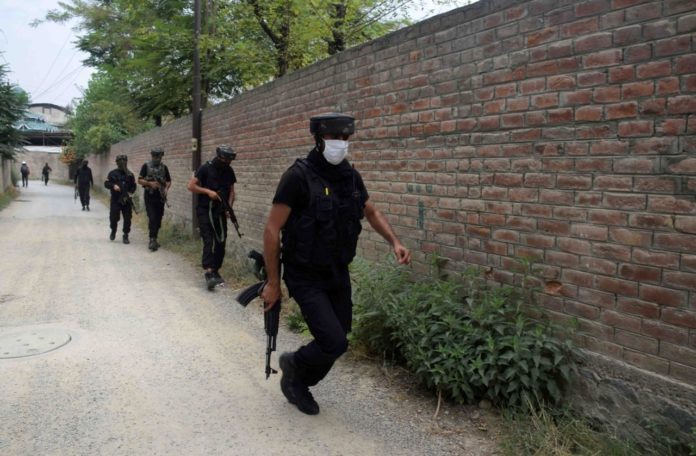
Jammu, May 28: For the 6th straight day today, security forces continued their search for a group of terrorists who have been hiding in a dense forest of Rajouri district of Jammu and Kashmir.

Rajouri is a border area, adjacent to the Line of Control (LoC) with Pakistan-occupied Jammu and Kashmir.

The terrorists were spotted on May 23 in Gambhir Muglan area and there was a brief exchange of fire between them and the security forces.

Afterwards, they fled into the dense forest and the security forces have been searching for them since.

This operation, involving the Army, Jammu and Kashmir Police and CRPF, has been codenamed ‘Sheruwali’.

Terrorists intercepted

The terrorists were intercepted by the security forces after an intelligence input about their presence in the area.

Since last Saturday, sounds of firing and explosions have been heard intermittently.

The security forces have been using drones, helicopters and foot patrols to locate the terrorists who have the advantage of think cover of trees, which helps them in hiding.

Alongside, a tight cordon is being maintained around the area even though it is not possible to cover every inch of the forest manually.

PVR INOX brings back ‘Pride Film Festival’

New Delhi, May 28: For cinema lovers, there is a film festival on the cards across India.

PVR INOX, India’s largest cinema exhibitor, has announced the return of its ‘Pride Film Festival’ from tomorrow.

This is to celebrate the layered and path-breaking queer cinema from across the world.

This week-long film festival will run across 20 cities and 40 cinemas, offering audiences a unique opportunity to re-watch these iconic titles on the big screen.

The line-up includes the Academy Award-winning Moonlight, the acclaimed musical biopic Rocketman, and the celebrated Marathi film Baapya.

Talking about this special festival Niharika Bijli, Lead Strategist, PVR INOX Ltd., said, “At PVR INOX, we believe storytelling has the ability to foster inclusion and celebrate diverse voices, and this festival is a reflection of that commitment.

We are proud to bring back globally celebrated titles such as Moonlight and Rocketman, as well as Baapya, a story from the heartland of India. We hope the festival sparks conversations and reminds audiences of the transformative power of cinema.”

The Pride Film Festival at PVR INOX will showcase a powerful slate of films that spotlight love, identity, courage, and self-expression through some of the most memorable queer narratives in cinema.

Moonlight offers an intimate portrait of a young man navigating race, vulnerability, and sexuality across three defining stages of his life.

Through music, fantasy, and emotion, Rocketman captures the extraordinary rise and personal struggles of global music legend Elton John.

Adding a regional voice to the line-up, Baapya presents a nuanced and heartfelt exploration of identity and human connection rooted in contemporary Marathi storytelling.

The Pride Film Festival is part of PVR INOX’s ongoing initiative to honour exceptional talents and landmark films from India and around the world.

By bringing timeless films back to the big screen, PVR INOX not only revives the magic of great cinema but also creates a rare opportunity for a new generation to discover these cinematic masterpieces, and for the generation that grew up with them to relive their nostalgia and charm.

ABOUT PVR INOX LIMITED

PVR INOX Limited is India’s largest film exhibition company, operating 1,798 screens across 359 properties in 113 cities in India and Sri Lanka.

Formed through the merger, in 2023, of two of the country’s most established and widely recognised cinema brands, PVR Limited and INOX Leisure Limited, the company represents the convergence of scale, operational excellence, and long-term creative vision.

Operating as a unified platform, PVR INOX brings together deep industry expertise and a strong consumer-centric approach to deliver world-class cinema experience

Days after Rubio’s complaint, UN Climate Change official comments on extreme heat in India

UN Climate Change Executive Secretary Simon Stiell

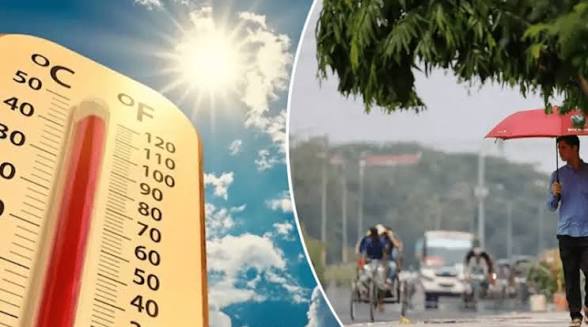
New Delhi, May 28: Days after US Secretary of State Marco Rubio complained of hot weather in Delhi during his visit, UN Climate Change Executive Secretary Simon Stiell today said the extreme heat in India is a “reminder of the potential of homegrown clean energy and energy efficiency measures which could help provide cooling”.

In a statement, Stiell said the “main culprit” is the “worsening climate,largely driven by the world burning colossal amounts of coal, oil and gas”.

“Large parts of India are already experiencing a punishing summer of extreme heat, with severe human and economic impacts, and the main culprit is worsening climate change, largely driven by the world burning colossal amounts of coal, oil and gas,” the top UN official said.

“These are testing times for those living in homes without cooling or working long hours outdoors. These extremes drive home the importance of measures to adapt to climate impacts, globally,” he said.

Stiell said India has also seen record-breaking peak electricity demand in recent days and solar and other renewable energy sources have helped in meeting day-time peaks.

“India’s strong steps to ramp up solar power have been a benefit. Even so, we are likely to see an increase in heat extremes over India and around the world in the future, as the impacts of the climate crisis get worse,” he added.

“The heat extremes over India are a reminder of the potential of homegrown clean energy and energy efficiency measures which could help provide cooling to the most vulnerable, and more secure and affordable electricity to help power homes, businesses, vital health services and electric transport,” he said.

His suo motu statement came days after Rubio, during a visit to New Delhi last week, complained that “it is too hot” in the Indian national capital.

Rubio was here to attend the QUAD Foreign Ministerial meeting, comprising India, the US, Japan and Australia. (NVI)

Escalation in West Asia: US launches new attacks, Iran hits its base in Kuwait

Explosions
Explosions (File pic)

New Delhi, May 28: The US again escalated tensions in the West Asian region as it carried out fresh attacks on Iran which retaliated by hitting American military assets in the neighbouring Kuwait.

Earlier this morning, the US carried out, what it called, ‘defensive strikes’, hitting an alleged drone-launch facility of Iran in Bandar Abbas.

The US forces also claimed to have shot down four Iranian drones in the Strait of Hormuz.

Soon after, Iranian military said it attacked US military base in Kuwait and warned that “aggression would not go unpunished”.

The US strikes came hours after President Donald Trump said Iran is “negotiating on fumes”.

He also insisted that the midterm elections in the US in November won’t make him rush into a deal to end the nearly three-month-old conflict that’s caused immense economic problems around the world, particularly due to the energy flow disruptions.

Trump has been desperately seeking reopening of the Strait of Hormuz, over which Iran has put a stronghold after the US and Israel launched the war on February 28.

The Strait is the narrow mouth of the Persian Gulf through which about a fifth of the global oil and natural gas transits.

On the ongoing indirect negotiations with Iran to end the war, Trump acknowledged there’s still work to do.

“They (Iran) want very much to make a deal.. So far, they haven’t gotten there. We’re not satisfied with it, but we will be — either that or we’ll have to just finish the job,” the US president said.

Supreme Court gives relief to Amazon, sets aside penalty of Rs 202 crore

New Delhi, May 27: In a major legal victory for Amazon, the Supreme Court of India has set aside the imposition of penalty of ₹202 crore on it by the Competition Commission of India (CCI) in connection with its investment in Future Coupons Private Limited.

The court also directed that any amount already recovered or deposited by Amazon must be refunded within eight weeks.

A bench comprising Justices Vikram Nath and Sandeep Mehta delivered the ruling while hearing Amazon’s appeal against the penalty imposed by the competition watchdog.

The case revolved around Amazon’s 2019 investment in Future Coupons, a promoter entity linked to Future Retail. The CCI had accused Amazon of allegedly suppressing material information while seeking regulatory approval for the transaction.

Background Of The Dispute

The controversy dates back to December 2021, when the CCI suspended its earlier approval granted to Amazon’s investment deal and imposed a penalty of around ₹200 crore on the company.

The regulator claimed Amazon had failed to fully disclose the strategic objectives and commercial intentions behind the transaction, particularly its broader interest in Future Retail.

Later, in June 2022, the National Company Law Appellate Tribunal (NCLAT) upheld the CCI’s decision and supported the penalty imposed on Amazon under the Competition Act, 2002.

CCI Alleged Non-Disclosure By Amazon

During the proceedings, the CCI argued that Amazon did not provide complete information regarding the actual scope and purpose of the investment.

The regulator alleged that Amazon concealed aspects of its strategic plans involving Future Retail and failed to transparently disclose all commercial objectives tied to the transaction.

The Future Group also reportedly supported the regulator’s argument, claiming that important details about the rationale behind the deal had not been fully revealed before approval was granted.

Amazon Maintained It Shared All Relevant Information

Amazon consistently denied the allegations and maintained that it had submitted all necessary documents and disclosures to the competition regulator during the approval process.

The company argued that the transaction complied with regulatory requirements and challenged both the CCI order and the NCLAT ruling before the Supreme Court.

With the latest judgment, the Supreme Court has now overturned the penalty and provided significant relief to Amazon in one of India’s most high-profile corporate legal disputes involving foreign investment and competition law.

Major Boost For Amazon Amid Long-Running Legal Battle

The ruling marks an important development in the prolonged legal and regulatory battle surrounding Amazon and the Future Group transaction, which has been closely watched by India’s corporate and retail sectors.

Legal experts believe the judgment could also influence how disclosure requirements and competition approvals are interpreted in future cross-border investment deals in India.

MUST READ