Monday, April 6, 2026
Home Blog Page 1313

World Bank approves $1 bn emergency funds for India to fight Covid-19

Representational Image

New Delhi (NVI): The World Bank has approved USD 1 billion emergency funds for India to help it fight against the coronavirus contagion, which has claimed 56 lives and infected 2,301 people across the country.

The India COVID-19 Emergency Response and Health Systems Preparedness Project is being facilitated to help India prevent, detect, and respond to the COVID-19 pandemic and strengthen its public health preparedness.

This is the largest ever health sector support from the Bank to India.

This new support will cover all states and Union Territories across India and address the needs of infected people, at-risk populations, medical and emergency personnel and service providers, medical and testing facilities, and national and animal health agencies.

The project will immediately enable the central government to scale-up efforts to limit human-to-human transmission, including reducing local transmission of cases and containing the epidemic from progressing further.

In parallel, interventions to strengthen the health system will be rolled out to improve the country’s capacity to respond to the COVID-19 epidemic and be better prepared to respond to emerging disease outbreaks, including transmission between humans and animals.

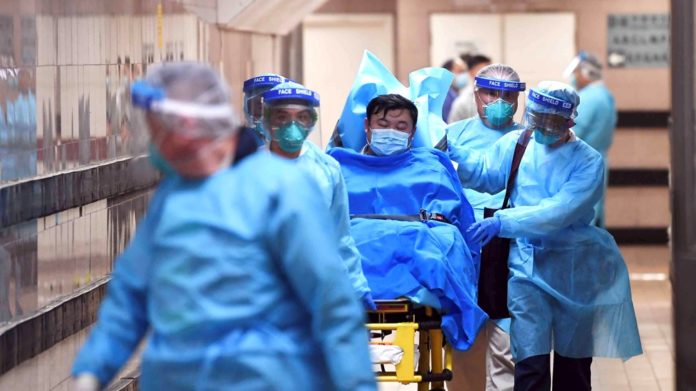
Procurement of testing kits; setting up of new isolation wards — including turning hospital beds into intensive care unit beds; infection prevention and control; and purchase of Personal Protective Equipment (PPE), ventilators, and medicines, particularly in district hospitals and designated infectious disease hospitals will be scaled up under the project.

“The World Bank is working in close partnership with the Government of India to provide urgent and flexible support to the country as it fights the spread of COVID-19,” said Junaid Ahmad, World Bank Country Director for India. “This operation is expected to enhance surveillance capacities, strengthen diagnostic systems, and expand the capacity of laboratories. But, COVID-19 is not only a health challenge. It has deep social and economic implications. In parallel, we are working with equal urgency with Government on social protection programs and economic measures that protect the livelihoods of people.”

The project will also enhance the resilience of India’s health system to provide core public health prevention and patient care to better manage COVID-19 and future disease outbreaks.

It will help strengthen India’s Integrated Disease Surveillance Program, revamp infectious disease hospitals, district, civil, general and medical college hospitals, and build a network of high containment Biosafety Level 3 laboratories.

Today, about 75 per cent of new infectious diseases begin with human-to-animal contact, including HIV/AIDS, Ebola, and SARS. The project will develop capacity and systems to detect existing and emerging zoonoses, support biomedical research on COVID-19 by Indian institutions, and upgrade viral research and diagnostic laboratories for testing and research.

It will also help address potential significant negative externalities in the event of a widespread COVID-19 outbreak, including comprehensive health awareness and behavior change campaigns on hygiene practices, wearing masks, social distancing, and mental health and psychological services for vulnerable communities.

The project is financed from the International Bank for Reconstruction and Development (IBRD) in the amount of $1 billion, of which $350 million is provided through the World Bank Group’s COVID-19 Fast-Track Facility. It will be managed by the National Health Mission (NHM), the National Center for Disease Control (NCDC) and the Indian Council of Medical Research (ICMR) under the Ministry of Health and Family Welfare.
489 more complete quarantine in Kashmir, sent back home

Mubashir Bukhari

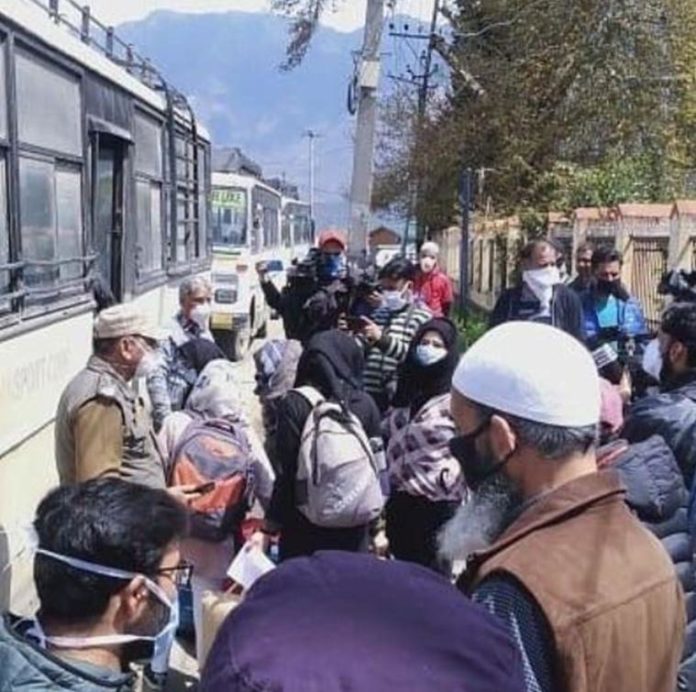
Srinagar (NVI): 489 more persons completed their quarantined period here today and were allowed to go home.

They were kept at different hotels and other government buildings and had tested negative. Some of them were placed at Hotel Abbas, Hotel Nehru and SAMCI here.

Those who were allowed to return to their homes hail from different districts of Kashmir, though a majority of them are from Srinagar.

Those belonging to different districts of Kashmir are being sent to their respective places in SRTC busses arranged by the Srinagar administration.

Meanwhile, those from Srinagar were all ferried home or entrusted to their families.

“We are thankful to administration for providing us good facilities. We are happy we are returning home,” said a group of students who had returned from Bangladesh and were allowed to go home today.

They also appealed to people to cooperate with the administration and do not hide their travel histories. “We need to cooperate then only we can fight COVID19,” they said.

Till yesterday, 638 persons were discharged after successfully completing their mandatory 14-day quarantine period.

There are around 1900 persons who had been put under administrative quarantine in Srinagar after their return, mostly from overseas.

Shifting of overseas-return persons into quarantine facilities was part of Srinagar administration’s elaborate preventive measures put in place to contain the spread of the COVID-19 disease after March 18 when the first positive case was reported in the district.

403 of 1,737 quarantined at Indian Army facilities released

New Delhi (NVI): The Ministry of Defence today said that a total of 1,737 persons have been handled at six COVID-19 quarantine facilities set up by the Army, of which 403 have been released so far after following mandatory procedures.

Armed forces have been playing a crucial role along with the civil authorities in mitigating the impact of coronavirus pandemic that has claimed 56 lives in the country so far, with total confirmed cases crossing the 2000 mark.

At present, six quarantine facilities or wellness centers by the Army are operational at Mumbai, Jaisalmer, Jodhpur, Hindon, Manesar and Chennai.

Three positive COVID cases – two from Hindon and one from Manesar – were referred to Safdarjung Hospital in the national capital for further treatment. In addition, 15 other facilities are being kept ready as standby for use, if required, the Defence Ministry said.

Apart from that, dedicated COVID-19 facilities including High Dependency Units, Intensive Care Unit beds are being prepared in 51 hospitals of the Armed Forces across the country. Some of these facilities are located at Kolkata, Visakhapatnam, Kochi, Dundigal near Hyderabad, Bengaluru, Kanpur, Jaisalmer, Jorhat and Gorakhpur.

Five viral testing labs at Armed Forces hospitals which can carry out COVID-19 test have been made part of the national grid, the ministry said. These include Army Hospital (Research & Referral), Delhi Cantt; Air Force Command Hospital, Bangalore and Armed Forces Medical College, Pune; Command Hospital (Central Command), Lucknow and Command Hospital (Northern Command), Udhampur. Six more hospitals are being equipped shortly with the resources to begin COVID-19 testing.

Army has been been working round-the-clock to provide medical and logistics support to the needy to contain COVID-19 pandemic. Armed Forces Medical Services (AFMS) has deployed its resources to aid the civilian authorities at this crucial time.

COVID-19: DRDO develops bio suit to keep health professionals safe

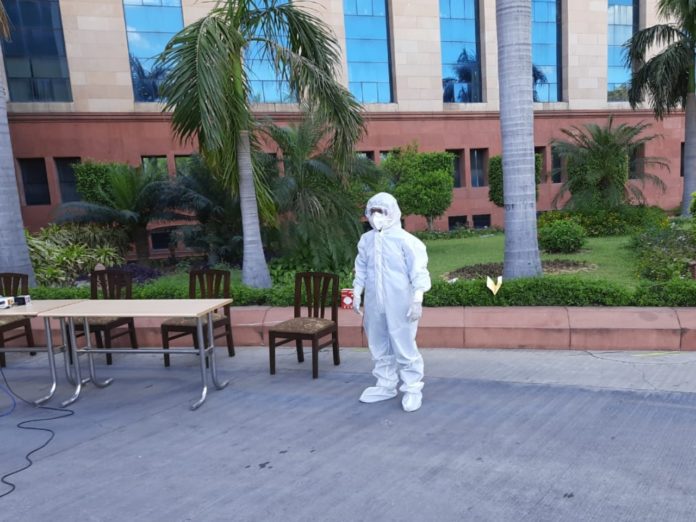
New Delhi (NVI): In a major breakthrough, the Defence Research and Development Organisation (DRDO) has developed a bio suit to keep the medical, paramedical and other personnel engaged in combating COVID-19 safe from the deadly virus.

DRDO is making all efforts to ensure that these suits are produced in large numbers and serve as robust line of defence for the medics, paramedics and other personnel in the front line combating COVID-19.

Scientists at various DRDO laboratories have applied their technical know-how and expertise in textile, coating and nanotechnology to develop the Personal Protective Equipment (PPE) having specific type of fabric with coating.

The suit has been prepared with the help of the industry and subjected to rigorous testing for textile parameters as well as protection against synthetic blood. The protection against synthetic blood exceeds the criteria defined for body suits by Ministry of Health and Family Welfare (MoHFW).

The industry is geared up for production of the suit in large quantities.

The current production capacity is 7,000 suits per day.

The bio suit production in the country by DRDO industry partners and other industries are being hampered due to non-availability of seam sealing tapes.

DRDO has prepared a special sealant as an alternative to seam sealing tape based on the sealant used in submarine applications. Presently, bio suits prepared using this glue for seam sealing by an industry partner has cleared test at Southern India Textile Research Association (SITRA) Coimbatore. This can be a game changer for the textile industry.

DRDO can mass produce this glue through industry to support the seam sealing activity by suit manufacturers.

A number of products and technologies has been developed for defence against Chemical, Biological, Radiological and Nuclear (CBRN) agents. Defence Research and Development Establishment (DRDE) Gwalior, a laboratory of DRDO, has developed Chemical, Biological, Radiological and Nuclear (CBRN) Permeable Suit Mk V.

53,000 suits have been supplied to Army and National Disaster Response Force (NDRF).

For first responders attending to radiological emergencies, a reusable suit has been developed by Institute of Nuclear Medicine & Allied Sciences (INMAS) Delhi.

Aerial Delivery Research and Development Establishment (ADRDE) Agra, has developed various types of parachutes with fabrics similar to protective technical textiles.

German Embassy cafeteria turns ‘Evacuation Situation Room’

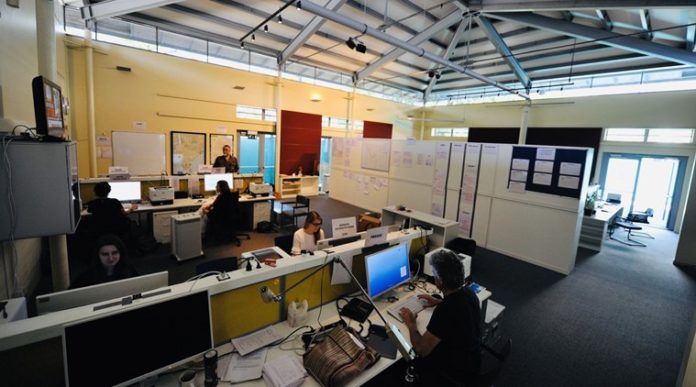
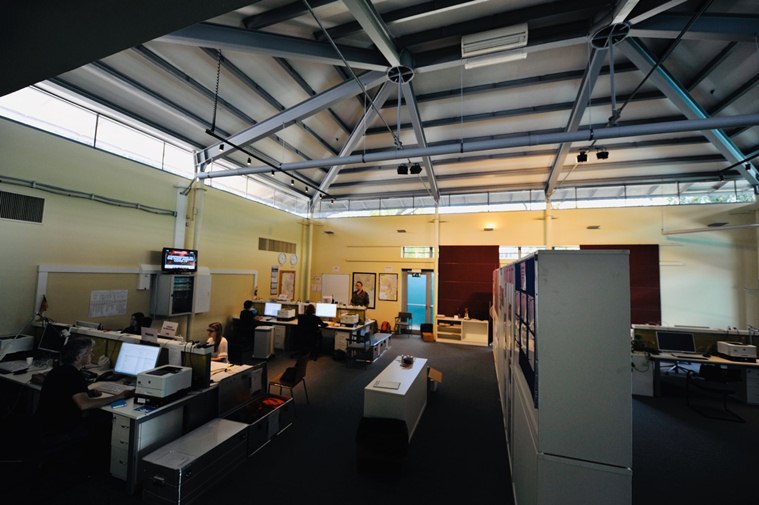
New Delhi (NVI): For the past three weeks, the cafeteria at German Embassy in Delhi has transformed into an ‘Evacuation Situation Room’ where a small team from the country is operating on a 24*7 basis to make sure that their nationals stranded in India are flown back home safely.

German Ambassador to India, Walter J Linder shared pictures of the cafeteria while lauding the hard work and efforts being put by the German officials at the embassy amid coronavirus pandemic.


“Update: for past 3 weeks, this Emb cafeteria (transformed into our EvacSituatRoom) has been the 24/7 home for fabulous evac team (same 4 consulates). 3000 stranded travelers already back home. No time for rest: airborne today 11th flight (Chennai), and 12th on Sunday (Goa/Mumbai),” the German envoy tweeted.

So far, 3000 Germans stranded at many places in India have been flown back home. The 11th evacuation flight operated from Chennai today and a 12th flight is scheduled on Sunday which will airlift German nationals from Goa and Mumbai.

Yesterday, over 600 Germans were evacuated from India on the 9th and 10th such flights. The first repatriation flight was operated by Lufthansa Airlines from Delhi to Frankfurt which flew back over 500 stranded Germans on March 26.

Amid the global Covid-19 crisis, many countries have imposed travel bans and closed their borders while airlifting stranded nationals from different parts of the world.

Taiwan to quarantine all incoming people with fever, respiratory problems

New Delhi (NVI): In an effort to stop coronavirus at its borders, Taiwan has announced that from today, all incoming people with fever or symptoms of respiratory tract infection will be taken to a designated quarantine facility after having their samples taken testing at the airport.

Announcing this, Taiwan’s Central Epidemic Command Center (CECC) said that as of April 1, the daily number of inbound passengers had fallen to 1,500, with about 100 per day having fever or respiratory symptoms.

The new measure is aimed at preventing community transmission of coronavirus by putting those with symptoms into quarantine before the test results come out, CECC Deputy Commander Chen Tsung-yen said, according to Taiwan’s Central News Agency (CNA).

Currently, only three airports receive incoming passengers — Taiwan Taoyuan International Airport, Kaohsiung International Airport and Taipei Songshan Airport, with the first two having already selected quarantine locations in nearby areas, while Songshan airport has yet to choose a venue, he said.

Meanwhile, to prevent potential community transmission of COVID-19 from causing hospital acquired infections, the government is banning patient visitors at all hospitals, nursing homes and long-term care facilities, according to CECC Commander Chen Shih-chung.

However, visitors will still be allowed for seriously ill patients or those receiving end-of-life care after making arrangements with the hospital or medical institutions, Chen added.

Four militant associates arrested in north Kashmir

Terrorist arrested
Representational image

Mubashir Bukhari

Srinagar (NVI): Jammu and Kashmir police today arrested four Lashkar-e-Toiba (LeT) militant associates in north Kashmir.

While two were arrested in Sopore area of Baramulla, two others were from Handwara area of north Kashmir’s Kupwara district.

In Handwara, police said that they have arrested Azad Ahmad Bhat and Altaf Ahmad Baba.

According to the police, a joint team of SOG (Special Operations Group) and Army arrested two persons during a raid at Langate area of Handwara.

“Two grenades, two pistols, one letter pad of LeT besides other incriminating material were recovered from their possession,” they said.

A case under FIR number 104/2020 under section 7/25 of the Arms Act has been registered against the duo.

In Sopore, the police along with SOG carried out raids at Noorbagh area of the town and arrested two persons. The identification of these persons has been yet to be ascertained.

“Arms and ammunition including UBGLs, pistols besides other incriminating material were recovered from their possession,” police said.

Coronavirus cases surge past 1 mn worldwide; over 53,000 dead

New Delhi (NVI): More than a million people are now known to have been infected by the novel coronavirus worldwide, while the death toll has surpassed 53,000, according to reports.

Italy remains the worst affected country by the COVID-19 outbreak, with 13,915 deaths, followed by Spain with 10,003.

The US has now become the third-worst affected country, with 5,316 total deaths, and more than 2,45,500 infected cases due to the contagion.

Meanwhile, The number of coronavirus deaths in French hospitals reached 4,503, an increase of 471 in 24 hours, according to the media reports.

In addition to this, President Donald Trump has said that if Iran requests his administration for help in dealing with the coronavirus emergency, that he would be willing to do it.

In Iran, nearly 50,000 people have been infected with 3,160 total deaths being reported.

On Sunday 9 pm, light lamps to dispel corona darkness: PM

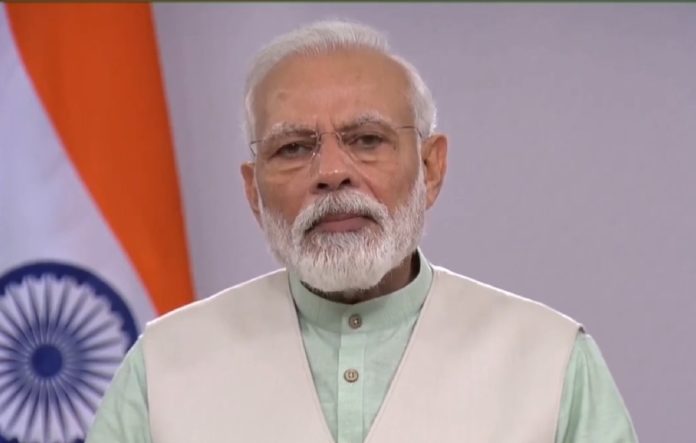
New Delhi (NVI): Prime Minister Narendra Modi today asked people to switch off the lights in their homes on April 5 (Sunday) at 9 pm, and light lamps, candles for nine minutes, as a gesture to show solidarity in the fight against coronavirus pandemic.

PM asked the citizens to stand in their balconies for 9 minutes with candles and lamps, or mobile flashlights to mark the march from darkness to light while maintaining social distancing.

“We are at home during lockdown, but we are not alone in this as collective strength of entire country is with each one of us,” he said while asking people to fight back the darkness spread by coronavirus by moving towards light.

The PM in his speech also thanked everyone for following the lockdown for 10 days so far and said, “I thank everyone who are fighting against the novel coronavirus and people for respecting the corona lockdown. It has become an example for all the countries today.”

“India has demonstrated a good example to be emulated by the world. The country is united against coronavirus,” he said.

The speech was live-streamed on PM Modi’s YouTube channel.

Modi had addressed the nation twice — on March 19 and March 24, since coronavirus pandemic became a serious concern in the country.

In his first address, PM Modi had called for a one-day Janata Curfew on March 22 (Sunday) and in the second address on March 24, he announced a 21-day nationwide lockdown to contain the spread of COVID-19. The lockdown will end on April 14.

Weather conditions to remain dry in North India

New Delhi (NVI): The weather will remain dry in the states of North India including Punjab, Haryana and Delhi for the next few days, according to the Meteorological Department.

The average temperature is expected to increase from 0.5 to 1.0 degrees Celsius during the coming April to June months.

In the last 24 hours, Khargone city of Madhya Pradesh was recorded as the hottest place in the plains of the country, where the maximum temperature was recorded at 41.5 degrees Celsius.

Apart from that, cities of Maharashtra, Karnataka, Andhra Pradesh, Kerala and Odisha were also included in the top 10 list of hottest places.

At the same time, parts of Uttarakhand and Himachal Pradesh may continue to receive rains for the next 24 hours whereas there will be a widespread decrease in rainfall activities in Jammu and Kashmir and Ladakh.

Meanwhile, the maximum temperature in Delhi settled at 32 degrees Celsius today and the minimum temperature was recorded at 18 degrees Celsius, according to IMD.

However, the maximum and minimum temperatures are expected to rise over the next few days.

MUST READ