Saturday, April 25, 2026
Home Blog Page 1328

PM directs availability of medical supplies for COVID-19

New Delhi (NVI): Prime Minister Narendra Modi today directed officials to ensure sufficient availability of all medical equipment such as ventilators, coveralls and masks, to be used in COVID-19 response.

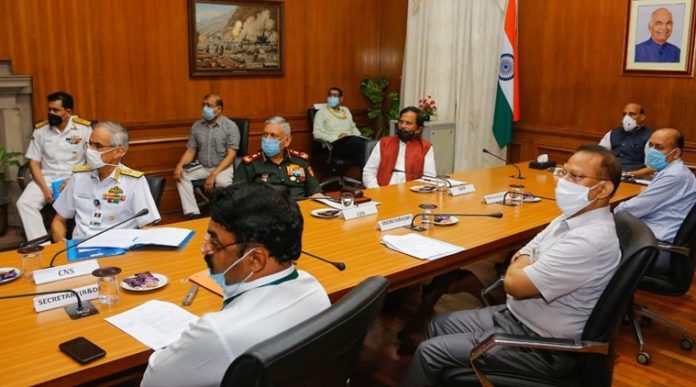
He issued the directions while chairing a joint meeting of the empowered groups constituted for planning and ensuring implementation of COVID-19 response activities in the country.

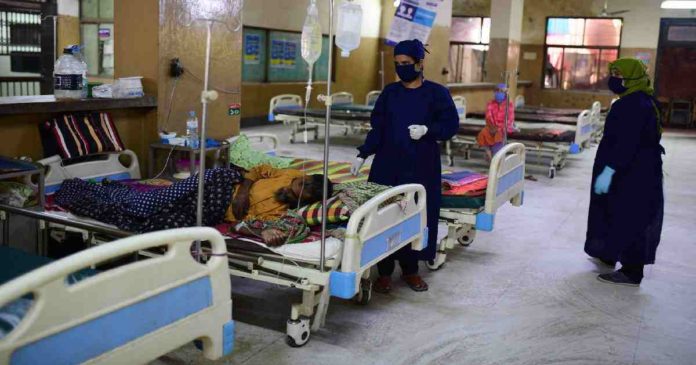
At the meeting, the Prime Minister reviewed countrywide preparedness regarding availability of hospitals, proper isolation and quarantine facilities, the PMO said.

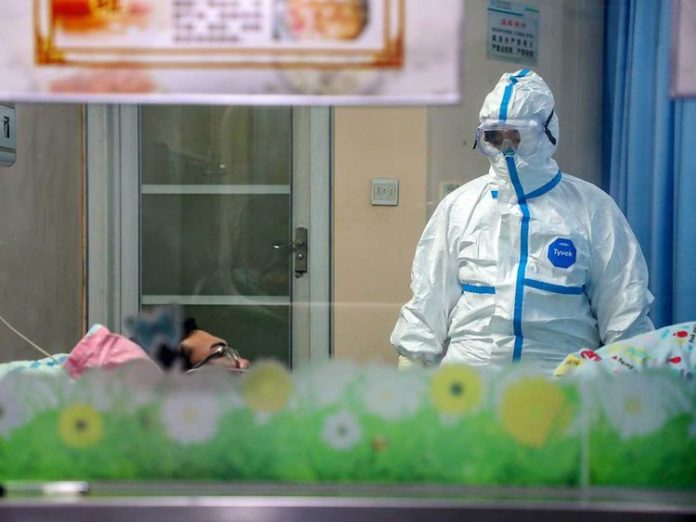
He also viewed disease surveillance, testing and critical care training and also directed the concerned groups and officials to ensure sufficient production, procurement and availability of all essential medical equipment such as PPEs, masks, gloves and ventilators.

The PM also directed the groups and officials concerned to ensure sufficient production, procurement and availability of all essential medical equipment such as PPEs, masks, gloves and ventilators, the Prime Minister’s Office tweeted.

4 militants eliminated by security forces

New Delhi (NVI): Security forces eliminated four militants in an ongoing operation that broke out today in Kashmir’s Kulgam region. The identities of the militants are yet to be ascertained.

The house in which the militants were holed up was demolished and weapons were seized from the scene of the encounter.

The militant group was responsible for killing several civilians since the last 12 days.

This operation was carried out based on a credible police input, through which the militants were tracked down in an operation launched by the Army and security forces.

Taiwan’s example-setting directive

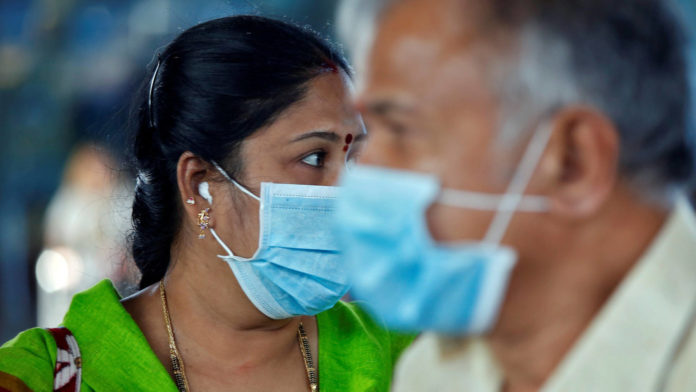
New Delhi (NVI): Wear facial masks while travelling in public transport or risk a fine of USD 496.

This example-setting directive has been issued in Taiwan by its government as part of efforts to contain the spread of coronavirus.

Taiwan’s Health Minister Chen Shih-chung, who also heads the Central Epidemic Command Center (CECC), said users of public transport, including the high speed rail and various metro systems, will need to wear the masks or face fines, Taiwan’s Central News Agency (CNA) reported.

“If we spot someone not wearing a mask, we will ask them to put one on and if they refuse to do so, we will fine them in accordance to the Communicable Disease Control Act,” Chen said.

Currently, passengers not wearing masks on trains belonging to the Taiwan High Speed Rail (THSR) and the Taiwan Railways Administration (TRA) have been directed to purchase masks at nearby convenience stores, said CECC Deputy Commander Chen Tsung-yen.

The reason for enforcing users of public transport to wear masks is because proper social distancing cannot be properly implemented in such situations, Chen Shih-chung said.

The CECC issued its first round of guidelines of social distancing on March 31, recommending that people in Taiwan stay at least one meter apart outdoors and 1.5 meters apart indoors.

The guidelines were expanded the following day, saying that businesses that cannot implement the social distancing rules should close temporarily.

Chen Shih-chung said social distancing is a preventative measure to contain COVID-19, even though Taiwan has not yet reached a lockdown level as has been the case in many other cities around the world.

“It will be too late if we implement social distancing after a lockdown has been announced,” Chen said.

As of yesterday, Taiwan had recorded nine new infections, bringing the total to 348 since the coronavirus emerged in China at the end of last year, according to CECC statistics.

In another directive, the government announced that all members of the public must wear a face mask when visiting government facilities and offices in Taipei from April 9, or be turned away.

Domestic cargo flights empowering India’s fight against COVID-19

New Delhi (NVI): Efforts at policy and ground level are being taken to add substantially in the country’s fight against Covid-19 by the Ministry of Civil Aviation.

The cargo that is being delivered to various parts of the country includes COVID-19 related reagents, enzymes, medical equipment, testing kits & PPE, masks, gloves & other accessories and cargo requisitioned by State and UT Governments and other postal packets.

The continous delivery of such essentials like medical kits has enabled testing of patients on time across the country. Similarly, delivery and parcel of masks and gloves has enabled doctors to protect themselves and others.

In addition to this, medical supplies delivered to North-East and remote areas ensures that no region of the country is left behind in this fight against Covid-19.

The ministry also announced that hub & spoke lifeline services have been started so that simultaneously, different and far located parts of the country can be catered to and resources are utilised optimally.

With regards to international collaboration, the ministry announced an air bridge between Shanghai and Delhi. “The First cargo flight of Air India on April 5.Air India will be operating dedicated scheduled cargo flights to China for the uplifting of critical medical equipment,” the ministry added.

Face Mask production initiative by SHGs

New Delhi (NVI): In response to rise in COVID-19, face mask production has been initiated by Self Help Groups (SHGs) members in 24 States covering 399 Districts of the country.

The initiative is being covered under the Ministry of Rural Development’s National Rural Livelihood Mission (NRLM).

Around 21,028 members of 4281 SHGs in 5 districts of Andhra Pradesh and 10,780 members of 1927 SHGs in 32 districts of Tamil Nadu produced 25,41,440 and 26,01,735 masks respectively in 10 days.

The members of SHGs of various states like Bihar, Chhattisgarh, Gujarat, Kerala, Madhya Pradesh, Uttar Pradesh and many North Eastern states are involved in producing masks.

However, total 65,936 SHG members from 14,522 SHGs are involved and together they have manufactured 132 lakh masks.

Three new cases of COVID-19 in Nepal

New Delhi (NVI): Three new coronavirus positive cases were reported in Nepal today, raising the number of such patients in the country to nine, according to local media reports.

All three new cases reported are from Sudurpaschim province, the far-western part of the country, the reports said, quoting officials of Ministry of Health.

The three new cases include a 21-year-old male of Kailali who returned from Mumbai in India and 41-year-old male of Kanchanpur who returned from Uttarakhand in India. Both of them have been quarantined.

The third patient is a 34-year-old female from Kailali who is known to be a relative of one of the earlier infected persons. This is the first case of local transmission in the country.

Among the nine cases of Nepal, eight are active and one has recovered. Except for one case confirmed today, all eight cases had recently returned to Nepal from other countries.

The Nepal government also imposed lockdown until April 7 halting flights, ordering vehicles off the roads, shutting businesses and shuttering major markets.

DRDO develops sanitisation equipments

(Image source: @DRDO_India)
New Delhi (NVI): As India prepares to fight against coronavirus pandemic, Defence research and Development Organisation (DRDO) has come up with technologies for sanitising areas of different sizes.
The Centre for Fire Explosive & Environment Safety (CFEES), Delhi, with the help of its industry partner, has developed two configurations of sanitising equipment. These are spin-offs from technologies developed for fire suppression applications.
It includes one portable sanitisation equipment for spraying decontamination solution consisting of one per cent Hypochlorite (HYPO) solution for sanitisation of suspected area.
The portable system can be mounted as a ‘backpack’ and can be carried by the operations personnel. This system incorporates low pressure twin fluid. It is capable of disinfecting up to 300 square metre area.

Advisory issued asking people to wear ‘homemade masks’: Health Ministry

Representational image

New Delhi (NVI): As India is witnessing a spike in the coronavirus cases, an advisory on homemade protective covers and face mask was issued today by the Ministry of Health and Family Affairs.

In the advisory, the government recommends that healthy people can wear homemade face masks, especially outside their homes, for better personal hygiene.

This will also protect the communities during the coronavirus pandemic. Certain countries have claimed benefits of homemade face cover for the general public.

Homemade face masks are recommended for such people  who are not suffering from medical conditions or having breathing difficulties may use the handmade reusable face cover, particularly when they step out of their house.

These masks and face covers are not recommended for Covid-19 patients or those involved in their care including healthcare workers and medical professionals.

The government also advises making two sets of these covers and masks so that while one is in use, the other can be washed.

In the manual, few steps have been laid down to make such homemade face covers and masks at home using cleam strips of cloth and a sewing machine.

In order to make a temporary face cover, the manual also shows ways to use a handkerchief and a couple of elastic bands for making a face mask.

An urgent need to facilitate the transfer of LCT to developing countries

New Delhi (NVI): Limiting global warming to 1.5 degrees is possible with existing low-carbon technology, if it is deployed on a massive scale to developing countries, according to the World Bank.

“There is an urgent need to facilitate the transfer of technology to developing countries,” said Ceyla Pazarbasioglu, Vice President for Equitable Growth, Finance and Institutions, at the World Bank Group.

Technology Transfer and Innovation for Low-Carbon Development observes that the cost of low-carbon technology (LCT) is on decrease while investment, trade, and innovation in this sector are rising.

The benefits of that progress have largely avoided the world’s poorest countries, which play little role in LCT markets as buyers, sellers or innovators despite being the most vulnerable.

As global transfer and deployment of LCT from developed to developing economies is a necessity but also an opportunity, according to the World Bank report.

Actions that promote LCT absorption, use and production, such as investments in human capital, infrastructure and firms. These investments can increase a country’s competitiveness, output, and employment while producing other benefits that improve the lives of citizens.

The World Bank report noted that, mass deployment of existing technology in just four sectors—energy, industry, transport and buildings, can account for two-thirds of the emissions reductions needed by 2030.

It is also said, technological capabilities in developing countries are improving although slowly, and from a small base.

In year 1992, just 5.2 percent of global LCT exports went from developing to advanced economies. By 2016, this share had increased to 18.1 percent, as per the World Bank report.

China is the said to be the world’s largest importer and exporter of LCT. In 2016, China accounted for 15.9 percent of total LCT imports, ranking ahead of the United States (13.2 percent) and Germany (6.9 percent).

Meanwhile, LCT have certain characteristics that make their adoption and transfer difficult, which include high up-front capital requirements, highly complex production inputs, and intense inertia and competition from the fossil fuel industry.

Apart from that, there are a variety of domestic and international policies that can help promote LCT technology transfer as well.

However, LCT is becoming less expensive, more widely traded and the basis for increasing innovation.

IMTECH to begin testing COVID-19

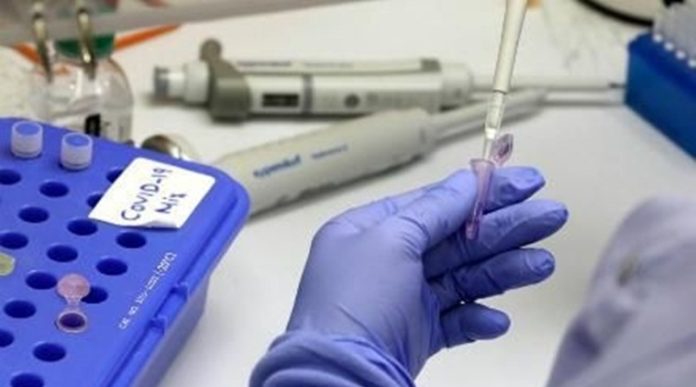
New Delhi (NVI): The CSIR Institute Microbial Technology (IMTECH) will take up testing of COVID-19 samples as the virus poses several challenges to the healthcare sector with the limited number of test kits.

In the initial phase, IMTECH plans to operationalise capability to test 50 to 100 samples a day, which can be subsequently ramped up.

IMTECH becomes the first CSIR laboratory in Chandigarh region and the third in the country after the Centre for Cellular Molecular Biology, Hyderabad, and the Institute of Genomics and Integrative Biology, Delhi, to take up Covid testing.

The institution has increased its capabilities to carry out clinical testing for COVID-19 and it has the necessary expertise in molecular microbiology.

Meanwhile, with a limited number of test kits available, India has been testing only those patients having a travel history and is ranked lowest in terms of testing per million people.

Apart from testing of clinical samples, CSIR-IMTECH is also supporting healthcare professionals by providing Personal Protection Equipment (PPE) to prevent them from contracting any infection.

MUST READ