Monday, June 22, 2026
Home Blog Page 1345

COVID-19: Sri Lanka extends curfew in four districts till May 4

New Delhi (NVI): Sri Lanka today extended the nationwide curfew in 4 high risk districts, including Colombo, till May 4 to curb the spread of coronavirus contagion in the country, a day after the island nation recorded the highest number of infections in a single day.

The 4 out of the 25 administration districts that come under high risk category are Colombo, Gampaha, Kalutara and Puttalam.

The extension was announced by President Gotabaya Rajapaksa’s office today.

Sri Lanka reported 15 new casesin the last 24 hours, raising the total number coronavirus cases to 435 in the country, according to the Health Promotion Bureau report.

7 patients have died and 109 patients including the Chinese tourist, who was the first COVID-19 case detected in the country in January and discharged last month, have fully recovered and been discharged from hospitals.

Sri Lanka has been under a 24-hour curfew since March 20 to combat the deadly viral infection.

Int’l, domestic flights suspended till May 15 in Nepal

New Delhi (NVI): The Nepal government has decided to extend the ongoing suspension of domestic and international flights until May 15 in view of the COVID-19 pandemic.

A high-level committee for the coronavirus control led by Deputy Prime Minister Ishwar Pokharel made the decision this afternoon, the local media reported.

The suspension announced earlier is in effect till April 30.

According to Nepali official, the meeting concluded that the suspension should not end on April 30 as decided earlier to avoid the risk.

The nationwide lockdown in Nepal, which was extended for the third time on April 14, will end on April 27.

The total number of confirmed cases in Nepal have gone up to 48, the Health and Pollution ministry said.

So far, 10 patients have been cured of the virus or discharged.

Coronavirus cases surpass 12,500 in Pakistan; 256 dead so far

COVID-19: Pakistan imposes mini-lockdown in Islamabad

New Delhi (NVI): The total number of coronavirus cases in Pakistan has reached 12,507 with 256 deaths so far.

Nearly half of the total confirmed cases are from Punjab province alone, at 5,326, according to Geo News.

Looking at the breakdown of cases, the Sindh province has reported 4,232 cases while Balochistan has 656 cases so far. The Khyber Pakhtunkhwa Province has 1,708 cases, Islamabad 214, Gilgit Baltistan 307 and 55 in Pakistan occupied Kashmir (PoK).

The total number of recovered cases so far stands at 2,589 in the country.

(Read more for additional information on coronavirus and related topics)

Meanwhile, the government has announced the arrival of the second installment of medical emergency relief items sent by China to aid Pakistan in its fight against the virus, according to media reports.

The items include PCR testing kits, surgical masks, protective suits, N95 masks and ventilators.

Pakistan has been under lockdown for over a month now to curb the spread of coronavirus.

J&K: 42 more test positive, highest ever since COVID-19 outbreak

Abid Bashir

Srinagar (NVI): Jammu and Kashmir today reported 42 positive cases, the highest number of cases ever since the outbreak of coronavirus pandemic, which has pushed the total tally in the Union Territory to 496 cases.

The government, however, said that more positive cases were the result of robust testing as the target of 1,000 tests per million was achieved and more than 1,000 tests were conducted in the last 24 hours.

J&K government spokesman Rohit Kansal said in a tweet that finally J&K has 1,000 test barrier but more tests have led to more positive cases. He confirmed that 42 cases tested positive for Covid-19, all from Kashmir.

Officials told NVI that in the Jammu region there are 57 cases and 437 in Kashmir. Pertinently, earlier in the day, a 72-year-old Covid positive patient succumbed in a Srinagar hospital, the sixth death in J&K so far.

Earlier 5 people including a woman had died due to coronavirus infection in the UT.

An official said that 14 cases were confirmed at Viral Diagnostic Lab at SKIMS and 28 others at Chest Disease Hospital Dalgate, Srinagar.

Among the fresh 42 cases, 23 are from Anantnag, 5 from Srinagar, 7 from Bandipora, 3 each from Baramulla and Shopian while 1 is from Kupwara district.

With 42 fresh cases, the total number of cases has reached 496 in Jammu and Kashmir including 109 recoveries and 6 deaths.

G H Yatoo, Nodal officer for Covid-19 at SKIMS, said that out of the 431 samples tested, 14 were tested positive at SKIMS while as many as 417 were tested negative.

He further added that all the 14 positive people have come in contact with already positive patients.

Saleem Ahmad Khan, Nodal officer for covid-19 at GMC Srinagar, said that 459 samples were tested at CD hospital Lab in the last 24 hours, of which 28 were tested positive. Pertinently, officials said that in the last 4 days, 115 people have been tested positive in J&K.

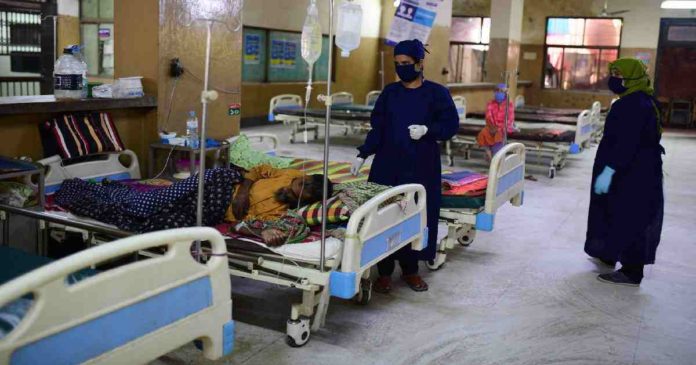
COVID-19: 324 doctors infected in Bangladesh so far

(Image source: United News of Bangladesh)

New Delhi (NVI): The deadly coronavirus has infected around 324 physicians both at private and public hospitals, Bangladesh Doctors Foundation (BDF) today said.

Of the total, 163 are from different government hospitals, 76 from private hospitals while 20 were shown in other category in the BDF data.

The total number of deaths from coronavirus continues to rise in Bangladesh as 9 more people have died in the last 24 hours, taking the total casualties in the country to 140, according to United News of Bangladesh.

Besides, a whopping 309 new cases of coronavirus infection were reported during this period, raising the number of such cases in the country to 4,988.

In addition to this, the coronavirus has now sread to 60 districts of the country out of the 64 districts.

J&K govt revokes detention of 28 people booked under PSA

Abid Bashir

Srinagar (NVI): Jammu & Kashmir government today revoked the detention orders of 28 people lodged in prisons under the Public Safety Act (PSA) post the Abrogation of Article 370.

Highly placed sources told NVI that Home Department has revoked PSA detentions of 21 persons lodged in different jails outside the Union territory and 7 others lodged in Central Jail, Srinagar. The decision in this regard was taken in a meeting yesterday evening.

The prominent figure in the list includes Muhammad Yasin Khan, who heads Kashmir Economic Alliance and Kashmir Traders and Manufactures Federation (KTMF).

Khan was detained by the J&K administration following the abrogation of Article 370 and its bifurcation into two UTs.

Apart from others, the detention orders of two close associates of Sajad Gani Lone, Chairman of the Peoples Conference, have also been revoked.

Ahead of abrogation of Article 370, police also rounded up activists from different parts of Kashmir. However, after the outbreak of the deadly coronavirus, J&K government has revoked detention orders of a total of 170 persons lodged in J&K, Uttar Pradesh and Haryana jails.

As per the mechanism worked out by the government, the revocation orders of all detainees have been sent to Home Departments and director generals of police of Haryana, Punjab, Uttar Pradesh and Delhi for issuing directions to police to enable their transit in respective jurisdictions.

The concerned Deputy Commissioners in Kashmir have been directed to issue necessary passes to family members of detainees along with vehicle passes for to and fro movement in Uttar Pradesh.

After the abrogation of Article 370 by BJP-led government, the government detained 5,000 persons in Jammu & Kashmir including three former Chief Ministers and top mainstream leaders. Of them, more than 300 were shifted outside J&K and lodged in Uttar Pradesh and Haryana jails.


UV disinfection trolley developed to clean up hospital spaces

New Delhi (NVI): A UVC based disinfection trolley has been developed to rapidly clean the hospital environment by the International Advanced Research Centre for Powder Metallurgy and New Materials (ARCI).

The trolley using UB+V light was developed as UV light in the range of wavelengths between 200 and 300 nm is capable of inactivating microorganisms, such as bacteria and viruses, thus disinfecting both air and solid surfaces.

ARCI along with an autonomous R&D Centre of Department of Science and Technology (DST) and University of Hyderabad (UoH) worked together on developing the trolley with the help of Mekins Industries Ltd. (MIL).

Coronavirus is sensitive to UVC light, as in the case of other viruses and bacteria. Rapid decontamination of the used patient-care beds and hospital rooms before admission of subsequent occupants is a major requirement in hospitals in view of the limited availability of beds.

The germicidal effects of UVC irradiation with peak intensity at 254 nm can result in cellular damage of the virus, thereby inhibiting cellular replication. Unlike chemical approaches to disinfection, UV light provides rapid, effective inactivation of microorganisms through a physical process.

The UVC disinfection trolley consists of 6 UVC germicidal tubes, which are arranged in such a way that 3 sides are illuminated with 2 tubes facing each direction. While these lamps take care of disinfection on the walls, bed, and room air, the floor disinfection is done by 2 smaller UV lights located at the bottom facing the floor. The hospital rooms get disinfected when the trolley is moved around in the room by an operator in protective suit and UV resistant goggles.

The present system is the first prototype and is readily usable in hospitals and railway coaches that are also being planned for treatment of COVID-19 patients. The UV-light disinfection system must be operated in unoccupied rooms after the patient is discharged and in the absence of health personnel.

Professor Ashutosh Sharma, Secretary, DST said, “Dry disinfection and sterilization of hospital rooms, instruments and other surfaces in the high-risk areas using a deep ultraviolet light is a good solution, which is implemented by the designer trolley in a compelling package that brings in ease, speed and efficiency.”


COVID-19 cases reach 1,463 in Afghanistan

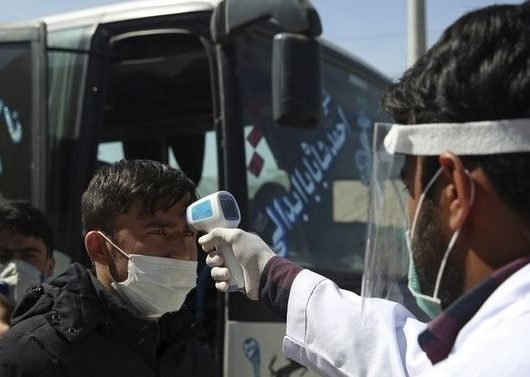
New Delhi (NVI): At least 133 new coronavirus positive cases have been reported in Afghanistan in the past 24 hours, taking the total to 1,463 across the country, according to local media.

Among the new coronavirus cases, 25 were reported in Herat, 21 in Balkh, 20 in Kandahar, 16 in Kabul, 7 in Nimroz, 7 in Samangan and three cases in each provinces of Zabul, Kapisa, Logar, Takhar, two cases in each provinces of Ghor, Bamiyan, Uruzgan, and one in each provinces of Baghlan, Maidan Wardak, Helmand and Parwan.

According to Afghan Health Ministry, four people died of the coronavirus in last 24 hours, bringing the total fatalities in the country to 47.

The official spokesperson of country said the shortage of RNA extraction kits “has been resolved” as Afghanistan has 10,000 kits that will arrive within the next few days and 50,000 kits are due in next few weeks.
Hide quoted text

Another 100,000 RNA extraction kits would be purchased by Afghanistan, official added.

Meanwhile, among new deaths, one of those who died was Assadullah Fazli, the former head of the Kunar public health directorate.

COVID-19 may worsen global immunization: UNICEF

Representational image

New Delhi (NVI): Around the world, more than 13 million children below the age of one year did not receive any vaccine at all in 2018, many living in countries with weaker health systems. The current situation of coronavirus pandemic could worsen this condition and cause disastrous outbreaks in 2020 and well beyond.

These statistics came on the occasion of World Immunization week, which this year aims to promote the use of vaccines to protect people of all ages against disease. The theme this year is #VaccinesWork for All.

Millions of children are in danger of missing life-saving vaccines against measles, diphtheria and polio due to disruptions in immunization services. Most countries had suspended mass polio campaigns and 25 countries had already postponed mass measles campaigns, according to the recommended guidance.

According to a UNICEF analysis, an estimated 182 million children missed out on the first dose of the measles vaccine between 2010 and 2018, or 20.3 million children a year on average.

This is because the global coverage of the first dose of measles stands only at 86 per cent, well below the 95 per cent needed to prevent measles outbreaks.

Widening pockets of unvaccinated children led to alarming measles outbreaks in 2019, including in high-income countries like the US, UK and France.

Immunization saves millions of lives every year and is recognized as one of the most successful and cost-effective health interventions. Yet, there are still nearly 20 million children in the world today who are not getting the vaccines they need.

“The stakes have never been higher. As COVID-19 continues to spread globally, our life-saving work to provide children with vaccines is critical,” Robin Nandy, UNICEF Principal Adviser and Chief of Immunization said. “With disruptions in immunization services due to the COVID-19 pandemic, the fates of millions of young lives hang in the balance.”

Between 2010 and 2018, Ethiopia had the highest number of children under one year of age, who missed out on the first dose of measles, at nearly 10.9 million. It was followed by the Democratic Republic of the Congo at 6.2 million, Afghanistan at 3.8 million, Chad, Madagascar and Uganda with about 2.7 million each.

Meanwhile, in Africa, more children have missed out on vaccines over the past years due to rising number of births and stagnation in immunization services. This has led to repeated outbreaks of measles and polio in countries such as the Democratic Republic of the Congo.

In South Asia, an estimated 3.2 million children did not receive any vaccines in 2018. In Eastern and Southern Africa, the number of unvaccinated children has remained almost the same for the last decade, at around 2 million. All regions are now also battling COVID-19 outbreaks.

In order to combat this situation, UNICEF is sending critical vaccine supplies to immunize children, where possible, in areas with outbreaks and to replenish their routine supplies.

In Congo, UNICEF is supporting the Government with vaccine supplies and protective equipment to continue immunization activities in North Kivu province, where over 3,000 cases of measles were reported since January 1. And in Uganda, UNICEF procured 38,42,000 doses of bivalent oral polio vaccine (bOPV) to immunize 9,00,000 children below the age of one year.

Children should receive three doses of the polio vaccine before they celebrate their first birthday.

“Children missing out now on vaccines must not go their whole lives without protection from disease,” said Seth Berkley, CEO, Gavi, Vaccine Alliance. “The legacy of COVID-19 must not include the global resurgence of other killers like measles and polio.”

MHA allows shops to open except in malls and containment zones

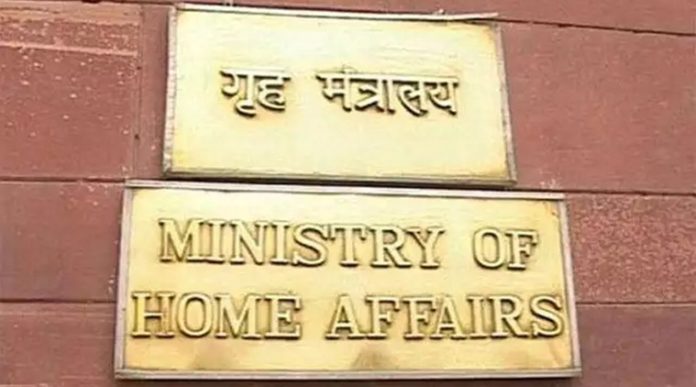
New Delhi (NVI): The Union Ministry of Home Affairs (MHA) today issued an order to allow opening of all shops, including shops in residential complexes, neighborhood & standalone shops.

Giving relaxation in the category of Commercial and private establishments, MHA has issued an order to all States and Union Territories, that shops in market complexes, except those within the limits of municipal corporations and municipalities, would be allowed to open. Shops in single & multi-brand malls would not be allowed to open anywhere.

The order implies that, shops in rural areas will be allowed to open except those in shopping malls. Whereas, in urban areas, all standalone shops, neighborhood shops & shops in residential complexes will be allowed to open. However, shops in markets/market complexes and shopping malls are not allowed to open.

The shops will have to function with 50 per cent worker strength and masks and social distancing will be mandatory.

The MHA order further states that sale by e-commerce companies will continue to be permitted for essential goods only.

In addition to this, sale of liquor and other items continues to be prohibited as specified in the National Directives for COVID-19 management.

It should be noted that, these shops will not be permitted to open in areas, whether rural or urban, which are declared as containment zones or hotspots by respective state governments.

MUST READ