Wednesday, July 29, 2026
Home Blog Page 1361

PM announces Rs 20 lakh crore package to tide over Covid-19 crisis

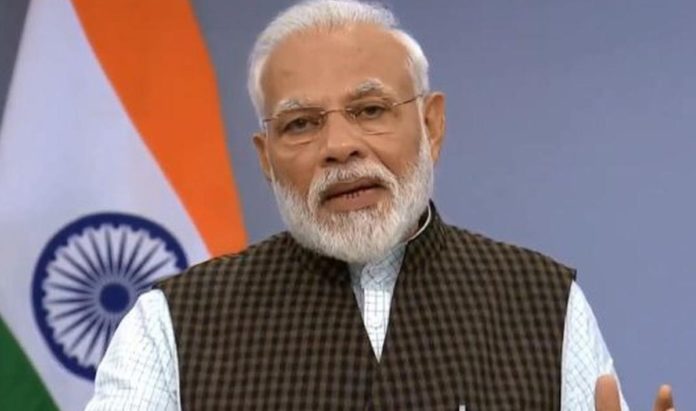
New Delhi (NVI): Prime Minister Narendra Modi today announced a Rs 20 lakh crore economic relief package to deal with the coronavirus crisis, saying that it will play an important role in “Atmanirbhar Bharat Abhiyan” (Mission self-reliant India).

Announcing the special economic package, just five days before the end of the third phase of lockdown, PM said it will support MSMEs, cottage and small scale industries, laboures, farmers and middle class amid the corona crisis. “This package is around 10% of India’s GDP,” PM said during his address to the nation at 8 PM.

He said that Finance Minister Nirmala Sitharaman will announce the details of the special economic package from tomorrow.

During his address, PM said that the building of a self-reliant India will stand on five pillars: Economy, Infrastructure, Tech-driven System, Vibrant Demography and Demand.

He said that Land, Labour, Liquidity, Laws have been stressed upon in the special economic package.

PM also said that being vocal about local is going to be the mantra for economic recovery now. “The current situation has taught us the importance of local supply chains. The global brands we see today were once local. From now, all Indians should become vocal for our local products,” PM said.

“The current situation in the world tells us that there is only one way to deal with this problem- ‘A Self-reliant India’,” the PM said in his opening remarks.

PM said that the vision of a self-reliant India will convert the corona challenge into an opportunity.

“One virus has destroyed the world. This is an unprecedented crisis. We have to protect ourselves and move ahead as well,” he said in an address to the nation.

Throughout his speech, PM stressed the idea of a self-reliant India. Citing an example, he said that when the corona crisis began, then not even a single PPE was manufactured in India. “Today, we are able to manufacture 2 lakh PPE and 2 lakh N-95 masks on a daily basis,” he said.

“When India talks of self-dependence, its focus is not on capital-centric world order, but on the welfare of humanity at large, based on Vasudhaiva Kutumbakam,” he said.

The Prime Minister also announced that lockdown 4.0 will come in a new form, with new rules and restrictions. He said that on the basis of suggestions received from states, important information related to the extended lockdown will be given before May 18.

The third phase of lockdown in slated to end on May 17. The lockdown initially kicked in on March 24 after the PM’s announcement and it has been extended twice since then.

PM’s address also comes a day after his marathon six-hours meeting with Chief Ministers of all states via video conferencing.

J&K: 4,802 industrial units functional amid Covid-19 lockdown

A small industry operating in Jammu (Source: Twitter)

Jammu (NVI): A total of 4,802 industrial units– 2,727 in Jammu division and 2,075 in Kashmir division– are functional in J&K, including large scale, MSMEs and micro enterprises, during the Covid-19 lockdown.

The Department of Industries and Commerce under J&K government today said that efforts are on to keep units making essential supplies, medicines in operation, amid the unprecedented lockdown situation.

The lockdown that was announced in late March has left a deep impact on the social and economic sectors. To generate income and prevent economic activities from a complete freeze amid the lockdown, the J&K government has initiated measures in the UT.

“As the administration is dealing with ensuring the safe return of stranded people of J&K from other parts of the country, at the same time it is working 24*7 to ensure that the economic impact due to lockdown is minimized,” the J&K government said in a statement.

In order to ensure an uninterrupted supply of essential commodities, during the first phase of the lockdown, all the industries involved in their manufacturing were allowed to function as per the SOP issued by the Department of Disaster Management, Relief, Rehabilitation and Reconstruction, it said.

Speaking about the initiatives here today, Director Industries and Commerce, Anoo Malhotra said that the department is ensuring hassle-free operation of food processing industries, flour mills, milk product industries, etc.

She said that the agro industries have been allowed to function during these times, considering the seasonal nature of the agricultural sector. “In addition to these, the pharma units have also been allowed to run to ensure there is no shortage of life-saving medicines in the market,” she said.

Packaging units that cater to essential commodity units are also kept functional, she added.

In the second phase of the lockdown, industries are allowed to function on case to case basis. All the industries falling in rural areas have been allowed to function to stem the tide of rural labour migration. The cold storage units and warehouses are also allowed to function.

“As of today 4802 units, (2727 in Jammu division and 2075 in Kashmir division) are functional including large scale, MSMEs and micro enterprises,” the J&K government said.

The UT administration has allowed the industries to operate only after ensuring strict enforcement of social distancing norms in factory premises, it said.

“The I&C department has allowed the industries to work at 30% of their staff strength, except the pharma sector which has been allowed to function at 60 % of its staff strength. Further, the unit holders have been advised to ensure that masks and sanitizers are provided to the employees. Department of Handloom and KVIB are also manufacturing masks and providing them to the various sectors,” read an official statement.

As per the SOP being followed by the industries, separate areas have been earmarked for unloading/loading of trucks bringing raw material from outside the UT. Quarantining of the truck drivers is also being done. The unit holders have been asked to ensure that all the labourers living in the premises are being provided with hygienic food and sanitary living conditions.

In order to ensure hygiene, fumigation drives are also being carried by the J&KSIDCO and J&KSICOP in their respective industrial estates. The General Managers are regularly inspecting the units so as to ensure all the norms are being adhered to. A robust mechanism has also been devised by the Department for redressal of the grievance of the unit holders. In order to ensure smooth movement, the GMs have been asked to coordinate with respective Deputy Commisioners to provide movement passes to the unit holders.

Health camps and inspections are also being conducted regularly by the department to ensure all SOP’s are being adhered to by the unit holders. To ensure the continuity of the supply chains, the units are functioning in shifts. Industries in the UT have also come forward in a big way to provide free ration and essentials to the needy under CSR initiative.

In this regard, Secretary, Industries and Commerce Department, Manoj Dwivedi who is coordinating all the activities of the Industries and Commerce Department, has reviewed the clearance of outstanding dues of MSMEs and JK Cements pending with other departments by 15th of this month. He has instructed for daily reporting of the clearance of the outstanding amount so that the MSMEs and JK Cement Unit which are facing severe liquidity crunch can be revived.

COVID-19: 1,878 policemen infected in Bangladesh

(Image source: United News of Bangladesh)

New Delhi (NVI): A total of 1,878 policemen have been infected with coronavirus in Bangladesh so far while performing their duties during the pandemic.

Among the infected police members, 865 are from Dhaka Metropolitan Police (DMP) alone, according to United News of Bangladesh.

The total number of deaths from coronavirus continues to rise in Bangladesh as 11 more people died during the period, taking the total casualties in the country to 250.

Besides, a whopping 969 new cases of coronavirus infection were reported during this period, raising the number of such cases in the country to 16,660.

In the last 24 hours, 245 more patients recovered from the disease raising the total recovery number across the country to 3,147.

Coronavirus cases in Pakistan exceed 32,000-mark

COVID-19: Pakistan imposes mini-lockdown in Islamabad

New Delhi (NVI): The total number of positive coronavirus in Pakistan has increased by more than a thousand, taking the overall tally to 32,674 with at least 724 fatalities recorded so far.

Looking at the breakdown of cases, Sindh province has reported 12,610 coronavirus cases, highest among all the provinces, while Punjab has 11,869 positive cases.

On the other hand, Khyber-Pakhtunkhwa has recorded 4,875 cases, Balochistan is at 2,061, Gilgit-Baltistan at 457, Islamabad at 716 and Pakistan-occupied Kashmir is at 86 cases so far, according to Geo News.

Balochistan government has announced that it will celebrate a simple Eid due to the coronavirus.

Provincial government spokesperson Liaquat Shahwani announced that the authorities have banned carnivals, functions and Eid milan parties in the province.

Covid-19: WHO, UNICEF issue guidance for reopening of schools

New Delhi (NVI): World Health Organization (WHO) and UNICEF have together issued guidance on adjusting public health and social measures while managing the risk of a resurgence of coronavirus cases, and prevention and control of COVID-19 in schools.

The guidance that was published on May 10, advises decision-makers that while deciding to close, partially close, or reopening schools, it should be guided by a risk-based approach to maximize the educational and health benefit for students, teachers, staff, and the wider community, and help prevent a new outbreak of COVID-19 in the community.

In a recent framework for reopening schools, WHO, UNICEF and IFRC (International Federation of Red Cross and Red Crescent Societies) highlight six key dimensions to consider when planning: policy, financing, safe operations, learning, reaching the most marginalized and wellbeing/protection.

In response to the coronavirus outbreak, countries around the globe have implemented several public health and social measures (PHSM), such as movement restrictions, closure of schools and businesses, and international travel restrictions.

However, several countries have started to ease the lockdown measures in place, as the disease is gradually loosening its grip from these nations.

Factors to consider in a general health risk assessment include epidemiological factors, health system and public health capacities, community engagement and government capacity to sustain social and economic support to the most vulnerable.

The guidance also suggests that national authorities can facilitate a risk-based approach at the local level by offering standard operating procedures or checklists for schools, based on local epidemiology and conditions.

The guidance suggests that decision-makers should consider the following when deciding on whether to open or close schools:

• Current understanding about COVID-19 transmission and severity in children

• Local situation and epidemiology of COVID-19 where the school(s) are located

• School setting and ability to maintain COVID-19 prevention and control measures

Certain additional factors to consider in deciding how or when to partially close or reopen schools include assessing what harm might occur due to school closure – risk of non-return to school, widening disparity in educational attainment, limited access to meals, domestic violence aggravated by economic uncertainties etc – and the need to maintain schools at least partially open for children whose caregivers are ‘key workers’ for the country.

Message on Govt’s 3-week, 5-phase ‘roadmap’ to ease COVID restrictions is fake

New Delhi (NVI): A message is doing rounds on WhatsApp claiming that a 3-week, 5-phase “roadmap” has been purportedly made by the government to ease Covid-19 restrictions in the country.

Taking note of the viral message, the Fact Check Unit of Press Information Bureau today clarified that this roadmap is not made the Indian government but that of some other country.

“Claim: A so-called 3-week, 5-phase “roadmap”, purportedly made by the Government, to ease #COVID19India restrictions is being circulated on Whatsapp.

“#PIBFactCheck: #Fake news.This roadmap is not made by our Government, but by that of some other country,” PIB Fact Check tweeted.

Apart from PIB, Regional Outreach Bureau (ROB) Chandigarh, under the Ministry of Information & Broadcasting (MIB) also posted a fake news alert regarding the “roadmap” message on Twitter.

The tweet read: “Claim: A message is being circulated down pointing backhand index claiming 5-phase roadmap by Government to ease #COVID19 restrictions based on a 3-week review process.

“#FactCheck: There is no such announcement/decision by the Government. The message is #FAKE & Baseless.”

Social media platforms are flooded with fake news and misinformation around coronavirus. To counter such viral fake messages, PIB has initiated Fact Check handle. One can also submit such messages or claims on PIB’s official website.

3 special trains with 3,461 passengers to leave from New Delhi today

New Delhi (NVI): With the restoration of passenger train services in a graded manner, three special trains will depart from New Delhi Railway Station today, carrying 3,461 passengers to their destinations across the country.

Train No 02442 from New Delhi to Bilaspur in Chhattisgarh was the first passenger train to leave at 4 PM with 1,177 passengers on board. Apart from that, two more trains will leave for Dibrugarh and Bengaluru today with 1,122 and1,162 passengers respectively.

These passenger trains are being operated around 50 days after the nationwide lockdown. All passenger train services were suspended when the lockdown kicked in, in March.

“With the departure of this train, restoration of passenger train services on Indian Railways started in a graded manner. Total 03 Special trains shall depart from New Delhi today while total 05 special trains to depart from other cities towards New Delhi,” the Ministry of Railway said in a statement.

These special train services shall be in addition to the Shramik specials run by Indian Railways.

“Total 741 PNRs were generated for 1177 passengers travelling in the New Delhi Bilaspur special train; total 442 PNRs were generated for 1122 passengers travelling in New Delhi Dibrugarh special train and total 804 PNRs were generated for 1162 passengers are travelling in New Delhi- Bengaluru special train,” the ministry added.

Apart from this, total 8 Trains are departing from various cities including New Delhi. These trains are:

1. Howrah-New Delhi (02301)
2. Mumbai Central-New Delhi (0295)
3. Ahmedabad-New Delhi (02957)
4. Rajendranagar (T)-New Delhi (02309)
5. Bengaluru-New Delhi (02691)
6. New Delhi-Bengaluru (02692)
7. New Delhi-Dibrugarh (02424)
8. New Delhi-Bilaspur (02442)

COVID-19: 371 prisoners released in April in J&K to decongest jails

(File/Representational Image)

Abid Bashir

Srinagar (NVI): Jammu and Kashmir government released 371 prisoners in the month of April, including 72 inmates who were lodged in various jails outside the UT under the Public Safety Act (PSA), in a bid to decongest jails amid Covid-19 pandemic.

371 prisoners have been released from jails within J&K and also from prisons outside the UT from April 1 to April 30, while dozens of other cases were currently under review.

The decision to release prisoners lodged in both J&K prisons as well as outside jails was taken to de-congest the jails in the wake of deadly Covid-19 pandemic to prevent the spread of the deadly virus.

In J&K UT, Review Committee on the release of prisoners headed by Home Secretary took a series of review meetings to review the cases of prisoners to be released in a bid to de-congest UT prisons at a time when pandemic Covid-19 is holding a tight grip on J&K.

Figures of total inmates released from within and outside jails between April 1 to April 30 reveal that among 72 PSA detainees who were released, 19 were from Central Jail Kotbalwal, 43 from Central Jail Srinagar, four from Kathua Jail, one from Udhampur and one each from Anantnag, Baramulla and Kupwara prisons.

97 undertrials were also released from these jails after a decision by the Under-Trial Review Committee. Besides this, 160 other prisoners were also released over the past one month, figures reveal.

Interestingly, 64 detention orders of prisoners from J&K lodged in outside jails were revoked from April 1 to 30 and so far 43 PSA detainees were released.

Figures suggest that from Central Jail Agra (UP) 23 prisoners were released, while two were released from district jail Bareilly, UP, six from District Jail Ambedkar Nagar (UP) and three from District Prison Karnal, Haryana.

Meanwhile, families of many prisoners complained that their loved ones released from various prisons are facing a tough time while reaching home.

“Back home, we are not even being given permission to travel outside J&K or even to Jammu so that we could bring our loved ones back in our vehicles,” said a family member, whose relative was released from Agra jail. “Not even a single driver agrees to ferry them to Srinagar,” he said.

Govt launches CHAMPIONS, an ICT-based system to help MSMEs

New Delhi (NVI): The Government has launched CHAMPIONS portal, a technology-driven Control Room-Cum-Management Information System, that will function as a real one-stop-shop solution of MSME Ministry.

The system utilising modern ICT tools is aimed at assisting Indian MSMEs march into big league as National and Global CHAMPIONS, the Ministry of Micro, Small & Medium Enterprises said in a statement today.

CHAMPIONS stands for Creation and Harmonious Application of Modern Processes for Increasing the Output and National Strength.

As the name suggests, the portal is basically for making the smaller units big by solving their grievances, encouraging, supporting, helping and handholding, the Ministry said.

The portal www.Champions.gov.in, is also fully integrated on real-time basis with government’s main grievances portal CPGRAMS and MSME Ministry’s own other web-based mechanisms.

Besides, the entire ICT architecture is created in house with the help of NIC in no cost. Similarly, the physical infrastructure is created in one of ministry’s dumping rooms in a record time, the Ministry said.

On April 30, new MSME Secretary AK Sharma had indicated that an ICT based system would be set up to help the MSMEs in present difficult situation and also to handhold them to become national and international champions. Accordingly, a comprehensive system known as CHAMPIONS was trial launched on 9th May, 2020, the Ministry added.

As part of the system, a network of control rooms is created in a Hub and Spoke Model. The Hub is situated in New Delhi in the Secretary MSME’s office.

AK Sharma did a trial launching of the champions system in the presence of his officers and staff. On the occasion, around 120 locations of the country were connected through video conference.

During trial launching the system, Sharma said that it is meant for the MSME units and people depending on them. “These units and people need our help badly. We will do everything to help, re-start and rejuvenate them”, he added.

Meanwhile, the spokes will be in the states in various offices and institutions of the ministry. As of now, 66 state level control rooms have been created as part of the system.

In addition, a detailed operating procedure has been issued, officers have been deployed and training has been conducted.

US CDC provides $3.6 mn to help India combat Covid-19

(Source: Twitter @msisodia)

New Delhi (NVI): The US Centers for Disease Control and Prevention (CDC) has committed USD 3.6 million to help India combat the COVID-19 pandemic. This is the first tranche of funds provided by CDC to India.

“These resources will support prevention, preparedness, and response activities in India,” the US Embassy said in a statement.

The funds will also strengthen the country’s efforts to increase laboratory capacity for SARS-COV-2 testing, including molecular diagnostics and serology.

The goal of the CDC’s global health response to COVID-19 is to limit human-to-human transmission and minimise the impact of COVID-19 through partnerships with key country and non-governmental partners to mitigate vulnerabilities and gaps in preparedness, the US Embassy said.

The funds will further support the development of Infection Prevention and Control (IPC) centers of excellence that can improve the ability of hospital networks to detect COVID-19 and local health systems through enhanced surveillance and monitoring systems.

The CDC will work with local partners to assist in the development of a strong public health workforce to support India’s capacity to respond not only to this pandemic but to the future threats as well.

In addition to this, the CDC India program will provide technical assistance for the Government’s ongoing crisis emergency and risk communication efforts, the Embassy said.

Since early January, the CDC’s India Office has been collaborating with sub-national and national government institutes to support the COVID-19 response in India, even before the first case of coronavirus was detected in the country.

CDC has also conducted training across India for healthcare administrators, physicians, nurses, and hospital staff on preparedness and response, infection prevention and control, laboratory operations, and field epidemiology to equip frontline response workers with the necessary skills to collect, analyze, and interpret data, and contribute to evidence-based decisions.

The CDC has a long-standing relationship and technical collaboration with the Health Ministry (MoFHW) to control HIV, tuberculosis, and malaria, eradicate polio, and prepare responses to influenza and other pandemic diseases.

These previous investments to improve health security have laid the foundation for rapid and effective preparation for emerging threats, including the current coronavirus outbreak.

For decades now, the United States has been the world’s largest provider of bilateral assistance in public health.  In India, the US government agencies, including the US Agency for International Development (USAID), the Centers for Disease and Control and Prevention, and other Department of Health and Human Services agencies, have provided more than USD 1.4 billion help in health assistance and nearly USD 2.8 billion in total assistance over the last 20 years.

MUST READ