Thursday, March 19, 2026
Home Blog Page 27

Middle East crisis: India issues advisories for its nationals
Cautionary Advisories issued for Israel, Iran, Bahrain, Qatar, UAE, Kuwait

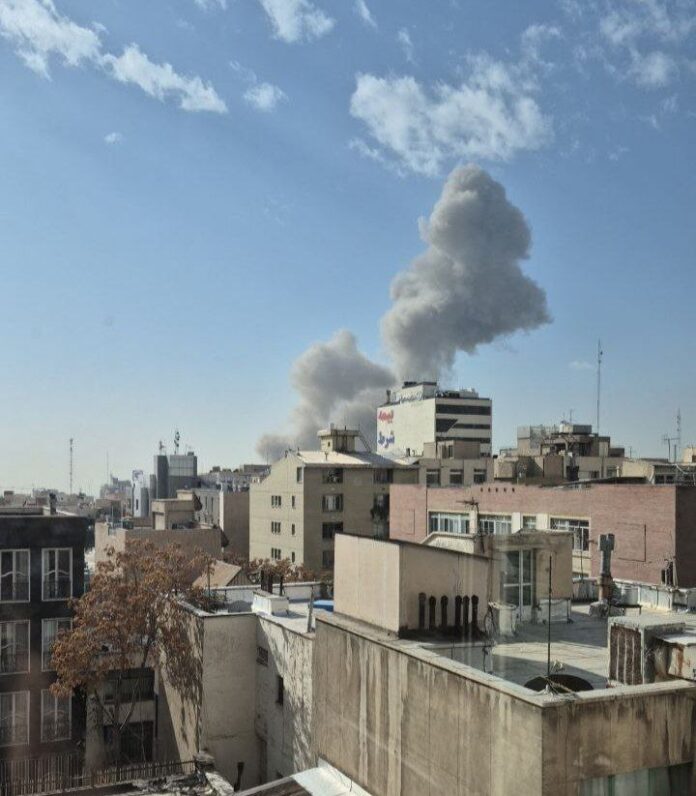
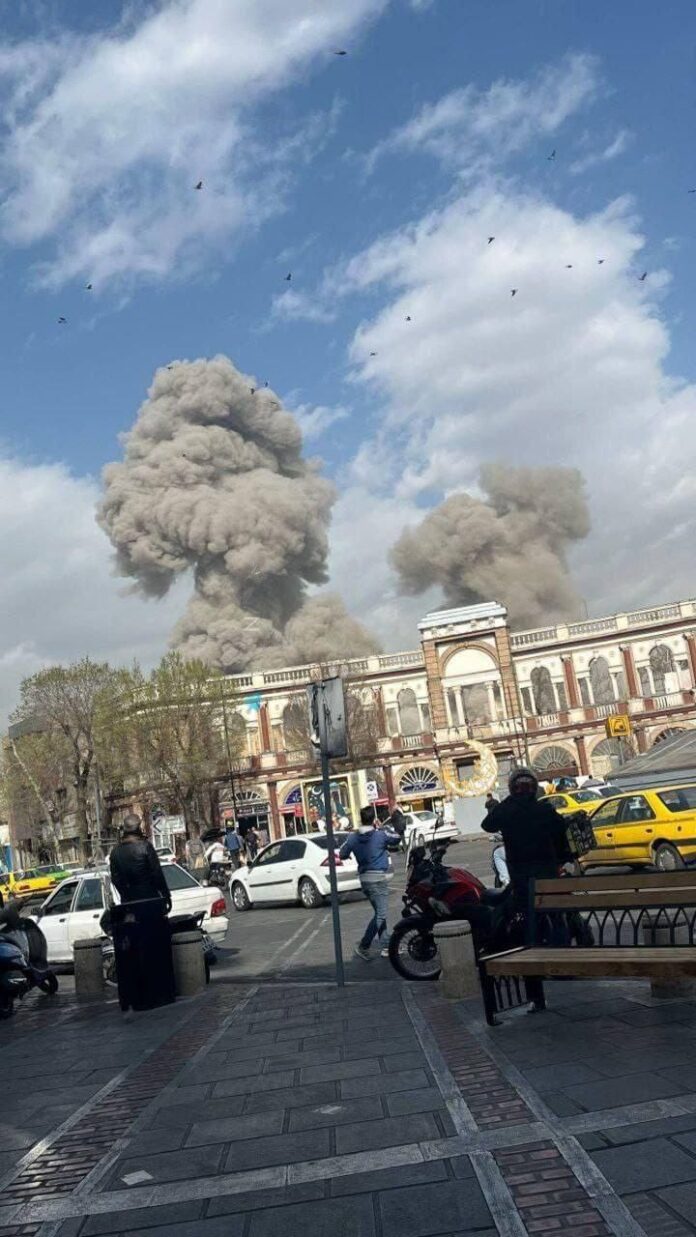
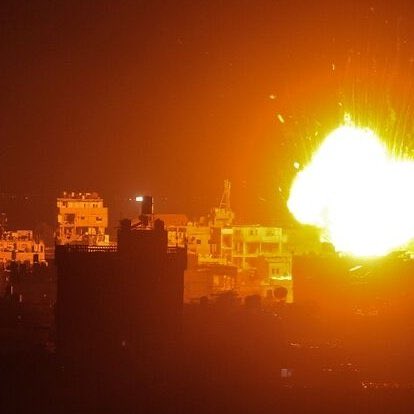
Scene in Iran after air attacks by Israeli and US forces

New Delhi, Feb 28 : As largescale fighting erupted across the Middle East today, India issued urgent advisories for its nationals in relation to Israel, Iran and various other countries of the region including Bahrain, Qatar, Kuwait and United Arab Emirates (UAE).

The advisories, issued through the Embassies in these countries, cautioned Indians living there to restrict movements and follow instructions given out by the local authorities to be safe.

The Government of India also advised Indians to avoid unnecessary travel to these nations in view of the deteriorating situation.

Indian Embassies, respectively, have also activated emergency helplines in these countries and are monitoring developments round the clock.

Several countries of the Middle East plunged into a war-situation this morning after the US and Israel launched military air strikes at Iran, which hit back by firing missiles and drones at Israel as well as regional countries like Bahrain, Qatar, UAE and Kuwait to target American military bases there.

The near-identical advisories issued by the Government of India have asked Indians in these nations to exercise “utmost caution”, avoid non-essential travel, steer clear of military installations and sensitive sites, and strictly adhere to safety protocols issued by host governments.

Indians have been advised to remain indoors where necessary and to keep emergency contact details readily accessible.

Embassy social media channels are being used to provide real-time updates, including changes to airspace restrictions and transport disruptions.

Indian missions are in close coordination with local authorities to ensure the safety and welfare of the diaspora.

Emergency Lines:

The Indian Embassies have established Helplines and dedicated email addresses to assist Indian nationals seeking guidance or support.

Consular teams have been placed on standby to respond to emergencies, including cases involving stranded travellers or those requiring urgent documentation.

The Ministry of External Affairs has reiterated that Indian citizens should register with their nearest embassy if they have not already done so. This enables officials to establish contact quickly should evacuation or further security measures become necessary.

As of now, there has been no announcement  regarding any plans to evacuate Indians from any of these countries.

US, Israel launch attacks on Iran which hits back by firing missiles
Trump asks Iranian leaders to lay down arms, Netanyahu says operation aimed to remove 'terrorist regime' in Tehran

A complex in Tehran in Iran hit during bombing by US and Israeli forces few days back (file pic)

New Delhi, Feb 28 : After weeks of talks with Iran, the US, along with Israel, launched largescale attacks on the Persian country, with the main objective of ousting the Islamic regime in Tehran.

Bombardments are being carried out in several cities of Iran, including the capital Tehran where the residences of Supreme leader Ayatohllah Ali Khamenei and President Masoud Pezeshkian were among the prime targets, according to reports.

The bombardments, described as “pre-emptive attack”, came after the talks on Iran’s nuclear programme resulted in no success.

About two hours later, Iran responded with missile attacks at Israel.

US President Donald Trump issued a video message, saying the US has begun “major combat operations” in Iran.

Trump asked the Iranian leaders to “lay down your arms” or “you will face certain death.”

He also encouraged the people of Iran to “take over your government — it will be yours to take.”

Israeli Prime Minister Benjamin Netanyahu also issued a statement, saying his country and the United States have launched an operation to remove the “existential threat posed by the terrorist regime in Iran”.

He said the operation would “create conditions for the Iranian people to take destiny into their own hands.”

Netanyahu also stated that Iran must not be allowed to arm itself with nuclear weapons.

Prior to that, Israel’s Defence Minister Israel Katz said, “The State of Israel launched a pre-emptive attack against Iran to remove threats to the State of Israel.”

As the attacks were initiated in Iran, Israel activated emergency norms back home and sirens were sounded across the country as “a proactive alert to prepare the public for the possibility of an incoming missile strike”.

The latest attack on Iran came around  8 months after such an action by the US and Israel in June, resulting in a military confrontation lasting 12 days. (NVI)

Pakistan wants to destabilise region: Afghanistan

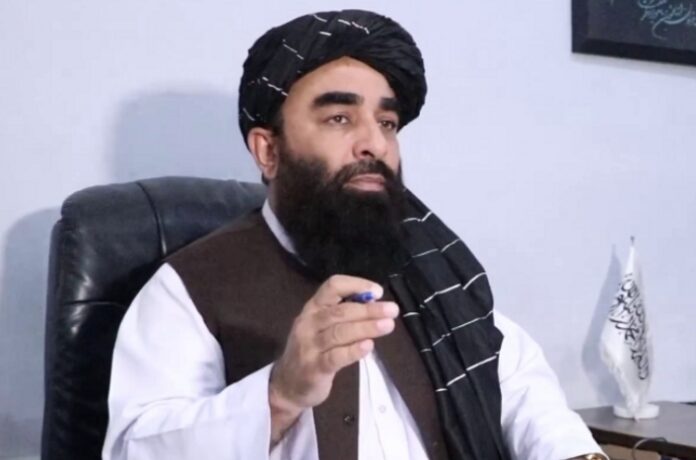
Kabul, Feb 27 : Pakistan is on a “mission” to destabilise the region, the Taliban regime of Afghanistan said today and urged countries of the region to stop the “trouble makers”.

Zabihullah Mujahid, the spokesperson of the Taliban regime, made the comments amid escalating military tensions between Afghanistan and Pakistan after the latter carried out provocative and brutal air strikes, killing dozens of innocent civilians and destroying Islamic religious places in Afghanistan on February 22.

Addressing a press conference in Kandahar province, Mujahid said Afghanistan does not want any fight with Pakistan but the latter is not willing to resolve issues through peaceful means.

Afghanistan “seeks a peaceful resolution of issues” has held several rounds of negotiations and discussed issues with Pakistan, he said.

However, the Pakistani side has not been willing to resolve the issues through peaceful dialogue, the spokesman said.

He said the Pakistani side constantly attempts to fabricate pretexts for war and links its internal issues to Afghanistan.

He stated this when asked what would be the Taliban regime’s stand if regional countries call for a halt to the fighting.

Regarding the fighting, Mujahid said Afghan forces precisely targeted Pakistani military centers.

Mujahid further stated that Pakistani aircraft are still patrolling Afghanistan’s airspace.

The latest flare up occurred due to Pakistan’s air strikes in Nangarhar and Paktika provinces of Afghanistan on February in which dozens of civilians, including children and women, were killed, besides which a mosque and a madrassa were destroyed and copies of holy Quran burnt to ashes.

In retaliation, Afghan forces last night launched massive cross-border attacks, using heavy artillery, to target Pakistani military positions at multiple places along the border, known as the Durand Line which the Taliban regime does not recognise.

Subsequently, Pakistan’s military regime carried out fresh airstrikes at several places in Afghanistan, including capital Kabul, early this morning.

Mujahid confirmed that Pakistani forces bombed certain areas in Kabul, Kandahar, and Paktia.

He said that during the fighting that started last night, 13 Afghan soldiers were “martyred” and 22 others were wounded.

The Afghan Ministry of National Defense also announced that in these clashes, Afghan forces killed 55 Pakistani soldiers, captured several others, and seized two military headquarters along with 19 security posts.

As tensions rise, Afghanistan says it hit military facilities inside Pakistan

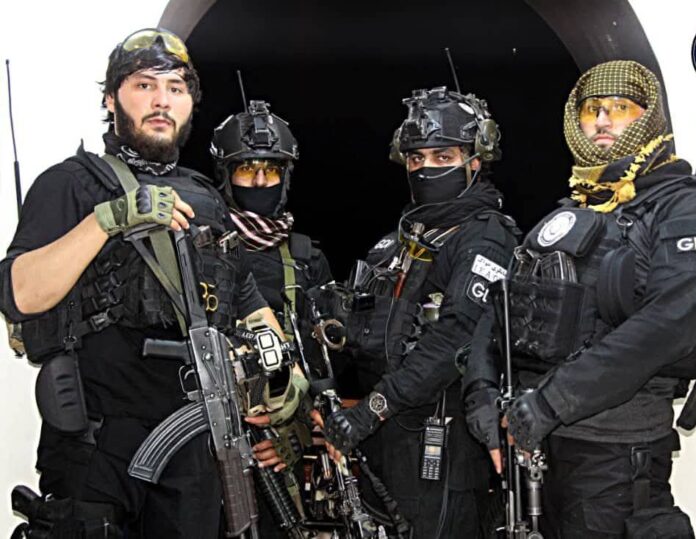
Afghan Special Forces (File Pic)

Kabul/Islamabad, Feb 27 : Amidst rising confrontation, Afghanistan claimed to have carried aerial strikes inside Pakistan today, targeting military installations, including in Abbottabad.

According to the Afghan Ministry of Defence, the aerial operation was conducted successfully, hitting key military centers, facilities, and installations belonging to Pakistan’s military regime.

“Afghan Air Force carried out airstrikes today (Friday) at around 11:00 a.m. on a military camp near the city of Faisalabad in Islamabad, the Army cantonment in Nowshera, the military township of Jamrud, and also in Abbottabad,” said a statement issued by the Ministry of Defense of the Taliban regime.

The Ministry statement added that the strikes were carried out in response to Pakistani military air “incursions” that took place last night in Kabul, Kandahar, and Paktia.

Though the Taliban regime did not specify, the aerial strikes were carried out apparently using the drones, since Afghanistan does not have fighter planes.

The Pakistan government confirmed this as its officials claimed that drones from Afghanistan were shot down.

Meanwhile, Fasihuddin Fitrat, Chief of Army Staff of the Taliban regime, sent out a tough warning to Pakistan, saying if any country “violates” any part of Afghanistan’s territory, it will receive an even stronger and more decisive response.

He asserted that the Taliban regime would not leave any aggression unanswered.

“If Pakistan’s military regime attempts to destabilize Afghanistan, they would not remain safe even in Islamabad or other major centers of that country,” the top military official of the Taliban regime warned.

Fitrat stressed that Afghanistan’s defense forces have the capability to defend the country’s territorial integrity.

Afghan forces launched massive cross-border attacks on Pakistani military at multiple places along with Durand Line last night, in retalation to the airstrikes inside Afghanistan four days earlier.

The Taliban regime claimed to have killed over 55 Pakistani soldiers, captured several others, besides seizing or destroying dozens of military installations, including a major Headquarters.

Soon, after Pakistani military carried out fresh air strikes at several places in Afghanistan, including Kabul and Kandahar.

The latest flare up in military tensions came began after Pakistan carried out airstrikes in Nangarhar and Paktika provinces of Afghanistan during the night of February 21 and 22, killing dozens of innocent civilians, including children and women.

An outraged Taliban regime vowed to avenge the brutal and criminal act of Pakistan, which it did last night.

Major military confrontation between Afghanistan and Pakistan
Pakistan declares 'open war' against Afghanistan

Afghanistan-Pakistan warzone (file pic)

Kabul/Islamabad, Feb 27 : Military confrontation between Afghanistan and Pakistan escalated massively today with huge attacks and counter-assaults being carried out by both sides, four days after Pakistani air force conducted strikes in the Taliban-ruled neighbouring country killing dozens of civilians.

The escalation occurred after Afghan forces launched a massive assault at Pakistani military at multiple places along the border last night to avenge the air attacks in Afghanistan during the intervening night of February 21 and 22.

“Heavy retaliatory offensive operations have been launched against the enemy by the Islamic Emirate of Afghanistan” at various points along the Durand Line in the provinces of Paktia, Paktika, Khost, Kunar, Nuristan, Nangarhar, and at the Torkham Gate, Hamidullah Fitrat, Deputy Spokesman of the Taliban regime, said last night.

While the operations were continuing, he said the Afghan forces captured one Headquarters and 19 outposts of the Pakistani military.

Four outposts were abandoned and vacated by the Pakistani forces, and those were completely set on fire, he added in a statement.

“Up to 50-55 Pakistani soldiers have been killed, of whom 23 bodies and a number of others have been taken alive into the custody of the Mujahideen,” he said.

Soon after, Pakistan declared an “open war” and carried out fresh air strikes at several places in Afghanistan, including Kabul, Kandahar and Paktia provinces.

One of the Pakistani fighter planes was shot down, according to Afghan media.

Hamidullah Fitrat said the Afghan forces seized dozens of light and heavy weapons of the Pakistani military, destroyed a tank, and captured one international harvester vehicle of the enemy.

The major Headquarters of the Pakistani regime, which has been captured, is located at Anzar Sar opposite the Alisher–Terezi district of Khost Province of Afghanistan.

Prior to that, Spokesperson of the Taliban regime Zabihullah Mujahid issued a statement, saying the Afghan forces “will, under the cover of darkness, easily eliminate all moving forces of the enemy and send them to hell.”

At around 3.30 am (Afghanistan time), Zabihullah Mujahid posted on X: “The cowardly Pakistani military has carried out airstrikes in certain areas of Kabul, Kandahar and Paktia; fortunately, there have been no reported casualties.”

Pakistan’s Defence Minister Khawaja M. Asif also issued a statement threatening the Taiban-ruled Afghanistan.

“Our cup of patience has overflowed. Now it is open war between us and you (Afghanistan). Now it will be ‘dama dam mast qalandar’. Pakistan’s army did not come from across the seas. We are your neighbours; we know your inns and outs,” he said.

Pakistan codenamed its military action against Afghanistan as ‘Operation Ghazab-ul-Haq’.

The attacks by the Afghan forces come four days after Pakistani military carried out airstrikes inside Afghanistan in Paktika and Nangarhar provinces, killing dozens of civilians, including children and women.

The Pakistani air attacks, ostensibly to target “TTP terrorists”, also destroyed a mosque and a madrassa, and resulted in burning of copies of Holy Quran to the ashes.

The Taliban regime was outraged by yet another blatant violation of the sovereignty of Afghanistan by the Pakistani military and vowed retaliation at an appropriate time and place.

The Taliban regime was angered more by the fact that the Pakistani military targeted innocent Afghan Muslim civilians during the Holy month of Ramadan.

Four days after Pakistani airstrikes, Afghanistan launches massive retaliatory attacks

Afghan forces launch cross-border attacks at Pakistani military

Kabul, Feb 26: Afghanistan tonight launched massive cross-border attacks on Pakistan in retaliation to the February 22 airstrikes and claimed to have killed around 55 Pakistani soldiers while capturing one military Headquarters and 19 outposts of the enemy during the operation which was continuing.

Hamidullah Fitra, Deputy Spokesman of the Taliban regim, said, “heavy retaliatory offensive operations have been launched against the enemy by the Islamic Emirate of Afghanistan” at various points along the Durand Line in the provinces of Paktia, Paktika, Khost, Kunar, Nuristan, Nangarhar, and at the Torkham Gate.”

He said while the operations were continuing, the Afghan forces have so far captured one Headquarters and 19 outposts of the Pakistani military.

Four outposts were abandoned and vacated by the Pakistani forces, and those were completely set on fire, he added in a statement.

“Up to 50-55 Pakistani soldiers have been killed, of whom 23 bodies and a number of others have been taken alive into the custody of the Mujahideen,” he said.

Dozens of light and heavy weapons of the Pakistani military have been seized, one tank has been destroyed, and one international harvester vehicle has also been captured, the Deputy Spokesman of the Taliban regime of Afghanistan said.

The major Headquarters of the Pakistani regime, which has been captured, is located at Anzar Sar opposite the Alisher–Terezi district of Khost Province of Afghanistan.

A little earlier, Spokesperson of the Taliban regime Zabihullah Mujahid issued a statement, saying the Afghan forces “will, under the cover of darkness, easily eliminate all moving forces of the enemy and send them to hell.”

The attacks by the Afghan forces come four days after Pakistani military carried out airstrikes inside Afghanistan in Paktika and Nangarhar provinces, killing dozens of civilians, including children and women.

The Pakistani air attacks, ostensibly to target “TTP terrorists”, also destroyed a mosque and a madrassa, and resulted in burning of copies of Holy Quran to the ashes.

The Taliban regime was outraged by yet another blatant violation of the sovereignty of Afghanistan by the Pakistani military and vowed retaliation at an appropriate time and place.

The Taliban regime was angered more by the fact that the Pakistani military targeted innocent Afghan Muslim civilians during the Holy month of Ramadan.

This is a developing story…..

Afghanistan hits Pakistani border posts to avenge airstrikes

Afghan forces launch cross-border attacks at Pakistani military

Kabul, Feb 26 : Four days after Pakistani airstrikes in Afghanistan, the Taliban regime tonight launched massive cross-border attacks, targeting the Pakistani military posts.

The Afghan government announced that the retaliatory operations have been launched against the Pakistani forces in areas bordering Khost, Paktia and Nuristan provices, besides some other parts along the “imaginary” Durand Line which divides the two countries.

The Afghan forces used heavy artilllery to target the Pakistani border forces.

Spokesperson of the Taliban regime Zabihullah Mujahid issued a statement, saying the Afghan forces “will, under the cover of darkness, easily eliminate all moving forces of the enemy and send them to hell.”

Soon after, he said the Afghan forces have captured 15 Pakistani military posts, killed several Pakistani soldiers and captured a number of others.

The Afghan action came in retaliation to the Pakistani airstrikes in Paktika and Nangarhar provinces during the intervening night of February 21 and 22, which killed many civilians.

The outraged Taliban regime had vowed to avenge the Pakistani action. (NVI)

TTP claims killing of 13 Pakistani soldiers, affiliates

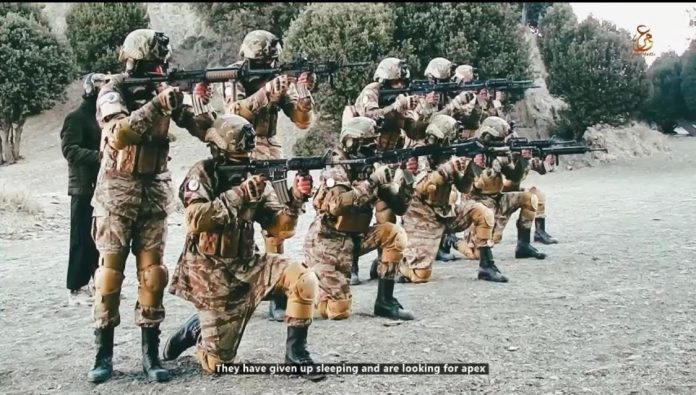
Special squad of Tehreek-e-Taliban Pakistan (TTP) undergoing training. (File Pic)

Peshawar, Feb 25 : Tehreek-e-Taliban Pakistan (TTP) has claimed to have killed more than 13 Pakistani soldiers, policemen and affiliated persons and injured several others in multiple operations in Khyber Pakthunkhwa Province over the last two days.

The biggest among the attacks was in Lachi in Kohat district, where TTP ambushed a police convoy on Shakardara Road.

At least 10 police personnel, including a DSP and an Inspector, were killed and wounded, TTP said in a statement issued by its spokesman Muhammad Khorasani.

One police vehicle was set on fire and others were damaged, he added.

In Bajaur district, one soldier was killed and another wounded in a sniper attack on a military post in Anzari area, the statement said.

One more Pakistani soldier was killed and another injured in a separate sniper attack in Shin Warsak in Wana, it said.

In Peshawar, a police officer was killed by TTP which claimed to have recovered an AK rifle and two pistols from him.

The TTP also carried out attacks at military posts and installations which are believed to have caused casualties among soldiers and destruction to properties.

These included two separate rocket and mortar attacks on military checkpost in Chinar in Salarzai and a missile attack on a military post in Khoja Gai Sarai.

In Tank district, a guerrilla attack was carried out by TTP on a checkpost jointly manned by the Pakistan Army and Police in Shalam and there is a strong possibility of enemy casualties, the spokesman said.

In Lakki Marwat district, a mortar attack was carried out at the residence of an agent of the Pakistan Army and the head of a so-called ‘Peace Committee’, the statement said, adding there is a possibility of casualties and material losses.

In North Waziristan, an officer of Counter Terrorism Department (CTD) was captured by TTP in Miranshah area.

The TTP also rubbished the claims of the Pakistani military regarding arrest of a female suicide bomber of the outfit.

“The news of the arrest of a female suicide bomber from Sheikh Yusuf tent settlement in Dera Ismail Khan is false and baseless. No woman belonging to Tehree-e-Taliban Pakistan has been arrested. CTD officials are spreading false propaganda to cover up their failure,” the spokesman said.

“A poor woman is being arrested and linked to Tehreek-e-Taliban Pakistan, which is merely an excuse to pave the way for violating the sanctity of women’s modesty and home privacy,” he said.

TTP questions Muslim credentials of Pakistani military over Afghan airstrikes
Pakistani bombing destroyed Mosque, reduced copies of Quran to ashes

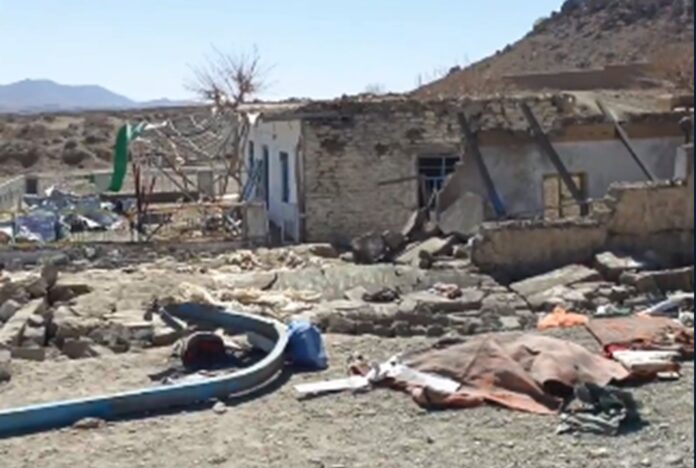
Condition of a Madrassa in Afghanistan after bieng hit by Pakistani airstrikes on Feb 21-22 night

Peshawar, Feb 25 : Questioning Pakistani military’s credentials of being Muslims, Tehreek-e-Taliban Pakistan (TTP) has slammed it for bombing Islamic religious places and killing innocent civilians in Afghanistan during the holy month of Ramadan.

“In this tragic attack, a mosque and a religious seminary were also destroyed, while sacred copies of the Holy Qur’an were reduced to ashes by bombs and explosives, deeply wounding the sentiments of the faithful,” TTP said referring to the airstrikes carried out by the Pakistani military in Paktika and Nangarhar Provinces of Afghanistan during the night of February 21 and 22.

“For those who call themselves Muslims to mercilessly target unarmed civilians in their sleep during the blessed month of Ramadan, and to desecrate places of worship, educational and religious institutions, and sacred religious texts, is not only a violation of humanity and morality, basic human rights, and international law, but also a grave breach of global principles respecting human values and religious sanctities,” TTP said.

In a statement, it said the bombing was carried out by “the slave army imposed upon Pakistan, in an attempt to cover up its failures regarding the country’s security situation and, as in the past, to shift the blame onto others.”

As a result, approximately 22 members of a single family were martyred or injured, including women, children, and elderly individuals, the Pakistani Taliban said in a statement.

“Such inhumane acts by the enemy aim to create an atmosphere of fear, insecurity, and instability, reflecting their brutality,” it said.

Pakistan-Afghanistan: Recurring Blitz

“Tehreek-e-Taliban Pakistan strongly condemns this cowardly bombing in the strongest possible terms,” the statement said.

Against this backdrop, the TTP posed a question to “the conscience of people of reason and wisdom”, asking “When from the leadership and officials of the (TTP) movement down to ordinary fighters have proven their presence within their own country (Pakistan), then under what law or moral code can unarmed Muslim civilians of the neighboring country, Afghanistan, be targeted under the pretext of the movement?”

In the wake of the brutal attacks, TTP said, “We call upon the international community and human rights organizations to conduct impartial and transparent investigations and to restrain those responsible for this incident, thereby demonstrating genuine humanitarianism and a sense of responsibility.”

The TTP vowed its “firm resolve to continue this sacred jihad until this country is freed from the grip of these oppressors and returned to its true purpose of creation.”

Pakistan-Afghanistan: Recurring Blitz

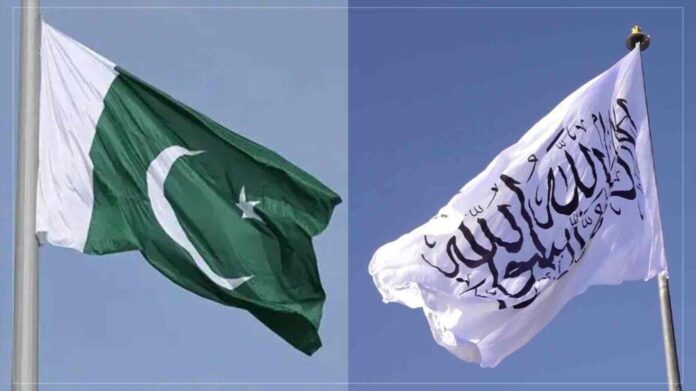
Flags of Pakistan and Taliban-regime of Afghanistan

Column:

By Tushar Ranjan Mohanty

On February 22, 2026, Pakistan carried out a series of predawn airstrikes across eastern and south-eastern Afghanistan, resulting in the deaths of at least 18 civilians, including women and children, and leaving several others injured.

Pakistani accounts, however, claimed the strikes hit seven militant facilities, including the Banusi Madrasa in Bermal district and suspected hideouts in Khogyani, killing more than 80 militants, including senior commanders.

A report in Dawn, citing security sources, stated that intelligence-based operations had destroyed centres linked to Tehreek-e-Taliban Pakistan (TTP), described as ‘Fitna al-Khawarij’.

Pakistan’s Ministry of Information and Broadcasting, in a statement on X, claimed the strikes targeted camps associated with TTP, its affiliates, and the Islamic State–Khorasan Province (ISKP).

It linked the operation to recent suicide attacks in Pakistan, including incidents in Islamabad, Bajaur and Bannu, asserting these were directed by the Afghanistan-based terrorist leadership.

Pakistan’s State Minister for Interior, Talal Chaudhry, claimed nearly 70 militants were neutralised and accused Afghanistan of exporting terrorism.

The Afghan government rejected these claims, stating that civilian areas, including homes and a madrassa, were struck, and condemned the operation as a violation of its sovereignty, warning of a measured response.

The February 22 airstrikes followed an escalation in militant violence within Pakistan, including a suicide attack in the Bannu District of Khyber Pakhtunkhwa just hours earlier.

TTP questions Muslim credentials of Pakistani military over Afghan airstrikes

On the evening of February 21, a vehicle-borne suicide bomber targeted a Security Forces (SF) convoy in Bannu District, killing Lieutenant Colonel Shahzada Gul Faraz (43) and Sepoy Karamat Shah (28). The attack underscored the deteriorating security environment in the province.

Earlier, on February 16, at least 13 persons, including 11 SF personnel and two civilians, were killed and another seven injured in a vehicle-borne suicide attack in the Malangi area of Mamund tehsil (revenue unit) in the Bajaur District of KP. A six-year-old child was among those killed.

The terrorists targeted a madrassa that had previously served as a hideout for Taliban affiliates and was reportedly under SF control at the time of the attack.

One of the deadliest attacks cited by Pakistan as a principal trigger for the February 22 airstrikes occurred on February 7, when a suicide bomber detonated explosives at the Khadijah al-Kubra Imambargah, a Shia place of worship, in the Tarlai Kalan area on the outskirts of Islamabad Capital Territory (ICT).

The attack killed at least 36 Shia worshippers and injured over 169 others. The Islamic State Pakistan Province (ISPP) claimed responsibility.

Addressing the media, Interior Minister Mohsin Naqvi and Minister of State for Interior Talal Chaudhry stated that the suicide bomber had been identified. While clarifying that he was not an Afghan national, they disclosed that he had travelled to Afghanistan prior to the attack.

Preliminary investigations indicated that the bomber, identified as Khan, had stayed in Afghanistan for approximately five months before returning to Pakistan. He is believed to have received training at the Mansoor Istashhadi training centre in Kunar Province, and to have travelled between the two countries multiple times.

The February 22 strikes must be viewed against the backdrop of a deteriorating security environment and strained bilateral relations following the Taliban’s return to power in Afghanistan on August 15, 2021.

Pakistan has repeatedly accused the Afghan Taliban of providing safe havens to terrorist groups, including TTP and ISKP, alleging that these groups plan and execute attacks from Afghan sanctuaries, either with tacit approval or due to the Taliban’s inability to restrain them.

The Taliban government, however, has consistently denied harbouring militants and maintains that Afghan soil is not permitted to be used against any other country.

These airstrikes do not constitute the first instance of Pakistan conducting cross-border operations inside Afghanistan to target alleged terrorist hideouts.

Since the Taliban’s return to power in Kabul on August 15, 2021, Pakistan has carried out several aerial operations against suspected militant sanctuaries across the Afghanistan–Pakistan border, particularly targeting TTP and its affiliates, prominently including:

April 16, 2022: Predawn airstrikes on multiple targets in the Khost and Kunar provinces of Afghanistan killed at least 47 civilians and injured 23.

March 18, 2024: Pakistan conducted “intelligence-based anti-terrorist” airstrikes in the Spera District of Khost province and Barmal District of Paktika province in Afghanistan, killing eight people – five women and three children. A press release from the Pakistan Foreign Office said the prime targets of the operation were terrorists belonging to Hafiz Gul Bahadur Group – a TTP faction.

December 24, 2024: A series of Pakistani airstrikes in the Bermal District of Paktika province, Afghanistan, resulted in the death of at least 15 people, including women and children. TTP camps in the Murgha and Laman areas of Barmal District were targeted, including one that was used by Sher Zaman aka Mukhlis Yar, Commander Abu Hamza, Commander Akhtar Muhammad and the head of TTP’s media wing, Umar Media.

October 9, 2025: Pakistan initiated airstrikes in Afghanistan, targeting TTP hideouts in Kabul, Khost, Jalalabad, and Paktika. Code-named Operation Khyber Storm, these strikes aimed to neutralize TTP leaders. On October 16, Umar Media, a TTP mouthpiece, released an approximately 8-minute-long video featuring its ‘chief’ Noor Wali Mehsud, where he denied reports of his killing in the air strikes in Kabul.

These recurring cross-border operations underline the deepening mistrust between Islamabad and Kabul, with Pakistan, for years, accusing Afghan-based militant groups of orchestrating attacks on its soil, while the Taliban regime continues to reject such allegations and terms the strikes a breach of Afghan sovereignty.

With the Taliban formalizing their vow of retaliation following the February 22, 2026, airstrikes, the Durand Line stands on a knife-edge, with all indicators pointing toward a significant and potentially sustained escalation of cross-border clashes in the coming days.

(Note: Tushar Ranjan Mohanty is a Research Associate at the Institute for Conflict Management)

MUST READ