Tuesday, September 22, 2026
Home Blog Page 28

Pigeon with purported Pakistani mobile number on leg ring found in J&K’s Kathua

Shivam Bakshi

Kathua, Aug 31 (NVI): Security agencies have launched an inquiry after a pigeon carrying a leg ring bearing a purported Pakistani mobile number was found in a border village in Hiranagar sector of Jammu and Kashmir’s Kathua district on Monday, officials said.

The pigeon was noticed by locals in Chhan Khatriyan village, following which police were alerted. The bird was taken into custody and the number inscribed on the ring was being verified, they said.

Officials said the number found on the ring was 03001717652 and investigators were examining its origin and possible significance.

Authorities have not established any link between the pigeon and espionage or any other suspicious activity so far, officials said.

Security agencies are also looking into whether the bird could have flown across the International Border or whether the ring was related to pigeon-rearing or racing activities.

The incident comes amid heightened security along the Hiranagar border belt following reports of suspected drone activity in the area in recent days.

Officials said the exact circumstances behind the pigeon reaching the village and the significance of the number would be known after the inquiry is completed.—(NVI)

Naresh Singh assumes charge as SSP Rajouri

Shivam Bakshi

Rajouri, Aug 31 (NVI): Naresh Singh, a Jammu and Kashmir Police Service (JKPS) officer, on Monday assumed charge as the Senior Superintendent of Police (SSP) of Rajouri district.

Singh was welcomed by officers and officials of the district police on his arrival at the District Police Office, Rajouri.

After taking charge, the new SSP interacted with senior officers and other personnel and took an overview of the functioning of the district police. He also discussed various policing and security-related issues.

Singh stressed the need for professionalism, discipline and effective coordination among all ranks, and called upon the police personnel to discharge their duties with dedication and sincerity.

He also emphasised the importance of maintaining peace and security in the district and ensuring prompt and responsive policing for the public.

Singh was transferred from Kishtwar and posted as SSP Rajouri as part of a recent reshuffle in the Jammu and Kashmir Police.(NVI)

J&K eyes Rs 1,000-1,200 crore Central funding under Khelo India 2026-31

Srinagar, Aug 31 (NVI) Jammu and Kashmir has prepared a five-year roadmap to maximise Central assistance under the Khelo India programme, with the Union Territory aiming to secure around Rs 1,000-1,200 crore between 2026 and 2031 for strengthening sports infrastructure and nurturing talent.

The roadmap was discussed at the first meeting of the UT Level Coordination Committee (UTLCC), chaired by Chief Secretary Atal Dulloo here on Monday.

Dulloo directed all deputy commissioners to adopt a district-driven approach and prepare comprehensive sports development plans to leverage the rechristened Khelo India 2026-31 scheme.

The districts have been asked to submit their plans by September 15, 2026.

“Jammu and Kashmir has consistently demonstrated remarkable sporting talent. Young athletes need the right platforms, facilities, coaching and exposure to hone their abilities and compete at the highest levels,” Dulloo said.

He called upon departments and districts to seek the maximum admissible funding under the programme, with a focus on developing Centres of Excellence and strengthening the sports ecosystem from the grassroots to the elite level.

Commissioner Secretary, Youth Services and Sports, Shahid Iqbal Choudhary, presented the roadmap and outlined the UT’s strategy to tap various funding windows under the national programme.

The roadmap seeks to cover the entire sports development chain, from grassroots participation in schools to preparation of elite athletes capable of competing at Olympic and international levels, officials said.

According to the presentation, the Khelo India programme has a total financial outlay of Rs 28,489 crore for 2026-31, including administrative expenses. The annual allocation is projected to rise from Rs 3,173 crore in 2026-27 to Rs 9,198 crore in 2030-31.

The largest component is Khelo India Training Facilities, with an allocation of Rs 10,586 crore, followed by Strengthening Strategic Sports Assets (Rs 4,963 crore), Sports Infrastructure for Medal Strategy (Rs 4,866 crore), Talent Identification and Development (Rs 2,407 crore), and Sports Competitions and Leagues (Rs 2,358 crore).

Other components include Rs 1,400 crore for the State Action Plan for Sports Infrastructure Development, Rs 748 crore for coach and support staff development, Rs 302 crore for sports technology and Rs 300 crore for the Fit India Movement.

The roadmap also envisages a ten-fold increase in the number of athletes supported by the UT through enhanced talent identification and development mechanisms.

Khel SETU will be used as an integrated platform to map and identify sporting talent in schools and universities. The plan also proposes capacity-building programmes for Physical Education Teachers in government schools.

A four-level coaching framework, systematic training of local trainers, community coaches and PETs through E-Khel Paathshala, and focused development of women coaches have also been proposed.

At the elite level, the roadmap envisages setting up Olympic Training Centres, upgrading existing facilities into National Centres of Excellence and encouraging accredited private academies to participate through the public-private partnership (PPP) mode.

It also proposes expansion of Khelo India Centres, introduction of Khelo India Utkarsha Vidyalayas and feeder schools, and development of specialised training facilities.

Technology has been identified as another key area, with proposed AI-based platforms for sports talent identification and athlete performance analytics, sports infrastructure and youth services management, and digital youth health screening.

The technology initiatives are proposed in collaboration with premier technical institutions, including NIT Srinagar and IIT Jammu.

The meeting was attended by senior officials from the Public Works Department, Youth Services and Sports, Social Welfare, Education, Planning and Rural Development departments, besides Director General-level officers. Deputy commissioners participated through video conferencing.—(NVI)

Red Cross Must Reach Vulnerable, Needy Sections Across J&K: LG Sinha

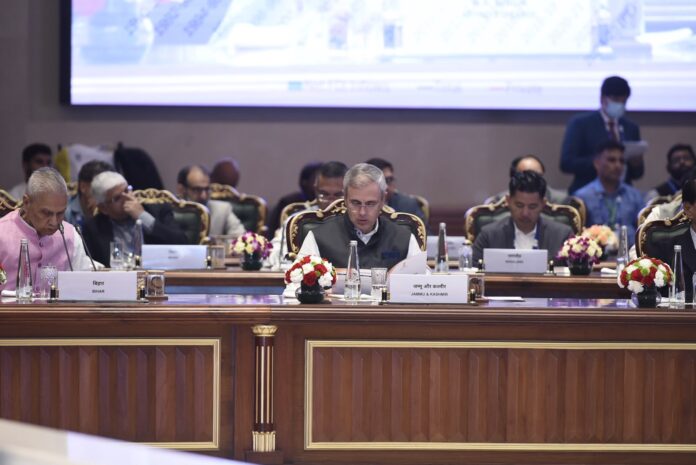
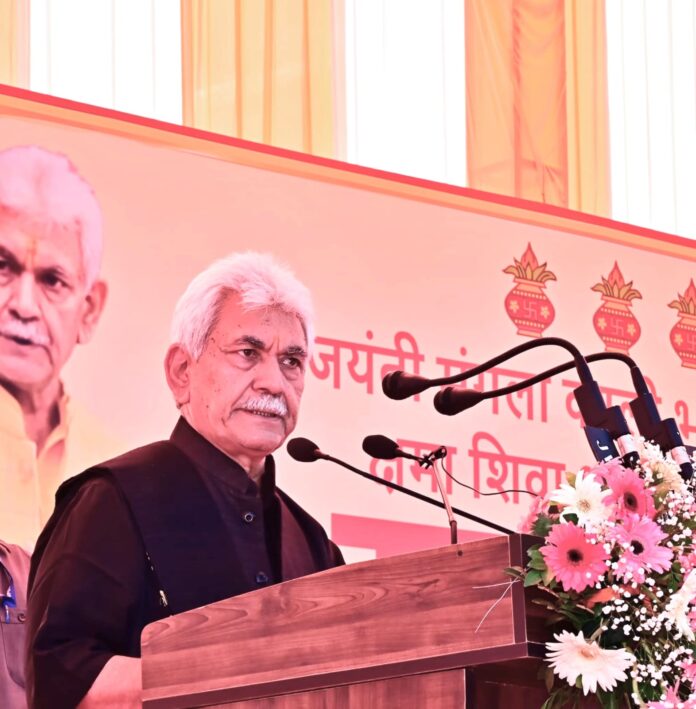
Srinagar, Aug 31 (NVI): Jammu and Kashmir Lieutenant Governor Manoj Sinha on Monday chaired the annual general meeting of the Indian Red Cross Society (IRCS), J&K UT, and reviewed its functioning, ongoing activities and future roadmap.

Sinha, who is the president of the J&K unit of the Red Cross Society, directed deputy commissioners to intensify resource mobilisation and explore innovative avenues for generating funds to strengthen humanitarian and welfare activities.

He also called for preparation of comprehensive district-wise annual activity plans identifying priority areas and interventions for effective implementation.

Emphasising the need to take Red Cross services closer to people, the lieutenant governor called for greater outreach in far-flung and border areas.

He suggested exploring the establishment of diagnostic centres in remote areas, particularly where people have to travel long distances to access hospitals and essential healthcare services.

Sinha also called for coordinated efforts towards the complete elimination of tuberculosis (TB), with emphasis on identification, diagnosis, treatment and follow-up of patients at the grassroots level.

The lieutenant governor directed the IRCS, J&K, to further strengthen its humanitarian role and ensure timely assistance and essential services reach vulnerable sections of society across Jammu and Kashmir.

He also asked the society to intensify its anti-drug campaign and contribute towards building a “Nasha Mukt Jammu Kashmir”.

General Secretary of IRCS, J&K, Shubhankar Pratyush Pathak presented various agenda items for review and ratification during the meeting.

The meeting also discussed budget estimates, audit, appointment of medical officers at blood banks and diagnostic centres, and activities undertaken by the Red Cross Society and its district-level units.

Deputy commissioners, who are presidents of district Red Cross units, apprised the lieutenant governor of activities being undertaken in their respective districts and shared suggestions for strengthening the society’s functioning and outreach.

Principal Secretary to the Lieutenant Governor Mandeep K Bhandari and senior officials of IRCS, J&K, were also present at the meeting.(NVI)

White Knight Corps GOC Reviews Operational Preparedness of Ace of Spades Division

Shivam Bakshi

Jammu, Aug 31 (NVI): General Officer Commanding (GOC) White Knight Corps on Monday visited the Ace of Spades Division to review its operational preparedness and assess the evolving security dynamics, officials said.

During the visit, the Corps Commander was briefed on the formation’s operational commitments, capability development and preparedness, including Unmanned Aerial Systems (UAS) and Counter-UAS capabilities, they said.

The GOC also reviewed the roadmap for further enhancing operational capabilities in view of the changing battlefield environment.

He emphasised the need to further strengthen operational effectiveness and exhorted all ranks to remain future-ready, agile and adaptable to emerging security challenges.

The visit comes amid continued efforts by the Army to strengthen operational readiness and counter emerging threats along the Jammu and Kashmir frontier.(NVI)

IMD agro data to be integrated with NABARD’s digital platform

IMD
IMD graphic (Representative pic)

New Delhi, Aug 31 (NVI) The agro-meteorological data of products of India Meteorological Department (IMD) will now be integrated into DiCRA (Data in Climate Resilient Agriculture), an open-source digital platform being supported by UNDP and NABARD.

An agreement in this regard has been signed by NABARD (National Bank for Agriculture and Rural Development) and IMD.

The objective is to primarily make this data freely accessible to farmers, financial institutions, policymakers, and researchers across India.

Under the MoU, IMD will provide a range of agro-meteorological data products through DiCRA, including district and block-level weather forecasts, agromet advisories, in-situ observations, and weather alerts.

These products will be integrated into a dedicated Weather Portal within DiCRA’s existing suite of thematic portals, alongside DiCRA’s geospatial data on soil moisture, vegetation health, crop conditions, and climate vulnerability, helping users obtain decision-ready insights at the block and district levels.

Dr Shaji Krishnan V., Chairman, NABARD, in his address, stated: “Climate risk cannot be treated as a standalone issue; it has to be integrated into our development and financing decisions. Information is available – what is needed is its conversion into intelligence and then into timely action. By bringing together IMD’s scientific capabilities and NABARD’s rural institutional reach, this partnership can help forewarn both the farmer and the bank, strengthening rural livelihoods and climate-resilient finance.”

Dr. Mrutyunjay Mohapatra, Director General of Meteorology, IMD, stated: India has made major advances in weather forecasting, with accuracy improving by around 40 to 50 per cent over the last decade and forecasts now reaching down to the panchayat level. The next challenge is to ensure that this information reaches every farmer in time and in a form they can use. No single institution can achieve that alone – IMD and NABARD together can bridge the last mile through outreach, technology and capacity building.”

NABARD will use DiCRA’s open APIs and data infrastructure to channel IMD’s agromet products — translated into actionable formats – through this network. District-level advisories, seasonal risk alerts, and weather-linked vulnerability assessments will be made available to researchers, policy makers, credit officers, field staff, and farmers through DiCRA’s web portal, mobile interface, and API integrations.

The integration will also support NABARD’s existing weather portal within DiCRA, which is currently under development. (NVI)

Tejinder Singh Takes Charge as IGP Jammu Zone

Shivam Bakshi

Jammu, Aug 31 (NVI) Tejinder Singh on Monday took charge as the new Inspector General of Police (IGP), Jammu Zone, succeeding Bhim Sen Tuti.

A farewell-cum-welcome function was organised at the Zonal Police Headquarters here to mark the change of guard.

Police officers and personnel bid farewell to Tuti and acknowledged his contribution during his tenure as IGP Jammu Zone.

Tuti thanked the officers and personnel for their cooperation and support during his tenure and conveyed his best wishes to Singh for his new assignment.

Singh was welcomed by officers and personnel of the Jammu Zone, who assured him of their cooperation and expressed confidence in his leadership.

The new IGP also received best wishes for a successful tenure, the police said.(NVI)

Fresh fighting in West Asia: US hits Larak Island, Iran retaliates in Jordan, UAE

Smoke emanating from a suspected oil facility in Fujairah in UAE after Iranian missile attacks on May 4
An installation hit in West Asia (File pic)

New Delhi, Aug 31 (NVI) After weeks of lull, fighting erupted again in West Asia today with the US launching fresh attacks and Iran retaliating.

The American forces attacked two rocket launchers of Iran on the Larak Island in the Strait of Hormuz, which killed two people and injured two others, according to Iran’s Islamic Revolutionary Guard Corps (IRGC).

Larak Island is just offshore from the key port of Bandar Abbas and sits right on the Strait of Hormuz, a critical waterway for global shipping.

Some 20% of the world’s oil and liquefied natural gas used to travel through before the war began.

US Central Command (Centcom) said it took “limited, precise action” after observing Iran preparing to “launch rockets and deploy sea mines into the Strait of Hormuz”, according to its spokesperson.

Shortly afterwards, Iran said it had struck US military bases in Jordan in response.

Jordan’s army said it had intercepted eight missiles early today.

Iran’s state TV also said the Iranian army had targeted an air base in the UAE with drones.

However, the UAE’s Ministry of Defence denied the reports that Al-Minhad Air Base had been targeted as “unfounded”. The UAE did confirm it shot down a drone.

The US strike is the first known attack on Iran since President Donald Trump paused a renewed military campaign in late July.

Since the conflict began in February, the strait has effectively been closed, causing wild fluctuations in the price of oil on world markets.

Iran is currently demanding that tanker traffic pass by Larak Island for checks and reportedly forcing vessels to pay $2m (£1.5m) to cross.

Iran’s Tasnim news agency said earlier that the attack on Larak was carried out by drones.

Hours later, Iranian media carried a statement by the IRGC saying it had attacked the US bases of King Hussein and al-Azraq in Jordan with ballistic missiles in response to the Larak Island attack.

Iran’s foreign ministry said on Monday it “strongly condemned the American military aggression on Larak”, saying the strikes on bases in Jordan were a “legitimate defence”.

Meanwhile Iranian President Masoud Pezeshkian said in a statement quoted by state TV: “We are not seeking war, but we will deliver a decisive response to the aggressors.”

Hours after the US strike, Trump posted apparent AI videos on Truth Social showing oil infrastructure exploding.

The US and Israel launched wide-ranging strikes on Iran on 28 February, with Iran responding by attacking Israel, US bases and allied states in the Gulf, and effectively closing the Strait of Hormuz to marine traffic.

The strait is a narrow stretch of water between Iran, the UAE and Oman that is about 21 miles (33km) at its tightest point.

Trump ​said last week that all mines‌ placed in the Strait of Hormuz by Iran as part of its efforts to blockade the route had been detonated or removed. He said Iran had been warned that any ship ​or boat deploying new mines would be ​destroyed.

Iran’s Deputy Foreign Minister Kazem Gharibabadi described Trump’s claim as a “propaganda” deception.

The US is also continuing a naval blockade of Iran, which has affected Iran’s ability to export oil.

On Saturday, Centcom said it had disabled three vessels, boarded two and redirected 82 as part of the blockade. (NVI)

Hand Grenade Recovered During Joint Search Operation In J&K’s Kupwara

File Photo

Srinagar, Aug 31 (NVI): Security forces recovered a hand grenade during a joint search operation in the Rashanpora forest area of Kralpora in Kupwara district on Monday, officials said.

The operation was conducted jointly by the Army, the Special Operations Group (SOG) Kralpora and the Jammu and Kashmir Police, they said.

The recovered grenade has been secured and a technical team has been called in for its safe handling and removal, officials said.

Further investigation into the recovery is underway, they added.—(NVI)

India rejects award by a tribunal on Indus Waters Treaty, questions jurisdiction

Logo of External Affairs Ministry

New Delhi, Aug 31 (NVI) The latest award issued by the so-called Court of Arbitration on the Indus Waters Treaty was today rejected by India, which described the tribunal as “illegally constituted”.

The Ministry of External Affairs (MEA) asserted that the tribunal has “no jurisdiction whatsoever” to pronounce on India’s sovereign decisions.

In a statement, the MEA said the tribunal had issued an award concerning interim measures and the status of the Indus Waters Treaty.

The MEA said the Court of Arbitration was constituted by the World Bank in “patent breach” of the terms of the Indus Waters Treaty.

India has consistently maintained that the establishment of the tribunal itself constitutes a grave violation of the treaty and has therefore never appeared before it or taken cognisance of its earlier pronouncements.

“Its pronouncements, now or in the future, will have no effect on India’s actions in connection with the projects being undertaken by India,” the MEA said.

India also made clear that its decision to place the Indus Waters Treaty in abeyance remains unchanged.

“The so-called Court of Arbitration has no jurisdiction whatsoever to pronounce on India’s sovereign decisions,” the ministry said, adding that the tribunal’s latest award would not affect India’s actions concerning projects being undertaken by the country.

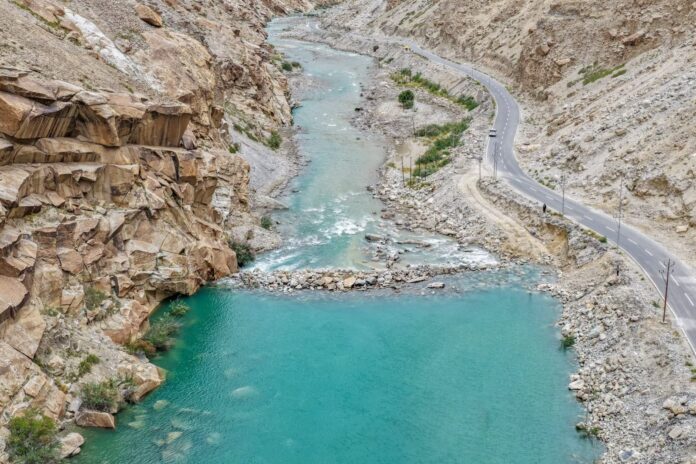
The 1960 Indus Waters Treaty, brokered by the World Bank, governs the sharing of waters of the Indus River system between India and Pakistan.

India had placed the treaty in abeyance following the escalation in tensions with Pakistan, and New Delhi has repeatedly maintained that the decision remains in force.

The latest development comes amid continuing differences between India and Pakistan over the interpretation and implementation of the treaty, particularly concerning India’s hydropower projects on rivers covered by the agreement. (NVI)

MUST READ