Tuesday, May 19, 2026
Home Blog Page 26

CM Omar Abdullah Invites Private Investment to Transform J&K’s Education Sector

Chief Minister Omar Abdullah Invites Private Investment to Transform J&K’s Education Sector

New Delhi: Following the passage of the landmark Jammu and Kashmir Private Universities Act, 2026, Chief Minister Omar Abdullah reached out to leading educational institutions in Bengaluru today, During an interactive session with education sector representatives, the Chief Minister pitched the Union Territory as an emerging academic hub, urging reputed private universities to establish campuses under a new, investor-friendly regulatory framework.

The Chief Minister was accompanied by Advisor Nasir Aslam Wani and MLA Zadibal Tanvir Sadiq, signaling a high-level push to modernize the region’s higher education landscape.


The J&K Private University Act, 2026: A New Chapter

Passed during the recent Budget Session of the J&K Legislative Assembly on April 4, 2026, the Act marks a fundamental policy shift designed to reduce the “student drain” from the region.

Feature Details
Primary Goal To expand access to quality higher education and reduce the need for local students to seek degrees outside the UT.
Sponsorship Universities can be set up by registered societies, trusts, or non-profit companies with a 3-year track record.
Regulatory Body Establishes the J&K Private Universities Regulatory Authority to oversee standards, inspections, and grievance redressal.
Student Protections Mandates 25% seat reservation for J&K domiciles and scholarships for at least 10% of students.
Transparency Prohibits capitation fees and mandates public disclosure of annual audits.

CM Omar’s Pitch in Bengaluru

The Chief Minister emphasized that J&K is no longer just a destination for tourism and cinema—having met with filmmakers in Bengaluru only a day prior—but is now open for significant intellectual and academic investment.

  • A Competitive Ecosystem: “The framework opens up substantial opportunities for reputed institutions to establish campuses in Jammu & Kashmir, fostering a modern, inclusive, and globally competitive higher education ecosystem,” the Chief Minister stated.

  • Investor Confidence: He assured prospective partners of a transparent and investor-friendly environment, focused on research collaborations and academic excellence.

  • Fiscal Independence: Private universities under this Act will operate as self-financing institutions, ensuring they complement government colleges rather than displacing them.

Also Read:90 beneficiaries receive compassionate appointment orders in Kashmir: CM Omar Abdullah

The Road Ahead

The J&K Government has already begun drafting the specific rules for the Act’s implementation, with Education Minister Sakeena Itoo directing that the process be expedited. The government anticipates that the first batch of private university applications will be reviewed by an Expert Committee later this year.

By positioning J&K as an attractive destination for institutions like those headquartered in Bengaluru, the administration hopes to create a vibrant academic corridor that supports the youth and strengthens the region’s socio-economic fabric.

JKEDI to Hold District-Level Startup Meetings Under D-BRAP

Jammu, Apr 26 (NVI): The Jammu & Kashmir Entrepreneurship Development Institute will organise district-level credit facilitation meetings under the District Business Reform Action Plan (D-BRAP) to strengthen the startup ecosystem in the Union Territory, officials said on Sunday.

The initiative is part of the implementation of the Jammu and Kashmir Startup Policy 2024–27, aimed at building a vibrant and inclusive entrepreneurship landscape by providing institutional support, financial assistance and capacity-building opportunities to aspiring entrepreneurs and startups.

Under the programme, JKEDI district offices have been designated as District Startup Cells to act as the first point of contact for entrepreneurs, facilitating registrations, spreading awareness about policy benefits and ensuring outreach at the grassroots level.

As part of the exercise, a series of district-level meetings will be held to connect startups, self-help groups and youth with banks and financial institutions to ease access to credit and promote awareness of financial schemes.

The meetings will be held on April 27 in Anantnag and Jammu, and on April 28 in Udhampur and Shopian, officials said.

They said the meetings will provide a platform for participants to explore financial avenues, understand credit mechanisms and receive guidance on business planning and funding strategies.

The startup policy offers incentives such as seed funding, innovation and prototype development grants, market access assistance and support for incubators. It also provides mentorship, capacity-building programmes and networking opportunities.

JKEDI, the nodal agency for the policy’s implementation, has been conducting regular mentorship sessions involving experts and industry leaders to guide startups on technology adoption, regulatory compliance and market expansion.

Officials said the initiative aims to extend entrepreneurial opportunities beyond urban centres and encourage participation from grassroots innovators across Jammu and Kashmir.(NVI)

Saree Cancer: When Tradition Turns Risky, Spot the Signs Before It’s Too Late

Saree Cancer: When Tradition Turns Risky, Spot the Signs Before It’s Too Late

New Delhi: While the term “Saree Cancer” sounds alarming, medical experts emphasize that it is an extremely rare condition. It is not the saree itself that is carcinogenic, but rather a specific type of skin malignancy known as Squamous Cell Carcinoma that develops due to decades of chronic friction and poor hygiene at the waistline.

In tropical climates like India, the combination of heat, sweat, and a tightly tied petticoat string can lead to persistent skin irritation, which, if left unaddressed for years, may transition into a non-healing ulcer and eventually become cancerous.

What Is 'Saree Cancer'? The Rare Skin Risk Many Women Don't Know About

Symptoms to Watch For

Early detection is key, as the signs are often subtle and can be mistaken for simple skin irritation:

  • Persistent Itching: A constant burning or itching sensation around the waistline.

  • Skin Changes: Chronic peeling, scaling, or thickening of the skin (hyperkeratosis).

  • Hyperpigmentation: Significant darkening of the skin in the area where the string is tied.

  • Non-healing Ulcers: Any sore or ulcer at the waist that does not heal with standard ointments or over time.

Simple Preventive Habits

Preventing this condition requires only minor, mindful changes to how the garment is worn.

Habit Why it Helps
Broad Waistbands Replace thin, sharp strings with broader cotton tapes or elastic bands to distribute weight evenly.
Loosen the Tie Avoid tying the petticoat excessively tight. A firm but comfortable fit prevents restricted blood flow.
Rotate the Height Slightly shift where you tie your saree—sometimes higher, sometimes lower—to avoid localized trauma.
Maintain Hygiene Ensure the waist area is washed thoroughly and dried completely to prevent sweat-induced fungal infections.
Fabric Choice Use 100% cotton petticoats. Unlike synthetics, cotton allows the skin to breathe and absorbs moisture.
Nighttime Recovery Always switch to loose nightwear (gowns or pajamas) to allow the skin to repair itself overnight.

Saree Cancer is a slow-developing condition caused by mechanical irritation over decades. By making small adjustments to the way the petticoat is secured and prioritizing skin “rest” during the night, women can easily eliminate the risk while continuing to embrace this traditional attire.

India’s First Homebuilt Bullet Train “B28” Is Coming in 2027, What to Expect?

India’s First Homebuilt Bullet Train “B28” Is Coming in 2027, What to Expect?

NEW DELHI — In a major stride toward the Aatmanirbhar Bharat vision, Indian Railways has set a definitive timeline for its first homegrown high-speed train. Known as the “B28” trainset, India’s first indigenous bullet train is expected to make its debut in 2027, marking a shift from importing Japanese technology to domestic engineering.

The project, spearheaded by BEML Limited in Bengaluru and the Integral Coach Factory (ICF) in Chennai, aims to establish India as a global player in the high-speed rail sector.

Speed and Technology Specifications

The B28 is designed to push the boundaries of current Indian rail travel. While the Vande Bharat trains are “semi-high-speed,” the B28 enters the “high-speed” bracket with significantly enhanced metrics.

Feature Specification
Operational Speed 250 km/h
Maximum Design Speed 280 km/h
Manufacturer BEML & ICF Consortium
Formation 8-car trainset (Standard Gauge)
Capacity Approx. 580 seats
Environmental Design Built for temperatures up to 50°C and heavy monsoon rain

Timeline and Rollout Strategy

The debut of the indigenous bullet train is synchronized with the broader Mumbai–Ahmedabad High-Speed Rail (MAHSR) project.

  • December 2026 – March 2027: The first two prototype trainsets are expected to be rolled out from BEML’s Bengaluru facility.

  • Q2 2027: Extensive static and dynamic testing, including RDSO-mandated safety trials.

  • August 15, 2027: Initial commercial operations are targeted to begin on the Surat–Vapi (or Surat–Bilimora) stretch in Gujarat.

  • 2028-2029: Full-scale operations on the complete 508 km corridor connecting Mumbai and Ahmedabad.

Vande Bharat vs. B28: The Evolutionary Gap

While the Vande Bharat has revolutionized Indian travel, the B28 represents a different league of engineering:

  • Tracks: Vande Bharat runs on upgraded broad-gauge tracks; B28 requires dedicated standard-gauge high-speed corridors.

  • Speed: B28 (250 km/h) is nearly 40% faster than the maximum operational speed of Vande Bharat (160–180 km/h).

  • Tech: The B28 features advanced aerodynamics, pressurized cabins for high-speed tunnel travel, and specialized bogies for stability at 250+ km/h.


Why 2027 is a Landmark Year

The indigenous bullet train initiative was accelerated after challenges in procurement costs for the Japanese Shinkansen E5 rolling stock. By building the B28 at home, India is expected to reduce the cost of high-speed trainsets by nearly 50%, making future corridors (like the proposed Delhi–Varanasi or Mumbai–Hyderabad routes) more economically viable.


“The B28 is not just a train; it’s a shift from technology adoption to technology creation.”

Ministry of Railways official

Old Grenade Found in Sopore Orchard, Bomb Squad Deployed

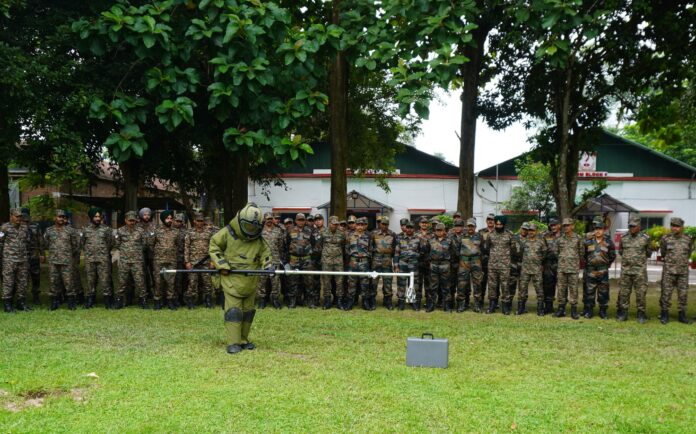
Srinagar, Apr 26 (NVI): An old grenade was found in an orchard in north Kashmir’s Sopore area on Sunday, prompting the deployment of a bomb disposal squad, Police said.

The explosive was noticed by a local resident of Warpora Sopore, while he was working in his orchard, they said.

He immediately informed Police Post Warpora, following which a police team along with a bomb disposal (BD) squad rushed to the spot.

The area was secured and necessary precautionary measures were taken, They said, adding that further details are awaited.(NVI)

Avalanche Hits Vehicles Near Zoji La Pass; No Casualties Reported

Oplus_16908288

Srinagar, Apr 25 (NVI) — An avalanche hit vehicle several near Shaitan Nallah at Zoji La Pass on Saturday, officials said.

No casualties have been reported so far to initial inputs.

Rescue teams have rushed to the spot and efforts are underway to clear the affected stretch and ensure the safety of stranded persons, they said.

Further details are awaited.(NVI)

DRDO Unveils Advanced Armoured Platforms for Armed Forces

New Delhi, Apr 25 (NVI) :Advanced armoured platforms—tracked and wheeled—developed by the Defence Research and Development Organisation (DRDO) were unveiled on Saturday, officials said.

The platforms, designed by the Vehicles Research and Development Establishment (VRDE), were unveiled by Secretary, Department of Defence (R&D) and DRDO Chairman Samir V Kamat at the DRDO laboratory in Ahilyanagar, Maharashtra.

Developed to meet emerging operational requirements of the armed forces, both platforms are equipped with an indigenously designed 30 mm crewless turret with enhanced mobility, firepower and protection features.

Officials said the platforms are powered by high-performance engines with automatic transmission, offering high power-to-weight ratio, superior speed, and advanced gradient and obstacle negotiation capabilities. They provide STANAG Level 4 and 5 protection with modular blast and ballistic shielding.

The amphibious platforms are capable of crossing water obstacles using hydro-jet propulsion, enhancing battlefield flexibility.

The 30 mm crewless turret is integrated with a 7.62 mm PKT gun and is configured to launch anti-tank guided missiles. The base design allows for multiple role configurations.

The platforms currently have about 65 per cent indigenous content, which is planned to be scaled up to 90 per cent.

The manufacturing has been carried out in collaboration with private sector firms Tata Advanced Systems Limited and Bharat Forge Limited, along with support from MSMEs, officials said.

Senior DRDO scientists, industry representatives and officials from various laboratories associated with armament and combat engineering systems attended the event.(NVI)

Jammu and Kashmir: Fraud in PDD Recruitment Exposed: EOW files Chargesheets

Srinagar, Apr 25 (NVI): Uncovering a major fraud in the Power Development Department, the Economic Offences Wing (EOW) of Crime Branch Kashmir has filed a chargesheet before the Anti-Corruption Court Baramulla against multiple accused for allegedly securing government employment through forged appointment orders and fabricated service records.

The Economic Offences Wing (EOW), Srinagar, of the Crime Branch J&K has filed a chargesheet in FIR No. 46/2023 before the Hon’ble Anti-Corruption Court, Baramulla, against Nasir Ahmad Mir of Kunan Babagund, Bandipora; Mushtaq Ahmad Malik of Aragam, Bandipora (a government employee in KPDCL); and a deceased former Executive Engineer of KPDCL/ED Sumbal, a resident of Jammu.

Statement reads, The case originated from a written complaint alleging fraudulent appointments in the Power Development Department (PDD). During the investigation, it was found that Nasir Ahmad Mir had secured employment using a fabricated appointment order purportedly issued under SRO-43 of 1994. The said order was found to be missing from official records, raising serious doubts about its authenticity.

The investigation further revealed that Mushtaq Ahmad Malik, then serving as a Senior Assistant, prepared a forged service book for Nasir Ahmad Mir, falsely reflecting his appointment under SRO-43. Forensic analysis confirmed that the entries in the service book were authored and signed by Mushtaq Ahmad Malik. Furthermore, no official dispatch or receipt records supported the issuance of the alleged appointment order.

Verification by the then Tehsildar, Bandipora, confirmed that Nasir Ahmad Mir was not eligible for appointment under SRO-43, as no qualifying family circumstances existed. Despite this, the deceased Executive Engineer facilitated salary disbursement in 2009 without proper verification, more than three years after the purported date of appointment.

The investigation established a criminal conspiracy among the accused, involving forgery, cheating, and misuse of official position. Accordingly, offences under Sections 420, 468, 471, and 120-B RPC have been established, along with relevant provisions of the Prevention of Corruption Act against the involved public servants.

The chargesheet has been submitted for judicial adjudication. (NVI)

CIK Conducts Raid in Srinagar Central Jail, Seizes Digital Devices in Terror Case

Counter Intelligence conducts raids in south, central Kashmir

Srinagar, Apr 25 (NVI): Counter Intelligence Kashmir (CIK) of J&K Police on Saturday conducted extensive searches inside Central Jail Srinagar in connection with a terror-linked, recovering multiple digital devices during the operation.

The searching was carried out following a warrant issued by the Special NIA Court Srinagar in FIR No. 06/2023 registered under IPC Sections 153-A, 505, 121, 120-B and relevant provisions of the UA(P) Act at Police Station CI Kashmir.

Acting on credible technical inputs about suspicious digital activity within the high-security prison, CIK teams, in coordination with jail authorities, searched several barracks and blocks.

During the raid, officials seized incriminating digital communication devices suspected to have links with terror activities.

Sources said the recovered will undergo detailed forensic analysis to establish possible connections with a wider terror network.

Meanwhile, investigators have launched a parallel probe into the apparent security lapse that allowed such devices inside the jail premises. The role of facilitators and insiders is under scrutiny, with officials indicating strict legal action against those found involved.

The operation is part of a broader crackdown to dismantle the terror ecosystem in Jammu and Kashmir by targeting Over Ground Workers (OGWs) and preventing misuse of communication channels within sensitive installations, officials added.(NVI)

Pak Balloon Marked “PIA” Found in Samba, Probe Underway

Jammu, Apr 25 (NVI): A balloon bearing “PIA” markings and suspected to be of Pakistani origin was found in Kamila village under Utterbehani police post in Purmandal area of Samba district on Saturday, officials said.

The balloon was recovered at around 9:00 am and taken into custody by police for examination, they said.

A probe has been initiated to ascertain the origin and purpose of the balloon, officials added.(NVI)

MUST READ