Friday, October 16, 2026
Home Blog Page 48

Rajnath Singh to Undertake Three-Day Visit to Sri Lanka

Rajnath
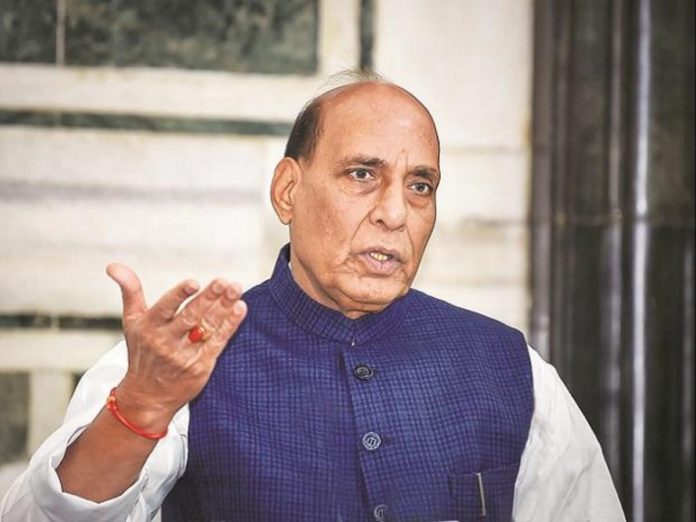
Defence Minister Rajnath Singh (file pic)

New Delhi, Sept 6 (NVI): Defence Minister Rajnath Singh will undertake a three-day official visit to Sri Lanka from September 8 to 10, during which he will hold talks with the country’s leadership on a range of bilateral and regional issues, the Defence Ministry said.

Singh will also interact with members of the Indian diaspora in Colombo and will be accompanied by a high-level delegation comprising senior officials from the Ministry of Defence and the Ministry of External Affairs.

India and Sri Lanka share close civilisational ties and a multifaceted partnership encompassing regional security, defence, economic and trade cooperation, as well as strong people-to-people relations, the ministry said.

The bilateral relationship has gained further momentum in recent years, including through India’s assistance to Sri Lanka during its economic crisis and its response as one of the first responders following Cyclone Ditwah in 2025.

The ministry said India’s support reflected its continued commitment to the ‘Neighbourhood First’ policy and Prime Minister Narendra Modi’s vision of MAHASAGAR (Mutual and Holistic Advancement for Security and Growth Across Regions).

Singh’s visit is expected to provide further impetus to the traditionally close and friendly ties between the two countries, particularly in areas of mutual interest, including maritime and defence cooperation.—(NVI)

Rendered Irrelevant, Yasin Malik Resorts to New Gimmick

Yasin Malik (File pic)

By Ajay Kaul

Yasin Malik, a terrorist of Kashmir who has admittedly killed several innocent people, has resorted to a fresh gimmick to attract attention and sympathies.

The chief of Jammu and Kashmir Liberation Front (JKLF) terrorist outfit, who is lodged in Tihar jail, has claimed that he does not wish to contest charges of murdering a young Kashmiri Pandit nurse Sarla Bhat in 1990 and is ready for death penalty.

“Considering my personal circumstances and after deep reflection, I have decided not to contest the trial proceedings further,” the 60-year-old has said in an affidavit filed in a local court in Srinagar where the cases is under trial.

“My decision shall not be treated as an admission of any prosecution fact, guilt or acceptance of the allegations made against me. I request capital punishment,” he has added.

This is pure gimmick aimed at projecting himself as a martyr and a hero for anti-India forces.

The gimmick is also to attract attention and sympathies since he has largely been forgotten and has become redundant in the affairs of Kashmir.

The rabid anti-India terrorist enjoyed a lot of attention for decades while pursuing separatist agenda but since the last 7-8 years, he has become inconsequential, especially after he was imprisoned in decades-old cases of terrorism.

Why is it a gimmick?

By making the statement that he does not want to contest the murder charges and was ready to face the gallows, Malik has attempted to gain support.

It’s actually a way of telling his sympathisers that he still exists. That is why he has made a lot of effort in drafting the 25-affidavit to give an emotional touch to his statement.

By making this kind of move, he is hoping to get support from so-called human rights activists who have not been pampering him lately as they did earlier.

His move is a gimmick because his statement has been made in a local court and he is quite aware that the matter will go to High Court and then to the Supreme Court, in case death penalty is to be awarded to him.

His cunning attempt is to get intervention from somewhere before his matter goes to the Superior courts.

Even as he has said he is ready for death penalty, he is conscious that capital punishment is given in the rarest of rare cases in India and he would most likely escape under that provision.

That process will anyway take decades.

In the meantime, he has created a buzz to gain relevance.

But perhaps he has missed one stark reality – the times have changed a lot and there is hardly anyone to come in his support in Kashmir.

He would have expected that people in Kashmir would hit the streets and beat their chests in his support. But no such thing has happened in the valley, although days have passed since his statement became public.

Even the politicians known for their separatist leanings have not uttered a word in his favour.

What is the Case?

Yasin Malik has been charged for the abduction and murder of Sarla Bhat, a nurse at state-run Sher-i-Kashmir Institute of Medical Sciences (SKIMS) in Srinagar in 1990.

The 23-year-old girl was abducted from near her hostel adjacent to the hospital in Soura area of Srinagar on April 18 and her body was found a few days later in an adjoining locality.

Thirty six years later, Jammu and Kashmir State Investigation Agency (SIA) filed a 737-page chargesheet in the case on June 29 this year. It named Malik as one of the accused.

Malik’s affidavit says that SIA officers questioned him in Tihar Jail on June 2 and 3 about an alleged JKLF handwritten note said to have been recovered from the scene and about the prosecution allegation that he had ordered Bhat’s killing.

Malik denies his personal involvement and claims that he has been falsely implicated.

Who is Yasin Malik?

Even if one were to believe him that he was not involved in the abduction and murder of Sarla Bhat, he remains a criminal of the worst order, going by his track record.

Hailing from Maisuma area of Srinagar, he joined militancy in 1988 at the behest of Pakistan with the agenda of separating Jammu and Kashmir from India.

He was one of the first Kashmiris to cross over to Pakistan-occupied Jammu and Kashmir (POJK) for undergoing arms training imparted by Pakistan’s intelligence agency ISI.

After his return in the same year, he started the campaign of bloodshed and mayhem in Kashmir valley.

He personally killed several innocent people, mostly Kashmiri Pandits who were then forced to leave the Valley because of the extreme fear.

Malik also brutally shot dead 4 unarmed personnel of the Indian Air Force (IAF) and injured several others, when they were waiting for their official bus at a bus stand in Srinagar in the morning of January 25, 1990.

In a TV appearance, he has admitted to that crime.

He was also involved in the abduction of Rubiya Sayeed, the daughter of then Union Home Minister Mufti Mohammad Sayeed, in December 1989. The government had to release 5 hardcore terrorists to secure her release.

He committed several other heinous crimes, including armed attacks on security forces when he was an active militant between 1988 and 1994.

In his affidavit, the terrorist has addressed his mother, saying she has “suffered immensely” during the past eight years because he has been in jail. He has also pretended his love for his Pakistani wife Mushaal and daughter Razia Sultana to gain sympathies.

But what about the dear ones of the innocent people whom he murdered in cold blood? What about his crimes of making the minor children of the IAF personnel and others orphans?

Will he ever pay for those crimes? He has never even expressed regrets for such crimes and now is playing a victim. (NVI)

Temperature dips across J&K after snowfall in higher reaches

Srinagar, Sept 6 (NVI): Temperatures dropped across several parts of Jammu and Kashmir following light snowfall in the higher reaches, with many stations in Kashmir recording below-normal minimum temperatures, officials said on Sunday.

According to the Meteorological Centre, Srinagar, the summer capital recorded a minimum temperature of 14.1 degrees Celsius, about 1.1 degrees below the seasonal normal of 15.2 degrees Celsius.

Pahalgam and Gulmarg recorded minimum temperatures of 8.4 degrees Celsius and 8 degrees Celsius respectively, both below their normal values of 10.8 degrees Celsius and 9.7 degrees Celsius.

Kupwara and Kokernag recorded minimum temperatures of 11.7 degrees Celsius and 11.8 degrees Celsius respectively, also below normal.

In the Jammu division, Jammu city recorded a minimum of 20.8 degrees Celsius against the normal of 23.8 degrees Celsius, while Banihal recorded 12.6 degrees Celsius against the normal of 15.2 degrees Celsius.

Light rainfall was recorded at several places during the past 24 hours. Jammu Airport received the highest rainfall of 17.4 mm, followed by Gulmarg with 7.2 mm, Pahalgam 2.6 mm and Kokernag 1.2 mm.

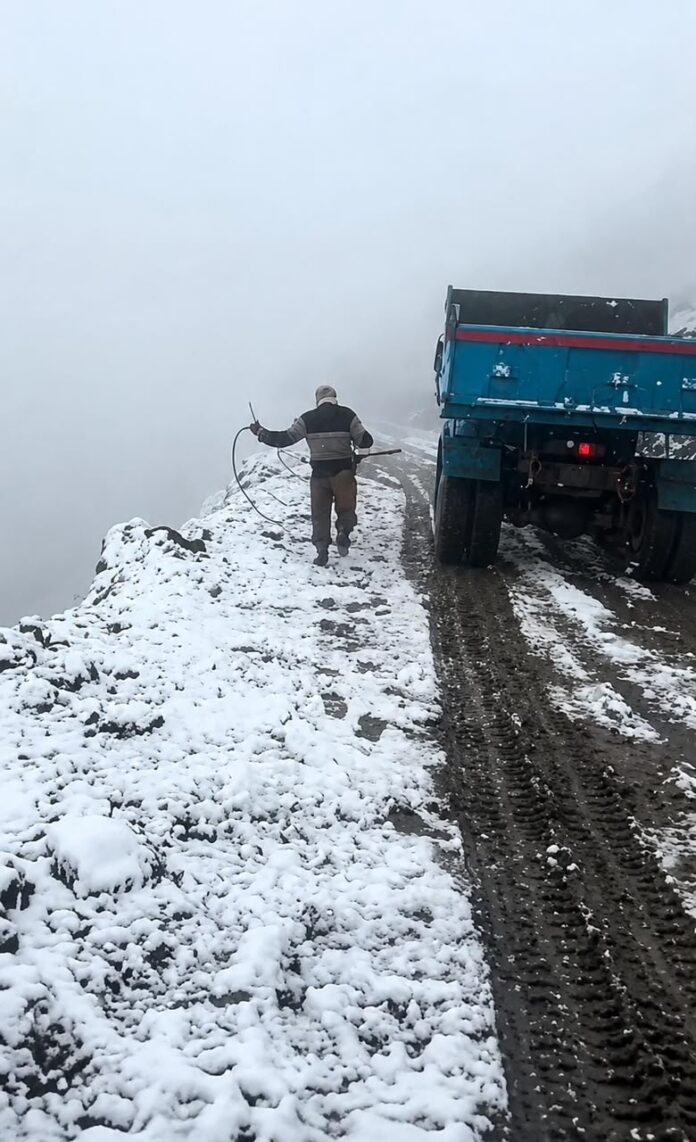
Light snowfall was reported from the extreme higher reaches, including areas around Zojila Pass and Gumri. Higher reaches of Gulmarg and adjoining parts of the Pir Panjal range also received fresh snowfall.

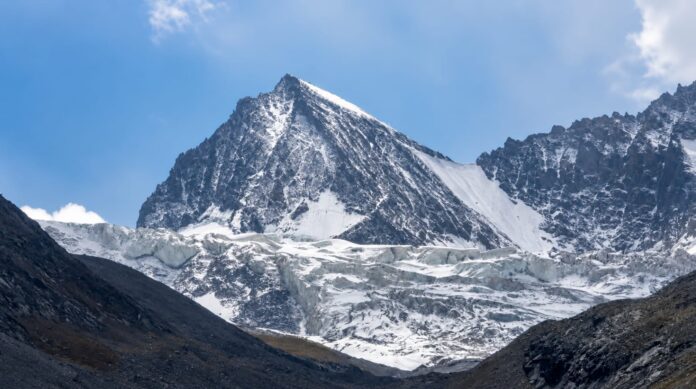
Fresh snowfall was also reported from Mahadev Peak, Kaobal Gali and parts of the Tulail Valley. The snowfall was largely confined to elevations of around 3,900 metres and above.

Weather observers said the brief snowfall over the higher reaches was a seasonal feature associated with the transition towards autumn and the gradual withdrawal of the monsoon.

The latest weather activity has largely cleared from Jammu and Kashmir, although a brief spell of rain or thundershowers cannot be ruled out at a few places, particularly during the morning or afternoon hours on Monday.

The Meteorological Centre has forecast mostly dry weather across Jammu and Kashmir till September 12.

Hailstorms accompanied by gusty winds were also reported from a few areas of Srinagar and isolated places in other districts during Saturday’s weather activity.—(NVI)

China a ‘long-term’ security challenge for India: Ex-CDS

First official visit by Indian Chief of Defence Staff to UK
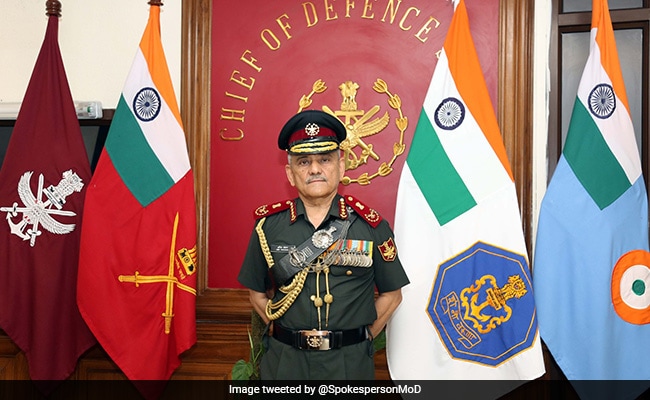
CDS General Anil Chauhan (File Pic)

New Delhi, Sep 5 (NVI) China is a “long-term and comprehensive” security challenge for India, while Pakistan will continue to remain a major security concern, particularly through terrorism and proxy warfare, former Chief of Defence Staff (CDS) General Anil Chauhan (Retd.) said today.

Speaking at the 22nd Bharat Ratna Pandit Govind Ballabh Pant Memorial Lecture, Chauhan said India’s security environment was becoming increasingly complex, with conventional military threats intersecting with cyber, technological, economic, informational and societal challenges.

On India’s northern neighbour, Chauhan said the unresolved boundary issue remained a significant source of friction. “The boundary issue remains unresolved, and there’s no mutually agreeable definition even on a Line of Actual Control,” he said.

He said differences in perceptions along the border, combined with infrastructure development and the multiplication of military capabilities, created the possibility of friction and escalation. Maintaining border stability, therefore, would require sustained vigilance, credible capabilities, clear communication and consistent adherence to agreements.

At the same time, Chauhan cautioned against allowing the boundary dispute to define the entire India-China relationship. India and China, he said, are major economies and regional powers that cooperate in some areas while competing for influence in markets and the broader international order.

“There’s a need to engage China in some way,” he said, adding that the future of Asia would depend substantially on how India and China manage their relationship and the wider international system.

On Pakistan, Chauhan said the western neighbour would remain a major security concern for India for the foreseeable future. The presence of nuclear weapons, he said, had created a degree of stability at the strategic level while contributing to instability at lower levels, a dynamic commonly described as the “stability-instability paradox”.

Pakistan’s strategy, according to Chauhan, has been to reduce the space for conventional military operations while expanding the scope for unconventional activities such as terrorism and cross-border operations. Terrorism and proxy warfare have consequently remained central to this approach, he said.

He said non-state actors provide advantages in terms of reliability, lower costs and the ability to generate political and communal consequences. Even when terrorist networks are virtual, he added, their enabling infrastructure, including ideology, recruitment, financing, propaganda and state support, can be developed within a country.

“We must go by this premise that terrorism and proxy war will remain a major challenge for us,” Chauhan said, stressing the importance of credible deterrence. He cited India’s cross-border operations, including Operation Sindoor, as demonstrations of the country’s ability to impose costs in response to terrorism and proxy warfare.

However, he cautioned that deterrence also needed to account for the possibility of overconfidence and miscalculation by Pakistan, making continued preparedness essential.

Beyond its immediate neighbourhood, Chauhan spoke about a broader set of challenges for India arising from a rapidly changing global security environment. He described the international system as being in a period of geopolitical flux, with established balances weakening while the structures of a new order were yet to fully emerge.

Countries, he said, were increasingly pursuing issue-based and transactional alignments. A country could be a trade partner while simultaneously being a technology competitor, or a security partner in one theatre while taking a different position in another.

The rapid pace of technological change was another major challenge. Artificial intelligence, machine learning, quantum technologies, hypersonic systems, robotics, autonomous systems and advanced materials are converging to change the character of warfare, Chauhan said.

Future conflicts would involve both conventional and non-conventional domains, including land, sea and air, as well as cyber, electromagnetic, space and information domains. Cyber operations, electronic warfare, economic pressure, legal instruments and information campaigns could precede, accompany or even substitute physical attacks.

Chauhan also warned about the weaponisation of information and what he termed “cognitive colonialism,” attempts to influence how societies interpret themselves, what they value and whom they trust.

He argued that India’s response must therefore go beyond military preparedness to encompass resilient infrastructure, secure supply chains, food and energy security, technological and industrial capacity, social cohesion and strong institutions.

He called for greater self-reliance in critical capabilities, while clarifying that Aatmanirbharta did not mean producing every item domestically, regardless of cost or quality. Instead, India needed control over critical capabilities and the ability to diversify partnerships and absorb external shocks. (NVI)

2019 Pulwama Protest Case: Jammu Court Discharges Seven Accused

Batla House
Representational image

Jammu, Sep 5 (NVI) A Jammu court has discharged seven persons accused in a case related to protests held in the city following the 2019 Pulwama terror attack, observing that mere presence in a large gathering cannot by itself make an individual criminally liable for offences allegedly committed by other members of the assembly.

The order was passed by 2nd Additional Sessions Judge Anoop Kumar Sharma, who held that the prosecution material did not establish that the accused had participated in, abetted or shared the common object behind the alleged acts of violence during the protest.

The case pertains to a Jammu bandh and protest held on February 15, 2019, a day after the Pulwama terror attack in which 40 CRPF personnel were killed.

According to the prosecution, a crowd of around 600-700 people moved towards Raghunath Bazaar and was stopped by police near Vivekanand Chowk. The gathering allegedly turned unruly following the intervention, with five to six vehicles subsequently set on fire.

The accused discharged by the court have been identified as Rohit Sharma, Kailash Kumar, Manat Kumar, Sajan Kumar, Sukhdev Singh alias Rinku, Sahil Sharma and Jagdish Kumar.

They were facing charges under Sections 188, 147, 148, 149, 435 and 427 of the Ranbir Penal Code (RPC).

While examining the evidence, the court noted that some police witnesses had identified the accused as being present in the gathering but none had attributed any specific overt or covert act to them in connection with the alleged violence.

The court also observed that certain witness statements appeared to be similar to each other and did not adequately explain when, where or under what circumstances the accused had allegedly been identified.

The prosecution had also relied upon mobile-phone tower location data to establish the presence of the accused in the vicinity of the incident. The court, however, held that the presence of their mobile phones in the area was not sufficient to establish that they were members of the particular section of the gathering which allegedly turned violent.

Referring to Supreme Court precedents, including the judgment in Zainul v. State of Bihar, the court reiterated that liability under Section 149 RPC requires material showing that the accused was a member of an unlawful assembly and shared its common object.

The court observed that the initial purpose of the gathering appeared to be a protest against Pakistan following the Pulwama attack, with slogans such as “Hindustan Zindabad, Pakistan Murdabad”.

According to the court, the gathering appeared to have turned violent only after it was stopped by the police.

The court also found insufficient material to proceed with the charge under Section 188 RPC, which relates to disobedience of an order promulgated by a public servant.

It noted that the prosecution had not placed on record the alleged order issued under Section 144 of the CrPC and that there was no complaint from the public servant whose order was allegedly disobeyed.

While considering whether charges should be framed, the court stressed that a judicial officer is required to independently assess the material placed before it and cannot mechanically accept the prosecution’s allegations.

The court observed that at the stage of framing charges, it “cannot act merely as a Post Office or a mouthpiece of the prosecution”.

After examining the evidence and material collected during the investigation, the court concluded that the case raised, at best, a “very bleak suspicion” against the accused, rather than the grave suspicion required for proceeding with a criminal trial.

The court consequently discharged all seven accused from the offences and dismissed the challan, also relieving them of their bail bonds.

The proceedings against the seven accused have thus come to an end at the trial court level.—(NVI)

NIA chargesheets 13 accused in Ghaziabad espionage case

(Representational Image)

New Delhi, Sep 5 (NVI): The National Investigation Agency (NIA) has filed a chargesheet against 13 accused in connection with a Ghaziabad espionage case, alleging that they were part of a conspiracy to illegally collect and transmit sensitive information related to vital installations in the country to enemy-linked entities.

The chargesheet was filed before the Special NIA Court in Lucknow under various provisions of the Bharatiya Nyaya Sanhita (BNS), Official Secrets Act and Unlawful Activities (Prevention) Act (UAPA), the federal agency said.

The case was initially registered as an FIR at Kaushambi police station in Ghaziabad on March 14, 2026, under provisions of the BNS and the Official Secrets Act. During the course of investigation, Section 18 of the UAPA was also invoked, the NIA said.

According to the agency, 21 accused persons have so far been arrested in connection with the case.

The investigation has allegedly revealed a conspiracy to carry out unlawful activities prejudicial to the sovereignty, unity and integrity of India, the NIA said.

The accused allegedly trespassed into or approached prohibited and sensitive areas of vital importance and installed spy cameras to collect photographs and videos of such locations, it said.

The information, according to the agency, was allegedly transmitted to entities based in an enemy country along with geo-tagging details.

The NIA further alleged that some of the accused facilitated enemy-state-linked entities in procuring and using Indian SIM cards for unlawful activities.

They also allegedly assisted in obtaining photographs and videos of sensitive installations along with precise GPS coordinates, the agency said.

The NIA said such information had the potential to jeopardise the sovereignty, unity, integrity and security of the country.

A Detailed Investigation Report concerning five juveniles in conflict with law had earlier been submitted before the Juvenile Justice Board in Ghaziabad on May 18, it said.

Further investigation into the case, including the role of remaining accused and other suspects, is underway, the agency added.—(NVI)

Fresh snowfall blankets higher reaches of Kaobal Gali in North Kashmir

Bandipora, Sep 5 (NVI): Fresh snowfall was recorded in the higher reaches of Kaobal Gali in the Tulail area of Bandipora district on Saturday, bringing a change in weather conditions in the high-altitude areas of north Kashmir.

The snowfall covered the mountainous landscape with a fresh layer of snow, giving the upper reaches a wintry appearance.

Kaobal Gali, located in the higher reaches of the Tulail Valley, frequently receives snowfall during colder weather due to its high elevation and mountainous terrain.

The latest snowfall was mainly reported from the upper reaches of the Gurez-Tulail belt, where temperatures remain considerably lower than in the plains.

The exact intensity of the snowfall and the amount of accumulation were not immediately available.—(NVI)

Season’s First Snowfall Recorded in Higher Reaches of Zojila

Srinagar, Sep 5 (NVI): The higher reaches of Gumri and the Zojila area in Jammu and Kashmir witnessed the season’s first snowfall on Saturday, marking the onset of colder weather conditions in the high-altitude areas, officials said.

Fresh snowfall was reported over the mountain peaks and upper reaches of Gumri and Zojila, turning the landscape white and bringing a visible change to the mountainous terrain along the Srinagar-Sonamarg-Zojila axis.

The snowfall comes amid a dip in temperatures in the higher reaches, with weather conditions turning colder compared to the plains.

The Zojila sector is an important high-altitude route connecting Kashmir with the Ladakh region. Authorities and commuters are keeping a close watch on weather and road conditions in the area, particularly in view of the possibility of further snowfall.

Officials said any intensification of snowfall could affect traffic movement and road conditions along the high-altitude route.—(NVI)

Two Killed As Oil Tanker Meets Accident In J&K’s Kishtwar

Shivam Bakshi

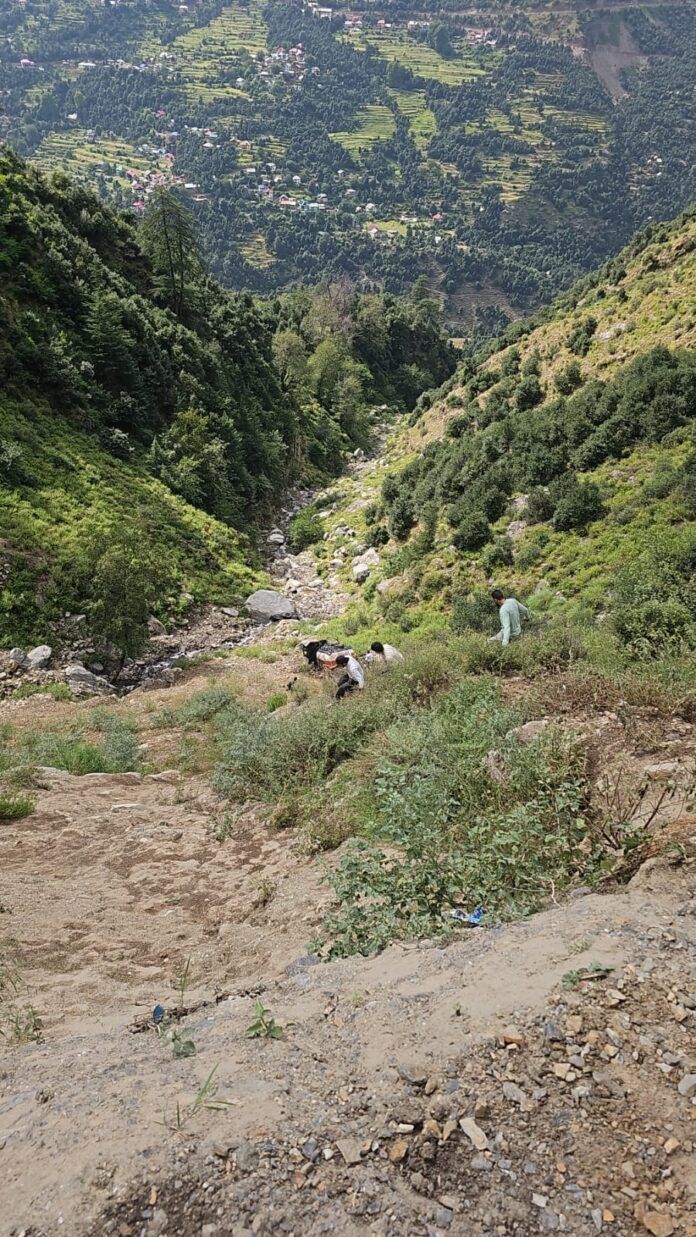
Kishtwar, Sep 5 (NVI): Two persons were killed on the spot after an oil tanker met with an accident in the Pathimhal area of Palmar in Kishtwar district on Saturday, officials said.

The accident occurred when the tanker was travelling through the area, resulting in the death of two persons at the scene.

Police and other concerned teams reached the spot and initiated necessary proceedings.

Further details regarding the circumstances leading to the accident are awaited.—(NVI)

Terrorist killed in Budgam encounter identified as Pakistani national: JK Police

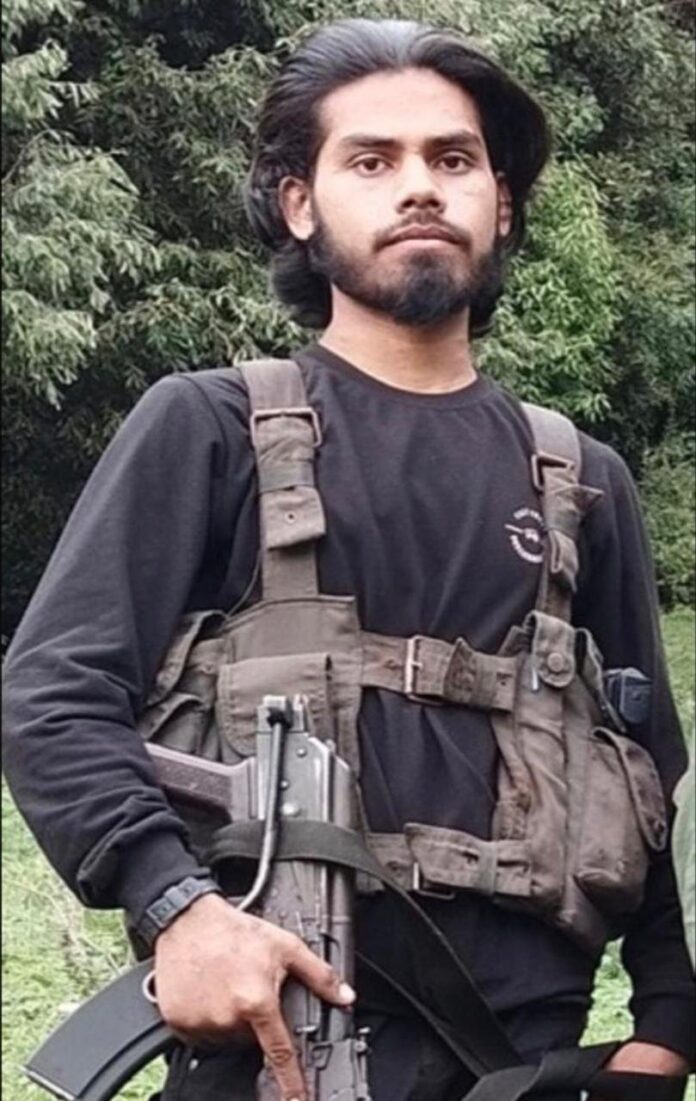
Srinagar, Sep 5 (NVI) : The terrorist killed in an encounter with security forces in Budgam district has been identified as Yasir, a Pakistani national affiliated with the Lashkar-e-Taiba (LeT) outfit, Jammu and Kashmir Police said on Saturday.

While sharing this information in a post on X, J&K Police said, “You Can Run But You Can’t Hide!”

The operation, codenamed ‘Operation Ashdar’, was launched by the Army, J&K Police and CRPF on the basis of specific intelligence inputs regarding the presence of terrorists in the area.

According to the Army, security forces noticed suspicious movement during the search operation and challenged the suspected terrorists. The terrorists opened fire, triggering an exchange of fire in which one terrorist was killed.

“The terrorist neutralised, during Op Ashdar, has been identified as Yasir, a Pakistani national of Lashkar-e-Taiba,” the police said.

An AK-series rifle and other war-like stores were recovered from the encounter site, the Army said.

The operation had been underway since Thursday, with security forces continuing searches in the area following the encounter.

Inspector General of Police, Kashmir Zone, Sujit Kumar, visited the operation site on Friday and reviewed the security situation and the ongoing search operation.—(NVI)

MUST READ