Tuesday, September 22, 2026
Home Blog Page 82

Rehabilitation scheme for drug abuse victims in J&K proposed

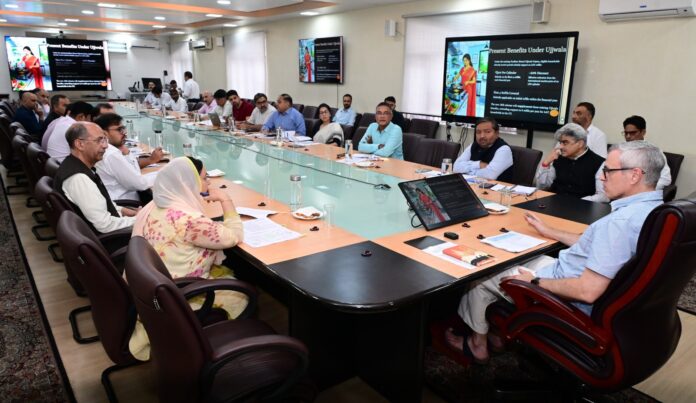
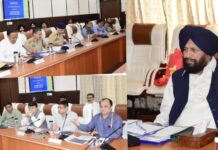
Srinagar, Jul 14 (NVI): Jammu and Kashmir Lieutenant Governor Manoj Sinha directed the pilot implementation of the proposed Rehabilitation and Socio-Economic Reintegration Scheme for Drug Abuse Victims.

During the pilot programme, one district each of the Kashmir and Jammu Divisions should be taken up, he said while chairing a meeting here on the scheme.

Sinha said the scheme should provide a coordinated, humane and outcome-oriented framework to ensure sustained recovery, social inclusion and livelihood opportunities for individuals recovering from substance abuse.

According to officials, the proposed scheme envisages a structured three-year rehabilitation cycle comprising treatment and stabilisation, reintegration and livelihood support, and sustained monitoring with community-based interventions to prevent relapse.

The lieutenant governor directed that the pilot project be implemented in the two worst-affected districts to assess its effectiveness before expanding it across the Union Territory.

He also stressed the need for effective inter-departmental coordination, community participation, family support, skill development and continuous monitoring for the success of the rehabilitation programme.

Sinha asked the departments concerned to identify committed officers and trained women volunteers to support counselling and rehabilitation efforts, while directing that capacity-building programmes for staff be started at the earliest.

Officials informed the meeting that a dedicated Rehabilitation Monitoring Portal is being developed for digital case management, monitoring of individual rehabilitation plans and real-time tracking of rehabilitation outcomes while ensuring confidentiality of beneficiaries.

The proposed scheme has been prepared by a task force headed by the Principal Secretary, Home Department, with the Social Welfare Department serving as the nodal agency. It aims to establish a comprehensive framework for the rehabilitation and socio-economic reintegration of drug abuse victims through coordinated action by multiple departments.

Chief Secretary Atal Dulloo and other senior officials attended the meeting.—(NVI)

646 Rural Roads to be built in J&K under Pradhan Mantri Gram Sadak Yojana

J&K Chief Secretary Atal Dullo chairing meeting on PMGSY

Srinagar, Jul 14 (NVI): Under the Pradhan Mantri Gram Sadak Yojana (PMGSY) Phase-IV, 646 rural roads will be constructed across Jammu and Kashmir at an estimated cost of Rs 7,790 crore.

This was stated by Chief Secretary Atal Dulloo today while reviewing the progress of works under the PMGSY in the Union Territory.

He assessed the physical and financial progress under PMGSY Phases I, II and III and reviewed the implementation strategy for PMGSY-IV, officials said.

He said the large-scale investment in rural road connectivity reflects the government’s commitment to improving infrastructure in remote areas and would enhance access to education, healthcare, markets, tourism and employment.

The Chief Secretary directed the Public Works (R&B) Department to complete the remaining projects under the earlier phases without further delay and fix responsibility for inordinate delays wherever necessary.

He also asked the department to work closely with the Divisional Commissioners, Deputy Commissioners and the Forest Department to resolve issues related to forest clearances, land acquisition, utility shifting and other statutory approvals.

Dulloo instructed Deputy Commissioners to regularly monitor PMGSY works in their respective districts and ensure timely completion of pending projects while maintaining the pace of implementation under PMGSY-IV.

According to officials, of the 3,437 roads sanctioned under PMGSY Phases I, II and III, 3,332 have been completed, achieving 96.9 per cent progress.

Against the sanctioned road length of 20,801.43 kilometres, 19,865.36 kilometres have been completed.

Officials said 260 of the 305 sanctioned long-span bridges have also been completed under the three phases, while cumulative expenditure has crossed ₹13,526 crore.

Under PMGSY-IV, the first two batches include 646 roads with a total length of 3,381 kilometres at an estimated cost of ₹7,790 crore to provide all-weather road connectivity to 792 habitations across Jammu and Kashmir.

Officials said Batch-I (2025-26) comprises 316 roads covering 1,781 kilometres at a sanctioned cost of ₹4,224 crore, with work already started on 235 projects and expenditure of nearly ₹270 crore incurred so far.

For Batch-II (2026-27), all 330 sanctioned roads have been technically approved and tendered, with the tendering process at an advanced stage, they added.(NVI)

Two Suspected Terrorists Caught on CCTV, Search Operation Underway in J&K’s Rajouri

File Photo

Shivam Bakshi

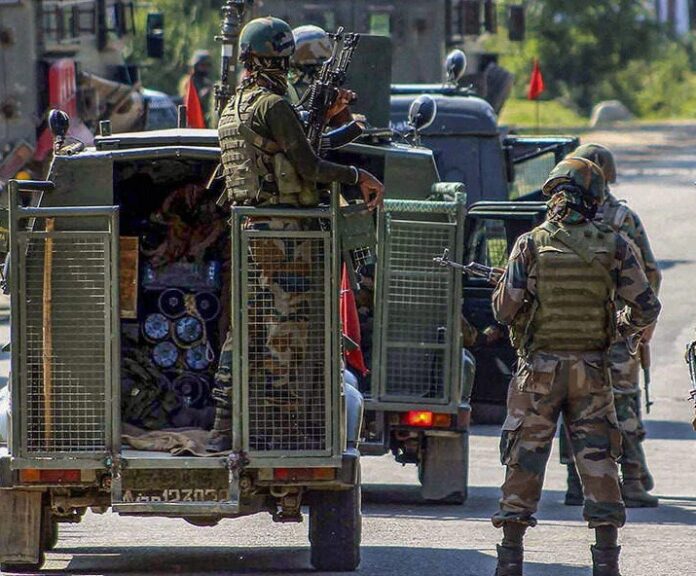
Rajouri, July 14 (NVI) :  A joint search operation is underway in Jammu and Kashmir’s Rajouri district after CCTV footage purportedly captured the movement of two suspected terrorists in the Thanamandi area, officials said on Tuesday.

According to officials, the suspected terrorists were seen crossing a road late on Sunday night, following which a coordinated search operation was launched by the Army, the Special Operations Group (SOG) of Jammu and Kashmir Police, and the Central Reserve Police Force (CRPF).

Search teams have been deployed in Bhanghai, Hasplote, Karyote, Kopra Top and adjoining forest areas to trace the suspected terrorists.

The operation was still in progress when the last reports were received, officials added.(NVI)

Heavy Rain Likely in Parts of J&K From July 18; Flash Flood, Landslide Alert Issued

Rainfall
Representational image

Srinagar, Jul 14 (NVI): The Meteorological Centre Srinagar has forecast generally hot and humid weather across Jammu and Kashmir till July 17, with brief spells of rain and thundershowers expected at scattered places.

According to the MeT Department, weather conditions are likely to change from July 18, with partly to generally cloudy skies and light to moderate rain or thundershowers expected at many places on July 18 and 19. Isolated areas of the Jammu division may witness brief spells of intense heavy rainfall during this period.

The department said a more active wet spell is expected between July 20 and 22, with generally cloudy conditions and light to moderate rain or thundershowers likely at most places. Peak rainfall activity is expected on July 21, while isolated areas in both the Kashmir and Jammu divisions could receive heavy rain or brief intense showers.

Rain and thundershowers are also likely at many places on July 23, it said.

The MeT Centre has issued an advisory warning of the possibility of heavy rainfall and brief intense showers during the night of July 18, the morning of July 19, and between July 20 and 22, particularly during late afternoon and late night or morning hours.

It has also cautioned about the possibility of flash floods, landslides and mudslides in vulnerable areas of the Chenab Valley, Pir Panjal range and some hilly areas of the Kashmir division during July 20-22.

The department advised people to remain cautious, avoid venturing near streams and nallahs, and be alert to possible waterlogging in low-lying areas.(NVI)

NIA court issues non-bailable warrant against Hafiz Saeed in Jammu terror case

Jammu, Jul 14 (NVI): A special NIA court in Jammu has issued an open-dated non-bailable warrant (NBW) against Lashkar-e-Taiba (LeT) founder and designated terrorist Hafiz Muhammad Saeed in connection with a terror case being investigated by the National Investigation Agency (NIA), officials said on Tuesday.

The warrant was issued by the Special NIA Court on July 8 after hearing an application moved by the agency in connection with RC-02/2025/NIA/JMU.

According to the NIA, Saeed, who is based in Pakistan, has been deliberately evading arrest and his custodial interrogation is essential for a fair, complete and effective investigation into the case.

Allowing the agency’s plea, the court observed that Saeed’s arrest and custodial interrogation were necessary for the investigation and issued an open-dated non-bailable warrant against him.

The warrant has been forwarded to the Deputy Inspector General (DIG), NIA, Jammu, for execution in accordance with law.

Saeed, founder of the banned terror outfit Lashkar-e-Taiba, has been designated as a terrorist under the Unlawful Activities (Prevention) Act (UAPA).

The case has been registered under various provisions of the Bharatiya Nyaya Sanhita (BNS) and the UAPA. A supplementary chargesheet has already been filed before the court, officials said.(NVI)

Suspicious Drone Recovered from Agricultural Field in J&K’s Samba; Probe Underway

Shivam Bakshi

Jammu, July 14 (NVI): A suspicious drone was recovered from an agricultural field in the Devak area of Jammu and Kashmir’s Samba district on Tuesday morning, officials said.

The drone was spotted by a local resident during a morning walk at around early morning, following which he alerted the security agencies, the officials said.

A security team rushed to the spot and recovered the drone, which has been taken into custody for examination.

Officials said the drone is being analysed to ascertain its origin and purpose. An investigation has been launched into the matter, they added.(NVI)

Ladakh to Constitute Autonomous Hill Councils in All Seven Districts

Leh, July 13 (NVI): The Ladakh administration on Monday announced that an Autonomous Hill Development Council (AHDC) will be constituted in each of the Union Territory’s seven districts, describing the move as a significant step towards democratic decentralisation and strengthening grassroots governance.

Addressing a press conference here, Chief Secretary Ashish Kundra said the decision follows the creation of five new districts earlier this year and is in line with the provisions of the Ladakh Autonomous Hill Development Council (LAHDC) Act.

He said Section 3(1) of the Act provides for the constitution of a Hill Council in every district through a government notification, adding that only necessary amendments to the Act and delimitation of constituencies remain before the process is completed.

The announcement comes months after Ladakh was expanded from two districts to seven with the creation of Sham, Nubra, Changthang, Zanskar and Drass in April 2026. Until now, elected Hill Councils existed only in Leh and Kargil.

Kundra said the new Councils would enjoy the same powers as those in Leh and Kargil, including authority over land ownership and allotment, district cadre recruitment and promotions, preparation of district development plans, and administration of sectors such as health, education, tourism, local infrastructure and social welfare.

He said each Council would also have its own dedicated Council Fund and powers to levy taxes and fees, enabling the newly created districts to manage their own development priorities.

The Chief Secretary further said the administration has proposed the creation of a Union Territory-level body under a customised Article 371 framework to function above the seven Hill Councils with legislative, executive, financial and administrative powers.

He said the structure and powers of the proposed body would be finalised through consultations between Ladakh’s representatives and the Centre, and may involve a redistribution of powers between the UT level body and the Hill Councils.

Kundra also clarified that Panchayati Raj institutions would continue to function alongside the Hill Councils, ensuring elected representation at the village, district and Union Territory levels.—(NVI)

J&K DGP reviews security arrangements in downtown Srinagar amid July 13 restrictions

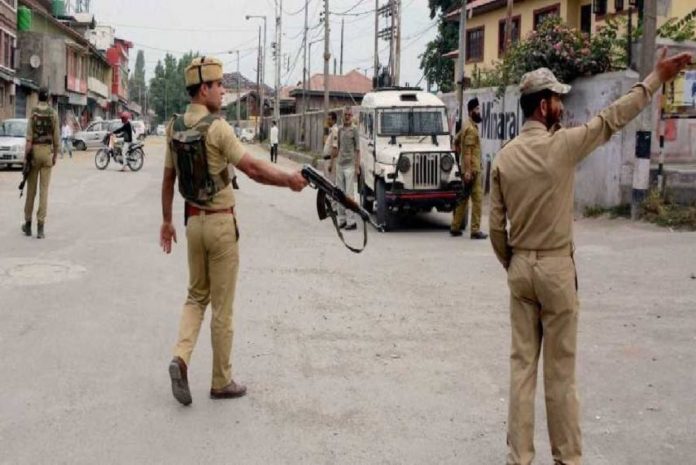
Srinagar, Jul 13 (NVI): Director General of Police (DGP) Nalin Prabhat on Monday reviewed the security arrangements in downtown Srinagar in view of restrictions imposed in parts of the city to maintain law and order, officials said.

Accompanied by Inspector General of Police (Kashmir) V K Birdi, Deputy Inspector General of Police, Central Kashmir Range, and Senior Superintendent of Police, Srinagar, Dr Sundeep Chakravarthy, the DGP inspected security deployments and assessed arrangements at key locations in the downtown area, they said.

The officers reviewed the deployment of security personnel, traffic management and other measures to ensure smooth maintenance of law and order, the officials said.

According to the officials, adequate security arrangements have been put in place to maintain peace and prevent any untoward incident.

Police have appealed to the public to cooperate with the security agencies and adhere to the advisories issued for the day, they added.(NVI)

India-Japan Defence Talks Focus on Indo-Pacific Security, Strategic Cooperation

New Delhi, Jul 13 (NVI): India and Japan on Monday reaffirmed their commitment to further deepen bilateral defence cooperation and promote a free, open and rules-based Indo-Pacific region during the eighth India-Japan Defence Policy Dialogue held in Tokyo.

The Indian delegation was led by Defence Secretary Rajesh Kumar Singh, while Japan was represented by Vice Minister of Defence for International Affairs Kano Koji.

According to an official statement, the two sides reviewed progress in bilateral defence cooperation since the previous dialogue and reaffirmed their resolve to strengthen the India-Japan Special Strategic and Global Partnership.

The discussions covered the regional and global security environment as well as the full spectrum of bilateral defence engagements, including military-to-military exchanges, cooperation between joint headquarters, maritime security, defence exercises, capacity building, and defence equipment and technology cooperation.

The two countries also explored ways to expand collaboration in emerging domains such as defence industrial cooperation, technological innovation, cyber security and space.

Both sides welcomed the steady expansion of defence ties and stressed the need to maintain regular high-level exchanges and dialogue mechanisms. They also discussed preparations and expected outcomes of the forthcoming ministerial engagements, including the India-Japan 2+2 dialogue later this year.

The two delegations reiterated their commitment to working closely in the Indo-Pacific and emphasised that the region should remain free, open and rules-based, founded on respect for international law.

On the sidelines of the dialogue, Singh called on Japanese Defence Minister Shinjiro Koizumi and conveyed greetings from Defence Minister Rajnath Singh. He also extended an invitation to the Japanese defence minister to visit India at the earliest opportunity.

Earlier, the Defence Secretary laid a wreath at the Self-Defense Forces Memorial Stone in Tokyo to pay tribute to members of the Japan Self-Defense Forces who laid down their lives in service of the nation.

The Defence Ministry said the visit reflected the growing depth of India-Japan defence ties and the two countries’ shared commitment to peace, security and stability in the Indo-Pacific region.(NVI)

POJK Agitation: Uprising Against Oppression And Gross Discrimination

Mass protests across Pakistan-occupied Jammu and Kashmir

Column

By Ajay Kaul

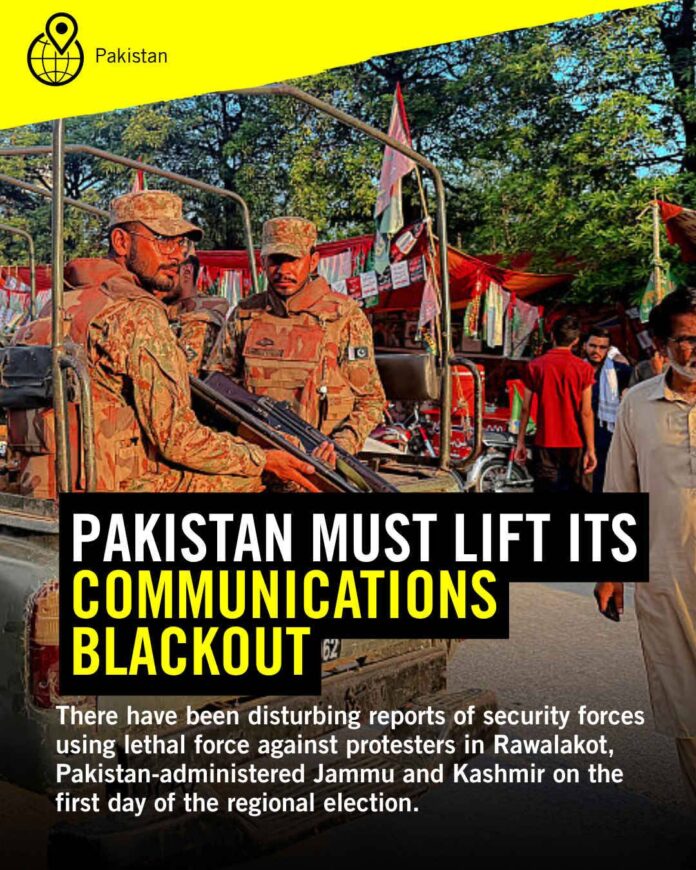
For the last 5 weeks, lakhs of people of Pakistan-occupied Jammu and Kashmir (POJK) have been on the roads and streets, raising their voice vehemently against the oppression and illegalities committed on them by Pakistan.

The Pakistani establishment, true to its character, has been using extreme means of brutalities in an attempt to crush the agitation, akin to a revolt, but has failed miserably.

Lakhs of Pakistani forces have been unable to dampen the spirit of the people of POJK, even after firing bullets into peaceful protesters, violating the modesty of women at their homes and denying basic essentials like food and medicine to the occupied region’s population comprising Muslims.

The Pakistani military, which claims to follow Islam, did not hesitate in firing at Muslim devotees even during the Namaz at Mosques.

However, the people of POJK are unfazed and are pledging now to be cowed down this time before the illegal occupier – Pakistan.

They have finally realized that Pakistan has been fooling them for the last 78 years after militarily occupying the region in October 1947.

Even though Pakistan calls the region ‘Azad Kashmir’ (Independent Kashmir), the ground realities are hugely different as there is hardly any freedom of any kind in the occupied region and Kashmiris are treated in the most disrespectful manner.

The people of POJK have been treated in a pathetic manner by Pakistan which has been having extreme distrust in them and has been looting their rich resources, particularly the wealth of hydropower.

Here are some of the examples of Gross Discrimination:

1 – The Legislative Assembly of so-called ‘Azad Kashmir’ is a lame duck one as Pakistan has disallowed it powers to make any kind of legislation.

2 — No local person from POJK can become Inspector General of Police (IGP), the top most police post of the region. The post is reserved for a Pakistani national and appointment is made not by the POJK government but by the Pakistan government. Local Kashmiri police officers cannot rise beyond the post of DIG.

3 — A local person cannot become the Chief Secretary of POJK, the top bureaucratic position. This post too has been reserved for a Pakistani national and the appointment is made by Pakistan government.

4 — The Secretaries of Finance and Health in POJK are also appointed by the Pakistani military generals from Punjab, since they do not trust the local Kashmiris.

5 — Even in the Pakistan Army, people from POJK are not allowed to rise to the rank of Lt General. They have to settle for lower posts.

All this is because Pakistan does not trust Kashmiris, even though the establishment in Islamabad, whoever is in power, keeps shouting from the roof that “Kashmir is our jugular vein”.

The reality is that Pakistan has been treating Kashmiris like slaves and cannon fodder, just like any illegal occupier does with the people of occupied territories.

Besides, Pakistan has been looting the rich natural resources of POJK and depriving people of the occupied region of their rightful energy dues.

For example, the occupied region has two big and 30 small hydro projects, producing 15,000 MW of electricity, most of which is transferred to Pakistan, particularly Punjab.

These discriminations are besides the control over the polity of POJK, maintained through the provision of 12 of the 53 seats in the Assembly reserved for “refugees of Jammu and Kashmir”.

These “refugees”, according to Islamabad, are those people who migrated to Pakistan in 1947, 1965, and 1971, the three wars involving Jammu and Kashmir.

Interestingly, these “refugee constituencies” are not in PoJK, but in Punjab, Sindh, and Khyber Pakhtunkhwa.

So, the locals in POJK cannot vote for these seats in the Assembly which is supposed to belong to so-called ‘Azad Kashmir’.

The value of the vote of a PoJK citizen is less than that of a “refugee vote” cast 500 km away.

Effectively, these 12 members of the Assembly, who become crucial for government formation, are chosen by voters who don’t even live in POJK and mostly have mysterious and dubious credentials.

This amounts to remote-controlled representation from Islamabad.

The scheme was designed under the 1974 “Interim Constitution Act”, which centralised power under the Ministry of Kashmir Affairs (Pakistan), ensuring that no government in PoJK could ever act independently.

Every time, people of POJK raise their voice for basic needs, rights and jobs, the system deploys these 12 external seats to tilt majorities and manufacture consent.

So, whenever Pakistan talks of “freedom for Kashmir,” remember that it has kept the people of territories under its occupation as slaves without any voice for the last 78 years.

Locals say that “Azadi” under Pakistan means “governance without geography”.

The locals call it the “representation without residency” model, a colonial relic disguised as constitution.

Whenever Pakistan talks about “disputed territories,” it should be asked: How are you treating POJK?

People of POJK, having seen the real character of Pakistan, are now in no mood to pardon the occupier and want their ongoing movement to be taken to the final conclusion.

The mass agitation against Pakistan, which started on June 7, is strengthening and building each day in all parts of POJK and also the occupied regions of Gilgit-Baltistan.

There is massive participation of people, including women and children, in rallies and demonstrations which continue day and night, braving brutalities by Pakistani forces and the inclement weather.

They are determined to reshape their future and destiny.

Ends

MUST READ