Sunday, September 13, 2026
Home Blog Page 934

ITR filing deadline for individual taxpayers extended to Jan 10

Union Cabinet
Representational/file photo

New Delhi (NVI): In the wake of Covid-19 pandemic, the Central Government has extended the deadline for filing Income Tax Return (ITR) by individual taxpayers to January 10, 2021. The earlier day for filing ITR was December 31 but it was extended by ten days today.

“In view of the continued challenges faced by taxpayers in meeting statutory compliances due to outbreak of COVID-19, the Govt further extends the dates for various compliances. Press release on extension of time limits issued today,” the Income Tax department said in a tweet.

The date for filing tax return by the companies was extended to February 15, 2021. Normally, the last date to file ITR is July 31 of every year.

The government has extended the deadline to file ITR for the third time this year. First it was extended from the normal deadline of July 31 to November 30, 2020, and then to December 31, 2020.

Apart from that, last date for declaration under Vivad Se Vishwas Scheme has been extended to 31 January, 2021 from 31 December, 2020.

The Central Board of Direct Taxes (CBDT) issued refunds of over Rs 1,56,624 crores to more than 1.33 crore taxpayers between April 1 to December 27, 2020.

IT Department has extended the deadlines after many chartered accountant and tax practitioner societies had appealed to the government to extend the ITR filing deadline to allow sufficient time for individuals to file ITR properly.

-ARK

Effect of EMFs emitted by mobiles can be reduced using Envirochip: Study

Effect of EMFs emitted by mobiles can be reduced using Envirochip: Study
Representative image

New Delhi (NVI): Electromagnetic Frequencies (EMF) emitted by mobile phones can be the reason for the changes in brain waves, but when an Envirochip is applied, reduction of EEG (electroencephalography) in brain activity is experienced, according to a recent study.

The purpose of the study, conducted by Syenergy Environics (known for developing solutions for reducing harmful effects of EMR on human body) along with AIIMS, was to investigate the effects of mobile phone radiation on brain activity.

In the study, participants were exposed to electromagnetic radiation (EMR) from mobile phones, to measure changes in the frequencies of the brain wave pattern by using Envirochip.

Envirochip is a passive device that generates random waves at higher frequencies, which carry constant microwaves emitted from mobile phones, computers and other Wi-Fi devices in a random form to make them compatible with the body’s waveforms, which is no longer harmful for the human body.

Changes in the frequencies of these EEGs can be interpreted as scientific evidence of an indication of the impact of the exposure to EMFs used in mobile communication on brain activity.

The EEG waves, in particular the theta, alpha, beta and gamma bands, can give insights into psychophysiological states such as alertness, awareness, and affection.

During the study, it was hypothesized that the alpha and theta band activity would increase during mobile phone exposure.

Further, it was estimated that application of Envirochip would alter the effect of EMFs emitted by mobile phone radiation on EEG. The increase in brain activity in alpha and theta bands indicates enhanced excitability of brain during EMF exposure from mobile phone.

The subjects in the study received sequence of different exposure while same mobile phone were used to notice difference in the results.

This study explains an effect of EMF exposure by mobile phone on brain waves when Envirochip is not placed and there was increase in EEG theta, alpha, beta, and gamma activity.

The results demonstrate that EMF emitted by mobile phone can be the reason for the changes in brain waves. When Envirochip was applied a reduction of increase in EEG brain activity was seen as compared to effects in no chip condition.

Application of the chip indicates that it can reduce the increase in EEG in brain waves excitability mainly in alpha and theta bands induced by EMF exposure by mobile phone.

The study findings are considerably important for today’s working environment as mobile phone is essential part of work. Repeated exposure to cell phones’ electromagnetic radiations (EMR) act as a repetitive stress.

-CHK

Govt approves multi-modal logistics hub at Greater Noida

Govt approves multi-modal logistics hub at Greater Noida
Representative image

New Delhi (NVI): Union Cabinet, chaired by Prime Minister Narendra Modi, today approved a multi-modal logistics and transport hub (MMTH) at Greater Noida in Uttar Pradesh with a view to making India a strong player in the global value chain.

The Cabinet has also approved a proposal to set up industrial corridor nodes at Krishnapatnam and Tumakuru under CBIC, according to a statement released by Cabinet Committee on Economic Affairs (CCEA).

“The proposals have a total estimated cost of Rs 7,725 crore and an estimated employment generation of more than 2.8 lakh persons,” the statement added.

Multi Modal Logistics Hub (MMLH) & Multi Modal Transport Hub (MMTH) Projects at Greater Noida, U.P. are in close proximity to Eastern peripheral expressway, NH91, Noida- Greater Noida Expressway, Yamuna Expressway, Eastern & Western Dedicated Freight Corridors.

Logistics Hub project will be developed as a world-class facility that will provide efficient storage/transitioning of goods to/from the Dedicated Freight Corridors (DFC) and offer a one-stop destination to freight companies and customers.

The facility will not only provide standard container handling activities but also provide various value-added services to reduce logistics cost with improved efficiency of operations.

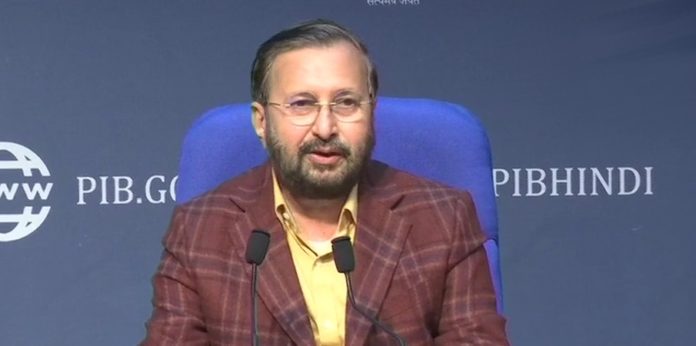
These projects will position India as a strong player in global value chains with developed land parcels in cities for immediate allotment for attracting investments, said Minister of Information and Broadcasting Prakash Javadekar.

The projects have been planned on the backbone of multi modal connectivity infrastructure. Krishnapatnam Industrial Area in Andhra Pradesh and Tumakuru Industrial Area in Karnataka under Chennai Bengaluru Industrial Corridor (CBIC) have been approved to kick start the development in Chennai Bengaluru Industrial Corridor Project.

These greenfield industrial cities will be self-sustained with world-class infrastructure, road and rail connectivity for freight movement to and from ports and logistic hubs along with reliable power and quality social infrastructure.

It will generate ample employment opportunities through industrialisation. For Krishnapatnam node, estimated employment projection on completion of the first phase of development is likely to be around 98,000 persons of which about 58,000 persons are likely to be employed at the site.

For Tumakuru node, employment of about 88,500 persons is estimated, out of which 17,700 persons will be from service industries such as retail, offices and other commercial opportunities in the initial development phase.

-CHK

Another Hindu temple vandalised in Pakistan’s Khyber Pakhtunkhwa

Another Hindu temple vandalised in Pakistan's Khyber Pakhtunkhwa

New Delhi (NVI): In another case of religious intolerance towards minorities in Pakistan, a Hindu temple was destroyed in Karak district of Kohat division in Khyber Pakhtunkhwa province by a mob of led by local clerics, according to reports.

The Hindus had obtained permission from the administration to extend the temple but local clerics arranged a mob to destroy the temple while police and administration remained silent spectators, said the reports.


Videos of the incident showed a large mob at the temple with some men breaking the walls and roof of the temple. A plume of smoke rising from the structure showed attempts to burn and raze down the temple.

This is not the first time that a Hindu temple has been vandalised in Pakistan. In October this year, a Hindu temple was vandalised by a person in Pakistan’s southeast Sindh province.

According to the local police, a Hindu minority member alleged that a person had damaged the idols kept in the makeshift temple in the remote Badin district and fled.

In a similar incident in November in Sindh province, a Hindu temple was vandalised by an angry mob that also attempted to attack over 300 Hindu families. However, the mob was stopped by Muslims from entering the century-old neighbourhood, a local media report said.

Hindus form the biggest minority community in Pakistan. According to the official estimates, 75 lakh Hindus live in Pakistan, mostly in Sindh province.

-ARK

Cabinet approves MoU with Bhutan on outer space cooperation

COVID-19
Union Minister Prakash Javadekar

New Delhi (NVI): The Union Cabinet today approved the Memorandum of Understanding (MoU) between India and Bhutan on cooperation in the peaceful uses of outer space.

The decision was announced by Union Minister Prakash Javadekar after the Cabinet meeting, chaired by Prime Minister Narendra Modi.

According to an official statement, the MoU was signed between the Government of the Republic of India and the Royal Government of Bhutan on November 19, by both sides at Bangalore/Thimpu and exchanged.

This MoU shall enable to pursue cooperation in potential interest areas, such as remote sensing of the earth, satellite communication and satellite based navigation, and space science and planetary exploration, use of spacecraft and space systems and ground system; and application of space technology.

Under the MoU, a Joint Working Group will be set up drawing members from Department of Space (DOS)/ISRO and the Ministry of Information and Communications (MoIC) of Bhutan, which will further work out the plan of action including the time-frame and the means of implementation, the Cabinet stated in a statement.

It will also provide impetus to explore cooperation possibilities in the field of remote sensing of the earth, satellite communication, satellite navigation, space science and exploration of outer space.

Furthermore, the cooperation with the government of Bhutan through this MoU would lead to develop a joint activity in the field of application of space technologies for the benefit of humanity. Thus, all sections and regions of the country will get benefitted.

India and Bhutan have been discussing on establishing formal space cooperation. Earlier on November 2017, a template for Inter-governmental MoU for space cooperation was shared with MEA in for further taking up with Bhutan.

This draft was further discussed along with other cooperative proposals during the bilateral meeting in February this year, the statement read.

“After a few iterations through diplomatic channels, both sides have arrived at a workable draft of the MoU and the same was processed for internal approvals,” it added.

-RJV

Union Cabinet approves export of indigenous Akash Missile system

Union Cabinet approves export of indigenous Akash Missile system

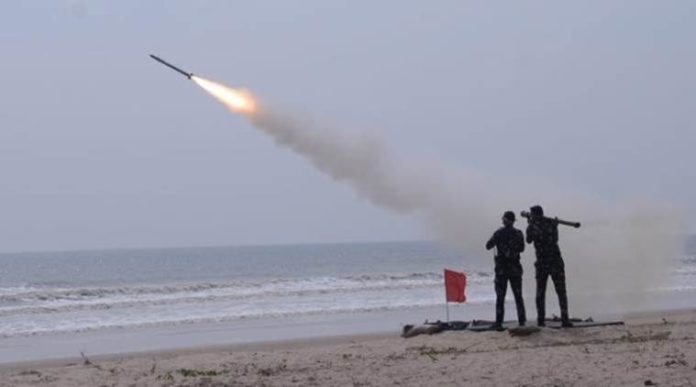
New Delhi (NVI): India will start exporting its indigenous Akash Missile system as the Union Cabinet gave approval for the same today. A committee for faster approvals in this regard has also been created.

The missile was inducted in 2014 in the Indian Air Force and in 2015 in the Indian Army.

Union Defence Minister Rajnath Singh announced the development on Twitter. “Under the #AtmaNirbharBharat, India is growing in its capabilities of manufacturing wide variety of Defence platforms & missiles. The Cabinet chaired by PM @narendramodi ji today approved the export of Akash Missile System and a Committee for faster Approvals has been created,” Singh said in a series of tweets.

“Akash is country’s important missile with over 96 percent indigenisation. Akash is a Surface to Air Missile with a range of 25 Kms. The export version of Akash will be different from System currently deployed with Indian Armed Forces,” he said in another tweet.

The Defence Minister said that so far, Indian defence exports included parts/components etc and the export of big platforms was minimal.

“The Government of India intends to focus on exporting high value defence platforms, to achieve target of 5 Billion USD of defence export and improve strategic relations with friendly foreign countries,” he said.

Developed by DRDO, the Akash Missile system is India’s first indigenously designed missile system that can target fighter jets, cruise missiles, drones and other aerial assets.

“After its induction in the Services, interest is shown in Akash missile by many friendly countries during International Exhibitions/Def Expo/Aero India. The Cabinet approval will facilitate Indian manufactures to participate in RFI/RFP issued by various countries,” the Ministry of Defence said in a statement.

The MoD said that so far, Indian defence exports included parts/components etc. The export of big platforms was minimal. This initiative of the Cabinet would help the country to improve its defence products and make them globally competitive, it said.

Besides Akash, there is interest coming in other major platforms like Coastal Surveillance System, Radars and Air platforms. To provide faster approvals for export of such platforms, a Committee comprising of Raksha Mantri, External Affairs Minister and National Security Advisor has been created, the Ministry said.

This Committee would authorise subsequent exports of major indigenous platforms to various countries. The Committee would also explore various available options including the Government-to-Government route.

Government of India intends to focus on exporting high value defence platforms, to achieve target of 5 Billion USD of defence export and improve strategic relations with friendly foreign countries, the MoD said.

-ARK

CBSE board exam dates tomorrow

JEE advanced
Union Education Minister Ramesh Pokhriyal (File photo)

New Delhi (NVI): Union Education Minister Ramesh Pokhriyal ‘Nishank’ will announce the dates of CBSE 10 and 12 board examination at 6 pm tomorrow.

This announcement was made by the Education Minister himself through his official Twitter handle.

“Dear students and parents! I will declare the date of commencement of CBSE Board Exam 2021 on 31 December,” Pokhriyal tweeted.

However, the announcement would be made live on his Twitter and Facebook page.

After the announcement of the datesheet by the Education Minister, the complete datesheet of the 10 and 12 board examination will be released on the website of Central Board of Secondary Education (CBSE).

Earlier, during virtual interaction with teachers, Pokhriyal informed that CBSE is making necessary preparations for conducting the 2021 board examinations after taking into consideration of suggestions given by students, teachers and parents, the Ministry of Education said in a statement.

-RJV/ARK

Centre tells States to keep strict vigil to curb ‘super spreader events’ on New Year

COVID-19 vaccinations
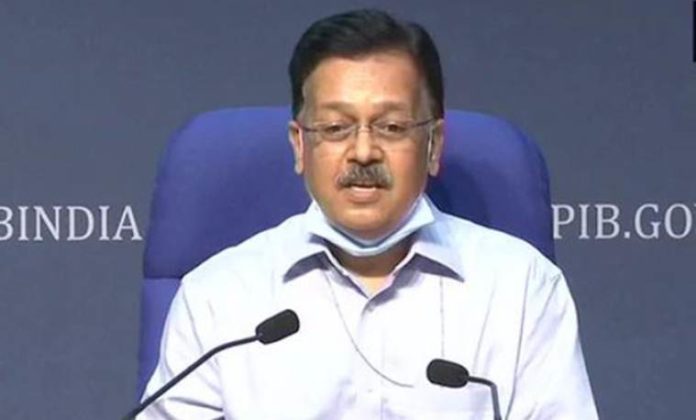
Health Secretary Rajesh Bhushan (File photo)

New Delhi (NVI): The Central Government today asked all States to keep a strict vigil on all New Year events that could be potential COVID-19 “super-spreader”, amid concerns over the new strain of the coronavirus.

In a letter to all States and Union Territories, Union Health Secretary Rajesh Bhushan has asked them to curb crowding as a precautionary measure during the winter season.

“Union Health Secretary has written to all the States to keep a strict vigil on all events that could be potential “super spreader” events, and to curb crowding in the wake of the New Year celebrations and various events associated with it as well as on-going winter season,” the Ministry of Health said in a statement.

The recent advice and guidance to the States by Home Ministry has been reiterated by the Health Secretary, it added.

“The Ministry of Home Affairs has mandated that States and UTs based on their assessment of the situation and state authorities may impose local restrictions such as night curfew, with a view to contain the spread of Covid-19,” Bhushan said in the letter.

However, there shall be no restriction on interstate and intra-state movement of persons and goods.

“Drawing attention to this, the health secretary also urged the states to promptly assess the local situation and consider imposition of appropriate restrictions on December 30 and 31, as well as on January 1, 2021,” the statement noted.

Earlier today, the Centre extended the suspension of flights to and from the United Kingdom till January 7, in view of new coronavirus strain discovered in Britain.

The decision was taken on the recommendations of a Joint Monitoring Group (JMG) headed by the Director General of Health Services (DGHS) and the National Task Force jointly headed by DG, ICMR and Member (Health), NITI Aayog, the ministry said.

-RJV

Delhi shivers at 3.5 degrees; braces for colder New Year’s Eve

Delhi chill
File photo

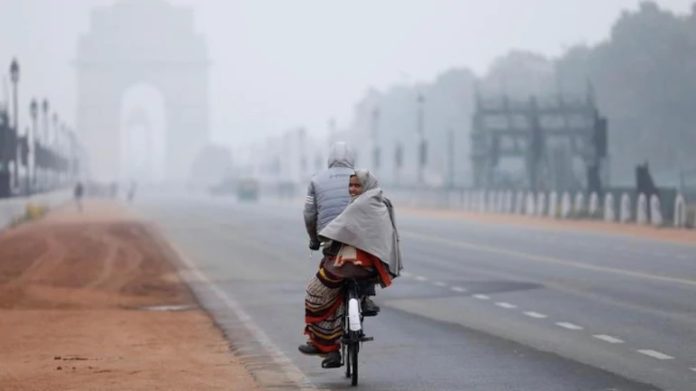
New Delhi (NVI): The minimum temperature in the national capital dipped as low as 3.5 degrees Celsius on Tuesday night as cold wave sets in. Temperatures are further expected to dip to 2 degrees Celsius on New Year’s Eve, according to IMD.

The India Meteorological Department declares a cold wave when the minimum temperature in the plains goes below four degrees Celsius.

The last time the minimum temperature dipped as low as was 3.4 degrees Celsius was on December 20.

“The western disturbance which was affecting the Western Himalayas has just passed so there is moisture in the air and wind speed is also likely to reduce. It’s going to be very cold and lead to the development of fog,” IMD stated.

Furthermore, according to the weather department, a western disturbance has led to “scattered to fairly widespread” snowfall in Jammu and Kashmir, Ladakh, Himachal Pradesh and Uttarakhand.

In addition to this, the temperature in some parts of Haryana and Rajasthan touched zero degrees Celsius on Tuesday night. Hisar and Narnaul recorded zero degrees and 0.3 degrees Celsius.

Rajasthan’s Bhilwara and Pilani registered 0.9 degrees, Sikar recorded 0.5 degrees, and the temperature in Churu touched 0.4 degrees Celsius, IMD stated.

-CHK

State-wise details of Covid-19 cases in India

State-wise details of Covid-19 cases in India

New Delhi (NVI): The total number of coronavirus cases in India has crossed 10.2 million and currently stands at 10,244,852 after 20,549 new cases were reported in the last 24 hours, according to the Union Health Ministry data.

The country’s death toll stands at 1,48,439 after 286 new fatalities were reported during the same period.

In worst-affected Maharashtra, the COVID-19 cases increased to 19,25,066 followed by Karnataka with 9,17,571 and Andhra Pradesh with 8,81,599 positive cases.

Total positive cases in States/UTs:

Andaman and Nicobar Islands- 4,936

Andhra Pradesh- 8,81,599

Arunachal Pradesh- 16,709

Assam- 2,16,063

Bihar- 2,50,928

Chandigarh- 19,615

Chhattisgarh- 2,77,471

Dadra and Nagar Haveli– 3,375

Delhi- 6,24,118

Gujarat- 2,43,459

Goa- 50,884

Haryana– 2,61,672

Himachal Pradesh- 54,894

Jammu and Kashmir- 1,20,527

Jharkhand- 1,14,650

Karnataka- 9,17,571

Kerala- 7,49,450

Ladakh- 9,436

Madhya Pradesh- 2,40,081

Maharashtra- 19,25,066

Manipur- 28,096

Meghalaya- 13,387

Mizoram- 4,199

Nagaland- 11,917

Odisha- 3,29,001

Puducherry- 38,070

Punjab- 1,65,878

Rajasthan- 3,06,784

Sikkim- 5,864

Tamil Nadu- 8,16,132

Telangana- 2,85,939

Tripura- 33,258

Uttarakhand- 90,167

Uttar Pradesh- 5,83,941

West Bengal – 5,49,715

State/UT wise total death toll:

Andaman and Nicobar Islands- 62

Andhra Pradesh- 7,100

Arunachal Pradesh- 56

Assam- 1,040

Bihar- 1,389

Chandigarh- 316

Chhattisgarh- 3,336

Dadra and Nagar Haveli- 2

Delhi- 10,502

Goa- 735

Gujarat- 4,295

Haryana- 2,892

Himachal Pradesh- 925

Jammu and Kashmir- 1,879

Jharkhand- 1,025

Karnataka- 12,074

Kerala- 3,014

Ladakh- 127

Madhya Pradesh- 3,582

Maharashtra- 49,373

Manipur- 353

Meghalaya- 138

Mizoram- 8

Nagaland- 79

Odisha- 1,868

Puducherry- 633

Punjab- 5,322

Rajasthan- 2,683

Sikkim- 126

Tamil Nadu- 12,092

Telangana- 1,538

Tripura- 385

Uttar Pradesh- 8,340

Uttarakhand- 1,495

West Bengal- 9,655

However, a total of 98,34,141 people have been cured and discharged. The total active cases stands at 2,62,272 in the country.

-CHK

MUST READ