
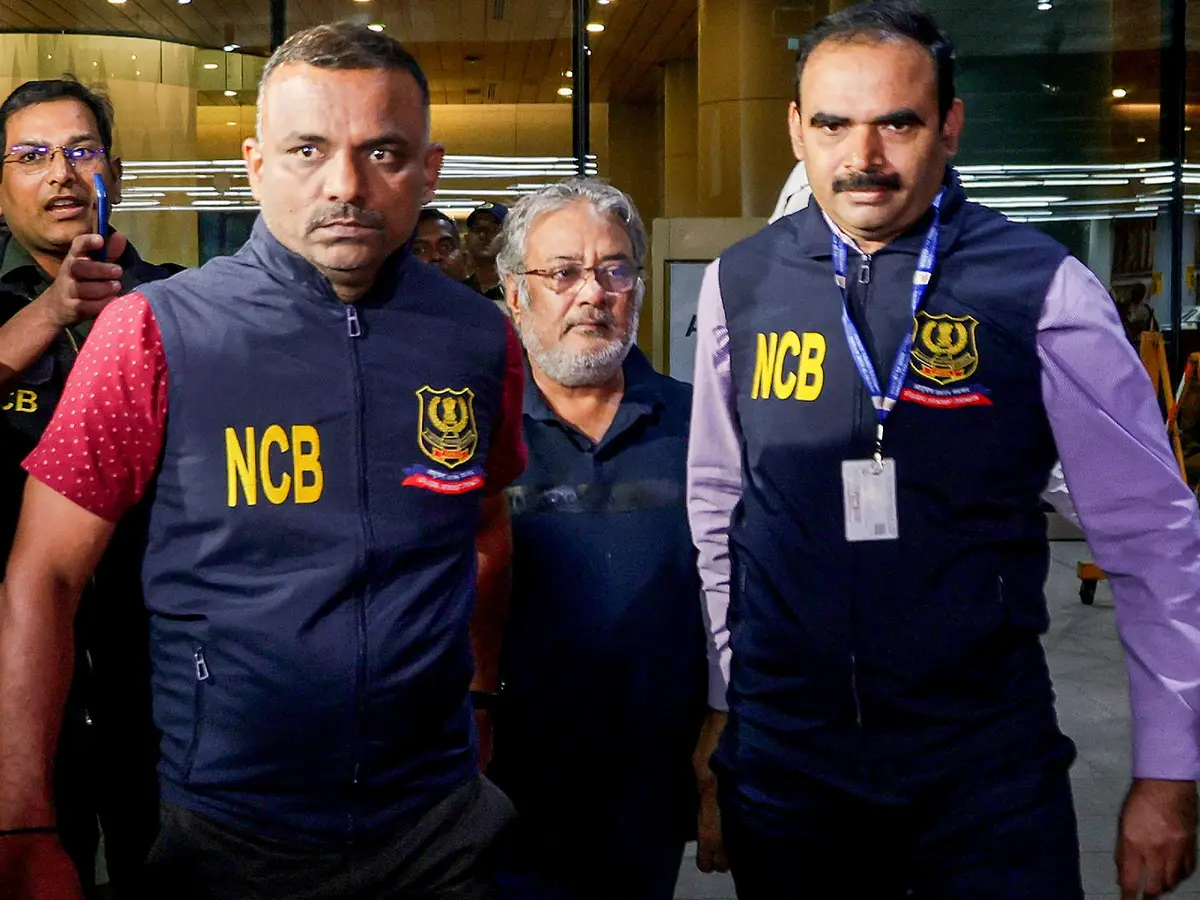
New Delhi, April 30: The deportation of alleged drug trafficker Salim Ismailbhai Dola from Turkey to India has gone beyond a routine law enforcement action, offering a glimpse into the complex and often contradictory nature of India–Turkey relations.
While political ties between the two countries have frequently been strained, especially over Turkey’s alignment with Pakistan on sensitive issues like Jammu and Kashmir, the Dola case highlights that security cooperation continues to function quietly beneath diplomatic tensions.
Who Is Salim Dola?
Salim Dola is a Mumbai-based alleged drug trafficker linked to international narcotics networks. Investigators describe him as an associate of underworld figure Dawood Ibrahim and a close aide of Iqbal Mirchi.
He was implicated in a major 2018 drug seizure in Mumbai worth around ₹1,000 crore. After multiple legal proceedings and eventual acquittals, he reportedly fled India in 2020, moving first to Dubai and later to Istanbul, where he continued alleged narcotics operations.
Indian agencies had issued a Red Corner Notice through Interpol, leading to coordinated action between Turkish and Indian authorities.
Arrest and Deportation
Dola was detained in Istanbul in a joint operation involving Turkey’s intelligence and police agencies. He was deported to India on April 28, 2026, shortly after his arrest.
Authorities also noted that his attempt to obtain Turkish citizenship under an investment scheme was blocked after Indian agencies shared intelligence inputs.
The case reflects active coordination between Indian and Turkish security agencies on transnational crime, despite broader diplomatic disagreements.
India–Turkey Relations: Cooperation Amid Tensions
India and Turkey share a relationship marked by both engagement and friction.
On one hand, both countries have institutional cooperation mechanisms, including counter-terrorism dialogue frameworks and joint working groups established in the early 2000s. Over the years, Turkey has previously assisted India in deporting individuals linked to extremist and criminal networks.
On the other hand, political relations have been strained due to Ankara’s consistent alignment with Pakistan on issues such as Kashmir, particularly after India’s constitutional changes in 2019.
Tensions escalated further following recent geopolitical developments, including Turkey’s public statements in support of Pakistan during India–Pakistan confrontations, which triggered criticism in India and calls for boycotts in trade and tourism sectors.
A Pattern of “Selective Cooperation”
Despite political differences, the Dola deportation is not an isolated incident. Similar cooperation has occurred in the past, including:
- Deportation of individuals linked to extremist networks
- Joint monitoring of transnational terror financing
- Intelligence sharing through formal and informal channels
This suggests a pattern of selective but functional cooperation, especially in areas involving security and organised crime.
What the Case Signals
Experts view the episode as evidence that:
- Diplomatic tensions do not fully disrupt law enforcement cooperation
- Both countries retain shared interest in tackling transnational crime
- Security engagement often continues even when political ties are strained
At the same time, the broader relationship remains sensitive due to competing geopolitical alignments and regional positions.
The Bigger Picture
India–Turkey relations continue to oscillate between engagement and friction. While trade, tourism, and economic ties have expanded over the years, political disagreements—especially on Kashmir—remain unresolved.
The Salim Dola deportation highlights this dual reality: strained diplomacy at the political level, but pragmatic cooperation at the security level.