Analysis
By Ajay Kaul
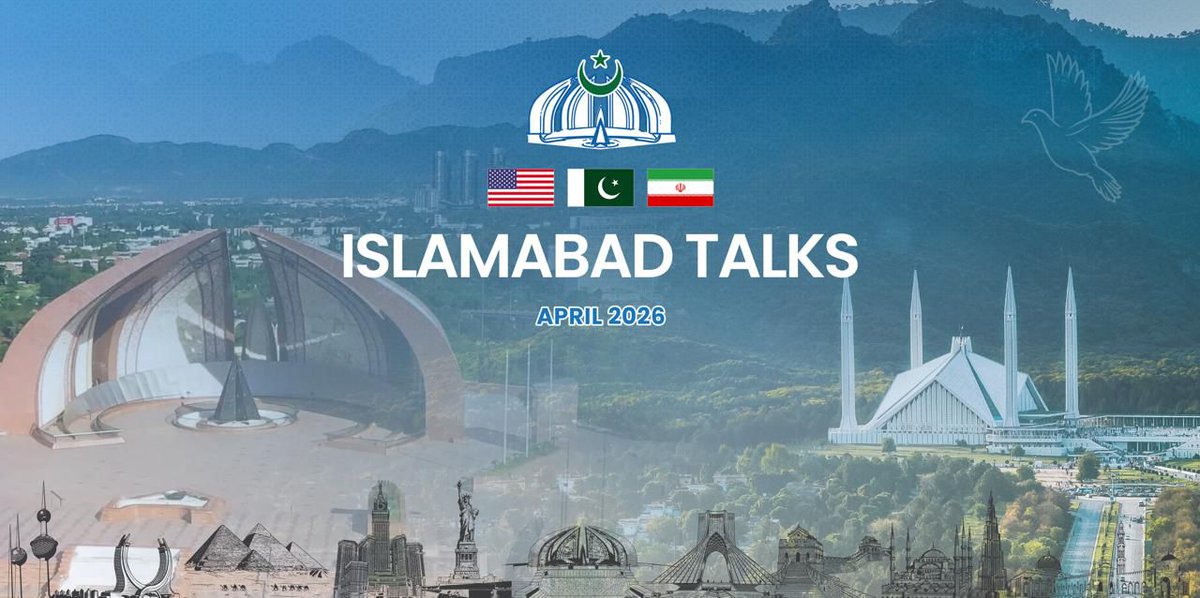
New Delhi, Apr 14: The entire world is on the edge again after the peace talks between the US and Iran in Pakistan failed to yield any agreement on ending nearly five decades of animosity.
The direct meeting between the top leaders of the two extremely hostile nations, first in 49 years, had raised hopes around the globe that there would be some understanding for restoring peace in West Asia, thus allowing international movement of critical energy supplies once again.
But those hopes have been dashed in Islamabad.
In fact, the situation is likely to worsen globally as the US has started enforcing a “blockade” on the movement of energy-laden ships through the Strait of Hormuz, which was anyway a trickle ever since the war in West Asia started on February 28.
US Blockade:
US President Donald Trump is agitated that Iran has been calling the shots as far as movement of ships across the Strait of Hormuz is concerned and that it is charging money, according to him, for allowing vessels to cross the critical maritime passage.
So, he has decided to impose a “blockade” on the ships that cross the Strait after paying money to Iran. One wonders how the US would be able to ascertain which ship made the payment and which did not.
The US has said it would be using military to enforce the “blockade”.
Iran has vowed to retaliate if its interests are hurt.
China too has stated that it would not let the US to impact movement of its ships to and fro Iran as it imports a lot of energy from the Persian nation.
In the wake of the move by the US, the UK and France are jointly convening an international conference his week to discuss ways to end the logjam related to the Strait of Hormuz so that movement of energy restarts through the Strait of Hormuz.
All eyes are now on the developments that may unfold in the coming days.
Failure of talks:
It may be surprising, or even shocking, for many that the talks held in Islamabad between the top-level delegations – US Vice President J D Vance leading his country and Speaker of Iranian Parliament Mohammad Bagher Ghalibaf heading his side – did not yield any agreement.
Although both sides are blaming each other for the failure of the talks, the result was not unexpected as it is too naive to think that the first round of talks would produce an agreement between two extremely hostile sides.
It would be highly immature to expect an agreement particularly considering the backdrop of the circumstances in which talks were held and the history of the relations between the US and Iran since the 1979 Islamic revolution in the Persian country.
The distrust is very deep, particularly within the Islamic regime of Iran in relation to the US.
In fact, Ghalibaf amplified this aspect even while going for the talks. He said the Iranian delegation was entering the negotiations with “deep distrust” as the US had committed “betrayal” again and again in the past.
He was referring to the military strikes launched by the US, along with Israel, on February 28, while negotiations were going on between Washington and Tehran, mediated by Oman, with regard to the nuclear issue of the Persian nation.
These military strikes resulted in the assassination of Iran’s Supreme Leader Ayatollah Ali Khamenei and some other top leaders, that too during the Islamic Holy month of Ramzan.
Ghalibaf, one of the top leaders of the Iranian regime, also pointed to the military strikes carried out jointly by the US and Israel in June last year, again while negotiations on the nuclear issue were ongoing.
Significantly, the US and Iran had reached an agreement on the nuclear issue way back in 2015 but Washington later backed out of it.
Trump issues latest threat to Iran: ‘A whole civilisation will die tonight’
Considering this backdrop, Iran has hardened its stance and wants to extract the maximum from the US, which has caused massive hit to the Persian nation through the sanctions in force over the last nearly five decades.
Iran now reportedly wants full compensation for that loss, as well as the losses caused during the US-Israeli military strikes launched on February 28. It also wants de-freezing of assets worth billions (or perhaps trillion) of dollars in various countries, including Qatar and South Korea.
Iran has been able to dictate terms since it has held the entire world hostage, virtually, by choking the Strait of Hormuz, disrupting energy flows and causing economic distress in many countries around the globe.
Trump, on the other hand, says he will do anything to prevent Iran from acquiring nuclear weapons.
It is a different matter that the Iranian regime has been insisting that it has no ambitions to acquire nuclear weapons, although it wants atomic energy for civilian purposes.
Future:
While the talks in Islamabad failed to produce any results, both the US and Iran, at least, spelt out their points and demands. Each side now has clarity about what the other wants and these points remain on the table.
The thread can be picked up any time in the future, of course with the mediation of some country/countries trusted by these two nations.
As far as the world at large, and India in particular, are concerned the coming days and weeks are likely to get more and more difficult due to the spiralling effect of the choking of energy imports.
The reduction in supplies of LPG and oil is going to hit the economies badly around the world and India too won’t be able to escape the adverse impact. (NVI)