Friday, April 24, 2026
Home Blog Page 1203

India rejects US report on religious freedom

New Delhi (NVI): India today rejected the report on international religious freedom published by the US Department of State which made certain critical comments on India.

External Affairs Ministry said the “foreign entity” has no locus standi to make such comments.

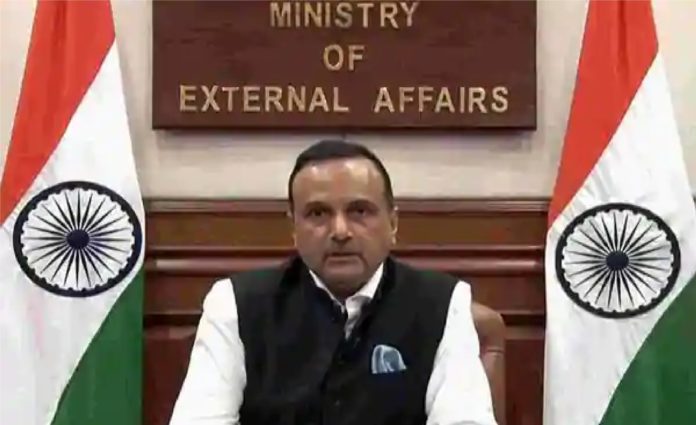
“Our principled position remains that we see no locus standi for a foreign entity to pronounce on the state of our citizens’ constitutionally protected rights,” External Affairs Ministry spokesman Anurag Srivastava said at a media briefing here.

He said the report is published annually by the Department of State as part of its legal requirement to the US Congress and is an internal document of the US government.

“India’s vibrant democratic traditions and practices are evident to the world. The people and government of India are proud of our country’s democratic traditions,” he said.

“We have a robust public discourse in India and constitutionally mandated institutions that guarantee protection of religious freedom and rule of law,” the spokesman added.

J&K: 26 travelers, doctor among 67 new Covid cases, tally 4,574

Over 3,200 cops COVID positive in J&K and 15 succumbed to virus
File photo

Abid Bashir

Srinagar (NVI): A female cancer patient, who had tested positive a few days ago, became the 52nd Covid victim in Jammu and Kashmir today while 26 travelers, a senior doctor were among 67 fresh cases, taking the tally to 4,574 in the UT.

Health officials said that the female cancer patient died at SKIMS, Soura. Medical Superintendent SKIMS, Soura Dr Farooq Jan said that a 62-year-old woman who was admitted to SKIMS on June 7 as a case of acute calcular cholecystitis besides other underlying problems died today.

“Her sample was taken on the same day which came as Covid-19 positive, following which the patient was shifted to infectious disease ward the next day,” Dr Jan said. “She died today after suffering cardiopulmonary arrest.”

Officials said that among the new 67 new cases, 23 were tested positive at SKIMS, 12 at CD hospital, 8 at JVC Bemina and rest at other hospitals.

Among 67 new cases, 43 belong to Kashmir division while 24 are from Jammu division, officials said, adding that the total number of positive cases in Kashmir has reached 3,565 including 1,522 recoveries and 46 deaths while the total number of positive cases in Jammu has reached to 1,009 including 298 recoveries and 5 deaths.

The officials said that the total number of active cases in Jammu and Kashmir is 2702 including 1996 from Kashmir and 706 from Jammu.

Cases tested positive in J&K include 2 each from Kulgam and Baramulla, 8 from Srinagar, 13 from Anantnag, 3 from Budgam, 1 from Kupwara, 4 from Bandipora, 9 from Pulwama and one from Ganderbal in Kashmir division while 24 from Jammu include 11 from Jammu, 3 each from Udhampur and Doda, 6 from Poonch and one from Rajouri.

As per officials figures, 568 positive cases including 8 deaths and 168 recoveries are from Kulgam, 497 including 10 deaths and 162 recoveries are from Baramulla, 497 including 12 deaths and 151 recoveries are from Srinagar, 482 including 315 recoveries and 5 deaths are from Anantnag, 440 including 171 recoveries and 4 deaths are from Shopian, 376 including 246 recoveries and 3 deaths are from Kupwara, 223 including 165 recoveries and 1 death is from Bandipora, 214 including 80 recoveries and 2 deaths are from Budgam, 199 including 32 recoveries and 2 deaths are from Pulwama and 59 including 32 recoveries are from Ganderbal.

In Jammu division, 353 including 107 recoveries and 3 deaths are from Jammu district, 172 including 23 recoveries are from Ramban, 153 including 35 recoveries and 1 death is from Udhampur, 123 including 49 recoveries are from Kathua, 91 including 28 recoveries from Poonch, 69 including and 28 recoveries are from Samba, 58 including 12 recoveries are from Rajouri, 46 including 2 recoveries and 1 death is from Doda, 23 including 10 recoveries are from Reasi and 21 including 4 recoveries are from Kishtwar.

As per the daily information bulletin, 2,27,016 persons in Jammu and Kashmir are under observation while 41,312 persons have been kept under home quarantine. Besides, 2702 persons are in hospital isolation while 25 persons are under hospital quarantine. According to the bulletin, 1,27,530 persons have completed the surveillance period and 55,395 persons are under home surveillance.

So far results of 2,47,267 samples are available out of which 2,42,693 tested negative while 4,574 have tested positive. Among them, 2702 are active, 1820 persons have recovered and 52 persons have died.

47 deaths were recorded in Kashmir including a CRPF man and a non-local tailor while five deaths were reported in the Jammu region of the UT.

India, China engaged in peacefully resolving Ladakh standoff at earliest: MEA

India-China face-off: Core issue is to 'strictly' follow bilateral border pacts, says MEA

New Delhi (NVI): India and China are maintaining military and diplomatic engagements to peacefully resolve the border issue at the earliest so as to ensure peace and tranquility along the Line of Control (LAC), External Affairs Ministry said today.

“This is essential for the further development of Indian-China bilateral relations,” the Ministry of External Affairs spokesperson Anurag Srivastava said today during weekly MEA briefing.

He also mentioned the earlier June 6 meeting of top military commanders of the two countries in Chushul-Moldo region in Eastern Ladakh.

“A meeting was held between the Corps Commanders of India and China on 6th June 2020 in the Chushul-Moldo region. This meeting was in continuation of the diplomatic and military engagements which both sides have maintained to address the situation in areas along the India-China border.  It was agreed that an early resolution of the situation would be in keeping with the guidance of the leaders.,” he said.

At the meeting held on June 6 at the level of Lt General, the Indian side was led by Commander of Leh-based 14 Corps Lt Gen Harinder Singh and the Chinese side was led by South Xinjiang Military District Commander Major General Liu Lin. This meeting took place after the ones at lower levels, including at the level of Major General, did not result in any resolution.

On June 5, senior officials of the foreign ministries of the two countries held talks and both sides agreed that they should handle the differences through “peaceful discussion”.

The talks were held via video conference between Naveen Srivastava, Joint Secretary (East Asia) in the Indian External Affairs Ministry and Wu Jianghao, Director General in Chinese Ministry of Foreign Affairs.

The two sides also held Major General-level talks yesterday, which lasted over four hours.

“The two sides are, therefore, maintaining their military and diplomatic engagements to peacefully resolve the situation at the earliest as also to ensure peace and tranquility in the border areas.  This is essential for the further development of Indian-China bilateral relations,” Srivastava said in the press briefing today.

The military stand-off in the Ladakh sector was triggered after China objected to the construction of a road by India on its side of the LAC, claiming that it is their territory. Since then, both sides have mobilised thousands of troops who are in eyeball-to-eyeball situation.

India rebuffs Imran Khan for commenting on its economic situation

Indo-Pak trade

New Delhi (NVI): India today rebuffed and ridiculed Pakistan Prime Minister Imran Khan for commenting on the economic situation in this country and proposing to share his country’s “cash transfer programme”.

External Affairs Ministry drew Khan’s attention to the Indian government’s stimulus package of Rs 20 lakh crore and pointed out that it is as large as annual GDP of Pakistan.

“Pakistan is better known for making cash transfers to bank accounts outside the country rather than giving to its own people,” External Affairs Ministry spokesman Anurag Srivastava said at a briefing here while reacting to Khan’s tweets.

“Clearly, Imran Khan needs a new set of advisers and better information. We all know about their debt problem (almost 90% of GDP) and how much they have pressed for debt restructuring. It would also be better for them to remember that India has a stimulus package, which is as large as Pakistan’s annual GDP,” Srivastava added.

Hours earlier, Khan referred to a report in a Pakistani daily newspaper and tweeted: “Acc to this report, 34% of households across India will not be able to survive for more than a week without add assistance. I am ready to offer help & share our successful cash transfer prog, lauded internationally for its reach & transparency, with India.

“Our govt successfully transferred Rs. 120 billion in 9 weeks to over 10 million families in a transparent manner to deal with the COVID19 fallout on the poor.”

The Pakistan Prime Minister’s claim can be considered ridiculous as his country has been facing extreme economic crisis and he has been pleading with international financial institutions and foreign countries to provide assistance in the wake of coronavirus crisis.

In one such appeal issued through a video on April 12, Khan pleaded with international institutions to give debt relief to Pakistan, saying his government could muster economic stimulus of only 8 billion dollars for the population of 220 million.

“With a population of 220 million people, so far the maximum stimulus we could afford is 8 dollars,” he said.

Indigenous people more vulnerable to Covid-19: UN

Representational image

New Delhi (NVI): COVID-19 still poses a disproportionate threat to indigenous communities even as it recedes elsewhere in the world, according to a report by the United Nations.

The indigenous peoples’ traditional lifestyles can create greater risks of spreading infection when they involve large gatherings to mark events like harvests, or living in multi-generational housing with elderly family members, as per the UN report.

“The indigenous also suffer from a relatively high degree of socio-economic marginalization that makes them more vulnerable,” it said.

The report gave example of Navajo Nation, a 71,000 square-kilometre expanse of the western US, which reported 54 new cases of what’s referred to locally as “Dikos Ntsaaígíí-19”.

The figured were recorded when this past Wednesday, some previously hard-hit countries were able to register daily COVID-19 infections in the single digits.

“That brought the total number of reported cases in the designated home of the Navajo people to 5,533, as the number of known deaths reached 252. For an area with an estimated population of 172,875, that translates into an infection rate more than five times that of the US as a whole,” it said.

However, the Navajo Nation is not an isolated example. The UN, in its report, cites a study which found that in New Zealand the Māori death rate during the 1918 flu pandemic was more than seven times higher than the rate for people of European ethnicity, and was more than six times higher during the 1957 “Asian flu.”

Meanwhile, the Navajo Nation government has issued a stay-at-home order as COVID-19 spread, implemented a curfew, and mandated the use of masks in public. But it has struggled with issues including the fact that nearly a third of the homes in the area (detailed in the map below) lack running water for hand washing, according to the report.

In another case study from Brazil, an advocacy group reported last month that the COVID-19 mortality rate among indigenous people was nearly twice that of the country as a whole. Prior to that, a mapping service had published an analysis showing that villages in the Amazon are on average 315 kilometres away from the nearest intensive care bed in the Brazilian public health system – and more than half of the villages analysed were more than 200 kilometres away from any intensive care unit, says the report.

Brazil is just one of the countries in the World Health Organization’s Americas region with significant and remote indigenous populations deemed vulnerable to the pandemic.

According to WHO, the region recently accounted for half of the 10 countries in the world reporting the highest new number of cases over a 24-hour span. Brazil had become the new coro epicenter all of a sudden.

However, there are exceptions. Some of the world’s indigenous populations appear not to be overly impacted by COVID-19. In New Zealand, for example, the Māori accounted for 9% of reported cases as of 4 June, but represent more than 16% of the country’s population, as per the UN report.

Similarly, in Canada, government figures have not indicated an unusual infection rate for indigenous people – though there are concerns that indigenous cases in the country are being undercounted.

Bangladesh COVID-19 tally tops 78,000 mark; 1,049 dead

New Delhi (NVI): Bangladesh today saw another surge in coronavirus cases and deaths. A whopping 3,187 new cases were reported, taking the total number of confirmed cases to 78,052.

The country also recorded a total of 37 deaths due to the novel coronavirus during this period, raising the death tally to 1,049, according to United News of Bangladesh.

Notably, the country crossed the 1,000 mark in death toll within 91 days after recording the first death on March 11.

So far, a total of 15,899 people have recovered from the deadly contagion, after 563 more patients made recovery.

The detection rate of new patients was recorded at 1.91 per cent today.

Against the total number of detected cases, the recovery rate is 21.24 per cent and the mortality rate is 1.35 per cent in the country.

748 new COVID cases in Afghanistan; tally hits 22,890

New Delhi (NVI): The Afghan authorities confirmed 748 new coronavirus cases in Afghanistan in the past 24 hours, bringing the total to 22,890, according to Afghan media reports.

Among the fresh cases, Kabul was on the top of the list with 311 new cases, followed by Herat with 181.

Other provinces reporting cases were Kandahar (50), Nangarhar (36), Paktia (78), Badghis (32), Parwan (21), Laghman (5), Farah (6), Kunar (10), Ghor (8) and Kapisa (10).

In last 24 hours, 21 people were reported to have died from respiratory disease. Among them eight were reported in Kabul, five in Nangarhar, one in Takhar, one in Baghlan, one in Logar, 2 in Bamiyan, one in Laghman and one each in Ghor and Paktika.

At least, 3,326 people have recovered while 426 died from the respiratory disease in Afghanistan, as per media reports.

The country’s Ministry of Public Health said, 52,546 people have been tested for coronavirus in the country so far.

Meanwhile, the Afghans Public Minister, Ahmad Jawad Osmani said that the country’s health care system needs to be reviewed, saying that virus has now spread to every home in Afghanistan.

India not in community transmission stage yet: ICMR

Prof Balram Bhargava, DG, ICMR

New Delhi (NVI): India is “definitely not in community transmission” as of now, the Indian Council of Medical Research (ICMR), the country’s nodal testing agency said today, amid speculations over a spike in Covid-19 cases in Delhi and Mumbai over the past few days.

Prof Balram Bhargava, DG ICMR, during a press conference here said that even the WHO has not given a clear definition of community transmission and no conclusion can be reached currently in India as it is a large country.

At the same time, the ICMR DG said that there is a need to continue with the strategy of testing, tracing, tracking, quarantine and containment measures. “We should not give up our guard on these,” he said.

“India is such a large country and prevalence is very low. India is not in community transmission,” he added.

He further said that lockdown measures have been successful in keeping the Covid infection low and preventing its rapid spread.

Reportedly, the statement comes after ICMR informed that 0.73 per cent of the population in 83 districts where Sero-survey was conducted, had evidence of past exposure to coronavirus infection.

As per Sero-survey, a large proportion of the population is still susceptible to COVID-19, the ICMR stated.

The ICMR DG also stated, “India’s mortality per lakh population is 0.59, which is also among lowest in the world.”

Meanwhile, India’s Covid-19 recovery rate showed an improvement amid the novel coronavirus cases rising in the country, the Health Ministry stated.

India’s coronavirus tally has surged past 2.86 lakh and reached 2,86,579, while the death toll has reached 8,102.

Coronavirus cases exceed 1,22,000 mark in Pakistan

New Delhi (NVI): Pakistan is witnessing a spike in coronavirus cases on a daily basis and reported nearly 6,000 new cases in the last 24 hours, taking the overall tally to 1,22,574 with at least 2,394 fatalities.

Looking at the breakdown of cases, Sindh province has reported 46,828 coronavirus cases, highest among all the provinces, while Punjab has 45,463 positive cases.

On the other hand, Khyber-Pakhtunkhwa has recorded 15,206 cases, Balochistan is at 7,335, Gilgit-Baltistan at 1,018, Islamabad at 6,236 and Pakistan-occupied Kashmir is at 488 cases so far, according to Geo News.

Ministry of National Health Services stated that nearly 38,391 patients have fully recovered from the coronavirus.

Meanwhile, Shehbaz Sharif, chief of the opposition Pakistan Muslim League-Nawaz (PML-N), has tested positive for the coronavirus, becoming the latest top politician to be infected in the country.

Nepal Covid-19 tally crosses 4,600; death toll 15

New Delhi (NVI): 250 new positive coronavirus cases have been reported from Nepal, taking the toll in the Himalayan nation to 4,614, according to local media reports.

The country’s Ministry of Health and Population said, “Of the infected, 4,285 are males and 329 are females.”

Of the newly infected, 230 are males and 20 females. These confirmed positive cases results in 57 people from Rautahat, 48 from Dailekh, 29 from Rupandehi, 18 from Bajura, 14 from Rolpa and 13 from Banke.

Similarly, nine individuals from Saptari, eight from Dang, seven each from Bara, Dhading, Surkhet and Kailali, six from Nawalparasi (West), four each from Mahottari and Pyuthan, three each from Sunsari and Jhapa and two cases each from Sarlahi, Kapilvastu and Bajhang also tested positive for the virus.

At present, 72 of the 77 districts and all the Provinces have witnessed the transmission of COVID-19 virus in the country, as per media reports.

The ministry also said, 294,073 samples have been tested for coronavirus in Nepal so far. Of these, 115,930 samples were tested through the PCR and 178,143 through the RDT.

A total of 861 people have been discharged after recovery and 15 have died so far.

MUST READ