
Tuesday, September 22, 2026
Home Blog Page 25

J&K Chief Secretary Dulloo reviews disposal of Kashmiri migrant property grievances

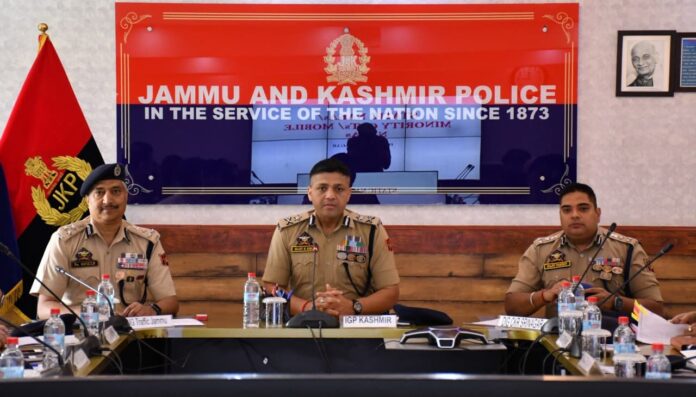
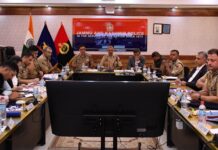
Srinagar, Sep 3 (NVI): Jammu and Kashmir Chief Secretary Atal Dulloo on Thursday reviewed the disposal of grievances related to properties of Kashmiri migrants across all 10 districts of the Kashmir division and directed officials to ensure time-bound resolution of pending cases.

Chairing a meeting attended by senior officials, including the divisional and district administrations, Dulloo stressed that every grievance lodged under the Jammu and Kashmir Migrant Immovable Property (Preservation, Protection and Restraint on Distress Sales) Act, 1997, should be examined comprehensively and decided strictly on merit.

He also called for greater use of technology in the management and protection of migrant properties and directed the remaining districts to expedite completion of geo-tagged digital inventories of such properties.

The meeting was informed that 522 kanals and 15.9 marlas of migrant land were retrieved and secured under Superdari or handed over to the original owners between January and July this year.

Bandipora accounted for the highest retrieval at 146 kanals and seven marlas, followed by Baramulla with 82 kanals and 10 marlas, Kulgam with 80 kanals and 0.5 marlas, Ganderbal with 53 kanals and Srinagar with 50 kanals and 16.9 marlas, officials said.

The Online Migrant Grievance Portal has so far registered 12,223 complaints, including 5,341 encroachment cases, 2,874 trespassing cases and 442 cases related to alleged tampering of records.

Of these, 10,038 cases have been closed by the district magistrates, while 7,605 have received final approval through the portal mechanism.

An independent telephonic quality verification mechanism was also instituted through the office of the Divisional Commissioner, Kashmir, to assess the quality of disposal of cases shown as closed.

Of the 4,918 applicants contacted during the verification exercise, 4,605 expressed satisfaction with the disposal of their cases, while the remaining grievances were flagged for further scrutiny and remedial action.

Dulloo appreciated the verification mechanism and said disposal figures must translate into actual, satisfactory and legally sustainable resolution on the ground.

The meeting was also informed that Baramulla, Ganderbal, Kulgam and Kupwara have completed geo-tagged digital inventories of migrant properties.

Officials said grassroots outreach camps conducted at Jammu by Additional Deputy Commissioners during the first quarter of 2026 resulted in 1,878 complaints being received directly, with 484 offline grievances subsequently brought onto the unified digital platform.

Following implementation of a revised Standard Operating Procedure in October 2025, the entire process has also been shifted to the e-Office platform.

The streamlined mechanism has enabled disposal of 129 complex alienation cases in the last 11 months, compared with 6,258 cases processed during the preceding 28 years, officials said.

Dulloo directed officials to maintain sustained focus on protecting migrant properties, expediting grievance disposal and strictly adhering to statutory safeguards while ensuring protection of the lawful rights of migrant property holders.—(NVI)

JeI-linked properties attached in North Kashmir under UAPA

Srinagar, Sep 3 (NVI): Police in north Kashmir’s Sopore on Thursday attached two double-storey buildings, six shops and two kanals of land in Dooru village following completion of legal proceedings under the Unlawful Activities (Prevention) Act, officials said.

The attached properties include the premises of Islamia Model School, Dooru, which were identified during an investigation into a case registered under Sections 10 and 13 of the UAPA, they said.

According to officials, the school has remained closed since 2022. During the investigation, scrutiny of official and revenue records and verification from the concerned authorities allegedly established links between the properties and the proscribed Jamaat-e-Islami Jammu and Kashmir (JeI).

The properties were notified under Section 8(1) of the UAPA by the Divisional Commissioner, Kashmir, through an order issued on August 12, officials said.

Subsequently, on the request of Sopore Police, the District Magistrate, Baramulla, issued orders under Sections 8(3) and 8(4) of the Act, following which police, accompanied by an Executive Magistrate, carried out the attachment in accordance with the prescribed legal procedure.

Police said the action was part of a sustained investigation into properties and assets allegedly linked to proscribed organisations and their networks.

The police said it would continue to take lawful action against proscribed organisations and prevent the use of properties allegedly linked to such groups for activities prohibited under law.—(NVI)

Rajnath Singh unveils ‘RAKSHA’ document outlining India’s 10-year defence diplomacy roadmap

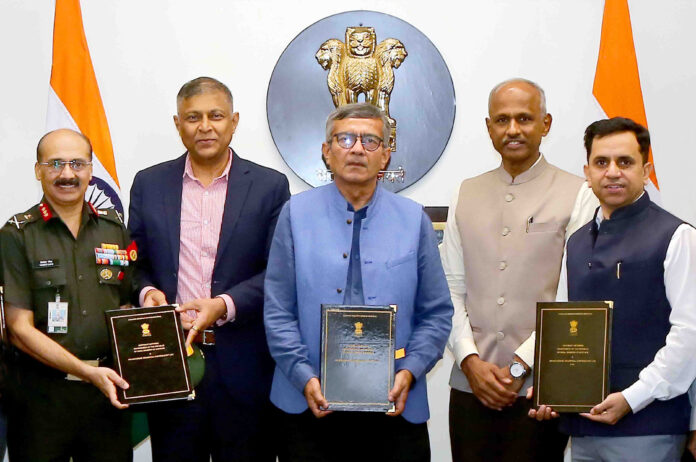
New Delhi, Sep 3 (NVI): Defence Minister Rajnath Singh on Thursday unveiled ‘RAKSHA’, a comprehensive defence diplomacy document outlining India’s strategic roadmap and vision for global defence partnerships over the next decade.

The document seeks to align India’s national security objectives with proactive international cooperation and long-term partnerships aimed at promoting stability, mutual growth and a rules-based global order.

The strategic framework identifies key areas including deepening bilateral and multilateral security partnerships, enhancing joint military exercises and training programmes, and sharing best practices with friendly countries.

It also lays emphasis on promoting indigenous defence platforms and equipment under the ‘Make in India’ initiative, with the objective of establishing India as a reliable global defence manufacturing and export hub.

Maritime security has been identified as another key pillar, with the document underlining India’s role as a net security provider and first responder in the Indian Ocean Region.

Defence diplomacy remains a core component of India’s foreign policy and the document provides an actionable vision for strengthening the country’s engagement with partner nations over the next 10 years, officials said.

Chief of Army Staff General Dhiraj Seth, Defence Secretary Rajesh Kumar Singh, Secretary (Defence Production) Sanjeev Kumar, Secretary (East) in the Ministry of External Affairs Rudrendra Tandon, Vice Chief of Air Staff Air Marshal Ashutosh Dixit, Vice Chief of Naval Staff Vice Admiral Ajay Kochhar and Chief of Integrated Defence Staff Air Marshal Tejinder Singh were among those present at the event.

Senior officials from the Ministry of Defence, Ministry of External Affairs and National Security Council Secretariat also attended the programme.—(NVI)

Pakistani national apprehended while crossing IB in Jammu: BSF

Samba

Shivam Bakshi

Jammu, Sep 3 (NVI) A Pakistani national was apprehended by Border Security Force (BSF) personnel while allegedly attempting to cross the International Border in the Kanachak sector of Jammu, officials said on Thursday.

The man was spotted moving towards the Indian side from Pakistan, following which BSF personnel issued repeated warnings, officials said.

However, he allegedly ignored the warnings and continued moving forward, after which the troops overpowered and detained him.

The apprehended person is being questioned to ascertain the circumstances and motive behind his attempted crossing, officials said.—(KNO)

Vande Bharat Express to make experimental halt at J&K’s Anantnag

Vande Bharat Train
File photo

Srinagar, Sep 3 (NVI) The Railway Ministry has approved an experimental stoppage of the Jammu Tawi-Srinagar Vande Bharat Express at Anantnag railway station, officials said on Thursday.

According to a Railway Board communication, the stoppage will be introduced from an “early convenient date”, subject to the requisite security clearance.

The concerned authorities have also been directed to closely monitor ticket sales at Anantnag station to assess the performance of the experimental halt.

The move is expected to improve rail connectivity for residents of Anantnag and adjoining areas and benefit tourists, traders, students and other passengers travelling between Jammu and Kashmir.

Railway sources said the stoppage is likely to become operational by the end of September. The exact date of commencement and the arrival and departure timings at Anantnag are yet to be notified.

The halt will initially be on an experimental basis, with passenger response and ticket sales to be monitored before a decision is taken on its continuation.—(NVI)

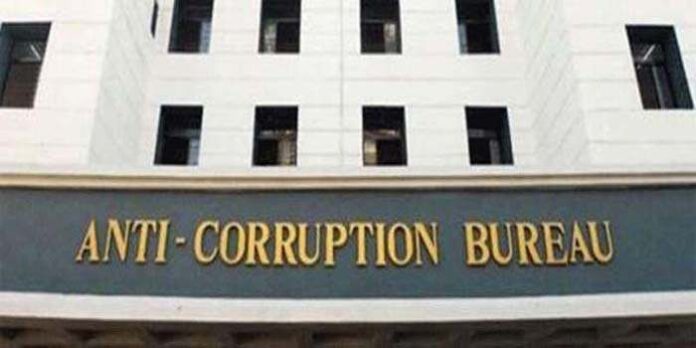
ACB arrests junior assistant for accepting Rs 15,000 bribe for marriage certificate

Shivam Bakshi

Jammu, Sep 2 (NVI) The Jammu and Kashmir Anti-Corruption Bureau on Wednesday arrested a junior assistant for allegedly demanding and accepting a bribe of Rs 15,000 for issuing a marriage certificate under the Special Marriage Act, 1954, officials said.

The accused, identified as Ajay Kumar, posted in the office of the Assistant Commissioner (General), Jammu, had allegedly initially demanded Rs 20,000 from the complainant and later agreed to accept Rs 15,000 following negotiations, the ACB said.

The complainant approached the anti-graft agency after refusing to pay the bribe. Following discreet verification, the ACB registered a case under Section 7 of the Prevention of Corruption Act, 1988, and laid a trap.

The accused was caught red-handed while allegedly demanding and accepting Rs 15,000 from the complainant. The bribe money was recovered from his possession in the presence of independent witnesses, following which he was arrested, the agency said.

The ACB also conducted searches at the accused’s residential premises in the presence of an Executive Magistrate and independent witnesses.

Further investigation in the case is underway, it said.—(NVI)

J&K CM Omar asks doctors to serve people with dedication

Srinagar, Sep 2 (NVI): Jammu and Kashmir Chief Minister Omar Abdullah on Wednesday handed over appointment orders to newly-recruited Medical Officers of the Health and Medical Education Department and urged them to serve people with dedication, particularly in remote and underserved areas.

Addressing the newly appointed doctors at a function held at the Sher-i-Kashmir International Convention Centre (SKICC) here, Abdullah said their appointment marked the beginning of a new chapter in their lives and a responsibility to serve the people.

“People have high expectations from you. In the most difficult of times, when people go in search of someone, they go in search of a doctor,” he said.

The chief minister urged the doctors to ensure quality healthcare is available closer to people’s homes and reduce unnecessary referrals to major hospitals in Srinagar and Jammu.

He said routine procedures, including normal deliveries and surgeries for gallbladder and appendicitis, should be available at sub-district or district hospitals wherever possible.

“People should not have to travel from sub-district and district hospitals to the major cities for routine medical procedures and treatment,” Abdullah said.

At the same time, he acknowledged the expectations of doctors posted in remote areas and assured them that the government would work to improve infrastructure, connectivity and working conditions.

“You will expect us to provide you with proper infrastructure so that you can carry out your duties properly. You will expect us to provide you with proper connectivity in the areas where we post you,” he said.

Abdullah said education and health were the two sectors to which his government was paying special attention, describing them as the foundation for the future development of Jammu and Kashmir.

“We have to change the future of Jammu and Kashmir. To change the future, we are paying special attention to two things—education and health,” he said.

The chief minister also highlighted the government’s efforts to make medical education more accessible and said the administration was working to increase the intake capacity of medical colleges in the Union Territory in coordination with the Centre.

He said increasing medical seats would help create a larger pool of trained doctors who could eventually contribute to public healthcare delivery.

Assuring the newly appointed Medical Officers of continued government support, Abdullah said service conditions and healthcare infrastructure would be improved to enable doctors to discharge their duties effectively.

The chief minister congratulated the doctors and their families, acknowledging the years of hard work, training and sacrifices that went into their medical education and recruitment.

He urged the new Medical Officers to make the most of their careers in public service and discharge their responsibilities with dedication and compassion.

Health and Medical Education Minister Sakina Itoo, Advisor to the Chief Minister Nasir Aslam Wani, Commissioner Secretary, Health and Medical Education, M Raju, Mission Director, National Health Mission J&K, Akriti Sagar, faculty members of Health Services Kashmir, newly appointed Medical Officers and their parents were present at the event.—(NVI)

16th ‘Aero India’ defence show to be held in Bengaluru from Feb 8-12 next year

AERO
Air show (representative pic)

New Delhi, Sep 2 (NVI) The 16th edition of Aero India, Asia’s largest air show and one of the world’s premier aerospace and defence exhibitions, will be held at Air Force Station, Yelahanka, in Bengaluru from February 8 to 12 next year, the Defence Ministry said on Wednesday.

Organised by the Department of Defence Production under the Ministry of Defence, the five-day event will bring together leading global aerospace and defence companies, policymakers, technology experts, innovators, industry stakeholders and defence forces personnel.

Aero India has emerged as a major international platform showcasing India’s capabilities in aerospace, defence manufacturing, emerging technologies and innovation.

The event will provide opportunities for business-to-business and government-to-industry engagements, technology demonstrations, international cooperation and strategic dialogue.

It will also feature aerial displays by the Indian Air Force and participating international flying teams.

The ministry said a dedicated web-based portal has been developed to facilitate participation of exhibitors and visitors.

Online registration and booking of exhibition space will commence from September 3 through the official Aero India website.

Aero India 2027 is expected to provide further impetus to the government’s ‘Aatmanirbhar Bharat’ initiative and India’s efforts to emerge as a trusted partner in the global defence and aerospace supply chain.

The event will also encourage greater participation of Indian defence industries, including MSMEs and start-ups, and create opportunities for partnerships, investments, exports and technology collaboration, the ministry said.—(NVI)

Thailand cuts visa-exempt period for tourists from 60 to 30 days

New Delhi, Sept 2 (NVI) Amending its rules, Thailand has announced cutting down of visa-exempt stay for tourists from many countries, including India, from 60 days to 30 days.
The new rules will come into effect after September 15, 2026, impacting plans of travellers who intend to stay longer or cross borders frequently.
The revised rules, published in Thailand’s Royal Gazette on August 31, replace the 60-day visa-exemption scheme that had covered 93 countries and territories since 2024.


The change is unlikely to make much practical difference for the typical Indian tourist taking a one- or two-week holiday.

Under the new framework, 60 countries and territories, including India, will qualify for visa-exempt tourist entry for up to 30 days.
Nationals from Mauritius and Seychelles will receive visa-free stays of up to 15 days, while nationals of Azerbaijan, Belarus and Serbia will become eligible for Visa on Arrival at authorised checkpoints.
K Rammohan Naidu, Kinjarapu Ram Mohan Naidu, Kinjarapu RamMohan, Kinjarapu, Ram mohan

The new 30-day visa-exemption list includes India, Australia, Austria, Bahrain, Belgium, Bulgaria, Bhutan, Brunei Darussalam, Canada, Croatia, Cyprus, Czechia, Denmark, Estonia, Fiji, Finland, France, Georgia, Germany, Greece, Hungary, Iceland, Indonesia, Ireland, Israel, Italy, Japan, Jordan, Kuwait, Kyrgyzstan, Latvia, Liechtenstein, Lithuania, Luxembourg, Malaysia, Maldives, Malta, the Netherlands, New Zealand, Norway, Oman, Philippines, Poland, Portugal, Qatar, Romania, Saudi Arabia, Singapore, Slovakia, Slovenia, South Africa, Spain, Sweden, Switzerland, Taiwan, Türkiye, Ukraine, UAE, UK and US.

Thailand’s government says the policy overhaul is intended to balance national security, tourism and economic interests, international relations and reciprocity, while reducing overlapping visa privileges and misuse of the visa system.

The biggest takeaway is that Indians remain visa-exempt.
The Thai Embassy in New Delhi has specifically confirmed that Indian passport holders will be eligible for the new 30-day visa exemption for tourism once the revised scheme takes effect. Indians who want to stay for longer than 30 days can apply for the appropriate Thai e-Visa.


So, for an Indian family flying to Bangkok, Phuket, Krabi, Pattaya or Chiang Mai for a holiday of 7, 10 or 15 days, there is effectively no change in the visa requirement.


The change becomes relevant primarily for travellers who previously relied on the 60-day visa-exempt period for longer stays.
Travellers already in Thailand under the existing visa exemption, as well as those who enter before the new rules become effective, will not have their existing permitted stay shortened simply because the new rules come into force.


Thailand’s government has confirmed that such travellers may remain until the expiry of the period granted to them when they entered the country.

The Thai Embassy in New Delhi has separately confirmed that Indian passport holders travelling before the effective date can remain in Thailand until the expiry of their permitted period of stay.


The Thai Embassy in New Delhi explicitly advises Indian passport holders who wish to enter Thailand for tourism for more than 30 days to apply for an appropriate e-Visa.ent when planning a long stay.


Thailand is also tightening rules around repeated visa-exempt entries through land borders.


Under the new rules, visa-exempt travellers entering through land-border checkpoints will generally be limited to two entries per calendar year, although nationality-specific exceptions can be designated by the Interior Minister.


There is no equivalent fixed annual numerical limit for visa-exempt entries by air. However, admission remains subject to the discretion of Thai immigration officials. Frequent visitors may be questioned about the purpose and frequency of their trips and may be asked to provide supporting information.


This could be particularly relevant to travellers who make repeated short trips to Thailand rather than taking conventional holidays.


Visa-free entry should not be confused with a general right to work in Thailand.


Thailand’s revised framework continues to distinguish between tourism/non-work activities and activities that require work authorisation.
The Thai government’s stated objective in revising the visa system includes preventing visa privileges from being misused for unauthorised activities.


The official Thai Embassy guidance says the new visa-exemption category covers tourism as well as certain business engagements or urgent/ad-hoc work, subject to the applicable rules. It also states that an extension of stay is at the discretion of immigration officials.


Travellers undertaking activities that legally constitute employment should therefore check the relevant work-authorisation requirements rather than assuming visa-free entry is sufficient.


The decision is significant because Thailand had initially considered moving Indian travellers away from visa-free entry.


In May, Thailand’s Cabinet approved the withdrawal of the 60-day exemption covering 93 countries and territories, with an earlier proposal that would have changed India’s status. But in July, Thailand reversed course on India and retained visa-free entry, while reducing the permitted stay to 30 days.


Thailand’s Tourism Minister Surasak Phancharoenworakul said the 30-day period was intended to better match Indian travel patterns while supporting the country’s tourism industry. He also said the government could review the measure if problems emerged.


Thailand has a significant economic incentive to keep the Indian market accessible. The Tourism and Sports Ministry has said the 30-day visa exemption is important for attracting Indian visitors, including wedding and celebration groups, as Thailand targets 2.7 million Indian arrivals in 2027.  (NVI)

Global temperature likely to rise above 1.5°C; quick action needed to contain it: UNEP

Climate Vulnerability Assessment
Representative Pic of climate change or global warming
New Delhi, Sept 2 (NVI) United Nations Environment Programme (UNEP) has predicted that global temperatures are likely to rise above 1.5°C from pre-industrial levels within the next few years.
In a report, titled Limiting Overshoot, the UNEP says the focus of climate action needs to shift towards limiting how far temperatures rise above the threshold and bringing them down again as quickly as possible as there are now no plausible scientific pathways that can keep global warming below 1.5°C.

The 1.5°C target is a central pillar of the 2015 Paris Agreement where nations pledged to keep global warming well below 2°C while striving to limit it to 1.5°C.

Although the threshold was breached temporarily in 2024, when global temperatures averaged 1.55°C above pre-industrial levels to mark the warmest year on record, the World Meteorological Organization (WMO) emphasizes that the Paris target measures long-term warming over decades rather than a single year.


However, the UNEP warns that annual temperatures could soon stay consistently above 1.5°C. With long-term global warming already reaching approximately 1.4°C, the multi-decade threshold could be crossed within a few years.
 
UNEP says the amount of warming the world sees will depend on how quickly countries cut greenhouse gas emissions.


About 1.8°C: This is the most optimistic scenario and would require countries to fully meet their current climate pledges and long-term commitments.
More than 2°C: If countries do less than this, global temperatures could rise above 2°C.
About 2.6°C: If current government policies continue without stronger action, warming could reach a median estimate of 2.6°C by 2100.


This means the world is likely to cross 1.5°C even in the most optimistic scenario. However, UNEP stresses that every fraction of a degree matters.
The higher temperatures rise, and the longer they stay elevated, the greater the risks to people, ecosystems and the planet.
UNEP says Climate Action must now prepare for an “overshoot, peak and decline” pathway. This means temperatures would first exceed 1.5°C, then reach a peak before gradually falling again.

However, returning below the threshold will be difficult and highly uncertain. It would require rapid reductions in greenhouse gas emissions as well as large-scale removal of carbon dioxide that is already present in the atmosphere.

Carbon dioxide removal could include measures such as reforestation and technologies designed to capture carbon from the atmosphere.
Yet UNEP stresses that carbon removal cannot replace deep cuts in emissions, while existing carbon removal efforts have so far had limited impact.
Even optimistic scaling is unlikely to reduce temperatures by more than a few tenths of a degree this century.


Crossing 1.5°C does not mean that a single new climate disaster will occur suddenly. Instead, existing risks are expected to become more severe and frequent as global temperatures continue to rise.

 These include:

 More intense heatwaves and extreme weather

  • Greater pressure on glaciers and ecosystems
  • Rising risks for low-lying coastal cities
  • Greater threats to food, water and livelihoods
  • Increasing chances of irreversible environmental damage

UNEP warns that even if temperatures eventually fall below 1.5°C, some losses and changes may be permanent.

UNEP says the world must now focus on making the period above 1.5°C as small and as short as possible.


To make this possible, UNEP calls for:


  • Rapid cuts in greenhouse gas emissions, including methane, to reach net-zero as soon as possible
  • Faster transition from fossil fuels to renewable energy, which can also improve air quality and public health
  • Stronger adaptation measures to help communities, economies and infrastructure cope with worsening climate impacts
  • Responsible carbon dioxide removal, including afforestation and other methods, to help bring temperatures down after the peak.  (NVI)

MUST READ