Tuesday, September 22, 2026
Home Blog Page 60

Union Cabinet approves oil and gas exploration scheme

Representational image

New Delhi, July 31 (NVI) Union Cabinet today approved a Rs 84,084 crore scheme for oil and gas exploration, named ‘Samudra Manthan’.

The scheme will be implemented through financial year 2031 (FY31) to unlock India’s vast offshore energy potential.

The scheme encompasses a comprehensive set of interventions across the offshore exploration value chain, aimed at strengthening India’s energy security, accelerating domestic exploration and production and promoting technological leadership.

It provides for large-scale acquisition, processing and interpretation of high-quality seismic data, accelerated deepwater and ultra-deepwater exploratory drilling, scientific drilling in frontier basins and development of common offshore production and evacuation infrastructure.

It also includes the establishment of an integrated oil and gas manufacturing and services zone.

It also includes dedicated provisions for digital programme management, capacity building, technology adoption, stakeholder engagement and international outreach, creating an integrated ecosystem.

“Samudra Manthan is expected to catalyse reserve accretion of over 600 million metric tonne of oil equivalent (MMTOE), substantially increase offshore exploration activity, promote higher domestic oil and gas production, generate large-scale employment, strengthen indigenous manufacturing under Make in India and Atmanirbhar Bharat, and foster a globally competitive ecosystem for offshore technologies and services,” the official statement noted.

The scheme is also expected to stimulate significant investments across the exploration and production value chain, creating long-term opportunities for industry, innovation and economic growth.

Over the past decade, the government has undertaken transformative reforms across the upstream sector, including opening almost the entire offshore acreage for exploration, modernising the legislative and contractual framework, and strengthening the National Data Repository, the statement noted. (NVI)

Union Cabinet approves Surya Sarovar Yojana

New Delhi, July 31 (NVI) The Union Cabinet today approved the Pradhan Mantri Surya Sarovar Yojana (PM-SSY) aimed at developing floating solar photovoltaic (FSPV) projects integrated with energy storage systems.

The total financial outlay of the project is  Rs 5,070 crore.

Under the scheme, the government plans to develop 5,000 MW of floating solar capacity with co-located energy storage systems having a minimum storage capacity of two hours, equivalent to 10,000 MWh.

The projects will be sanctioned between FY 2026-27 and FY 2030-31, while financial support will continue until FY 2032-33.

The approval comes after an assessment by the National Institute of Solar Energy (NISE), which estimated India’s floating solar potential at around 102.18 GWp across reservoirs and other suitable inland water bodies.

The scheme will provide Central Financial Assistance (CFA) of Rs 1 crore per MW for eligible floating solar projects after successful commissioning. Additionally, financial support of up to Rs 50 lakh per project will be available for feasibility studies, including bathymetry, hydrography, environmental assessments and other preparatory activities.

The government said the initiative will help expand India’s floating solar capacity, which currently stands at around 700 MW, while enabling better utilisation of reservoirs and industrial ponds without competing for land resources.

The integration of energy storage systems is expected to improve grid stability and reliability.

The scheme is projected to reduce around 10 million tonnes of carbon dioxide emissions annually and generate approximately 16,000–17,000 full-time equivalent employment opportunities across the project value chain.

The initiative will also promote domestic manufacturing of floating structures, photovoltaic cells, modules and energy storage systems, supporting the government’s Aatmanirbhar Bharat push. (NVI)

Non-local worker killed, another injured in terrorist attack in J&K’s Kulgam

Representational Image

Srinagar, Jul 31 (NVI): One non-local worker was killed and another injured after terrorists opened fire on them in Kulgam district of Jammu and Kashmir on Friday evening, officials said.

The attack took place in the Kellam area of south Kashmir’s Kulgam district, where the terrorists fired at two non-local labourers, the officials said.

Both the injured workers were rushed to a nearby hospital, where one of them succumbed to his injuries, they said.

The other injured worker was referred to the Government Medical College (GMC), Anantnag, for specialised treatment.

Security forces have cordoned off the area and launched a search operation to trace the attackers, officials said.

Further details are awaited.(NVI)

BSF ASI found dead with bullet injury in J&K’s Baramulla; probe underway

REpresentational Image

Srinagar, Jul 31 (NVI): A 56-year-old Assistant Sub-Inspector (ASI) of the Border Security Force (BSF) was found dead with a bullet injury at his place of posting in the Boniyar area of Jammu and Kashmir’s Baramulla district on Friday, officials said.

The deceased was identified as Shiv Dutt, a resident of Muzaffarnagar in Uttar Pradesh, who was posted with the 175 Battalion of the BSF in Boniyar, they said.

Officials said the ASI was found with a bullet injury and preliminary findings suggest that he may have died after allegedly shooting himself with his service rifle.

A police team reached the spot soon after the incident and shifted the body for medico-legal formalities.

Police have registered a case and launched an investigation to ascertain the exact circumstances surrounding the death, officials added.(NVI)

LG Sinha Launches New Academic Programmes at Cluster University Jammu

Jammu, Jul 31 (NVI): Jammu and Kashmir Lieutenant Governor Manoj Sinha on Friday inaugurated a series of new academic initiatives at Cluster University Jammu, including the “Design Your Degree” programme, integrated science courses, a semiconductor skilling programme in collaboration with IIT Madras, and a Department of Vedic Studies.

Addressing the inaugural function, Sinha said the challenges of the 21st century require multidisciplinary learning and urged students to integrate knowledge from different fields to develop innovative solutions.

He said the newly launched “Design Your Degree” programme would enable students to design their academic pathways by combining subjects based on their interests and career aspirations.

The Lieutenant Governor also inaugurated integrated programmes in Physics, Chemistry, Botany, Zoology, Mathematics and Geography, saying cross-disciplinary education would prepare students to tackle complex issues such as climate change with a broader perspective.

Sinha also launched a one-year postgraduate diploma in Sanatan Dharma and Indian Knowledge Systems and inaugurated the Department of Vedic Studies. He said modern education should be complemented by an understanding of India’s intellectual and civilisational heritage.

Highlighting the importance of technology, Sinha inaugurated the Semiconductor Skilling Programme developed in collaboration with IIT Madras. He said the initiative would equip students with industry-relevant skills and support India’s goal of becoming a global leader in technology development and manufacturing.

The Lieutenant Governor also launched a postgraduate programme in Environmental Sciences with a minor specialisation in Renewable Energy, a one-year postgraduate diploma in Dogri Translation, released the Nasha Mukt Bharat activity report, and inaugurated renamed university facilities during the event.

Vice-Chancellor Prof K.S. Chandrasekar, Registrar Ankur Mahajan, faculty members and students attended the function.(NVI)

Indian Army Shoots Down Pakistani Surveillance Drone in Jammu’s Khour Sector

Shivam Bakshi

Jammu, Jul 31 (NVI): The Indian Army shot down a Pakistani surveillance drone in the Khour sector of Jammu after it was spotted hovering close to vital military installations, official sources said on Friday.

The unmanned aerial vehicle (UAV) was detected during surveillance, prompting troops to engage and bring it down, the sources said.

The recovered drone has been secured, and security agencies have launched a detailed forensic examination to determine its origin, technical specifications and any intelligence it may have gathered, they added.

Officials said further investigation is underway, and security measures in the area have been strengthened following the incident.(NVI)

Army chief launches indigenous diesel for operations in extreme cold

New Delhi, Jul 31 (NVI): Chief of the Army Staff General Dhiraj Seth on Friday launched an indigenously developed Xtreme Weather Grade (XWG) Diesel designed to improve the performance of military vehicles in extreme cold conditions.

The specialised fuel has been jointly developed by the Indian Army and Oil Marketing Companies and is aimed at enhancing the mobility, safety and operational readiness of combat and logistics vehicles deployed in high-altitude and snow-bound areas.

According to the Army, conventional diesel tends to thicken at very low temperatures, leading to clogged fuel filters and affecting vehicle operations. The new XWG Diesel remains effective at temperatures as low as minus 42 degrees Celsius, ensuring reliable performance in harsh winter conditions.

The fuel complies with BS-VI emission norms and IS 1460:2025 specifications and can be used in the Army’s existing fleet without requiring any engine modifications.

Speaking at the launch, General Seth described the fuel as a significant indigenous innovation that would improve operational readiness and mission reliability while eliminating the need for practices earlier adopted to keep vehicles functional during severe winters.

He also praised the Indian Army and Oil Marketing Companies for developing the fuel within a year and expressed confidence that such collaborations would lead to more specialised fuels for varied operational requirements.

The Army said the technology is also expected to benefit civilian users in high-altitude and extreme winter regions by improving the reliability and safety of vehicles operating in severe climatic conditions.(NVI)

Cop injured as service rifle goes off accidentally in J&K’s Anantnag

Representational Picture

Srinagar, Jul 31 (NVI): A policeman was injured after his service rifle accidentally went off in the Kokernag area of Jammu and Kashmir’s Anantnag district on Friday, officials said.

The injured policeman, identified as Mohammad Altaf, sustained a bullet injury to his foot after the accidental discharge of his service weapon, the officials said.

He was initially taken to Sub-District Hospital Kokernag and later referred to Government Medical College (GMC), Anantnag, for specialised treatment.

Officials said his condition is stable and further details are awaited.(NVI)

Residual Turbulence in Bangladesh; President Quits Amid Allegations

A file picture of one of the protests seen in Bangladesh in 2024

Column

By Shivangi Sharma

On July 24, 2026, Bangladesh President Mohammad Shahabuddin resigned from office after weeks of political uncertainty.

Speaker Hafiz Uddin Ahmad Bir Bikram accepted the resignation at 5:01 pm, making it effective immediately under Article 50(3) of the Constitution.

A day later, on July 25, 2026, the Cabinet Division immediately issued a gazette notification confirming the acceptance of Shahabuddin’s resignation letter, adding that Speaker Bir Bikram would discharge the responsibilities of President, as the new head of state, until a new President is elected, in accordance with Article 54 of the Constitution.

The resignation of President Shahabuddin is a significant political development in Bangladesh’s post-July uprising transition, marking the end of his constitutional immunity and intensifying demands for accountability over the July–August 2024 violence.

Within days of Shahabuddin’s departure from office, on July 26, 2026, the Chief Prosecutor’s Office of the International Crimes Tribunal (ICT) filed a complaint against the outgoing President.

Two organisations, the Bangladesh Azadi Party and Rashtra Sanglap Forum, filed two separate complaints.

Rashtra Sanglap Forum Central Member Secretary Al Noor Mohammad Ayas named Shahabuddin a ‘close associate’ of former Prime Minister Sheikh Hasina in the complaint, and demanded an impartial investigation and trial for Shahabuddin’s role in ordering the shooting, inhuman torture, murder, and disappearance of students participating in the July mass uprising of 2024.

Additionally, the Azadi Party also filed a complaint against former President Mohammad Abdul Hamid, along with Shahabuddin.

After filing the complaint with the Chief Prosecutor’s Office, Azadi Party Convener Lieutenant Colonel (Retired) Mohammad Hasinur Rahman declared, “So many people have been killed and disappeared until August 5; these two former presidents never protested. They had tacit consent to these crimes.”

Shahabuddin assumed office as President of Bangladesh on April 24, 2023, for a five-year term under the Awami League government.

During his 39-month tenure, he oversaw two national elections, administered the oath of office to three Prime Ministers, and witnessed the July–August 2024 mass uprising that led to the fall of the Awami League government and the departure of then-Prime Minister Sheikh Hasina from Bangladesh.

His Presidency coincided with one of the most politically turbulent periods in Bangladesh’s recent history.

Regarding the President’s resignation, on July 24, 2026, Nahid Islam, Convener of the National Citizens Party (NCP), called for vigilance to prevent Shahabuddin from a safe exit or flight abroad.

Islam said, “We are still saying that we must keep a vigilant eye so that this fascist-friendly president, Chuppu, cannot make any kind of safe exit or escape abroad under the pretext of physical illness or any other excuse, and the government must arrest this fascist president immediately.”

Another party, the Bangladesh Khelafat Majlis, also stated that there was a question in the public mind, whether there was any political equation behind the President’s resignation.

Other parties, including the Islami Andolan Bangladesh (IAB) and Jamaat-e-Islami (JeI), welcomed the President’s resignation.

JeI Chief Shafiqur Rahman noted, “The President of Bangladesh has resigned from his post. Although late, a dark shadow of tyranny has been lifted from the nation’s neck”

Overall, the reactions by prominent political leaders to the resignation elicited mixed political opinions, ranging from calls for arrests to allegations of political manoeuvring behind the President’s departure.

Shahabuddin served as both the Head of State and Commander-in-Chief of the Armed Forces, and his departure removes the last prominent constitutional figure seen as aligned with Sheikh Hasina.

Significantly, on July 10, 2026, Sheikh Hasina declared that she would return to Bangladesh in December 2026, despite a political environment that has become increasingly unfavourable for the former Prime Minister.

The Awami League remains a proscribed party, and many of its senior leaders and supporters have either been detained or are in hiding following the 2024 student-led uprising, Shahabuddin’s resignation further diminishes the party’s remaining institutional presence.

Ends

(Shivangi Sharma is a Research Assistant at the Institute for Conflict Management in India).

Turmoil in Badakhshan in Afghanistan

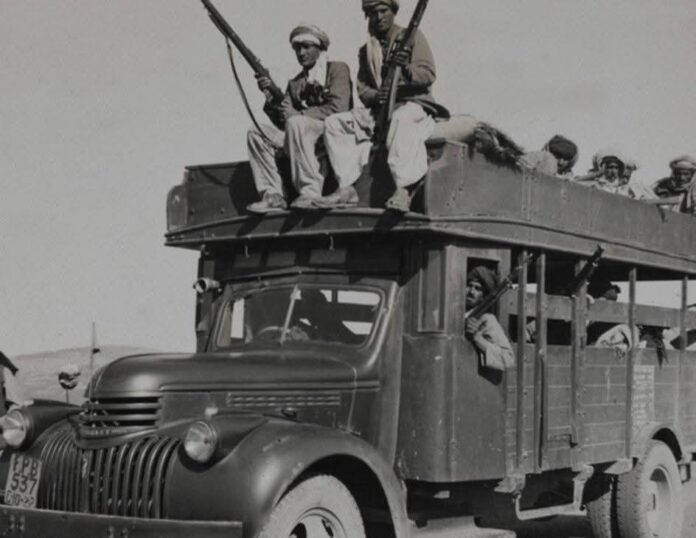
Badakhshan province of Afghanistan

Column

By Sanchita Bhattacharya

Badakhshan Province in Afghanistan is in the midst of severe disorder, experiencing violent anti-Taliban rebellions, intense internal mutinies within the Taliban structure, and crises over the mining of natural reserves.

On July 23, 2026, fighters of the Afghanistan Freedom Front (AFF) killed 21 Taliban fighters and injured another 37, in a series of targeted operations against Taliban bases, units, and military detachments in the Zebak District of Badakhshan Province.

One AFF fighter was also killed. During the fighting, AFF fighters captured ammunition, light and heavy weapons, military equipment, and other war materials, from the Taliban.

On the other hand, as reported on July 22, 2026, the Taliban ordered gunmen loyal to dissident local commander Juma Khan Fateh to surrender their weapons as soon as possible in the Shekay and Nusay Districts.

On July 21, 2026, Taliban fighters stationed in the Nusay District of Badakhshan Province ordered 350 armed men affiliated with the group, who did not hold positions within the Taliban regime’s structure, to surrender their weapons.

The notice warned that if any individual refused to hand over his weapons, Taliban fighters would use military force to seize them.

On July 17, 2026, Taliban authorities claimed that they had retaken the Yaftal-e Payin District in Badakhshan Province after an overnight attack claimed by anti-Kabul forces.

Police Spokesperson Ehsanullah Kamgar stated that the attack occurred while several Taliban fighters and commanders were on leave, adding that Taliban authorities had arrested seven people in connection with the incident and seized weapons and military equipment.

On July 13, the 2026, Taliban begun disarming their local fighters in the Shahr-e Buzurg District of Badakhshan Province.

Taliban’s special forces have also been deployed in the area, alongside Mawlawi Saifuddin Tayeb, the Deputy Chief of the Taliban Administrative Affairs Office.

The disarmament process began after the noon prayer in the district.

According to partial data compiled by South Asia Terrorism Portal (SATP), since the Taliban takeover on August 15, 2021, 216 people, including 57 civilians, 14 militants, and 145 in the Not Specified (NS) category have been killed in Badakhshan Province in 73 incidents (data till July 25, 2026).

Some of the major incidents include:

On March 29, 2026, AFF fighters carried out a planned attack targeting a watchtower of the Taliban’s 219th Division, located in the Qalatak area of Baharak District in Badakhshan Province, killing four Taliban fighters and injuring three.

On November 29, 2025, AFF fighters carried out a rocket attack on the Taliban’s Police District (PD) 7, in Faizabad, the capital city of Badakhshan, killing three Taliban fighters and injuring two.

On October 12, 2025, at least 10 Taliban fighters were killed in fighting between rival factions of the group at Yalor village in the Yaftali Sufla District of Badakhshan Province, over control of a gold mines.

On May 26, 2025, a local Taliban commander, Zaidullah, was killed along with his wife and child, during an internal armed clash in the Shahada District of Badakhshan Province.

At least four Taliban members were also seriously wounded, including Abdul Saboor, the deputy head of the Taliban’s intelligence unit in Shahada District, and Mahmood, another intelligence officer.

On May 8, 2024, at least three Taliban fighters were killed and another six were injured in an Improvised Explosive Device (IED) blast. Later, on the same day, the Islamic State-Khorasan Province (IS-KP) claimed responsibility for the blast.

On June 8, 2023, a Taliban senior commander identified as Mawlawi Safiullah and 15 others were killed in a bomb blast inside the Nabawi Mosque in the provincial capital of Faizabad.

On September 30, 2022, four Taliban fighters were killed when the National Resistance Front (NRF) attacked them in the Payan Mor area of Shahr Buzurg District of Badakhshan Province.

Amidst this chaos, a new anti-Taliban group, Sepahian-e Mihan (Patriotic Soldiers Front) has appeared on the scene.

On July 17, 2026, the group claimed responsibility for an attack in the Yaftali Sufla District and declared that its forces had controlled the district administration building for several hours.

Following this attack, the Taliban sent Army Chief Fasihuddin Fitrat to the District, to lead operations.

Fitrat claimed that the assault had been foiled and that the attackers had failed to achieve their objectives.

Nevertheless, on July 22, 2026, Qayum Malang, Commander of the Sepahian-e Mihan, released his first audio message, declaring that he and his fighters were safe: “I am in full health. Do not follow the enemy’s propaganda. We are all safe and well.”

He also stressed that the front “has its own plans and objectives” and that its members desire freedom above everything else.

The group reportedly consists of people from different sections of society, including residents of Badakhshan, who came together in response to growing dissatisfaction with Taliban rule in the province.

The official logo of the group includes symbolic elements such as the Simurgh (a giant bird of Persian mythology), the sun, the Hindu Kush mountains, lapis lazuli, a sword and the golden star of Bactria.

The Hindu Kush mountains are seen as a symbol of the group’s geographical roots, while the sword and star may represent its military and defensive character.

Further, Juma Khan Fateh, the influential and disgruntled Tajik commander of Badakhshan Province has become a festering wound for the Taliban leadership.

Fateh, his relatives (including brothers Mohammad Musa Shahryar and Abdul Fattah), and his loyalist gunmen, have been linked to land seizures, extortion, and illegal control of gold mines in Badakhshan.

As reported on June 27, 2026, increased movements and a military build-up by Juma Khan was reported in the Darwaz area of Badakhshan Province. He had organised his forces over the preceding days and held extensive meetings with residents in Nusay District.

The Taliban however, initiated a few official interventions to assess the situation.

On June 25, 2026, Taliban Defense Minister, Mullah Yaqoob Mujahid travelled to Badakhshan, following unsuccessful negotiations between a special Taliban commission and Juma Khan Fatah.

Taliban officials said Mullah Yaqoob’s visit was to evaluate the security situation along the Wakhan, Ishkashim, and Shughnan border areas.

However, sources suggest that he was also calculating military capabilities for a possible confrontation with Fatah.

Later, as reported on July 9, 2026, Fasihuddin Fitrat, Taliban’s Chief of Army staff, and Mawlawi Amanuddin, Taliban Governor of Helmand, travelled to Nusay District to meet with Juma Khan, in an effort to ease ongoing tensions.

Thereafter, on July 10, Juma Khan was transferred to Faizabad, capital of Badakhshan, after receiving ‘guarantees’ from Taliban Army Chief Fasihuddin Fitrat. No details of the talks or any agreement between the two sides have yet been released.

A day later, Juma Khan Fateh returned to the Darwaz region of Badakhshan after pledging loyalty to the Taliban administration.

In parallel to these ongoing ‘negotiations’ at the administrative level, Zabihullah Mujahid, Taliban Spokesperson, announced on June 22, 2026, that Juma Khan had been removed as Zabul Deputy Governor, without being assigned a new role.

Mujahid added that Taliban Supreme Leader Hibatullah Akhundzada had reshuffled several senior positions across government institutions.

Moreover, as reported on July 9, Taliban forces established several checkpoints in the Shekay, Nusay and Maymay Districts in Badakhshan to monitor the movement of locals.

Badakhshan is a rugged and rocky, pre-dominantly non-Pashtun province in northeastern Afghanistan, rich in gold, silver, aluminum, limestone, lapis lazuli, etc.

After their takeover in 2021, the Taliban leadership has been mistrustful of the local Taliban commanders of Tajik and other ethnic backgrounds.

A major point of dispute has been the control of Badakhshan’s rich mineral resources and mines.

There have been frequent disputes between Taliban and local miners.

For instance, on July 21, 2026, a number of mine workers gathered in front of Taliban’s mining department building in Badakhshan, protesting against the Taliban’s continued closure of mining sites, and saying that Taliban forces threatened and beat some workers and ignored their demands.

According to the protesters, the situation had left hundreds of families facing serious financial hardship.

Earlier, on May 9, 2026, eight people were injured after local miners and residents clashed with Taliban-affiliated forces over control of the Qatqati gold mine in the Shirin Nazm village of Shekay District in the province. The tensions began after Taliban beat several miners.

Crucially, in order to take full control of mining sites, as reported on February 19, 2026, Hibatullah Akhundzada approved the deployment of 1,000 fighters to protect gold mining operations in Badakhshan.

Subsequently, on July 23, 2026, Taliban’s Ministry of Interior stated that it had signed an agreement with the Taliban’s Ministry of Mines and Petroleum to provide security for four of Afghanistan’s key economic projects, including the lapis lazuli mine of Badakhshan.

Badakhshan is in turmoil, substantially due to highhandedness and ethnic biases of the Taliban’s central leadership. The perennial mistrust of non-Pashtuns, untamed greed in exploiting local resources without paying heed to the common people, the emergence of anti-Taliban forces, and the unapologetic nature of the Taliban is pushing Badakhshan deeper into distress and violence.

Ends

(Sanchita Bhattacharya is a Research Fellow at the Institute for Conflict Management in India).

MUST READ