Tuesday, September 22, 2026
Home Blog Page 84

India-based syndicate hit in US: Watershed moment in combating international crime

10 Indians charged in US for staging armed robberies to claim crime victimhood
US Justice Department

Column

By Ruchika Kakkar

In a significant escalation of international law enforcement efforts, on July 7, 2026, the United States (US) Department of Justice unsealed three federal grand jury indictments, charging a total of 37 defendants connected to three India-based transnational organised crime syndicates.

Operation Hard Ball involved coordination with Canadian, European, and other authorities and resulted in 24 arrests (including 11 in California, others in Indiana, Georgia, Canada, and Spain).

With 7 persons already in custody, Law enforcement is looking for 10 fugitives (seven in the US, two in India and one in Europe).

Enforcement agencies recovered 1,000 kilograms of cocaine, one kilogram of heroin, a dozen firearms, including machine guns, and USD 40,000 in cash. A total of 23 search warrants were executed in the Sacramento area, and 11 in the Los Angeles (L.A.) area.

Three major criminal groups were charged in L.A., centred on Punjab-based gangsters and their transnational operations involving racketeering, drug trafficking, extortion, and violence.

The largest indictment targets Lawrence Bishnoi (33), a gangster long imprisoned in India, who is accused of directing a sprawling criminal enterprise across multiple continents from prison using smuggled cell phones and VOIP services, as well as his associate and designated terrorist Satinderjeet Singh aka Goldy Brar.

Lawrence and Goldy Brar were close allies for a long time; reports from 2025 onward indicate a major split and ongoing gang war between the two factions, with Brar since aligned with Rohit Godara against Bishnoi.

However, in the context of the US charges, he is still treated as part of Bishnoi's network.

Separately, the Federal Bureau of Investigation (FBI) has declared a reward of up to USD 50,000 for information leading to Goldy Brar’s arrest.

The indictment includes Rohit Godara, the leader of the Bishnoi gang in Europe, among nine defendants facing charges of racketeering conspiracy, Hobbs Act extortion
and attempts, and drug trafficking of cocaine and methamphetamine.

Prosecutors allege the group orchestrated murders, shootings, kidnappings, and extortions, including attempts to extort victims in L.A. and Thousand Oaks for USD 5 million via encrypted messaging apps like WhatsApp between December 2025 and January 2026.

Significantly, Canada designated the Bishnoi enterprise a terrorist entity in September 2025.

A separate seven-count indictment charges Jaggu Bhagwanpuria (38), another imprisoned Punjab gangster and occasional rival, along with 16 co-defendants, for racketeering, murder-for-hire, kidnappings, weapons trafficking, and drug operations spanning the US, Canada, UK, Europe, Australia, and New Zealand, with funding allegedly derived from drug networks in L.A. and the Inland Empire in southern California as well as illegal firearms dealing.

US prosecutors have accused Gurinderjit Singh Nagra, who was posted as Station House Officer (SHO) of the Tanda Police Station in Hoshiarpur district of Punjab, of assisting an extortion scheme linked to the Jaggu Bhagwanpuria network.

An eight-count indictment also targets Ravinder Singh Dhanda (57), aka Randy, aka Rolex, aka John Wick, of Vancouver, Canada, and co-defendants for smuggling and distributing hundreds of pounds of cocaine and methamphetamine weekly from Southern California into Canada, primarily using trucks.

The US Department of Justice highlighted the scale of the narcotics network operated by these criminal syndicates, stating that groups were involved in trafficking "hundreds of kilograms of cocaine and methamphetamine each week from the US into Canada."

According to the department, the drugs were transported through smuggling routes, with narcotics concealed in long-haul semi-trucks travelling from the Greater L.A. area – including L.A., West Covina, Ontario, Fontana, and Perris – towards the US-Canada border.

The department further noted that criminal networks exploited legitimate commercial
transportation channels to facilitate drug movement, including the use of farm trucks from working agricultural operations, to conceal narcotics during transit to Canada.

The scale and complexity of these operations demonstrate the transformation of regional gangs into highly organised transnational criminal enterprises with established logistics, financial networks, and international supply chains.

A major aspect of the investigation is the alleged involvement of Lawrence Bishnoi and Goldy Brar in ordering the June 18, 2023, assassination of Hardeep Singh Nijjar, a prominent Sikh separatist leader, outside a gurdwara in Surrey, British Columbia (B.C.), in Canada. The syndicates linked to Bishnoi and

his associates are accused of targeting members of the Indian diaspora, particularly in Canada and the US, including communities in California.

Operation Hardball represents a major setback for the leadership structure and operational capabilities of these networks while highlighting growing cooperation between US, Canadian, and international agencies in tackling transnational organised crime.

The operation is expected to reduce immediate security threats faced by diaspora communities, particularly in areas such as Southern California, including L.A. and the
Central Valley, as well as parts of B.C.

The crackdown also affects the financial and logistical networks supporting these organisations and their drug trafficking routes.

The case also highlights the changing nature of transnational crime, where regional gangs have evolved into international networks, and reflects strengthening law enforcement cooperation between the US, Canada, and other partner countries, despite ongoing diplomatic tensions.

Enhanced intelligence sharing, coordinated investigations, and possible extradition efforts could play a crucial role in preventing these groups from rebuilding their networks.

For India, the action reinforces long-standing concerns regarding gangsters and criminal
elements operating from foreign territories, while also shifting attention towards the role of non-state actors in cases involving diaspora-related violence.

While the allegations unveiled in Operation Hard Ball have yet to be proven in court, the operation stands as a watershed moment in combating cross-border organised crime.

The true and enduring impact of this indictment will, however, be judged by its long-term ability to structurally dismantle these violent networks and permanently depress criminal activity.

Ends

(Ruchika Kakkar is a Research Associate at Institute for Conflict Management)

Balochistan: BLA claims 34 proxies of Pakistan military were killed in Khuzdar operation

Fighters of Baloch Liberation Army (BLA) at some undisclosed location. File Pic

Quetta (Balochistan), July 12 (NVI) Baloch Liberation Army (BLA) has claimed to have killed 34 operatives of the so-called ‘Death Squad’, a proxy militia of the Pakistani military, and other associates in the July 8 attack on residence-cum-central command of its chief Shafiq Mengal.

“The majority of these eliminated elements consisted of individuals directly involved in the murder, abduction, brutal torture, enforced disappearance, and targeted killing of Baloch political activists, students, and Baloch citizens,” BLA spokesman Jeeyand Baloch said in a statement to NVI.

He said several police and Levies personnel present at the site were also killed by the fedayeen during the operation.

“The casualties and losses of intelligence officers, ISIS operatives, and former Afghan military personnel killed in this BLA operation are being deliberately concealed to cover up this criminal nexus operating on the ground,” he said.

This ‘Operation Murg-e-Ghadaran’ was executed by the BLA’s fidayeen (self-sacrificing) wing, the ‘Majeed Brigade’ in Khuzdar in Balochistan at a time when Mengal, alias Shafiq Laghor, was engaged in a meeting with key members of his outfit and “external terrorist networks”.

“According to authentic information gathered by the BLA’s intelligence wing, “ZIRAB,” this compound of Shafiq Laghor had long been used as a facilitation center against the Baloch national movement,” the spokesman said.

“At the time of the attack, a joint meeting involving intelligence officers of the occupying state of Pakistan, the international terrorist organization ISIS, Lashkar-e-Taiba, and former Afghan soldiers was underway.

“The objective of this meeting was to organize religious extremism against the Baloch national movement in occupied Balochistan and to mobilize new armed networks against Baloch political activists,” the spokesman said.

The ZIRAB wing maintained strict surveillance over the activities of this entire network for several weeks, and upon confirming the acquisition of the target, the Majeed Brigade was granted approval for the operation, he said.

Giving details, he said the first phase of the operation was carried out by 10 suicide attackers of the Majeed Brigade.

“The operation commenced when a fedaee comrade rammed an explosive-laden vehicle into the main gate of Shafiq Laghor’s house, reducing the outer security perimeter and checkpoints to rubble within seconds and instantly killing nearly a dozen armed guards stationed there, with the total number being approximately 20,” the BLA spokesman said.

“Immediately following this initial blast, another fedaee comrade fought diligently to breach the inner building of the compound and detonated the suicide vest strapped to his body, completely shattering the inner defensive line and paralyzing the enemy’s command.

“After these two explosions, the remaining 8 fedayeen successfully took up positions inside the compound and opened fire on the armed operatives with automatic weapons, officially initiating close-quarter clashes,” he said.

“This intense battle continued uninterrupted for over four hours, during which the fedayeen cleared various sections of the compound, killing 34 armed operatives of Shafiq Laghor’s death squad,” he said.

Jeeyand Baloch said the targeted and deceased individuals were undercover intelligence operatives of Pakistan, masked as normal government employees.

“They were regular criminal pawns of Shafiq’s private death squad, serving as his personal employees and armed bodyguards rather than fulfilling official duties, making them equally complicit in his crimes,” he added.

The BLA spokesman said Shafiq manaed to flee from the compound using a secret underground passage, leaving his wounded and dying associates writhing in pain.

“The voices of Shafiq Laghor and his operatives crying in terror and screaming for help could be clearly heard by the fedayeen from inside the compound.

“In a state of extreme panic, he hid in the rearmost section of his own house, from where he shouted profanities and curses at his armed operatives, ordering them to go out and confront the fedayeen, while simultaneously making frantic phone calls to some “Colonel Sahb,” pleading for immediate reinforcement,” Jeeyand Baloch said.

“On the other hand, instead of obeying their master’s orders, his salaried operatives cowered in the inner rooms of the compound to save their lives or fled barefoot toward the back alleys.

“The state of these fleeing operatives was such that they threw down their weapons and were shot in the back by the fedayeen while trying to escape,” he said.

“Following Shafiq Laghor’s escape, the fedayeen assumed complete control of the compound and thoroughly wiped out all remaining elements,” he added.

The BLA lost three fighters in the operation, he said.

“During this lengthy operation, 3 brave fedayeen of the Majeed Brigade managed to penetrate deep into the residential block of Shafiq Laghor despite the enemy’s intense siege.

“They single-handedly confronted the heavy numbers of the enemy for four hours, and when their ammunition neared exhaustion, rather than dying by the bullets of the occupying forces or the death squad, or facing arrest, they adhered to the BLA’s historic ‘philosophy of the last bullet,’ embracing martyrdom with their own final rounds and sacrificing themselves for the freedom of the motherland,” he said.

“On the other hand, once the clearance operation inside the compound concluded and the objective was achieved, the BLA High Command issued directives for the remaining fedayin to terminate the operation and withdraw safely.

“The remaining 5 brave fedayeen (including one wounded comrade) successfully and with extreme ease breached their way through the strict sieges and cordons established inside Khuzdar city and around the compound by the army, Frontier Corps, ATF, police, and the fugitive death squad, retreating entirely at their own will to reach their safe havens securely,” the BLA spokesman said. (NVI)

TTP claims killing 7 Pakistani soldiers, injuring several others

TTP
Cadres of Tehreek-e-Taliban Pakistan (TTP) - File Pic

Peshawar, July 11 (NVI) Tehreek-e-Taliban Pakistan (TTP) today claimed to have killed more than 7 Pakistani soldiers and injured several others in multiple attacks in Pakistan.

In one attack, TTP fighters ambushed a patrol party of Pakistan Army in Mir Ali in North Waziristan district of Khyber Pakhtunkhwa Province, killing 4 soldiers, its spokesman said in a statement.

A military vehicle was destroyed in the attack, he said.

In the same district, an officer of Pakistan Army was killed and two were injured in a counter-attack on a military post in Khudri Navna last night, he said.

Two more soldiers were killed in a separate sniper attack in Patsi Adda area of Mir Ali, he said.

A separate sniper attack on a military post in Almara in Mir Ali killed a soldier yesterday, he said.

In South Waziristan district, one officer of Pakistan Army was killed and another was injured in a guerrilla operation at the Nashpa military post in Sararogha, the spokesman said.

TTP also carried out a thermal attack on members of so-called ‘peace committee’, a proxy of the Pakistani military, and Counter Terrorism Department (CTD) in the Basti Jotar area in Dera Ghazi Khan in South Punjab last night, he said, adding “there is a possibility of casualties.”

The TTP spokesman also said that the Pakistan Army personnel today attacked the house of civilian in Halal Lagad village of Ladha district of South Waziristan, killing one Muhammad Nawaz and injuring other members of the family, including children. (NVI)

SIA Kashmir Secures Interpol Red Notice Against Hizbul Commander Wanted in 2013 Sopore Attack

Srinagar, July 11 (NVI): The State Investigation Agency (SIA) Kashmir has secured an Interpol Red Corner Notice (RCN) against designated Hizbul Mujahideen commander Imtiyaz Ahmad Kandoo, alias Fayaz alias Sajad, who is wanted in connection with the 2013 Tarzoo (Hygam) terror attack in Sopore that left four Jammu and Kashmir Police personnel dead, officials said on Saturday.

Officials said the Red Corner Notice was issued following a request by Indian authorities, enabling international law enforcement agencies to trace, detain and facilitate the extradition of the accused to India to face trial.

The case relates to the April 26, 2013, terrorist ambush at Peer Mohalla in Hygam area of Sopore, where armed terrorists attacked a police party, killing four policemen. The investigation was transferred to the SIA in 2024 for further probe.

According to officials, the agency completed its investigation and filed a chargesheet in July 2024 against six accused after collecting fresh evidence and reconstructing the conspiracy behind the attack.

During the investigation, two accused were killed in separate encounters with security forces, while three others were arrested and are currently facing trial, officials said.

Kandoo, a resident of Sopore, remains absconding and is believed to have crossed over to Pakistan. He has been associated with the banned Hizbul Mujahideen since 2010 and was designated as an individual terrorist by the Government of India in October 2022.

Officials said the investigation established Kandoo’s alleged role in the 2013 attack and linked him to several other terror-related cases, including attacks on security forces, targeted killings, arms smuggling and terror financing.

The SIA described the issuance of the Interpol Red Corner Notice as a significant step in efforts to trace and bring back fugitives involved in terrorism, adding that it would continue to pursue absconding terrorists through legal and international mechanisms.—(NVI)

OGW Detained at Amarnath Yatra Base Camp After Facial Recognition Alert: Police

J-K Police
Representational image

Srinagar, July 11 (NVI): An Over Ground Worker (OGW) was detained by police after a facial recognition system generated an alert at the Nunwan base camp of the ongoing Amarnath Yatra in south Kashmir’s Anantnag district, officials said on Saturday.

They said the facial recognition system (FRS), installed at the X-ray checkpoint at the Nunwan base camp as part of the Yatra security arrangements, flagged the movement of the individual.

The man was identified as Mohd Iqbal Wani, a resident of Hajin in north Kashmir’s Bandipora district. Acting on the alert, police personnel intercepted and verified his identity before detaining him for further investigation, the officials said.

According to the police, the interception demonstrates the effectiveness of the facial recognition system integrated into the multi-layered security grid for the annual pilgrimage.

Police said the FRS is being used to strengthen surveillance, improve access control and enable prompt response to potential security threats during the Yatra.

Further investigation is underway, officials added.(NVI)

Madhya Pradesh Man found Dead at Jammu Hotel

REpresentational Image

Shivam Bakshi

Jammu, July 11 (NVI): A man from Madhya Pradesh was found unconscious at a hotel near the Jammu railway station on Saturday and was declared brought dead at a government hospital, officials said.

The deceased was identified as Anil Kumar Karamwani, a resident of Rajsawa in Ujjain district of Madhya Pradesh.

He was found lying unconscious at the hotel in the Trikuta Nagar area and was immediately shifted to Government Medical College (GMC) Jammu, where doctors declared him brought dead, the officials said.

After the completion of medico-legal formalities, the body was handed over to his family, they said.

The cause of death will be ascertained after the post-mortem examination, officials added.(NVI)

Restore J&K Statehood Without Conditions, CM Omar Abdullah Tells Centre

J&K CM Omar Abdullah

Srinagar, July 11 (NVI): Jammu and Kashmir Chief Minister Omar Abdullah on Saturday said the restoration of statehood to the Union Territory cannot be made conditional on the Bharatiya Janata Party (BJP) forming the government, and announced that the ruling National Conference (NC) will hold a protest at Jantar Mantar in New Delhi on July 20 to press for its demand.

Addressing a gathering at Hazratbal on the 26th death anniversary of Begum Akbar Jehan Abdullah, Omar said the NC had exercised restraint for nearly two years in the hope that the Centre would fulfil its repeated assurances on restoring statehood.

“Our patience should not be mistaken for weakness. We believed the promises made to the people would be honoured. When commitments remain unfulfilled, democratic protest becomes our constitutional right,” he said.

The chief minister alleged that attempts were being made to engineer defections in the National Conference through monetary and political inducements.

He claimed that an NC legislator from the Jammu region was allegedly offered Rs 20-30 crore, a ministerial berth and an assurance of restoration of Jammu and Kashmir’s statehood if he quit the party and joined the BJP.

Calling such attempts an insult to the people’s mandate, Omar said they undermined democratic values.

Referring to the Supreme Court proceedings on Article 370, Abdullah said the Centre had outlined a three-step process comprising delimitation, Assembly elections and restoration of statehood.

“Delimitation has been completed and Assembly elections have been held. There is now no justification for delaying the restoration of statehood,” he said.

The chief minister also questioned the role of the elected government if key administrative decisions continued to be taken from the Raj Bhavan.

“If governance continues to remain under the exclusive control of Raj Bhavan, then what was the purpose of holding Assembly elections and forming an elected government?” he asked.

Omar said the issue of statehood had been raised repeatedly with Prime Minister Narendra Modi, Union Home Minister Amit Shah and other Union ministers, but every meeting ended with assurances that it would be restored at an “appropriate time”.

“The people have every right to ask when this appropriate time will come,” he said.

Throwing a challenge to the Centre, Abdullah said if the policy was to restore statehood only after the BJP formed the government in Jammu and Kashmir, it should state so publicly.

“If that is the policy, then the government should openly declare that Jammu and Kashmir will not regain statehood unless the BJP comes to power here,” he said.

He reiterated that the National Conference would continue its peaceful and democratic struggle until Jammu and Kashmir’s statehood is restored.(NVI)

India commissions indigenous stealth frigate INS Mahendragiri, boosts Navy’s combat capability

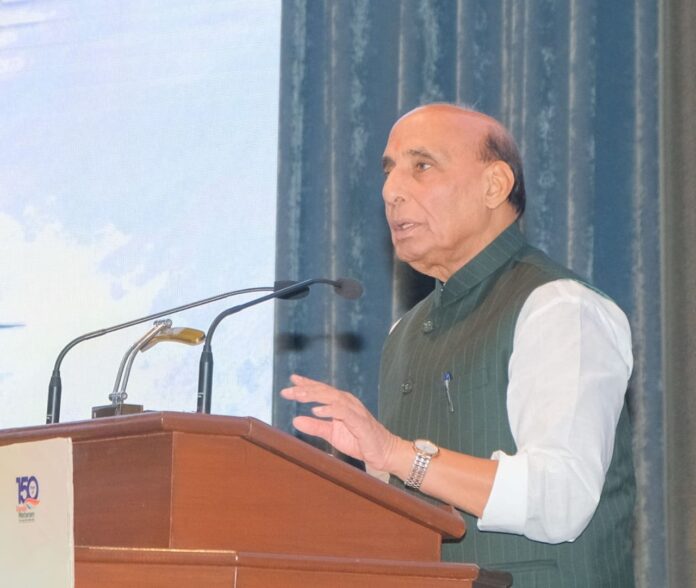
New Delhi/Visakhapatnam, July 11 (NVI): India on Saturday commissioned the indigenously-built stealth frigate INS Mahendragiri into the Indian Navy’s Eastern Fleet, with Defence Minister Rajnath Singh describing the warship as a major milestone in the country’s drive towards self-reliance in defence manufacturing.

The sixth and final frigate under the Project 17A programme was commissioned at Visakhapatnam in the presence of the defence minister, senior naval officers and other dignitaries.

Designed by the Indian Navy’s Warship Design Bureau and built by Mazagon Dock Shipbuilders Limited (MDL), Mumbai, the warship has over 75 per cent indigenous content and is equipped with advanced stealth features, modern sensors and a range of sophisticated weapon systems.

Addressing the commissioning ceremony, Singh said INS Mahendragiri reflected India’s growing capability in indigenous warship design and construction and underscored the country’s commitment to building a technologically advanced and combat-ready Navy.

He said the frigate would strengthen India’s maritime security architecture, extend its blue-water operational reach and reinforce its presence in the Indian Ocean Region.

The 6,670-tonne warship is capable of speeds of up to 28 knots and can undertake a wide range of operations, including fleet air defence, anti-surface warfare, anti-submarine warfare, maritime interdiction, surveillance and humanitarian assistance and disaster relief missions.

The ship can be armed with BrahMos supersonic cruise missiles, medium-range surface-to-air missiles, torpedoes, anti-submarine rocket launchers, an integrated electronic warfare suite and close-in weapon systems.

Highlighting the changing nature of warfare, Singh said emerging technologies such as artificial intelligence, drones, cyber warfare and space-based capabilities were transforming military operations, but stressed that conventional military strength remained the foundation of national defence.

“Future wars may be fought with artificial intelligence, but they will still be won by national resolve, trained soldiers and credible military power,” he said.

The defence minister said the government would continue investing in next-generation technologies while simultaneously strengthening conventional military capabilities.

Emphasising the strategic importance of the Indo-Pacific, Singh said India remained committed to the vision of Security and Growth for All in the Region (SAGAR), adding that the Indian Navy had emerged as a “first responder” and “preferred security partner” through its humanitarian, anti-piracy and maritime security operations.

He also referred to the Navy’s role in safeguarding merchant shipping during the West Asia conflict, saying it had escorted 18 merchant vessels carrying cargo worth over Rs 9,000 crore under Operation Urja Suraksha.

Chief of the Naval Staff Admiral Krishna Swaminathan said the commissioning of INS Mahendragiri marked another milestone in indigenous warship construction and significantly enhanced the Navy’s operational capability.

He said the Project 17A programme had achieved several milestones, including reducing the launch-to-delivery timeline by nearly 50 per cent and cutting the overall construction period by around 20 per cent compared with earlier projects.

Named after the Mahendragiri mountain range in the Eastern Ghats, INS Mahendragiri was built with contributions from more than 200 Indian industries, including several micro, small and medium enterprises (MSMEs).

With its induction into the Eastern Fleet, the warship is expected to enhance the Indian Navy’s operational reach and maritime combat capability in the Indian Ocean Region.(NVI)

Suspected Pakistani drone activity in border area of J&K

drone
Representational image of a drone

Shivam Bakshi

Rajouri, July 11 (NVI): Security forces on Saturday launched a search operation in the Dharat-Dandani area of Nowshera sector in Jammu and Kashmir’s Rajouri district following suspected Pakistani drone activity reported late on Friday, officials said.

The search operation was launched by the Special Operations Group (SOG) in the Lamberi area to sanitise the region and verify the reported drone movement, the officials said

Further details are awaited.—(NVI)

Hizbul commander exposes Pakistan’s role in terrorism in Kashmir

Hizbul Mujahideen commander Shamsher Khan

New Delhi, July 10 (NVI) A top commander of Pakistan-based Hizbul Mujahideen (HM) terror outfit, which has been active in Jammu and Kashmir, has publicly spilled the beans about involvement of Pakistan in terror activities in the Union Territory.

Shamsher Khan, the deputy chief of HM, made revelations about the involvement of Pakistanis in terrorism in J&K at an event organised in Pakistan-occupied Jammu and Kashmir (POJK).

The event was organised by HM on the 8th death anniversary of one of its commanders, Burhan Wani, who was killed by security forces in an encounter in Tral area of Kashmir on July 8, 2016.

“From Lolab and Kupwara to Kathua, there is no graveyard where Pakistani nationals, from all corners of Pakistan, are not buried after getting killed there,” Khan said at the event while praising Pakistan for its role in Kashmir.

He added that while “tehreek-e-Islam” is the main reason for the “movement” in Kashmir, “the role of Pakistani rulers is bigger than that”.

Kupwara is a district of Kashmir bordering the Line of Control (LoC) with POJK and Kathua is the district bordering Punjab state of India.

By mentioning “from Kupwara to Kathua”, Shamsher Khan intended to underline that Pakistanis have participated in terror activities through the entire track of Jammu and Kashmir, from LoC up till Punjab.

He was only exposing Pakistan which has been falsely claiming that the “movement” in Jammu and Kashmir was “indigenous”.

The fact is that terrorism in Jammu and Kashmir and in other parts of the country is a project of Pakistan Army, particularly its intelligence agency ISI, which has been brainwashing, training, arming and funding terrorists, including Pakistanis to carry out the subversive activities.

Khan only highlighted that fact as hundreds of brainwashed and religiously-motivated Pakistani nationals, sent by Pakistan Army to Jammu and Kashmir clandestinely for carrying out terror activities, have been killed by the Indian security forces there.

Their burial is undertaken in Jammu and Kashmir itself because Pakistan refuses to accept them as their nationals after they are killed. (NVI)

MUST READ